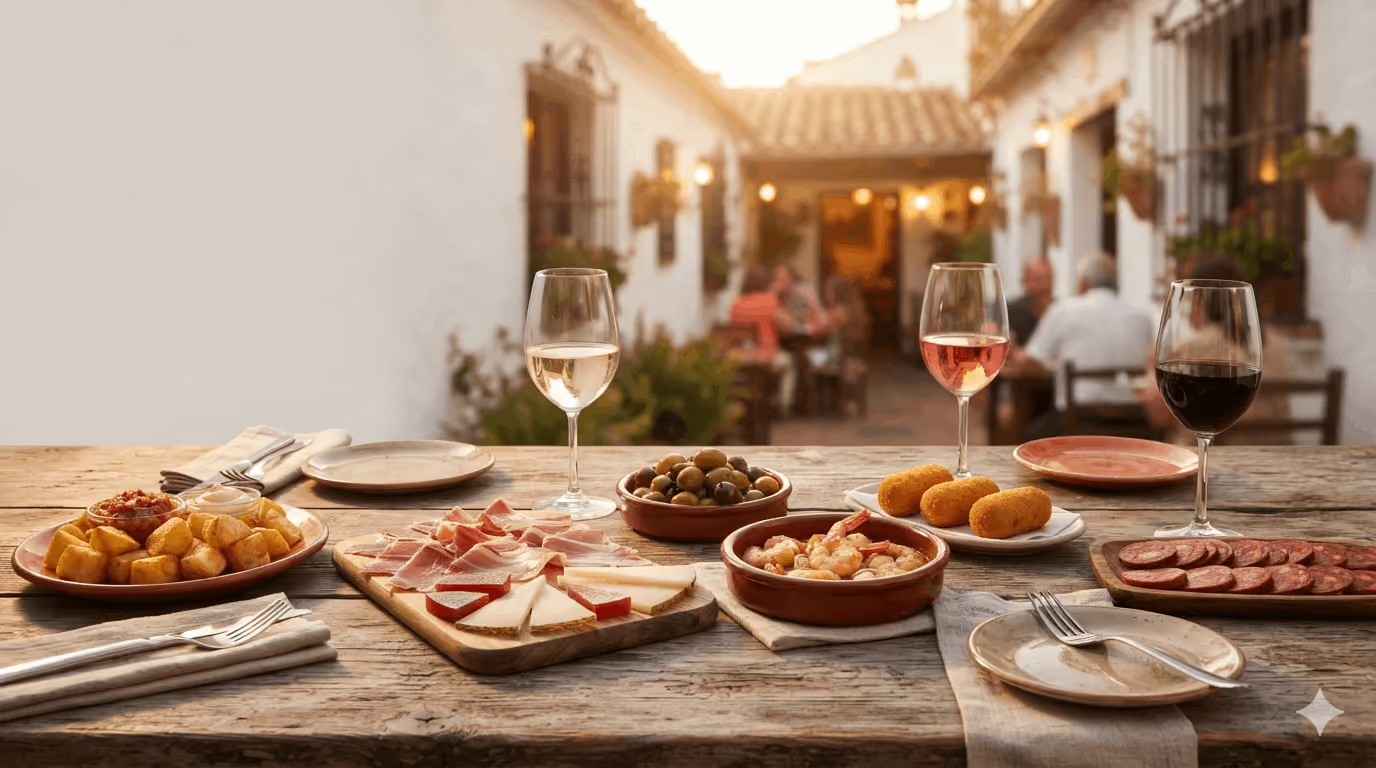


A dry Spanish rosado or a crisp Spanish white such as Albariño is the safest bet for almost any paella, and it works because both bring acidity without the weight that smothers saffron rice. If the paella is the traditional Valencian one made with rabbit, chicken and snails rather than seafood, a light red or a Bobal rosado from Utiel-Requena is the better call. Everything else on this page is about telling those two situations apart before you order.
The one rule that covers you when you can't tell is simple. If anything in the pan came out of the sea, go pink or white, and keep the bottle fresh rather than rich.
Is paella served with red or white wine?
Both, and the pan decides rather than the tradition. Seafood and mixed paella sit best with a crisp white or a dry rosado, while the meat-based Valencian original can take a genuine red as long as it stays light and fresh. The saffron, the paprika and the toasted rice crust are constant across every version, and all three want acidity in the glass to keep the plate lively.

People reach for a big red because paella looks rich, and that instinct is the most common way the pairing goes wrong. The dish carries a lot of flavor but very little fat, so a heavy, tannic red has nothing to soften it and ends up tasting dry and metallic against the rice. Lighter and fresher beats heavier and louder here almost every time, which is the same principle our guide to wine with shellfish works through in more detail.
Which paella are you actually eating?
Probably not the one from Valencia, and that changes the answer more than any grape variety does. According to Wikipedia's account of the dish and its history, the traditional paella valenciana consists of Valencian rice, olive oil, rabbit, chicken, duck, snails, saffron, tomato, ferradura flat green beans, lima beans, salt and water, sometimes seasoned with whole rosemary branches. There is no seafood in it at all.
What most of the English-speaking world calls paella is paella de marisco, the seafood version, or paella mixta, which combines meat and shellfish and is regarded in Valencia as a tourist invention rather than a local dish. Neither is worse than the original, and both are what you will actually be served outside Spain. They simply want a different bottle, because a pan of prawns, mussels and squid asks for something completely unlike a pan of rabbit and snails.
The vegetable version, paella de verduras, is the third common one and behaves more like the seafood pan than the meat pan. Artichoke, pepper, green bean and tomato keep the plate fresh and slightly bitter, which is white and rosé territory.
What wine goes with seafood or mixed paella?
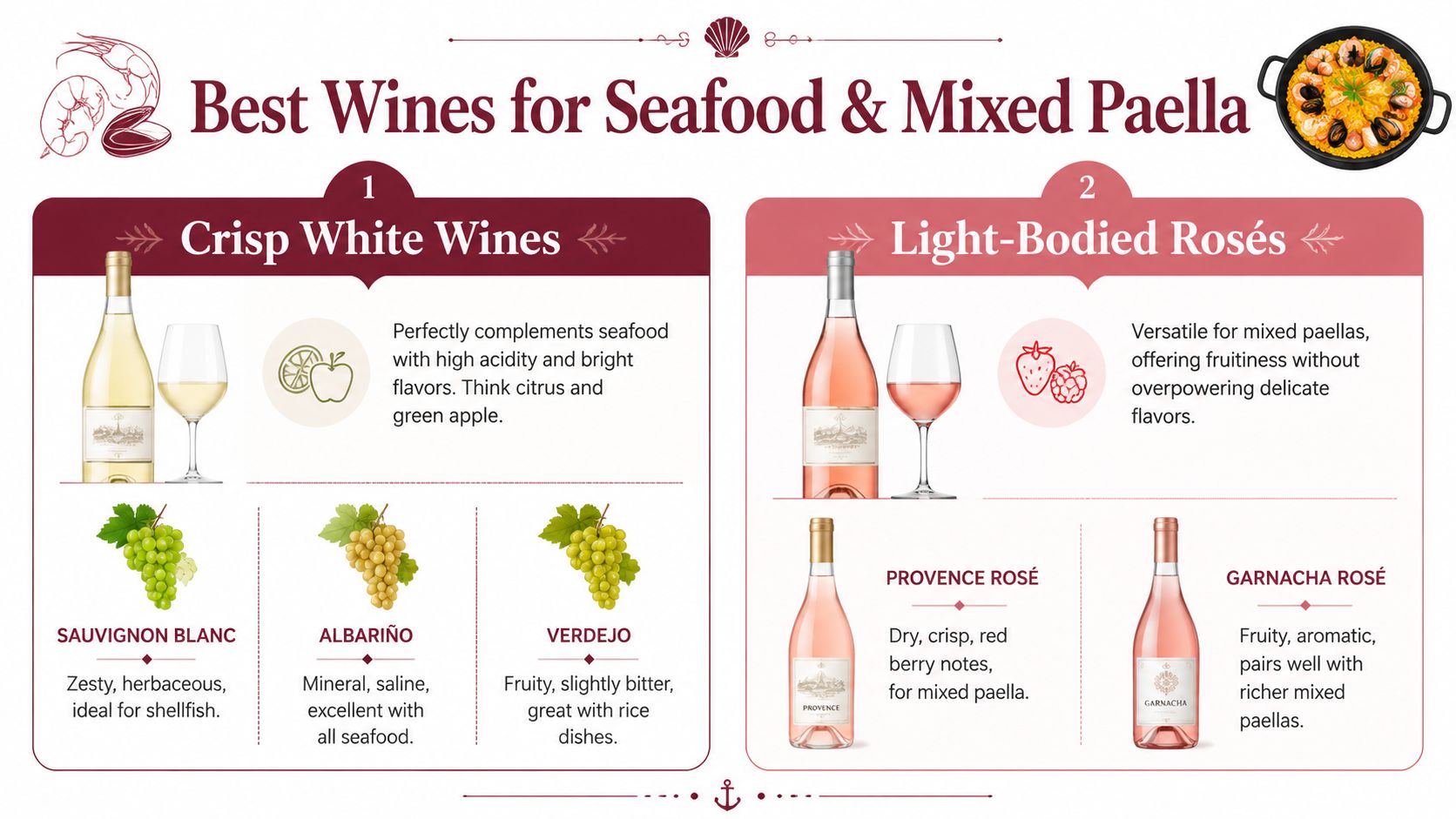
Albariño from Rías Baixas is the reliable white, Verdejo from Rueda is the reliable substitute, and a dry Spanish rosado handles both jobs at once. All three carry the acidity that saffron and shellfish need, and none of them brings oak that would fight the smoky edge of the rice.
Albariño works because it has weight without richness. It gives you stone fruit and a salty, citrus-driven finish that behaves around prawns and mussels the way a squeeze of lemon does, and it holds up to the garlic and paprika that would flatten a more delicate white. Verdejo is a touch more herbal and slightly less expensive, which makes it the better buy when you are feeding a crowd.
Dry Cava is the option most people forget and the one that flatters seafood paella most. The bubbles scrub the oil off your palate between mouthfuls and the acidity does the same job as the wedge of lemon on the side of the pan. Look for Brut on the label rather than Semi Seco, since residual sugar works against the saffron. If you want to widen the search, our guide to describing how a wine tastes covers the label words that point toward this style.
What wine goes with traditional Valencian paella?
A light, fresh red or a full-bodied rosado, and the most fitting choice comes from the countryside around Valencia itself. Utiel-Requena is a Denominación de Origen in the province of Valencia, named for the neighboring towns of Utiel and Requena and established in 1932, with 34,510 hectares under vine according to its regional record. Bobal occupies more than 80% of those vineyards and is the second most planted red grape in all of Spain.

That matters because Bobal makes exactly the wine this dish grew up beside. As a rosado it is deeper in color and fuller in body than a Provençal pink, with enough substance for rabbit and chicken and enough acidity for the rice, and as a light red it stays fresh rather than heavy. The grape has another good story attached to it: the vineyards of Utiel-Requena escaped phylloxera because Bobal is more resistant to the louse than the varieties planted elsewhere in Europe.
If your shop doesn't stock Bobal, a young Rioja at Crianza level or below works on the same principle, since it gives you Tempranillo fruit with restrained oak. Skip the Reserva and Gran Reserva bottlings for this meal, because their oak and tannin are aimed at roast lamb rather than rice. Our guide to choosing a Rioja covers how to read those tiers on the label.
Why is saffron the hard part of this pairing?
Because saffron is aromatic and faintly bitter rather than sweet or fatty, so it gives the wine nothing familiar to lean on. Most food and wine advice runs on matching richness with richness or cutting fat with acidity, and saffron rice sits outside both of those patterns. It is intensely flavored and almost weightless at the same time, which is why a bottle chosen for its power so often lands wrong.
Oak is the specific enemy of this dish. A barrel-aged white brings vanilla and toast that sit on top of saffron and blur it, and a barrel-aged red adds the same thing plus tannin. Wines made in stainless steel keep their own aromatics clean and let the saffron stay legible, which is most of the reason Albariño and Verdejo work so consistently and why an oaked Chardonnay does not.
Smoked paprika does the other half of the work in most pans, and it behaves differently from saffron. Its gentle smoke is what makes a light red plausible with a seafood pan in the first place, since smoke and red fruit are an easy match. The wine needs to stay light enough that the shellfish survives the encounter.
What do people actually drink with paella in Spain?
Regional wine and, before the meal, dry sherry. Fino and Manzanilla are both bone dry and aged under a layer of flor yeast, which gives them a saline, almost bread-like character that works with shellfish and saffron better than their reputation as sweet wines suggests. Served cold in a small glass alongside the first few bites, either one makes the pan taste more of itself.
The other habit worth borrowing is drinking the wine of the place rather than the wine of the label. Valencia DO and Utiel-Requena bottles are everyday wines in the region where the dish was invented, and they cost a fraction of the Rioja most restaurants abroad will steer you toward. Asking for something Valencian is the single best move you can make on a Spanish wine list that has one.
Which single bottle works for a whole table?
A dry Spanish rosado, and it isn't a compromise choice. It has the freshness a seafood pan needs and enough body for a mixed or meat pan, so it's the one bottle that doesn't leave half the table wishing they had ordered something else. If you're feeding a group with a split menu, this is the answer.
Cava is the runner-up and wins if the meal is a celebration or if the group is large enough that people are eating at different times. Sparkling wine survives sitting in the glass for twenty minutes better than a still white does, and it flatters the first bite as reliably as the last. Our piece on choosing one bottle for a mixed table works through the same problem across other meals.
There are two traps worth avoiding here. A heavily oaked Chardonnay puts butter and vanilla next to saffron and paprika, which muddles both, and a big Cabernet or a Reserva Rioja brings tannin the dish cannot absorb. Neither is a bad wine and both are the wrong wine here.
| Paella | Pour this | Why it works |
|---|---|---|
| Seafood (marisco) | Albariño, Verdejo or Brut Cava | High acidity without oak, playing the role of the lemon wedge |
| Mixed (mixta) | Dry Spanish rosado | Freshness for the shellfish and enough body for the meat |
| Traditional Valencian | Bobal rosado or young Rioja | Light red fruit that suits rabbit and chicken without tannin |
| Vegetable (verduras) | Verdejo or dry rosado | Handles the gentle bitterness of artichoke and green bean |
Two service details that change the bottle
Serve the white and the rosado cool rather than cold, around 48 to 52 degrees Fahrenheit, because straight from a cold fridge they taste of nothing and the aromatics that match the saffron are locked up. Ten minutes on the counter before pouring makes a noticeable difference to a bottle you already chose well.
Give the light red the opposite treatment and put it in the fridge for fifteen minutes. A Bobal or a young Rioja served at a warm room temperature reads as soft and alcoholic, and a light chill tightens it up so it can stand next to the socarrat, the toasted crust of rice at the bottom of the pan that carries most of the dish's smoky character. That crust is the part of paella the wine has to answer, more than the protein sitting on top of it.
Questions people ask about paella and wine
Is paella typically served with red or white wine?
Seafood and mixed paella are usually served with a crisp white or dry rosado, while the traditional Valencian version made with rabbit and chicken is often served with a light local red. In the Valencia region itself a full-bodied rosado is the everyday choice for both.
What drink pairs well with paella?
Albariño, Verdejo, dry Cava, Spanish rosado and light Bobal or young Rioja reds all work well. Outside wine, a dry sherry such as Fino or Manzanilla is the traditional Spanish aperitif alongside seafood rice, and it handles saffron unusually well.
What is traditionally served with paella?
In Valencia the pan is usually the whole meal, eaten straight from the paellera, with bread, alioli and a simple green or tomato salad alongside. Wine is typically regional rather than famous, which is how Utiel-Requena and Valencia DO bottles became the local match.
What is the best wine to pair with seafood generally?
A high-acid, unoaked white or a dry sparkling wine, because acidity plays the role a lemon wedge plays on the plate. Albariño, Muscadet, Picpoul, dry Riesling and Brut Cava all satisfy that description at a range of prices.
Can you drink red wine with seafood paella?
You can, as long as it's light, low in tannin and served slightly chilled. A young Bobal or a Gamay-based red will sit happily beside prawns and squid, while anything oaked or tannic will make the shellfish taste metallic.
What wine goes with vegetable paella?
Treat it like the seafood version and reach for Verdejo, Albariño or a dry rosado. Artichoke and green bean bring a gentle bitterness that a fresh white handles neatly, and a fuller or oaked wine will overwhelm the vegetables.
Ordering with confidence
Look at the pan before you look at the list, then choose fresh over rich and regional over famous. Seafood or mixed sends you to Albariño, Verdejo, Cava or a Spanish rosado, and the traditional Valencian pan sends you to a light Bobal or a young Rioja, ideally with a short chill on it. That's the whole decision, and it takes about five seconds once you know which paella you're looking at.
Sommy is built for the part after the ordering, when you want to remember which of those bottles you actually enjoyed. Our guide to picking wine for dinner covers the same approach across the rest of the week.