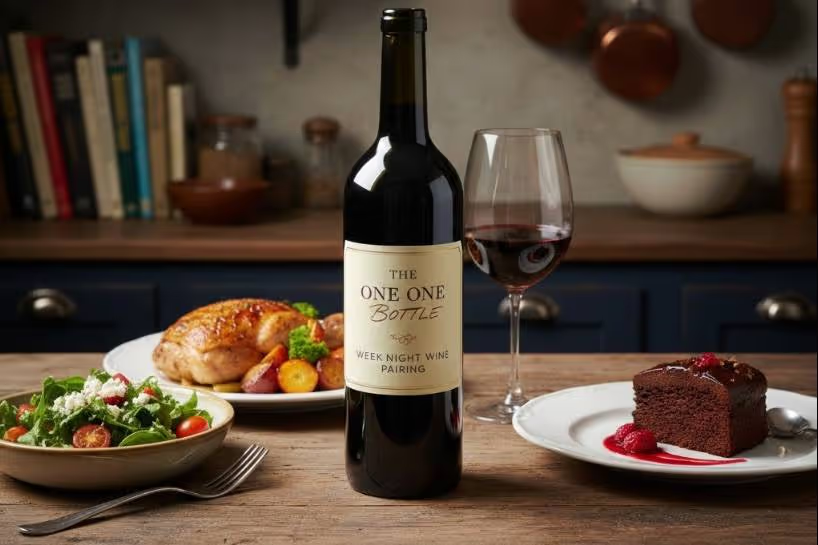

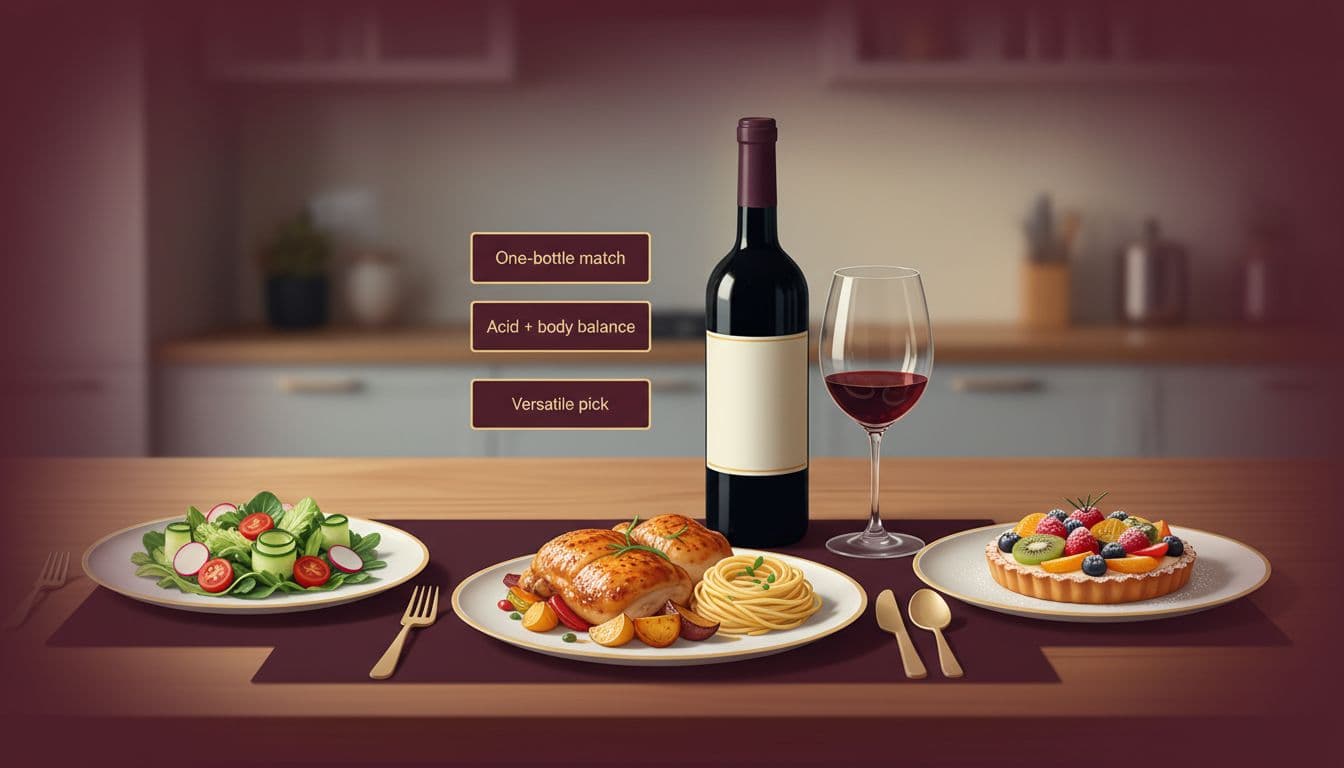
You don’t need three bottles for three courses. For a one bottle wine pairing, pick a flexible style, aim it at the hardest dish, then let Sommy confirm it against your full menu and your taste.
That’s it. No memorizing grapes, no guessing, no feeling like you picked “the wrong one.” Sommy acts like an AI wine assistant that gives calm, clear wine recommendations for real dinners, on real nights.
Why one bottle works (even with three courses)
A weeknight dinner moves fast. Salad hits the table, the main follows, dessert appears almost by surprise.
The trick is to stop trying to “perfect match” every plate. Instead, choose a wine that stays steady across the meal. Think of it like shoes for a long day: you don’t need a pair for each room, you need one pair that won’t hurt later.
This mindset also fits how Sommy approaches wine recommendations. The goal isn’t to teach wine theory, it’s to help you decide with less stress.
If you like extra context on the idea of versatile wines, both Food & Wine’s take on the most versatile wines for pairing and Decanter’s list of versatile wines with food are helpful reference points.
The 3-step “one bottle” method Sommy follows
Step 1: Find the “boss dish” (the one that can break a pairing)
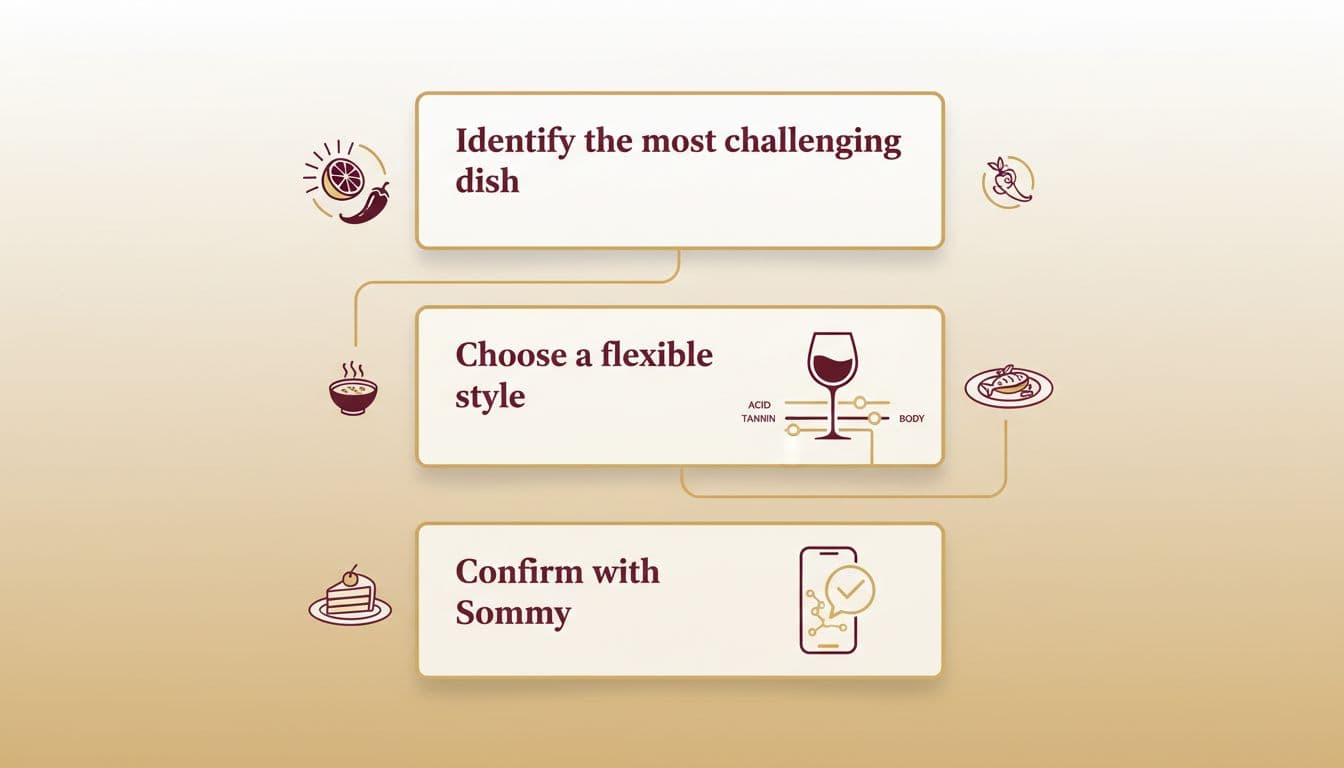
Look for the course that’s most intense or “picky” with wine. Usually it’s one of these:
- Acid-heavy (tomato sauce, vinaigrette, lemony chicken)
- Spicy (chili heat, hot sauce, curry)
- Bitter/green (kale, arugula, Brussels sprouts)
- Very rich (cream sauces, fried food)
This is the key move in any practical wine pairing guide: don’t start with the easy dish. Start with the dish that causes most mismatches.
Step 2: Choose a flexible wine style, not a “perfect” one
Flexible wines tend to have:
- Enough brightness to handle salad and sauce
- Enough flavor to stand up to the main
- A finish that won’t fight dessert (especially fruit-based)
Step 3: Confirm with Sommy (menu + your taste + budget)
This is where a lot of “rules” fall apart, because taste matters. Sommy takes your preferences seriously, then turns them into personalized wine picks you can actually buy.
If you’ve ever wanted wine explained simply, this is the moment. You tell Sommy what you’re eating and what you usually like, and it responds in plain language.
Wine tasting notes explained (the only parts you need tonight)
Tasting notes can feel like a foreign language. For a one-bottle decision, you only need three “dials.” This is wine tasting notes explained in everyday words.
What you noticeWhat it means in the glassWhy it matters for three courses“Crisp” or “bright”Higher acidityHelps with salad, lemon, tomato, and rich foods“Drying” or “grippy”More tanninCan clash with salad and spicy food“A little sweet”Off-dry sweetnessCan calm spice, can also make dessert feel sweeter
These are simple wine explanations you can use anywhere, store, restaurant, or home. They’re also the backbone of most restaurant wine tips and wine list tips, even when nobody says it out loud.
How to use Sommy for a weeknight three-course dinner
Sommy is a wine app for beginners, but it doesn’t talk down to you. It’s more like a quiet helper that remembers what you like.
Here’s a simple flow that works at home or while shopping:
Tell Sommy the three courses
Example: “Arugula salad, lemon herb chicken, berries with whipped cream.”
Add one preference that matters
Examples: “No super-dry reds,” “nothing too sweet,” “I like crisp whites.”
Set a budget and location
This is how you get smart wine recommendations that fit your actual shelf, not an imaginary one.
If you’re standing in the aisle, Sommy can also work like a scanner. This guide on the best wine scanner app overview shows how scanning helps when labels all blur together.
For a broader, calm walkthrough of how to choose wine, this is a strong companion piece: Choosing wine with confidence.
Four “safe” one-bottle styles (that don’t feel boring)
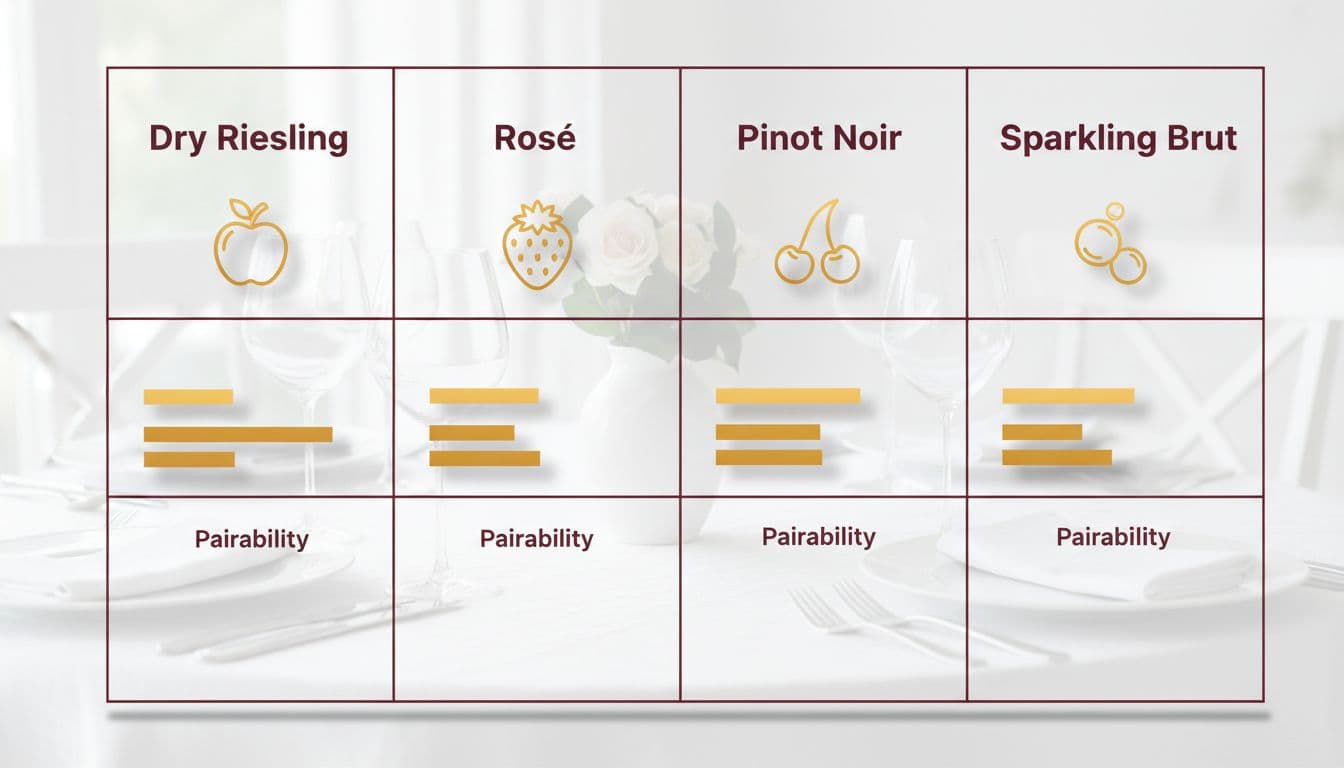
These aren’t the only options. They’re just the most reliable starting points when you want one bottle to cover the night.
Sparkling Brut (dry bubbles)
Brut is the “reset button” wine. It’s great with salad, salty starters, roasted chicken, and it’s usually fine with fruit dessert.
If you want a backup opinion, Wine Spectator’s roundtable on versatile wines for pairings echoes why sommeliers often reach for versatile bottles like this.
Dry Riesling (bright, food-friendly white)
Dry Riesling is a quiet hero for mixed meals. It handles tangy dressings, spicy mains, and it won’t overpower lighter desserts.
Rosé (dry, crisp, and flexible)
Dry rosé works when the table has different tastes. It’s one of the best answers to “everyone wants something else,” without buying two bottles.
Pinot Noir (lighter, smooth red)
Pinot Noir is a common pick when you want red but don’t want a heavy one. It’s especially good for chicken, mushrooms, and many pastas.
Sommy can turn these into personalized wine recommendations based on what you actually enjoy, then offer smart wine picks inside that lane.
Two weeknight menus, one bottle each (what Sommy would aim for)
Menu A: Salad + lemon chicken + berries
This menu has acid and freshness. The “boss dish” is the lemony main (and maybe the vinaigrette).
A strong one-bottle answer: Sparkling Brut or Dry Riesling.
In Sommy, you’d ask for “one bottle that works with lemon and salad,” then choose the option that matches your taste (more crisp, more fruity, less dry). This is the kind of beginner-friendly wine advice that saves time without being vague.
Menu B: Caesar salad + tomato pasta + chocolate cookies
Here the boss dish is tomato sauce (high acid) and possibly the Caesar dressing.
A strong one-bottle answer: Pinot Noir (light to medium, not too tannic). If you prefer white, Sommy may steer you toward a bright white instead, depending on your profile.
Grocery store wine picks that make this easier
When you’re doing grocery store wine picks, don’t hunt for the “perfect brand.” Hunt for the right style, then let Sommy narrow it down.
A few simple wine tips that work fast:
- For Brut: look for “Brut” on the label, skip “Doux” or “Demi-Sec” if you want dry.
- For dry Riesling: look for “Dry” or ask the shop staff, sweetness is not always obvious.
- For rosé: pick “Dry Rosé” when possible, avoid “White Zinfandel” if you want less sweet.
- For Pinot Noir: choose a bottle that says “Pinot Noir” clearly, avoid “reserve” guessing games.
If you want wine app suggestions for this moment, Sommy can scan a few bottles and return a short list of “yes” options. That’s everyday wine advice with less second-guessing.
Restaurant wine tips when you’re ordering one bottle for the table
The same approach works on a wine list. Find the boss dish (spice, acid, or richness), then choose the flexible style.
Two helpful scripts:
- “We’re doing different courses, can you suggest one versatile bottle?”
- “We want something food-friendly and not too heavy.”
For more calm, practical help, this guide on how to read a wine list with confidence turns wine list tips into plain steps, no pressure.
Conclusion: one calm choice beats three guesses
A good one bottle wine pairing is about comfort and balance, not perfect rules. Pick the boss dish, choose a flexible style, and let Sommy turn your menu into clear wine recommendations you can trust.
If you want help choosing wine in the moment, at home or in the aisle, this is exactly what Sommy is for: https://www.sommy.ai.