


The best wine for your dinner is the one that matches the weight of your meal. For a rich, heavy dish like steak, you need a bold, full-bodied wine like Cabernet Sauvignon. For something lighter like grilled fish or a salad, a crisp, light-bodied wine like Sauvignon Blanc is the perfect partner. This one simple rule cuts through the guesswork and gets you 90% of the way to a perfect pairing.
This guide will give you a simple framework to confidently choose a great wine for any dinner, without needing to become a wine expert.
Stop Guessing and Start Matching
Staring at a wall of wine bottles can feel like a pop quiz you didn't study for. The labels are confusing, and all you want is something that will taste good with tonight's dinner. The fear of choosing the "wrong" bottle is real, but it doesn't have to be this way.
The good news is, you already have the most important clue: your dinner menu. Forget memorizing grape varieties or regions. The single most helpful trick is to think about your food and wine in terms of their intensity, or "weight."
The Weight-Matching Rule
Let's make this practical. Imagine a delicate angel hair pasta with a light lemon sauce. A big, heavy red wine would completely steamroll it. It would be like trying to have a quiet conversation while a rock band is playing. A light, crisp white wine, however, would feel balanced and refreshing.
Now, picture a hearty lasagna layered with rich meat sauce and melted cheese. A delicate white wine would get completely lost. This is where a bold, full-bodied red comes in. It has the structure to stand up to the meal, creating a satisfying, balanced experience.
This simple concept is the foundation for confidently choosing a great dinner wine every time.
The goal is balance. You don't want the wine to overpower the food, and you don't want the food to overpower the wine. When their 'weights' are similar, they complement each other instead of competing.
By focusing on this one simple idea of matching weight, you can walk into any wine aisle with a clear, simple plan. No more random guessing. For a deeper dive, you'll find even more helpful advice in our guide on how to pick wine without the stress.
Focus on Your Meal, Not the Label
Forget trying to decode complicated wine labels. The real secret to finding the best wine for dinner is already on your plate.
Instead of getting lost in the wine aisle, you can make a confident choice by looking at your meal in three simple ways. This approach removes the pressure to have any prior wine knowledge. It puts the focus back on what you're actually eating, making the decision intuitive and stress-free.
The Three Meal-Based Questions
To narrow down your options almost instantly, just ask yourself these quick questions about your dinner.
- What's the main event? Think about the protein. Are you having a delicate piece of fish, a rich cut of beef, or a hearty chicken dish? Lighter proteins generally call for lighter wines, while heavier, richer meats need a wine with enough structure to stand up to them.
- What's in the sauce? The sauce is often the most powerful flavor. A creamy, rich Alfredo sauce behaves very differently from a tangy tomato sauce. Creamy sauces love a wine with enough crispness to cut through the richness, while tomato-based dishes pair beautifully with reds that have a bit of their own acidity.
- Is there any spice? Heat changes everything. If you're digging into spicy tacos or a fiery curry, a high-alcohol, bold red wine will feel like throwing gasoline on a fire. Instead, you'll want something that cools your palate, like a slightly off-dry white or a crisp rosé.
This simple decision tree shows how thinking about whether your dinner is light or hearty can instantly guide your wine choice.
The key takeaway here is that the weight of your food is the most reliable starting point for finding a balanced and enjoyable wine pairing.
Practical Examples in Action
Let’s see how this works with a couple of real-world dinners.
Imagine you're grilling a steak. Its bold, savory flavor needs a wine that won't get lost. A full-bodied red like a Cabernet Sauvignon is a classic for a reason. Its structure and tannins perfectly match the richness of the meat.
Now, consider a lemon-herb roasted chicken. The flavors are much more delicate. A crisp, unoaked white wine like a Sauvignon Blanc or even a light-bodied red like a Pinot Noir would complement the dish without overwhelming it.
For a deeper dive into this strategy, you can check out our complete guide on how to pair wine with food for even more confidence.
By focusing on the food first, you turn an overwhelming choice into a simple matching game. You're no longer trying to remember facts about wine; you're simply describing your dinner and finding a wine that fits. This is exactly the kind of in-the-moment decision that Sommy was built to help with.
Go-To Pairings for Your Favorite Weeknight Dinners
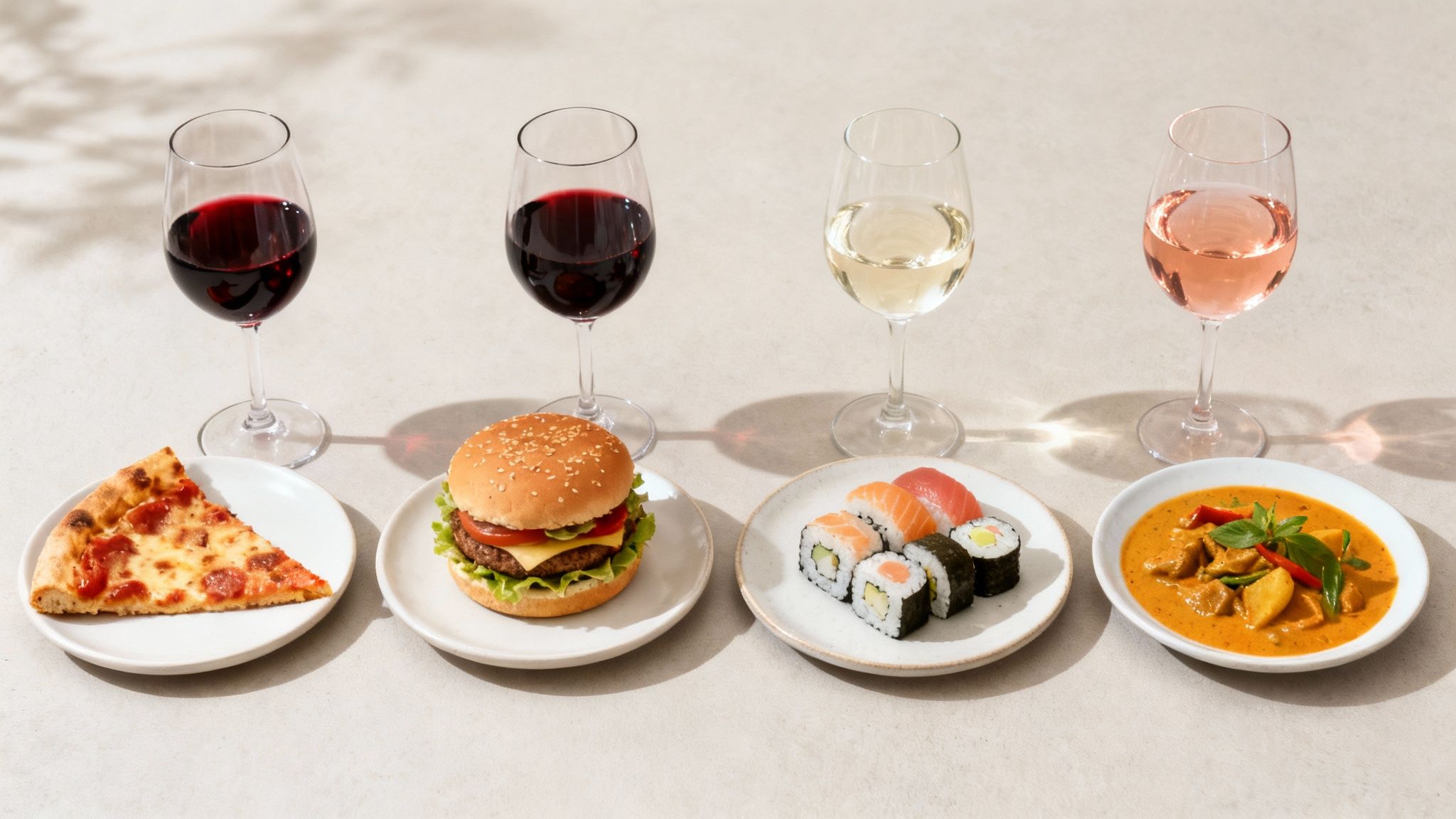
Most nights, you aren't trying to pair wine with a five-course tasting menu. You're just figuring out what to drink with tacos, pizza, or a simple roasted chicken.
The good news is that these everyday meals have easy, reliable wine partners that you can grab without overthinking it. The goal isn't to find the single "perfect" bottle but to have a few trusted options in your back pocket that make a weeknight dinner feel a little more special.
For Classic Comfort Foods
Some dinners are classics for a reason, and they have classic wine pairings that just work. No need to reinvent the wheel.
- Spaghetti and Meatballs: The rich, acidic tomato sauce is the star. You need a red wine with enough acidity to stand up to it. An Italian Chianti is the textbook choice, but a juicy Barbera will also do the trick beautifully.
- Roast Chicken: This is one of the most versatile dishes out there. A simple, herb-roasted chicken can go with a crisp white like Sauvignon Blanc or a light, smooth red like Pinot Noir. If the chicken has a richer gravy, lean toward the Pinot.
- Burgers and Pizza: Both are savory, a little greasy, and delicious. A fruity, low-tannin red is your best friend. A simple Merlot or a bold Zinfandel is fantastic with burgers, while the bright fruitiness of a Sangiovese is a natural fit for pizza.
For Takeout Favorites
Ordering in shouldn't mean giving up on a great pairing. The right wine can make your favorite takeout feel like a restaurant experience.
- Spicy Thai or Indian Curry: When you have some heat, you want a wine that cools things down. An off-dry (meaning slightly sweet) Riesling is perfect because that touch of sweetness balances the spice.
- Sushi: The delicate flavors of raw fish and rice call for something clean and crisp. A dry Riesling, an unoaked Pinot Grigio, or even a dry Rosé will complement the meal without overpowering it.
- Tacos: Whether it's spicy carnitas or grilled fish, a zesty Sauvignon Blanc is a can't-miss choice. Its citrusy notes are like squeezing a lime over everything, cutting through the richness and brightening it all up.
The secret is finding a wine that complements, rather than competes with, your food. For creamy pasta, a crisp white cuts through the richness. Check out our easy picks for creamy pasta night to see this idea in action.
Don’t Forget Bubbles and Rosé
While reds and whites get most of the attention, don't sleep on sparkling and rosé wines. They are incredibly versatile food partners. Their acidity and bubbles can cut through the richness of everything from fried chicken to creamy pasta, making them a surprisingly effective choice for a wide range of meals.
This is exactly the kind of real-world decision Sommy helps with. Instead of memorizing these pairings, you can just tell the AI what you’re having for dinner, and it will give you a confident recommendation from the store shelf or restaurant menu right in front of you.
How to Confidently Order Wine at a Restaurant
The server hands you the heavy, leather-bound wine list. That familiar wave of anxiety, the pressure to choose quickly and correctly, is something almost everyone feels. But that moment is completely avoidable.
You don't need to become a wine expert to order with confidence. All you need is a simple, repeatable plan that works every time.
Use the Server as Your Guide
The single most underused resource in any restaurant is the server or sommelier. Their job isn’t to judge you; it’s to help you find a wine you’ll genuinely love that fits your meal and budget.
Instead of guessing, use a few straightforward phrases to give them the clues they need. Just think about these three things first:
- What you're eating: This is the most important piece of information.
- What you like: Red or white? Something light and crisp or rich and smooth?
- What you want to spend: You can communicate this discreetly by pointing to a price on the list and saying, "I'm looking for something in this neighborhood."
Armed with that, you can say something direct like, “We’re having the steak and the salmon, and we'd love a bottle of red under $60 that works with both.”
This clear request turns a stressful guess into a simple, collaborative decision.
A Modern Approach to the Wine List
Sometimes, you might not feel like talking it through, or maybe you just want a quick second opinion. This is where a discreet tool on your phone can completely change the game.
This is exactly the kind of in-the-moment decision an AI assistant like Sommy was built for. Just scan the restaurant’s wine list with your phone’s camera. Sommy will instantly highlight the best options based on your personal taste, your budget, and the food you’re about to order. It cuts through the noise and gives you a few great choices without any guesswork.
The best part is that it’s completely private. You get a confident, personalized recommendation without having to explain your preferences or budget to anyone. It’s a quiet confidence boost right when you need it.
For those who want to feel even more prepared, you can dive deeper with our guide on how to read a wine list like a pro.
The next time that heavy wine list lands on your table, you can see it not as a test, but as a list of possibilities. By using the people around you or the smart tools in your pocket, you can make a great choice every time: turning a moment of anxiety into a moment of confident enjoyment.
Let an AI Assistant Handle the Decision for You
What if you could skip all the guesswork entirely? Instead of trying to memorize which wine goes with spicy food, you could have a personal wine assistant do the heavy lifting for you. This isn't about complicated tech; it's about getting a clear, confident answer right when you need it most.
Imagine pointing your phone at a restaurant wine list or a packed store shelf and instantly seeing the top choices highlighted just for you. This is the simple, practical help a tool like Sommy provides. It’s built to cut through the noise and eliminate decision anxiety on the spot.
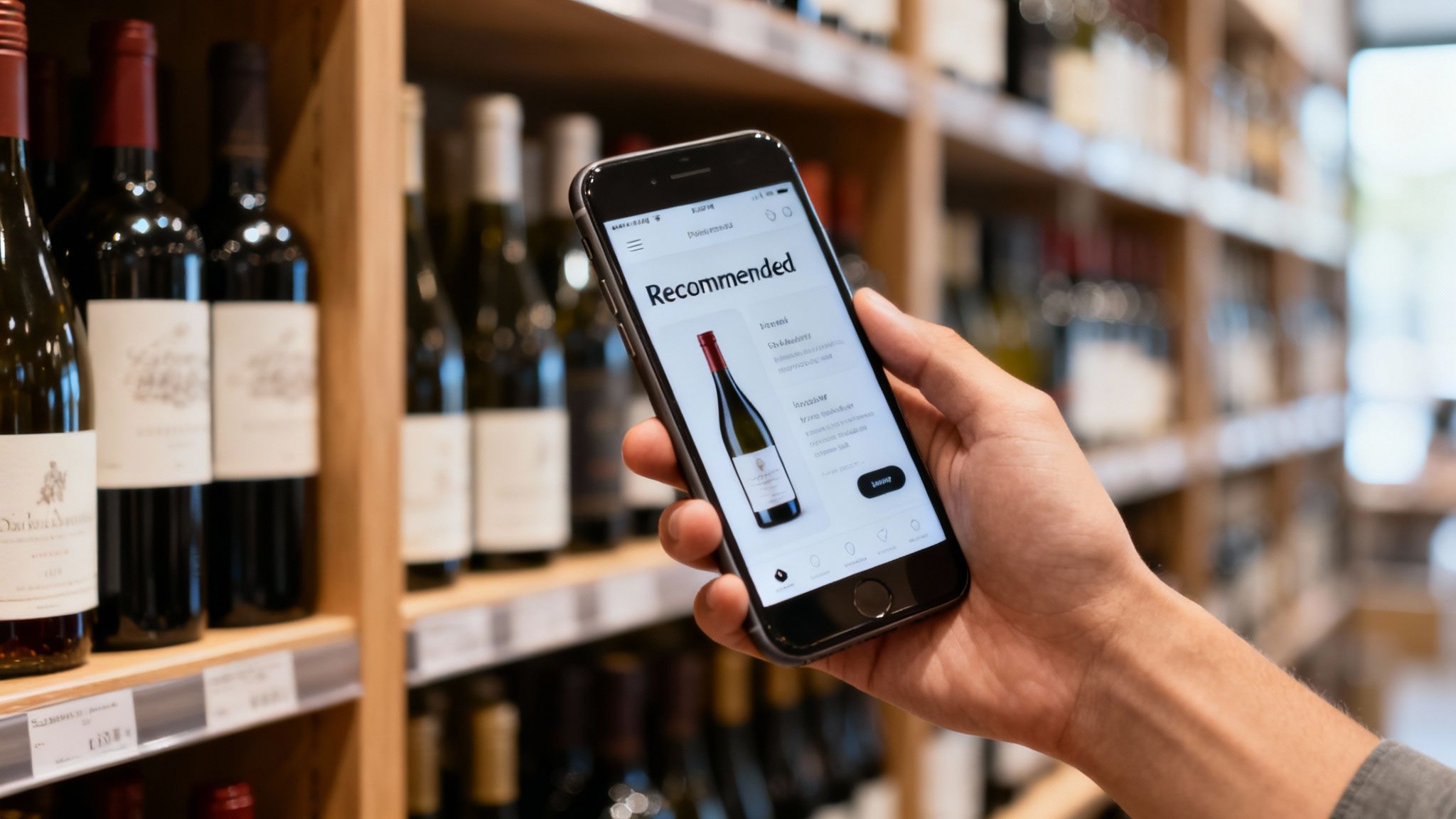
How an AI Assistant Simplifies Your Choice
The whole point is to give you the confidence of an expert without making you become one. An AI wine assistant gets to know what you like over time, quietly building a personal taste profile based on the wines you enjoy.
This means its recommendations are tuned to your palate, not just based on a generic algorithm. It combines what it knows about you with the options in front of you to find the best wine for your dinner.
It’s a pretty straightforward process:
- It understands your taste: Based on wines you've enjoyed before, it knows if you prefer bold and fruity or light and crisp.
- It sees the options: By scanning a wine list or store shelf, it analyzes all the available bottles in seconds.
- It factors in your meal: You can tell it what you’re eating, from steak to sushi, to guarantee a great pairing.
- It respects your budget: Just set a price range, and it will only recommend wines that fit.
Think of it like a friend who has a perfect memory for every wine you’ve ever liked, standing right next to you at the restaurant or wine shop. It's a quiet, personal guide in your pocket.
Ask a Simple Question, Get a Clear Answer
Beyond just scanning, you can talk to it in plain language. Instead of fumbling with grape varieties, you can just ask a direct question like:
- “What’s a good, smooth red for lasagna under $20?”
- “I need a crisp white wine that will go well with grilled shrimp.”
- “Find me a bold red wine similar to that one I had last week.”
This is exactly the kind of in-the-moment problem Sommy was built to solve. It translates your simple request into a perfect bottle choice, giving you a calm, quick, and certain decision every time.
Common Questions About Picking a Dinner Wine
Even with a few simple guidelines, some questions always come up. Nailing down the answers to these common sticking points is often the final step to feeling totally confident, whether you're in a wine aisle or looking at a restaurant menu.
Let's walk through these questions with practical, jargon-free answers to clear up any lingering anxiety.
Does the Price of a Wine Really Matter for Dinner?
Not nearly as much as most people think. A great pairing is about matching the wine's style to the food, not the number on the price tag.
You can easily find incredible, food-friendly wines for under $20 that will pair with your dinner just as beautifully as a more expensive bottle. The trick is to focus on the style first, like a crisp Sauvignon Blanc for fish tacos or a juicy Merlot for burgers. Once you know the style you need, finding a great bottle in your budget is easy.
What's the Safest All-Around Wine for a Dinner Party?
This is a classic. You're heading to a friend's place, have no idea what's on the menu, and need a bottle that won't clash. For moments like these, you want something versatile that plays well with others.
A dry Rosé is a fantastic choice. It's a go-to for a reason. It pairs well with almost anything, from fresh salads to roasted chicken. It’s a safe, stylish, and incredibly food-friendly option.
Here are two other trusted picks:
- Pinot Noir: This red is light enough for chicken but has enough fruity character for pork or pasta. It’s famously one of the most adaptable food wines out there.
- Sauvignon Blanc: You can't go wrong with this zesty, crisp white. It's a reliable partner for salads, seafood, and lighter chicken dishes.
What if We Order Very Different Meals?
The classic dinner dilemma: one of you is getting a rich steak, and the other is ordering delicate fish. Don't sweat it. You've got a couple of great options.
The simplest solution? Order by the glass. This lets each of you get the perfect pairing for your own meal, no compromises needed.
If you’d rather share a bottle, look for a "bridge" wine. These are styles that can comfortably span the gap between different dishes. A lighter-bodied red like Gamay (often labeled as Beaujolais) or a fuller-bodied white like a lightly oaked Chardonnay can often work surprisingly well with both meat and fish.
Instead of trying to juggle all these details, you can let Sommy do the heavy lifting. It's like having a personal wine expert in your pocket, ready to find the perfect bottle for everyone at the table, no matter how different the orders are. Find your next favorite bottle with help from Sommy.ai.