
Creamy pasta is comfort food with a confidence problem. The sauce is rich, the choices are endless, and picking the wrong bottle can make the whole meal feel heavy.
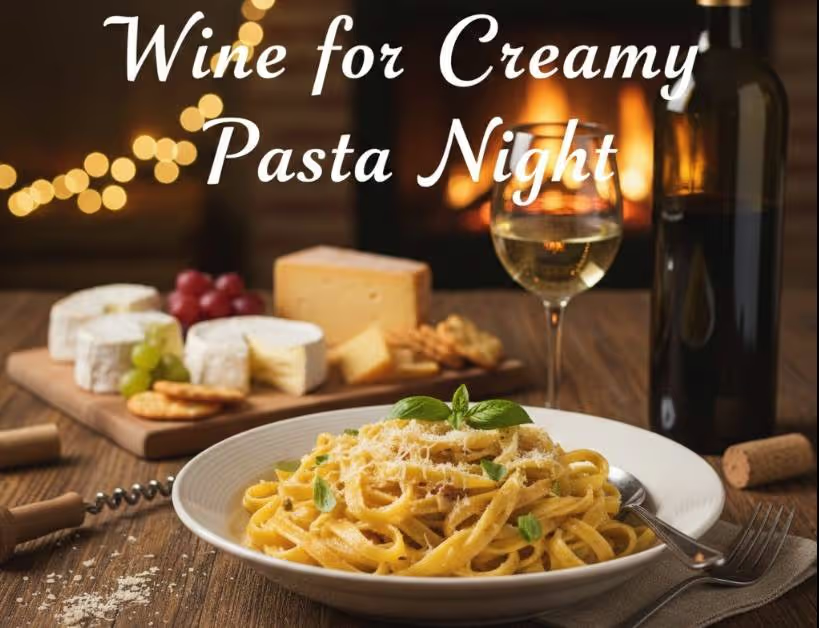
Here’s the core answer for wine creamy pasta: choose a wine with fresh acidity to cut the richness, and keep flavors clean. For most Alfredo and carbonara, reach for Pinot Grigio, Sauvignon Blanc, or a not-too-oaky Chardonnay. For pesto, go brighter and more herbal, or even a lightly chilled, light red.
If you want a calm, no-drama plan, this post is your wine pairing guide for creamy pasta night.
The 20-second rule that makes creamy pasta easy
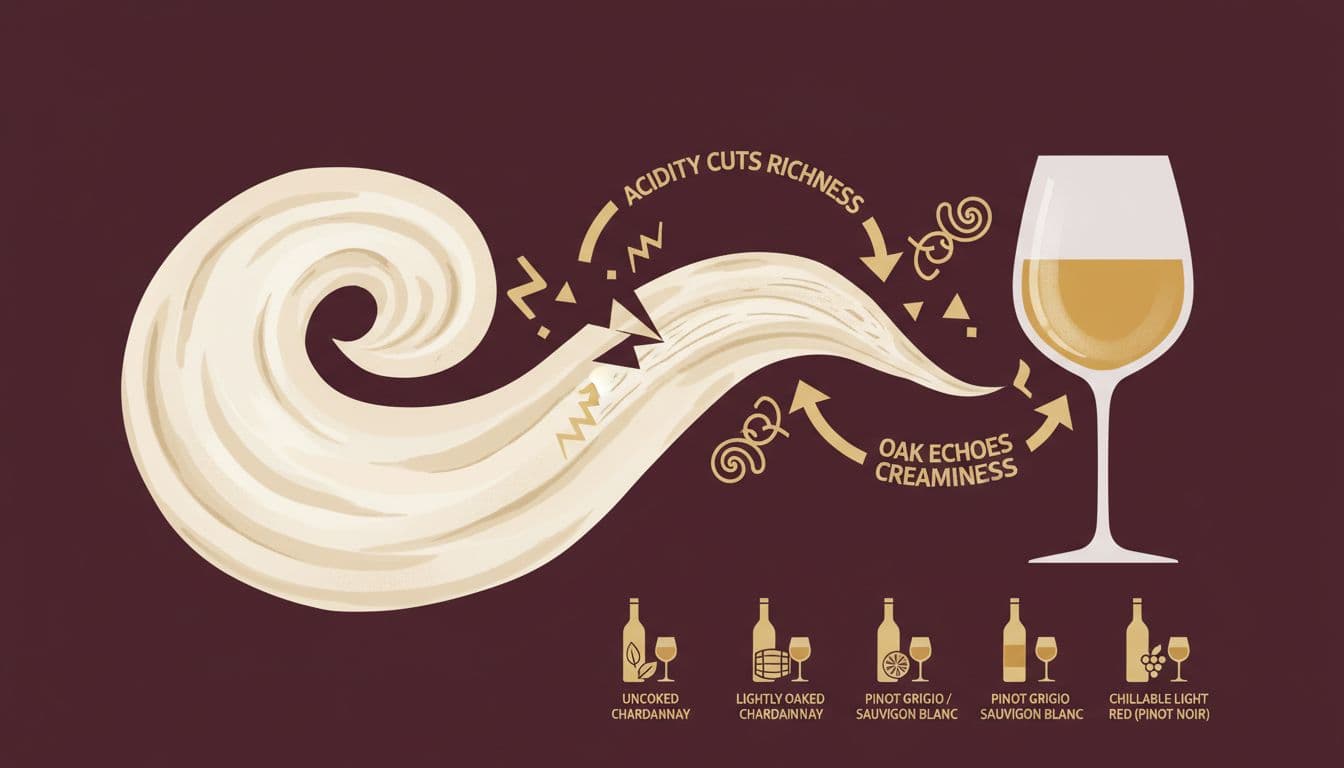
Forget memorizing grapes or regions. Here’s how to choose wine for anything creamy, explained in one idea:
Rich sauce needs lift. The lift usually comes from acidity (the mouth-watering, citrusy feel in wine). It works like a squeeze of lemon on a buttery dish.
A second idea helps when the sauce is extra silky: a touch of oak in the wine can “echo” the cream. Not required, but it can feel cozy when it’s cold out.
This is a beginner wine guide version of pairing, with wine explained simply:
- If the sauce feels heavy, pick a wine that feels bright.
- If the sauce feels smooth and buttery, a slightly rounder white can match it.
If you like the quick logic behind this, you’ll see the same basic guidance in broader write-ups about wine types that pair with creamy pasta dishes. You don’t need all the details to choose well, but it’s reassuring to know the rule holds up.
One more thing that lowers stress: “tasting notes” aren’t secret code. This is wine tasting notes explained in plain terms. “Lemon” means it feels zippy. “Apple” means clean and crisp. “Buttery” means round and soft. That’s it. These simple wine explanations are enough to make solid wine recommendations on the spot.
Easy wine picks for Alfredo, carbonara, and pesto
Creamy pasta doesn’t taste like one thing. The add-ins matter more than people think. Cheese, bacon, herbs, pepper, seafood, they pull the pairing in different directions. Use the sauce as the base, then adjust.
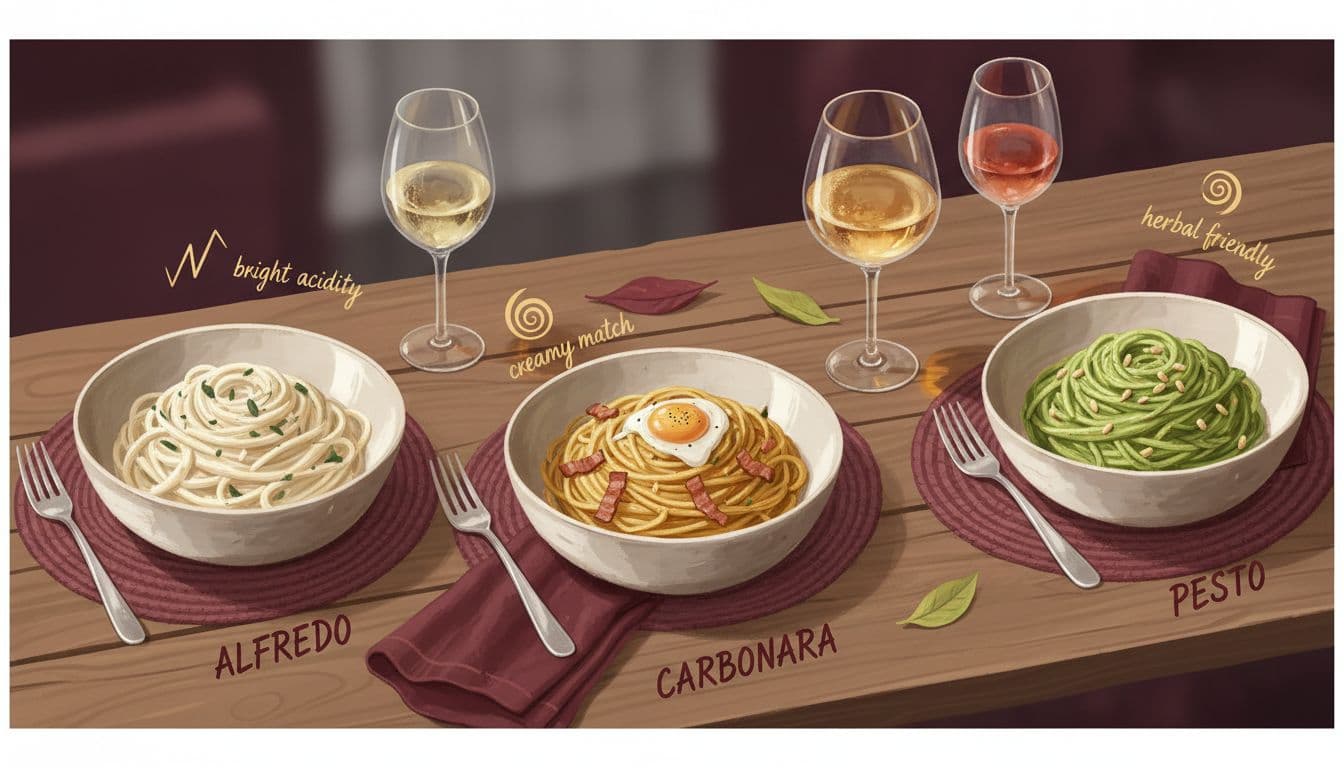
Alfredo wine pairing that won’t feel too heavy
Alfredo is butter, cream, and cheese. It’s like a soft blanket, which is exactly why the wine should bring a little snap.
Grocery store wine picks that work almost every time:
- Pinot Grigio (clean, crisp, not too intense)
- Sauvignon Blanc (brighter, more citrus)
- Unoaked Chardonnay (a bit fuller than Pinot Grigio, still fresh)
Quick adjustment: if Alfredo has chicken and mushrooms, a slightly rounder white (lightly oaked Chardonnay) can feel right. Our fuller guide to what wine goes with pasta Alfredo takes the added-protein question head on and explains why the sauce still decides.
Carbonara: creamy, salty, peppery, and picky
Carbonara tastes creamy, but it’s also salty and peppery. That black pepper bite changes the game. You want a wine that can refresh your mouth after each forkful.
Great easy picks:
- Sauvignon Blanc (bright and clean)
- Vermentino or Soave if you see them (crisp, food-friendly whites)
- Dry sparkling wine (bubbles help reset your palate)
If the carbonara is extra peppery, avoid super-oaky whites. The combo can feel bitter. This is where beginner-friendly wine advice pays off: when in doubt, go brighter.
Pesto pasta: herbal sauce, brighter wine
Pesto is creamy in texture, but the flavor is green and sharp. Basil, garlic, and nuts can make some wines taste flat.
Try these clear wine recommendations:
- Sauvignon Blanc (often the easiest match)
- Vermentino (fresh, slightly savory)
- Dry rosé (if you want something that can handle garlic)
- Light red served cool (Pinot Noir is a classic “chillable red” option)
If you want a simple principle for pesto, this explainer on Alfredo pairing basics still applies, because the rule is the same: acidity cuts creamy richness. For pesto, you’re just also trying to stay friendly with herbs.
Restaurant wine tips and wine list moves that feel natural

When you’re on a date night or grabbing dinner with friends, the pressure spikes. You don’t want a lecture, you want a decision. These are restaurant wine tips that keep you calm:
Wine list tips that work in one sentence: ask for a crisp white with good acidity, and say what you’re eating. You don’t need to name a grape.
If the list is huge, pick by style:
- “Crisp and dry” white for Alfredo and carbonara.
- “Herbal-friendly” bright white or dry rosé for pesto.
- “Light-bodied red” if you really want red, and serve it a little cool.
Here’s a small, practical map you can screenshot mentally:
Pasta dishSafest wine styleWhat to look forAlfredoCrisp white“Dry,” “fresh,” citrus wordsCarbonaraBright white or bubbles“Crisp,” “clean,” “zesty”PestoBright, herbal white or dry rosé“Herbal,” “citrus,” “minerally”
For the store, keep it simple. These are simple wine tips for fast shopping: pick a dry white under your budget, then choose the coldest bottle in the fridge case so it’s ready sooner.
If you want help choosing wine in the moment, this is exactly what an AI wine assistant is good at: quick, calm decisions based on your taste and your meal. Sommy is built for smart wine recommendations and personalized wine picks when you’re holding a bottle or reading a menu, not when you’re studying. If you like the idea, look for wine app suggestions, save what you liked, and turn that into personalized wine recommendations and smart wine picks over time. That’s everyday wine advice you can actually use.
Conclusion
Creamy pasta doesn’t require fancy wine knowledge. Stick to acidity, keep flavors clean, and match the sauce plus the strongest add-in. With that, your “best guess” turns into real wine recommendations that feel steady, not stressful.
Next pasta night, pick one bottle with confidence, then notice what you enjoyed about it. That tiny habit is a modern wine guide all by itself, and it leads to better choices every week.