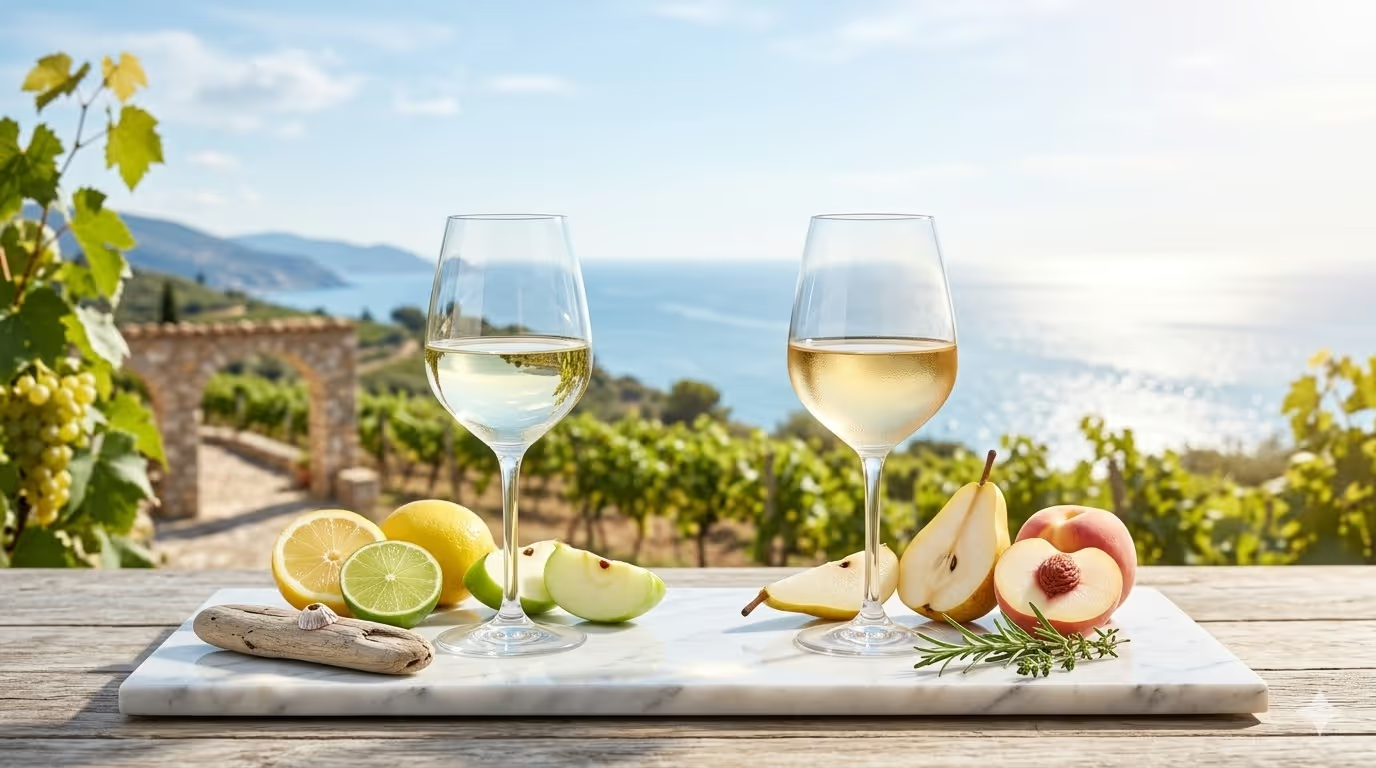

Albariño and Vermentino are both dry, unoaked, high-acid white wines grown on the coast, and the practical difference between them comes down to how each one finishes. Albariño, from northwest Spain, is usually the sharper of the two, with citrus running straight through it and a clean salty snap at the end. Vermentino, grown mostly on Sardinia and along the Italian coast, keeps the same freshness but adds a rounder texture and a faint bitter almond note on the finish that softens the whole thing. If you want the more cutting glass, buy Albariño, and if you want something gentler that still tastes properly dry, buy Vermentino.
Both live in the same part of the shelf in the United States. As of August 2026, solid bottles of either start around $14 to $16 on wine.com, and the genuinely very good ones land between $20 and $30. Neither wine needs cellaring, and both are made to be drunk within a couple of years of the vintage printed on the label, so this is a low-risk decision either way.
What's the actual difference between Albariño and Vermentino?
The real differences are origin, the level of acidity, and what happens in the last second of the sip. Albariño comes from Rías Baixas in Galicia, on Spain's rainy Atlantic corner, where the grape holds onto a lot of natural acidity. Vermentino comes mostly from Sardinia, plus Liguria and Tuscany on the Italian mainland, where a warmer Mediterranean climate gives slightly lower acidity and a fuller texture. Both are almost always fermented in steel rather than oak, which is why neither one tastes buttery or vanilla-scented the way a lot of Chardonnay does.
| Albariño | Vermentino | |
|---|---|---|
| Home region | Rías Baixas, Galicia, Spain | Sardinia, Liguria and Tuscany, Italy |
| Also grown in | Portugal (as Alvarinho), California, Oregon | Corsica, Provence (as Rolle), California |
| Acidity | High, the sharper of the two | High, but a step softer |
| Texture | Lean and cutting | Rounder, slightly oily |
| The finish | Salty and clean | Faintly bitter, like almond skin |
| Typical US price | $14 to $35 | $16 to $32 |
| Drink within | 2 to 3 years of the vintage | 2 to 3 years of the vintage |
Neither grape carries meaningful tannin, and neither is sweet in any normal bottling, so the choice between them is never about sweetness. If you're still working out how to tell a dry wine from an off-dry one on the shelf, our guide to telling dry and sweet wine apart before you buy covers the label language that actually signals it.
How do they taste when you drink them side by side?
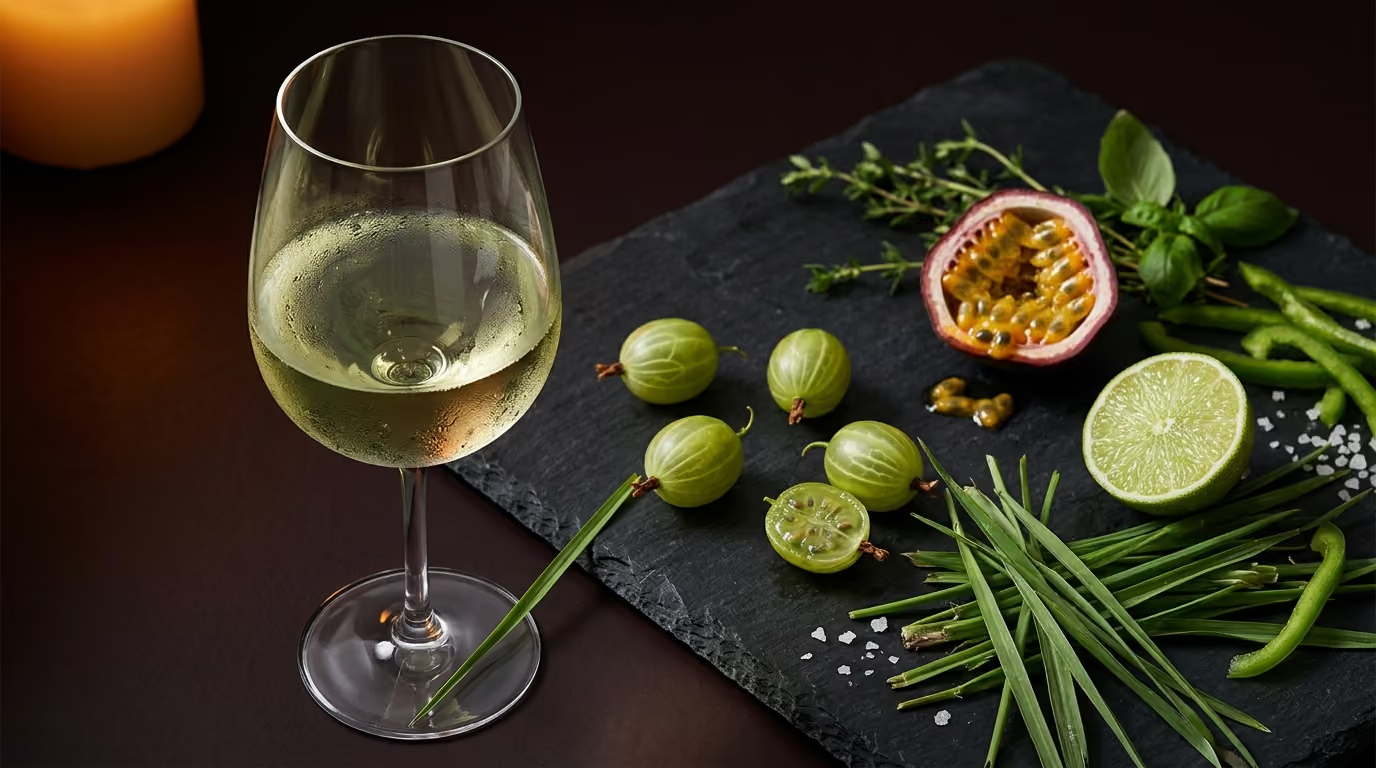
Poured next to each other, Albariño reads as louder and more citrus-forward while Vermentino reads as broader and herbal. Albariño usually shows grapefruit and lime peel, underripe peach, and something faintly saline that people describe as sea air. The acidity arrives early and keeps going, so the wine feels like it's scrubbing your palate clean between bites.
Vermentino opens with lemon and green apple too, then adds a herbal edge that sits somewhere near crushed basil stem or wild fennel. The texture is the giveaway, because Vermentino coats the tongue a little where Albariño skates across it. That faint bitterness at the end is the single most reliable way to identify the grape blind, and it's a feature rather than a fault. It works the same way the pith of a grapefruit does, giving the wine somewhere to land instead of just stopping.
The saltiness in Albariño and the bitterness in Vermentino are doing the same job from opposite directions. Both give an otherwise simple, fruity white wine a reason to hold your attention for a second longer, and both make the next bite of food taste better than it would on its own.
Which one will you like, based on what you already drink?
The fastest way to predict which one suits you is to think about the white wine you already reach for. Most people already have a preference between sharp and round without ever having named it, and these two grapes fall cleanly on either side of that line.
If Sauvignon Blanc is your usual order and you like it precisely because it's zippy and aggressive, Albariño is the closer match, and it gives you that same energy with less of the grassy, green pepper character some people find harsh. If you tend toward Pinot Grigio because it's easy and unfussy, Vermentino is the natural step up, since it keeps the same gentle shape but has far more flavor going on. Our comparison of Sauvignon Blanc and Pinot Grigio maps out that sharp-versus-soft split in more detail, and the same logic carries straight over here.
Chardonnay drinkers split depending on the style they like. Anyone who drinks unoaked Chablis-style Chardonnay will get on with either grape immediately, while someone who loves a rich, buttery California Chardonnay will probably find both of these too lean at first and should start with Vermentino, which has the softer landing.
This is the moment where a second opinion actually helps, because the label tells you the grape but not whether the wine inside suits your palate. Standing in the aisle with two unfamiliar bottles, you can point Sommy's Fit Check at either one and get a straight verdict on whether it matches the style you already like, based on what you've rated before rather than on a generic tasting note.
How does the region change what's in the bottle?
Region changes these wines more than vintage does, and it's the part most comparisons skip entirely. Buying "an Albariño" or "a Vermentino" without looking at where it came from is how people end up disappointed by a grape they were told they'd love.
Albariño from Rías Baixas is the reference point, and it's the sharpest, most saline expression of the grape. Portuguese versions, labelled Alvarinho and often from Vinho Verde, tend to be a little leaner and sometimes have a faint prickle of carbonation left in them. Albariño grown in California, particularly in cooler spots like Edna Valley and Monterey, comes out riper and more tropical, with the salinity dialled down and stone fruit dialled up. That Californian style is often the easiest entry point for someone who finds Spanish Albariño too austere.
Vermentino varies even more than Albariño does, and Sardinian bottlings are the benchmark and give you the fullest, most textural version, and the island's Vermentino di Gallura zone carries Italy's top classification, which you can decode using our explainer on what DOCG means on an Italian label. Ligurian Vermentino is thinner, saltier and more mineral, closer in spirit to Albariño than to its Sardinian cousin. Tuscan versions, including those from Bolgheri and Maremma, sit in the middle with riper citrus and a rounder body. Across the border in Provence the same grape is called Rolle and mostly disappears into rosé blends, which is why you rarely see it named on a French label.
If Italian whites in general are new territory, our roundup of the best white wines from Italy puts Vermentino alongside the other coastal options worth knowing.
Which bottles should you buy, and what do they cost?
Both grapes are unusually good value, and you don't need to spend much to get a genuinely representative bottle. All of the prices below were checked on wine.com in August 2026, and they move around with vintage and stock, so treat them as a guide to the right shelf rather than a fixed number.
For Albariño, Terras Gauda Abadía de San Campio 2024 from Rías Baixas is the easiest starting point at around $14, and it's a textbook version of the salty, citrus-driven style. Moving up, La Val Finca de Arantei 2023 and La Caña 2025 both sit around $25 and give you more depth without changing the character. Do Ferreiro 2024 at roughly $35 is the one to buy when you want to understand why people get serious about this grape. On the American side, La Marea Kristy Vineyard from Monterey runs about $23 and Cadre Sea Queen from Edna Valley about $26, both showing that riper, fruitier California take.
For Vermentino, Sella & Mosca La Cala 2025 from Sardinia is the value benchmark at roughly $16, followed closely by Argiolas Costamolino 2025 at about $17. Around $22 you can get Olianas or Pala Soprasole, both Sardinian and both a clear step up in texture. If you want the Gallura classification specifically, Vigne Surrau Branu 2025 is about $27 and Cantina Gallura Canayli 2025 about $29. Cantine Lunae Etichetta Grigia from Liguria at roughly $32 shows the leaner, more mineral coastal style, and Tenuta Guado al Tasso from Bolgheri at about $26 shows the rounder Tuscan one.
One habit matters more than any specific label here. Check the vintage before you buy, and put back anything more than three years old, because freshness is most of what you're paying for with both of these grapes.
What food does each one handle best?
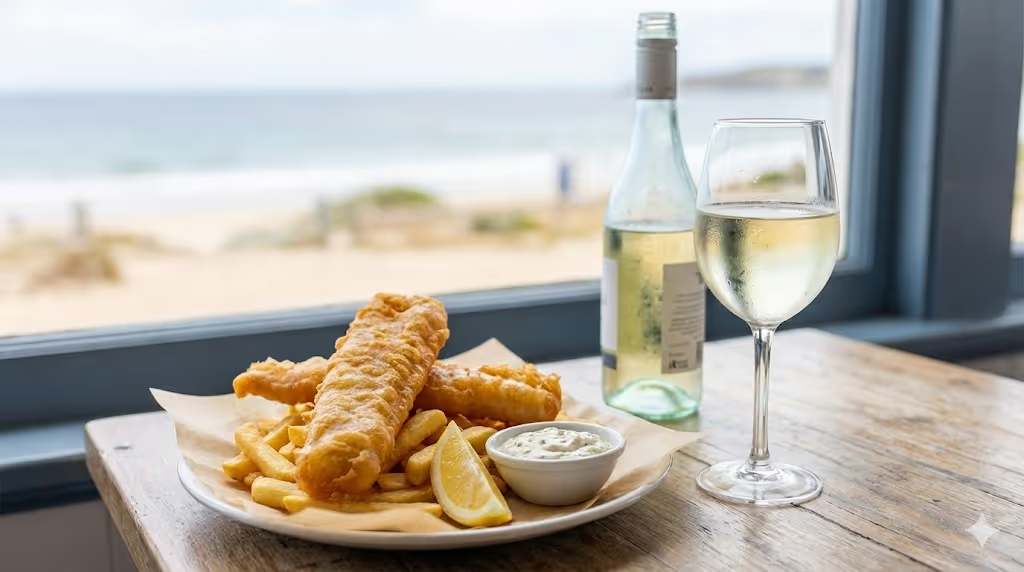
Both wines are built for food, and the split follows the same sharp-versus-round logic as everything else. Albariño's job is cutting through things, so it belongs with anything briny, fried or squeezed with lemon. Oysters, shrimp cocktail, ceviche, sushi, salt cod and fritto misto all sit naturally with it, and the wine's acidity does the same work a wedge of lemon would.
Vermentino's job is complementing rather than cutting, so it goes with olive oil, herbs and gentle richness. Pesto is the classic Ligurian pairing and it's genuinely hard to beat, along with grilled fish, roast chicken with rosemary, artichokes, and pasta with clams. The slight bitterness on the finish lines up with green vegetables that fight most wines, which is why Vermentino handles asparagus and artichoke better than almost any other white.
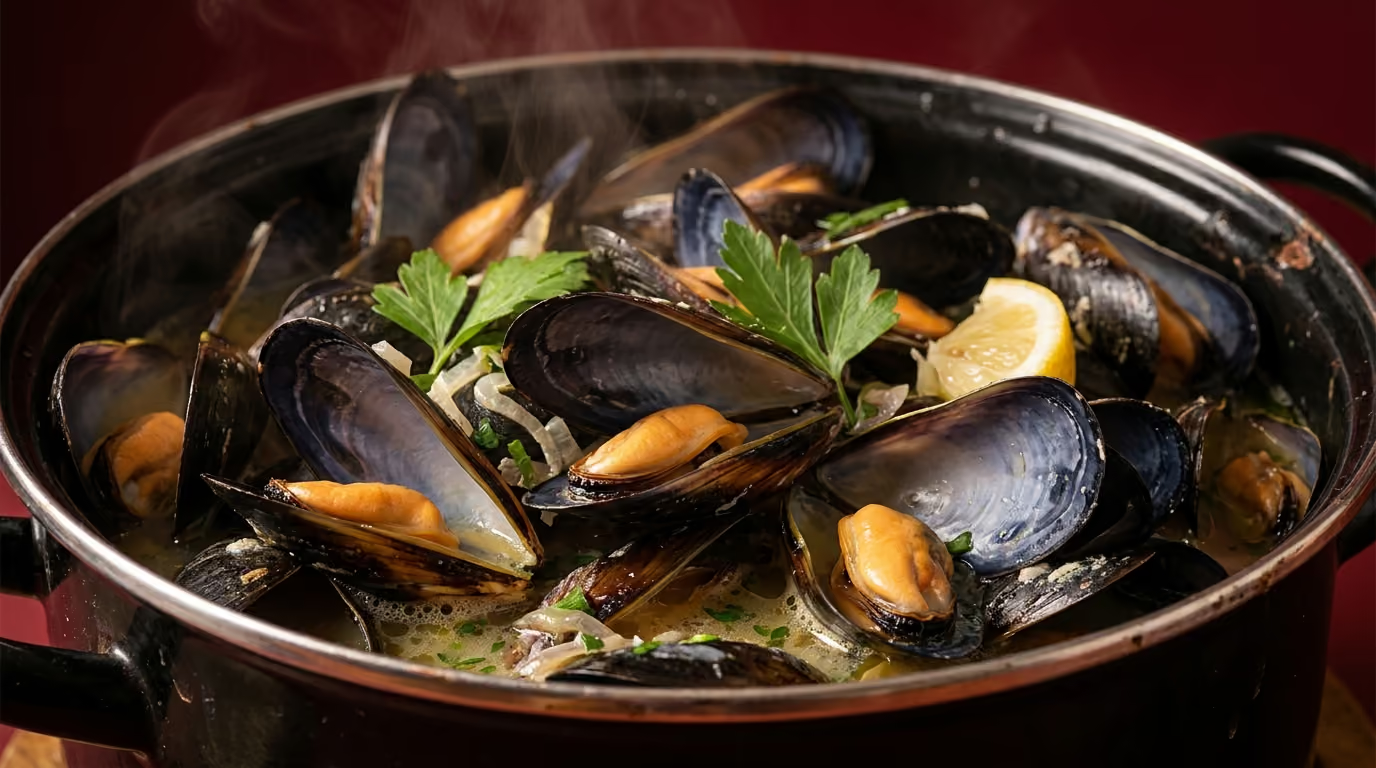
Shellfish is the one area where both work and the choice is genuinely yours, though they do different things: Albariño refreshes between bites while Vermentino sits alongside the dish. Our guide to choosing wine for shellfish breaks that down by specific dish if you're cooking rather than ordering.
Ordering either one in a restaurant is straightforward once you know the phrasing. Asking for something dry, crisp and unoaked gets you into the right neighbourhood on almost any wine list, and mentioning Albariño or Vermentino by name signals that you're comfortable outside the obvious choices. If wine lists tend to overwhelm you, our piece on reading a wine list without stress covers the structure most of them follow.
How cold should they be, and when does each one stop working?
Serve both between 45 and 50 degrees Fahrenheit, which is roughly 20 minutes out of the fridge rather than straight from it. Ice-cold temperatures flatten both wines and hide exactly the details you paid for, and the salinity in Albariño and the herbal notes in Vermentino only really show up once the glass warms a little. Use a normal white wine glass with some room in the bowl instead of a small tulip, since both wines have more aromatic detail than their price suggests.
Being honest about limits matters as much as knowing the strengths. Neither wine has the body to stand up to red meat, heavy cream sauces or anything smoky off a barbecue, and both get bullied by serious chilli heat. Vermentino in particular lacks the acidity to cope with sharply pickled or vinegary dishes, which is where Albariño's extra bite gives it the advantage. Neither grape improves with age in any useful way, so a ten-year-old bottle of either is a curiosity rather than a treat.
An opened bottle of either will hold up for two or three days in the fridge with a stopper in it, losing a little of its lift each day. Both are also good candidates for drinking over a long lunch, since they stay pleasant as they warm in a way that heavily oaked whites do not.
Common questions about Albariño and Vermentino
Is Albariño or Vermentino sweeter? Neither is sweet in any standard bottling, and both are made in a fully dry style. Albariño can read as slightly more sour because of its higher acidity, while Vermentino's rounder texture sometimes makes people describe it as sweeter even though the sugar level is essentially the same.
Is Vermentino the same as Pinot Grigio? They're different grapes, though they're often shelved together as easy Italian whites. Vermentino has noticeably more flavor, more texture and that bitter almond finish, while most inexpensive Pinot Grigio is deliberately neutral.
Which is better with oysters, Albariño or Vermentino? Albariño is the better oyster wine, since its high acidity and saline finish match the brine directly. Vermentino works but feels slightly soft against something that raw and salty.
How long does Albariño or Vermentino last after opening? Both keep for two to three days in the fridge with a stopper. The fruit fades first and the acidity holds, so day three tastes leaner rather than spoiled.
Is Alvarinho the same as Albariño? Yes, Alvarinho is the Portuguese name for the same grape, most often seen on Vinho Verde labels. Portuguese versions tend to be slightly leaner and occasionally have a light spritz.
What is Rolle wine on a French label? Rolle is the French name for Vermentino, used mainly in Provence where the grape mostly goes into rosé blends rather than being bottled on its own. Seeing Rolle on a label means you're drinking Vermentino under a different name.
How to make the call tonight
Pick Albariño when the food is raw, briny or fried and you want the wine to cut through it, and pick Vermentino when the food involves olive oil, herbs or green vegetables and you want the wine to sit alongside it. If there's no food involved at all and you're just pouring a glass, the question is simply whether you like your whites sharp or smooth, because that preference predicts your answer better than any tasting note will.
Both grapes reward buying the most recent vintage on the shelf and spending a few dollars more than the cheapest option, which is unusual in wine and worth taking advantage of. Start with Terras Gauda around $14 or Sella & Mosca La Cala around $16, drink them a week apart with similar food, and you'll know which side you're on faster than any comparison chart can tell you.
Sommy learns which way you lean from the bottles you rate, so the next time you're choosing between two unfamiliar coastal whites the recommendation already accounts for it. You can scan a shelf or a wine list with Sommy and get an answer built around your own taste rather than a general description of the grape.