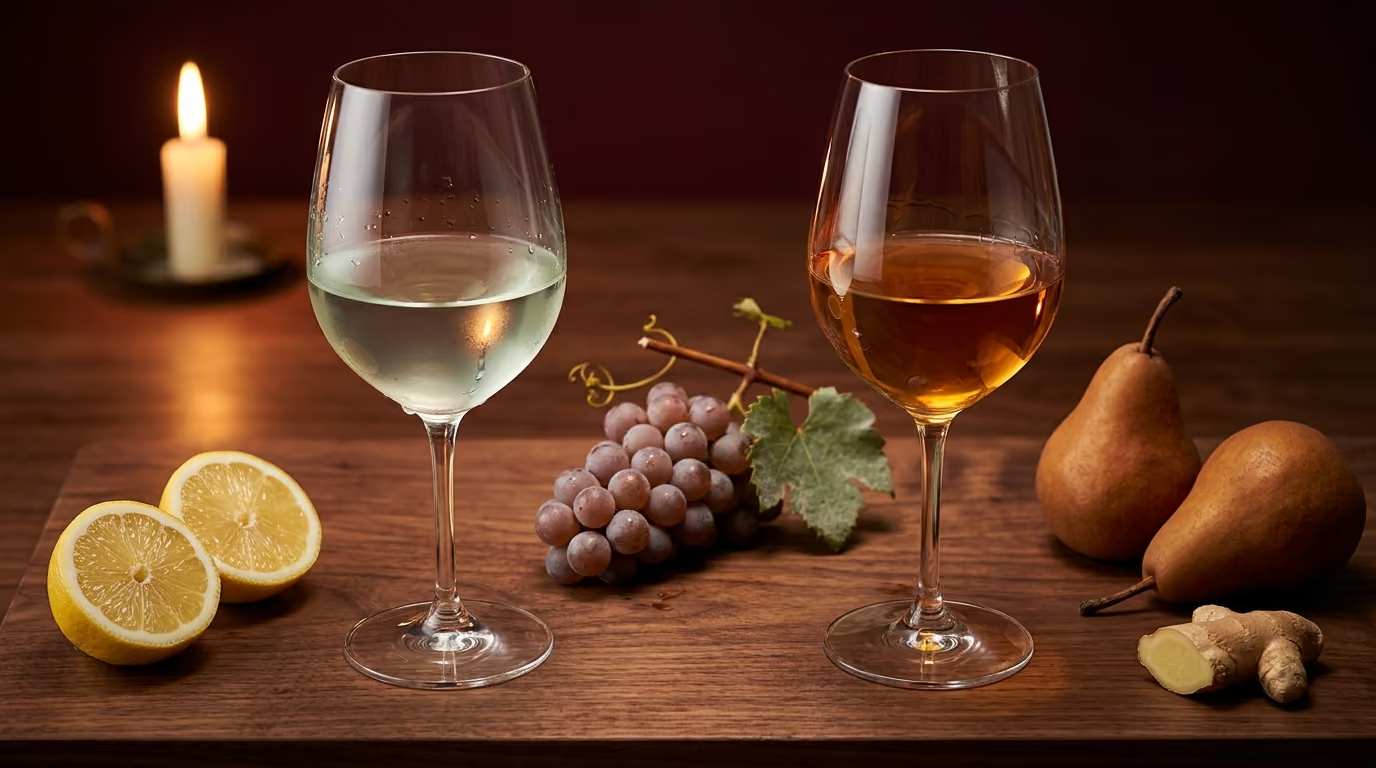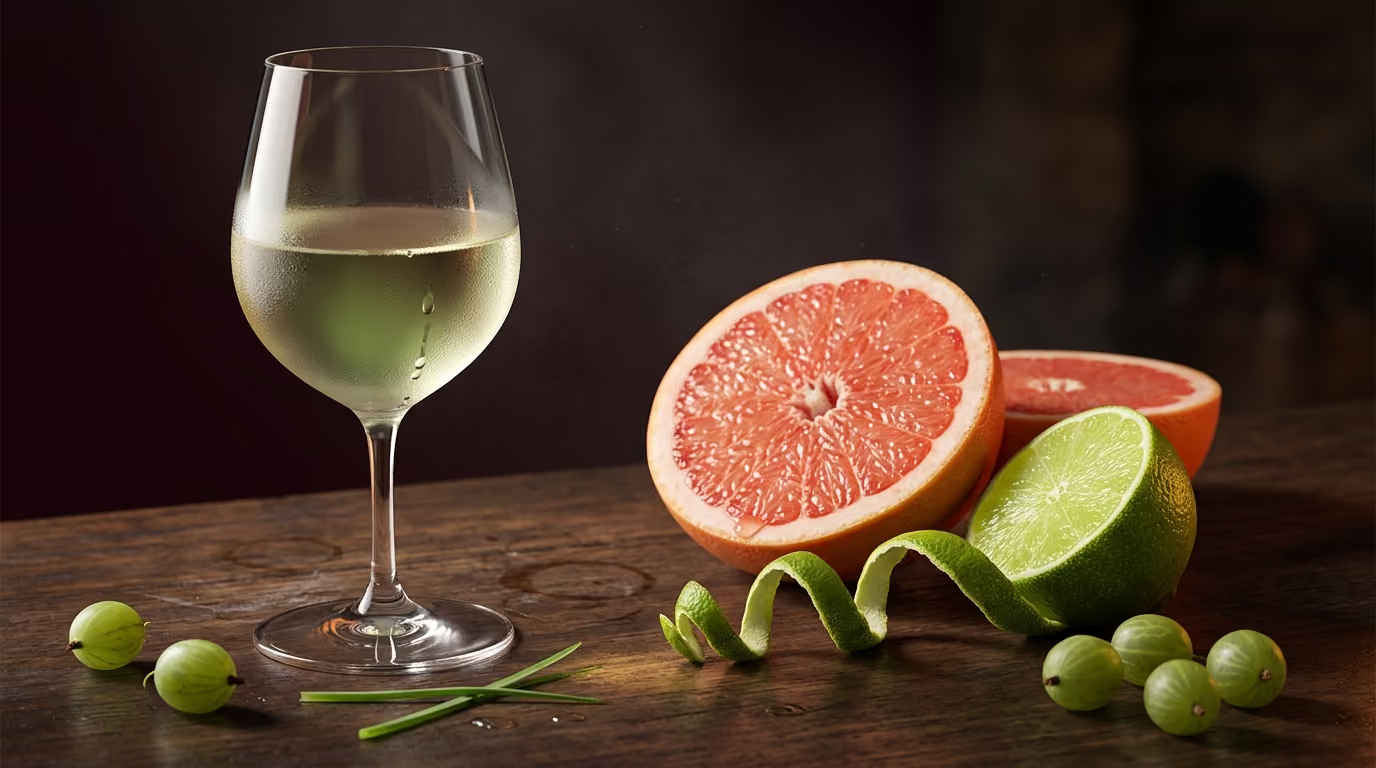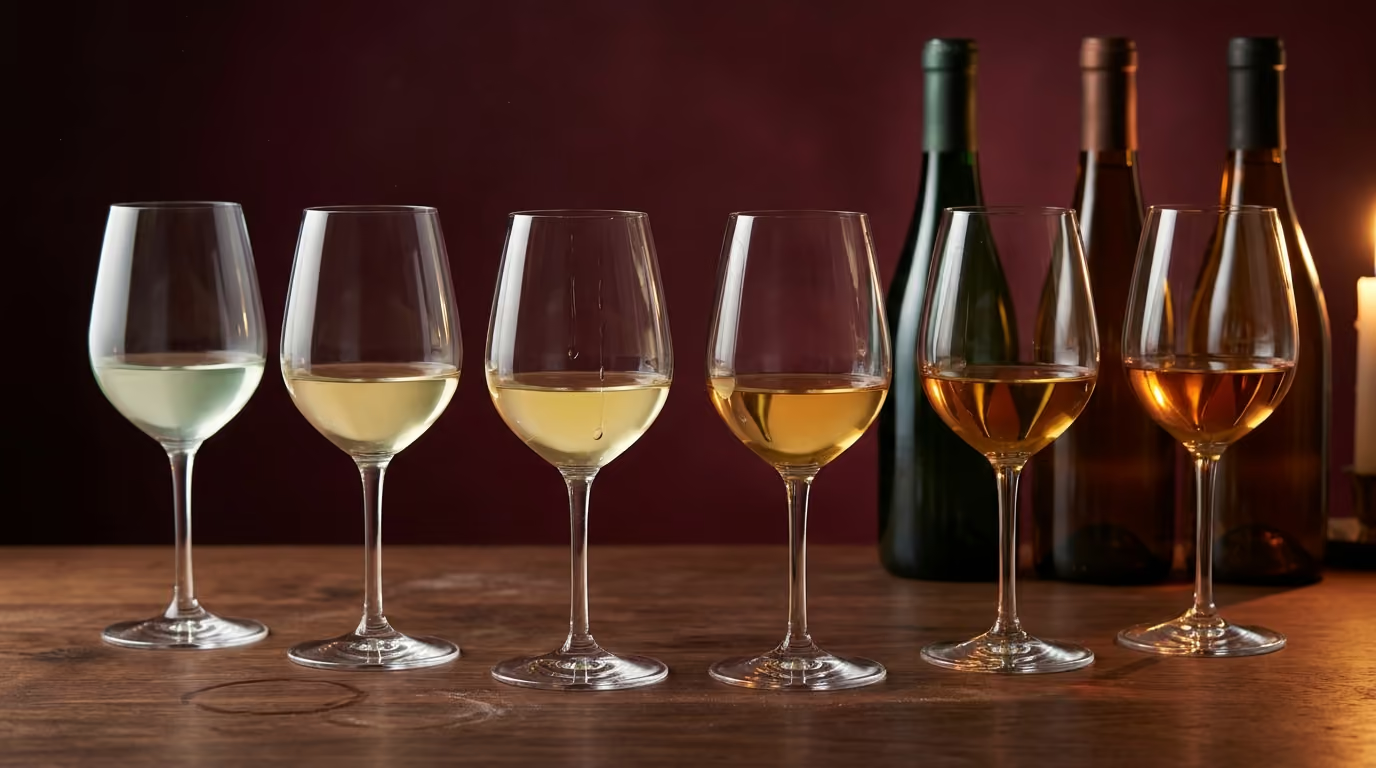
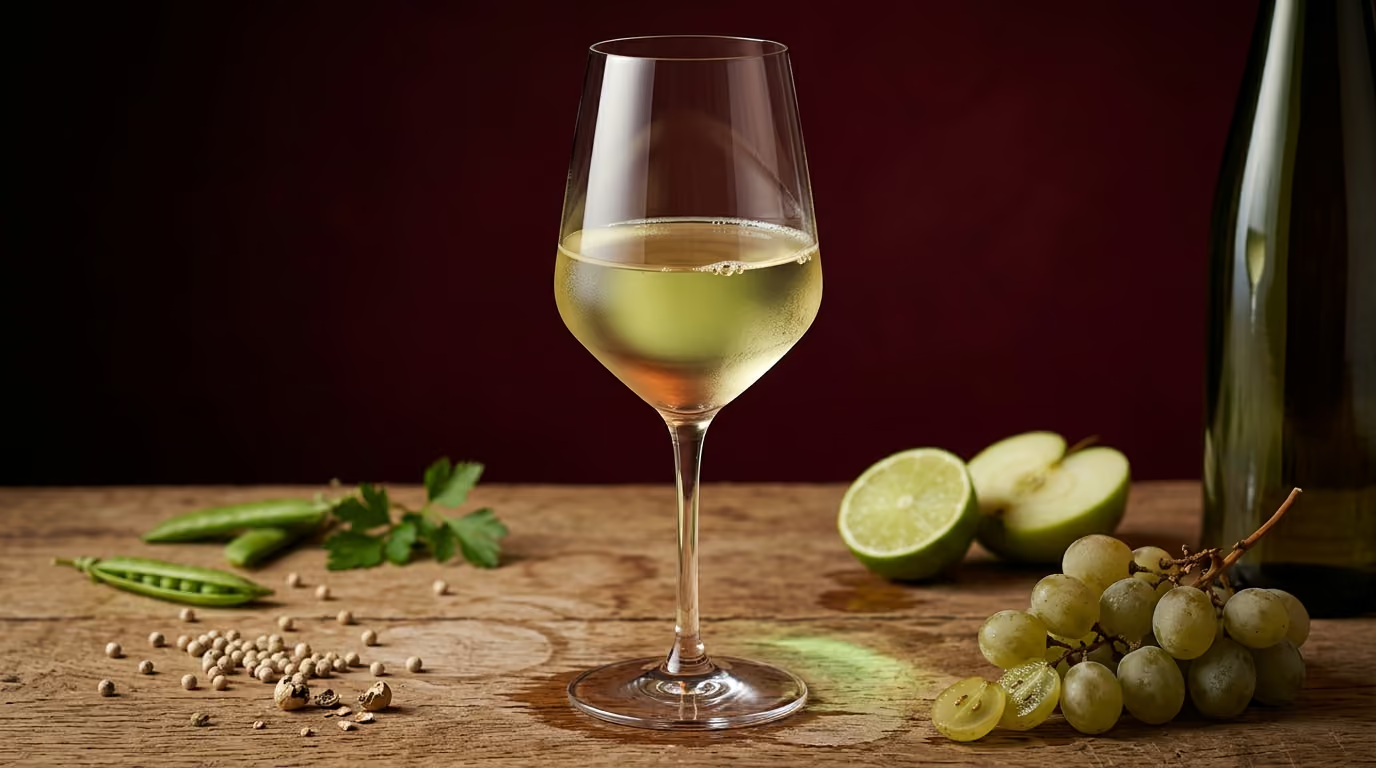
Grüner Veltliner tastes dry, sharply fresh and citrus-led, with green apple, lime and a savory herbal edge, and often a snap of white pepper on the finish. If you already enjoy dry Sauvignon Blanc, Chablis, or a Pinot Grigio you wish had more flavor, you will almost certainly like it. If you reach for buttery oak, obvious sweetness or loud tropical fruit, this is the wrong grape for you. It is Austria's signature white, and its real skill is sitting quietly next to food rather than shouting from the glass.
What does Grüner Veltliner actually taste like?
Start with what it is not doing, which is anything sweet. Most Grüner is bone dry, and the small amount of residual sugar some bottles carry is buried under the acidity, so it reads as fresh rather than fruity-sweet. The body sits somewhere between light and medium in the everyday bottles, which is roughly where Pinot Grigio lives.
The fruit is citrus first: lime, lemon peel, grapefruit and green apple, sometimes with pear behind them. Wine Folly's grape guide lists starfruit, gooseberry and crushed gravel among its primary flavors, which is a good description of how green and mineral the lighter bottles taste. Alongside all of that runs a savory, vegetal streak that is unusual in a white wine, closer to snap pea, green bean, radish or lentil than to fruit at all.
Then there is the finish, which is where the pepper lives. It arrives after the fruit fades and it tastes like cracked white pepper over cucumber, not like chili heat. That combination of citrus, green savoriness and pepper is the whole signature, and nothing else on the white shelf does quite the same thing.
Is the white pepper note always there?
It is not, and any guide that promises it is overselling the grape. The peppery aroma comes from a compound called rotundone, the same one responsible for the pepper note in Syrah, and how much of it a wine carries depends on the vineyard site, the vintage and how ripe the grapes got. Cooler sites and cooler years show it most.
Master Sommelier Tim Gaiser makes the same point at length in his own tasting notes on the grape, where he treats the pepper as a frequent marker rather than a guaranteed one. Riper, warmer-vintage bottles often show almost none of it, replacing the pepper with peach, apricot and melon instead.
This matters when you are buying rather than reading. If pepper is the thing you want, a lighter, cheaper bottle from a cool region is more likely to deliver it than an expensive, powerful one. Ripeness trades the pepper away for weight.
Will you like Grüner Veltliner?
The fastest way to decide is to compare it against a wine you already drink, since taste transfers across grapes better than any tasting note ever will. Grüner sits in the dry, high-acid, savory corner of the white world, so your existing habits tell you almost everything.
You will probably love it if you drink dry Sauvignon Blanc and prefer the citrus and herb side of it to the tropical side. You will also get on well with it if you drink dry Riesling but want less floral perfume, or if Pinot Grigio has always felt slightly too plain and you want the same freshness with more going on. Chablis and unoaked Chardonnay drinkers are the fourth natural group, since crispness matters more to them than oak does.
You will probably not enjoy it if you like creamy, oaked whites, if you prefer a hint of sweetness, or if you want a wine that smells strongly of tropical fruit. None of those are what this grape does, and no amount of price will change that.
How does it compare to Sauvignon Blanc and Riesling?
Sauvignon Blanc is the loud one. It jumps out of the glass with grass, gooseberry, grapefruit and sometimes passionfruit, and its aromatics are the point of the wine. Grüner smells calmer and more restrained, and its interest is savory rather than aromatic, so the pepper and the green-vegetable character do the work the perfume does in Sauvignon Blanc. Choose Sauvignon Blanc when you want a wine that announces itself, and Grüner when you want one that sits beside dinner. Our comparison of Sauvignon Blanc's taste covers the other side of that trade in more detail.
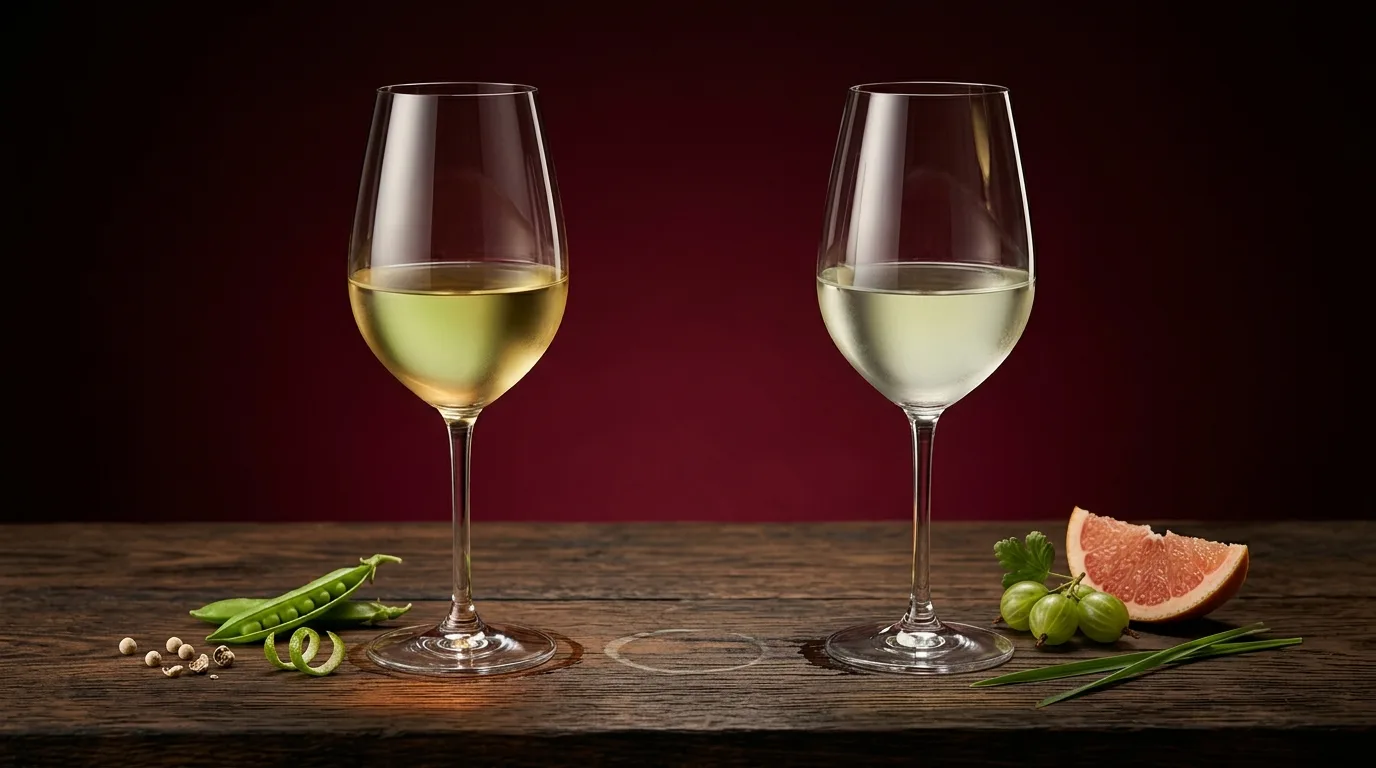
Riesling is the trickier comparison, because the two share a lime-driven acidity that can make them taste related. The difference is that Riesling is floral and peachy where Grüner is peppery and green, and Riesling spans everything from bone dry to genuinely sweet while Grüner is reliably dry. That reliability is worth something at a wine list, and it means you never need to work out where a bottle sits on a sweetness scale the way our guide to spotting a dry Riesling has to.
Against Pinot Grigio, Grüner simply has more flavor for the same money. The texture and the weight are similar, the acidity is higher, and the savory finish gives you something to think about that most Pinot Grigio does not attempt.
Why does one bottle taste light and another taste rich?
Because the grape covers an enormous range of ripeness, and where it grows decides which end you get. It is comfortably Austria's most planted variety, and the national wine board Austrian Wine puts it at 14,296.41 hectares, or 32.3 percent of the country's total area under vine. The great majority of that sits in Niederösterreich, in regions like Weinviertel, Kamptal, Kremstal and the Wachau.
Cooler, higher vineyards give lean wines with lime, herbs and firm acidity. Warmer sites, deeper loess soils and older vines give riper fruit, more alcohol and a broader, rounder feel that some people find surprising in a grape they think of as sharp. The wine is still dry in both cases, which is the constant across the whole range.
Winemaking then adds a second layer. Most Grüner is fermented in stainless steel and bottled early, which keeps it clean and snappy, and that is the version you will meet most often. Leaving the wine on its spent yeast for longer, or aging it in old neutral casks, softens the edges and builds texture without adding any vanilla or toast. New oak is rare and generally not the point.
The grape's parentage is worth a paragraph if you like that sort of thing, mostly because it is only half solved. Austrian Wine describes Grüner as most probably a natural crossing involving Traminer, with the second parent still unconfirmed, though it is thought to be a century-old vine found at Sankt Georgen in Burgenland and named after the village it was discovered in. Wine Folly and several other guides state that second parent as settled fact, so the Austrian board's own hedge is the safer version to repeat.
What do Steinfeder, Federspiel and Smaragd mean?
These three words are the most useful shortcut on any Austrian wine list, and almost every guide describes them slightly wrong. They are not Austrian wine law and they do not appear across the country. They are registered trademarks belonging to Vinea Wachau, an association of Wachau growers, and only member wineries may use them.

What they tell you is weight, measured through alcohol. Vinea Wachau's own rules put Steinfeder at up to 11.5 percent alcohol by volume, Federspiel at no more than 12.5 percent, and Smaragd at 12.5 percent or above. All three categories must be dry, made without any oak influence, and grown entirely in the Wachau.
| Term | What it tastes like | Best moment |
|---|---|---|
| Steinfeder | Light, fragrant, brisk, up to 11.5 percent | An aperitif or a light lunch |
| Federspiel | Fresh and medium-bodied, up to 12.5 percent | Almost any dinner |
| Smaragd | Riper, denser and longer, 12.5 percent and above | A substantial, richer meal |
Federspiel is the one to reach for if you only remember one of them, since it has enough body for dinner without feeling heavy. And Smaragd does not mean sweet, which is the most common misreading of the three: it means the grapes hung longest and the wine has more weight and alcohol, while the sugar stays gone.
Separately from all of this, the Wachau now also runs a DAC origin system with three tiers, Gebietswein for regional wines, Ortswein for village wines, and Riedenwein for single vineyards. That pyramid tells you where the grapes came from. The Vinea words tell you how heavy the wine is. Seeing both on one label is normal and they are answering different questions.
What food does Grüner Veltliner go with?
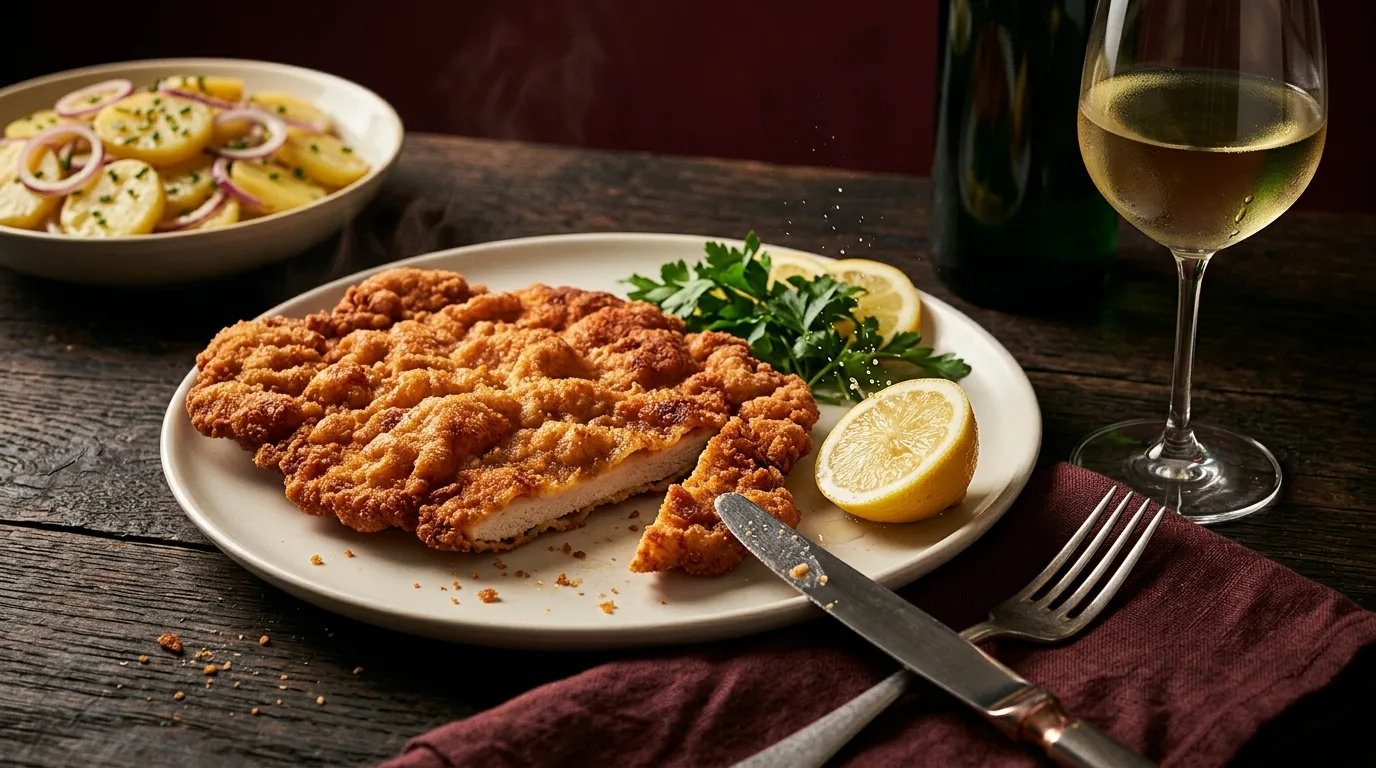
Almost anything fried, and that is the first thing to know about it. High acidity works on rich food the way a squeeze of lemon does, which is why Wiener Schnitzel is the classic pairing and why tonkatsu, fried chicken and tempura all work just as well.
Its second talent is vegetables that ruin other wines. Asparagus and artichokes make a lot of whites taste flat or metallic, and Grüner's own green, peppery character meets them on their own terms instead of fighting them. Our notes on asparagus wine pairing without metallic notes explain the mechanism, and Grüner is one of the few bottles that needs no special handling there.
Beyond that it handles sushi, seafood, herby salads, roast chicken and pork cutlets without complaint. Spicy food is the one area to think about, because a very dry, peppery bottle can make chili heat feel sharper. Pick a riper example with peach or melon notes for Thai and Vietnamese dishes, and serve it properly cold, which our guide to wine serving temperatures puts at the cooler end of the white range for the lighter styles.
How do you order or buy it without guessing?
At a restaurant, describe the wine rather than naming the grape. Asking for a dry, crisp white with citrus and a little pepper, nothing buttery or heavy, gives a server a target they can actually hit, and it works even when the list has no Grüner on it at all. Our guide to ordering wine at a restaurant has more phrasing that gets you a good glass without a performance.
On a shelf, three clues get you the right bottle. Austria on the label is the first, since the vast majority of good Grüner comes from there. A Wachau term or a regional name is the second, and Weinviertel or a basic Austrian bottling is the reliable choice for crisp, uncomplicated drinking. A recent vintage is the third, because the lighter styles are best young while the fruit is still bright.
Grüner is also one of the grapes most likely to leave you standing in an aisle holding a bottle whose label tells you nothing about how it will taste. That is the moment Sommy's Fit Check is for: name or scan the bottle in your hand and it tells you whether that particular wine suits your taste, rather than whether the grape does in general.
Frequently asked questions
What does Grüner Veltliner taste like?
Grüner Veltliner tastes dry and crisp, with lime, lemon peel, green apple and grapefruit up front. Most bottles add a savory, herbal note and a peppery finish, which is what separates it from other dry whites.
Is Grüner Veltliner sweet?
Grüner Veltliner is almost always dry or very dry, even in the riper styles. A warmer-vintage bottle can taste of peach or melon and feel rounder in the mouth, though it still has little or no sugar in it.
Is Grüner Veltliner similar to Sauvignon Blanc?
The two share citrus and high acidity, so they suit similar meals and similar drinkers. Sauvignon Blanc is louder and more aromatic, while Grüner is quieter, more savory and carries a white pepper note that Sauvignon Blanc lacks.
What does Smaragd mean on a Grüner Veltliner label?
Smaragd is a Vinea Wachau trademark for the ripest and fullest style, made from grapes picked latest and bottled at 12.5 percent alcohol or more. It signals weight and concentration rather than sweetness, and the wine is still dry.
Is Grüner Veltliner a good wine for beginners?
It is a very good starting point, because it is dry, food-friendly and rarely expensive. The savory pepper note also gives new drinkers something specific to notice, which is more useful than a wine that tastes pleasant and forgettable.
What is the best food to serve with Grüner Veltliner?
Fried food is the standout, with Wiener Schnitzel as the traditional match and tonkatsu or fried chicken working equally well. It is also one of the few wines that handles asparagus and artichokes without turning metallic.
Pouring your first bottle
Buy a Federspiel or a straightforward Weinviertel bottle, chill it properly, and drink it with something fried or something green. That combination shows you the grape at its most characteristic, and it costs very little to find out whether the style is yours.
If you like what happens, the range opens up quickly from there. A Smaragd from the Wachau is a genuinely serious white wine with the weight to handle roast pork or a cream sauce, and it will still be dry, still be fresh, and still carry that peppery edge underneath the extra ripeness.