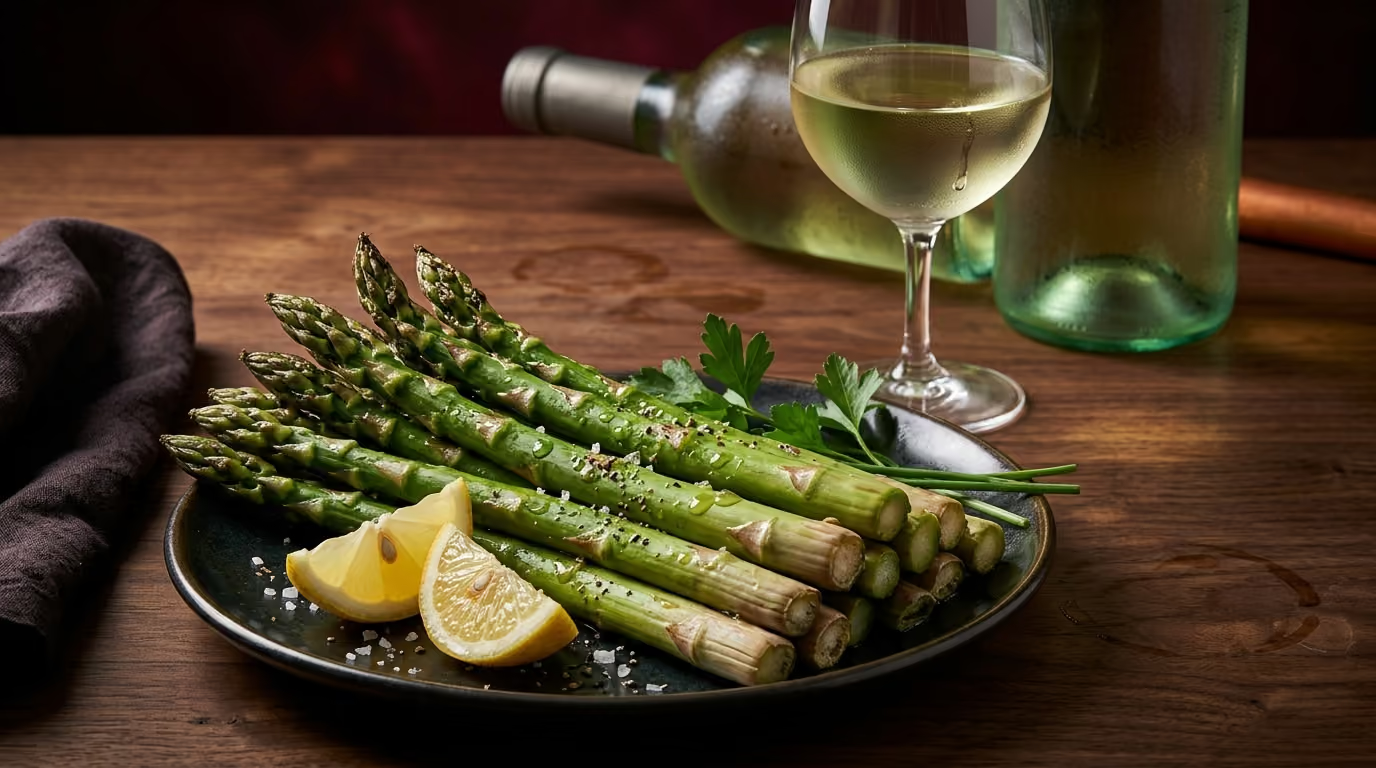
Pour a Sauvignon Blanc, a Grüner Veltliner, an Albariño or a dry sparkling wine with asparagus, and the metallic edge that ruins this pairing mostly disappears. All four are dry, high in acidity, and free of oak, which is the combination that keeps asparagus from turning your wine harsh and tinny.
Asparagus has a reputation as the vegetable that breaks wine, and the reputation is earned. It genuinely does make certain bottles taste like sucking on a coin. The good news is that the failure is predictable rather than random, so once you know which two or three things cause it, you can avoid them in about five seconds at the shelf.
Why does asparagus make wine taste metallic?
Asparagus turns wine metallic because of its sulfur chemistry. The vegetable contains asparagusic acid, a sulfur-bearing compound found in almost no other food, and when it breaks down it releases volatile sulfur compounds including methanethiol. Those compounds hit your palate at the same moment the wine does, and against the wrong wine they read as tinny, bitter or sour.
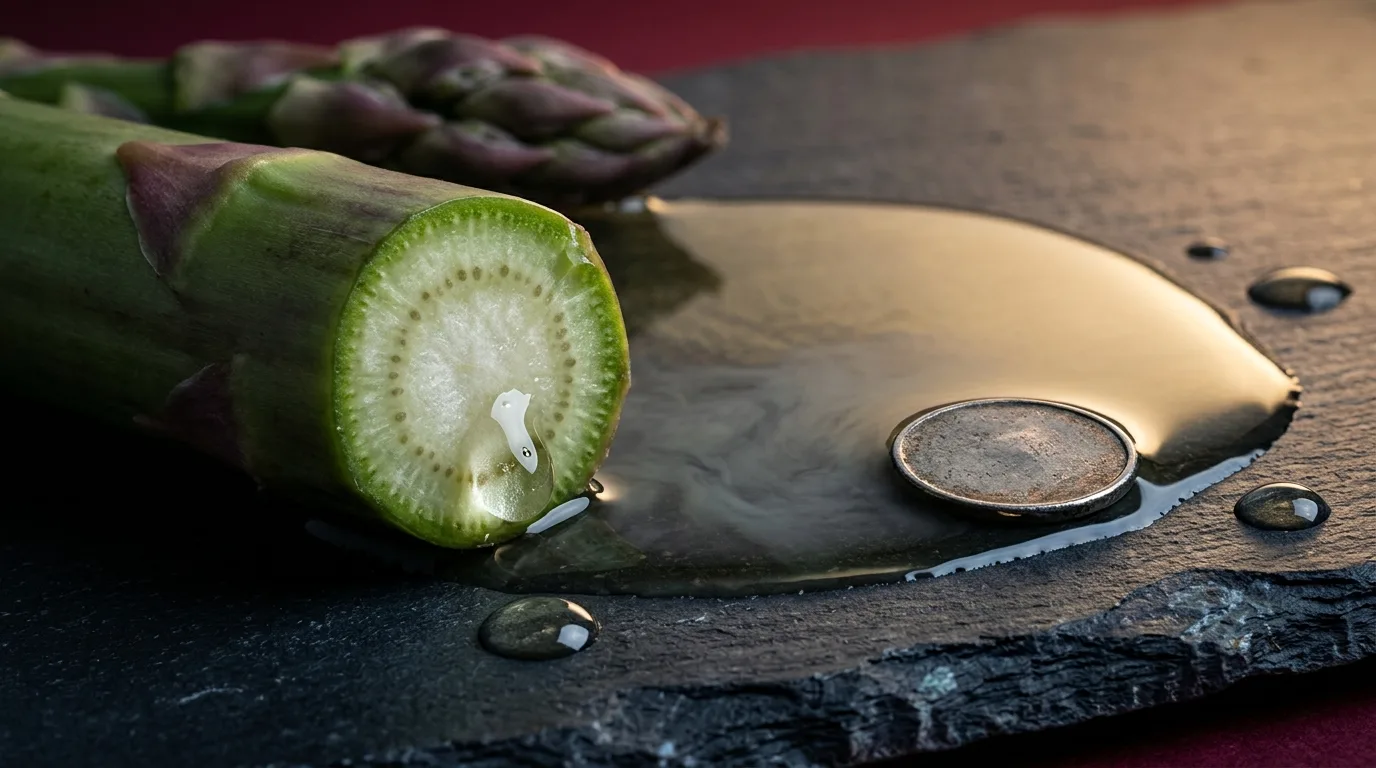
Chlorophyll and the vegetable's general green, grassy character add to the problem. Asparagus tastes emphatically of green things, and a wine with no green character of its own has nothing to meet that with, so the two flavors sit next to each other and argue rather than blending. This is why the pairing so often fails with a bottle that would be excellent alongside almost anything else.
Two wine features make it much worse. Tannin is the first, because tannin and sulfur compounds together produce a genuinely unpleasant bitter, vegetal result, which is why a big red is the single worst thing you can open here. Heavy oak is the second, since vanilla, toast and butter flavors have nothing in common with a green stalk and end up tasting clumsy beside it. High alcohol compounds both problems by making everything feel hotter and rougher on your tongue.
Acidity is the fix, and it's worth understanding why. A wine with brisk acidity keeps your palate refreshed between bites, so the sulfur note never has time to build up and settle in. It also matches the food in intensity instead of trying to overpower it. Our explainer on what acidity in wine actually does goes into how that freshness registers, and asparagus is close to a textbook case of it earning its keep.
Which wines actually work with asparagus?
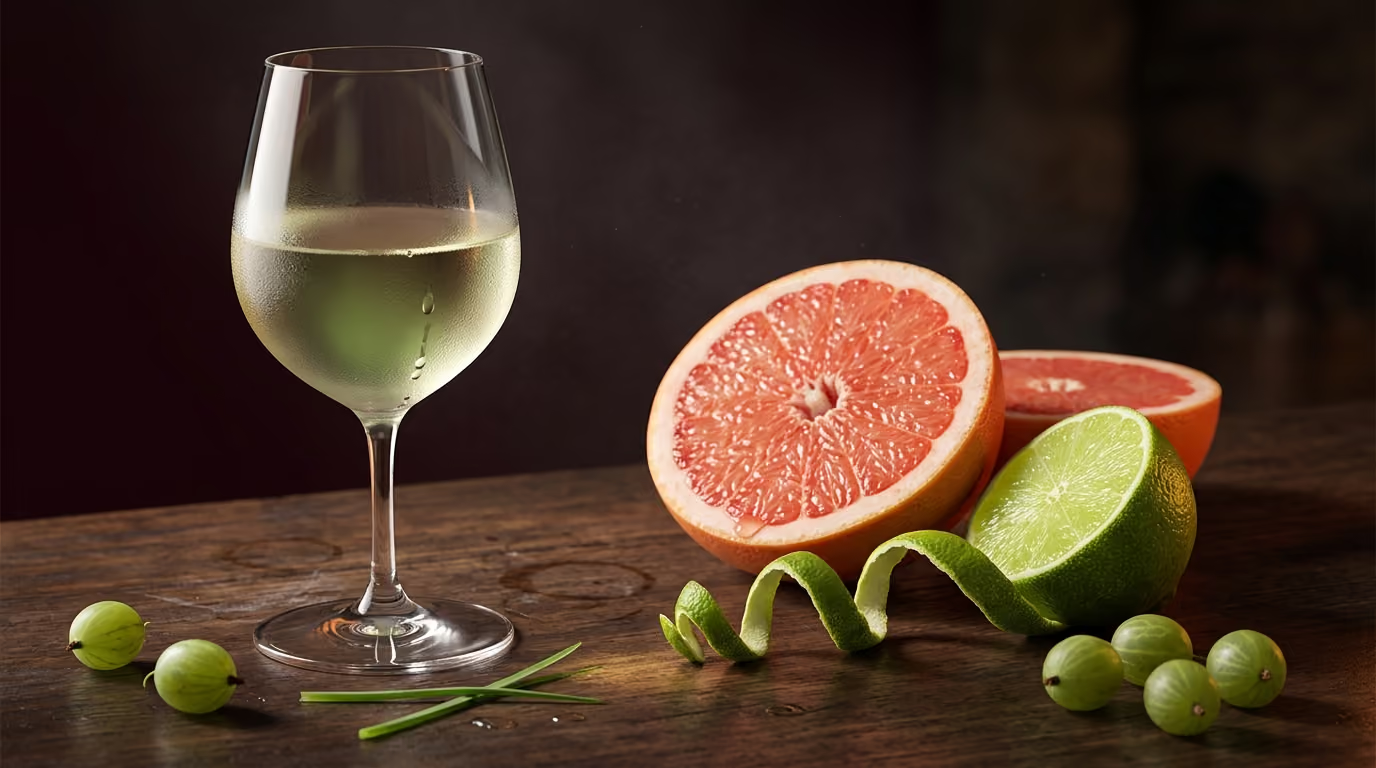
Sauvignon Blanc and Grüner Veltliner are the two safest bottles, and they work for a reason beyond acidity. Both grapes are naturally high in compounds called methoxypyrazines, the same family of aromatics that give green bell pepper and fresh-cut grass their smell. One of them, isopropyl methoxypyrazine, is described in the literature as smelling specifically of asparagus and peas.
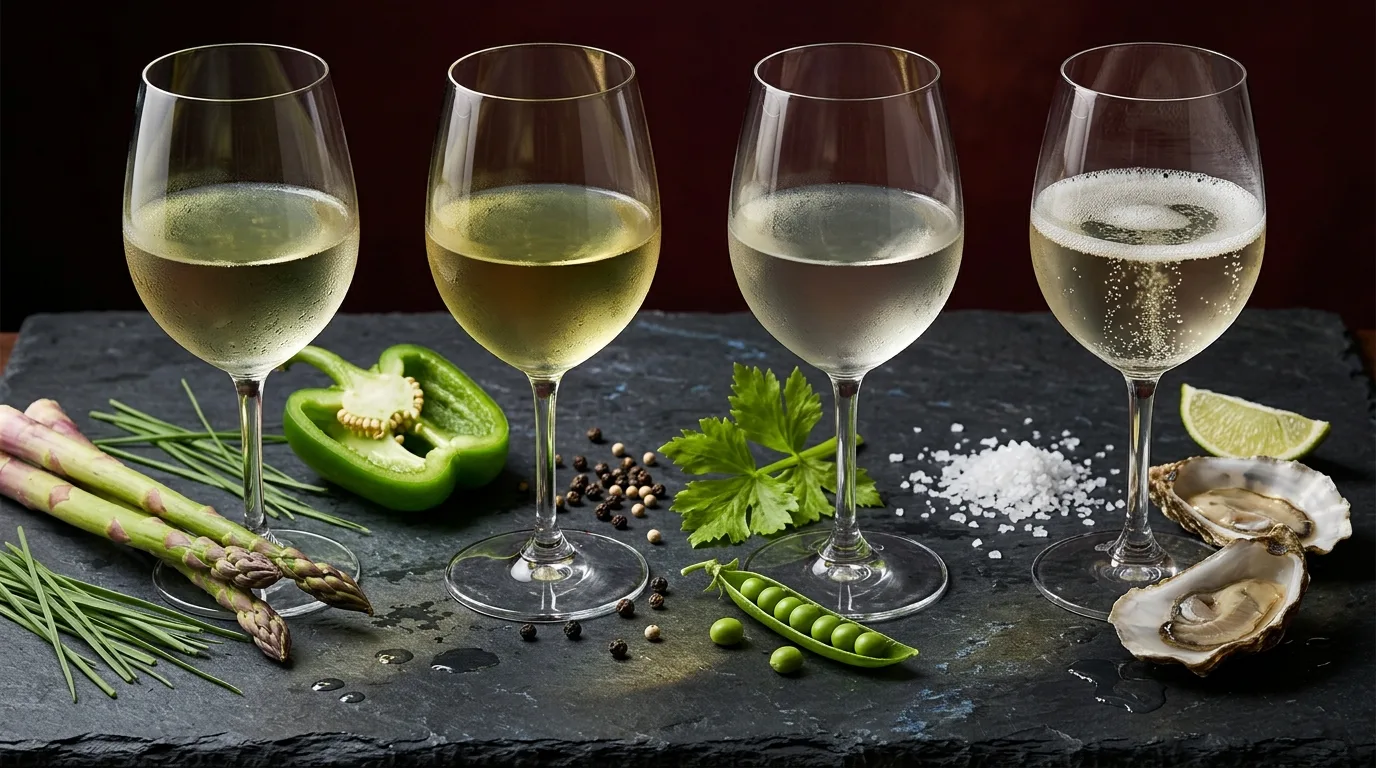
That means these wines aren't tolerating asparagus, they're echoing it. The green note in the glass and the green note on the plate line up and reinforce each other, which is a completely different mechanism from a wine simply being inoffensive. It's also why these two so reliably beat a neutral, high-acid white that has nothing green about it at all.
Beyond those two, a handful of other styles do the job well.
| What you're drinking | Why it works with asparagus | Best with |
|---|---|---|
| Sauvignon Blanc, Loire or New Zealand | Green herbal aromatics echo the stalk, no oak, sharp acidity | Grilled or steamed spears with lemon |
| Grüner Veltliner | Peppery, savory, high acid, famously good with hard vegetables | Plain asparagus, asparagus with egg |
| Albariño | Saline coastal freshness, brisk acidity, zero oak | Asparagus with shrimp, crab or fish |
| Dry sparkling, brut or cava | Bubbles and acidity scrub the sulfur note off the palate | Hollandaise, quiche, anything rich |
| Muscadet or Picpoul | Lean, stony, faintly salty, deliberately neutral fruit | Asparagus vinaigrette, cold spears |
| Dry Riesling, German or Alsatian | High acidity with a lift of citrus and stone fruit | White asparagus, ham and asparagus |
The pattern running through all six is more useful than the list itself. Every one of them is dry, unoaked and high in acidity, and none of them is trying to be the biggest thing on the table. Asparagus rewards restraint, so the correct instinct is to pick the wine that gets out of the way rather than the one that impresses.
Dry Riesling deserves a specific mention because white asparagus is its home turf. In Germany and Alsace, where white asparagus season is close to a national event, Riesling and Silvaner are what actually gets poured, and both handle the milder, slightly bitter, more delicate character of the white stalks better than a grassy Sauvignon Blanc does. If you're not sure a bottle labeled Riesling will taste dry, our guide to finding a Riesling that really is dry covers the label clues.
How much does the sauce change things?
The sauce usually matters more than the asparagus, and that's the single most useful thing to know about this pairing. A plate of spears is a light dish, so whatever you pour over them becomes the dominant flavor and the real thing your wine has to answer to.
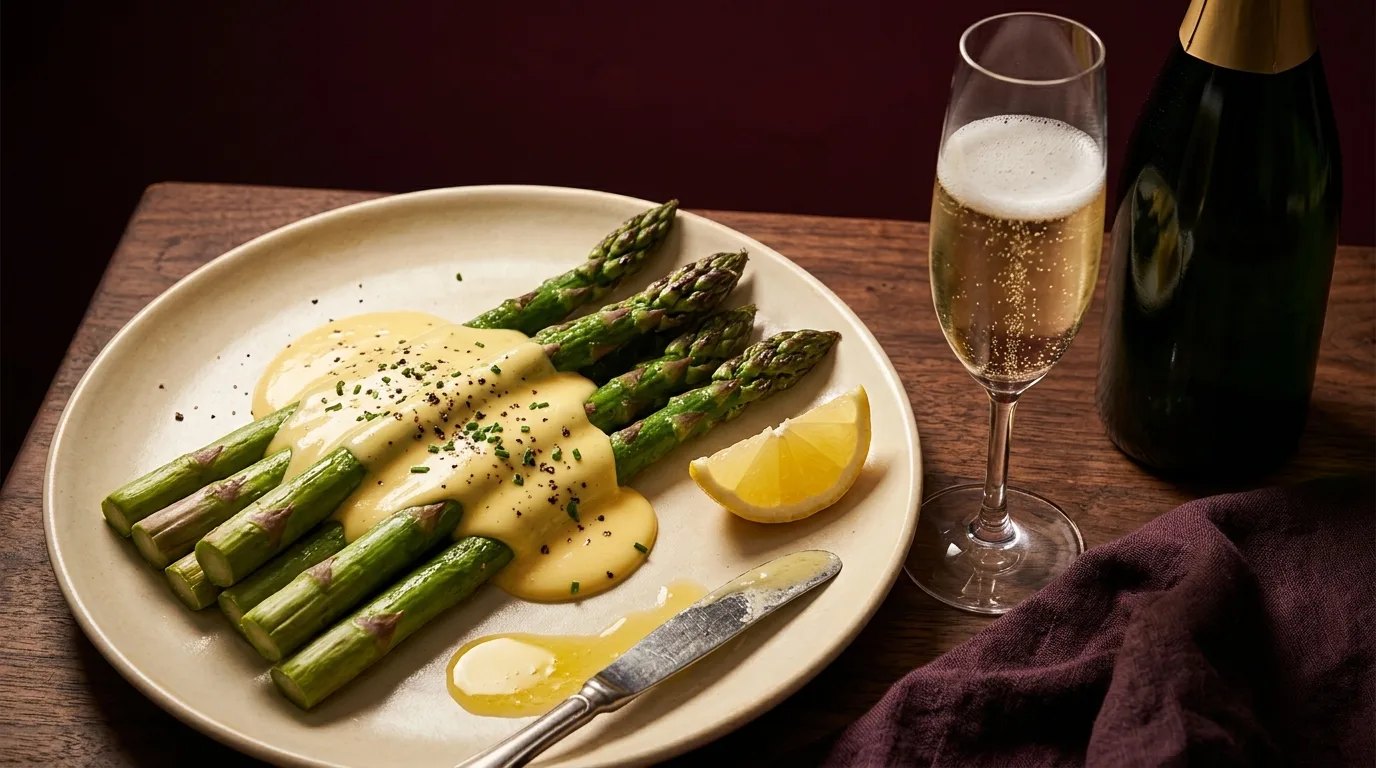
Lemon, olive oil and fresh herbs keep the dish in its lightest register, and there the sharpest wines shine. Sancerre, a New Zealand Sauvignon Blanc or a Picpoul will all feel like a squeeze of extra citrus over the plate. Butter and hollandaise push in the opposite direction, adding fat and richness, and there you want something with enough body to keep up while still holding acidity. Champagne and other dry sparkling wines are close to ideal for hollandaise, because the bubbles cut the egg-and-butter richness in a way a still wine can't quite manage.
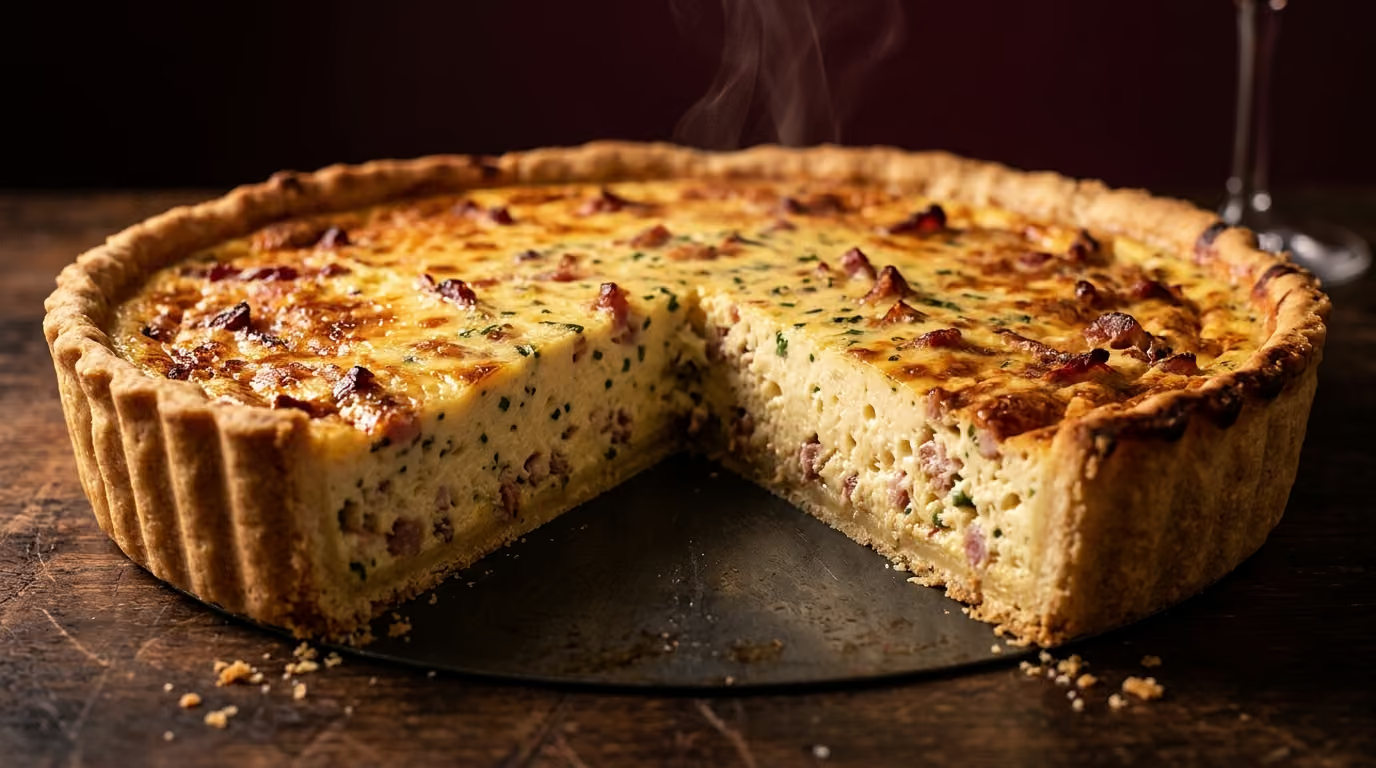
Parmesan, prosciutto and eggs are the three additions that quietly rescue a difficult pairing. Salt, fat and umami all soften the sulfur edge, so asparagus wrapped in prosciutto or topped with a fried egg is a far easier match than plain steamed spears. That's also why asparagus quiche works so well with wine when a bowl of boiled asparagus doesn't, and our quiche pairing guide covers the eggs-and-pastry version in full.
Char is the other big variable. Grilling or roasting asparagus caramelizes its sugars and adds smoke, which shifts the whole dish toward something warmer and less aggressively green. That opens the door to a fuller white like an unoaked Chardonnay or a dry rosé, and it's the one preparation where a light red becomes genuinely reasonable.
This is the moment a general guide runs out of road, because the honest answer depends on what's on your plate tonight rather than on asparagus in the abstract. Sommy's Pairing feature is built for exactly that: photograph the dish or paste the recipe, and it reads the sauce and the sides along with the vegetable instead of pairing to the headline ingredient. For a dish this sensitive to what's poured over it, that distinction is the whole game.
Can you drink red wine with asparagus?
You can, but only a specific kind, and only when the dish gives you a reason. A light, low-tannin red served slightly chilled works when asparagus has been charred on a grill or paired with bacon, mushrooms or an egg. Anything tannic will taste bitter and vegetal, and no amount of hoping will fix it.
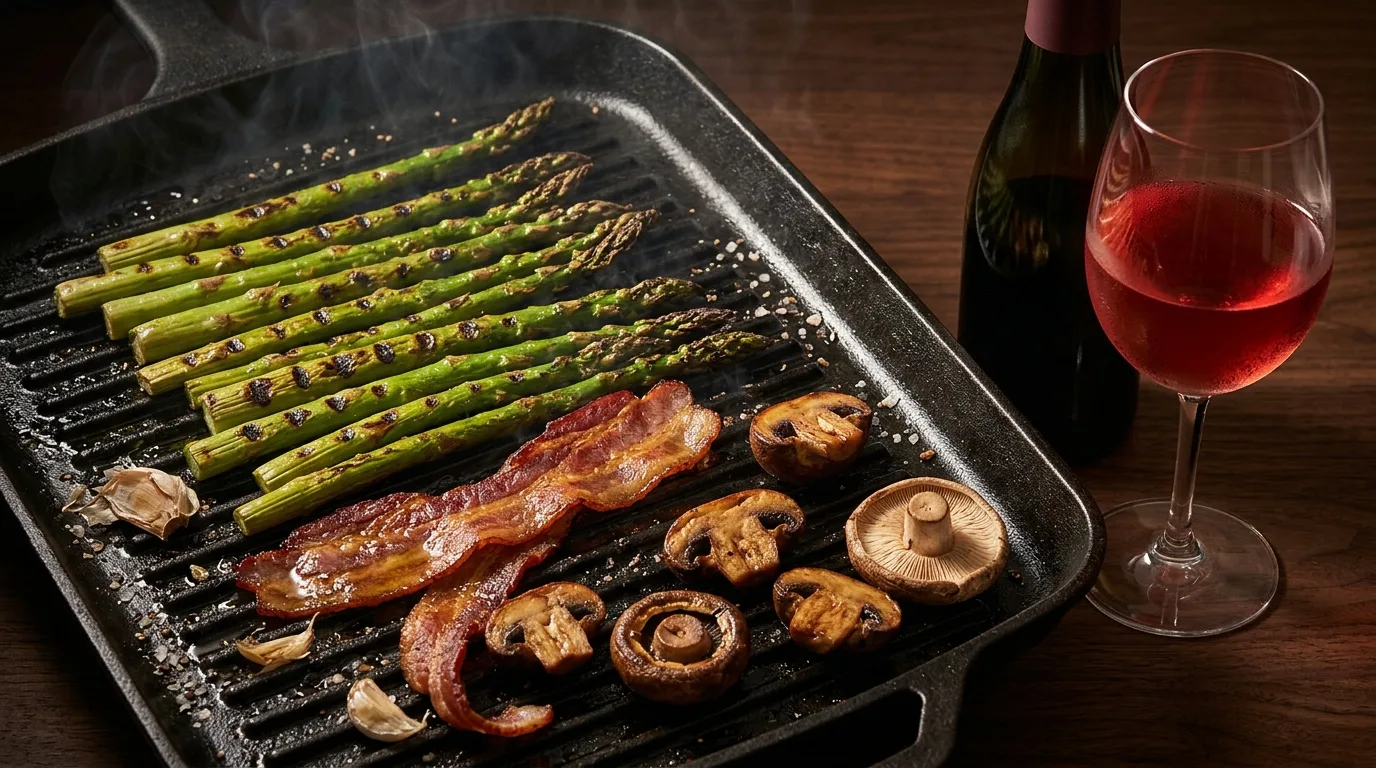
Gamay from Beaujolais is the first bottle to reach for. It's juicy, low in tannin, high in acidity and cheerful rather than serious, and fifteen minutes in the fridge makes it fresher still. A light Pinot Noir with no obvious oak does something similar with a bit more earth to it, which suits mushrooms particularly well. Cabernet Franc from the Loire is the third option and the most interesting one, since it carries its own green, leafy pyrazine character that echoes the asparagus the same way Sauvignon Blanc does.
What to avoid is simple and absolute. Cabernet Sauvignon, Malbec, Syrah, Nebbiolo and big red blends all bring firm tannin, and tannin plus asparagus sulfur is the exact combination that produces the metallic taste people complain about. Heavily oaked Chardonnay fails for a different reason but fails just as reliably, its butter and vanilla landing awkwardly against a green stalk.
If mushrooms are doing real work in the dish, treat them as the lead ingredient rather than the asparagus, because they change the arithmetic more than anything else on the plate. Our mushroom pairing guide explains why earthy reds and cooked mushrooms get along, and that logic overrides most of what's written above.
How do you pick a bottle at the shop or a restaurant?
Read the sauce before the vegetable, then choose the driest, freshest, least oaky thing available. That single sentence handles almost every asparagus dinner you'll ever face, and it works whether you're scanning a supermarket shelf or a restaurant list with forty bottles on it.
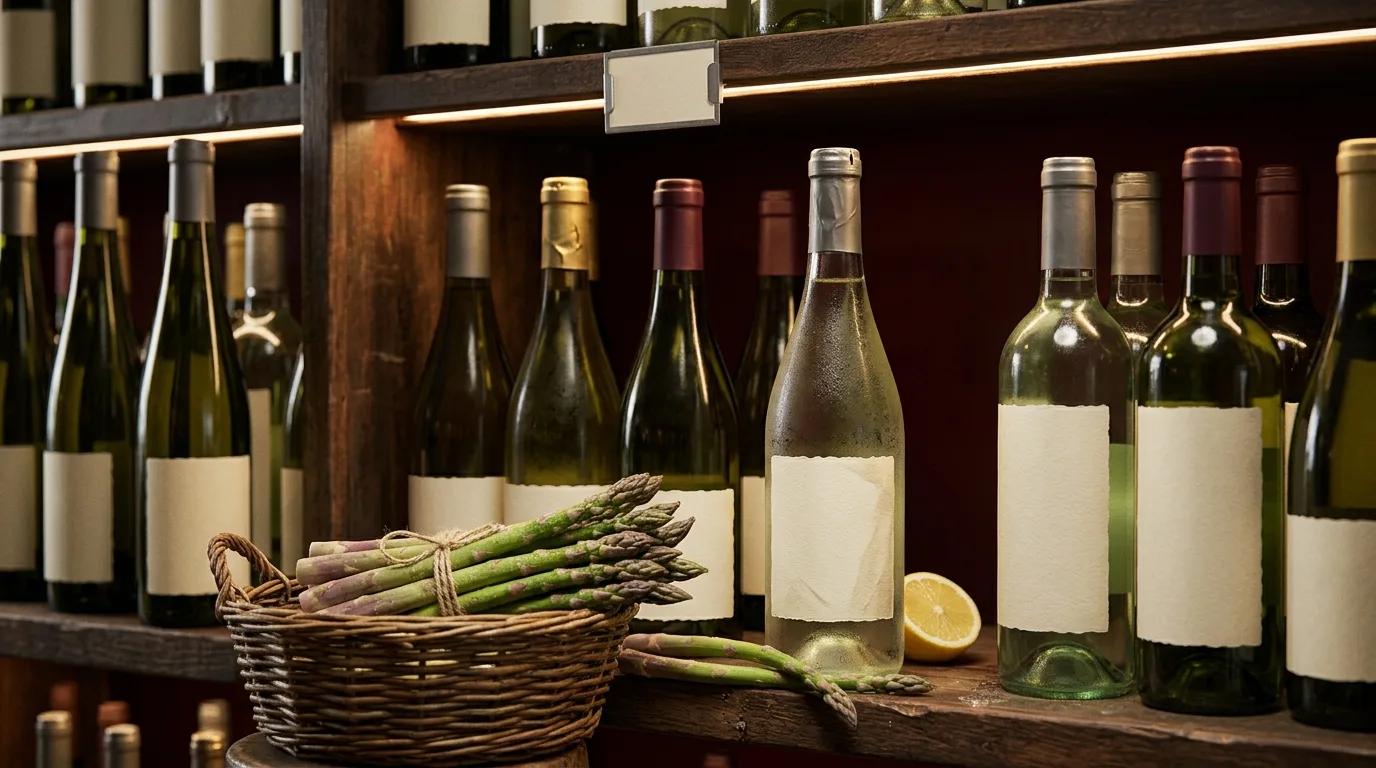
In a shop, ignore the poetic shelf copy and hunt for a small set of words. Dry, crisp, fresh, citrus, mineral and unoaked all point the right way. Buttery, vanilla, toasted oak, jammy, velvety and full-bodied all point the wrong way. Region is a faster filter than any tasting note: Sancerre and Pouilly-Fumé from the Loire, Grüner Veltliner from Austria, Albariño from Rías Baixas and Muscadet from the western Loire are all reliable, and none of them is expensive.
At a restaurant, describe what you want rather than naming a grape, since the list may not have the grape but will almost certainly have the style. Saying you'd like something dry, crisp and unoaked to go with asparagus gives a server real information to work with. If the only white by the glass is Chardonnay, ask whether it's unoaked, because that one question decides whether the pairing survives.
Serving temperature is worth a moment too. These wines belong properly cold, around 45 to 50 degrees Fahrenheit, since the chill sharpens their acidity and keeps the green notes crisp rather than heavy. The light reds mentioned above want a short chill as well, closer to 55 degrees, and our wine serving temperature guide has the rest of the numbers.
Frequently Asked Questions
Why does asparagus make wine taste metallic?
Asparagus contains asparagusic acid and other sulfur compounds that release volatile sulfur molecules when the vegetable is eaten. Against a tannic or heavily oaked wine, those compounds read as a tinny, bitter, metallic taste, and high-acid unoaked whites avoid the reaction almost entirely.
What is the best wine for asparagus?
Sauvignon Blanc and Grüner Veltliner are the two most reliable choices, because both carry green herbal aromatics that echo the vegetable rather than fighting it. Albariño, Muscadet and dry sparkling wine all work well too, and dry Riesling is the traditional answer for white asparagus.
Can I drink red wine with asparagus?
Only a light, low-tannin red, and ideally one served slightly chilled. Gamay, a light Pinot Noir or a Loire Cabernet Franc can work when the asparagus is grilled or served with bacon, mushrooms or egg, while any tannic red will taste bitter and metallic.
What wine goes with asparagus and hollandaise?
Dry sparkling wine is the strongest match, because the bubbles and acidity cut through the butter and egg yolk in a way still wines struggle with. A fuller unoaked white such as Chablis or a textured Albariño is the next best option if you'd rather not open something fizzy.
Does white asparagus need a different wine?
Yes, white asparagus is milder and slightly more bitter than green, so the grassy edge of Sauvignon Blanc can overwhelm it. Dry Riesling and Silvaner are the traditional German and Alsatian answers, and both handle the delicacy of the white stalks better.
Does the cooking method change the wine?
It changes it quite a lot. Steamed and raw asparagus stay at their greenest and want the sharpest wines, while grilling or roasting adds char and sweetness that suits a fuller white, a dry rosé or even a chilled light red.
The short list worth remembering
Asparagus doesn't need a clever pairing so much as it needs you to avoid three things: tannin, oak and high alcohol. Take those off the table and most of what remains will work, which turns a supposedly impossible match into one of the easier decisions in wine.
Keep four names in your phone for the next time this comes up. Sauvignon Blanc for lemon and herbs, Grüner Veltliner for plain spears, Albariño when there's seafood involved, and dry sparkling wine whenever butter or hollandaise appears. If the dish has been grilled and the meal has drifted toward bacon and mushrooms, a chilled Gamay is the one red worth the risk.