The best wine for quiche is a dry white with real acidity and a bit of body, which in practice means Alsace Riesling or Pinot Blanc for a quiche Lorraine and Sauvignon Blanc for a vegetable quiche. Crémant and Champagne work with either, and a light red like Beaujolais is a genuinely good idea with mushrooms or caramelized onion. Nearly every pairing list starts from the filling, which is the wrong end of the dish. The custard and the pastry are what stay constant in every quiche you'll ever eat, so they should pick the wine first, and the filling should adjust it.
Why does the custard matter more than the filling?
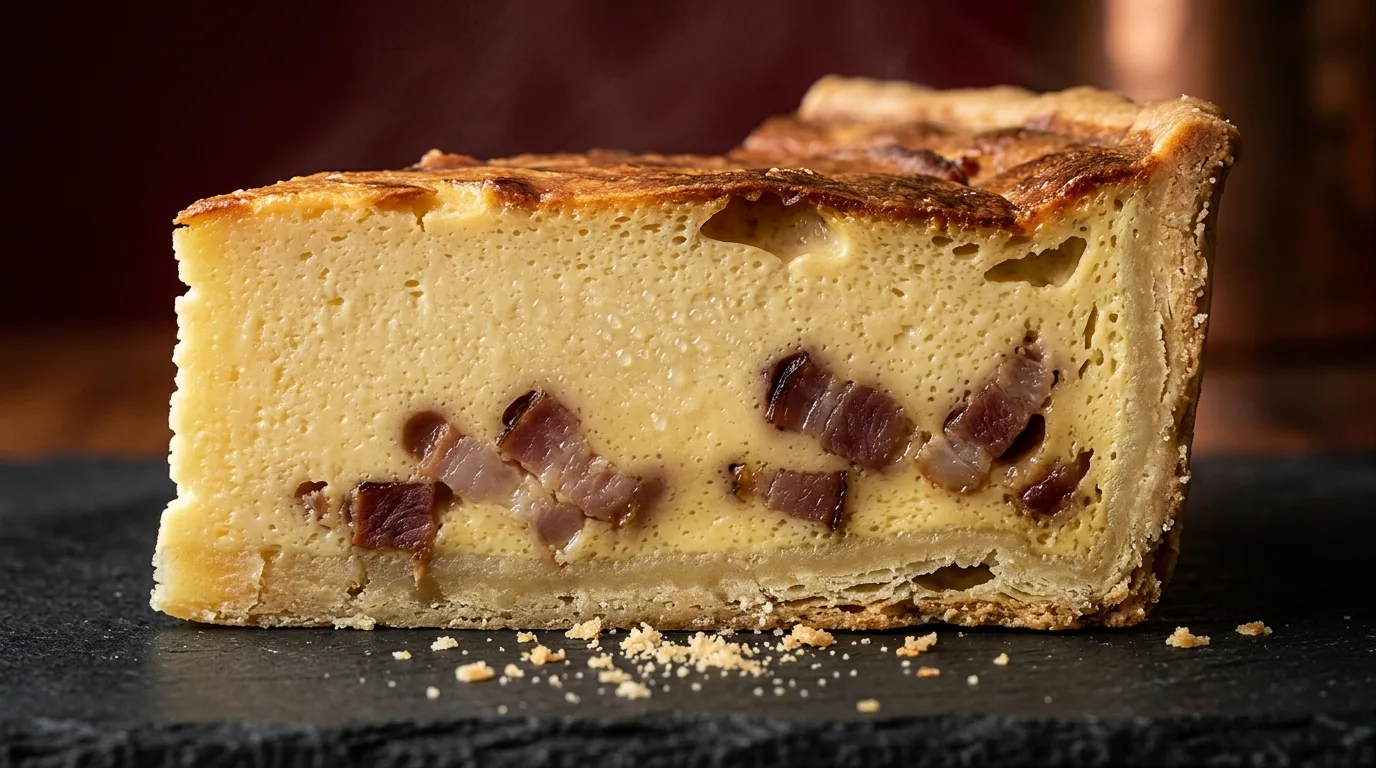
The custard matters more because it's the part of the dish that fights your wine. Quiche is eggs and cream baked slowly into a soft set, sitting inside a shell made largely of butter, and that combination coats your mouth in a way very few savory dishes do. Egg yolk in particular has a way of flattening wine, dulling fruit and making anything soft or low in acid taste dull and slightly sweet.
So the first requirement is acidity, and quite a lot of it. A wine with a bright, mouth-watering line running through it resets your palate between forkfuls and stops the richness accumulating. The second requirement is a little weight, because a very thin, delicate white gets swallowed whole by all that cream and disappears. What you want sits in the middle, dry and firm with some texture to it, which is why the same handful of regions keeps coming up.
That also explains the pairing everyone recognizes without quite knowing why. Egg dishes and sparkling wine have been a fixture of brunch tables for decades because bubbles plus high acidity do exactly this job, scrubbing the fat away between bites. We make the same case for a different egg dish in our guide to the best wine for eggs Benedict and hollandaise, where the rich sauce creates the identical problem.
What wine goes best with quiche Lorraine?
Alsace is the natural home for this pairing, and a dry Alsace Riesling or Pinot Blanc is the single best answer for a classic quiche Lorraine. That recommendation isn't just regional sentiment. Lorraine sits directly next to Alsace, the two have shared a kitchen for centuries, and the wines evolved alongside exactly this style of rich, pork-driven cooking.
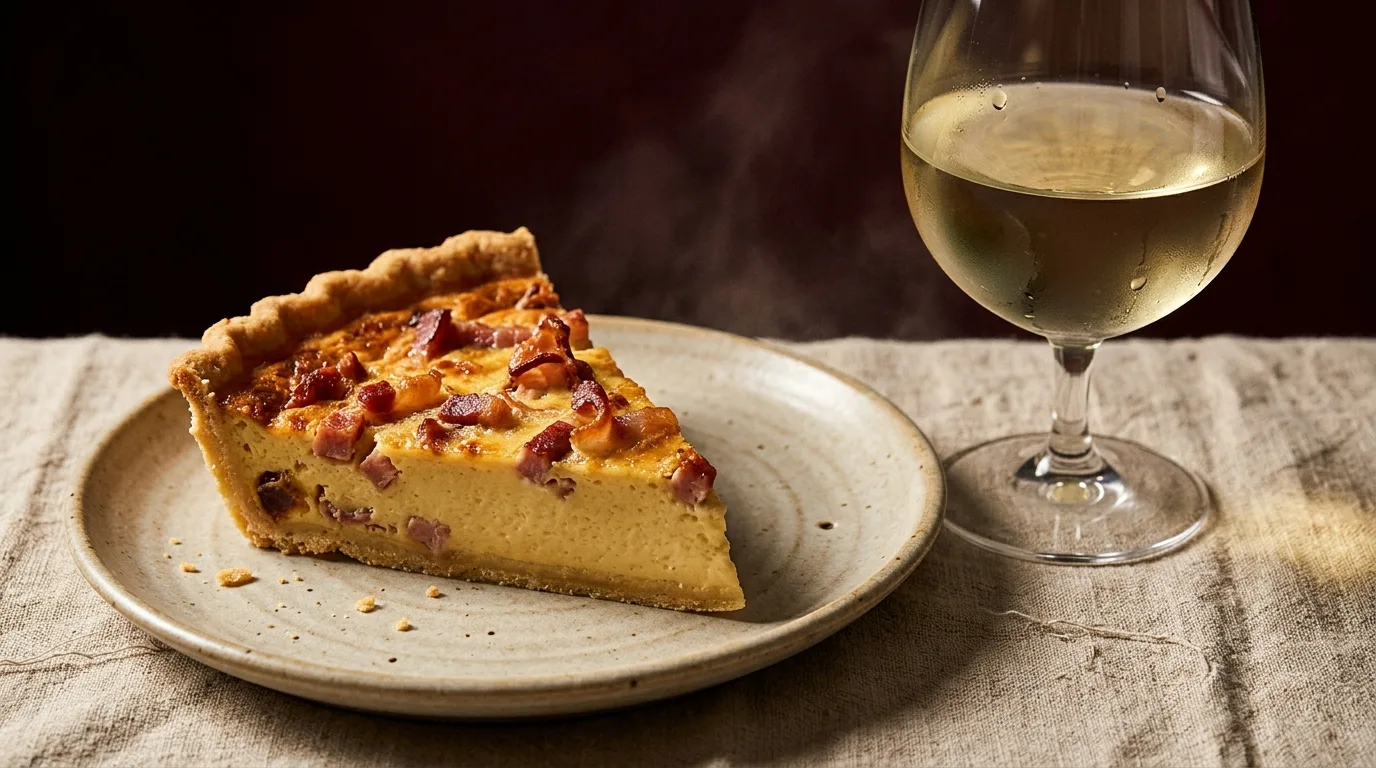
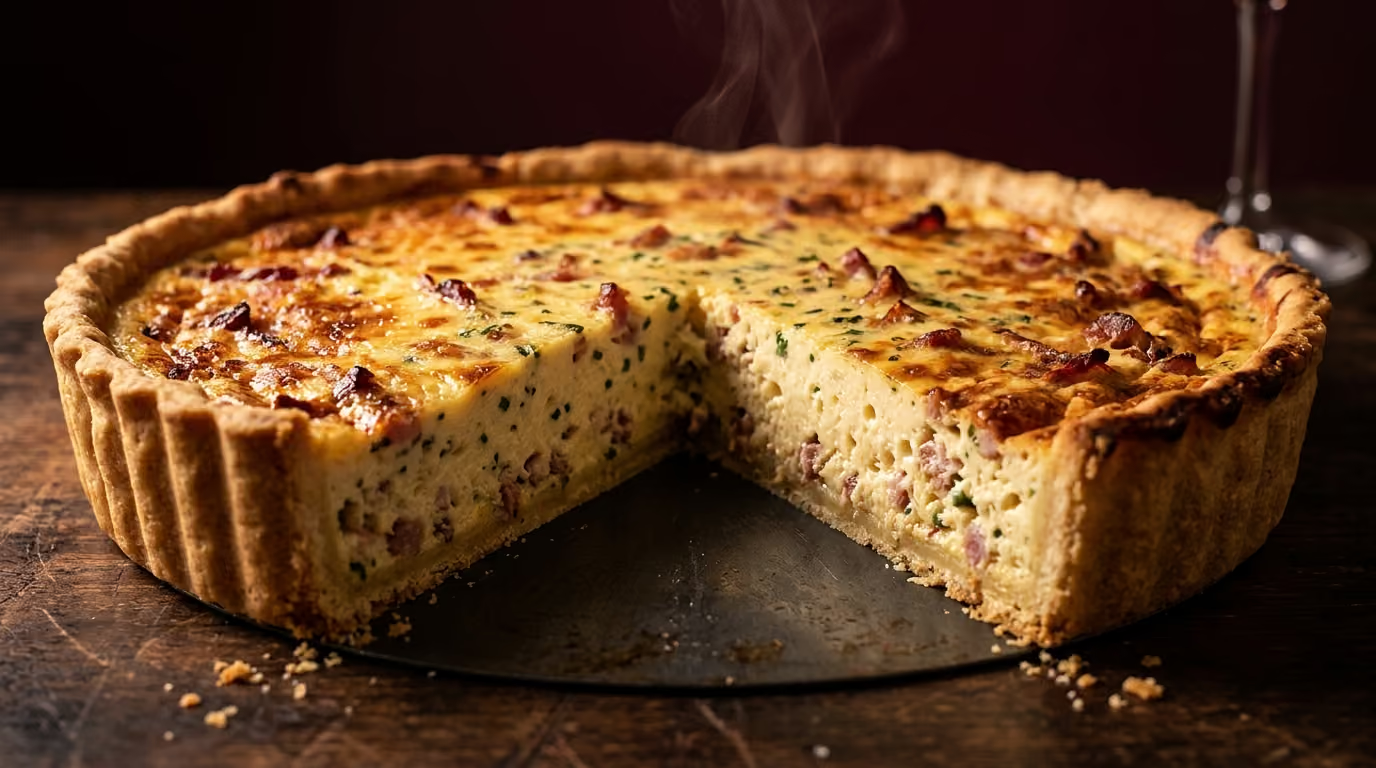
A traditional quiche Lorraine is eggs, cream and smoked bacon lardons in a pastry shell, with no cheese in the original version at all. The bacon is the loudest thing on the plate, salty and smoky, and it needs a wine with enough aromatic presence to answer it. Alsace Riesling is dry, high in acid and faintly stony, and it has enough concentration to sit next to smoked pork without being flattened. Pinot Blanc is the softer, cheaper alternative and gives up a little intensity for a rounder texture, which some people prefer with the custard.
Food & Wine's own recommendation for quiche lands in the same place, naming Champagne, Alsace Riesling and Beaujolais as its three wines to pair with quiche. If Alsace is hard to find where you shop, a dry German Riesling labelled trocken does the same work, and our guide to finding a Riesling that actually tastes dry covers how to read the label so you don't end up with a sweet one by mistake.
There's one more option worth knowing for a bacon-heavy quiche. A lightly oaked white Burgundy, or a Chardonnay in that leaner style, has the body to match the cream and enough acid to survive the fat. Heavy, buttery Chardonnay is the version to avoid, since butter next to butter next to more butter stops being pleasant around the second glass. If you're not sure which style you're holding, the label rarely says outright, and our guide to spotting a buttery Chardonnay on any wine list covers the words that give it away.
Which wine suits a vegetable quiche?
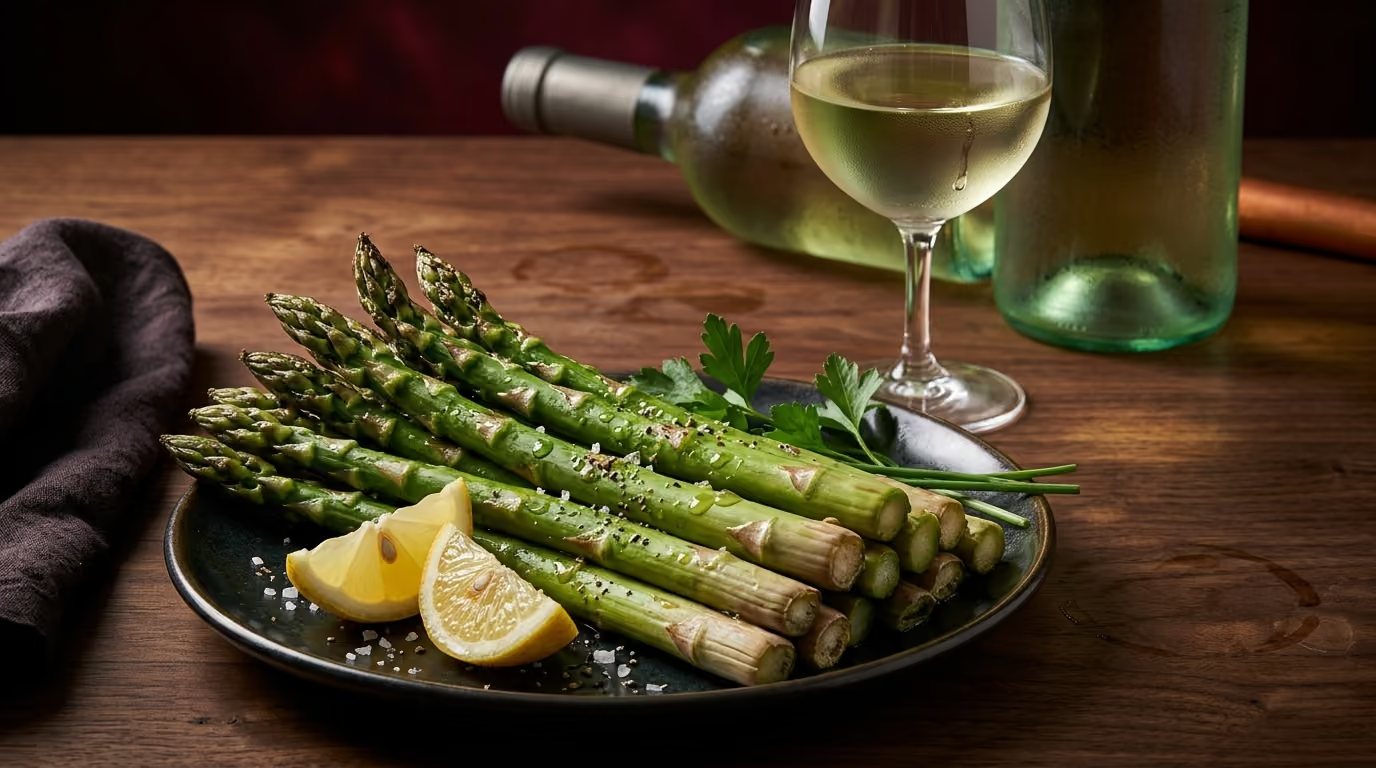
A vegetable quiche wants Sauvignon Blanc, and the greener the filling, the more obviously that's true. Spinach, leek, asparagus and broccoli all carry a faintly bitter, herbal, slightly grassy character, and Sauvignon Blanc is built from those same notes, so the two read as one flavor rather than two competing ones.
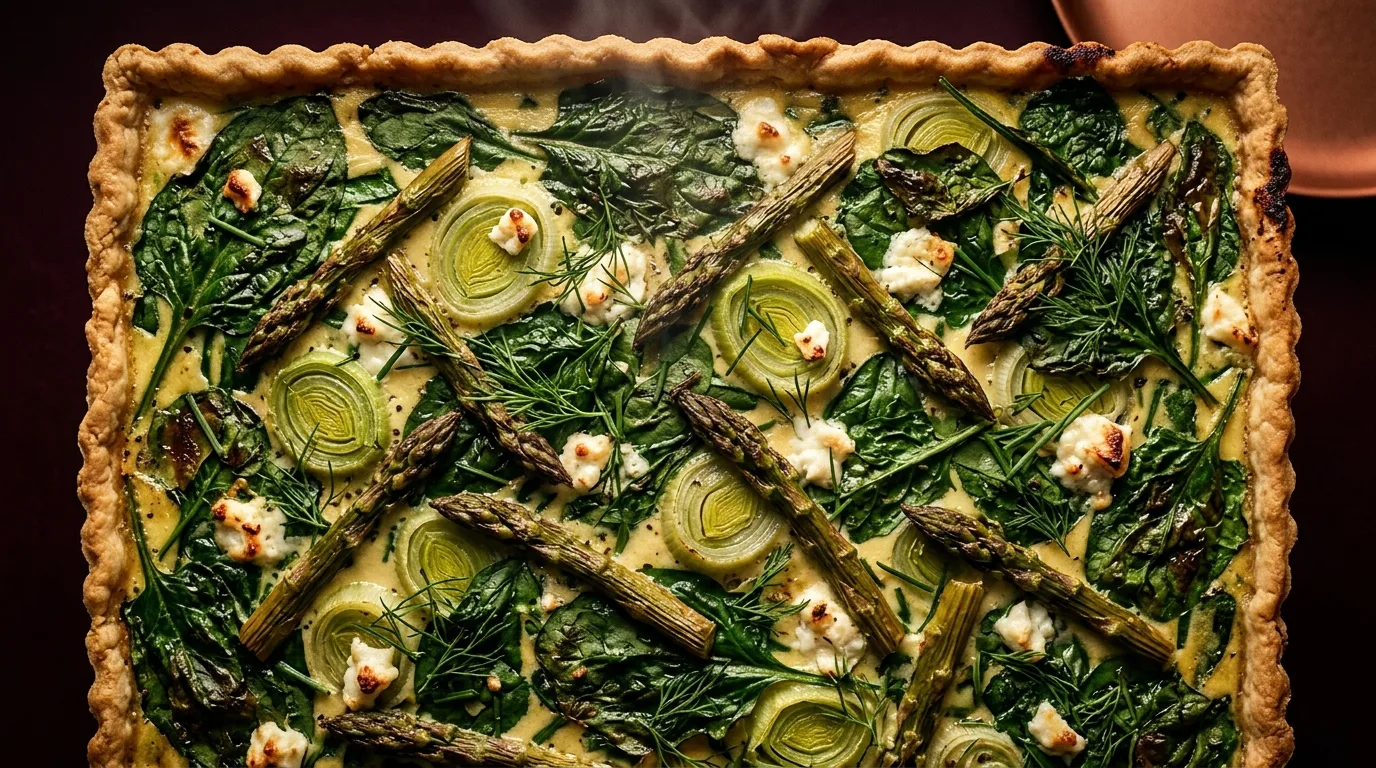
Loire Sauvignon is the most reliable expression for this, whether that's Sancerre at the expensive end or Touraine and Quincy at the sensible one. New Zealand Sauvignon Blanc also works and brings more tropical fruit and a louder aroma, which suits a quiche with plenty of herbs but can overpower a delicate one. Our guide to Sauvignon Blanc food pairings goes through the vegetable end of that in more detail.
Two vegetable quiches break the rule and want something else. A mushroom quiche has an earthy, savory depth that a green wine argues with, and it's much happier with a light red. A caramelized onion tart is sweeter than it looks and does the same thing. In both cases Beaujolais is the pick, since Gamay is fruity, low in tannin and high in acid, which is precisely what a rich pastry dish needs from a red. Chilling it slightly helps, and our comparison of Pinot Noir and Gamay as chilled reds explains why that temperature matters more than the grape.
A quiche loaded with Gruyère or Comté is a slightly different problem again, since hard alpine cheese adds salt and nuttiness rather than richness. That version can take a fuller white than you'd expect, and a Pinot Gris from Alsace or a white Rhône blend both suit it well.
Goat cheese in the filling pulls the pairing back toward the Loire with real force. Sancerre and Pouilly-Fumé grow within sight of some of France's best goat cheese, and the tangy, chalky combination is one of the most reliable matches in wine.
Does the serving temperature of the quiche change the wine?
It does, and this is the variable almost every pairing guide leaves out. Quiche is one of the few dishes people routinely eat hot, warm, at room temperature and cold from the refrigerator, and it tastes noticeably different at each.
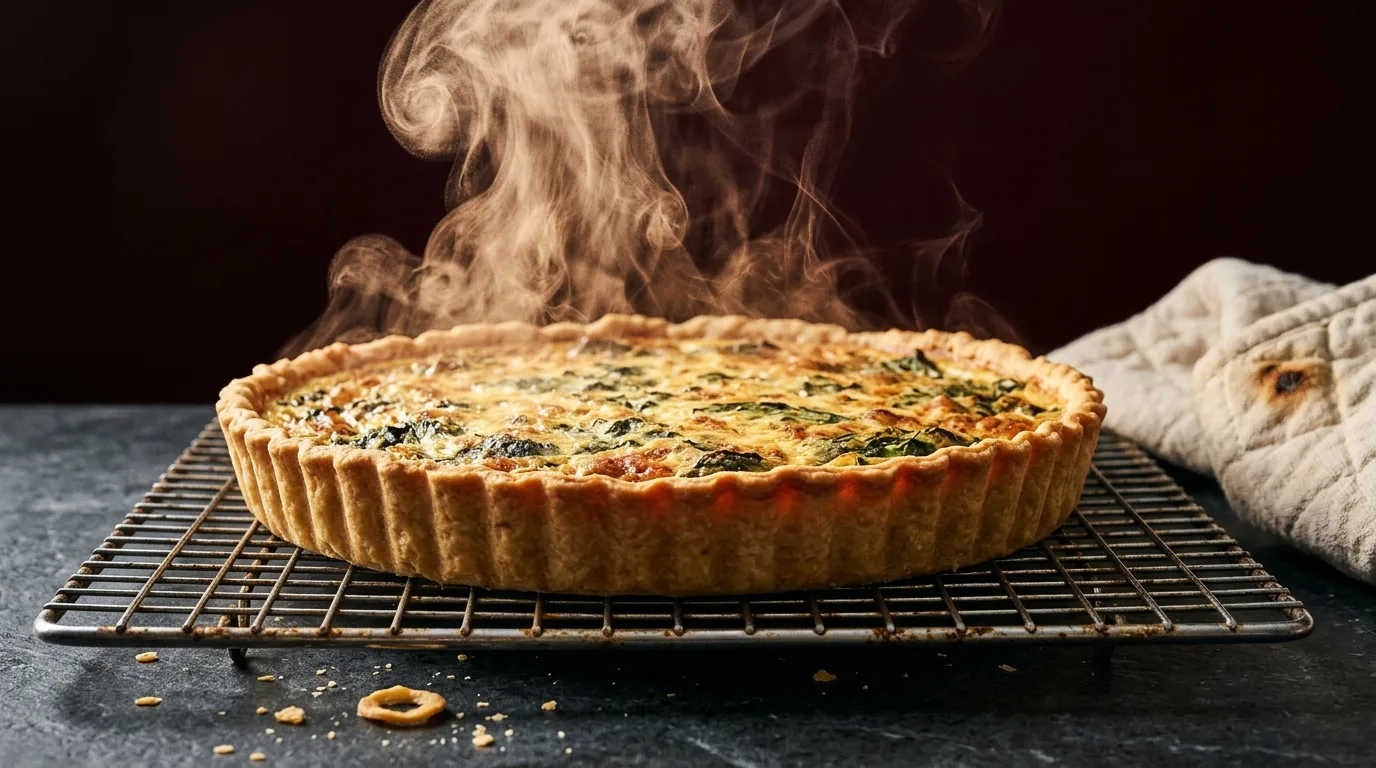
Straight from the oven, the fat in the custard and pastry is liquid, aromas are lifting off the plate, and the whole thing tastes richer and more savory. That version needs the most acidity you can find, so a taut Riesling, a Crémant or a Muscadet earns its place. At room temperature, which is how quiche is actually served at most brunches and picnics, the fat has firmed up, the flavors are calmer and the salt reads more clearly. That's the version where a slightly rounder wine like Pinot Blanc or Chenin Blanc shines, and where a very lean white can feel harsh.
Cold from the refrigerator, the pastry is dense and the custard is firm, and honestly the dish is at its least expressive. Sparkling wine rescues it better than anything else, because the bubbles supply the texture the cold quiche has lost. If you're serving leftovers the next morning, that's the one time to open the Crémant rather than saving it.
Is sparkling wine the safe answer at brunch?
Yes, and it's the safest answer on this whole page when you're feeding a group. Sparkling wine handles the egg, the cream and the pastry all at once, and it does the same job whether the filling is bacon, spinach or mushroom, which no still wine manages quite as well.
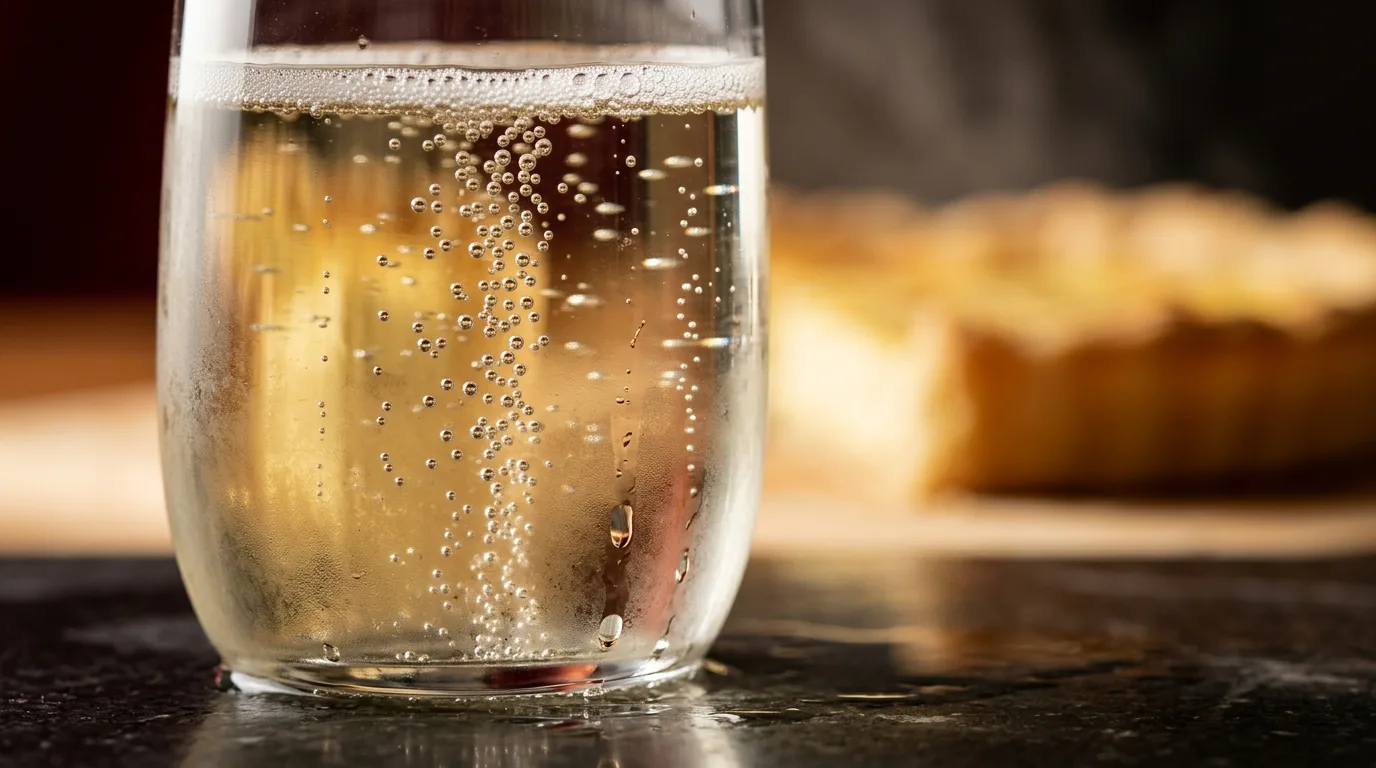
Crémant d'Alsace is the pairing with the strongest logic behind it, since it comes from the same place as the food and costs a fraction of Champagne. Crémant de Bourgogne and Crémant de Loire are equally good options. Champagne itself is lovely here, particularly a blanc de blancs, where the lemony, chalky character lines up with the custard beautifully. Cava is the value choice and its slightly savory, nutty quality suits a bacon quiche better than people expect.
Prosecco is the one to think about rather than default to. Most of it is made in a softer, fruitier style with a touch of sweetness, and against a salty quiche Lorraine that can read as slightly confectionery. Look for a brut nature or extra brut if Prosecco is what you have, and our breakdown of Prosecco, Cava and Champagne covers how differently the three are actually made. If brunch is a regular event at your house, the same logic runs through our guide to wine for brunch crepes and waffles.
How do you choose one bottle when everyone's eating a different quiche?
Choose for the custard rather than the fillings, and pick the wine that sits closest to the middle of the table. This is the real brunch problem, since quiche is a dish people make two or three of at once, and nobody wants to open four bottles at eleven in the morning.
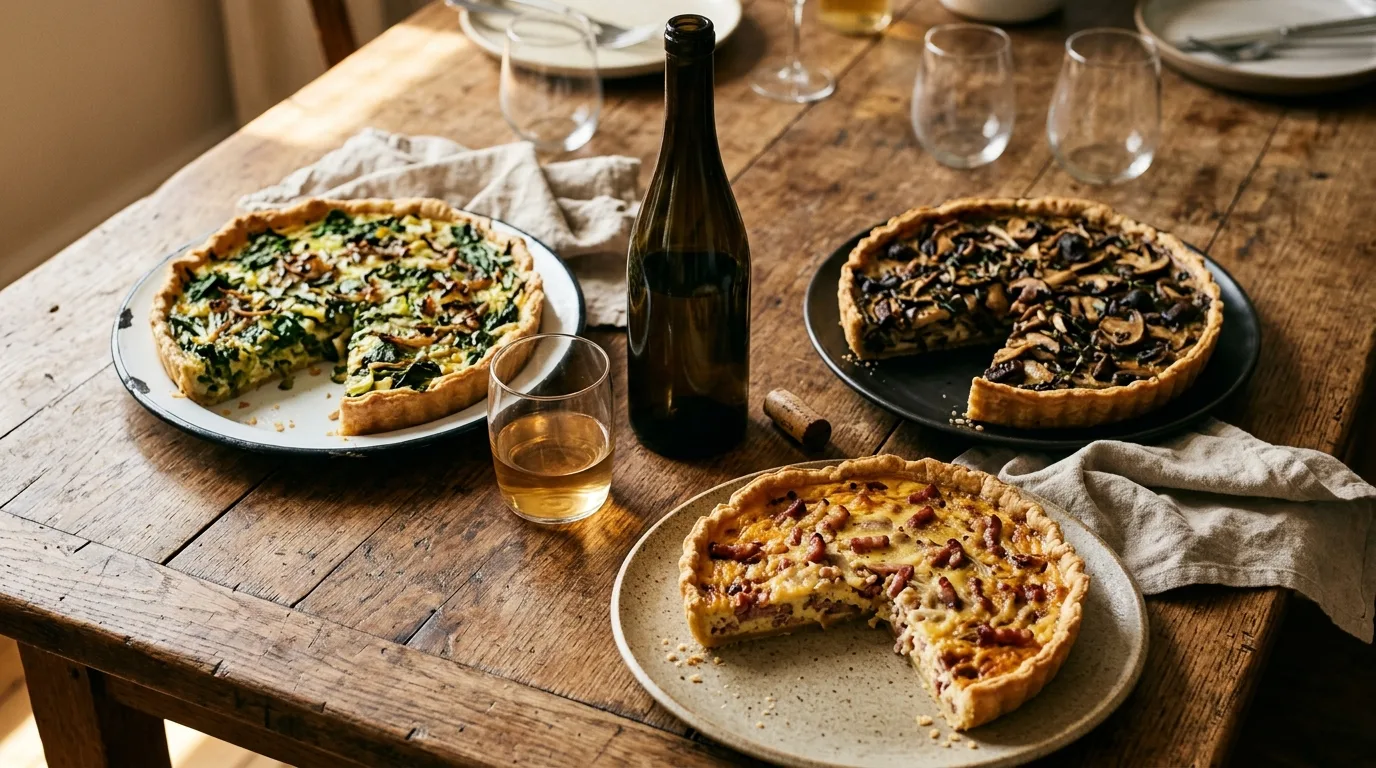
Here's the short version for the fillings you're most likely to be looking at.
| The quiche | What it needs | Reach for |
|---|---|---|
| Lorraine, bacon and cream | Acidity plus aromatic presence | Alsace Riesling, Pinot Blanc, Cava |
| Spinach, leek or asparagus | Green, herbal, high acid | Sancerre, Touraine, New Zealand Sauvignon |
| Mushroom or caramelized onion | Earthy, fruity, low tannin | Beaujolais, light Pinot Noir |
| Goat cheese or three cheese | Tangy, chalky, very dry | Sancerre, Pouilly-Fumé, dry Chenin |
| A table eating several at once | Bubbles and acidity | Crémant d'Alsace, Champagne, brut Cava |
If you're cooking for a crowd, the sparkling row is the one to trust, and a dry Chenin Blanc from Vouvray is the best still-wine compromise across a mixed table. When you're standing in a shop holding something unfamiliar, Sommy's Pairing feature reads a photo of the dish or the recipe itself and comes back with a match against your own taste, which is more use than a printed rule when the quiche in front of you has four things in it.
Frequently asked questions
What is the best wine for quiche Lorraine?
A dry Alsace Riesling or Pinot Blanc. Both have the acidity to cut the cream and enough aromatic weight to stand next to smoked bacon, and Alsace sits right beside Lorraine, so the pairing has centuries of shared cooking behind it.
What wine goes with a vegetable quiche?
Sauvignon Blanc, especially from the Loire. Its green, herbal character matches spinach, leek and asparagus directly. The exceptions are mushroom and caramelized onion quiche, which are both better with a light red like Beaujolais.
Can you drink red wine with quiche?
Yes, as long as it's light and low in tannin. Beaujolais is the standard choice and a light Pinot Noir works too. Serve it slightly chilled and avoid anything tannic or oaked, since heavy red flattens the custard and the pastry.
Is Champagne actually a good quiche wine pairing, or just a brunch habit?
It's a real pairing. High acidity and bubbles both cut through egg, cream and buttery pastry, which is the specific problem quiche creates. Crémant d'Alsace does the same job for considerably less money.
Does quiche wine pairing change if the quiche is cold?
A little. Cold quiche has firmer fat and muted flavors, so sparkling wine suits it best because the bubbles restore some of the liveliness the dish loses. Warm quiche is richer and needs the sharpest, highest-acid white you have.
What one bottle works across several different quiches?
A brut sparkling wine, or a dry Chenin Blanc from Vouvray if you'd rather pour something still. Both have the acidity that every quiche needs, without leaning so hard in any direction that they clash with a particular filling.
Buy for the pastry, adjust for the filling
Quiche looks like a hard pairing because the fillings vary so much, and it stops looking hard as soon as you notice that the part doing the damage never changes. Eggs, cream and butter pastry need acidity and a bit of body, every single time, and once a wine clears that bar the filling only nudges it one way or the other.
Start with Alsace if there's bacon in it and the Loire if there's something green, open something sparkling when the table can't agree, and don't rule out a chilled Beaujolais when mushrooms show up. None of these are expensive bottles, which suits a dish that was invented to use up what was already in the kitchen.

.avif)