.avif)

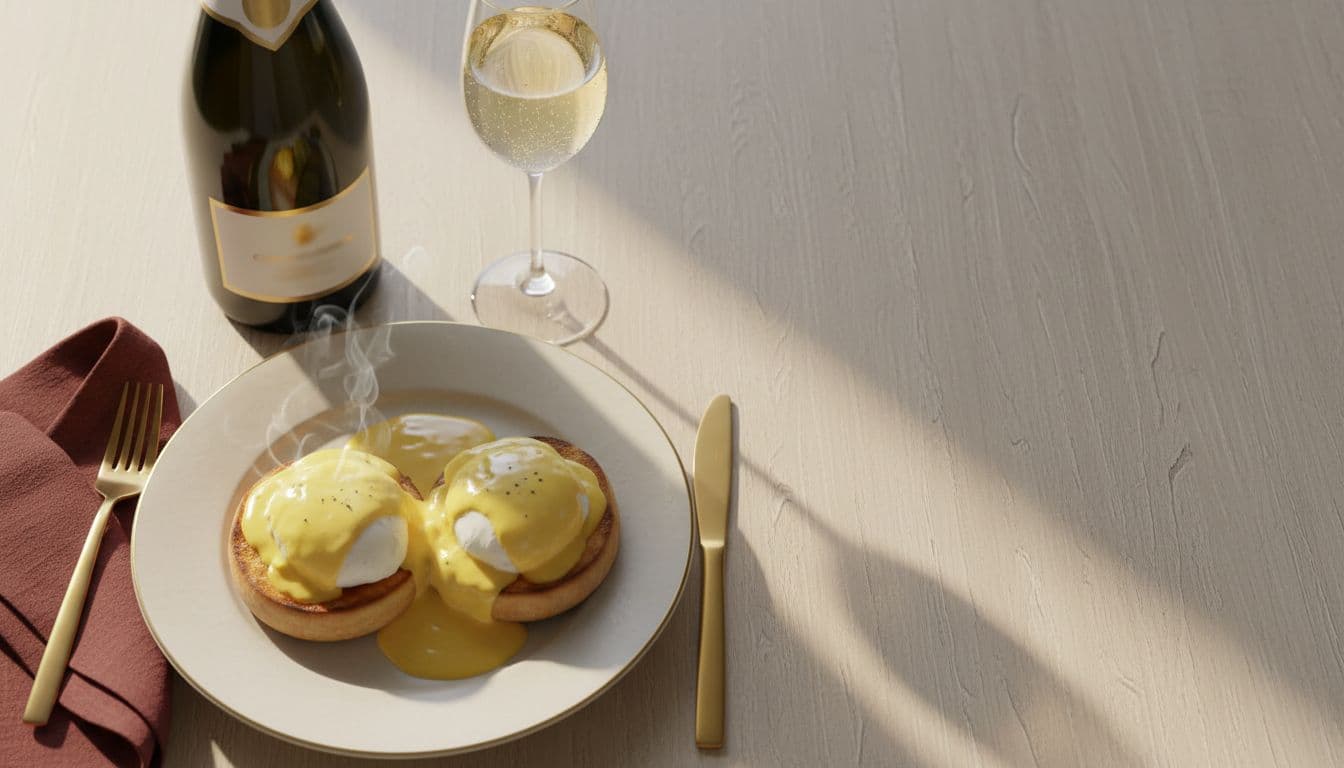
Eggs Benedict is basically a warm, buttery blanket. Hollandaise is rich, lemony, and glossy, the kind of sauce that makes everything feel indulgent. The best wine for Eggs Benedict isn’t about memorizing grapes, it’s about picking a bottle that cuts the sauce and still tastes fresh after the first round of mimosas.
If you want the fast answer: choose a high-acid sparkling wine (Brut), or a crisp white with bright citrus. Skip heavy oak and anything sweet. If you also want bottles that stay fresh with rich sauces, pick styles that hold up after opening, like sparkling with a proper stopper.
This is a wine pairing guide built for real brunch, not wine class.
Why wine and hollandaise can clash (and how to avoid it)
Hollandaise is butter plus egg yolk, with lemon doing the only “sharp” work. That means your wine has two jobs: refresh your mouth and not taste flat next to all that richness. When the wine is too soft (low acid, lots of oak, too warm), it can taste sleepy, even a little oily.
There’s also the egg factor. Eggs can make some wines taste metallic or dull, especially very tannic reds. If you’ve ever sipped a big red with eggs and felt like the flavor just disappeared, you’re not imagining it. For a helpful perspective on pairing wine with eggs, see Eater’s take on what kind of wine pairs with eggs.
A simple “3-check” framework (how to choose wine)
Use this as friendly wine advice when you’re scanning a menu or a shelf:
- Acid first: Look for words like “crisp,” “bright,” “citrus,” or “zesty.” This is wine explained simply: acid is the squeeze of lemon your mouth wants.
- Bubbles help: Sparkling wine scrubs the palate clean. It’s the easiest shortcut to clear wine recommendations.
- Keep oak low: Heavy oak plus butter-on-butter can feel like too much. If you like Chardonnay, lean “unoaked” or “fresh.”
Quick matching guide:
| Your Eggs Benedict twist | What the sauce tastes like | Wine style that works |
|---|---|---|
| Classic hollandaise | buttery, lemony | Brut sparkling or crisp white |
| Extra lemon, capers | sharper, salty | Dry Riesling |
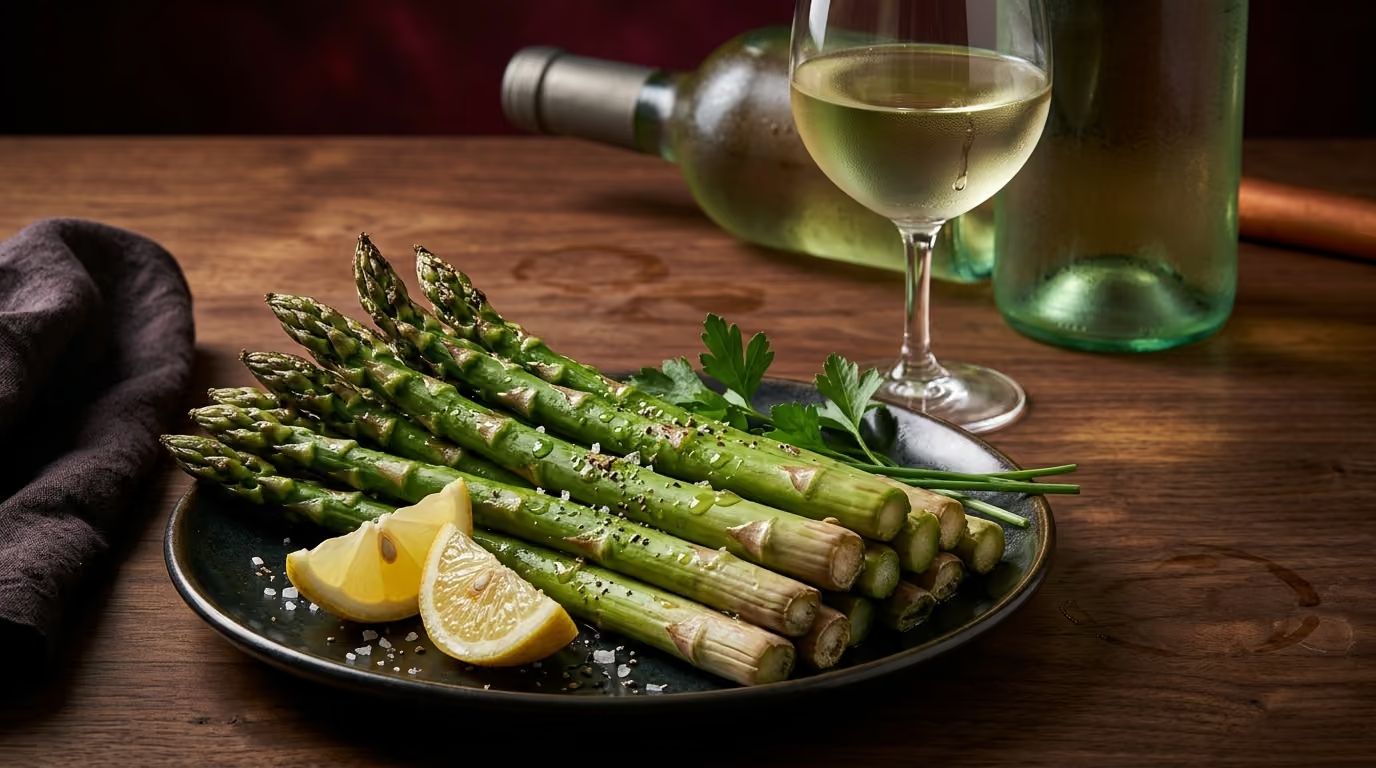
| Herbs, greens, asparagus | green, fresh | Grüner Veltliner |
| Smoked salmon or ham | smoky, savory | Sparkling rosé or light Pinot Noir |
Think of this as your everyday wine advice for brunch: match richness with lift.
Best wines for Eggs Benedict (that won’t fade fast)
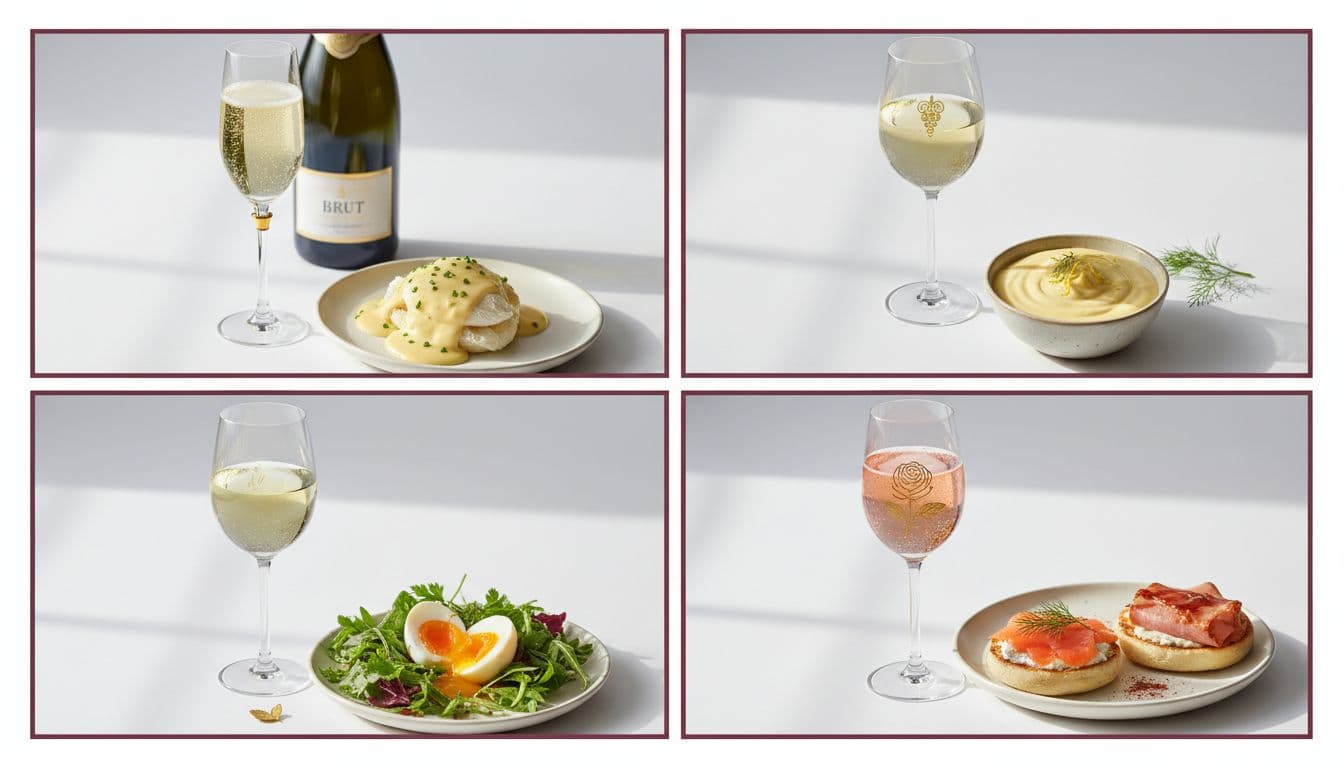
Below are wine recommendations that feel “right” with hollandaise, and also make sense if you want a bottle that still tastes good tomorrow.
Brut sparkling (Champagne, Crémant, Cava)
If you want smart wine picks with almost no risk, go Brut. Bubbles and acid cut through hollandaise like a squeeze of fresh lemon over fries.
- What it tastes like (wine tasting notes explained): crisp apple, citrus peel, a clean finish, and a dry snap.
- Why it works: it lifts the sauce, resets your palate, and keeps the dish from feeling heavy.
- Freshness bonus: with a sparkling stopper, it can stay lively for a couple of days in the fridge.
For more brunch bottle ideas, Wine Spectator has a big list of wines that work for brunch.
Dry Riesling (especially with extra lemon)
If your hollandaise is tangier, or you’re adding lemony greens on the side, dry Riesling can feel like the “bright line” that pulls everything together.
- What it tastes like: lime, green apple, and a clean, mouthwatering finish.
- Why it works: it mirrors the lemon in hollandaise without piling on weight.
- Freshness bonus: screw-cap Riesling is your best friend for day-two brunch.
This is also a great answer when someone asks for wine app suggestions, because “dry Riesling” is easy to search and easy to spot.
Grüner Veltliner (when there are herbs and greens)
If your Benedict comes with arugula, chives, or asparagus, Grüner tends to “agree” with those green flavors.
- What it tastes like: citrus, pear, and a gentle peppery edge.
- Why it works: it stays fresh and herbal, so the plate tastes awake.
- Freshness bonus: holds up well for 2 to 3 days re-corked and chilled.
Sparkling rosé or light Pinot Noir (for smoked salmon or ham)
Adding smoked salmon shifts the whole plate toward savory and smoky. A light red can work, but keep it light. Think “fresh cherries,” not “campfire.”
- What it tastes like: red berries, bright acidity, very light tannin.
- Why it works: it matches the smoky-salty protein without fighting the egg.
- Freshness bonus: sparkling rosé keeps better than still rosé after opening.
If you’re building a modern wine guide for your own taste, this is the fork-in-the-road: salmon often likes pink bubbles.
Bottles that stay fresh with rich sauces (plus restaurant and store tips)
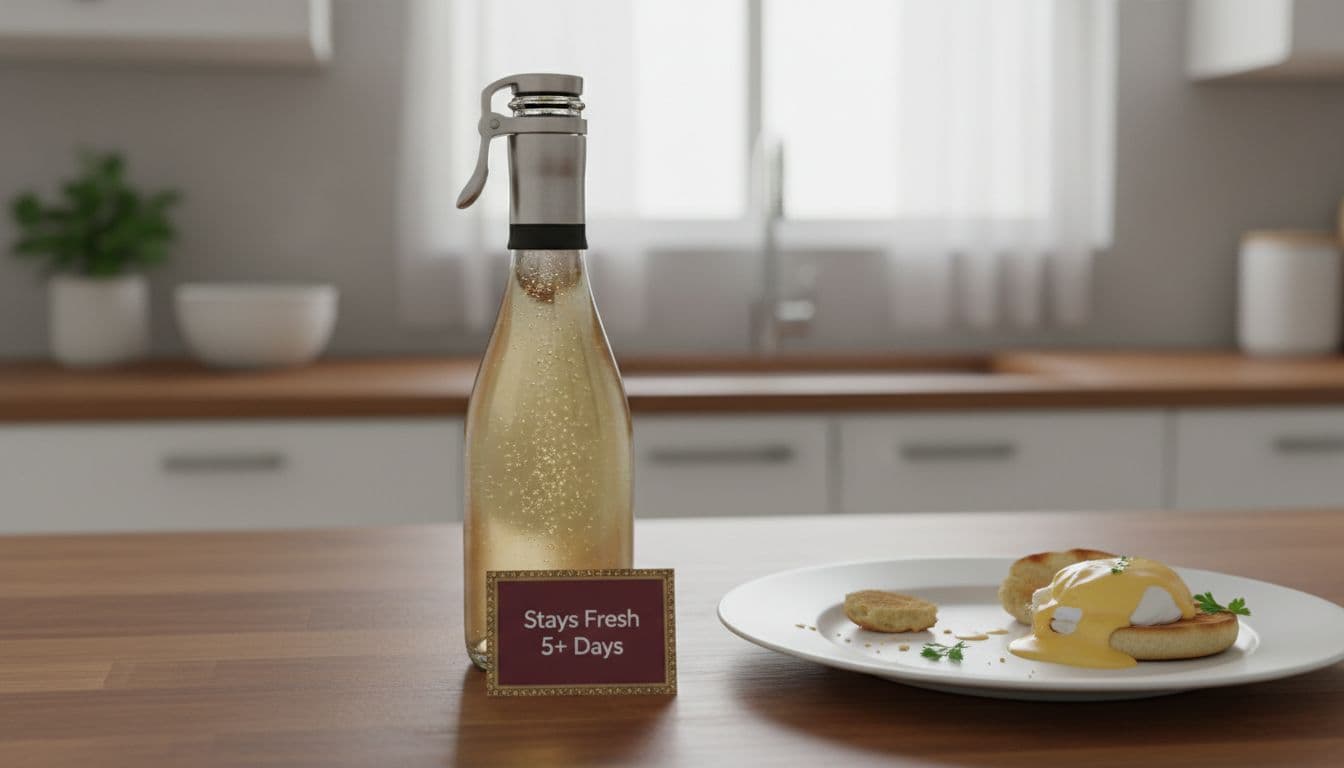
Brunch wine is often a “one-bottle-now, one-glass-later” situation. That’s why freshness matters. Here are simple wine tips that keep your bottle tasting like it should.
At home: keep it bright for day two
- Sparkling: use a real sparkling stopper, refrigerate right away.
- Still white: re-cork tightly, store cold, and pour a smaller glass tomorrow. Warm air is the enemy.
- Don’t leave it on the counter: heat makes wine go flat faster than you think.
For a wider look at pairing wine with egg dishes (beyond Benedict), The Telegraph also covers the best wines to pair with egg dishes. Closer to home, shakshuka is the other brunch egg dish that splits the room, and our shakshuka wine pairing guide handles the tomato and spice end of the table.
Restaurant wine tips (so you don’t overthink the list)
When you’re staring at a menu, use these wine list tips:
- Ask for “dry sparkling” or “Brut,” if you want the safest match.
- If you prefer still wine, say “crisp white, not oaky.”
- If the Benedict has smoked salmon, ask for “sparkling rosé” or “a light Pinot Noir.”
- If you’re splitting with friends, choose the bottle that works across plates.
That’s how to choose wine without learning anything complicated.
Grocery store wine picks that are easy to spot
In a wine aisle, aim for labels that signal freshness:
- Brut sparkling (often clearly marked “Brut”)
- Dry Riesling (look for “dry” on the front label)
- Grüner Veltliner (usually easy to find in the white section)
These are simple wine explanations you can use in real time: pick “crisp,” pick “dry,” avoid “sweet,” avoid “oaky.”
If you like extra help, an AI wine assistant can turn your preferences into smart wine recommendations. Instead of guessing, tools like Sommy can offer personalized wine recommendations from a menu photo or a shelf scan, then refine personalized wine picks over time. That’s the point of smart wine picks, calm choices that match your taste.
Conclusion
Eggs Benedict doesn’t need a “perfect” bottle, it needs a fresh one. Choose Brut sparkling for the easiest win, then branch out to dry Riesling or Grüner when the sauce gets brighter or greener. For salmon or ham, pink bubbles or a light Pinot can feel spot-on.
If you'd like clear wine recommendations that keep brunch rich, but not heavy, come check out Sommy.