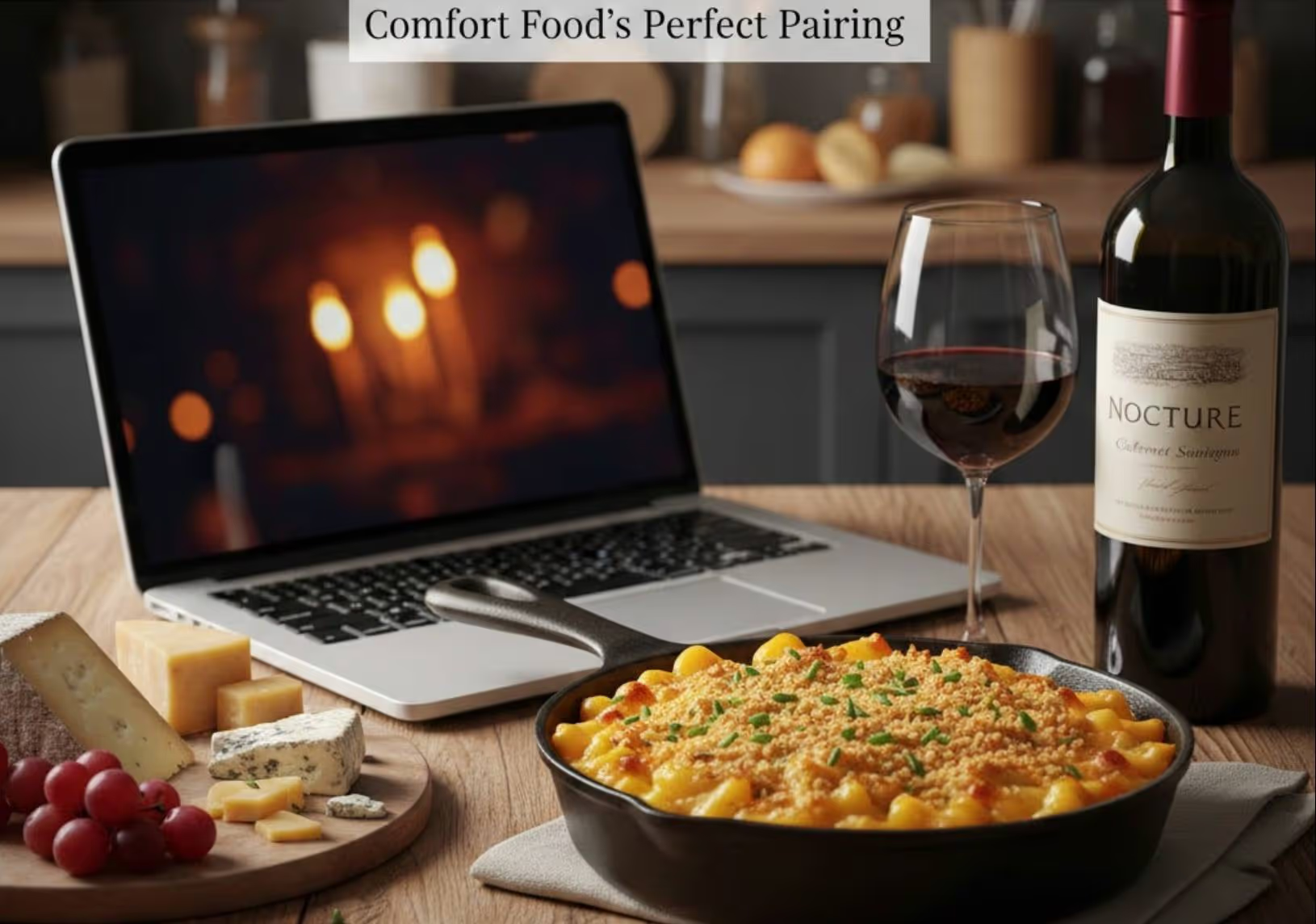

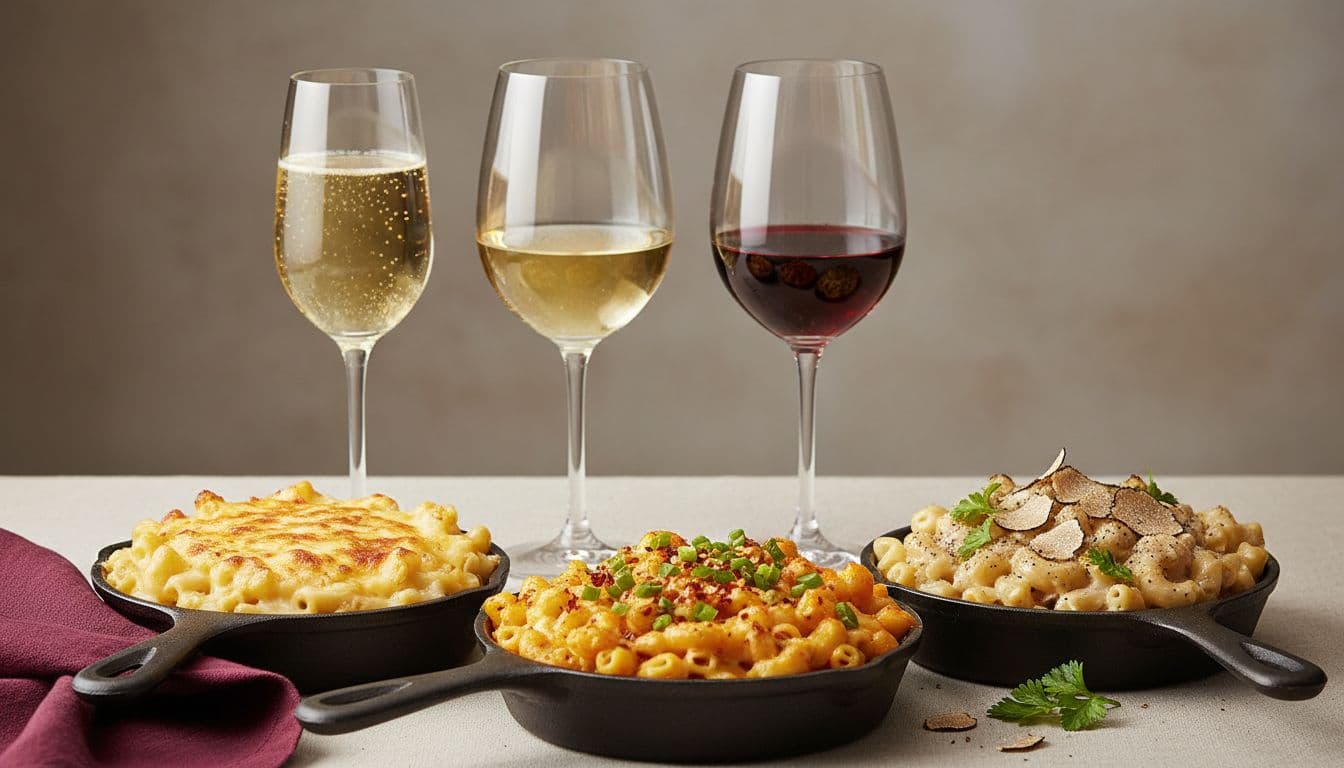
Mac and cheese is rich, salty, and a little stubborn. The right wine makes it feel lighter, like someone opened a window in a warm kitchen.
Here’s the fast answer for wine mac and cheese nights: go for bubbles or bright whites for classic creamy bowls, a touch of sweetness or rosé for spicy versions, and earthy white or light red for truffle mac.
This post is a practical wine pairing guide you can use in a store aisle or when a server hands you a list. No theory, no pressure, just clear choices that work.
A simple wine pairing guide (that you’ll remember)
If mac and cheese is a heavy blanket, wine should be the squeeze of lemon. Your job is to bring lift.
Use this 3-part “how to choose wine” filter:
1) More cream = more acidity (or bubbles).
Acidity keeps each bite from feeling like the last bite.
2) More spice = less oak, more chill, maybe a hint of sweet.
Spice and high alcohol can feel like a spotlight in your eyes.
3) More truffle = earthy, not loud.
Truffle is perfume. The wine should smell good too, but not shout.
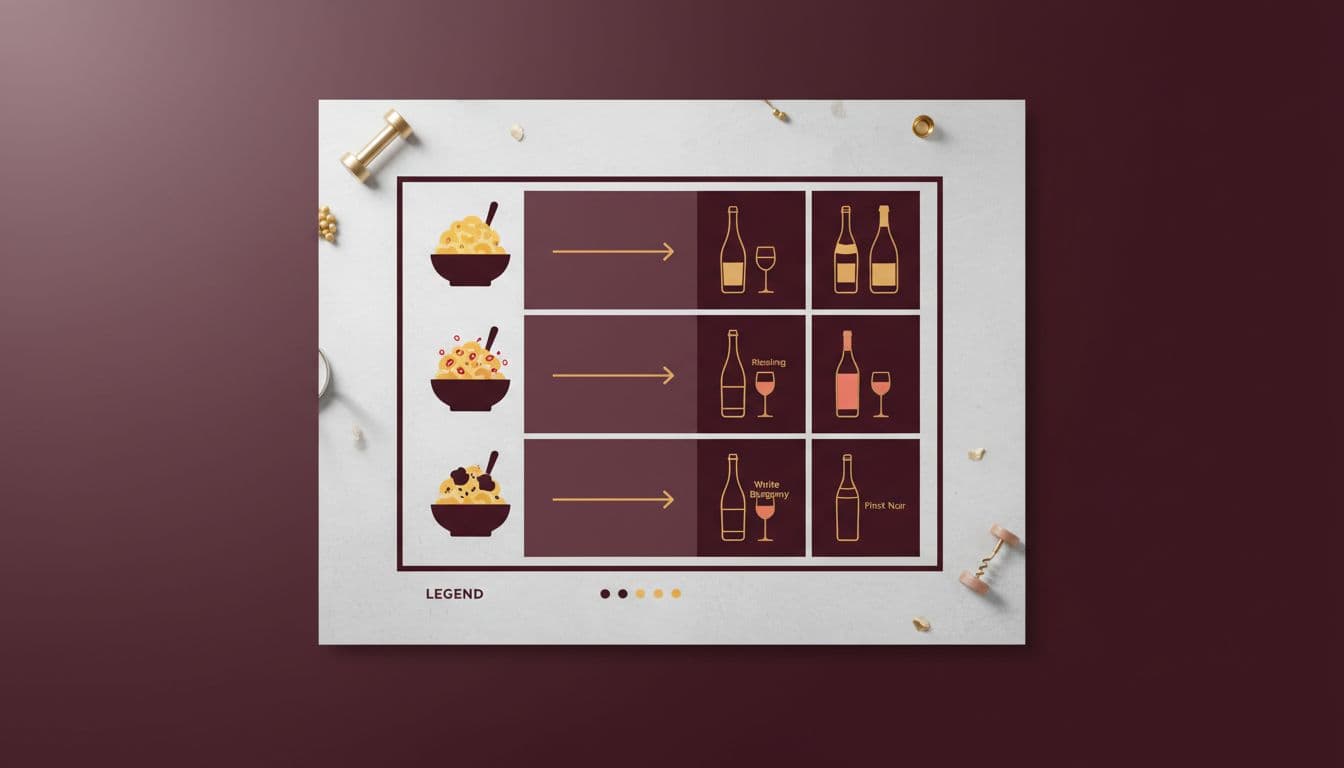
| Mac and cheese style | Best wine style | Why it works | What to look for on the label |
|---|---|---|---|
| Classic creamy | Brut sparkling, crisp Chardonnay | Bubbles and acidity cut richness | “Brut,” “dry,” “crisp,” “unoaked” |
| Spicy | Off-dry Riesling, dry rosé | Soft sweetness cools heat | “Riesling,” “off-dry,” “rosé,” “low alcohol” |
| Truffle | White Burgundy-style Chardonnay, Pinot Noir | Earthy meets earthy, stays elegant | “Chardonnay,” “Pinot Noir,” “light-bodied” |
If you ever feel stuck on a tasting note, this is wine tasting notes explained in plain terms:
crisp = refreshing, creamy = softer, oaky = vanilla/toast, dry = not sweet. That’s enough.
Best wine for classic mac and cheese (creamy, buttery, golden)
Classic mac is all about comfort. It’s also a lot of fat and salt, which can flatten a wine that’s too soft.
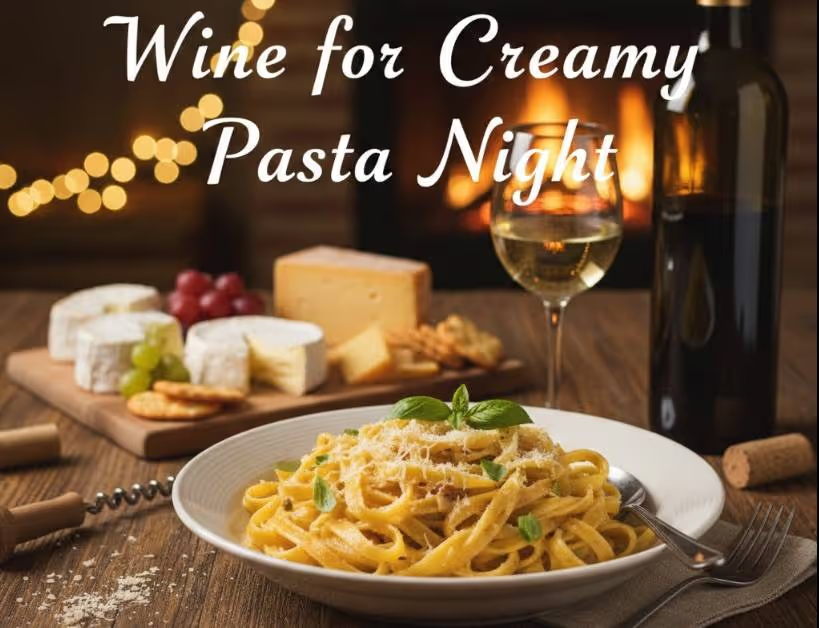
Most reliable pick: Brut sparkling wine.
Bubbles act like a palate reset button. You take a bite, you take a sip, and suddenly you’re ready for another forkful.
Also great: a crisp, not-too-oaky Chardonnay.
Think “fresh apple” more than “buttered popcorn.” If you like the flavor of toasted breadcrumbs on top, a lightly oaked Chardonnay can work, but keep it bright.
Quick wine recommendations for classic mac (bottle styles, not brands):
- Brut sparkling (dry)
- Sparkling rosé Brut (dry)
- Unoaked Chardonnay (or any “crisp” Chardonnay)
If you want beginner-friendly wine advice, use this rule: when the mac is plain and creamy, pick the wine that feels like it has a snap to it.
Best wine for spicy mac and cheese (jalapeño, buffalo, Cajun)
Spicy mac is fun, then it sneaks up on you. Wine that’s too boozy can make the heat feel sharper, not smoother.
Most reliable pick: off-dry Riesling.
A small amount of sweetness calms the burn, and the acidity still keeps the cheese in check. This is one of the easiest “trust it” pairings in any beginner wine guide.
Also great: dry rosé.
Rosé is the friendly middle: fruity enough to handle spice, crisp enough to handle cheese. Chill it like you would a white.
Simple wine tips for spicy mac:
- Choose lower alcohol when possible (often printed on the back label).
- Skip heavy oak and super-bold reds.
- Serve colder than usual. Cold softens heat.
Best wine for truffle mac and cheese (truffle oil, truffle cheddar, shaved truffle)
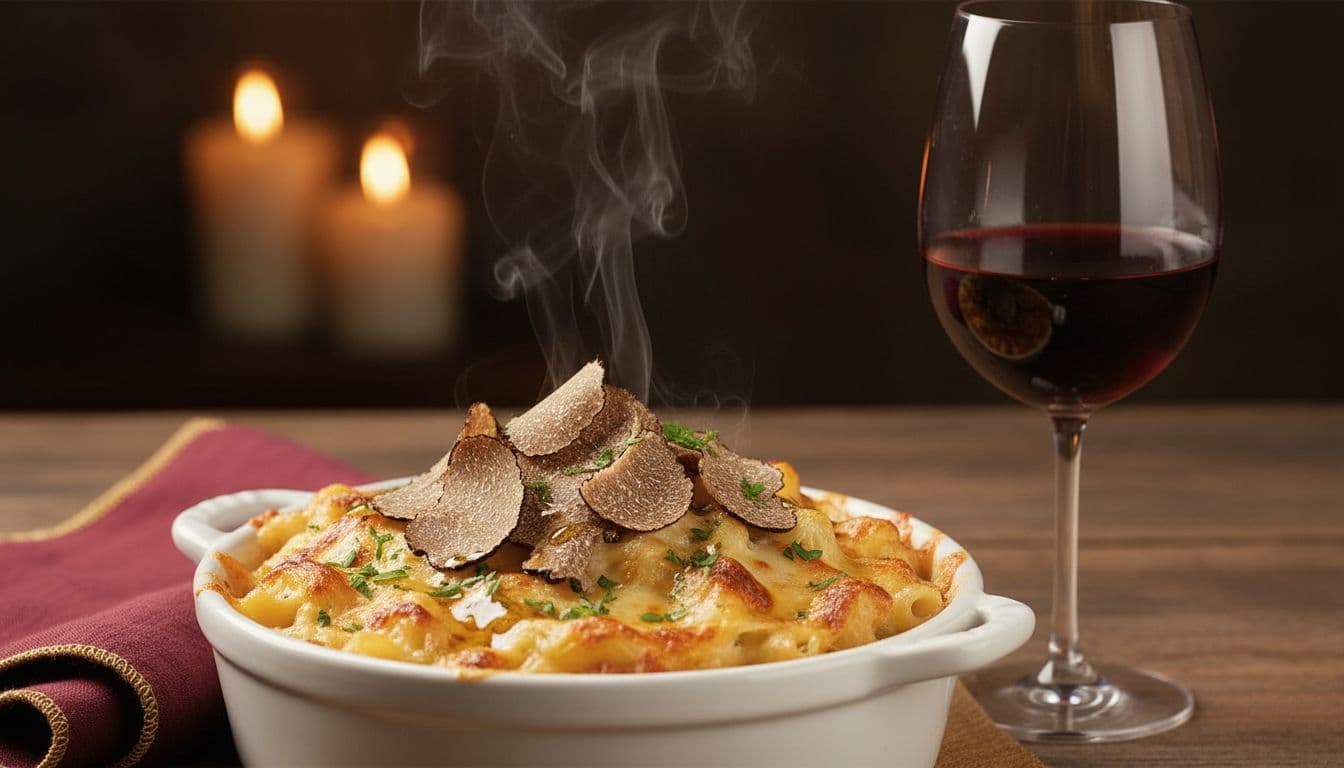
Truffle mac is rich plus aromatic. It’s not just “cheesy,” it’s woodsy, savory, and a little mysterious.
If you’re curious what drives that flavor, Wisconsin Cheese’s overview of truffle cheese gives a clear, non-snobby description of why it tastes so intense.
Most reliable pick: Chardonnay with a touch of richness.
Truffle and a slightly rounder white can feel seamless, like the wine was part of the sauce.
Also great: Pinot Noir (light-bodied red).
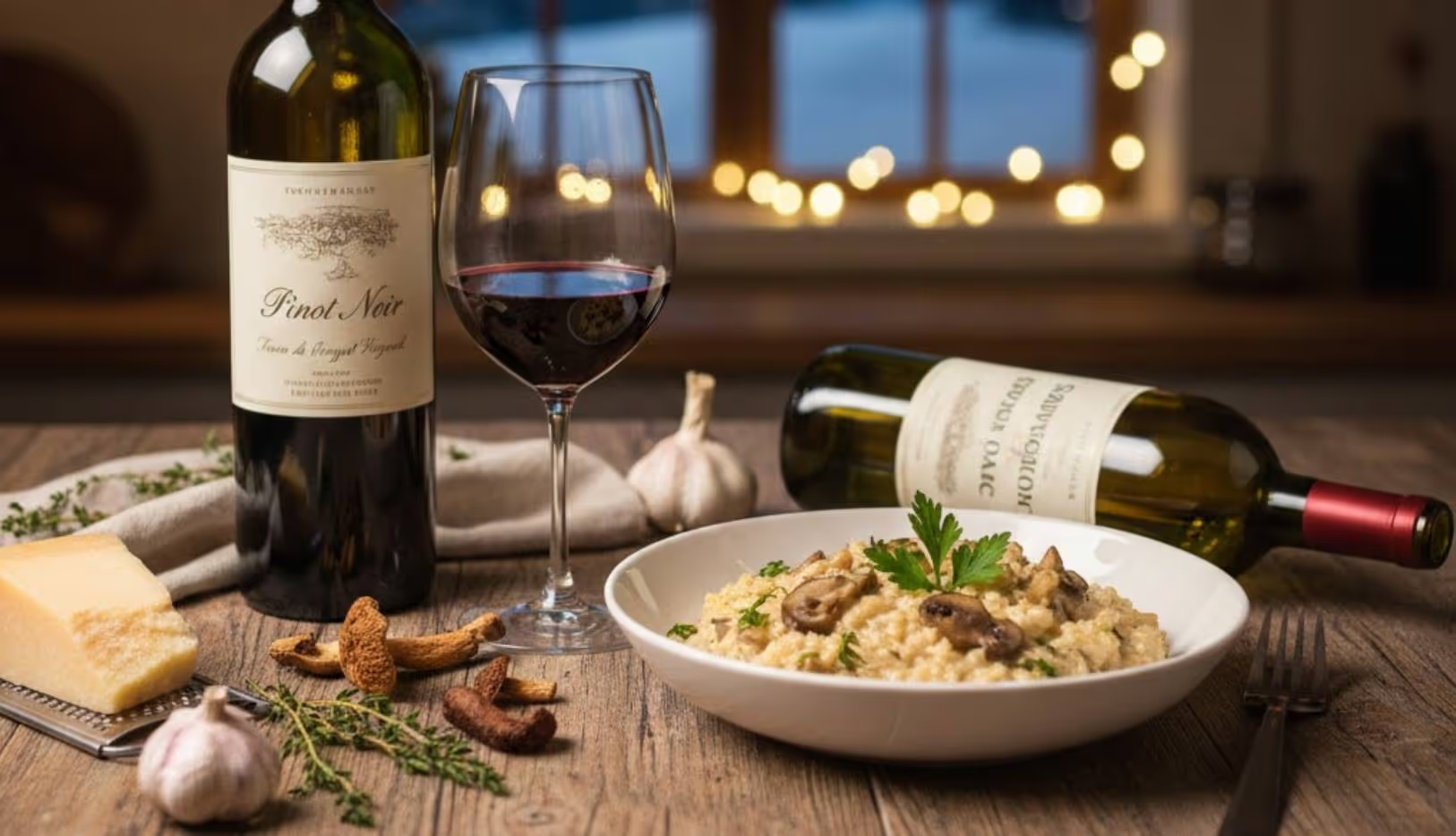
Pinot Noir can echo the earthy side of truffle without turning the meal into “steak night.” Keep it on the lighter side and don’t serve it warm.
For more truffle food ideas in general, this truffle pairing guide can spark good add-ons (even beyond wine).
Restaurant wine tips and grocery store wine picks (no awkward guessing)
Mac and cheese shows up everywhere now, pubs, bistros, steakhouses, even tasting menus. The list can feel like a pop quiz.
These restaurant wine tips keep it simple:
- If mac is the main dish, ask for “something crisp and dry, not too oaky.” That phrase works.
- If it’s spicy, say “something with a touch of sweetness or a dry rosé.”
- If it’s truffle, say “a lighter Pinot Noir or a richer Chardonnay.”
Now the aisle version. These grocery store wine picks help you choose fast:
- Sparkling section: look for “Brut” (dry).
- Riesling shelf: look for “off-dry” if the mac is spicy.
- Pinot Noir: look for “light-bodied” or ask for “not too bold.”
A few wine list tips that save time: pick the “house sparkling” if it’s Brut, choose a Riesling by the glass for spicy food, and avoid the highest-alcohol red on the page for mac nights.
This is wine explained simply: you’re not hunting perfection, you’re avoiding the few mismatches that ruin the mood.
When you want smart wine picks that match your taste
Even with a framework, your taste still matters. Some people want ultra-dry. Some want fruit. Some just want “smooth.”
That’s where an AI wine assistant helps, especially in the moment. Instead of memorizing grapes, you can ask for personalized wine recommendations based on what you like, your budget, and what’s in front of you. Think smart wine recommendations that feel calm and practical.
If you’ve been looking for wine app suggestions or a wine app for beginners, choose one that gives simple wine explanations, not lectures. The best tools give clear wine recommendations, plus personalized wine picks you can actually find. That’s the whole point of a modern wine guide: fewer rules, more “yes, this will work.”
(And if you want a wine app that learns your preferences over time, Sommy is built for exactly these everyday decisions.)
Conclusion
Mac and cheese doesn’t need a fancy bottle. It needs the right kind of bottle: bubbles or crisp white for classic, a gentle off-dry white or rosé for spicy, and an earthy Chardonnay or Pinot Noir for truffle.
Keep the goal small: one confident choice, one great meal, zero second-guessing.
That’s everyday wine advice that holds up on busy weeknights and cozy weekends alike.