
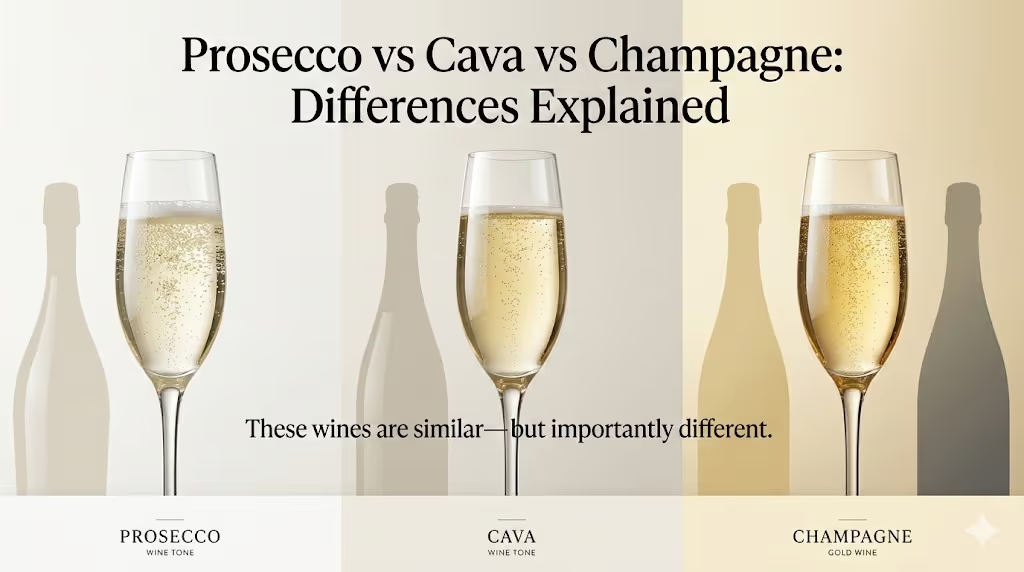

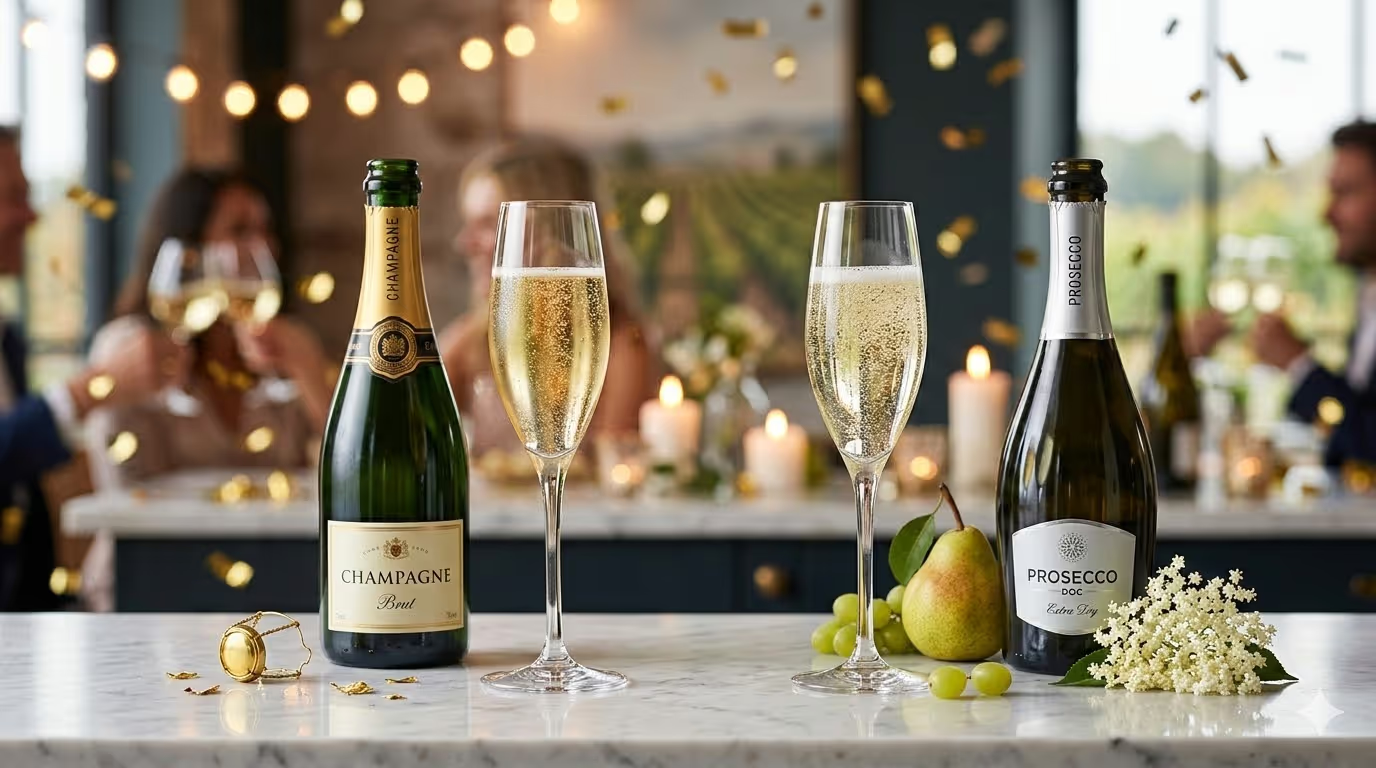
If you want the quick answer, here it is: Prosecco tastes fruitier and softer, Cava tastes crisp and lightly nutty, and Champagne tastes the most toasty with the finest bubbles. You can taste the difference even if you don't know a single grape name.
That "I don't want to choose wrong" feeling is normal. Sparkling wine menus and shelves make everything look equally fancy.
This wine guide keeps it calm. You'll get simple wine explanations for what you'll notice in the glass, plus simple wine tips for picking the right bottle in a store or at a table.
What you'll taste first: bubbles, fruit, toast
The biggest "Prosecco vs Cava vs Champagne" clue hits before flavor: the bubbles. Think of bubbles like the texture of a song. Some feel like a soft beat, others like a tight drumroll.
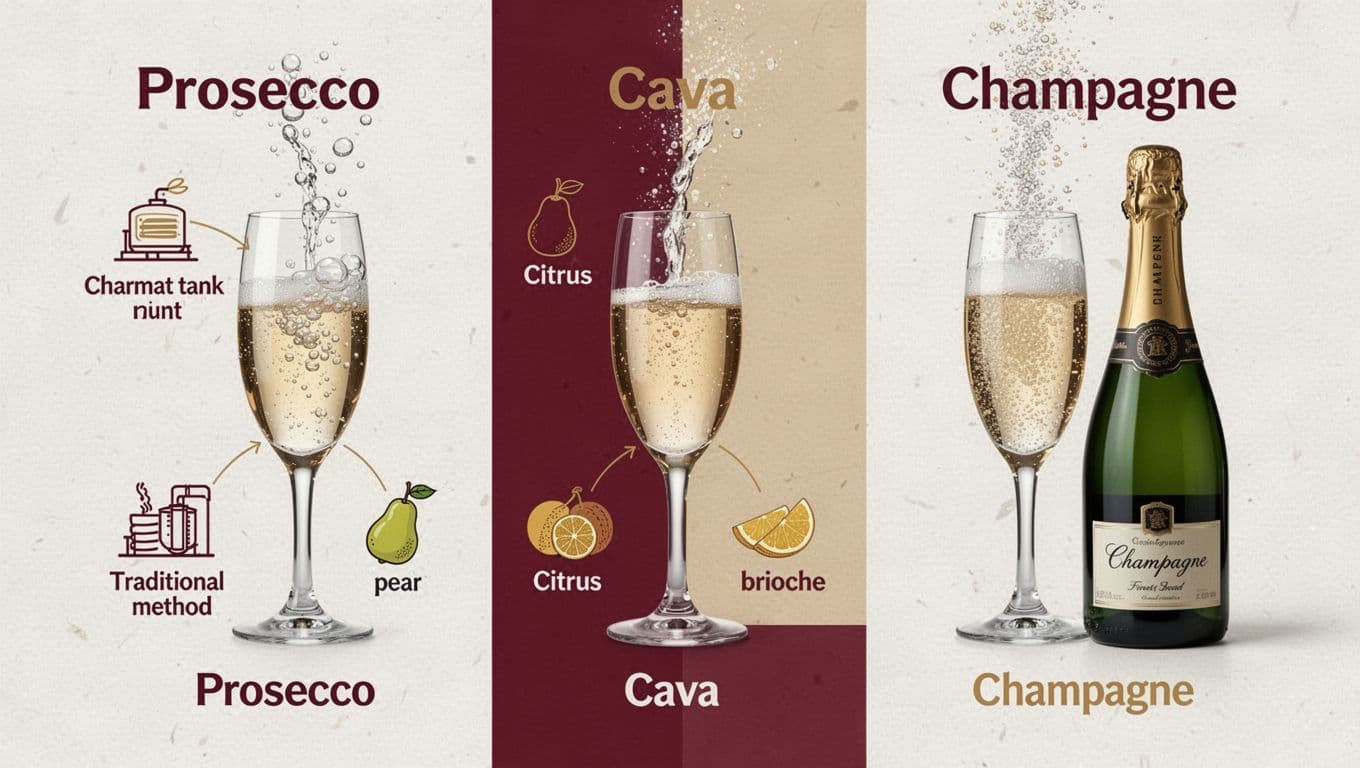
Prosecco is usually made in a tank (the Charmat method). As a result, it often feels rounder, with bigger, gentler bubbles. The flavor leans toward pear, apple, and white flowers. Even when it's dry, it can feel "sweet-ish" because the fruit reads as sweet.
Cava is typically made like Champagne (traditional method, with a second fermentation in the bottle). It often tastes drier and more savory than Prosecco, with citrus, green apple, and a light almond note. The bubbles feel firmer, and the finish can seem more "clean" than "cuddly."
Champagne also uses the traditional method, and it usually spends longer building those bready aromas. That's why it often tastes like lemon plus toast, sometimes with brioche and a chalky snap. The bubbles tend to be the finest and most persistent, which makes it feel more lifted and focused.
Here's a quick side-by-side you can use while ordering.
| Sparkling wine | What it feels like | What it often tastes like | When it's the easiest "yes" |
|---|---|---|---|
| Prosecco | Softer, bigger bubbles | Pear, apple, floral | Brunch, light apps, casual toasts |
| Cava | Crisp, steady bubbles | Citrus, green apple, almond | Tapas, fried foods, weeknight celebrations |
| Champagne | Finest bubbles, longest finish | Lemon, toast, brioche | Big moments, oysters, anything salty |
If you only remember one thing, remember this: Prosecco = fruit-forward, Cava = crisp, Champagne = toasty and precise.
A simple way to choose fast (store or restaurant)
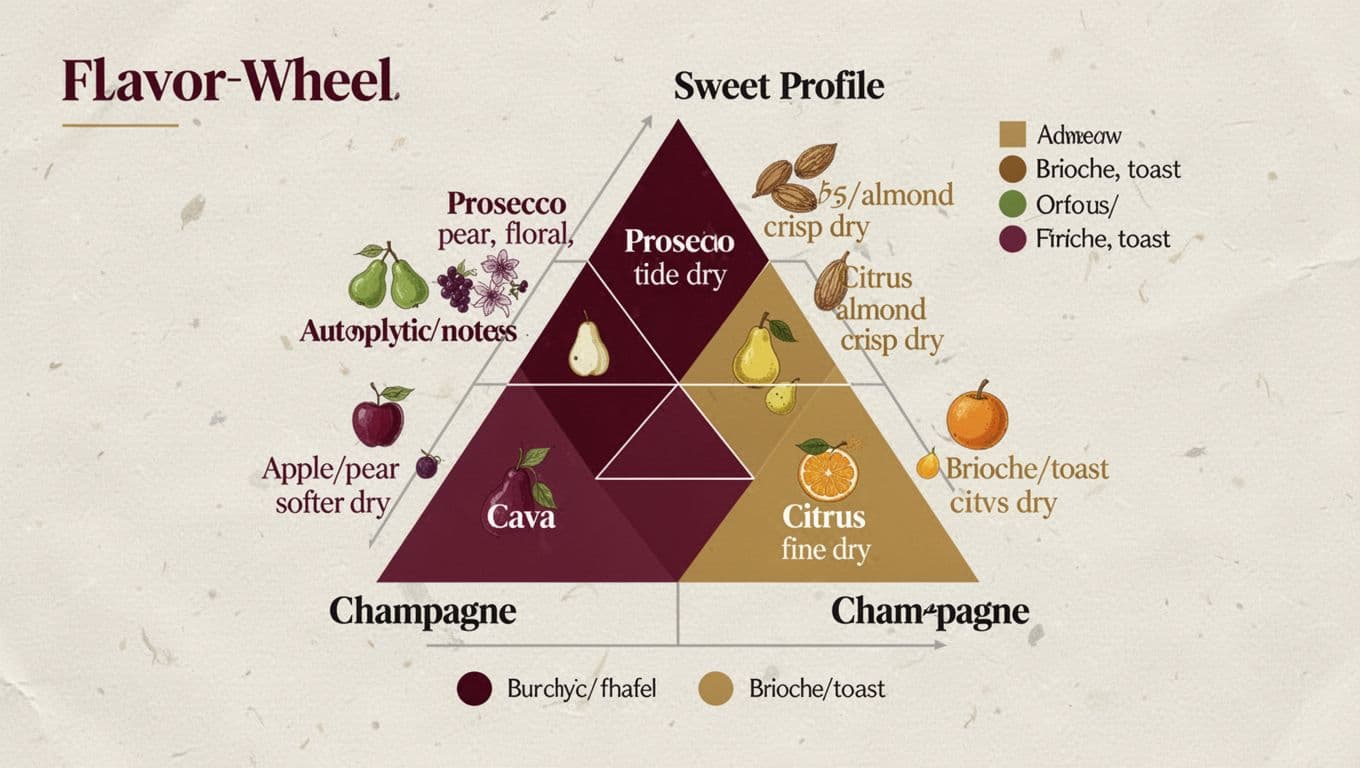
When you're staring at a shelf or a wine list, your brain wants a rule. So use this three-part filter (it works as restaurant wine tips and as grocery store wine picks).
First, decide the vibe you want:
- If you want easy and fruity, go Prosecco.
- If you want clean and dry, go Cava.
- If you want toasty and "special", go Champagne.
Next, choose your dryness level. This is where wine tasting notes explained matters. "Brut" usually signals dry. "Extra Dry" can sound drier than it is (especially on Prosecco). Meanwhile, "Demi-Sec" is sweet enough for desserts.
Then, use one label clue to confirm you're in the right lane. If you want a quick refresher, this guide on how to read a wine label keeps it practical and fast.
At a restaurant, keep it simple. Pick a price ceiling, pick the style, then pick the driest option that fits the moment. If you want extra confidence at the table, these restaurant ordering tips to avoid common mistakes are a helpful gut-check.
This is also where an AI wine assistant takes stress off your plate. Instead of guessing, you can get smart wine recommendations based on what you like, what you're eating, and what's available. Think of it as friendly wine advice you can use in the aisle, not a lecture. It's wine explained simply, with clear wine recommendations that fit real budgets, real dinners, and real taste preferences.
Pairing differences you can taste with food
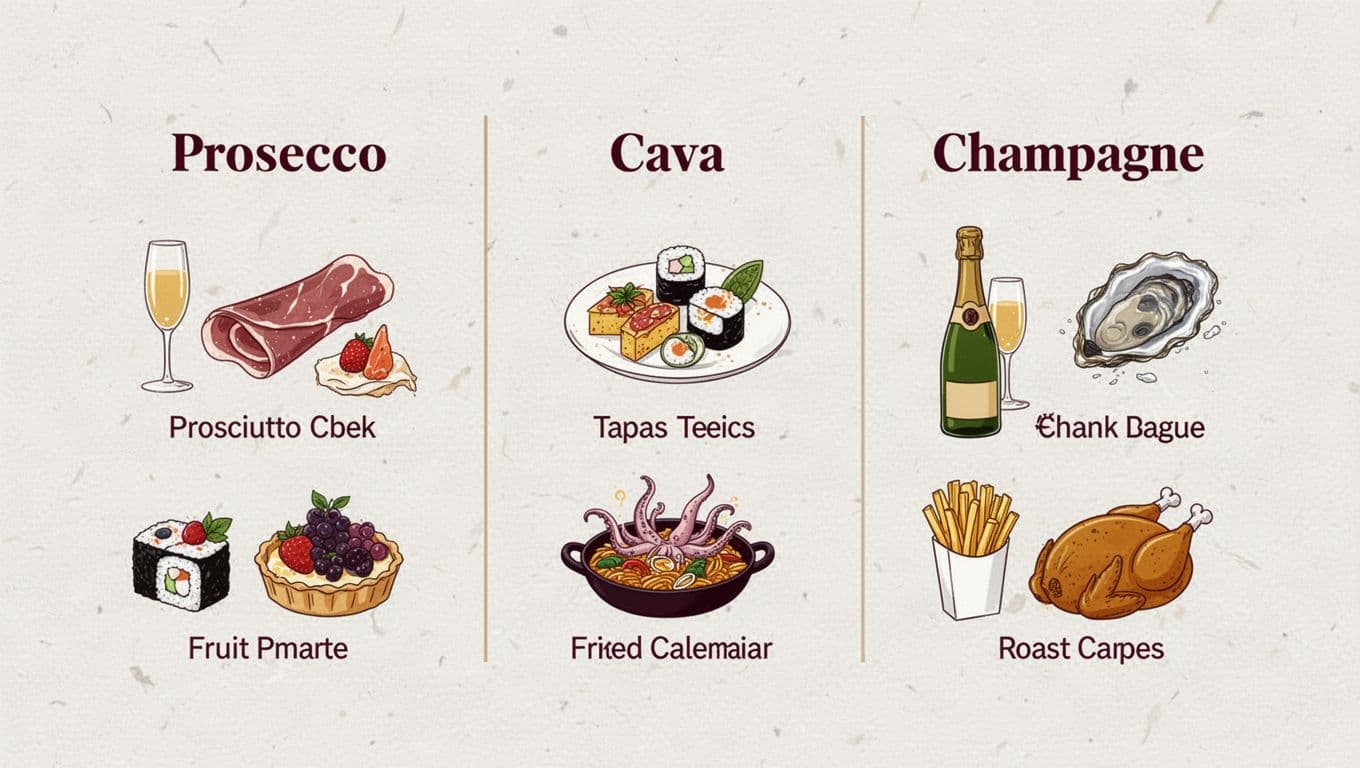
Food is the shortcut. The right pairing makes any sparkling wine taste better, and the wrong one makes it taste weirdly sweet or sour. Use this mini wine pairing guide when you want a decision in seconds.
Prosecco loves salty, delicate foods. The soft fruit makes prosciutto feel sweeter, and it plays well with sushi because it doesn't taste too yeasty. If you're serving fruit desserts, Prosecco can feel friendly and easy, especially if it's not bone-dry.
Cava shines with crunchy, oily, or smoky foods. Fried calamari, potato chips, croquettes, and grilled shrimp all work because Cava's crispness cuts through fat. It also handles Spanish flavors without getting lost.
Champagne is the king of salty plus rich. Oysters, fries, roast chicken, creamy cheeses, even popcorn, they all pop because the bubbles and acidity clean your palate. Those toasty notes can also make simple foods taste "finished," like you planned it.
If you want more background on the broad differences, this explainer on Champagne, Prosecco, and Cava offers helpful context.
For Italian nights, sparkling can still be the move. Prosecco with antipasti is almost unfairly good, and Cava works with plenty of pizza toppings. If you're building the whole meal, this guide to best wines for Italian food can help you cover the table without overthinking.
One pairing "save" that almost always works: bubbles + salty food. When in doubt, choose the driest option.
Conclusion: pick the bubbles that match your mood
Prosecco feels like a bright cardigan, Cava feels like a clean white shirt, Champagne feels like a crisp jacket that fits perfectly. Once you know what each one tends to taste like, choosing gets easier fast.
If you want help choosing wine in the moment, Sommy is built for that. It gives wine recommendations, personalized wine recommendations, and personalized wine picks that match your taste, with suggestions that feel like everyday wine advice. In other words, it's a modern wine guide for how to choose wine, with smart wine picks and smart wine recommendations when you're busy and you just want a good bottle.

.avif)