Pinot Noir is the safest wine with almost any mushroom dish, with Gamay close behind and an oaked Chardonnay taking over the moment butter or cream enters the pan. The rule that matters is structure rather than color: mushrooms make firm, tannic reds taste harsher, so a lighter red or a fresh white will nearly always serve you better than a big Cabernet. Then adjust for how you cooked them, because a grilled portobello and a creamy mushroom pasta want genuinely different bottles.
Most pairing advice stops at the mushroom variety, which is only half the answer and usually the less important half. The way you cooked the dish decides more than the fungus in it, and once you see that, the whole thing gets much easier to do from the kitchen with the pan already going.
Why do mushrooms make some red wines taste harsh?
Mushrooms are one of the most umami-rich ingredients in the kitchen, and that deep savoriness rubs badly against tannin. Pour a firm young Cabernet next to a mushroom dish and the wine tastes more bitter and more drying than it did on its own.
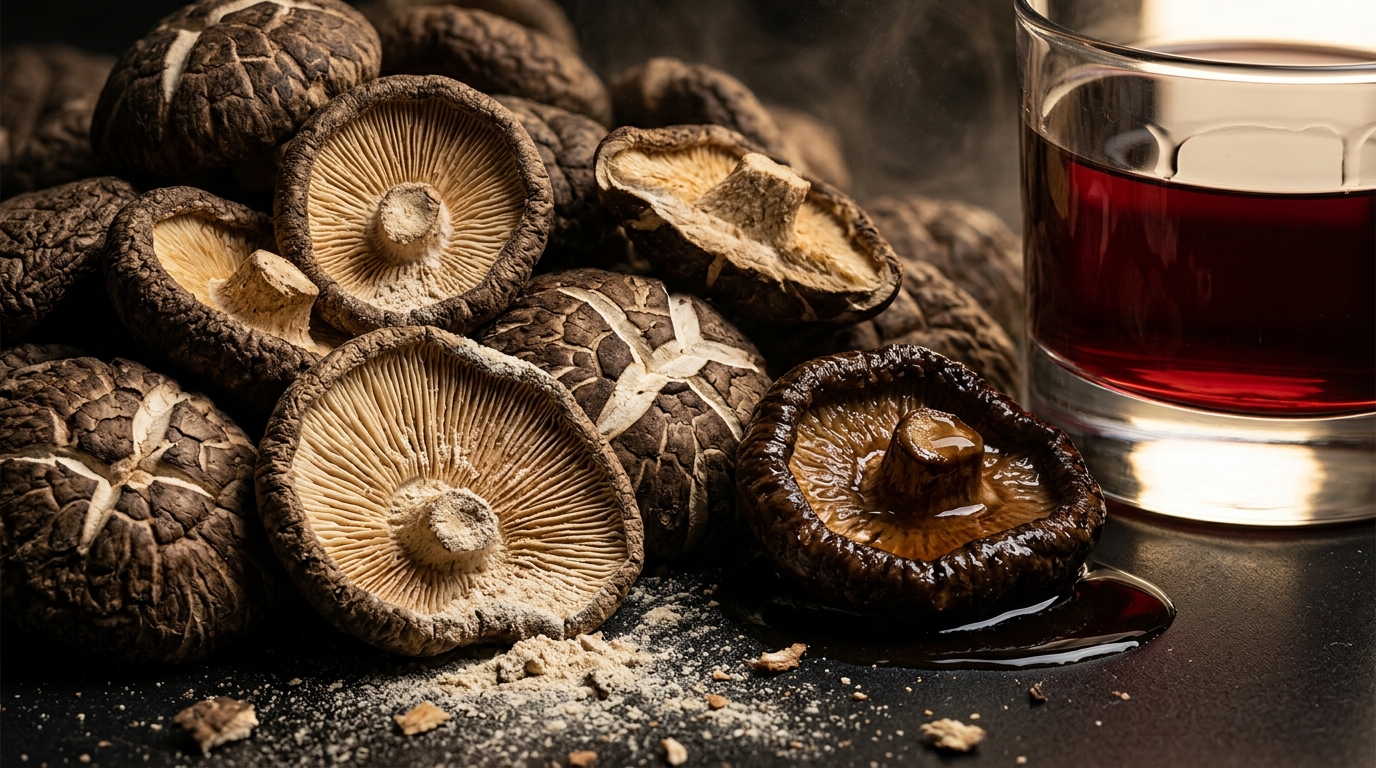
Umami is one of the five basic tastes, alongside sweet, sour, salty and bitter, and it comes from glutamates and nucleotides in food. Mushrooms are a classic source, and dried shiitake are especially loaded with it. Researchers identified the specific compound responsible in shiitake back in 1957, which is why dried mushrooms taste so much more intense than fresh ones and why even a small handful of dried porcini changes the character of a whole pot.
There's a second effect worth knowing about. Many mushrooms, particularly when they're raw or barely cooked, carry a subtle peppery, throat-tickling quality similar to radish. Wine Enthusiast notes that tannin accentuates exactly that sensation in an unpleasant way, which is a useful confirmation of what most people notice without being able to name it. Between the umami and the pepper, tannin is simply the wrong tool for the job.
The practical takeaway fits in a single sentence. If a wine feels drying and grippy when you sip it on its own, it will feel worse beside mushrooms. Reach for something with softer structure and brighter acidity instead, and the same dish will suddenly taste better. Our explainer on what tannin in wine actually is covers how to spot it before you open the bottle.
Which wines pair best with mushrooms?
Pinot Noir first, then Gamay, Sangiovese or Nebbiolo depending on the dish, and an oaked Chardonnay whenever butter or cream is involved. Those five cover the overwhelming majority of mushroom dinners you'll ever cook.
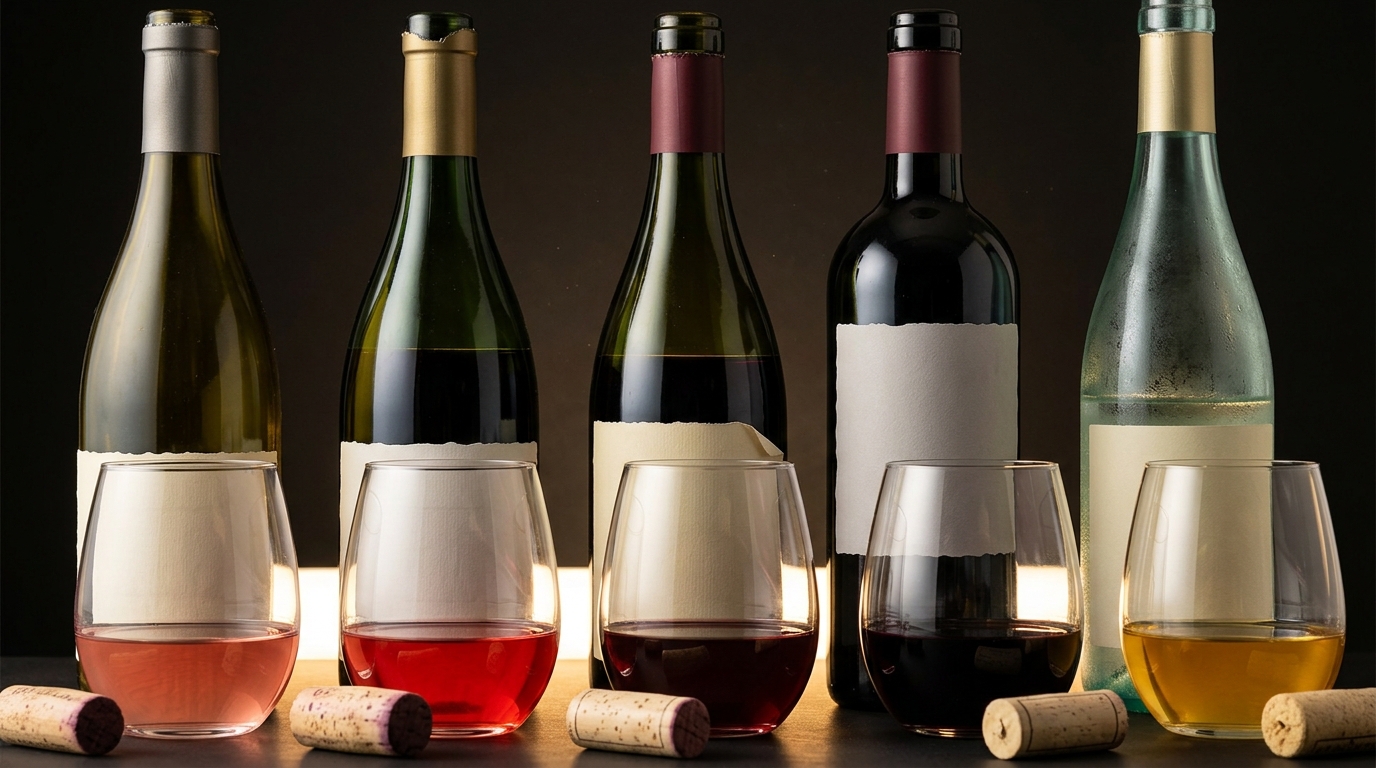
Pinot Noir earns the top spot because its own character overlaps with the food. It's low in tannin, bright in acidity, and as it ages it develops mushroom, forest floor and damp earth aromas of its own, so the wine and the plate meet in the middle instead of fighting. Red Burgundy is the classic expression of this and the Côte de Nuits in particular is famous for it, though an Oregon or cool-climate California bottle does the same job for a lot less money.
Gamay, sold as Beaujolais on most labels, is the cheerful alternative when the dish is simple and you want something you can drink cold. Sangiovese suits anything with tomato in it, since the wine's own acidity matches the sauce. Nebbiolo, from Barbaresco or Barolo, is the specialist pick for earthy Italian mushrooms like porcini, where its savory, tarry side genuinely improves the dish despite its firm tannin.
On the white side, a rich oaked Chardonnay is the one to know, and it becomes the right answer far more often than people expect. An aged white Rioja works beautifully too, with nutty caramelized notes and an almost creamy texture. For lighter, plainer preparations, a crisp unoaked white with real acidity keeps everything fresh without adding weight. Our guide on why acidity matters in wine explains why that freshness does so much heavy lifting.
Does the mushroom variety change the wine?
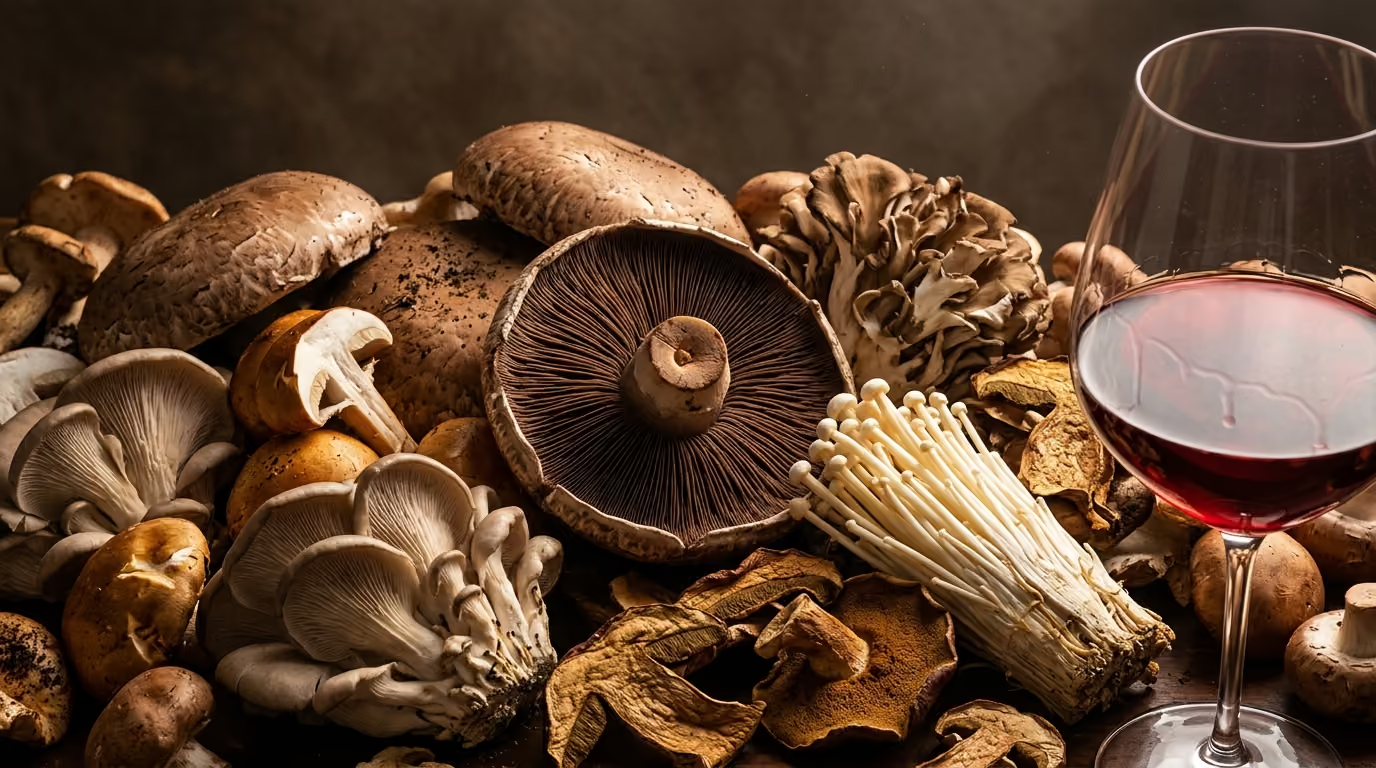
It changes the weight of the wine rather than the style. Delicate mushrooms need something lighter, meaty and dried mushrooms can handle more body, and everything else stays the same.
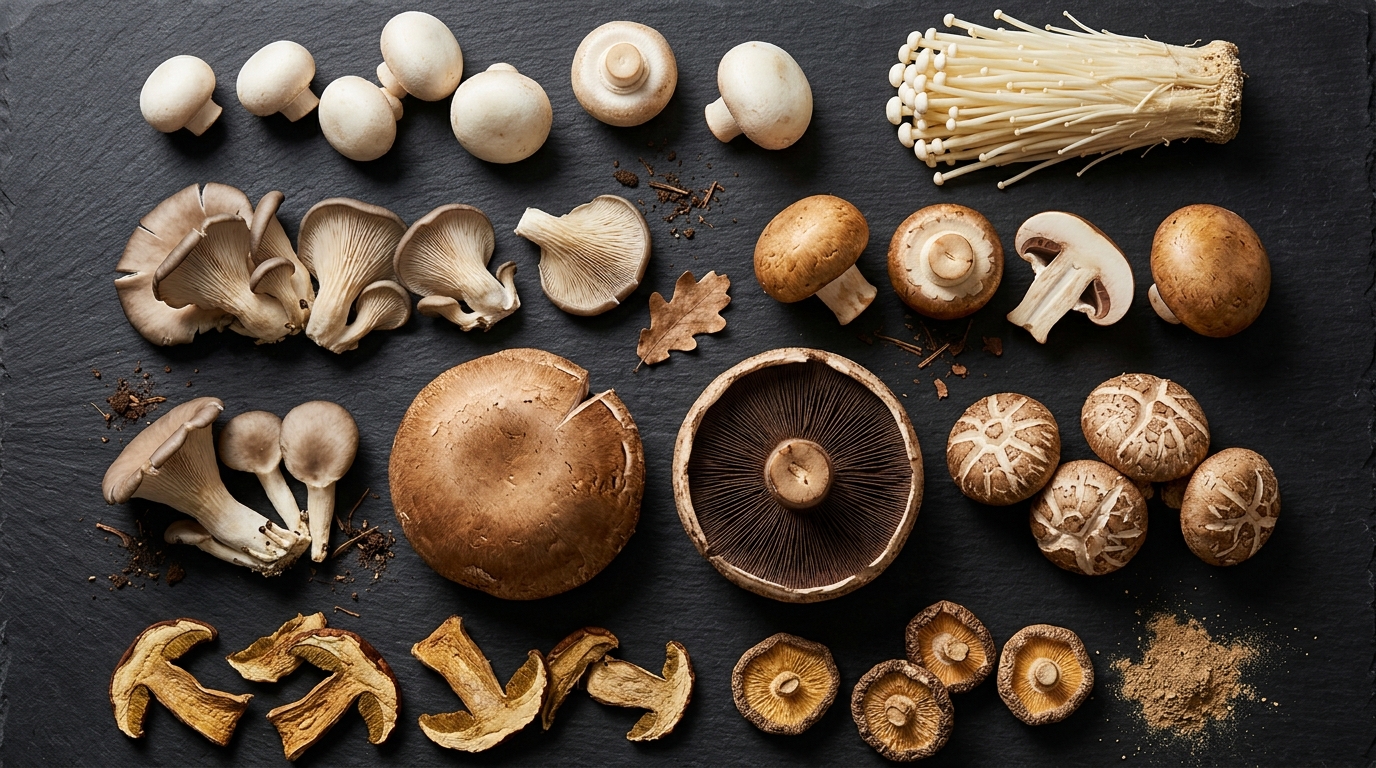
Think of it as sorting your mushrooms into two piles before you think about the bottle at all. Here's how that shakes out in practice.
| Mushroom | Weight | Wine direction |
|---|---|---|
| Button, chestnut, oyster, enoki | Delicate | Pinot Noir, Gamay, unoaked Chardonnay, Pinot Grigio |
| Maitake, cremini | Medium | Pinot Noir, Beaujolais-Villages, richer whites |
| Portobello, shiitake | Meaty | Fuller Pinot Noir, Sangiovese, Syrah, Bordeaux-style reds |
| Porcini, morels, dried mushrooms | Concentrated | Nebbiolo, aged Pinot Noir, Chianti Rufina |
Portobello behaves almost like a steak, which is why it's the one mushroom that can genuinely handle a hearty red, and a Bordeaux-style blend works well with it. Porcini and other earthy Italian varieties call for an earthier red in return, which is where Nebbiolo comes into its own. Oyster and shiitake with soy sauce usually show up inside a more complicated Asian dish, and a Pinot Noir-based Champagne is a surprisingly good all-rounder in that situation.
Truffles are their own category and the one place where spending more is justified. Their earthy, nutty perfume suits a fine aged red Burgundy or a Barbaresco, and how much cream is in the dish shifts things further. That said, a truffle dinner is a rare event and the pile-sorting logic above covers every other night of the year.
Serving temperature deserves a mention here too, because it quietly changes the outcome. A light red served warm tastes flabby and loses the freshness that makes it work with mushrooms in the first place, so twenty minutes in the fridge before you pour is worth the effort with Pinot Noir and Gamay. A rich Chardonnay has the opposite problem and gets muted if it comes straight from a cold fridge, so let it sit out for fifteen minutes before dinner. Neither adjustment costs you anything, and both make a bigger difference with earthy food than they do with most other meals.
How does the cooking method change the pairing?
More than the mushroom does, and this is the part almost every pairing guide skips. Butter, cream, char and smoke each pull the wine in a different direction, and the loudest element on the plate should decide your bottle.
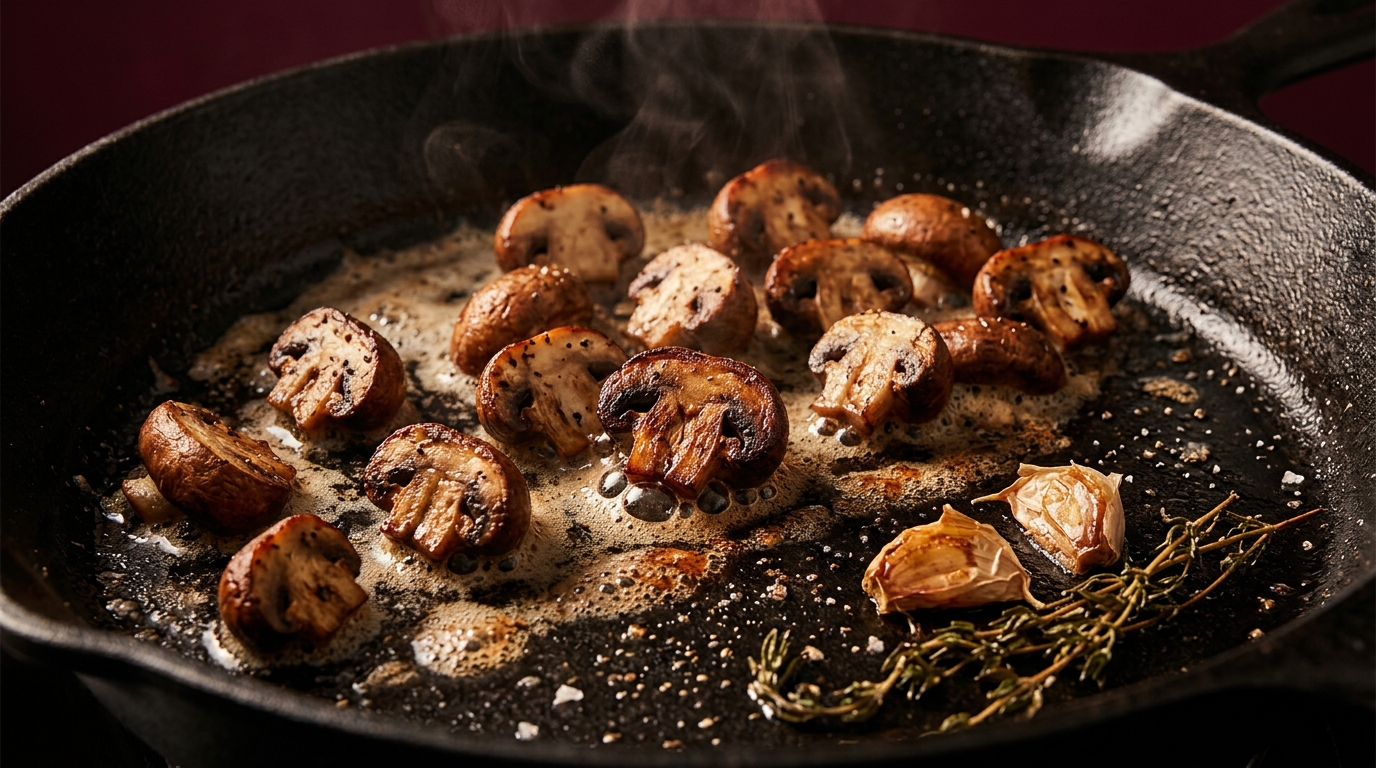
Sauté mushrooms in butter and the dish stops being about earthiness at all. The butter becomes the dominant flavor and the fat coats your palate, which is exactly the situation an oaked Chardonnay was built for. The same mushrooms in a cream sauce push even further that way, and a white with enough acidity to cut through the richness beats any red you could open. This single adjustment explains why so much generic mushroom advice fails people: the same mushroom in two dishes genuinely needs two different bottles.
Grill or char them and the logic reverses. Smoke, caramelization and a crisp seared edge add weight and bitterness the wine has to match, and now a fuller red makes sense. Syrah handles smoke particularly well, and a grilled portobello is one of the few mushroom dishes where a properly hearty red is the correct call rather than a compromise.
Cook them plainly, roasted with oil or simmered into a broth, and you're back in Pinot Noir and Gamay territory with the mushroom itself leading. Add tomato and you should move toward Sangiovese. Add a lot of soy or miso and the dish gets saltier and more savory still, so lower tannin and higher acidity become even more important. The full logic behind all of this lives in our guide on how to pair wine with food, and it applies well beyond mushrooms.
There's a moment where this gets genuinely fiddly, which is when you're halfway through cooking and the recipe has butter, mushrooms, garlic and a splash of stock all going at once. Sommy's Pairing feature reads a recipe or a photo of what's in the pan and recommends from your Taste Profile, so you get an answer that accounts for the whole dish rather than one ingredient in it.
What should you pour with common mushroom dishes?
Here's the shortlist for the dishes people actually cook, with the reasoning attached so you can adapt it when your version differs.
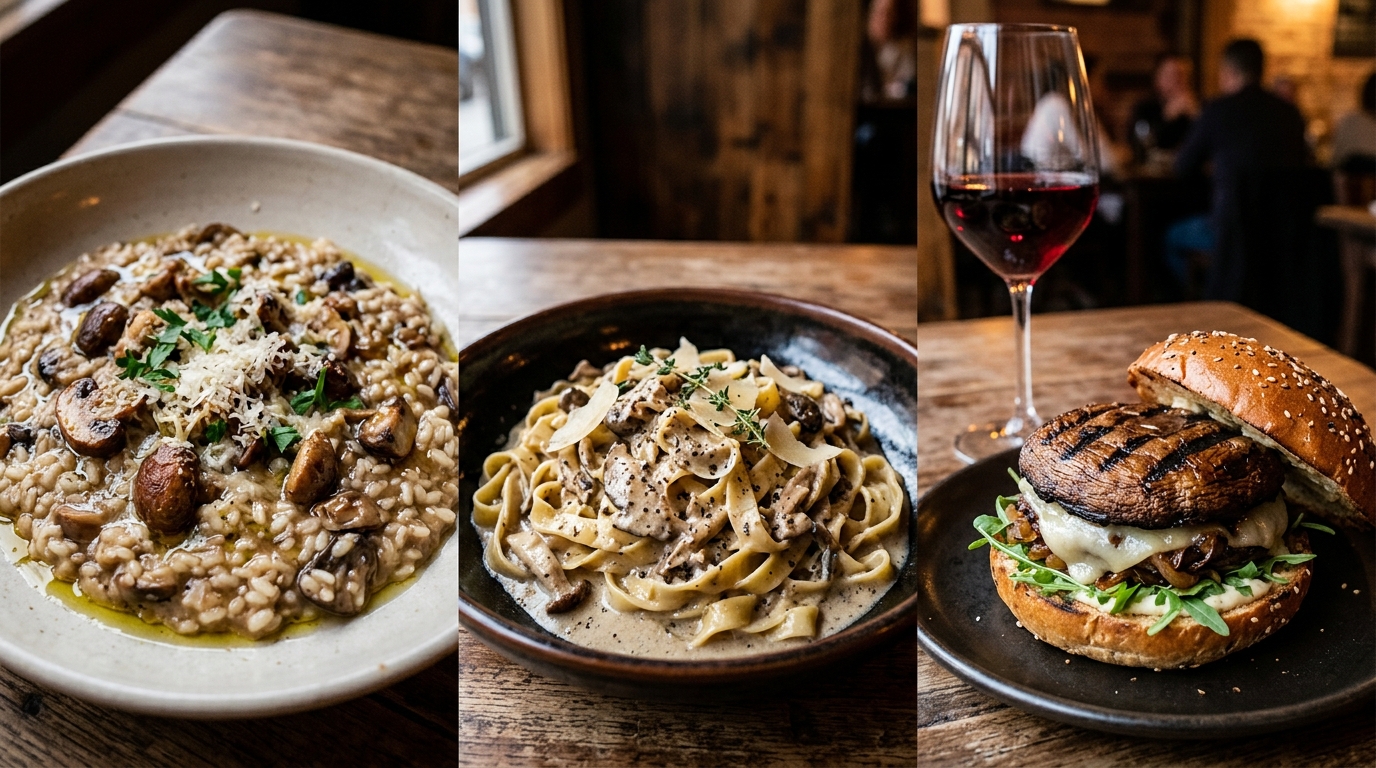
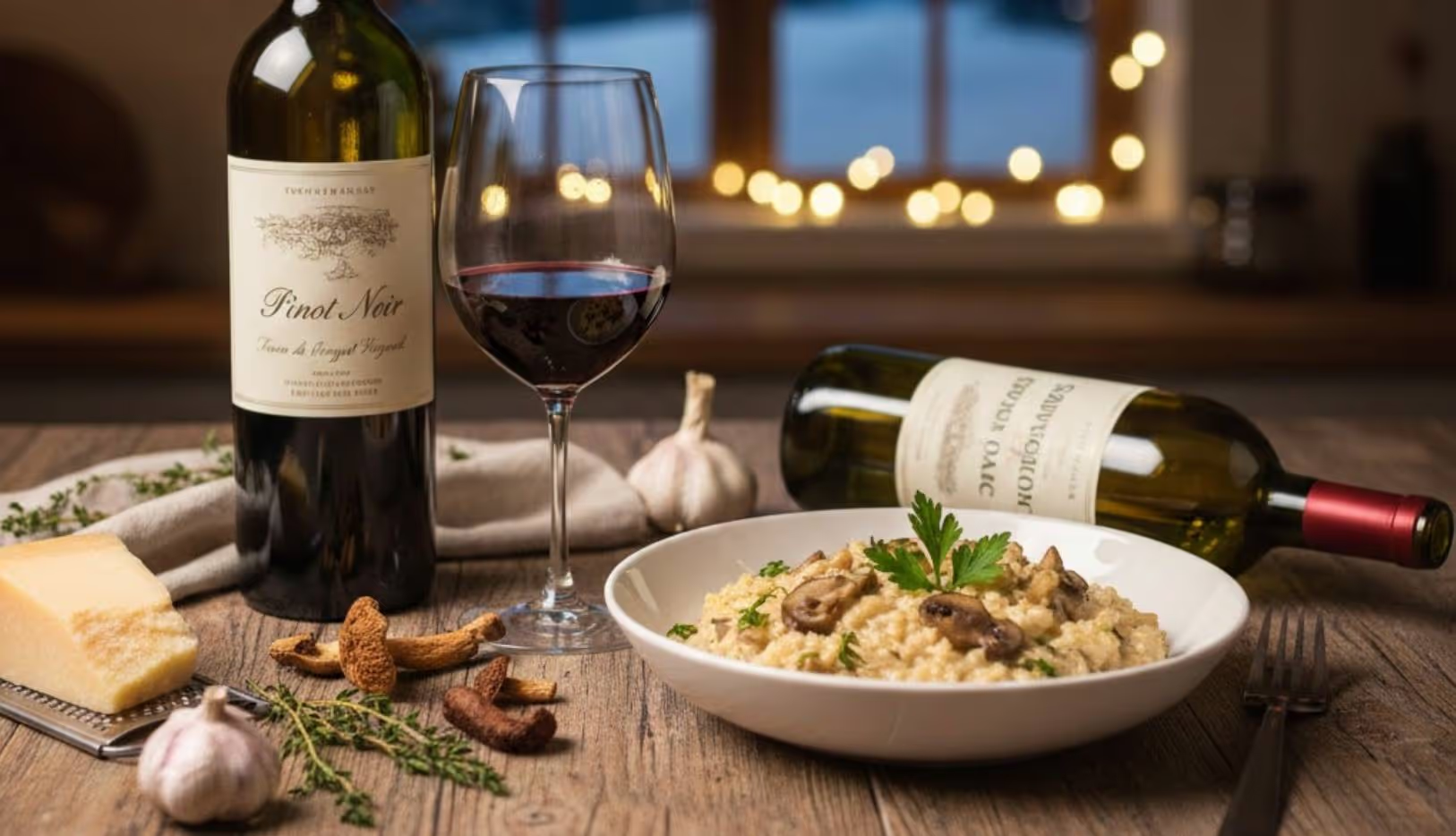
Mushroom risotto tricks people into reaching for a big red because it tastes so earthy, when the rice, butter and parmesan actually pull it toward a rich white. A Chardonnay from a cooler site works well, and a gentle Pinot Noir is the better move if you want red. We go deeper on this one in our guide to wine for mushroom risotto, since it's the dish people ask about most.
Creamy mushroom pasta follows the sauce rather than the fungus, so an oaked Chardonnay is the default and a lighter unoaked white works when the dish is more restrained. Mushroom soup does the same thing, and a rich Chardonnay suits a creamy version particularly well. A grilled portobello burger goes the other way entirely, with the char and the meaty texture calling for Syrah or a similarly full red. Sautéed mushrooms with herbs and a little butter sit right in the middle, and that's where Pinot Noir and Gamay are at their best.
Mushroom pizza and Tuscan mushroom dishes both want Sangiovese, because the tomato and the acidity in the wine belong together. Beef and mushroom stew or stroganoff can take something heavier still, like a Chianti Rufina or a Vino Nobile di Montepulciano. If you find yourself reaching for a very tannic red for any of these, it's usually a sign the dish has enough fat and protein in it to soften the wine, and if it doesn't, our notes on spotting low-tannin reds fast will steer you somewhere kinder.
Frequently asked questions
What wine goes best with mushrooms?
Pinot Noir is the most reliable choice across nearly every mushroom dish, because its low tannin and earthy character complement the food instead of fighting it. Gamay works for lighter preparations, and an oaked Chardonnay becomes the better answer whenever butter or cream is involved.
Should you drink red or white wine with mushrooms?
It depends far more on how the dish is cooked than on the mushrooms themselves. Plainly cooked, roasted or grilled mushrooms suit reds, while anything built on butter, cream or cheese usually tastes better with a rich white.
Why does red wine taste bitter with mushrooms?
Mushrooms are rich in umami and often carry a subtle peppery quality, and tannin accentuates both in a way that reads as bitterness and dryness. Choosing a lower-tannin red like Pinot Noir or Gamay solves the problem without giving up red wine.
What wine goes with mushroom risotto?
A rich Chardonnay is the classic match, since the butter, rice and parmesan matter more than the mushrooms do. If you want a red, a lighter Pinot Noir is the safest choice and will not overwhelm the dish.
Does Cabernet Sauvignon go with mushrooms?
Young, firmly tannic Cabernet is one of the riskier choices, because mushrooms make its grip and bitterness more noticeable. It works far better with a grilled portobello or a beef and mushroom dish where the fat and protein soften the tannin.
Do dried mushrooms need a different wine than fresh ones?
Yes, because drying concentrates their savory intensity considerably. A dish built on dried porcini or shiitake can handle a fuller, earthier red such as Nebbiolo, while the same recipe with fresh button mushrooms wants something much lighter.
Two questions and you're done
Wine with mushrooms comes down to asking what kind of mushroom you're using and then, more importantly, what you cooked it with. Delicate and plainly cooked points at Pinot Noir or Gamay, butter and cream point at Chardonnay, and char and smoke open the door to a fuller red.
The one habit worth building is checking the loudest thing on the plate before you check the recipe title. A dish called mushroom pasta might really be a cream dish, and pouring for the cream instead of the mushroom is the difference between a bottle that works and one that quietly disappears.