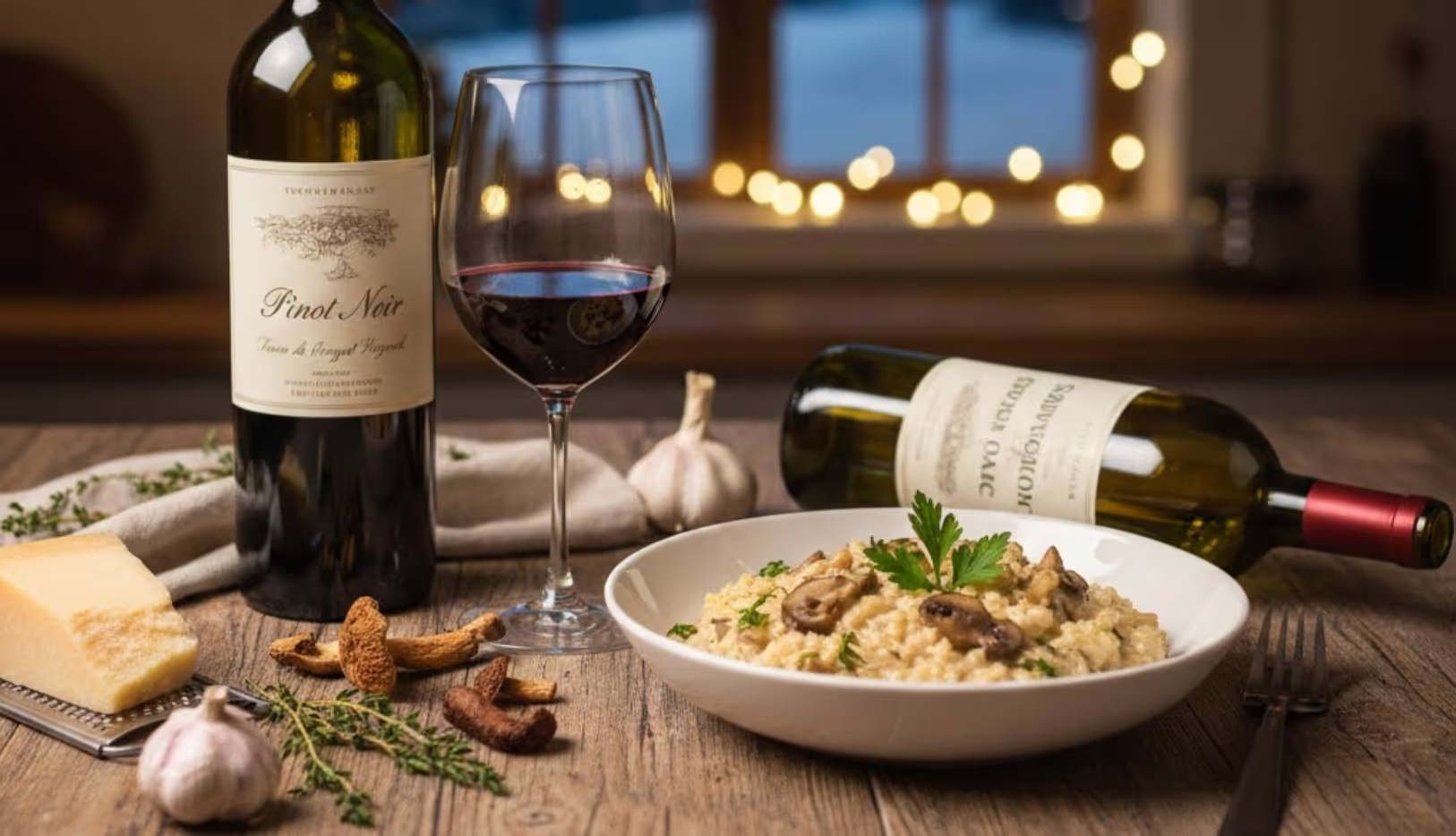

The best wine for mushroom risotto is a dry white with no heavy oak, and a stainless-steel Chablis or a Soave Classico is the pick we'd reach for first. If you'd rather drink red, go for a light Pinot Noir such as a red Burgundy, and move up to Nebbiolo when the risotto is built on porcini or finished with truffle. A Brut sparkling wine is the easy answer for a very cheesy, buttery pot, and the wine you stir into the rice should be a cheap, dry, unoaked white rather than the good bottle.
Below we'll walk through why each of those works, how porcini, truffle oil, extra parmesan and a splash of cream shift the choice, what to cook with versus what to pour, and how to order when mushroom risotto turns up on a restaurant menu.
What wine goes with mushroom risotto?
Mushroom risotto goes best with Chardonnay made without much oak (Chablis is the classic), Italian whites like Soave and Pinot Grigio, light Pinot Noir, and for bigger, earthier versions, Nebbiolo. Food & Wine's guide to mushroom risotto pairings lands in the same place: earthier reds like Pinot Noir or Nebbiolo, or a fuller white like lightly oaked Chardonnay or Pinot Gris. It also makes the point that the dish is generous with wine in general, suggesting it as the dinner to cook when you've got a special bottle of Barolo, Barbaresco or Burgundy to show off.
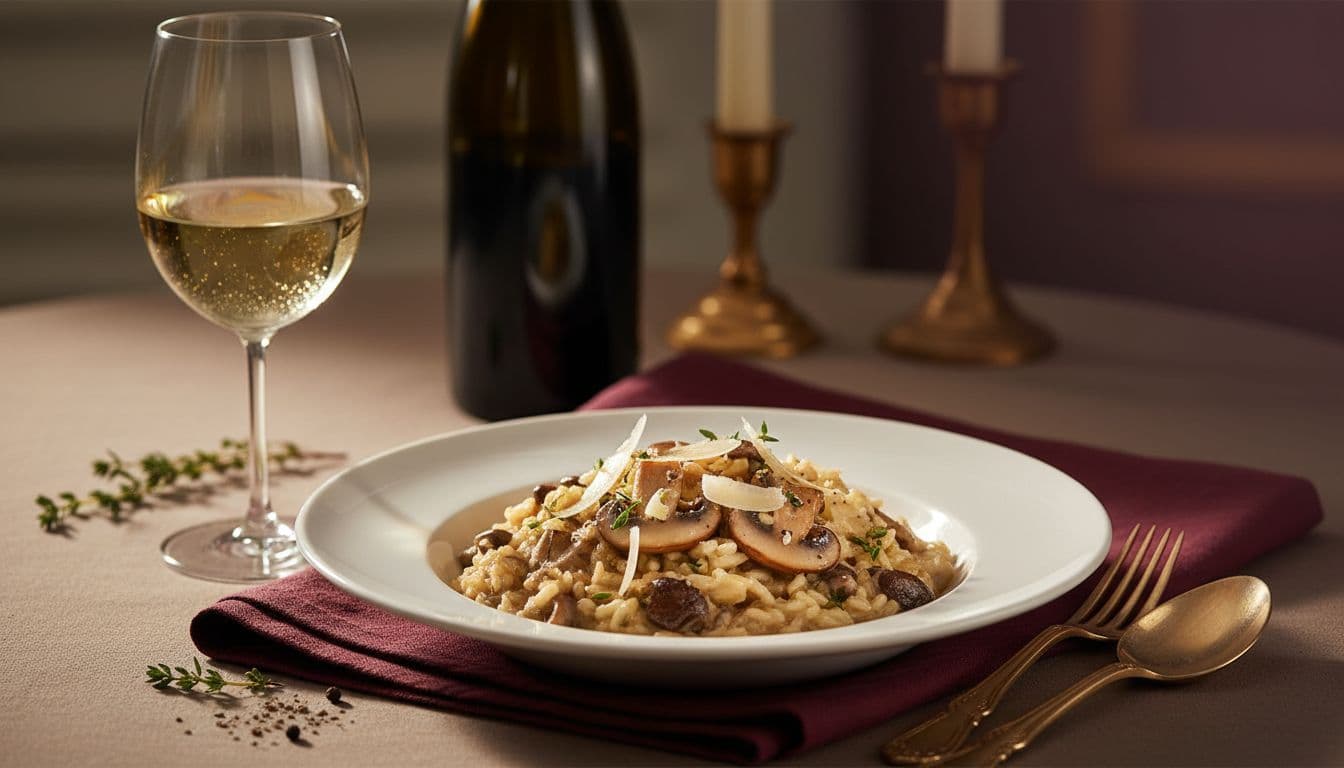
The reason so many styles work is that the dish pulls in two directions at once. The rice, butter and parmesan make it rich and rounded, so it wants a wine with enough acidity to keep each forkful feeling fresh. The mushrooms bring a savory, woodsy depth, which is why reds with an earthy side sit so comfortably next to it. A good match handles both jobs, and the easiest way to think about your pick is to ask which half of the dish is louder tonight.
If the pot leans on butter and cheese with a handful of sliced cremini, the richness is louder and a crisp white wins. If you've used dried porcini, mushroom stock and a lot of fungi, the earthiness is louder and a light red starts to make more sense. Most home versions sit somewhere in the middle, which is exactly why a dry, unoaked white is our default.
The one thing to watch is tannin, the drying grip you feel on your gums from many reds. Earthy mushroom dishes and big, tannic reds can clash, and we cover the mechanics in our guide to wine pairing with mushrooms.
Which white wine is best for mushroom risotto?
The best white wine for mushroom risotto is an unoaked Chardonnay, and Chablis from northern Burgundy is the most reliable version on a store shelf. Louis Jadot's basic Chablis is a good example to look for, since the producer says both fermentation and aging take place in stainless steel tanks to keep the fruit and freshness. That steel-only approach matters here, because it gives you Chardonnay's roundness without the vanilla and toast that new oak adds, and those flavors tend to pile onto a dish that's already buttery.
Soave Classico is our second favorite, and it's a lovely Italian answer to an Italian dish. Pieropan's Soave Classico is made mostly from Garganega with a little Trebbiano di Soave, and it ages in glass-lined concrete tanks on its lees rather than in barrel. That gives it a soft texture that sits well with creamy rice while staying fresh enough to cut through the cheese.
Pinot Grigio works when you want something lighter and simpler, and it's an easy white to find on almost any by-the-glass list. Pick a dry Italian one over a sweeter, fruitier style. Grüner Veltliner from Austria is the outside choice we keep coming back to, since its fresh, often herbal character plays nicely with mushrooms and thyme.
What about oaked Chardonnay? A lightly oaked one is fine, and Food & Wine includes it in its picks. The trouble starts with the big, buttery California style, where the oak and creaminess in the glass meet the oak-free creaminess of the dish and the whole meal can start to feel heavy. If you're not sure which kind you're holding, our guide to spotting unoaked Chardonnay on the label covers the words that give it away.
Should you pour red wine with mushroom risotto?
Yes, red wine works with mushroom risotto as long as it's light on tannin, and Pinot Noir is the red to start with. Red Burgundy is the classic version, and Louis Jadot's Bourgogne Pinot Noir is a widely stocked one that the producer vinifies and ages in stainless steel vats to keep its fruitiness and freshness. Pinot from Oregon, New Zealand or a cooler part of California does the same job, as long as it isn't one of the very ripe, jammy bottlings.
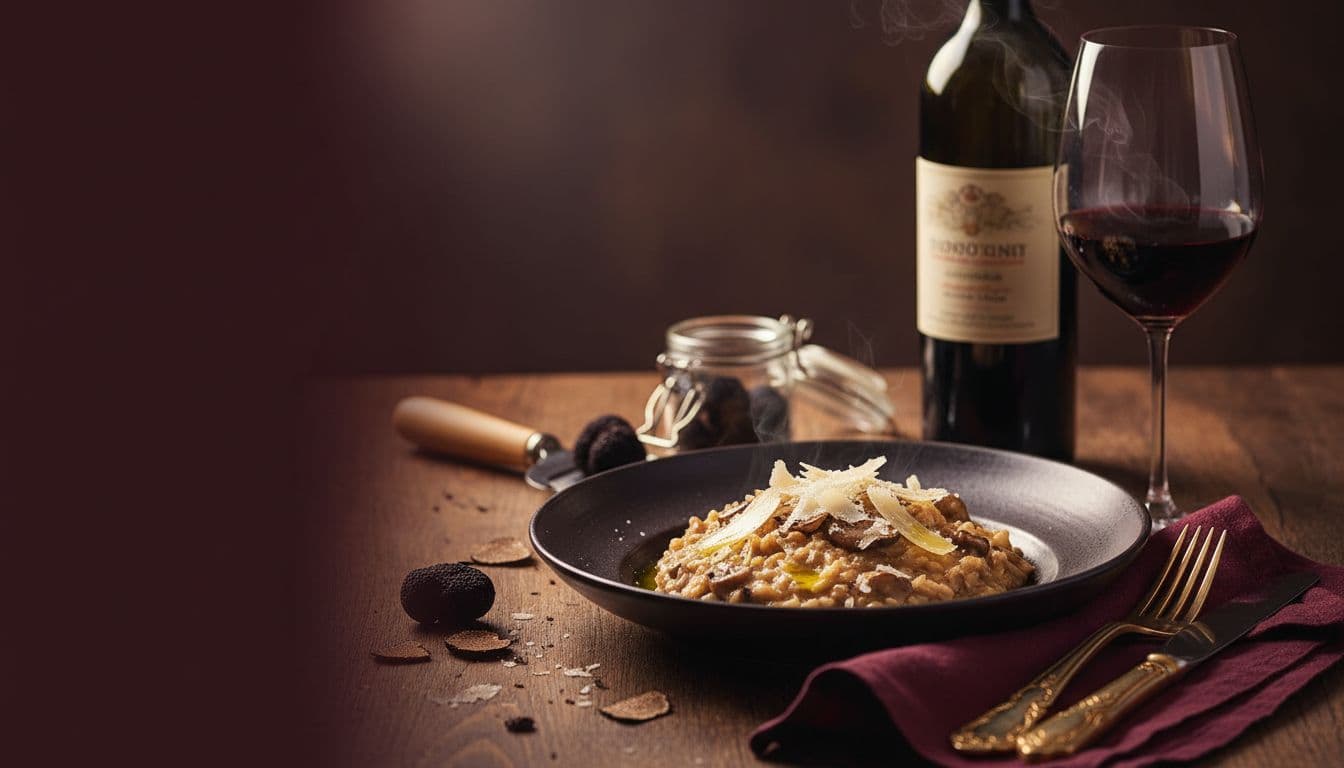
Nebbiolo is the bolder red choice, and we love that it's a northern Italian grape for a northern Italian dish. Wine Folly's Nebbiolo profile describes the grape as delicate in aroma with strong tannins, and it specifically recommends fatty, creamy or cheesy dishes to soften that grip, calling truffle risotto a revelation. You don't need a Barolo to try it. Produttori del Barbaresco's Langhe Nebbiolo is 100% Nebbiolo from the same co-op that makes their Barbaresco, and the producer describes it as medium-bodied with ripe red fruit and white pepper.
Cabernet Franc is the third red we like here, especially a lighter one from the Loire Valley, where the earthy, herbal side of the grape echoes mushrooms and fresh thyme. We wrote about this match in more detail in our guide to Cabernet Franc paired with creamy mushroom risotto, including how to keep the butter in check so the wine still shows.
Big reds are the ones to skip. A young, oaky Cabernet Sauvignon or a high-alcohol Zinfandel carries more tannin and weight than a bowl of rice can absorb,. Mushroom risotto is forgiving, but that's a reason to relax about your pick rather than a reason to open a heavy red on purpose.
How do porcini, truffle oil and parmesan change the pick?
Porcini and truffle push you toward Pinot Noir or Nebbiolo, while a very cheesy, buttery risotto pushes you back toward crisp whites and sparkling wine. The base dish is the same, but the finishing ingredients decide which half of it is louder, so it helps to pair for what you actually added.
Porcini and wild mushroom risotto
Dried porcini and mixed wild mushrooms give the deepest, most savory version of the dish, especially when you use the soaking liquid in the stock. That intensity can make a delicate white seem thin, so this is where a red earns its place. Pinot Noir is the gentle option and Langhe Nebbiolo is the fuller one. If you'd still rather drink white, step up from Pinot Grigio to Chablis or a white Burgundy with a little more texture.
Truffle oil or shaved truffle
Truffle is all about aroma, and a few drops of truffle oil or a little shaved truffle can dominate the smell of the whole plate. Earthy reds suit it best, which is why Nebbiolo and red Burgundy are the traditional choices, and Wine Folly's note about truffle risotto with Nebbiolo is the clearest example. Go easy on the oil itself, since a heavy hand drowns out the wine as well as the mushrooms.
Extra parmesan and butter
A risotto finished with a big handful of parmesan and a generous knob of butter is rich and salty, and that's the version where acidity and bubbles help most. Chablis, Soave and Brut sparkling wine all keep it from feeling heavy. Salty cheese also makes reds with firm tannin feel harsher, so if you're piling on the parmesan, a white is the safer bet.
Herbs, lemon and lighter versions
A spring-style risotto with fresh herbs, peas or lemon zest is lighter and greener, and it pairs best with the crispest whites on the list. Grüner Veltliner and Pinot Grigio come into their own here, and Sauvignon Blanc works well too when there's plenty of lemon or green herbs in the pot.
If your recipe adds something we haven't covered, like pancetta, chicken or blue cheese, that's the moment to hand the recipe to Pairing in Sommy, which reads the ingredient list from a recipe link or a photo of the page and picks out the ingredients that actually change the wine.
Does a cream-finished risotto need a different wine?
A risotto finished with cream needs a wine with a bit more acidity than one finished only with butter and cheese, so lean toward Chablis, Soave or sparkling wine. A traditional risotto gets most of its creaminess from the rice starch released by stirring, then a final beat of butter and parmesan, but plenty of home recipes add a splash of heavy cream or mascarpone as well.
Cream makes the dish softer and more rounded, which means an oaky, buttery Chardonnay can tip it over into feeling heavy. Without cream, you've got more room to experiment, and Pinot Noir and Nebbiolo work at their best.
Is sparkling wine a good match for mushroom risotto?
Yes, a dry sparkling wine labeled Brut is one of the easiest matches for mushroom risotto, because the bubbles and acidity cut through cheese and butter. Champagne is the classic, and we like one with plenty of Pinot Noir in the blend for the mushrooms, but a good domestic sparkler does the same job for less.
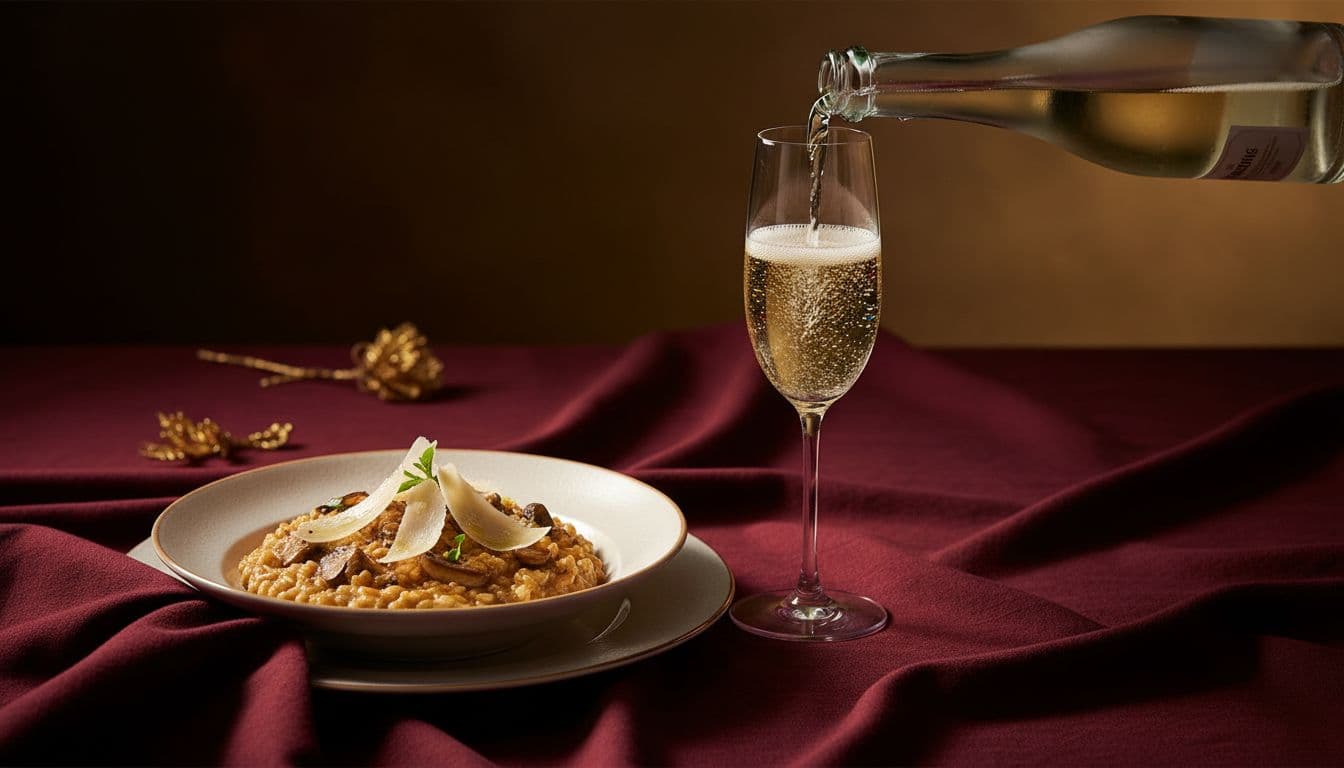
One we'd point you to is Mumm Sparkling Brut Prestige from California, a traditional-method blend of 49% Chardonnay and 48% Pinot Noir with 10 g/L of dosage, the sugar added before corking. The winery lists it at $25 (checked Oct 2026). That Pinot Noir share is a nice bridge to the mushrooms, and the Chardonnay keeps it fresh.
The word to look for on any bottle is Brut, since Extra Dry, confusingly, is sweeter. Our guide to what Brut means on sparkling wine labels explains the whole scale if you're comparing bottles in the aisle. Prosecco comes in both styles, so check the label before you buy one for this dish.
What wine should you cook the risotto with?
Cook mushroom risotto with a dry, unoaked white wine you'd be happy to drink, such as an inexpensive Pinot Grigio or Sauvignon Blanc, and save the nicer bottle for the glass. The Kitchn's explainer on risotto without wine notes that most recipes call for about half a cup, added right after the rice is toasted and before the broth, and that its job is to lend flavor and a bit of acidity to balance the dish's richness.
Because the wine is there for acidity, the main things to avoid are sweetness and heavy oak, both of which concentrate as the liquid cooks down. You don't need anything special, since the subtler character of a good wine fades as it simmers into the rice, and an open bottle of whatever dry white you're drinking that week is perfect.
Can you use the same wine you're pouring? Absolutely, as long as it's an affordable one, and it's a neat way to tie the glass to the plate. If you're serving Chablis, a splash of it in the rice works beautifully.
Red wine in the pot is possible too, and it gives the rice a purple tint and a deeper, fruitier flavor, which suits a porcini-heavy version served with Nebbiolo or Pinot Noir. And if you'd rather skip wine entirely, The Kitchn points out that Marcella Hazan left it out of her basic risotto, and suggests verjus or a squeeze of lemon instead for the acidity.
For a wider look at other risottos, from seafood to saffron to butternut squash, our roundup of the best risotto wine for any recipe covers the rest of the family.
How do you order wine with mushroom risotto at a restaurant?
At a restaurant, ask for a dry white that isn't oaky, or a light red like Pinot Noir, and you'll be on solid ground with mushroom risotto.
If the menu says the risotto has truffle or porcini, steer red. If it's a lemon, herb or pea risotto, stay white. If the table is sharing several dishes and you want one bottle that covers everything, a Brut sparkling wine is the safest single choice. Here's the whole thing in one place:
| Your risotto | What to pour | Why it works |
|---|---|---|
| Cremini, butter and parmesan | Chablis, Soave Classico | Acidity freshens the richness |
| Porcini or wild mushrooms | Pinot Noir, Langhe Nebbiolo | Earthy red meets earthy dish |
| Truffle oil or shaved truffle | Nebbiolo, red Burgundy | Fat and cheese soften the tannin |
| Extra cheese or a splash of cream | Brut sparkling, Chablis | Bubbles and acidity cut the fat |
| Lemon, herbs or peas | Grüner Veltliner, Pinot Grigio | Crisp and light for a lighter dish |
| The wine in the pot | Cheap dry unoaked white | Adds acidity, skip sweet or oaky |
The cheat sheet gives you the average answer, and only your own palate can settle which side of it you land on. If you love crisp whites, the Chablis will probably feel right even with a porcini risotto, and if you always reach for red, a light Pinot is a perfectly good call with the butteriest version. The rules are a starting point rather than a verdict.
Frequently Asked Questions
What is the best wine for mushroom risotto?
The best wine for mushroom risotto is an unoaked Chardonnay such as Chablis, with Soave Classico and light Pinot Noir close behind. Choose Nebbiolo if the risotto uses porcini or truffle, and a Brut sparkling wine if it's very cheesy.
Is red or white wine better with mushroom risotto?
Both work, and it depends on the version you've made. White wine suits butter-and-parmesan risotto with milder mushrooms, while a light red like Pinot Noir suits earthier risottos made with porcini, wild mushrooms or truffle.
What is the best white wine for mushroom risotto?
Chablis is our top white, because it's Chardonnay without the heavy oak that can make a creamy dish feel heavier. Soave Classico, dry Pinot Grigio and Grüner Veltliner are all good alternatives.
Does Pinot Noir go with mushroom risotto?
Yes, Pinot Noir is the classic red for mushroom risotto. Its light tannin keeps it from clashing with the mushrooms and cheese, and its earthier side suits porcini and truffle versions especially well.
What wine do you cook mushroom risotto with?
Use about half a cup of a dry, unoaked white such as Pinot Grigio or Sauvignon Blanc, added after toasting the rice. Avoid sweet or oaky wines, and keep your best bottle for drinking.
Can you make mushroom risotto without wine?
Yes, you can leave the wine out and start adding broth straight after toasting the rice. A squeeze of lemon or a little verjus adds back some of the acidity the wine would have brought.