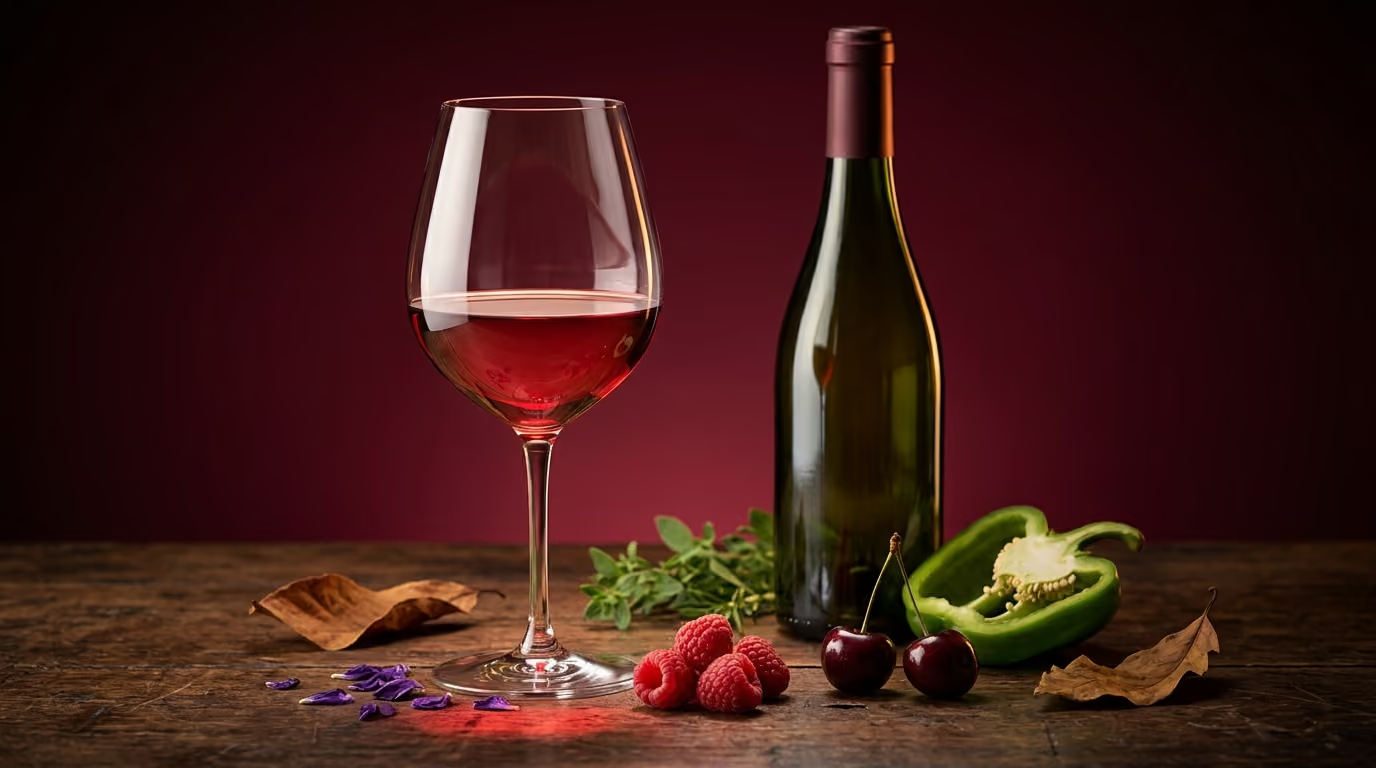


Cabernet Franc, with its alluring notes of raspberry, bell pepper, and graphite, is one of the most versatile and food-friendly red wines available. Yet, finding the perfect dish to complement its unique character can feel like a puzzle. Whether you're uncorking a bright, herbal style from the Loire Valley or a richer, more structured bottle from Bordeaux, the right food pairing with Cabernet Franc can elevate the experience from simple to sublime. This is where a well-curated guide becomes essential, removing the guesswork and ensuring every bottle reaches its full potential.
This guide demystifies the art of pairing, offering a comprehensive roundup of dishes that showcase the wine's incredible range. Forget generic advice; we provide specific, actionable pairings designed for real-world scenarios, from a casual weeknight dinner to a more elaborate gathering. We will explore the principles behind each match, providing clear tips to help you recreate these perfect pairings at home and transform your next meal into an unforgettable event.
For those looking to digitize and expand their pairing knowledge, a tool like the Sommy app can be invaluable. It allows you to log each bottle, rate pairings, and build a personal flavor profile, turning every glass into a data point for future enjoyment. This list serves as your starting point, a curated collection of proven successes to begin your journey. We'll cover everything from classic red meat dishes and earthy vegetarian options to specific cheeses and even spicy cuisine, ensuring you have the perfect food pairing with Cabernet Franc for any occasion. Let's dive into the dishes that make this remarkable grape shine.
1. Lamb with Herb Crust
When seeking a quintessential food pairing with Cabernet Franc, few dishes align as harmoniously as herb-crusted lamb. This classic combination, deeply rooted in French culinary tradition, particularly in the Loire Valley, succeeds because the wine and the meat complement each other's core characteristics. The slightly gamey, rich flavor of lamb is beautifully balanced by Cabernet Franc's bright acidity and earthy, herbaceous notes of bell pepper, graphite, and violet.
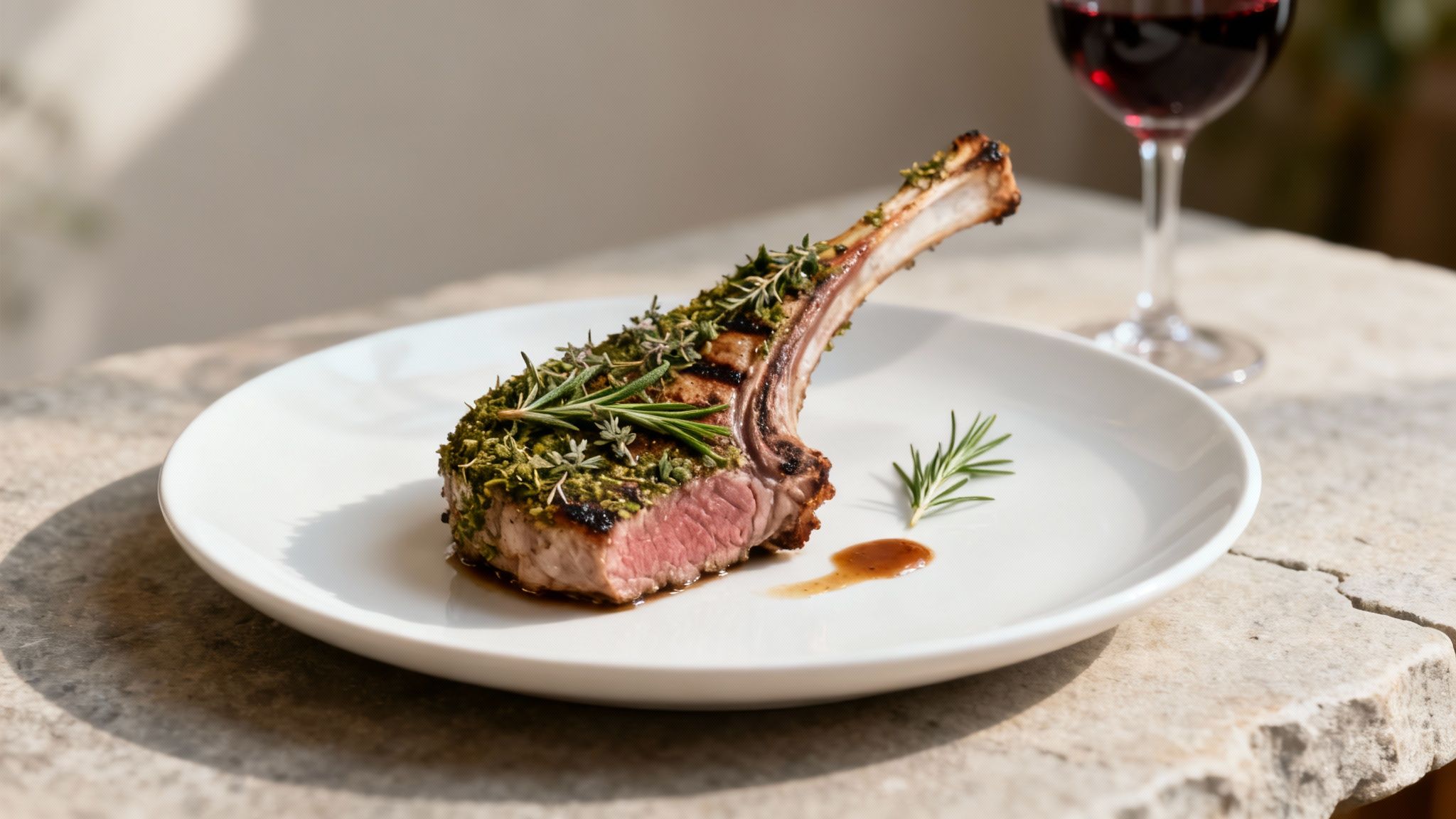
The wine's moderate tannins and medium body are substantial enough to stand up to the lamb's richness without overpowering it. The acidity acts as a palate cleanser, cutting through the fat and preparing your taste buds for the next bite. Furthermore, the herbal notes in the wine, often reminiscent of thyme, rosemary, and sage, directly echo the herbs used in the crust, creating a seamless and resonant flavor bridge between the plate and the glass.
Why This Pairing Works
The success of this pairing hinges on flavor congruence and structural balance. The savory, earthy profile of the lamb finds a direct counterpart in the wine's terroir-driven, sometimes vegetal character. This is especially true for Old World Cabernet Francs from regions like Chinon or Bourgueil, which are celebrated for their herbal and mineral qualities.
Expert Insight: The key is the interaction between the wine's pyrazines (the compounds responsible for green bell pepper notes) and the herbs in the crust. When they align, the pairing feels intentional and sophisticated, elevating both the food and the wine.
Actionable Tips for the Perfect Lamb Pairing
To ensure your lamb and Cabernet Franc pairing is a memorable one, follow these specific guidelines:
- Select the Right Wine: Opt for a Cabernet Franc with a few years of age (2-3 years is a good starting point). This allows the tannins to soften slightly, making the wine more approachable and less likely to clash with the meat's texture.
- Emphasize Herbal Preparations: Focus on recipes where herbs like rosemary, thyme, and garlic are prominent. Avoid heavy cream or cheese-based sauces, which can mute the wine's delicate aromatics.
- Proper Serving Temperature: Serve your Cabernet Franc slightly chilled, between 60-65°F (15-18°C). This temperature lifts the wine's aromatics and preserves its refreshing acidity.
- Rest the Meat: Always allow the cooked lamb to rest for at least 10 minutes before slicing. This helps the juices redistribute, resulting in a more tender and flavorful bite that pairs exquisitely with the wine's structure.
2. Mushroom Risotto
For a vegetarian pairing that is both elegant and deeply satisfying, look no further than a creamy mushroom risotto. This classic Italian dish offers a sublime food pairing with Cabernet Franc, particularly highlighting the wine's earthy and savory side. The umami-rich flavors of mushrooms, especially varieties like porcini or truffle, resonate beautifully with Cabernet Franc's signature notes of forest floor, graphite, and dried herbs.
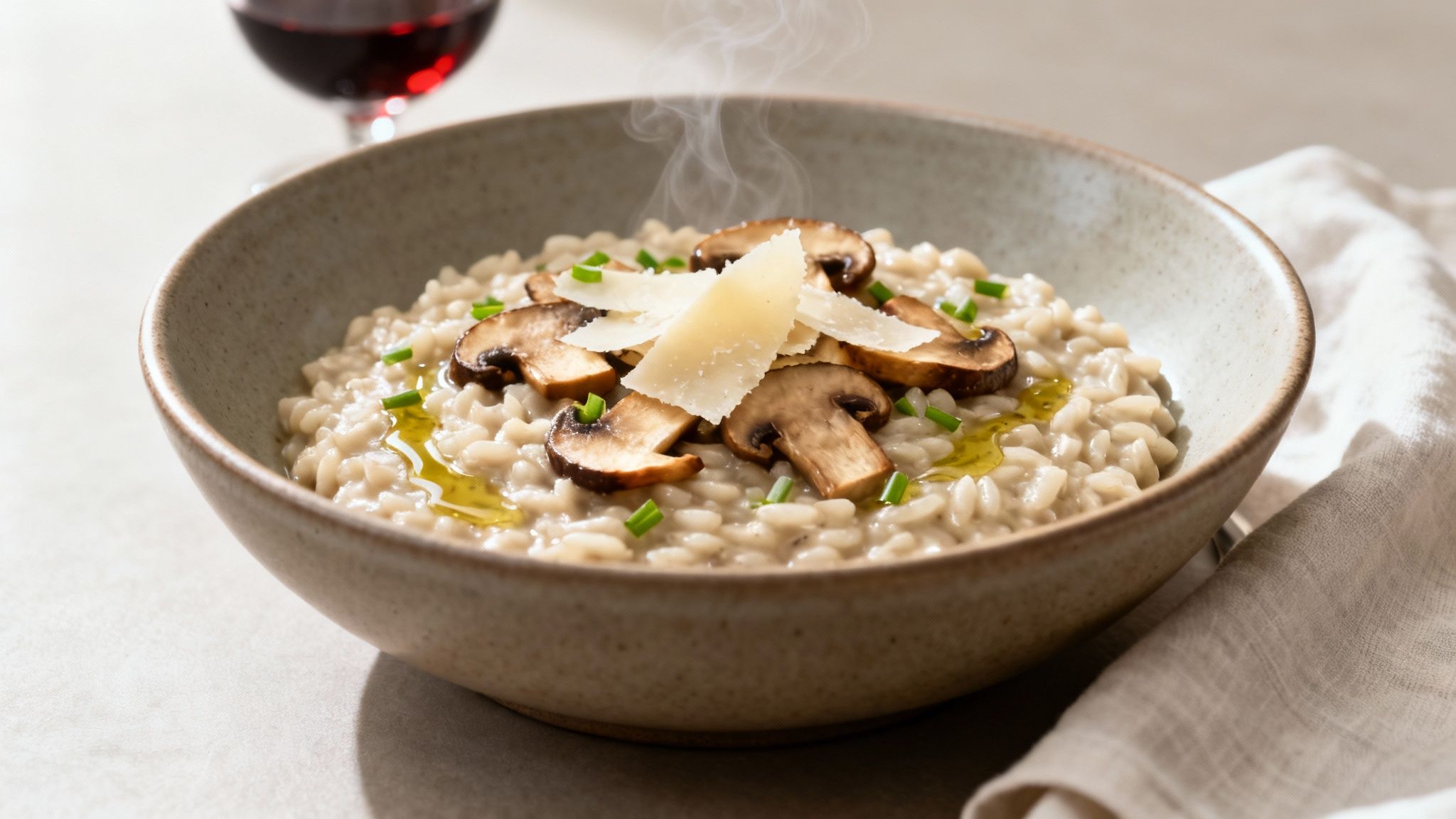
The wine's bright, food-friendly acidity is crucial here, as it cuts through the creaminess of the Arborio rice and Parmigiano-Reggiano, preventing the dish from feeling heavy. This creates a refreshing balance on the palate. The wine's moderate, fine-grained tannins provide just enough structure to complement the risotto's rich texture without overwhelming its delicate flavors, proving that Cabernet Franc’s versatility extends far beyond red meat.
Why This Pairing Works
The magic of this pairing lies in umami and earthy synergy. The mushrooms provide a profound savory depth that mirrors the mineral and soil-driven notes often found in Cabernet Franc, especially from cooler climates like the Loire Valley. This creates a flavor bridge where the dish and the wine seem to speak the same language, enhancing each other’s complexity.
Expert Insight: The earthiness in both the mushrooms and the wine comes from shared organic compounds. When paired, they create a resonant, layered flavor experience. The wine's acidity acts as a spotlight, illuminating these shared notes and keeping the rich dish vibrant.
Actionable Tips for the Perfect Risotto Pairing
To create an unforgettable mushroom risotto and Cabernet Franc experience, consider these practical tips:
- Select the Right Wine: An aged Cabernet Franc (3+ years) is ideal. The additional time in the bottle will have developed its tertiary notes of mushroom and forest floor, creating a more direct and sophisticated flavor link.
- Vary Your Mushrooms: Don't stick to one type. A blend of fresh wild mushrooms like cremini and shiitake with a base of rehydrated porcini adds layers of flavor and texture that will complement the wine's complexity.
- Balance the Richness: Be mindful of the butter and cream. Finish the risotto with just enough to create a creamy texture, but not so much that it masks the wine’s subtle aromatics.
- Add a Savory Boost: A generous amount of high-quality Parmigiano-Reggiano at the end not only adds creaminess but also boosts the umami, further strengthening the connection to the wine.
3. Duck Breast with Red Fruit Sauce
A truly elegant food pairing with Cabernet Franc is duck breast, especially when served with a vibrant red fruit sauce. This combination, a staple in French bistro cuisine, creates a sophisticated dance of flavors where the wine’s characteristics perfectly elevate the rich, fatty nature of the duck. The wine's inherent notes of red cherry, raspberry, and plum find a direct reflection in the sauce, creating a powerful flavor bridge.

The magic of this pairing lies in its structure. Cabernet Franc’s bright acidity and firm tannins are essential for cutting through the richness of the duck fat, cleansing the palate with each sip. This prevents the dish from feeling heavy and allows the nuanced flavors of both the meat and the wine to shine through. The sauce, often a cherry or blackberry gastrique, mirrors the wine’s acidity, ensuring the entire experience is balanced and harmonious.
Why This Pairing Works
This pairing succeeds due to complementary flavors and contrasting textures. The rich, savory profile of the duck is enhanced by the wine’s bright red fruit character, while the wine’s tannins and acidity provide a necessary counterpoint to the meat's fattiness. The fruit sauce acts as the crucial link, echoing the wine's aromatics and tying the entire dish together.
Expert Insight: The acidity in both the wine and the fruit sauce is the key to success. It prevents the rich duck from overwhelming the palate. A well-made cherry or blackberry reduction will have a tartness that perfectly aligns with a Loire Valley Cabernet Franc, making the pairing feel seamless.
Actionable Tips for the Perfect Duck Pairing
To create a flawless duck and Cabernet Franc experience, focus on these details:
- Choose the Right Wine: Select a Cabernet Franc with prominent red fruit notes and good acidity. A Chinon, Saumur-Champigny, or even a cooler-climate New World version works beautifully. Wines with 2-5 years of age will have softened tannins that are ideal.
- Master the Sauce: Use tart fruits like sour cherries, blackberries, or plums for your reduction. Balance the sweetness with a splash of wine vinegar or a bit of the Cabernet Franc itself to align the sauce's acidity with the wine.
- Render the Fat: Score the duck skin in a crosshatch pattern and start the breast skin-side down in a cold pan. This allows the fat to render slowly, resulting in a crispy skin and moist meat that contrasts beautifully with the wine's texture.
- Serve at the Right Temperature: Pour your Cabernet Franc slightly cooler than room temperature, around 62°F (16-17°C). This enhances its fruity aromatics and makes its acidity feel more refreshing against the rich duck. For expert guidance on specific bottles, an AI-powered tool can offer precise recommendations. Discover more about Sommy's personalized pairing technology.
4. Roasted Beets with Goat Cheese
For a vegetarian-focused pairing that is both sophisticated and deeply satisfying, look no further than roasted beets with goat cheese. This combination excels because it highlights the more nuanced, terroir-driven side of Cabernet Franc. The inherent earthiness of the roasted beets resonates beautifully with the wine's mineral and herbal notes, while the beet's subtle sweetness is perfectly balanced by the wine's bright acidity and modest fruit profile.
The tangy, creamy goat cheese introduces a crucial counterpoint. Its bright acidity mirrors that of the wine, creating a refreshing lift that cuts through the rich, dense texture of the beets. This interplay prevents the pairing from feeling heavy, instead making it vibrant and elegant. The wine's moderate tannins and medium body are gentle enough not to overwhelm the dish, allowing the delicate dance of earthy, sweet, and tangy flavors to take center stage.
Why This Pairing Works
The success of this food pairing with Cabernet Franc is built on complementary earthiness and contrasting acidity. The wine's classic bell pepper and graphite notes find a natural partner in the beet's earthy flavor profile, a connection often found in contemporary French bistro cuisine. The goat cheese then provides a sharp, acidic contrast that brightens the entire experience, making the wine's fruit notes of raspberry and cherry pop.
Expert Insight: It’s the harmony between the wine's acidity and the goat cheese's tang that truly elevates this pairing. This acidic bridge cleanses the palate and makes the earthy notes from both the beets and the wine feel more focused and refined.
Actionable Tips for the Perfect Beet Pairing
To create a memorable experience with roasted beets and Cabernet Franc, consider these specific recommendations:
- Select the Right Wine: Opt for a younger, unoaked Cabernet Franc, particularly from the Loire Valley (e.g., a Chinon or Saumur-Champigny). These wines lead with fresh acidity and herbal notes rather than heavy tannins or oak, which could overpower the dish.
- Enhance Earthiness: Roast the beets with a drizzle of good-quality olive oil and a sprinkle of thyme. This preparation method deepens their earthy character, creating a stronger link to the wine's profile.
- Balance with Texture: Add a textural element like toasted walnuts or pistachios. The crunch provides a delightful contrast to the soft beets and creamy cheese, adding another layer of complexity.
- Serve at Room Temperature: Allow the roasted beets and goat cheese to come to room temperature before serving. This ensures the flavors are fully expressed and not muted by cold temperatures, allowing for a more seamless pairing.
5. Grilled Steak with Black Peppercorn Crust
The robust and classic pairing of a grilled steak with a bold Cabernet Franc stands as a benchmark in the world of wine and food. This combination, particularly when the steak is encrusted with black peppercorns, is a perfect food pairing with Cabernet Franc because the wine's inherent structure and flavor profile are tailor-made to complement the rich, charred character of the beef. The wine's firm tannins, bright acidity, and distinctive spicy notes create a powerful yet balanced interaction with the savory meat.
Cabernet Franc’s tannins bind with the proteins and fat in the steak, cleansing the palate and heightening the beef's umami flavors. Simultaneously, the wine's acidity cuts through the richness, preventing the pairing from feeling heavy. The signature black pepper and subtle chili notes found in many Cabernet Francs, especially those from warmer climates, directly mirror the peppercorn crust, forging a direct and exhilarating flavor link between the glass and the plate.
Why This Pairing Works
This pairing thrives on the principles of complementary intensity and flavor bridging. The steak's powerful, savory profile requires a wine with enough backbone to not be overwhelmed. Cabernet Franc provides this with its tannin and acid structure. The peppery spice in both the wine and the crust creates a synergistic effect, where each component amplifies the other, resulting in a cohesive and deeply satisfying culinary experience.
Expert Insight: The magic here is the Maillard reaction. The char on a grilled steak creates complex, savory compounds that resonate perfectly with the subtle pyrazine and peppery notes in a well-made Cabernet Franc, making the pairing feel both classic and exciting.
Actionable Tips for the Perfect Steak Pairing
To elevate your grilled steak and Cabernet Franc experience, focus on these key details:
- Choose a Robust Wine: Select a New World Cabernet Franc or a riper Bordeaux-style blend where it plays a key role. A wine with 3-5 years of age will have more integrated tannins that beautifully complement the texture of the steak.
- Use Coarse Black Pepper: For the crust, use freshly cracked, coarse black peppercorns. This maximizes the aromatic connection to the wine's spicy notes and provides a superior texture.
- Rest the Steak: After grilling, let the steak rest for 5-10 minutes before slicing. This crucial step ensures the juices are redistributed, leading to a more tender and flavorful bite that won't overpower the wine.
- Optimal Wine Temperature: Serve your Cabernet Franc slightly below room temperature, around 64-66°F (18°C). This temperature keeps the alcohol in check and allows the fruit, earth, and spice notes to shine. For personalized recommendations on serving temperatures and pairings, you can explore platforms that help you track and learn from your tasting experiences. Learn more about building your wine knowledge on Sommy.ai.
6. Rabbit Stew with Root Vegetables
For a pairing that speaks to the rustic heart of French countryside cuisine, look no further than rabbit stew with root vegetables. This dish, particularly a classic civet de lapin, is an exceptional food pairing with Cabernet Franc. The lean, delicately flavored meat of rabbit finds a perfect partner in the wine’s bright acidity, earthy undertones, and subtle herbal notes, which prevent the stew’s rich sauce from becoming overwhelming.
The magic of this pairing lies in the slow-cooking process. As the rabbit and vegetables simmer, often with a splash of the wine itself, their flavors meld and deepen. Cabernet Franc’s medium body and moderate tannins are robust enough to complement this slow-cooked richness without overpowering the rabbit’s subtle, almost poultry-like character. The wine’s acidity effortlessly cuts through the sauce, refreshing the palate with each bite.
Why This Pairing Works
This pairing succeeds due to flavor harmony and structural contrast. The earthy notes from root vegetables like carrots and parsnips resonate beautifully with the wine's own terroir-driven profile of wet earth, graphite, and savory herbs. The bright acidity of a Loire Valley Cabernet Franc provides a crucial counterpoint to the stew's deep, savory base, creating a balanced and dynamic dining experience.
Expert Insight: The stew’s aromatics, often featuring bay leaf, thyme, and sometimes a hint of mustard, directly mirror the herbal and spicy notes found in a well-made Cabernet Franc. This aromatic bridge makes the pairing feel seamless and deeply satisfying.
Actionable Tips for the Perfect Rabbit Stew Pairing
To create an unforgettable meal with rabbit stew and Cabernet Franc, consider these specific tips:
- Select the Right Wine: A Loire Valley Cabernet Franc from Chinon or Saumur-Champigny is ideal. Look for a younger vintage with vibrant acidity and prominent red fruit and herbal notes to lift the dish.
- Use Wine in the Stew: Incorporate about a cup of the same Cabernet Franc you plan to serve into your stew’s braising liquid. This creates a powerful flavor link between the glass and the bowl.
- Incorporate Earthy Elements: Add mushrooms, pearl onions, and a touch of Dijon mustard to the stew. These ingredients amplify the savory, earthy qualities that pair so well with the wine.
- Proper Serving Temperature: Serve the Cabernet Franc slightly cool, around 60-65°F (15-18°C). This temperature highlights its bright acidity and aromatic complexity, preventing it from tasting heavy alongside the warm stew.
- Tender is Key: Simmer the stew slowly over low heat until the rabbit is fall-off-the-bone tender. This ensures the meat's texture is delicate enough for the wine’s medium body.
7. Aged Cheddar and Walnut Tart
For a vegetarian food pairing with Cabernet Franc that exudes sophistication and depth, look no further than a savory aged cheddar and walnut tart. This pairing elevates the wine's more nuanced characteristics, moving beyond simple fruit flavors to highlight its earthy, mineral, and herbal qualities. The sharp, umami-rich profile of well-aged cheddar beautifully mirrors the savory, sometimes peppery notes in the wine, creating a profound flavor connection.
The buttery pastry crust and the earthy, slightly bitter character of toasted walnuts provide a textural counterpoint and complement the wine's medium body and moderate tannins. This is especially true for more mature, complex Cabernet Francs, where the primary fruit has mellowed, allowing secondary notes of leather, dried herbs, and forest floor to emerge. The tart's richness is effortlessly cut by the wine’s signature acidity, ensuring each bite feels as vibrant as the first.
Why This Pairing Works
The success of this pairing lies in umami synergy and complementary textures. The aged cheddar's crystallization and savory depth resonate with the wine's inherent earthiness and structure. The walnuts add a layer of complexity that echoes the subtle, nutty, and sometimes pencil-shaving notes found in older Cabernet Francs from regions like Saumur-Champigny.
Expert Insight: The magic happens when the saltiness and sharpness of the cheese meet the wine's acidity and tannin. This interaction softens the wine's structure while amplifying the tart's savory elements, creating a pairing that is both comforting and intellectually stimulating.
Actionable Tips for the Perfect Tart Pairing
To create a memorable experience with your cheddar tart and Cabernet Franc, consider these specific tips:
- Select the Right Wine: Choose an aged Cabernet Franc, ideally with 4-6 years of bottle age. This maturity brings out the tertiary flavors that align perfectly with the nutty and savory notes of the tart.
- Use High-Quality Cheese: Opt for a sharp cheddar that has been aged for at least three years. The intense flavor and crumbly texture are essential for standing up to the wine. Gruyère is also an excellent substitute.
- Toast the Walnuts: Always toast the walnuts before incorporating them into the tart. This small step enhances their earthy flavor and adds a delightful crunch that contrasts with the flaky pastry.
- Serve at Optimal Temperatures: Serve the tart at room temperature to allow its full flavors to shine. Your Cabernet Franc should be served slightly cool, around 64°F (18°C), to balance its aromatic lift and structure.
- Add Aromatic Depth: Incorporate caramelized shallots or fresh herbs like thyme and rosemary into the tart filling to build a stronger bridge to the wine's herbaceous notes. This detail can transform a good pairing into a great one. For more ideas on how to track and remember such nuanced pairings, check out these frequently asked questions about food and wine matching.
8. Grilled Portobello Mushroom Steaks
For a brilliant vegetarian food pairing with Cabernet Franc, grilled Portobello mushroom steaks offer a sophisticated and satisfying option. This contemporary choice works so well because the mushrooms' dense, meaty texture and profound umami flavor profile provide a substantial base for the wine. The inherent earthiness of Portobello mushrooms beautifully mirrors the wine's own terroir-driven notes of graphite, damp soil, and forest floor.
The char from the grill introduces a smoky complexity that resonates with the subtle spice and tobacco notes found in many Cabernet Francs, particularly those with a bit of oak influence. The wine's bright acidity cuts through the richness of the mushroom and any accompanying olive oil or marinade, cleansing the palate and enhancing the dish's savory character. This pairing is a testament to how well the wine's structure can elevate plant-based cuisine.
Why This Pairing Works
The success of this pairing lies in textural synergy and earthy flavor resonance. The firm, steak-like quality of a grilled Portobello can stand up to the wine's moderate tannins, preventing the pairing from feeling unbalanced. Simultaneously, the mushroom's savory, earthy notes find a natural partner in the wine's herbaceous and mineral qualities, creating a cohesive and deeply flavorful experience.
Expert Insight: The umami compounds in Portobello mushrooms have a unique ability to soften the perception of tannins in red wine. This interaction makes the Cabernet Franc feel smoother and more fruit-forward, highlighting its elegant structure without any harshness.
Actionable Tips for the Perfect Mushroom Pairing
To create an exceptional Portobello and Cabernet Franc experience, consider these specific tips:
- Select the Right Wine: A younger, vibrant Cabernet Franc from a cooler climate like the Loire Valley will emphasize the fresh, herbal notes. For a smokier, richer dish, a slightly oaked New World version can work beautifully.
- Enhance with Marinades: Marinate the mushrooms for at least 30 minutes in a mixture of olive oil, balsamic vinegar, garlic, and fresh herbs like thyme or rosemary. This deepens their flavor and connects them directly to the wine's aromatic profile.
- Grill for Char: Cook the mushrooms on a hot grill for just a few minutes per side until they develop distinct grill marks. This char is crucial for adding the smoky complexity that complements the wine.
- Finishing Touches Matter: A sprinkle of high-quality sea salt (like fleur de sel), cracked black pepper, and perhaps a drizzle of truffle oil just before serving can elevate the entire dish, making the pairing feel more luxurious and intentional.
Cabernet Franc: 8 Food Pairings Compared
Making Your Next Pairing Effortless
Your journey through the world of food pairing with Cabernet Franc has equipped you with a diverse palette of options, from the rustic elegance of herb-crusted lamb to the earthy depth of mushroom risotto. We've explored how this single grape variety, with its fascinating spectrum of expressions, can elevate a wide array of culinary creations. The true magic lies not just in a single "perfect" pairing, but in understanding the principles that make these combinations work so harmoniously.
The key takeaway is recognizing Cabernet Franc’s dual personality. On one hand, you have the lighter, more floral and herbaceous styles from cooler climates like the Loire Valley, which sing alongside poultry, goat cheese, and vegetable-forward dishes. On the other, the richer, more robust, and fruit-forward expressions from warmer regions like Bordeaux or California stand up beautifully to the bold flavors of grilled steak, hearty stews, and aged cheeses.
Recapping the Core Principles
To ensure your future pairings are consistently successful, let’s distill the most crucial concepts we've covered. Think of these as your foundational rules for creating memorable dining experiences.
Match Weight with Weight: This is the golden rule. A delicate, lighter-bodied Cab Franc from Chinon calls for a lighter dish like roasted beets or duck breast. A powerful, full-bodied Cab Franc from Napa Valley demands something substantial, like a peppercorn-crusted steak or a rich rabbit stew.
Embrace the Green Notes: Cabernet Franc’s signature pyrazine character, that delightful note of bell pepper, jalapeño, or fresh herbs, is your secret weapon. Lean into it by incorporating fresh herbs like rosemary, thyme, and sage into your cooking. This creates a "flavor bridge" that makes the wine feel like a natural extension of the meal.
Acidity is Your Friend: The wine’s bright acidity acts as a palate cleanser, cutting through richness and fat. This is why it works so well with fatty duck, creamy risotto, and rich cheeses. It keeps each bite feeling fresh and prevents the meal from becoming overwhelming.
Tannin Management: Pay attention to the tannins. A young, tannic Cabernet Franc can be softened by protein and fat, which is why steak and lamb are classic pairings. If you're working with a lower-tannin expression, you have more flexibility with leaner proteins and even vegetarian dishes like grilled portobello mushrooms.
Actionable Steps for Your Next Pairing Adventure
Theory is great, but practical application is where the fun begins. Here are your next steps to move from reading about food pairing with Cabernet Franc to confidently executing it.
Start with the Wine: The next time you shop, pick up two distinct bottles of Cabernet Franc: one from the Loire Valley (e.g., Chinon or Saumur-Champigny) and one from a warmer climate (e.g., California, Washington, or a Bordeaux blend where it features prominently). This side-by-side comparison will be an invaluable lesson.
Host a Pairing Dinner: Don't go it alone! Invite friends over and assign each person one of the dishes from this article. Taste each dish with both styles of wine and discuss what works, what doesn't, and why. This collaborative approach makes learning faster and more enjoyable.
Journal Your Experiences: Keep a simple log of your pairings. Note the wine (producer, region, vintage), the dish, and a few thoughts on the interaction. Was it a perfect match? Did the wine overpower the food? For a digital solution, Sommy can help you log your tastings and builds a personal taste profile, making your pairing history an incredible resource over time.
Key Insight: The goal is not just to find one perfect match but to build an intuitive understanding of why certain combinations succeed. Every meal is an opportunity to refine your palate and deepen your appreciation for both the food and the wine.
Ultimately, mastering food pairing with Cabernet Franc is about building confidence through experimentation. The guidelines and examples in this article are your roadmap, but your own palate is the ultimate compass. Don't be afraid to try an unconventional pairing or trust your instincts. Each successful combination you discover will make the next one even easier, transforming any meal from simple sustenance into a deliberate and delightful sensory experience.
Ready to take the guesswork out of your next wine decision? Whether you're standing in a wine aisle or looking at a restaurant menu, Sommy.ai acts as your personal AI sommelier. Simply scan the selection, and it will provide instant, personalized recommendations for food pairing with Cabernet Franc and beyond, tailored perfectly to your taste and budget. Discover your next favorite bottle with confidence at Sommy.ai.