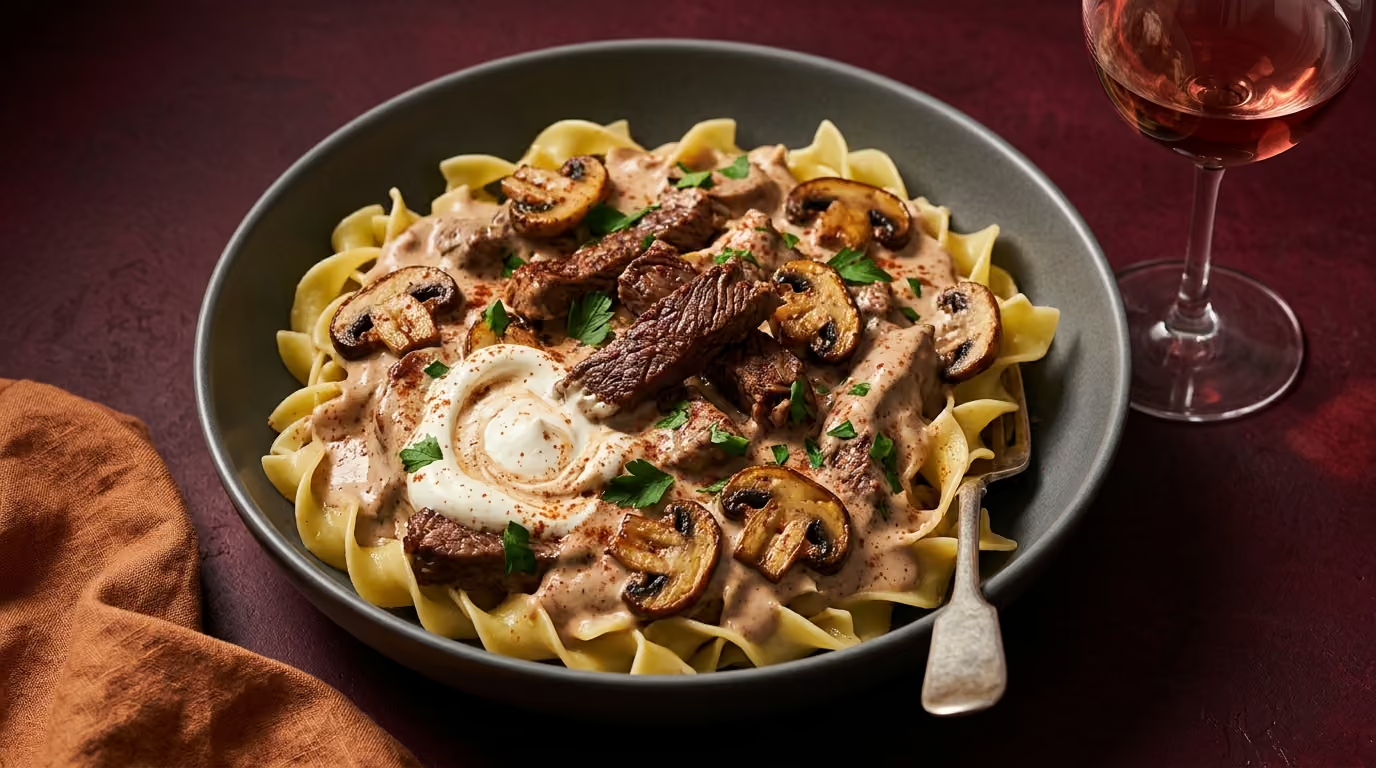
Reach for a medium-bodied red with soft tannins and bright acidity, which in practice means Pinot Noir, Barbera, Chianti or a lighter Grenache blend. The sour cream is what makes this dish different from every other beef dinner, since its tang wants acidity in the glass and its fat gets ruined by grippy tannin. A heavy Cabernet Sauvignon or a big Malbec will taste harsh and metallic against it, however good the beef is. Softer and brighter beats bigger and bolder every time here.
What wine goes best with beef stroganoff?
Pinot Noir is the most reliable answer, because it has the acidity to cut sour cream and the earthy, forest-floor character that picks up the mushrooms. Barbera from Piedmont runs a very close second and usually costs less, since it's naturally high in acid and unusually low in tannin for an Italian red. Chianti works for the same reason, adding a savoury tomato-leaf note that suits a dish built on browned beef and onion.
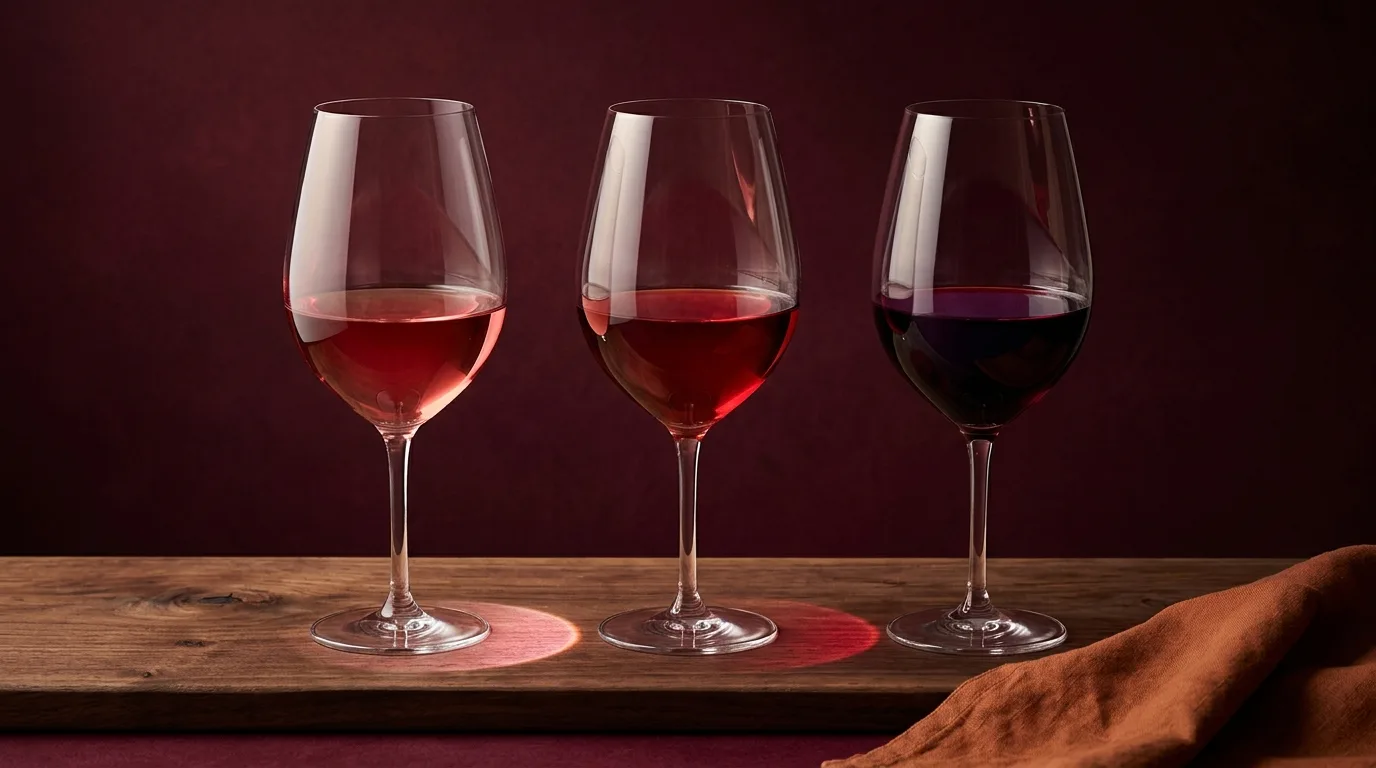
The common thread across all three is what they don't have. None of them lead with dense tannin, and none of them carry the sweet vanilla weight of heavily oaked new-world reds. That's the actual specification for this dish, and once you have it, the grape matters less than you'd think.
If you want the version that will surprise people, try a Cru Beaujolais such as Morgon or Fleurie. Gamay gives you juicy red fruit, almost no tannic grip and enough acidity to reset your palate between forkfuls of a very rich sauce. It's a genuinely great match, and it's usually the cheapest good bottle on this list.
Why does the sour cream change everything?
Sour cream introduces lactic tang and a coating layer of fat, and both of those change what a wine has to do. The tang means a low-acid wine will taste flat and dull beside the dish, since a wine needs to be at least as bright as the food it sits next to. The fat means a tannic wine has nothing soft to cling to on the palate, so its tannins register as drying and slightly bitter instead of pleasant structure.
This is why a lot of generic pairing advice fails here. The usual reasoning goes beef, therefore Cabernet, and it ignores the fact that stroganoff is closer to a creamy pasta with beef in it than it is to a steak. Our broader notes on how to pair wine with food work through the same principle, which is that the sauce usually outweighs the protein when you're deciding what to open.
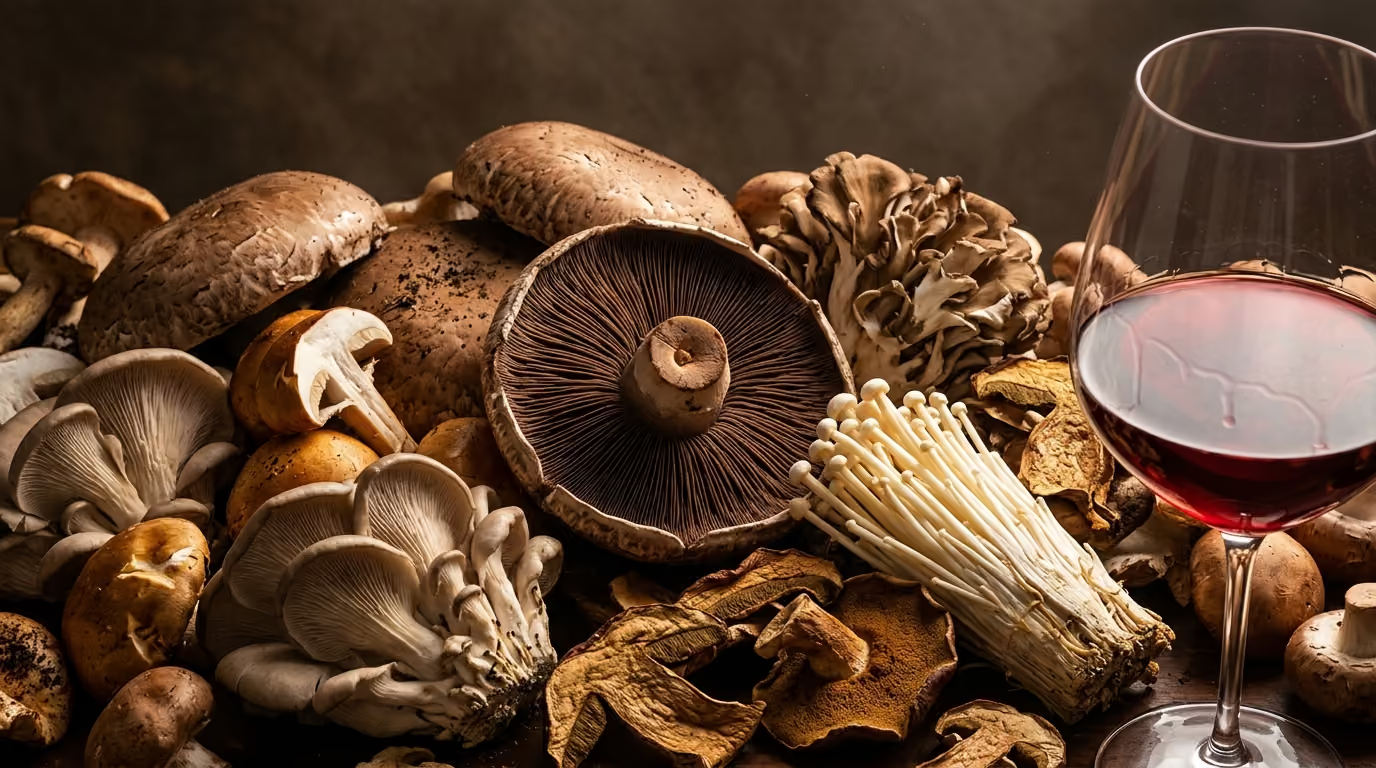
The mushrooms then push the same direction. Earthy, umami-heavy ingredients flatter wines with savoury complexity and clash slightly with jammy fruit, which is another reason Pinot Noir keeps winning. Our guide to pairing wine with mushrooms covers what changes across button, chestnut and wild varieties, and stroganoff usually falls in the middle of that range.
Which specific reds should you buy?
Choose by structure rather than by region, since a soft, acidic, medium-bodied red from almost anywhere will do the job. The table below groups the dependable options by what your version of the dish emphasises, which is easier to judge from your own pan than from a shelf.
| If your stroganoff is | Look for | Why it works |
|---|---|---|
| Classic, sour cream forward | Pinot Noir, Cru Beaujolais | High acidity answers the tang, and the tannin stays light |
| Heavy on mushrooms | Barbera, red Burgundy, Nebbiolo from Langhe | Earthy savoury notes echo the mushrooms rather than fight them |
| Made with plenty of paprika | Blaufrankisch, Zweigelt, Cotes du Rhone | Peppery red fruit meets the sweet spice without turning hot |
| Rich and beef-heavy, less cream | Chianti Classico, Rioja Crianza | A little more structure without the drying grip of a big Cabernet |
| Served over buttered noodles | Barbera, Dolcetto, Gamay | Bright acidity keeps a starchy plate from feeling heavy |
Blaufrankisch deserves more attention than it gets on lists like this one. It's an Austrian red with peppery dark fruit, firm acidity and modest tannin, and it handles paprika better than almost anything else because the spice notes in the wine and the spice in the dish point the same way. Zweigelt from the same country is the softer, fruitier cousin and works nearly as well.
Rioja Crianza is the pick if your stroganoff leans more beef than cream. The oak ageing gives it a gentle savoury vanilla edge that flatters browned meat, while Tempranillo's tannins stay supple enough not to fight the sour cream. Look for Crianza rather than Reserva or Gran Reserva, since the older bottlings carry more oak than this dish wants.
Do any white wines work with beef stroganoff?
They do, and a few work surprisingly well, because the dish is so much creamier than most beef dinners. A white with body and acidity behaves rather like the medium reds above, matching the sauce instead of the meat. Oaked white Rioja is the standout, since its nutty, slightly savoury profile suits mushrooms and its acidity handles the sour cream.
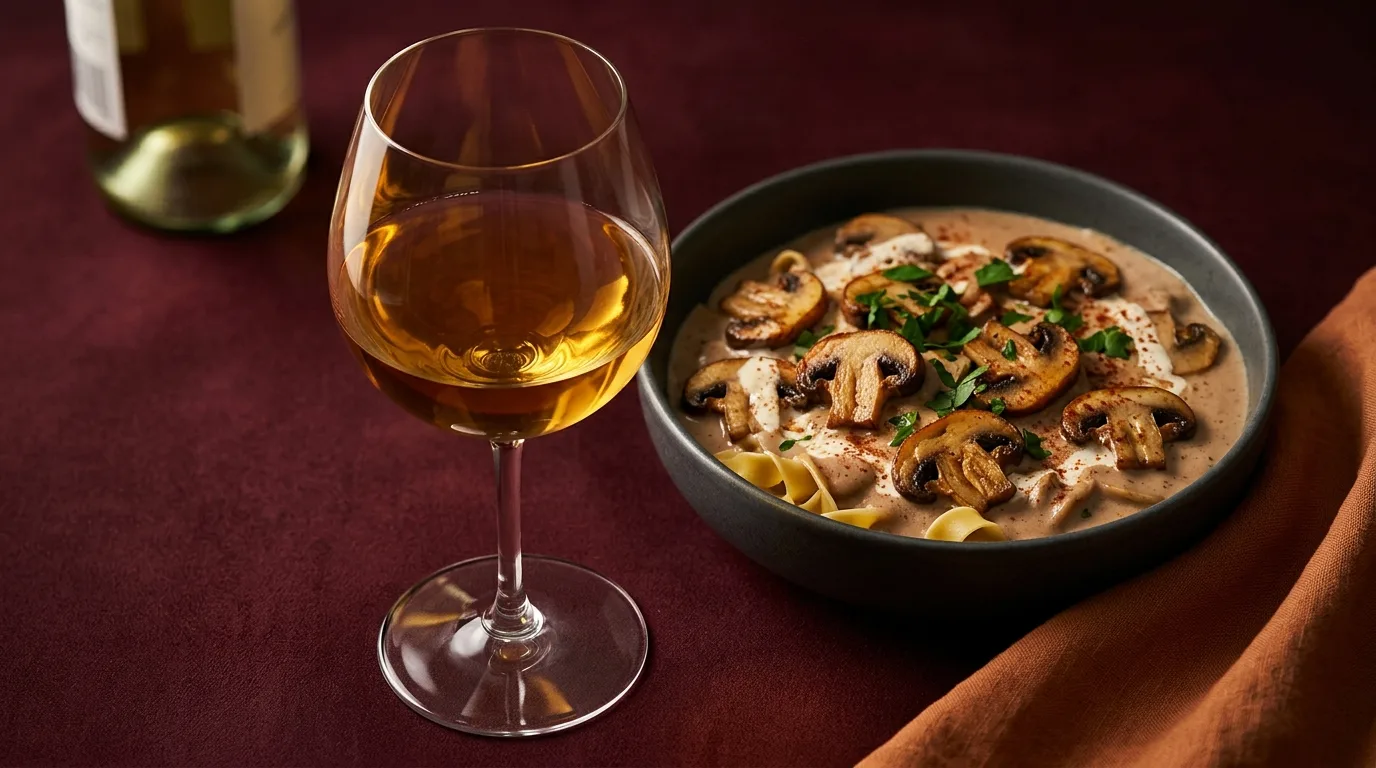
Dry Furmint from Hungary is worth hunting down if your shop carries it, and it makes cultural sense next to a dish from that part of the world. It brings sharp acidity, a smoky mineral streak and enough weight to sit beside cream without disappearing. A richer Chenin Blanc from South Africa does something similar and is much easier to find.
Skip the crisp, light whites here. Pinot Grigio, Muscadet and lean Sauvignon Blanc all get flattened by the sauce, and you'll finish the glass having tasted almost nothing. The white you want has texture, which usually means some oak, some lees ageing or some age in the bottle.
What do the paprika and mushrooms actually do?
Sweet paprika adds warmth and a faint red-fruit sweetness rather than heat, which is why it flatters wines with ripe berry character. Hot paprika or a heavy hand with black pepper changes the calculation, since capsaicin amplifies the burn of alcohol and makes a high-alcohol red taste hotter and harsher than it is. Keep the alcohol moderate if your version has a kick to it.
Mushrooms bring glutamates, the savoury compounds behind that deep umami taste, and umami has a habit of making tannin seem more aggressive. That's the second independent argument against a big tannic red with this dish, and it's the same reason a mushroom risotto pairs so happily with Pinot Noir. Our mushroom risotto pairing notes go further into that relationship if you cook a lot of earthy dishes.
Onions caramelised properly at the start of the recipe add a background sweetness that ties the whole thing together. It's a small detail, though it's part of why a wine with a touch of ripe fruit lands better than a severe, austere bottle.
What should you avoid opening?
Big, tannic, high-alcohol reds are the main thing to leave on the shelf, so that rules out most Cabernet Sauvignon, Malbec, Petite Sirah and young Bordeaux. Their structure has nothing to soften against in this dish, and the sour cream turns their tannins chalky. If a bottle is described as bold, powerful or full-bodied on the shelf talker, it's probably the wrong shape for tonight.
Heavily oaked reds are the second group to skip, since sweet vanilla and coconut notes sit oddly against sour cream and mustard. Sweet or off-dry reds are the third, because the dish already has a gentle sweetness from the onions and paprika, and adding more makes the whole plate taste cloying by the third forkful.
Very light, delicate reds can also get lost. A pale, ethereal village Burgundy that shines with roast chicken may simply disappear under a rich sauce, so you want the middle of the range rather than either extreme. Our guide to pairing wine with pot roast covers the opposite problem, where the dish is heavy enough to want that structure back.
Should you cook with wine, and which one?
Some recipes deglaze the pan with wine and some rely on stock and mustard alone. If yours uses wine, a dry red with decent acidity is the right choice, and there's no need to open anything expensive since the delicate qualities of a good bottle boil away. What survives is acidity, fruit concentration and any oak, so an ordinary Merlot or a basic Cotes du Rhone works perfectly.
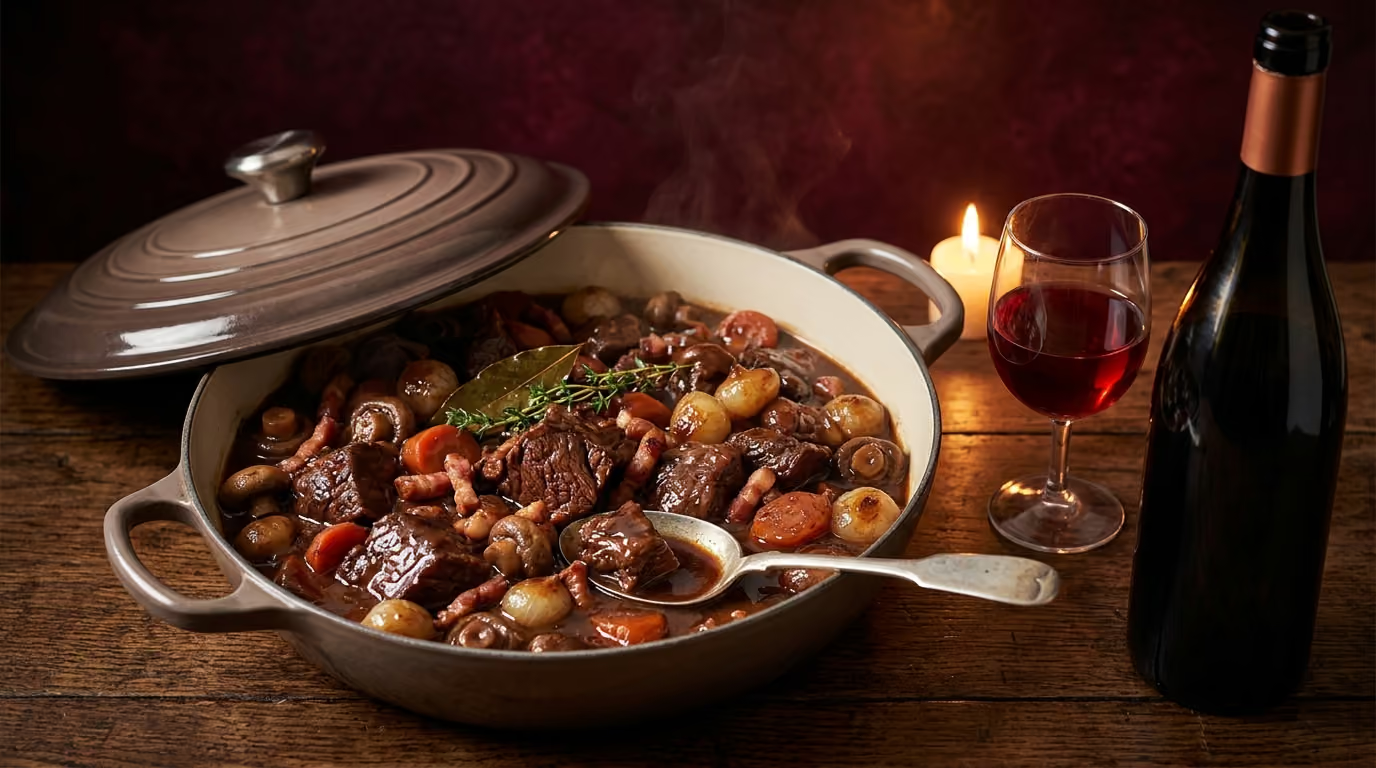
Avoid anything labelled cooking wine, which is usually salted and made for a shelf rather than a glass. A cheap drinkable red is a better ingredient and a better value. Our page on wine for beef bourguignon covers the cook-with-it question in more depth, since that dish depends on it far more heavily than stroganoff does.
The tidiest approach is opening one bottle you'd happily drink, using a splash in the pan and pouring the rest. Barbera and Cotes du Rhone both play this dual role cheerfully, and neither costs much.
How do you pick a bottle in the shop?
Head for Burgundy or Beaujolais first if the shop organises by region, since almost anything from either section will suit the dish. If it organises by grape, go to Pinot Noir and pick a French or Oregon bottle over a very ripe Californian one, because the leaner styles have the acidity this sauce needs. Italy's shelf is the reliable third option, where Barbera and Chianti sit next to each other.
Use the alcohol figure on the back label as a quick filter, since anything from twelve and a half to fourteen percent is generally in the medium-bodied zone you want. Numbers well above that usually signal a riper, denser, more tannic style that will steamroll the sour cream. That single number tells you more about weight than most front labels do.
Working out tannin from a label is much harder, which is where checking a specific bottle against your own taste beats guessing. Fit Check gives you a straight verdict on whether the bottle in your hand actually suits you, which is a more useful question than whether it theoretically suits the recipe.
Frequently asked questions
What is the best red wine to serve with beef stroganoff?
Pinot Noir is the most dependable choice, with Barbera and Cru Beaujolais close behind. All three combine bright acidity with soft tannins, which is exactly what a sour cream and mushroom sauce asks for.
Can I drink Cabernet Sauvignon with beef stroganoff?
You can, though it's rarely the best option, because Cabernet's firm tannins turn drying and slightly bitter against sour cream. If Cabernet is what you have open, pick a softer, fruitier example and serve it a little cooler than room temperature to take the edge off.
What wine goes with mushroom stroganoff without beef?
The vegetarian version points even more strongly toward earthy reds, so Pinot Noir and Barbera still lead. A lighter hand works well here, and a chilled Gamay or a savoury oaked white Rioja both suit a meat-free version nicely.
Does beef stroganoff need red wine, or will white do?
White works when it has body and acidity, which means oaked white Rioja, dry Furmint or a richer Chenin Blanc rather than a crisp light white. The creamy sauce makes this dish far more white-friendly than most beef dinners.
What wine should I use in the stroganoff sauce itself?
An inexpensive dry red with good acidity is ideal, such as a basic Merlot or Cotes du Rhone. Skip anything sold as cooking wine, since it's typically salted and will throw off the seasoning of the finished sauce.
What temperature should the red wine be?
Slightly cooler than most people serve red, so somewhere around sixty degrees Fahrenheit rather than a warm kitchen. Twenty minutes in the fridge usually gets you there, and a red served too warm tastes alcoholic and soft, which is the last thing a creamy dish needs.
Pouring it tonight
Treat stroganoff as a creamy dish that happens to contain beef, and the pairing solves itself. You want acidity to meet the sour cream, gentle tannin so nothing turns bitter, and a savoury edge that agrees with the mushrooms rather than arguing with them. Pinot Noir, Barbera and Cru Beaujolais all deliver that combination without asking you to spend much.
If your version leans heavily on paprika, move toward Blaufrankisch or a Cotes du Rhone with some peppery character. If it's mushroom-forward, red Burgundy earns its price. And if you fancy showing that a white can handle beef, an oaked white Rioja will quietly prove the point over dinner.