Pour Pinot Noir with beef bourguignon, ideally a red Burgundy if the budget stretches, and use a dry, inexpensive Pinot Noir or Gamay in the pot itself. Gamay, Merlot and Côtes du Rhône are the alternatives worth knowing if Burgundy is out of reach or your store doesn't carry it.
This dish asks you to buy two bottles, which is the part that trips people up. One goes into the braise and cooks for hours, and one goes into your glass, and the sensible answer for each is different. We'll take them in that order, since the pot needs its wine long before you need yours.
Which wine should you cook beef bourguignon with?
Cook with a dry, medium-bodied red that has decent acidity and no noticeable oak, and don't spend more than you'd casually spend on a Tuesday bottle. The wine in a bourguignon isn't a seasoning you'll taste directly. It reduces over several hours into the backbone of the sauce, contributing acidity, depth and color while its aromatics cook off almost entirely.
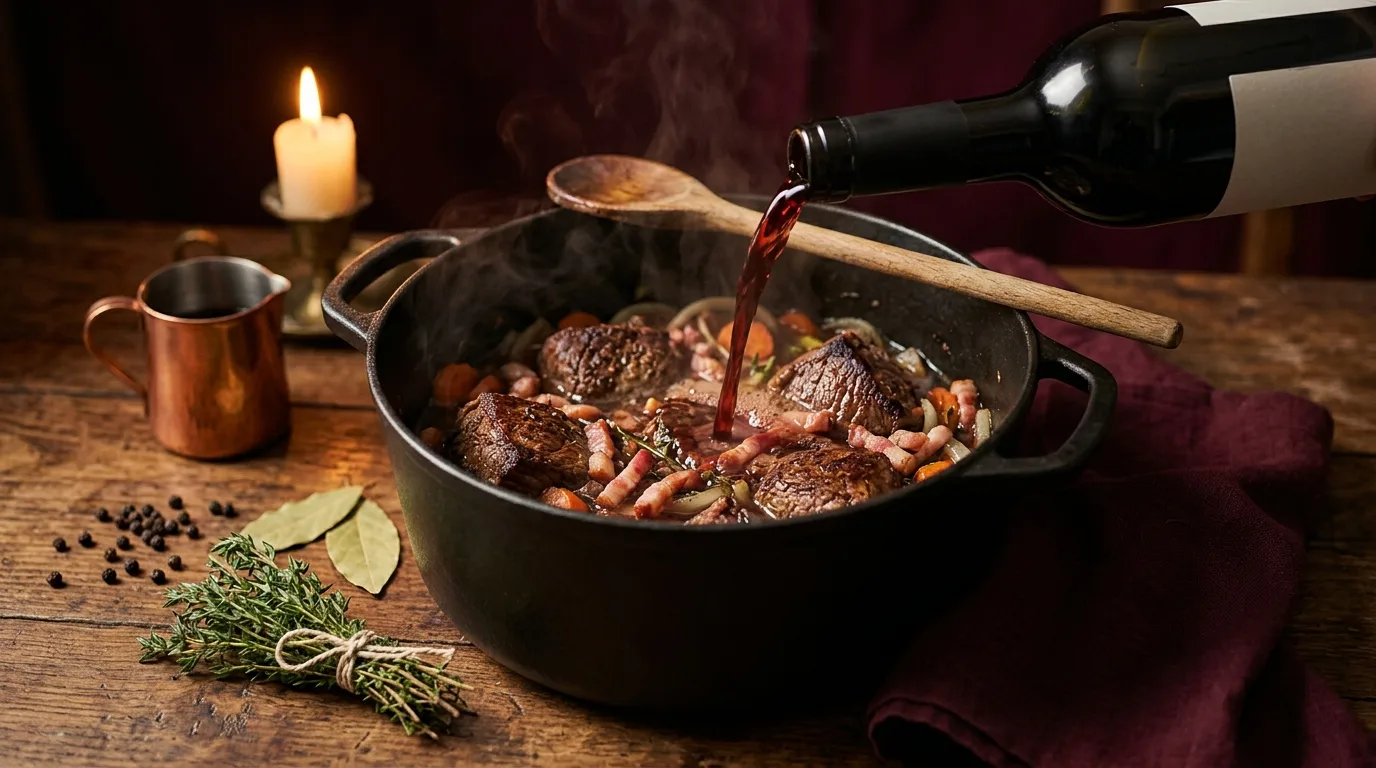
Pinot Noir is the traditional choice for the honest reason that the dish comes from Burgundy, where Pinot Noir is what people had. Gamay from Beaujolais does the same job for less money and is genuinely a good substitute, since it shares the bright acidity and light tannin that keep the sauce from turning heavy. A basic Côtes du Rhône works too, though it pushes the finished sauce a little darker and more peppery than the classic version.
The advice that you must cook with a wine you'd drink is repeated everywhere and is only half true. The useful half is that you shouldn't cook with something you'd actively refuse to drink, because faults concentrate rather than disappear as a sauce reduces. The unhelpful half is the implication that an expensive bottle makes a better braise, which it doesn't, since the delicacy you're paying for is exactly what three hours at a simmer destroys.
What to genuinely avoid is narrower than most people think. Skip anything labeled "cooking wine" from the vinegar aisle, since those are salted and the salt concentrates as the liquid reduces. Skip heavily oaked reds, because oak tannin turns bitter and drying over a long braise. Skip anything sweet or jammy, which reduces into something that fights the bacon and mushrooms rather than supporting them.
What is the best wine to drink with beef bourguignon?
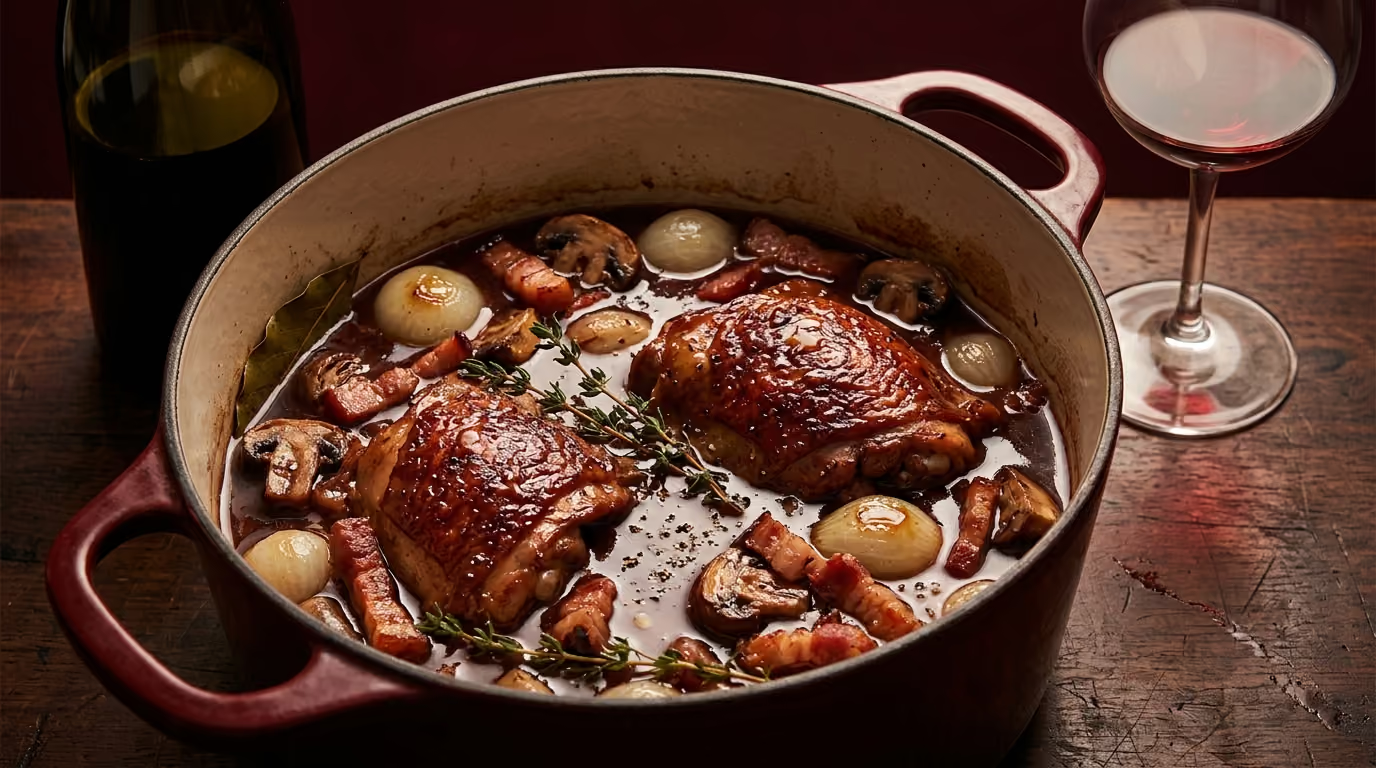
Pinot Noir is the most dependable bottle to actually drink with this dish, and red Burgundy is the classic if you feel like matching the wine to the region. What makes it work is a combination that few other reds manage: enough acidity to cut through a rich, reduced sauce, plus an earthy, mushroomy character that runs directly alongside the mushrooms and bacon already in the pot. The same two-bottle logic applies to coq au vin, the chicken version of the same Burgundian braise, where a fresh Pinot Noir or Gamay does both jobs.
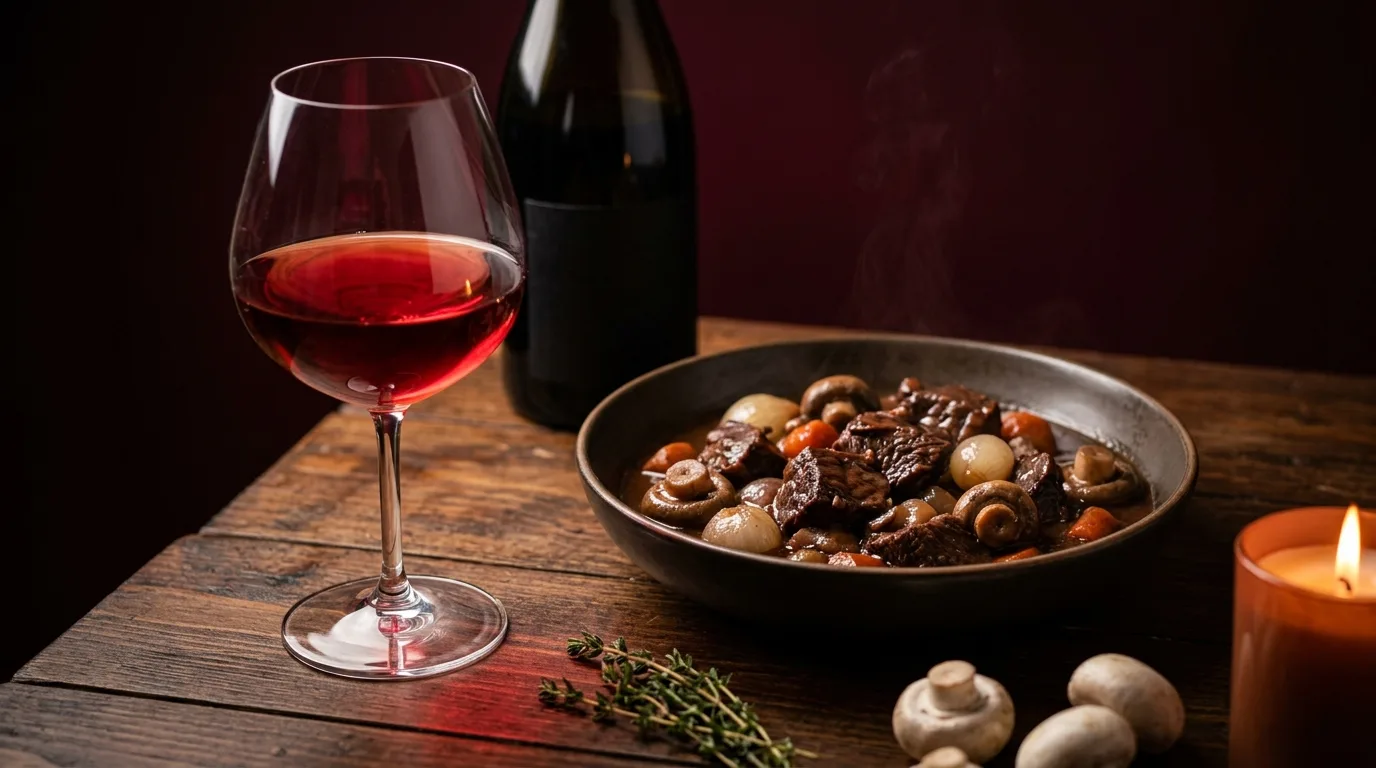
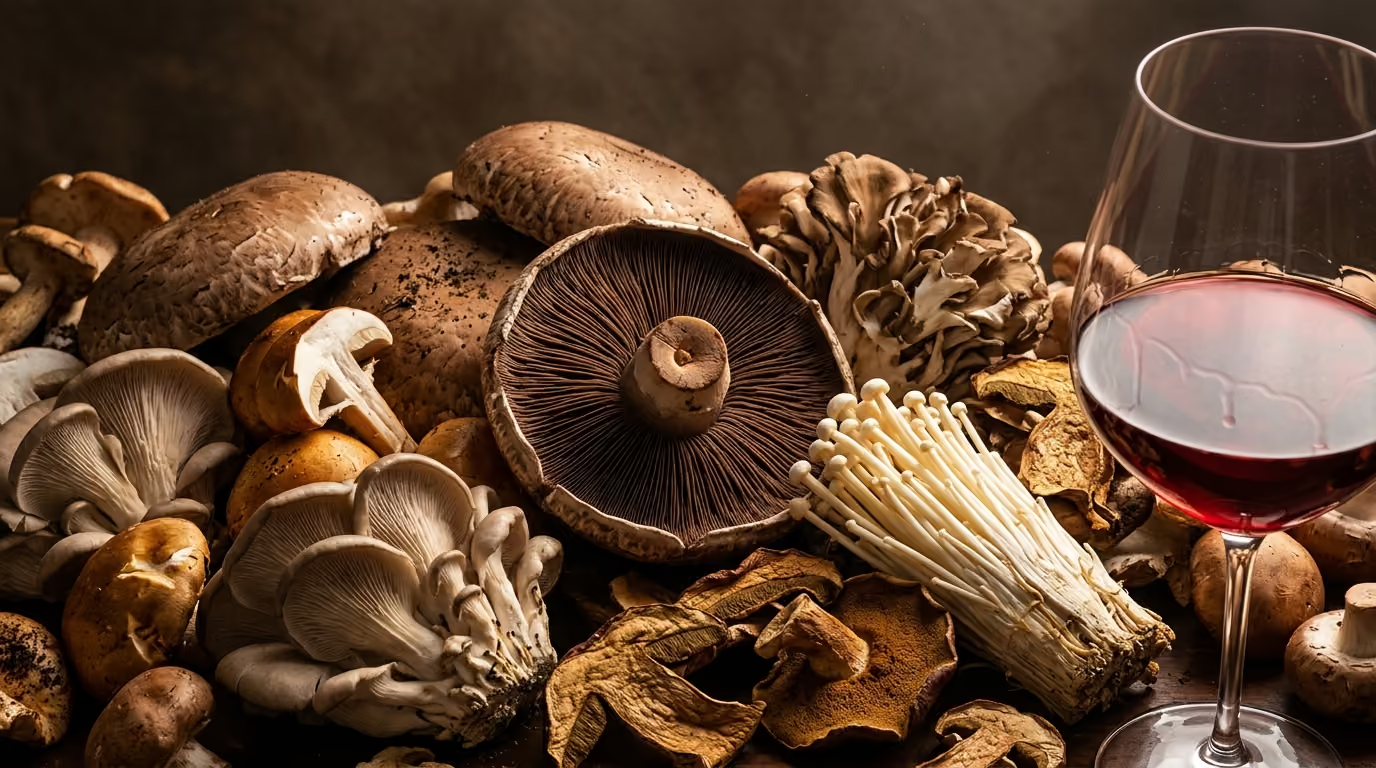
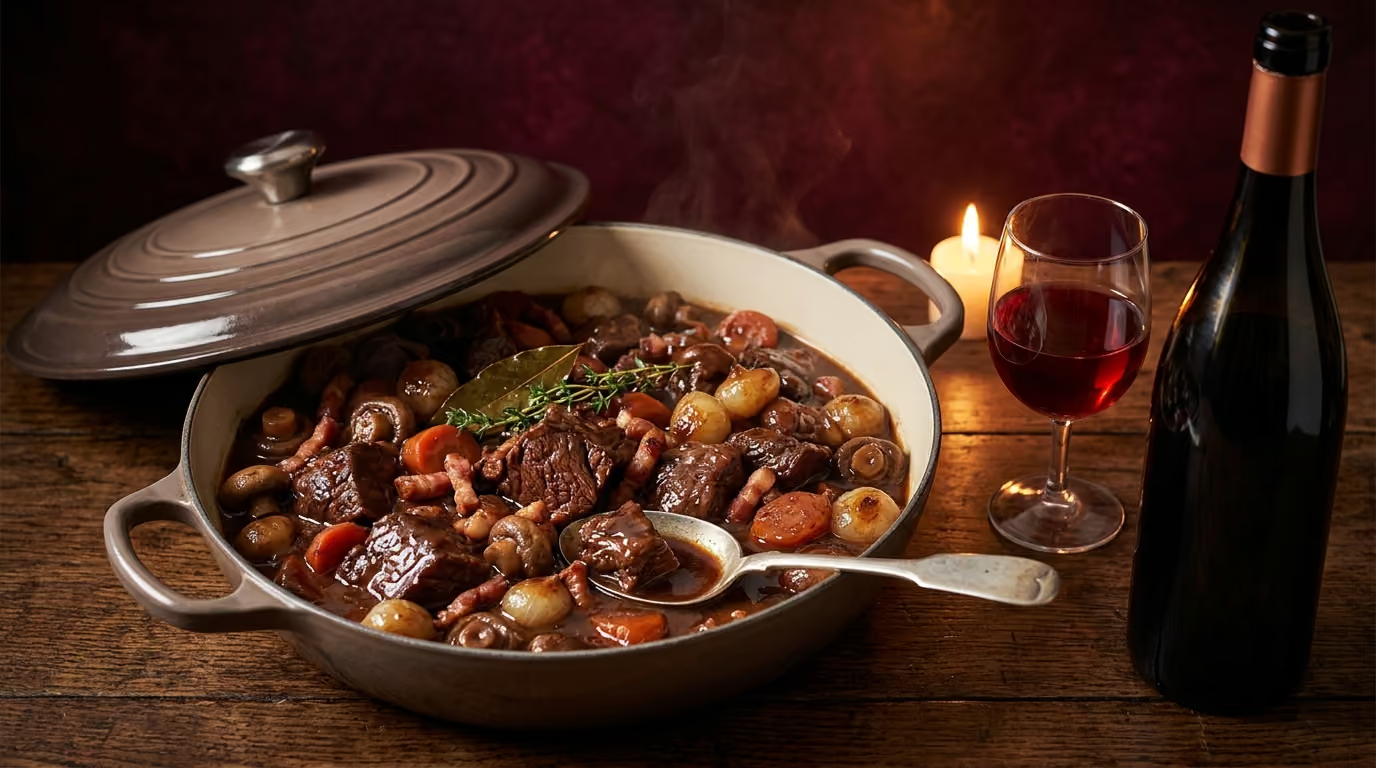
It helps to look at what's actually in the pot, because the beef is only part of the picture. A classic bourguignon carries lardons or bacon, button mushrooms, pearl onions, carrots and a bouquet of thyme and bay, all of it braised in reduced red wine and stock. The smoke from the bacon and the earthiness of the mushrooms are the two flavors doing most of the work, and both point toward a savory, earth-inflected red rather than a purely fruity one. That's the underlying reason Pinot Noir keeps coming out on top, and the same logic runs through our pairings for mushroom risotto.
The instinct to reach for something big is understandable and usually wrong here. Beef bourguignon looks like it wants a powerful red, but the beef has been braised until it's tender and the sauce carries most of the flavor, so there's no muscular texture for a muscular wine to meet. A dense Cabernet Sauvignon or a young Nebbiolo brings tannin that has nothing to soften it, and the meal starts to feel like work. Our comparison of Merlot against Pinot Noir covers the same trade-off if you're deciding between the two at the shelf.
Burgundy is expensive and the honest advice is that you don't need it. Pinot Noir from Oregon's Willamette Valley, from Sonoma or the Central Coast, from New Zealand or from Chile will all give you the freshness and red fruit this dish is asking for, and many are better made than an entry-level Burgundy at the same money. If you want to understand what you're buying before you spend, our Pinot Noir taste guide for first-time buyers is the shortest route to knowing which style you'll like.
Gamay is the alternative we'd recommend to anyone who finds most reds too dry. Beaujolais-Villages and the Cru Beaujolais villages like Morgon and Fleurie give you juicy red fruit, low tannin and enough acidity to keep pace with the sauce, and they're usually cheaper than comparable Pinot Noir. We wrote about how the two grapes differ in Pinot Noir versus Gamay, which is worth a look if you're choosing between them.
| Wine | What it brings | Choose it when |
|---|---|---|
| Red Burgundy | Earth, red fruit, fine acidity | You want the classic regional match |
| Pinot Noir, New World | Riper fruit, softer edges | You want Burgundy's shape for less money |
| Gamay | Juicy fruit, very low tannin | You find most reds too dry |
| Merlot | Round plum fruit, gentle texture | You want something fuller and smoother |
| Côtes du Rhône | Herbs, dark berry, warmth | The braise is especially rich or peppery |
Does the side dish change the pairing?
Buttered noodles, the usual accompaniment, quietly rule out the biggest reds. Butter and starch soften a wine's fruit and leave its tannin exposed, so a bottle that tasted fine on its own can turn drying and slightly bitter once noodles are on the plate. That's the strongest practical argument for keeping the wine medium-bodied.
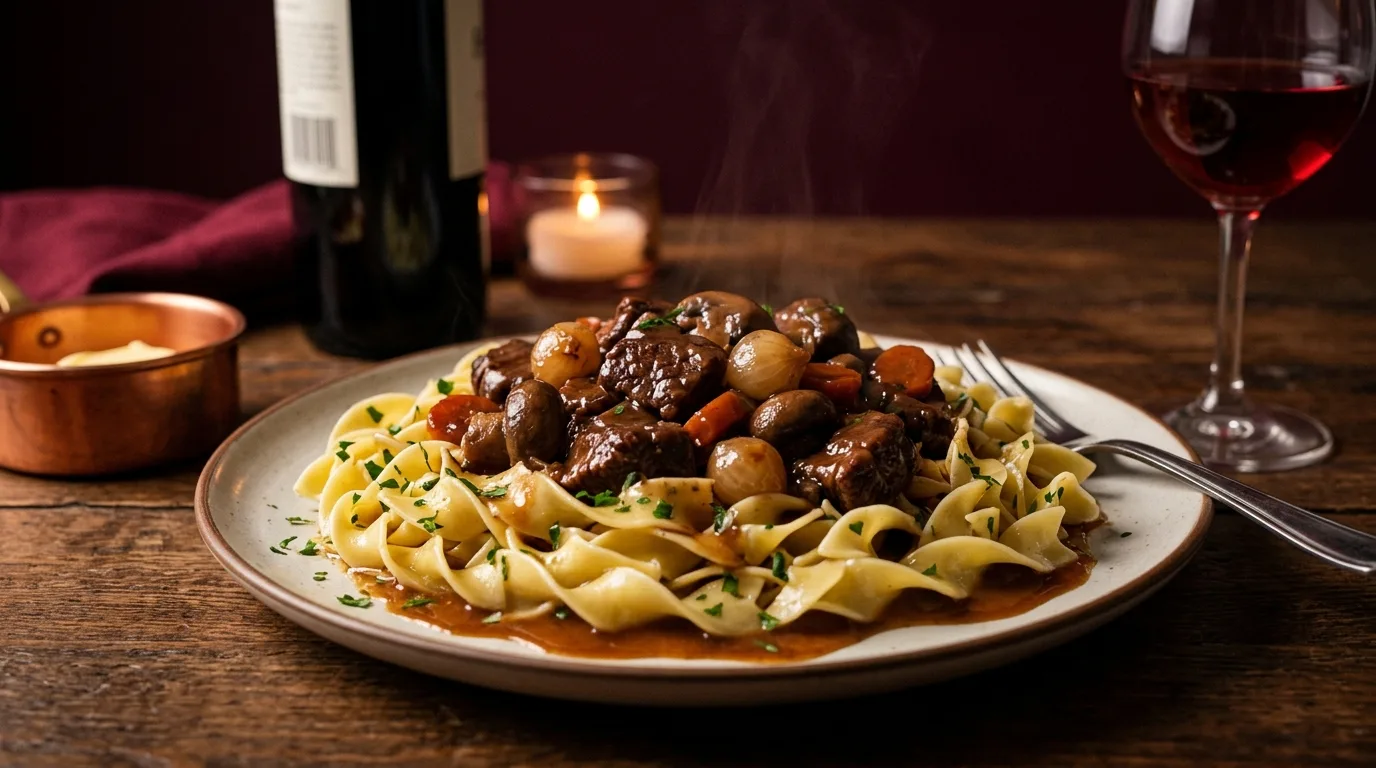
Mashed potato does something similar but gentler, since there's usually less fat involved than in properly buttered noodles. Crusty bread and a green salad change almost nothing, which makes them the easiest sides to pair around. If you're serving the braise over creamy polenta, you can afford slightly more body in the wine, and the reasoning is the same one we set out in our wine for short ribs and polenta.
Leftovers are worth a note, since bourguignon is one of the few dishes that genuinely improves overnight. A day in the refrigerator lets the sauce thicken and the flavors settle, and the reheated version tastes deeper and less sharp than it did on the first night. That extra concentration gives you room for a slightly fuller red the second time around, so a Côtes du Rhône or a Merlot that felt like too much on day one can be exactly right on day two.
Serving temperature is the adjustment most people skip and it makes a real difference here. Red wine served at a modern room temperature tastes warm, alcoholic and flabby, and the fix is fifteen or twenty minutes in the refrigerator before you pour. A slightly cool Pinot Noir tastes fresher and more defined, and its acidity does more work against a rich sauce, which is exactly what you want it doing.
How do you buy the right bottle without overthinking it?
Look for Pinot Noir, Gamay, Merlot or Côtes du Rhône on the shelf, then pick the one described as medium-bodied, smooth, fresh or earthy. Those four grapes cover the entire useful range for this dish, and the descriptor is what separates a good bottle from one that will feel heavy against the braise.
Words on a back label are more informative than they get credit for. Bold, powerful, full-bodied and intensely oaked are all steering you toward wines that will overwhelm a bourguignon, while cherry, raspberry, forest floor, mushroom and spice are describing exactly the profile you want. Alcohol content is the other honest signal, since a bottle at 15 percent or above will taste warm next to a rich stew and one around 13 percent generally won't.
Price bands are worth being realistic about, because Burgundy is where this dish can quietly get expensive. Entry-level red Burgundy is often thin and disappointing for what it costs, since the name carries a premium the wine in the bottle doesn't always earn. Pinot Noir from Oregon, California, New Zealand or Chile tends to deliver noticeably more at the same money, and a good Beaujolais Cru costs less again while doing the same job at the table. Spending more only starts to pay off once you're into village-level Burgundy, which is not where a weeknight braise needs you to be.
At a wine shop you can hand the whole problem to someone else in one sentence. Tell them you need a smooth, medium-bodied red for beef bourguignon with buttered noodles, and they'll have you sorted in under a minute. At a restaurant, ask for Pinot Noir by the glass first if you're unsure, and mention the noodles if a server steers you toward a big Cabernet.
The version of this dish you've made is not the version we've described, which is the honest limitation of any written pairing. Yours may be deeper, or lighter on the bacon, or served over something we haven't thought of. Sommy's Pairing feature exists for that gap: point it at the recipe you're actually cooking and it recommends against that, rather than against an average bourguignon nobody has made.
Frequently asked questions
What is the best wine for beef bourguignon?
Pinot Noir, ideally a red Burgundy. It has the acidity to cut a rich, reduced sauce and an earthy, mushroomy character that matches the mushrooms and bacon in the dish. Gamay, Merlot and Côtes du Rhône all work as alternatives.
What wine should you cook beef bourguignon with?
A dry, medium-bodied red with good acidity and no obvious oak, such as an inexpensive Pinot Noir, Gamay or basic Côtes du Rhône. Avoid salted cooking wine, heavily oaked bottles and anything sweet, since all three concentrate badly over a long braise.
Do you need to cook and drink the same wine?
There's no need to. You shouldn't cook with anything you'd refuse to drink, but an expensive bottle is wasted in the pot, because hours of simmering removes the delicacy you paid for. Buying a modest bottle to cook with and a better one to pour is perfectly sensible.
Can you use Cabernet Sauvignon with beef bourguignon?
It's not the best choice for drinking, because the braised beef has no firm texture to soften Cabernet's tannin, and buttered noodles make that tannin more noticeable. A medium-bodied red with fresher acidity suits the dish considerably better.
Should beef bourguignon be served with white wine?
Traditional recipes call for red, and red is what gives the sauce its color and depth. If you strongly prefer white, a full-bodied, textured example can work at the table, but it won't produce the classic dish if you cook with it.
Open something fresh, not something heavy
Pinot Noir is the calm, dependable answer for beef bourguignon, with Gamay, Merlot and Côtes du Rhône close behind. Cook with a cheap, dry version of the same idea, and keep the better bottle for the table where you'll actually taste it.
The mistake worth avoiding is reaching for power. This is a rich, slow, tender dish, and what it wants beside it is freshness and lift rather than weight. Serve the wine slightly cool, pour a modest first glass, and let a long afternoon of cooking pay off.