
Staring at a wine menu, trying to pick a wine for risotto, can feel stressful. The good news is the answer is simple. The best risotto wine is almost always a dry, crisp white wine like Sauvignon Blanc or Pinot Grigio. This style of wine cuts through the dish's rich creaminess, keeping your palate refreshed and making every bite taste bright and delicious.
This guide will help you feel confident choosing the right wine for any kind of risotto, without needing to become a wine expert.
Your Simple Guide to Choosing Risotto Wine
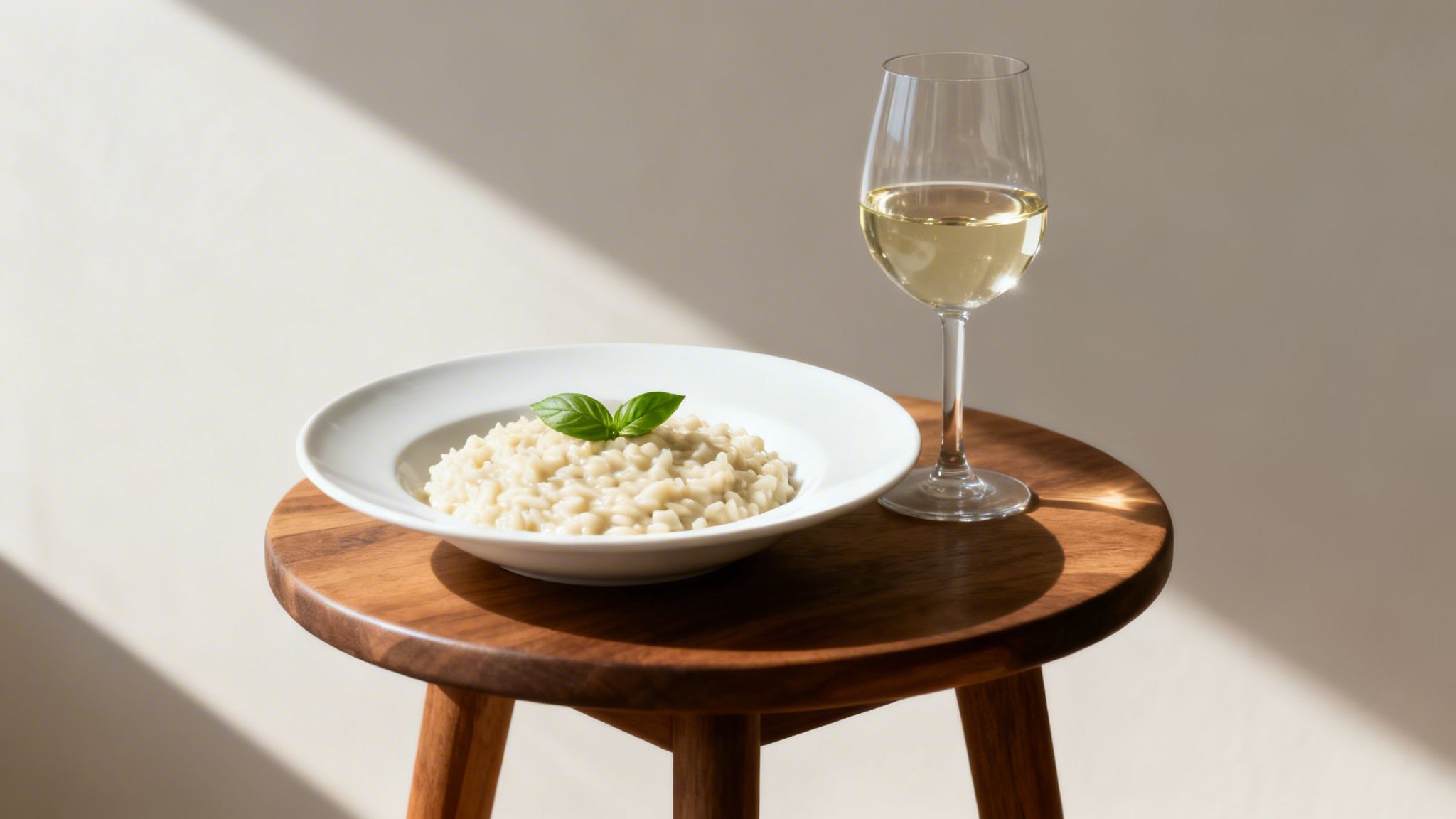
That feeling of not wanting to make the "wrong" choice is completely normal. Wine can feel needlessly complicated, but pairing it with food is much more intuitive than you think. The goal isn't to memorize wine theory; it's to find a bottle you'll enjoy that makes your meal even better.
Let's build your confidence with a simple way to think about risotto pairings. The key is to focus on what makes your specific risotto special.
Think About Balance, Not Rules
The secret to a great pairing is all about balance. A rich, creamy risotto needs a wine that can hit the reset button for your palate between bites.
Think of it like a squeeze of fresh lemon over a rich pasta dish—that little bit of acidity cuts through the heaviness and makes all the other flavors pop. A wine with good acidity does the exact same job. It stops the dish from feeling too dense and cleanses your palate, making each spoonful taste as vibrant as the first.
A Simple Framework for Any Risotto
Instead of getting lost in details, just ask yourself one question: What is the main flavor in my risotto?
- Is it light and fresh? Think seafood, lemon, or spring vegetables.
- Is it rich and cheesy? Like a classic Risotto alla Parmigiana.
- Is it earthy and savory? Maybe a mushroom or truffle risotto.
Answering this one question is the biggest step toward a perfect match. This basic approach is a core part of learning how to pair wine with food without feeling overwhelmed. You're always pairing to the star ingredient, not the rice.
This guide will walk you through easy recommendations for each of these scenarios. You’ll see just how simple it is to pick a great bottle every time. If you want help choosing wine in the moment, this is exactly the kind of decision Sommy helps with.
Pairing Wine With Creamy Parmesan Risotto
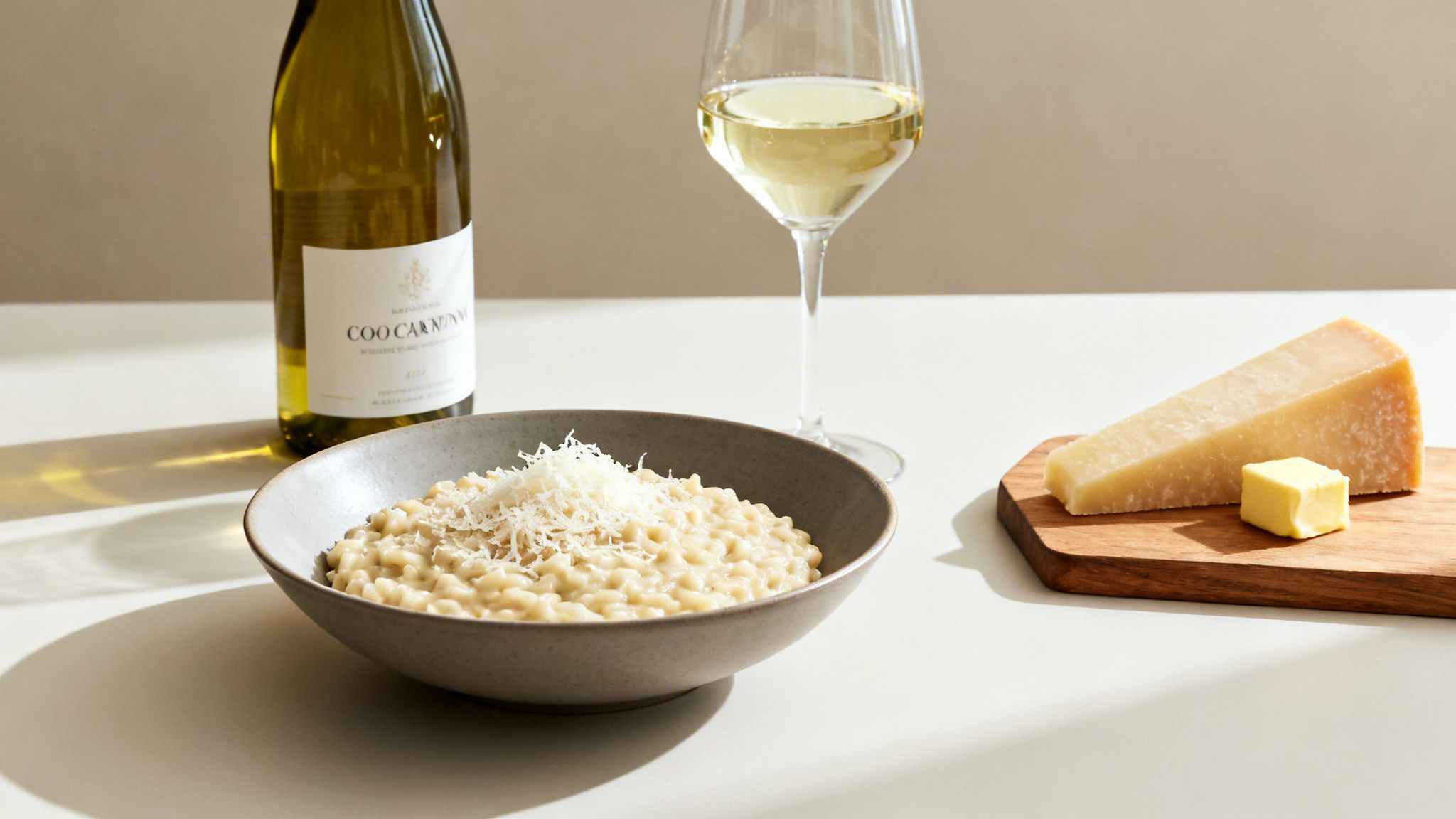
Classic Parmesan risotto is the definition of comfort food. It’s rich, savory, and has a velvety texture. When picking a wine, the mission is to find something that can dance with that creaminess, not get lost in it.
The go-to partner here is an unoaked Chardonnay. It has a subtle creaminess of its own that feels at home with the risotto, but it also brings enough bright acidity to keep the dish from feeling too heavy.
Why This Classic Pairing Works
An unoaked Chardonnay and a creamy Parmesan risotto just understand each other.
- Texture Meets Texture: The smooth feel of a good Chardonnay mirrors the creamy texture of the risotto. This creates a balanced mouthfeel where neither one overshadows the other.
- Acidity is Your Friend: That brightness in the wine acts like a spotlight, cutting through the richness of the cheese and butter. It’s what keeps the pairing from feeling flat.
- Flavor Harmony: An unoaked Chardonnay often has notes of apple and pear. These flavors beautifully complement the savory, nutty notes of aged Parmesan.
This combination is a classic for a reason—it creates a balanced and deeply satisfying meal. If you’re a fan of creamy pasta, you’ll find the same principles apply. For more ideas, check out our guide on the best wine for creamy pasta night.
Skip The Guesswork In The Wine Aisle
For a dish built on butter, onions, and nutty Parmesan, Chardonnay is a reliable choice. It’s one of the most widely planted grapes on the planet, accounting for about 20% of the world's white wine output, which means you can almost always find a solid option.
The best wine pairings don’t require you to be an expert. They just need to make your meal more enjoyable. If a wine feels right with your food, then it’s the right choice.
Instead of staring at a wall of bottles trying to figure out which Chardonnay is the "right" one, let technology help. This is exactly the kind of in-the-moment decision Sommy was built for. Just scan the wine shelf or restaurant list with your phone, and the app will highlight Chardonnays that fit your budget and taste, taking the anxiety out of the equation.
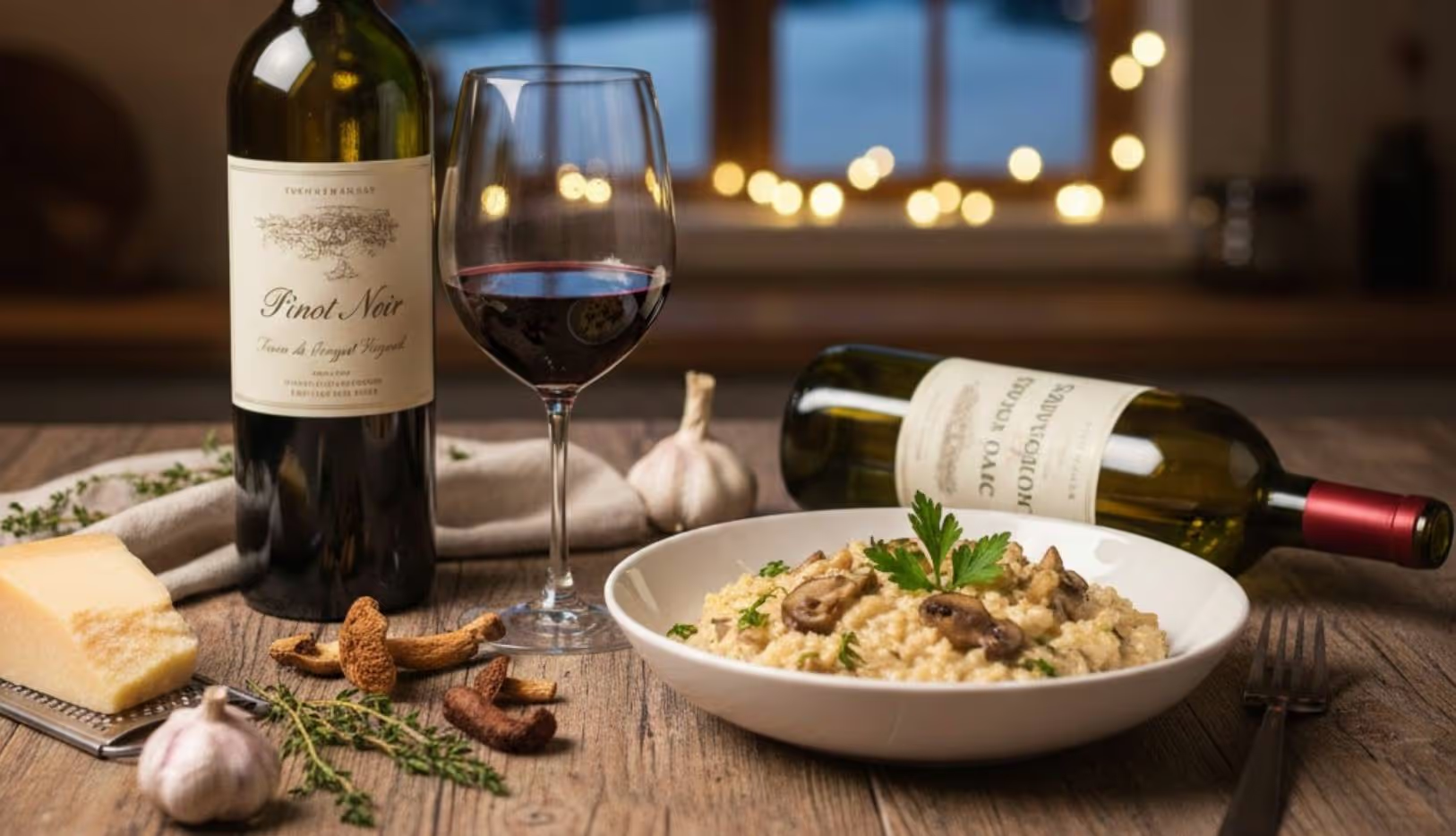
Finding The Right Wine For Mushroom Risotto
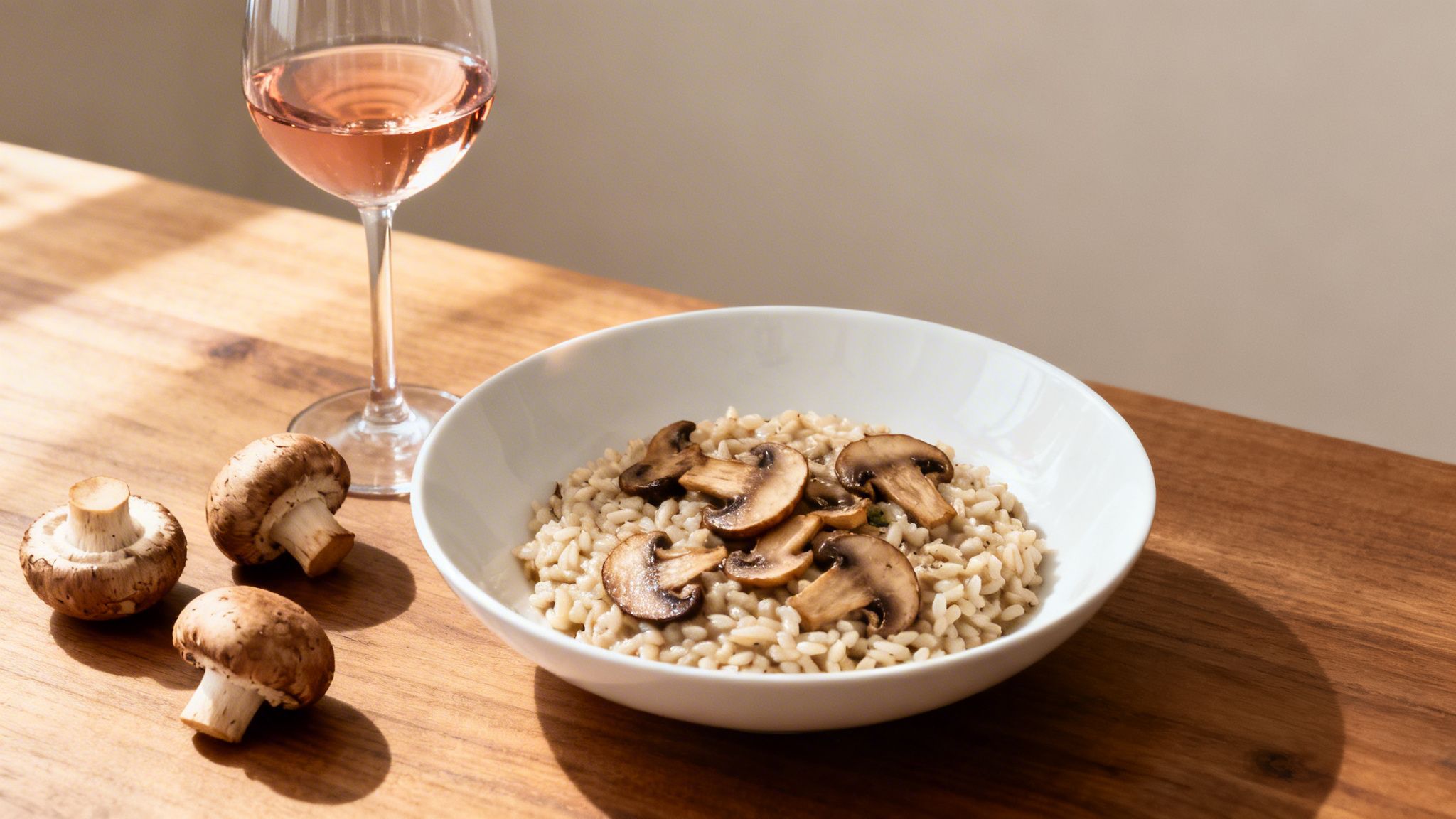
When your risotto shifts from bright and zesty to deep and earthy, your wine choice should follow. Mushroom risotto brings a savory, woodsy depth that changes the pairing game. While a crisp white can still work, this is where a light-bodied red truly shines.
The perfect partner for mushroom risotto is Pinot Noir. It’s a red wine that complements, it doesn't shout. With its notes of cherry, raspberry, and subtle earthy undertones, it feels right at home with the flavors of wild mushrooms.
Why A Light Red Works So Well
A big, heavy red wine would completely overwhelm the risotto, but a light-bodied red like Pinot Noir has just the right structure to stand alongside it.
- Earthy Connection: Good Pinot Noir often has a natural, forest-floor character that perfectly mirrors the flavor of the mushrooms. It makes the dish taste more like itself.
- Bright Acidity: Just like a good white wine, Pinot Noir has enough acidity to cut through the creaminess of the risotto, keeping your palate refreshed.
- Soft Tannins: Unlike bigger reds, Pinot Noir has gentle, silky tannins. This means it won't clash with the risotto's texture, ensuring a smooth, balanced experience.
This pairing is a fantastic way to step outside the white-wine box with total confidence. For a deeper look, our dedicated guide explores several great options for a perfect wine and mushroom risotto dinner.
A Confident Choice, Backed By Many
Pinot Noir is a top choice for earthy mushroom risotto for a reason. Its mix of red fruit, subtle spice, and earthy notes is the ideal companion for the dish's savory depth. Globally, Pinot Noir production hit 150 million cases in 2023, capturing 12% of the premium red wine market share.
Choosing a red wine for a creamy dish might feel counterintuitive, but the right one elevates the entire meal. Trust your taste—if you love earthy flavors, you’ll love this combination.
Instead of trying to remember which style of Pinot Noir to look for, you can lean on a tool designed for these moments. If you want help choosing wine in the moment, Sommy can recommend a Pinot Noir from the wine list or store shelf that pairs beautifully, taking all the pressure off you.
Choosing A Wine For Seafood Or Lemon Risotto
When your risotto is all about delicate seafood or bright, zesty lemon, you need a wine that matches that fresh energy. The best choice is a crisp, high-acid white wine with citrus and mineral notes. Think Sauvignon Blanc, Pinot Grigio, or a lively Vermentino—they act like that final squeeze of lemon, making all the flavors pop.
These wines don't just sit next to the dish; they get involved. That zesty character cuts through the richness of the risotto, making sure the creamy texture doesn't bulldoze the delicate seafood.
Why Acidity Is Your Best Friend
Think of acidity in wine as the perfect spotlight for your food. It brightens everything it touches.
- It Cuts Through Richness: The wine’s bright acidity slices cleanly through the butter and Parmesan, keeping the dish from feeling heavy.
- It Enhances Delicate Flavors: Instead of overpowering the gentle taste of shrimp or scallops, the wine’s crispness makes those flavors more vibrant.
- It Cleanses Your Palate: Each sip resets your taste buds, so every spoonful of risotto is just as exciting as the first.
The right wine shouldn't compete with your seafood risotto—it should make it taste even better. A crisp, zesty white wine is the simplest way to create a pairing that feels effortless and delicious.
For dishes with prawns and briny notes, a wine like Vermentino shines with its crisp citrus and hint of saltiness. Imports of such wines to North America rose 18% from 2020-2024, pairing with 45% of seafood risottos in major US Italian restaurant chains. You can explore more ideas in our guide on the best wine with shellfish.
How To Order With Total Confidence
Standing in the wine aisle or staring at a restaurant menu, it’s easy to second-guess yourself. This is exactly where Sommy turns a guess into a great choice.
Instead of trying to figure it out alone, just scan the wine list with your phone. The app instantly analyzes the options and highlights the best crisp white wines for your seafood risotto, tailored to your personal taste. It removes the anxiety so you can order with confidence and get back to enjoying your meal.
The Only Risotto Pairing Rule You Need
Instead of memorizing a long list of wine pairings, just remember this one simple rule: match the wine to the main ingredient, not the rice.
That's it. This one shift in thinking makes every risotto pairing decision surprisingly easy. The rice, Parmesan, and butter create a creamy, delicious canvas. It’s the other ingredients—the mushrooms, the seafood, the squash—that define the dish's character. Once you focus on that star player, choosing a great wine becomes intuitive.
This little flowchart shows how simple the rule is for a classic seafood risotto.
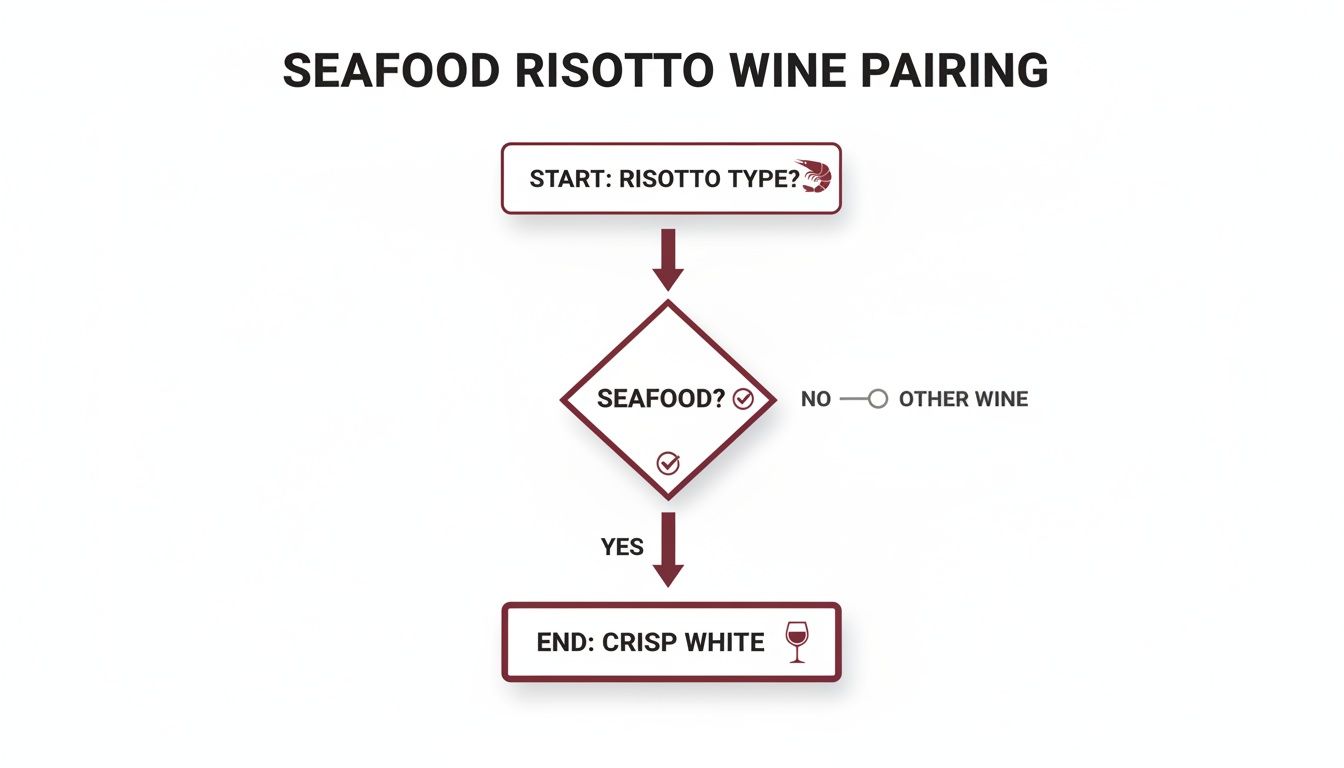
By zeroing in on the main ingredient (seafood), the path to the right wine style (a crisp white) becomes clear. No guesswork needed.
Putting The Rule Into Practice
Let’s see how this works with a few real-world examples.
- You're making a butternut squash risotto. Don't think "risotto wine." Instead, ask: what wine goes well with roasted butternut squash? A slightly richer white, like an unoaked Chardonnay, would be perfect.
- You’re ordering an asparagus and pea risotto. The main flavors are green and fresh. So, what wine complements green vegetables? A zesty Sauvignon Blanc with its own grassy notes is a natural fit.
- You see a saffron risotto (Risotto alla Milanese) on the menu. Saffron is aromatic and delicate. A dry, floral white like a Soave or Pinot Blanc would highlight its flavors without overpowering them.
This single rule—match the main ingredient—is your key to confident pairings. It transforms an anxious guess into a simple, logical decision, which is the core of what we believe at Sommy.
This approach builds your confidence because it’s not about memorizing facts; it’s about a simple, repeatable strategy. You already have the intuition to know what flavors go together. This rule just gives you permission to trust it.
Let Technology Handle The Details
Of course, you don’t have to apply this rule all by yourself. This is exactly the kind of in-the-moment thinking that Sommy.ai was built for.
Instead of guessing, you can just tell the AI assistant you're having butternut squash risotto. It instantly understands the pairing principle and will scan the store's inventory or a restaurant's wine list to find the perfect bottle that matches the dish and your personal taste. It’s a fast, calm way to make a great choice.
Let an AI Assistant Handle Your Next Pairing
Trying to remember these guidelines in a busy restaurant is a tall order. This is the exact problem Sommy was built to solve. Instead of trying to recall if Pinot Noir is better for mushrooms or if Sauvignon Blanc is right for seafood, you can just scan the wine list with your phone.
The app quickly analyzes the options and points you to the best pairings for your specific risotto. This isn't about turning your phone into a wine encyclopedia; it's about getting a clear, calm answer right when you need it.
From Overwhelmed To Confident
Choosing a wine shouldn't feel like a test. The whole point is to enjoy your meal. Think of Sommy as your personal assistant, quietly removing the stress so you can choose quickly and feel good about it.
Here’s a look at how the app gives you clear, simple choices right on your screen.
This screen cuts through the noise. It shows you exactly what you need to know—a few great options that match your dish—without any complicated jargon. It turns a moment of uncertainty into an easy, satisfying choice.
Sommy helps you apply the simple pairing rules without the stress of remembering them. It’s a quiet, helpful tool that lets you focus on the meal, not the menu.
The app also learns your personal taste over time. The next time you're having risotto, its recommendations will be even more tuned to what you love. This is the real magic of having an AI wine assistant in your pocket—it handles the details so you don't have to.
A Few Common Questions About Risotto and Wine
Even with the basic rules down, a few practical questions often pop up right when you're about to cook or order. Let’s clear up a few common situations.
Can I Use The Same Wine For Cooking And Drinking?
Yes, and you absolutely should. This is one of the easiest ways to guarantee the flavors in your glass and on your plate feel connected.
A simple rule to follow: if you wouldn't enjoy drinking a glass of it, don't put it in your food. Steer clear of bottles labeled "cooking wine." They're often loaded with salt and are made from low-quality grapes that can flatten an otherwise beautiful risotto.
What’s The Best Wine For A Vegetable Risotto?
This brings us right back to our main principle: match the wine to the star of the show.
- For bright, green vegetable risottos—like asparagus, spring pea, or zucchini—a zesty Sauvignon Blanc is a great pairing. Its grassy, vibrant notes are a perfect echo for the fresh green flavors.
- For heartier, richer vegetable risottos with butternut squash or pumpkin, you’ll want a wine with a bit more body. An unoaked or very lightly oaked Chardonnay has the perfect texture to stand up to that creamy sweetness.
What If My Guests All Want Different Wines?
The classic dinner party dilemma! Luckily, risotto has a built-in solution. A classic mushroom risotto is your best friend here, as it’s one of those rare dishes that pairs beautifully with both a crisp white like Chardonnay and a light-bodied red like Pinot Noir.
Another fantastic peacemaker is a dry rosé. It often brings the bright acidity of a good white wine along with some of the soft red fruit character you’d find in a light red. It’s the perfect middle-ground choice that makes almost everyone happy.
If you find yourself hesitating at a restaurant or in the wine aisle, that's exactly what Sommy is for. Instead of trying to recall all these tips, you can just tell the AI assistant what risotto you're having. It will instantly scan the wine list or store shelf and find a great bottle that matches your meal and your personal taste. Get your next pairing right at https://www.sommy.ai.