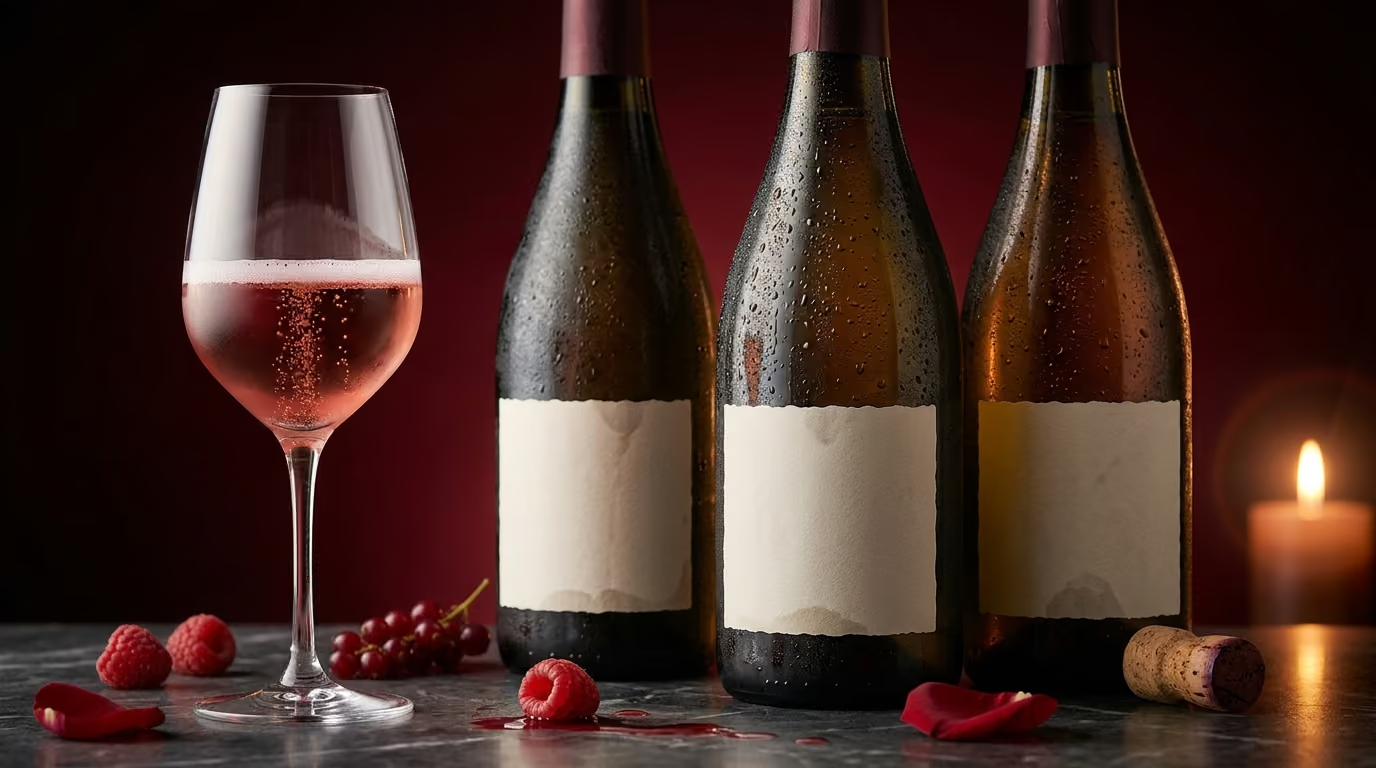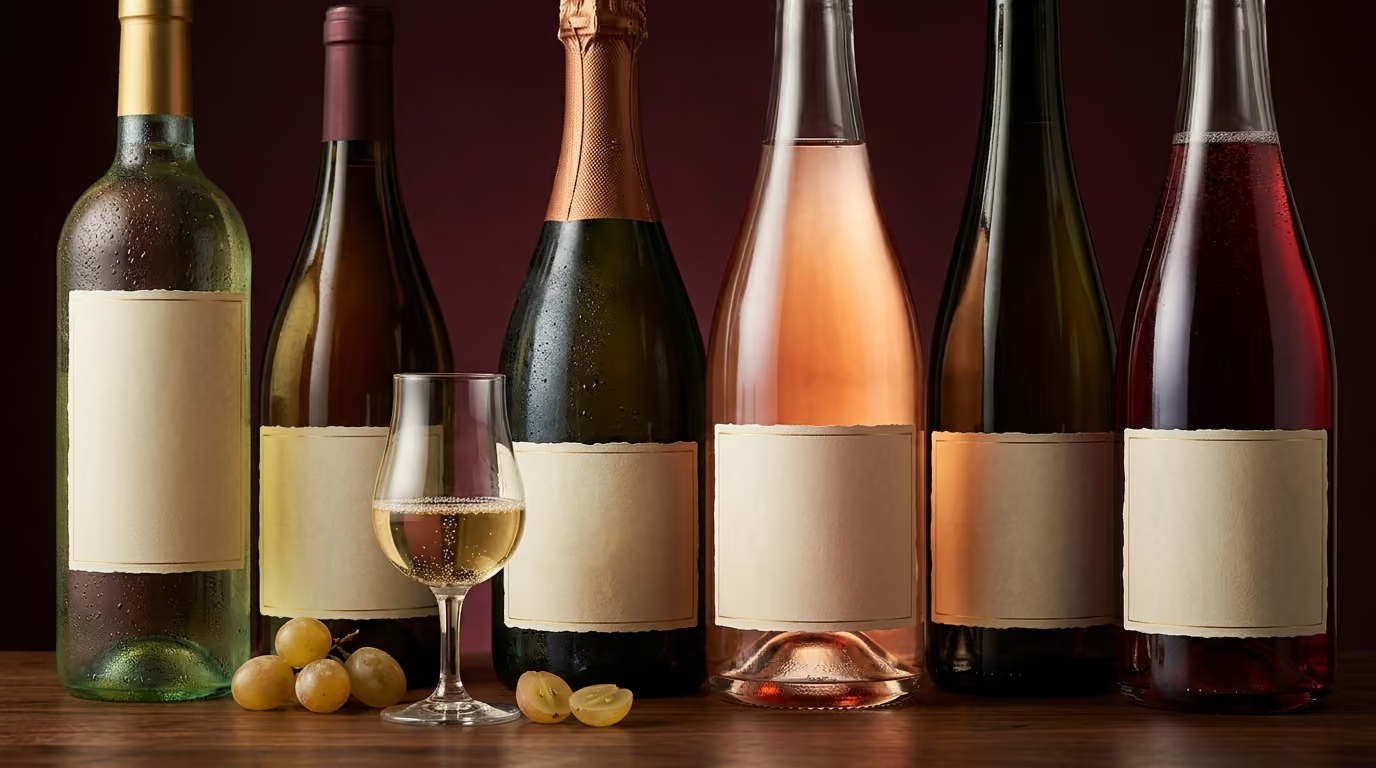
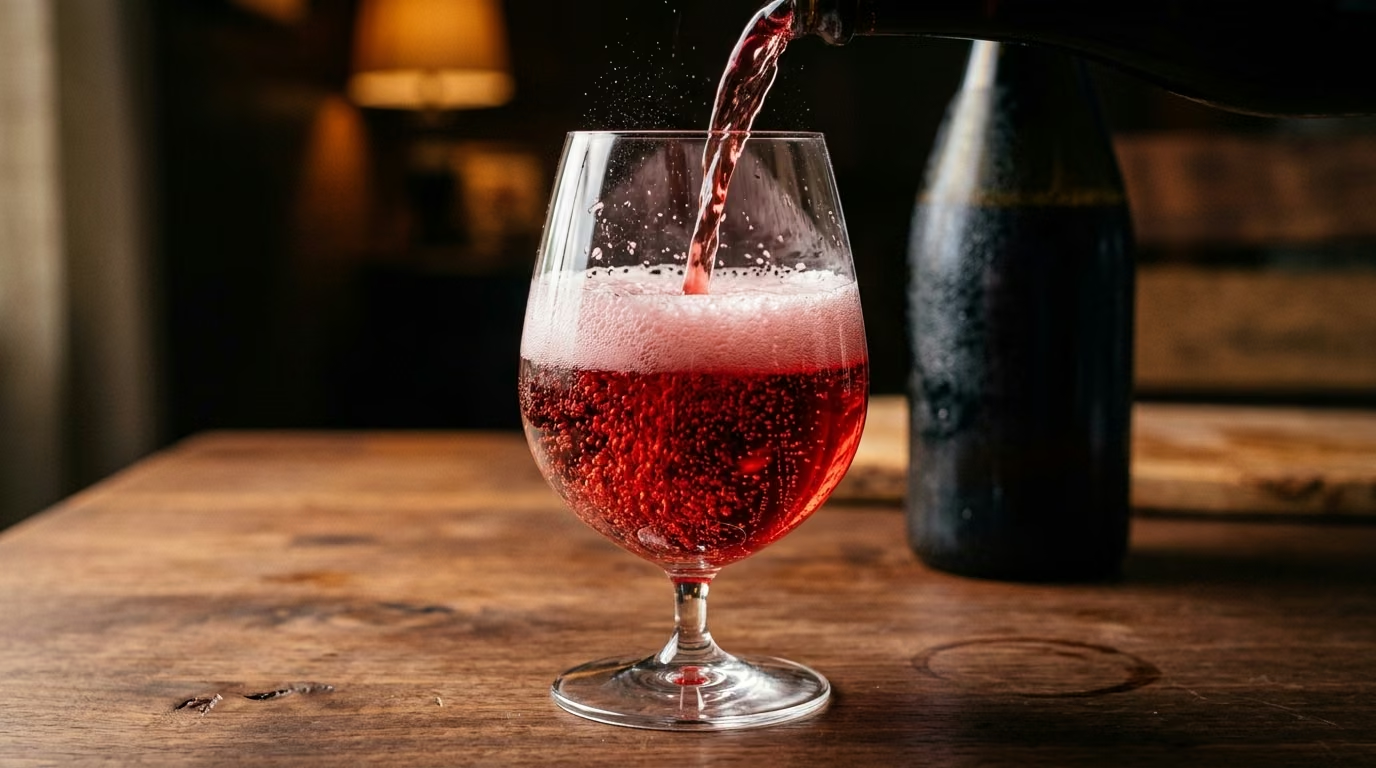

The sweet sparkling red wine most people should buy first is Banfi's Rosa Regale, a Brachetto d'Acqui from Piedmont at 7 percent alcohol and about $18, with 102 grams of sugar per liter on the producer's own spec sheet. If you want it cheaper and gentler, Stella Rosa Red is made from the same Brachetto grape at 5 percent for about $12, and Roscato Sparkling Sweet Red is the fuller, bubblier pick at 10 percent for about $15. For a sweet Lambrusco, look for amabile or dolce on the label, and whatever you grab, don't trust the word "Dry" on a sparkling label, because it legally means sweeter than Brut.
What is a sweet sparkling red wine called?
There's no single name for the category, which is why it's so hard to shop for. You're looking at a handful of separate wines that happen to be red, bubbly and sweet at the same time, and each one goes by its own name.
The names you'll actually see on shelves are Brachetto d'Acqui, Lambrusco, and brands like Stella Rosa or Roscato. Italy makes almost all of them, and the Italian words on the label are what tell you the sweetness. The generic words change with the country, since Italy calls its fizz spumante or frizzante, France says mousseux or petillant, and Australia just says sparkling Shiraz.
Frizzante and petillant matter more than they look, because they mean lightly sparkling. EU rules define semi-sparkling wine as holding 1 to 2.5 bar of pressure, while fully sparkling wine needs at least 3. Most sweet sparkling reds sit in that gentler band, so the bubbles feel like a soft prickle on your tongue rather than a scrub.
Which sweet sparkling red wine should you buy?
Buy Banfi Rosa Regale if you want the classic version, Stella Rosa Red if you want it lighter and cheaper, and Roscato Sparkling Sweet Red if you want more fizz and more alcohol. All three are big-volume Italian brands, so you shouldn't need a specialist shop to find one.
| Bottle | What it is | Alcohol | Typical price |
|---|---|---|---|
| Banfi Rosa Regale Sparkling Red | Brachetto d'Acqui DOCG, dolce | 7% | About $18 |
| Marenco Pineto Brachetto d'Acqui | Brachetto d'Acqui DOCG, semi-sweet | 5.5% | About $17 |
| Stella Rosa Red | Semi-sweet, semi-sparkling Brachetto | 5% | About $12 |
| Stella Rosa Black | Semi-sweet, semi-sparkling Brachetto | 5% | About $12 |
| Roscato Sparkling Sweet Red | Fully sparkling sweet red from northern Italy | 10% | About $15 |
| Riunite Lambrusco | Semi-sweet frizzante Lambrusco | 8% | Varies by store |
Prices are the shelf prices a New York wine shop listed in October 2026, so expect a dollar or two either way where you live. The alcohol figures come from the producers or the bottle listings: Banfi publishes 7 percent and 102 grams per liter of residual sugar for Rosa Regale, Stella Rosa lists its Red as a semi-sweet, semi-sparkling wine made with Brachetto grapes at 5 percent, and Riunite describes its Lambrusco as a semi-sweet frizzante at 8 percent.
Our pick for a first bottle is Rosa Regale, because it tastes deliberately made rather than merely sweetened, and the strawberry and rose smell is the whole point of the style. Stella Rosa Red is the better choice for a party where people will drink it like a spritz, since at 5 percent it's barely stronger than a beer. Roscato's sparkling bottle carries twice that alcohol and a busier bubble, so it drinks more like a celebration wine and less like a soda.
Why does "Dry" on the label mean sweeter than "Brut"?
The sparkling wine sweetness terms are legally defined by sugar content, and they were set long enough ago that the plain English meaning drifted away from the legal one. It's the most useful thing to know before buying, and it's the opposite of what most people assume.
The terms and their limits sit in Annex III of Regulation (EU) 2019/33, which replaced the older Regulation 607/2009 that many wine sites still quote. The scale runs like this, in grams of residual sugar per liter, with the Italian word you'd see on a bottle of spumante:
| Term on the label | Italian equivalent | Residual sugar | How it reads |
|---|---|---|---|
| Brut Nature | Dosaggio zero | Under 3 g/L | Bone dry, no sweetness at all |
| Extra Brut | Extra brut | 0 to 6 g/L | Dry |
| Brut | Brut | Under 12 g/L | Dry, the default for Champagne |
| Extra Dry | Extra dry | 12 to 17 g/L | Just off dry |
| Dry or Sec | Secco or asciutto | 17 to 32 g/L | Noticeably sweet |
| Demi-Sec | Abboccato | 32 to 50 g/L | Clearly sweet |
| Doux | Dolce | Over 50 g/L | Dessert sweet |
Look at the Dry row and the Brut row side by side, because that's where people lose money. A wine labeled "Dry" can carry up to 32 grams of sugar per liter, while "Brut" tops out at 12. The regulation also lets the real sugar differ by up to 3 grams per liter from what the label states, so the boundaries are soft at the edges.
So if you want sweet, the words to look for are Demi-Sec, Doux or Dolce. If you buy Brut expecting sweetness, you'll get one of the driest things in the aisle. Our guide to what Brut means on sparkling wine labels covers that term in more depth.
How sweet is each style, in numbers?
Brachetto d'Acqui is the sweetest of the mainstream styles, a sweet Lambrusco sits a step below it, and sparkling Shiraz is barely sweet at all. Sweetness still varies within each style, so the style name gets you close and the label word finishes the job.
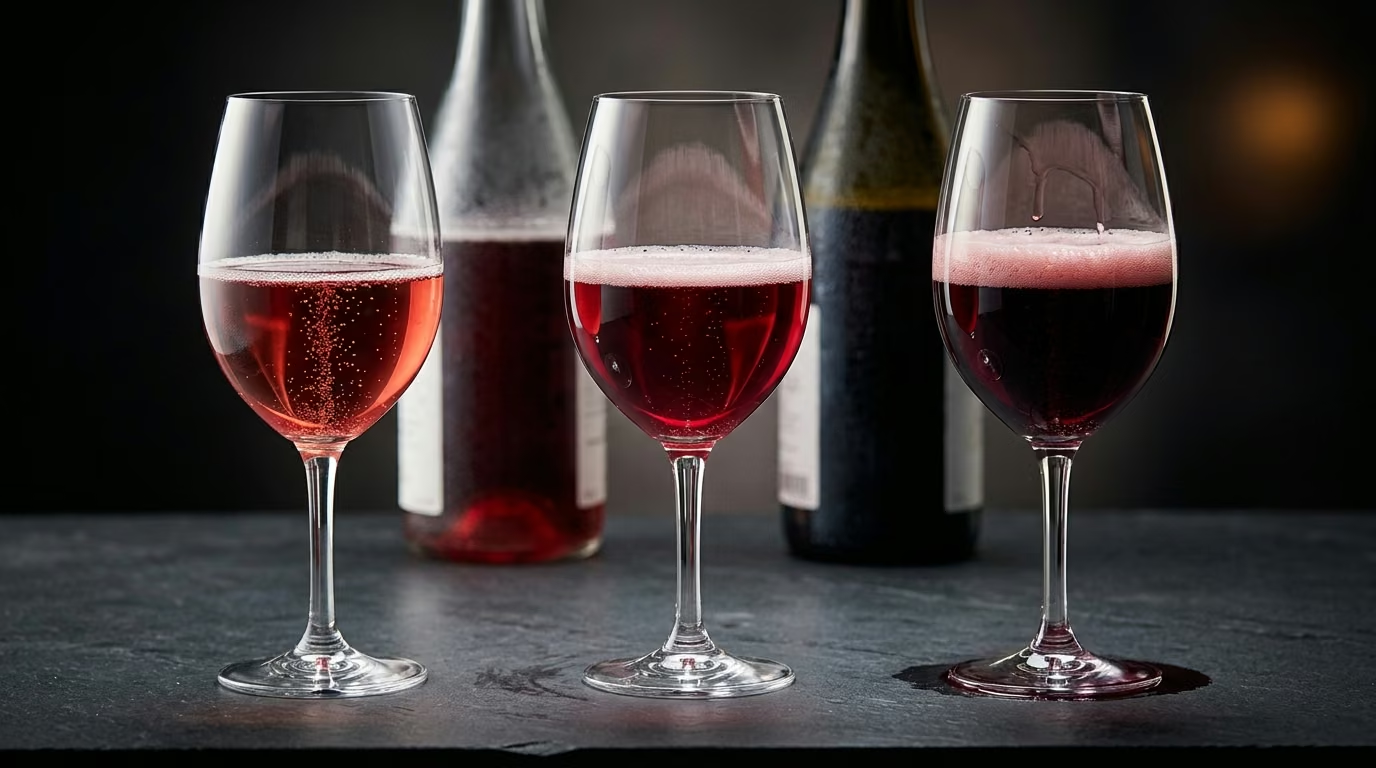
Brachetto d'Acqui is the one most people picture when they think of a sweet sparkling red. It's a DOCG wine from Piedmont made from the Brachetto grape, and it smells like strawberries and rose petals in a way that's almost startling the first time. The denomination rules set a minimum of 5 percent alcohol for the lightly fizzy rosso and 6 percent for the fully sparkling spumante, and the bottles we checked sit between 5.5 and 7 percent, roughly half a normal red. Rosa Regale's 102 grams per liter puts it twice over the line for Dolce.
Lambrusco is the wildcard, because the name covers a family of grapes and a range that runs from bone dry to properly sweet. When a Lambrusco is frizzante, as Riunite is, it's labeled on a different EU scale from the table above: amabile means more than 12 and up to 45 grams per liter, and dolce means at least 45. A fully sparkling spumante Lambrusco uses the table above instead. Buy a Lambrusco Amabile or Dolce if you want sweetness, and a Lambrusco Secco if you want the dry style, which tastes like sour cherry with a savory edge and is a different wine entirely. Our Lambrusco guide walks through every label word.
Branded semi-sweet reds like Stella Rosa and Roscato are built for consistency rather than regional character. Stella Rosa sits at 5 percent and Roscato's sparkling bottle at 10, so they're not interchangeable even though they share a shelf. If you already drink one of them, our piece on wines like Stella Rosa covers what to move to next.
Sparkling Shiraz is the outlier and the one people buy by mistake. It's Australian, red and fizzy, but it's dry to off dry rather than sweet, full bodied and peppery, and closer to a still Shiraz with bubbles than to anything else here. We wrote about sparkling Shiraz separately because it belongs in a different conversation.
Brachetto vs Lambrusco: which one should you pick?
Pick Brachetto if you want dessert in a glass, and pick a Lambrusco Amabile if you want a sweet red that still tastes like red wine. They're the two names people confuse most often, and they behave very differently on the table.
Brachetto is lighter, lower in alcohol and more perfumed, with almost no tannin, so it reads as strawberries and roses with a soft fizz. It's the one to open with fruit, chocolate or a slice of cake. Lambrusco is darker, usually stronger, and carries more acid and a little grip from the grape skins, so even the sweet versions have something underneath the sugar. That structure is why Lambrusco Amabile works with salami and pizza in a way Brachetto doesn't.
On sugar alone the gap is real. A Dolce Brachetto spumante has to clear 50 grams per liter, while a frizzante Lambrusco Amabile can sit anywhere above 12 and up to 45, so the sweetest Lambrusco you'll commonly find is still gentler than a typical Brachetto. If you're buying for someone who says they "like sweet wine" and nothing else, Brachetto is the safer bet.
Which sweet sparkling red suits your taste?
Start from what you already like rather than from the category, because these wines are less similar to each other than the shelf implies.
If you like Moscato, go to Brachetto d'Acqui first. It's the closest thing to a red Moscato that exists, similar in sweetness and alcohol but with red fruit instead of peach, and our guide to wines similar to Moscato maps that territory more fully. If you like a fruity everyday red and just want bubbles, a Lambrusco Amabile is the better fit, since it has enough acid and tannin to feel like a red wine rather than a soft drink.
If you've tried a sweet sparkling red and found it too much, the answer usually isn't a different brand but a drier category. Move down the scale to Extra Dry or Brut and see whether the fizz was the part you enjoyed. Sweetness tolerance is the most personal variable in wine, and the gap between someone who finds 30 grams per liter pleasant and someone who finds it cloying is enormous. If you're standing in the aisle unsure which side of that line a bottle falls on, Sommy's Fit Check lets you type or scan it and places it against your own palate on a dry-to-sweet scale.
How should you serve sweet sparkling red wine?
Serve it properly cold, colder than a still red, at around 45 to 50 degrees Fahrenheit. Sweetness feels heavier and more cloying when the wine is warm, and the chill keeps it refreshing rather than syrupy.
Use a normal wine glass rather than a narrow flute. A flute concentrates the bubbles and hides the aromas, and with Brachetto in particular the strawberry and rose smell is most of the pleasure. Open it the way you'd open any sparkling wine, with a thumb over the cork and a slow twist of the bottle rather than the cork. Frizzante bottles are under far less pressure than Champagne, so they're less dramatic, but a red that sprays still stains everything it lands on.
What food goes with sweet sparkling red?
Sweet sparkling reds work best with dessert or against salt, and they struggle with anything in between. Match the wine to food that's less sweet than the wine, or the wine will taste thin and sour by comparison.
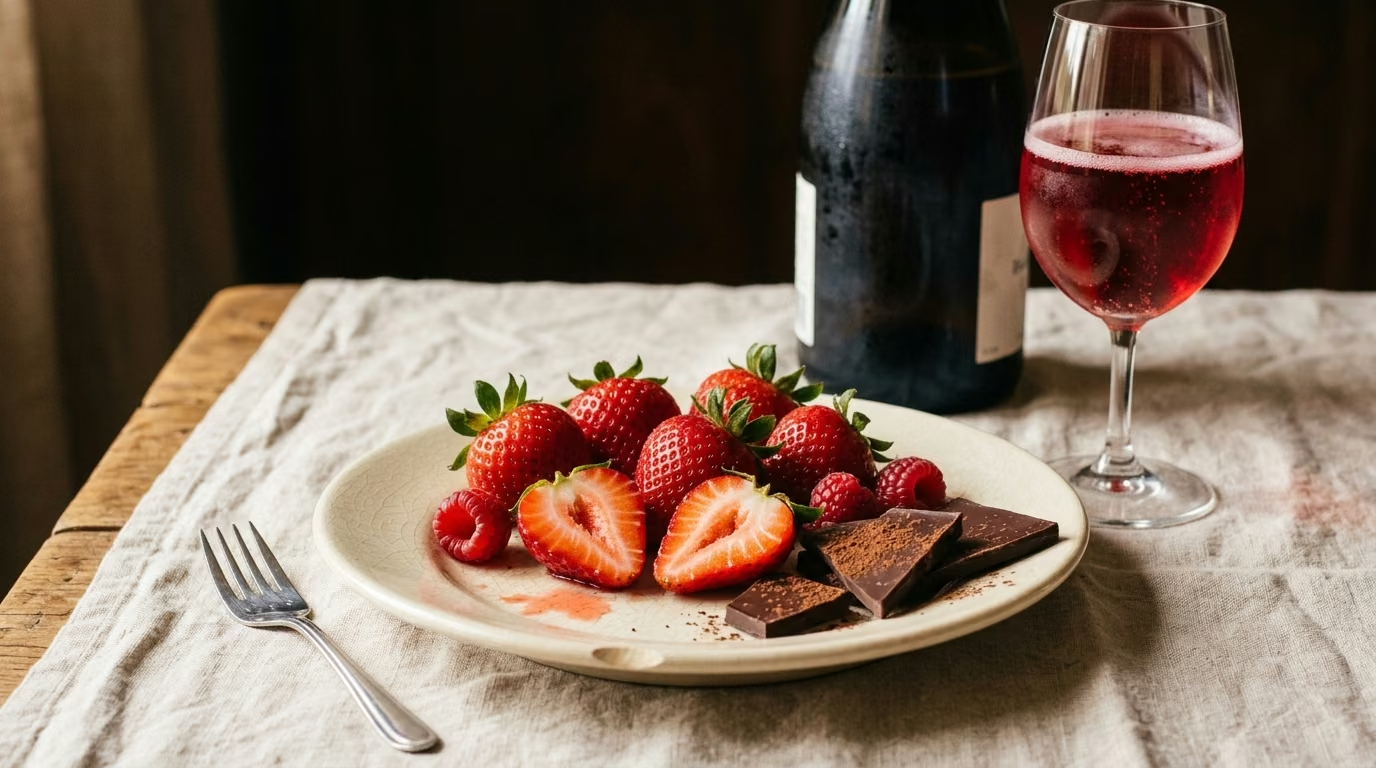
Berries and milk chocolate are the classic partners for Brachetto, and the pairing works because the wine already tastes of red fruit. A bowl of strawberries with a glass of Rosa Regale is a better dessert than most desserts, and our guide to wine with chocolate explains why a very dark bar needs something stronger.
The other direction is salt and fat. A semi-sweet Lambrusco against prosciutto, salami or a hard aged cheese is the traditional pairing in Emilia, and the sweetness plays off the salt the way a fruit chutney does on a cheese board. Spicy food is the third option, since a little sugar calms chili heat where tannin only makes it burn hotter.
Frequently Asked Questions
What is the best sweet sparkling red wine?
For most people it's Banfi Rosa Regale, a Brachetto d'Acqui at 7 percent alcohol and about $18. Stella Rosa Red is the lighter, cheaper alternative at 5 percent, and a Lambrusco Amabile gives you sweetness with more structure underneath it.
Is Stella Rosa a Brachetto?
Stella Rosa Red and Stella Rosa Black are both made with Brachetto grapes, according to the producer, which is why they taste so close to Brachetto d'Acqui. They're semi-sparkling rather than fully sparkling and sit at 5 percent alcohol.
What is a sweet sparkling wine called on the label?
On fully sparkling wine, look for Demi-Sec or Doux, or Abboccato and Dolce on an Italian spumante. On lightly sparkling frizzante wines like most Lambrusco, the sweet words are Amabile and Dolce. The word "Dry" is not a reliable signal, because on sparkling wine it legally means 17 to 32 grams of sugar per liter.
Is sweet sparkling red wine low in alcohol?
Brachetto and Stella Rosa are, at roughly 5 to 7 percent, about half the strength of a normal red. Roscato Sparkling Sweet Red is stronger at 10 percent, and sparkling Shiraz is the exception at full table-wine strength.
Is Lambrusco always sweet?
No, and it's the most common misunderstanding about it. Lambrusco runs from dry to sweet, and the label tells you which: secco is dry, semisecco is off dry, amabile is semi-sweet, and dolce is sweet.
How long does an opened bottle last?
Two to three days in the fridge with a sparkling wine stopper is a fair expectation. The bubbles soften noticeably after the first day, so finish the bottle sooner if the fizz is what you like about it.
Can you cook with sweet sparkling red wine?
You can, but the sugar makes it a poor substitute for dry red in a savory sauce, where it reduces to something jammy. It works much better in a fruit reduction or as a poaching liquid for pears.