Brut means dry on a sparkling wine label, and it's a legally defined sugar level rather than a loose descriptor. Under European Union wine law it means the bottle holds less than 12 grams of sugar per liter, which is little enough that most people taste crispness rather than sweetness. It's the most common style of Champagne, Prosecco, Cava and Cremant you'll find on a shelf, so reaching for a brut is the safest way to avoid a sweet surprise. The genuinely confusing part is that Extra Dry is sweeter than Brut, and plain Dry is sweeter than both.
That single word does more work than almost anything else printed on a bottle of bubbles. It won't tell you the grape, the region or the price, but it answers the question people actually worry about while they're standing in front of a wall of sparkling wine. Once you know where brut sits, the rest of the sweetness vocabulary falls into place quickly, and you stop buying dessert wine by accident on New Year's Eve.
What does brut mean on a sparkling wine label?
Brut is a sweetness category, not a quality tier, a region or a price bracket. The word is French for raw or unrefined, and on a sparkling bottle it tells you the winemaker added very little sugar back into the wine before sealing it. A brut bottle can cost twelve dollars or three hundred, and the term says nothing about which one you're holding.
Here's where the sugar comes from in the first place. Traditional sparkling wine finishes its second fermentation bone dry, with essentially every gram of grape sugar converted to alcohol and carbon dioxide. Left alone, that wine tastes searingly acidic, because bubbles and high acid amplify each other. So just before the final cork goes in, the producer adds a small measure of wine mixed with sugar called the dosage. According to the Comite Champagne, the trade body representing Champagne's growers and houses, the dosage liqueur itself runs 500 to 750 grams of sugar per liter, and the producer decides how much of it to add. That decision is the entire sweetness scale.
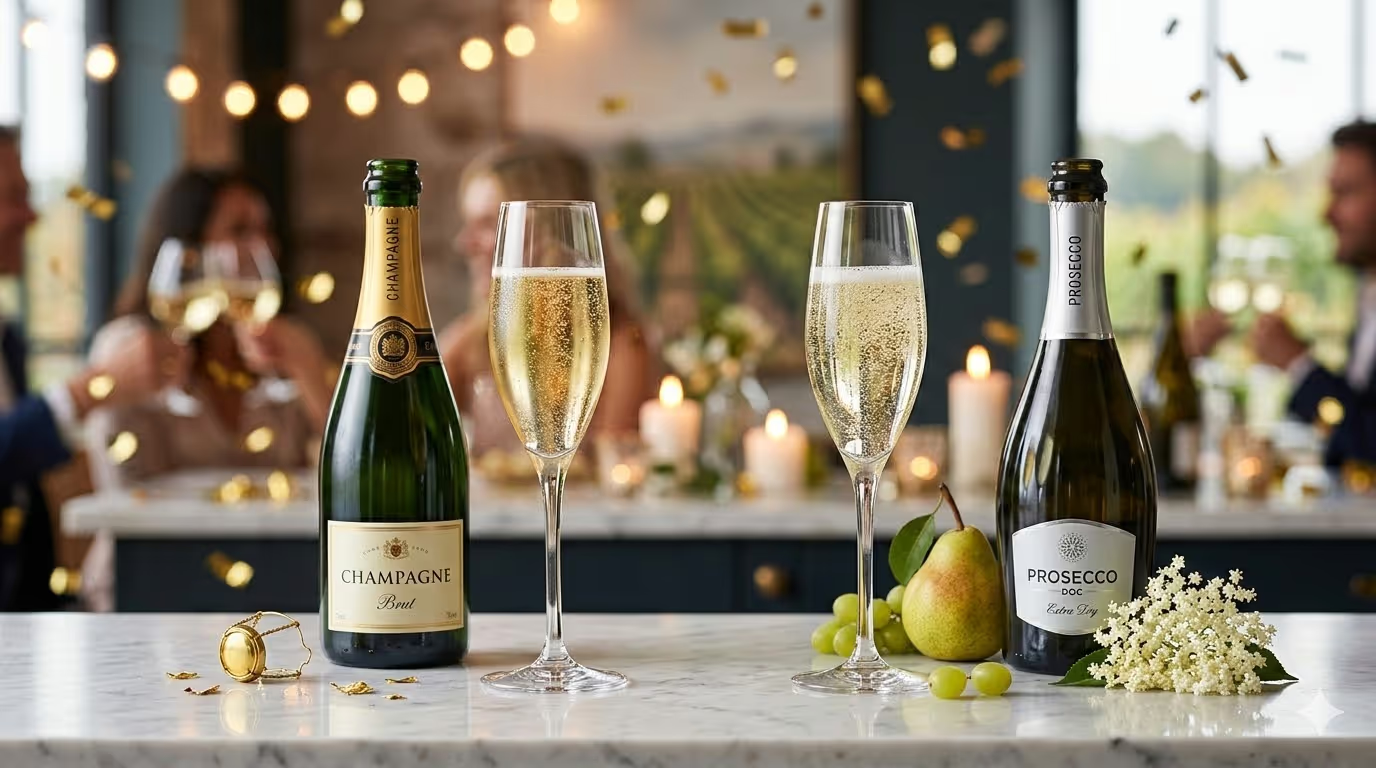
The pronunciation trips people up more than the meaning does. It rhymes roughly with "boot" rather than "brute", and the t stays soft. You'll see it on Champagne from France, Cava from Spain, Prosecco from Italy, Cremant from every French region outside Champagne, and on sparkling wine from California, Oregon, England, Australia and South Africa. If you're building the broader skill, our piece on how to read wine labels covers the other terms that share the front of the bottle, and sweetness is the one worth learning first because it changes the drink more than anything else printed there.
One thing worth knowing about European bottles is that this word isn't optional. Under Article 47 of the EU's wine labelling regulation, the sweetness term has to appear on the label of every sparkling wine sold there. It isn't marketing copy the producer chose to include. It's a required disclosure, which is why you can trust it in a way you can't always trust softer words like "smooth" or "elegant".
How much sugar is in brut sparkling wine?
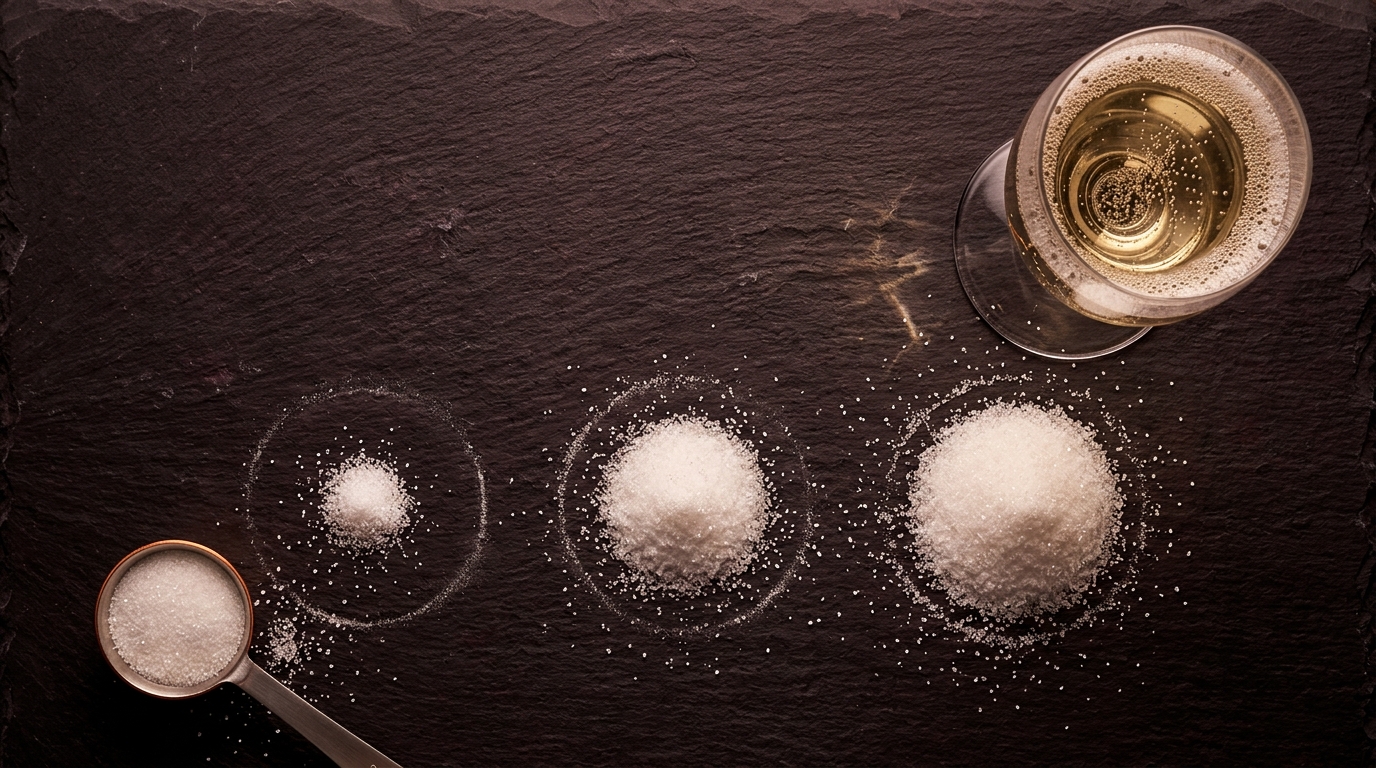
Less than 12 grams per liter, which works out to roughly two grams in a standard five ounce pour. The full scale is set out in Annex III of EU Regulation 2019/33, and every term on it has a hard number attached rather than a vibe.
| Label term | Sugar allowed | How it usually reads in the glass |
|---|---|---|
| Brut Nature (also Zero Dosage, Pas Dose) | Under 3 g/L, with no sugar added after the second fermentation | Bone dry, lean, sometimes austere |
| Extra Brut | 0 to 6 g/L | Very dry, taut, mineral |
| Brut | Under 12 g/L | Dry and crisp, with the fruit still showing |
| Extra Dry | 12 to 17 g/L | Softer, rounder, a touch of sweetness |
| Sec (labelled Dry in English) | 17 to 32 g/L | Noticeably sweet |
| Demi-Sec | 32 to 50 g/L | Sweet, dessert territory |
| Doux | Over 50 g/L | Properly sweet |
Two grams of sugar in a glass is genuinely small once you compare it to anything else people drink socially. Wine Folly's sweetness breakdown puts a brut sparkling wine at about two grams a glass against roughly fourteen for a gin and tonic and thirty three for a whisky and cola. That gap explains why brut feels so refreshing next to salty or fried food, and why it doesn't leave the cloying finish that people who avoid sweet wine are usually worried about.
Notice that Brut Nature carries a second condition beyond the number. The producer can't add any sugar at all after the second fermentation, so under 3 grams has to be what the wine arrived at naturally. Every other term on the scale is a number alone. If you want the wider picture of how winemakers measure and talk about sweetness across still wine too, we broke down the numbers behind dry and sweet wine separately.
Why is extra dry sweeter than brut?
Because the naming came from a marketing race in nineteenth century Champagne, and the categories were added in the wrong order. Sec, meaning dry, arrived first when almost all Champagne was sweet. As tastes moved drier, producers needed a word for something drier than dry, so Extra Dry appeared. Then they went drier again and reached for brut, and drier still with Extra Brut and Brut Nature. Each new term had to sound drier than the last one already in use, and nobody went back to tidy up.
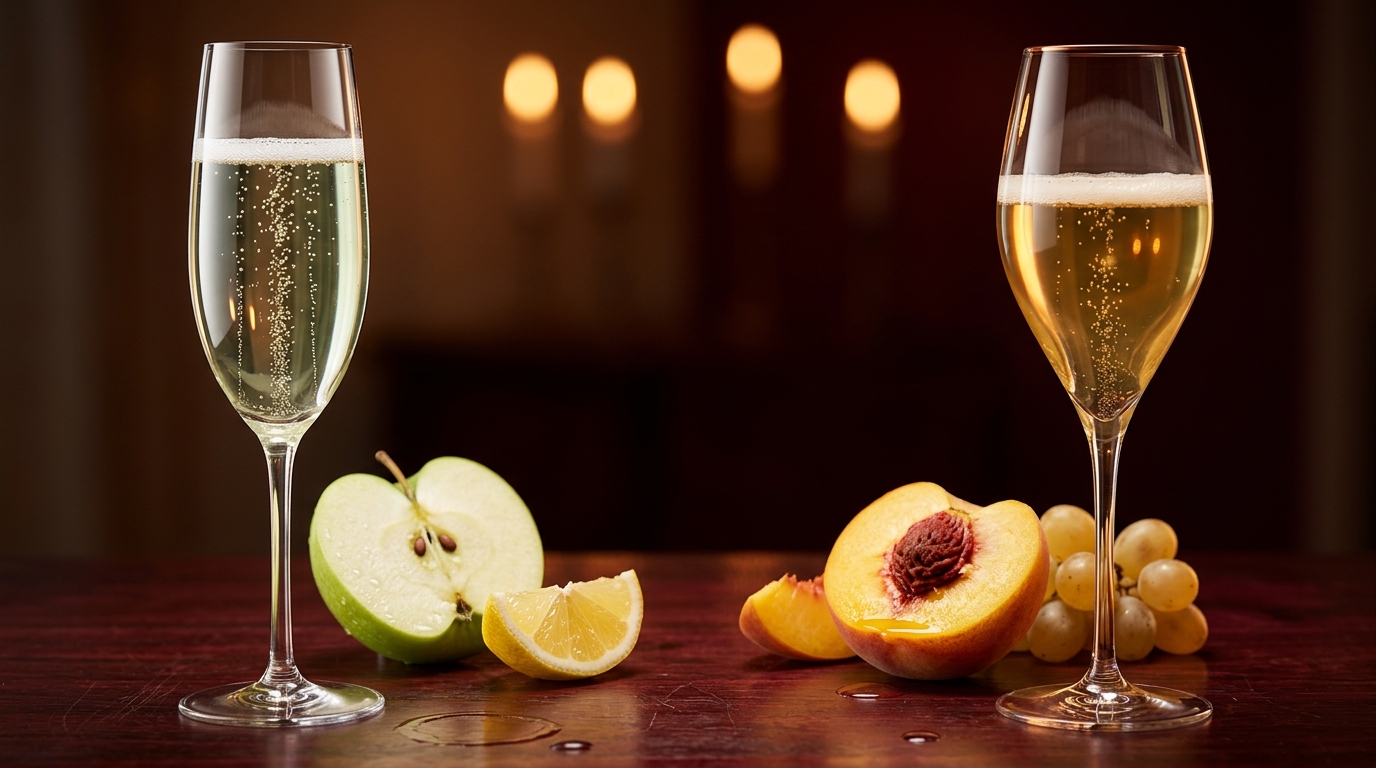
The practical result is three dry-sounding phrases that run in ascending order of sweetness. Brut is the driest of the three, Extra Dry is a step sweeter at 12 to 17 grams, and plain Dry is sweeter than both at 17 to 32 grams. English speakers get caught by the middle one constantly, and it's a reasonable mistake, because "extra dry" reads in every other context as more of the thing rather than less of it.
Whether that difference matters depends on what you're doing with the bottle. Twelve to seventeen grams is a soft, fruit-forward style that suits brunch, mimosas, wedding toasts and mixed tables where a few people quietly dislike bone-dry wine. Under twelve grams is the better default with food, because the acidity stays in front and the wine keeps cutting through salt and fat rather than sitting on top of it. If you've ever found a Prosecco sweeter than you expected, check the label rather than blaming the grape. The Consorzio that governs Prosecco DOC lists Brut Nature through Demi-Sec as permitted styles, and plenty of what sells well in the United States is Extra Dry.
Does brut mean the same thing on every bottle?
Not quite, and there are three separate reasons why two bottles both labelled brut can taste different from each other.
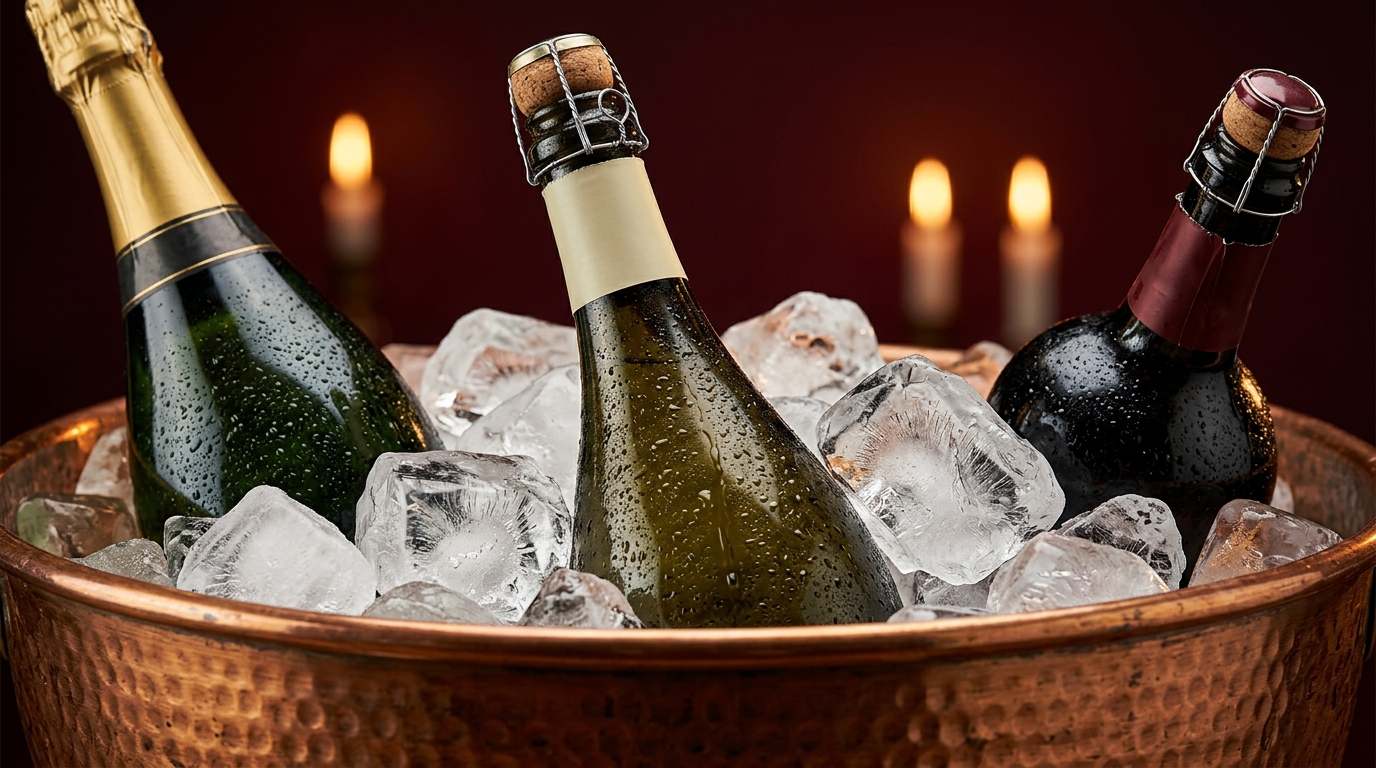
The first is that brut is a wide bracket with no floor. Anything under 12 grams qualifies, so a wine at 3 grams and a wine at 11 grams can both use the word, and that's a real difference you can taste. The regulation adds that when a wine's sugar level qualifies for two terms, the producer picks one, which is how a 5 gram wine can appear as Extra Brut on one label and Brut on another. Most non-vintage Champagne sits in the upper half of the brut range, between 6 and 12 grams, because that's where the sugar balances the acidity most reliably. If the non-vintage part of that sentence is new to you, we explain what non-vintage means on a sparkling label and why it's the house's signature blend rather than a lesser bottle.
The second reason is acidity, which never appears on the label at all. Sugar and acid pull against each other on your palate, so a Champagne with searing acidity and 10 grams of sugar can taste drier than a soft, low-acid sparkling wine with 6 grams. This is the single biggest reason brut Champagne, brut Prosecco and brut Cava don't taste alike despite sharing a category, and it's a large part of what separates the styles more broadly. We compared how Champagne and Prosecco actually differ in grape, method and texture if you want the fuller version.
The third is that the numbers themselves are European law, not global law. In the United States, the federal standards of identity for sparkling wine at 27 CFR 4.21 define sparkling grape wine, champagne-style wine and the production methods behind them, but they never define brut and never attach a gram figure to it. American producers use the term because the whole world understands it, and in practice they follow the European brackets closely, but on a domestic bottle it's a strong convention rather than a legal threshold. Even in Europe there's a tolerance built in: the regulation allows the measured sugar to differ from the labelled term by up to 3 grams per liter, so the word points at a range rather than a precise figure.
When should you reach for a brut?
Any time you want bubbles with food, and any time you're buying for a group whose tastes you don't know. Brut is the safest default in sparkling wine because it lands where most palates expect a dry wine to land, and it stays out of the way of whatever you're eating.
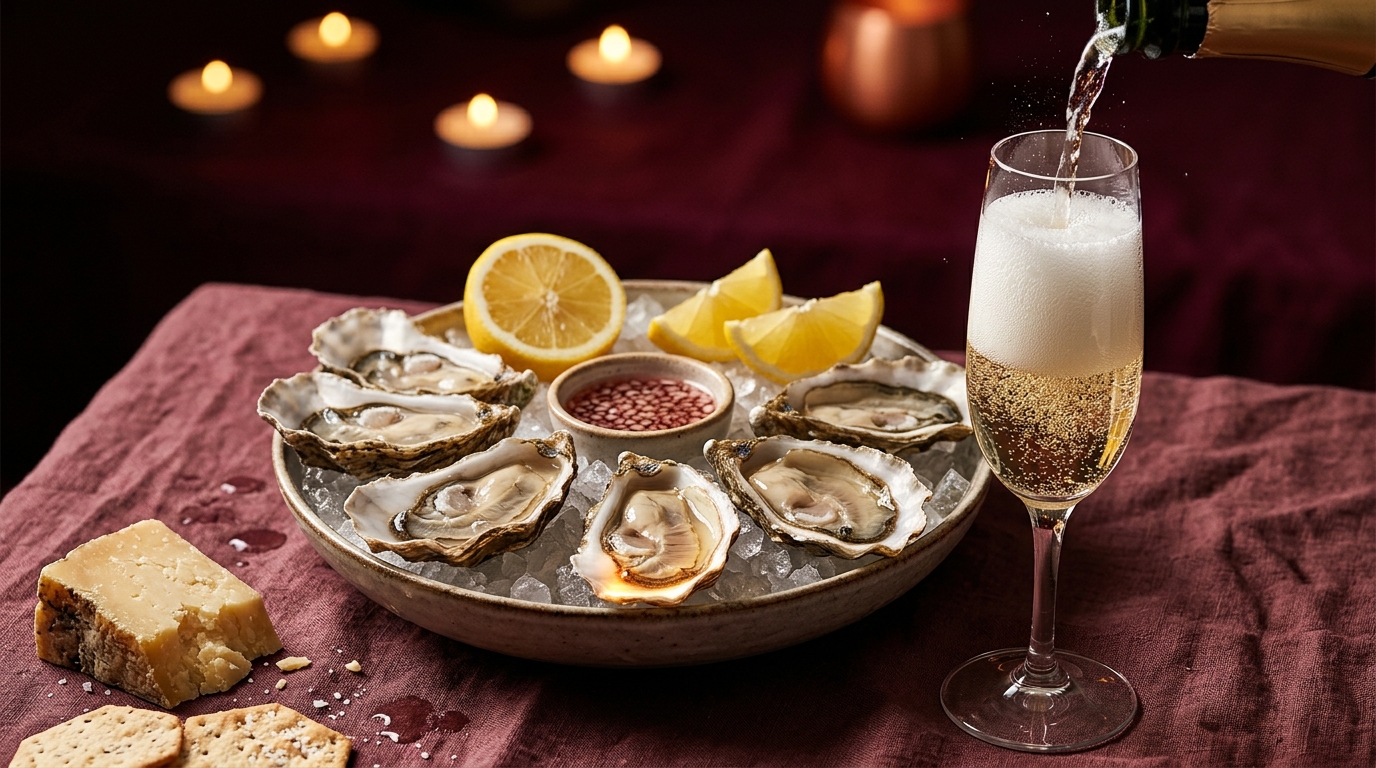
The pairing logic is simple enough to carry in your head. Bubbles and acidity both scrub salt, fat and fried texture off your palate between bites, which is why brut works so well with oysters, fried chicken, potato chips, salty hard cheese, sushi and anything that arrives from a fryer. Our guide to wine for oysters goes deeper on why the briny end of that list is such a reliable match. Sweeter styles have their place too, and Demi-Sec with a fruit tart or a wedding cake is a much better idea than trying to force a bone-dry wine against sugar.
In a restaurant, ordering a brut by the glass is one of the lowest-risk moves on the list, because it starts the meal well and rarely fights an appetizer. In a shop, a non-vintage brut from a producer whose style you already like is the reliable choice, and if the shelf tag says Extra Dry and you wanted crisp, put it back and keep looking.
What the label can't tell you is whether you'll like this particular bottle. Brut narrows the field to a sugar bracket, and everything past that point comes down to acidity, fruit, the amount of time the wine spent on its lees and your own palate. That's the gap Fit Check is built for in Sommy: you scan a label or just say the name out loud, and you get a straight verdict on whether that specific bottle suits your taste rather than a general description of the style. It's most useful in exactly this moment, when two bottles carry the same word and you have no way of knowing which one is for you.
Common questions about brut sparkling wine
Is brut sparkling wine sweet or dry?
Brut is a dry style of sparkling wine. It holds under 12 grams of sugar per liter, roughly two grams in a five ounce glass, so it reads as crisp rather than sweet. There's still fruit flavor in the glass, and apple, citrus, pear and toast are all common notes, but they come from the wine rather than from added sugar.
Is extra dry sweeter than brut?
Yes, and the naming is genuinely backwards. Extra Dry sits at 12 to 17 grams per liter against brut's under 12, so it's a step sweeter. Plain Dry, confusingly, is sweeter than both at 17 to 32 grams.
What does brut mean on a Champagne label specifically?
The same thing it means anywhere else in the European Union, which is under 12 grams of sugar per liter. Most non-vintage Champagne lands between 6 and 12 grams, and brut is by a wide margin the most produced Champagne style.
What's the difference between brut and extra brut?
Extra Brut is drier, at 0 to 6 grams per liter against brut's under 12. Brut Nature goes drier again at under 3 grams with no sugar added after the second fermentation. All three are dry wines, and the differences between them show up as texture and sharpness more than as sweetness.
Does brut mean the wine has no sugar at all?
No, and only Brut Nature comes close to that. A brut wine can carry up to 12 grams per liter, which is a real amount even though it reads as dry against the wine's acidity. If you want the driest sparkling wine on the shelf, look for Brut Nature, Zero Dosage or Pas Dose on the label.
Is brut a good choice for mimosas?
It works well, and many people prefer it precisely because orange juice brings plenty of sweetness on its own. If you like a rounder, softer mimosa, an Extra Dry sparkling wine gives you that without needing to add anything.
What to check next time you're buying bubbles
Find the sweetness word before you look at anything else, because it changes the drink more than the region or the vintage will. Brut is your dry default, Extra Brut and Brut Nature go drier if you want lean and mineral, and Extra Dry, Sec and Demi-Sec climb steadily toward dessert. On a European bottle that word is a legal disclosure with a number behind it, and on an American bottle it's a convention that almost always matches. Either way, it's the most reliable single piece of information on the front of a sparkling wine bottle, and learning it takes about a minute.