
The safest wine for oysters is a dry Brut sparkling wine, whether that's Champagne, Crémant or Cava, because the acidity and the bubbles both reset your palate between briny, creamy bites. If you'd rather drink a still white, Muscadet, Chablis, Sancerre and Albariño all work for the same reason, and the one rule that matters more than the grape is to match the wine to whatever sauce is on the spoon rather than to the oyster itself.
Oysters are salty and delicate at the same time, so the wine has to be bright enough to keep up without being big enough to bury them. Once you've got that, the sauce does the rest of the deciding for you.
What is the best wine for oysters?
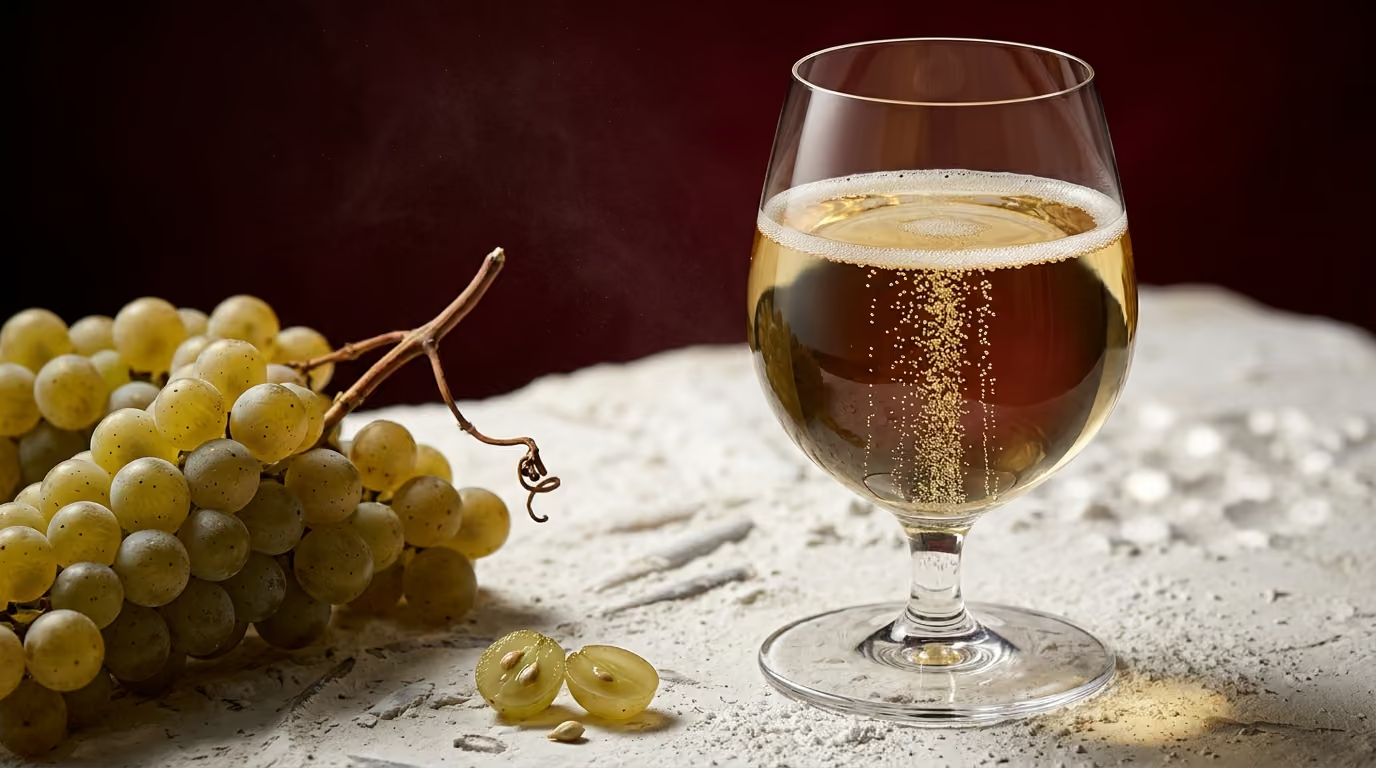
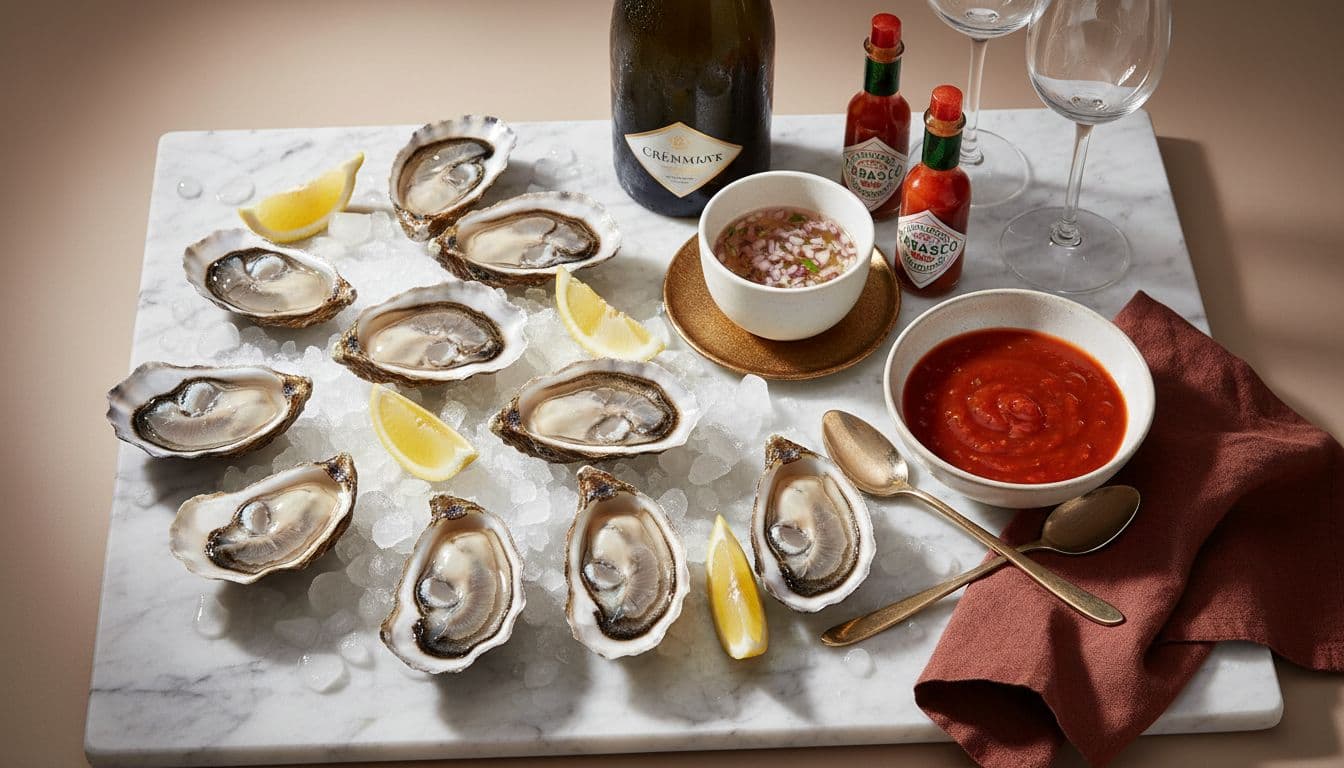
Brut sparkling wine is the answer if you want to buy one bottle and stop thinking about it. Bubbles do two useful things at once, since the acidity cuts the creamy texture of the oyster and the carbonation physically rinses salt and sauce off your palate, so the next oyster tastes as clean as the first. Champagne is the classic version, but Crémant from the Loire or Burgundy and Cava from Spain give you most of the same effect for a good deal less money, usually somewhere between $15 and $25.
Among still whites, Muscadet from the Loire is the traditional match and remains hard to beat, being light, bone dry and faintly saline in a way that seems built for shellfish. Chablis brings a little more weight and a stony character, since it's unoaked Chardonnay from a cool climate, and our guide to Chablis and Chardonnay explains why those two taste so different despite being the same grape. Sancerre gives you sharper citrus and cut grass, and Albariño from Rías Baixas in Galicia has a slightly rounder, more peachy texture while keeping plenty of acidity.
| Wine style | Why it works with oysters | When to use it |
|---|---|---|
| Brut sparkling (Champagne, Crémant, Cava) | Crisp and dry, and the bubbles clean the palate | Best all-purpose choice |
| Muscadet (Loire white) | Light, bone dry and faintly saline | Best with mignonette |
| Chablis (unoaked Chardonnay) | Stony and precise with a little more weight | Best with plain or lemon only |
| Albariño (Rías Baixas) | Citrus and stone fruit with firm acidity | Best with creamier West Coast oysters |
| Dry Riesling | Fruit and acidity that survive strong sauces | Best with hot sauce or cocktail sauce |
Which sparkling wine should you choose?
They are not interchangeable, and the differences matter more with oysters than with most food. Champagne has the highest acidity of the group along with a bready, yeasty depth from long ageing on the lees, which is why it handles both the salt and the texture so well. Crémant is made the same way in other French regions and gives you a good deal of that character for roughly half the price, making it the value pick most nights.
Cava from Spain is leaner and slightly earthier, and it suits briny East Coast oysters particularly well. Prosecco is the one to skip here, because it is made in a different way that keeps it softer, fruitier and lower in acidity, and those floral pear notes sit oddly against something saline. Our comparison of Prosecco, Cava and Champagne goes through how each one is made and why they end up tasting so different.
How do you match the wine to the sauce?
The sauce changes the pairing far more than the oyster does, which is why a single recommendation for oysters in general is never quite right. Once you add something to the shell, that ingredient becomes the loudest thing on the plate and the wine has to answer it.
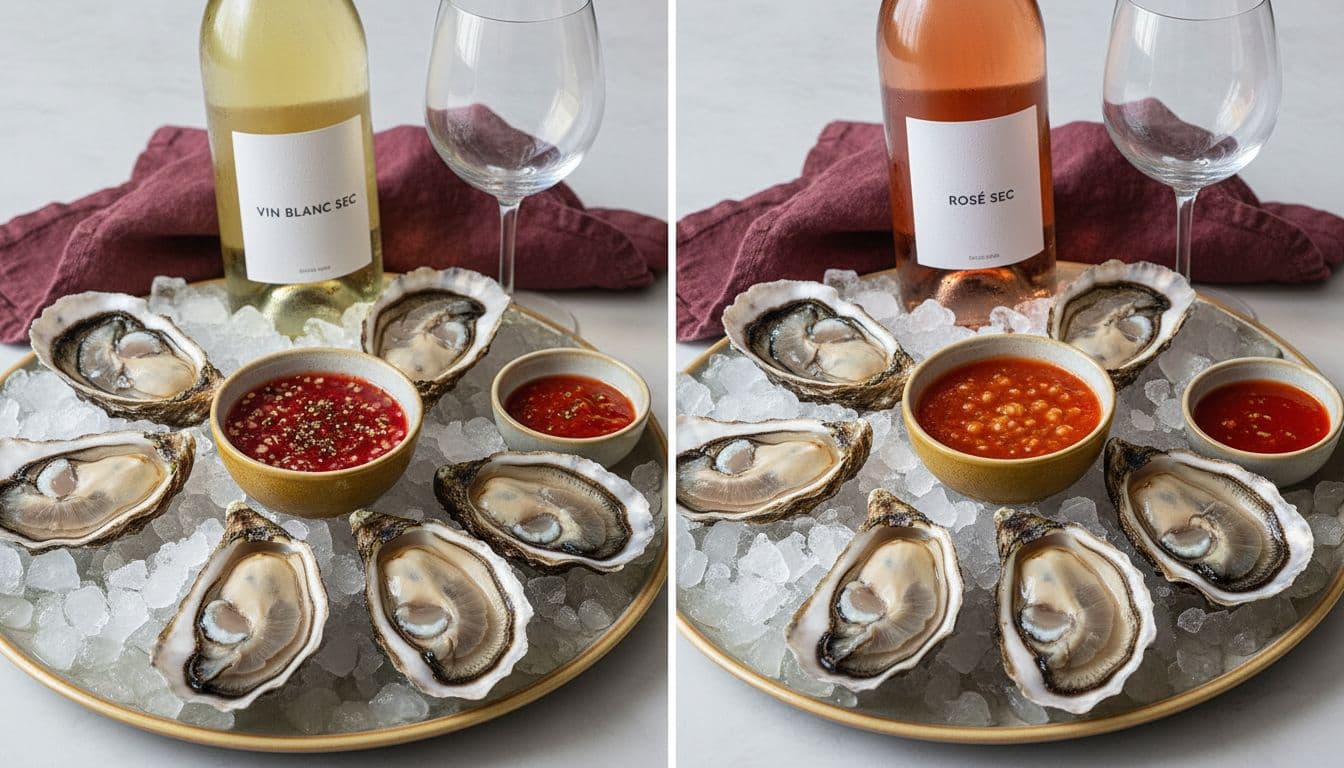
Mignonette is vinegar, shallot and cracked pepper, so it brings sharp acidity of its own. The wine needs to be at least as fresh, or it will taste flat and slightly sweet by comparison, which means Muscadet, Sancerre, Chablis or a Brut sparkling. Anything soft, rounded or oaked will lose that contest badly.
Cocktail sauce is tomato and horseradish, so it brings sweetness and a sinus-clearing heat that can flatten a delicate white completely. Dry Riesling handles it best, because it has enough fruit to meet the tomato and enough acidity to cut the richness, and a dry rosé is a decent alternative if your sauce leans sweet. Our guide to Riesling food pairing covers why it copes with difficult sauces so well.
Hot sauce is the trickiest, since capsaicin heat makes alcohol taste hotter and more aggressive. Keep the alcohol moderate, keep the wine properly cold, and stay bright, which points you back to dry Riesling or Brut sparkling. Plain oysters with nothing but a squeeze of lemon are the easiest case of all, and that's where the more delicate wines like Chablis and Muscadet get their moment, because nothing is competing with them.
Do East Coast and West Coast oysters need different wines?
They benefit from slightly different wines, though the difference is smaller than the sauce difference. East Coast oysters from the Atlantic tend to be smaller, firmer and distinctly briny, with a clean salty finish, and that saltiness suits the leanest, most mineral wines, so Muscadet and Chablis are at their best here.
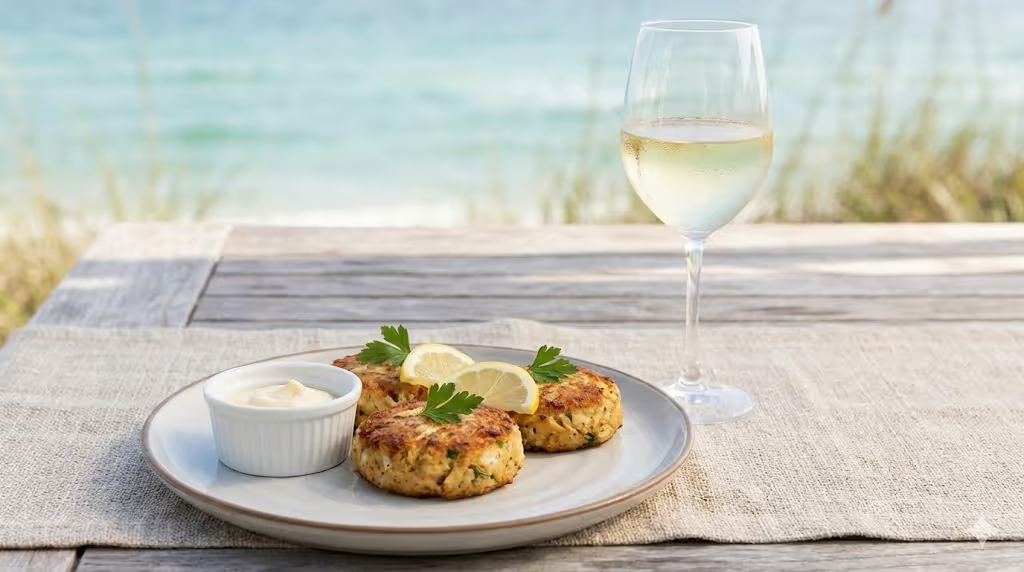
West Coast oysters from the Pacific are usually larger and creamier, and many of them carry a sweet, faintly melon or cucumber note rather than pure salt. Kumamotos in particular are small, sweet and buttery. Those flavors suit a wine with a little more body and fruit, which is where Albariño and a richer Crémant earn their place over the very lean whites. If you're serving both kinds on the same platter, a Brut sparkling straddles them comfortably, which is another reason it stays the default recommendation. Our guide to wine with shellfish extends the same thinking to crab, shrimp and lobster.
How do you build a raw bar at home?
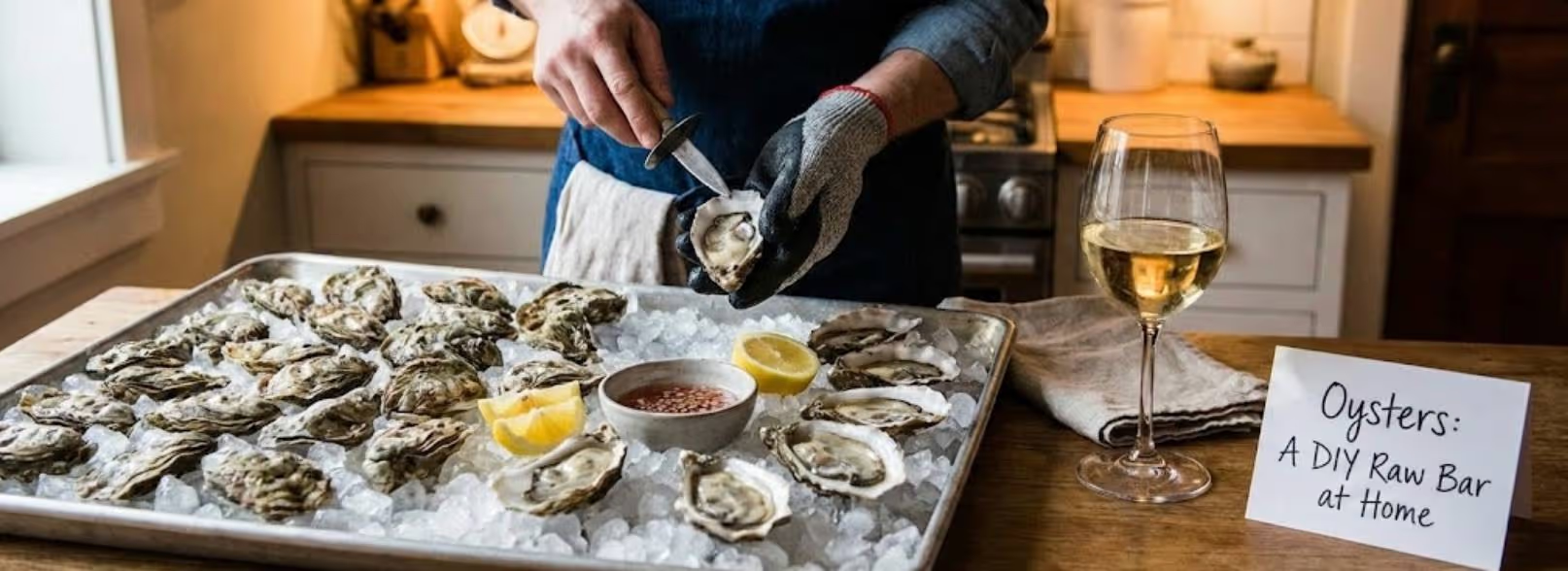
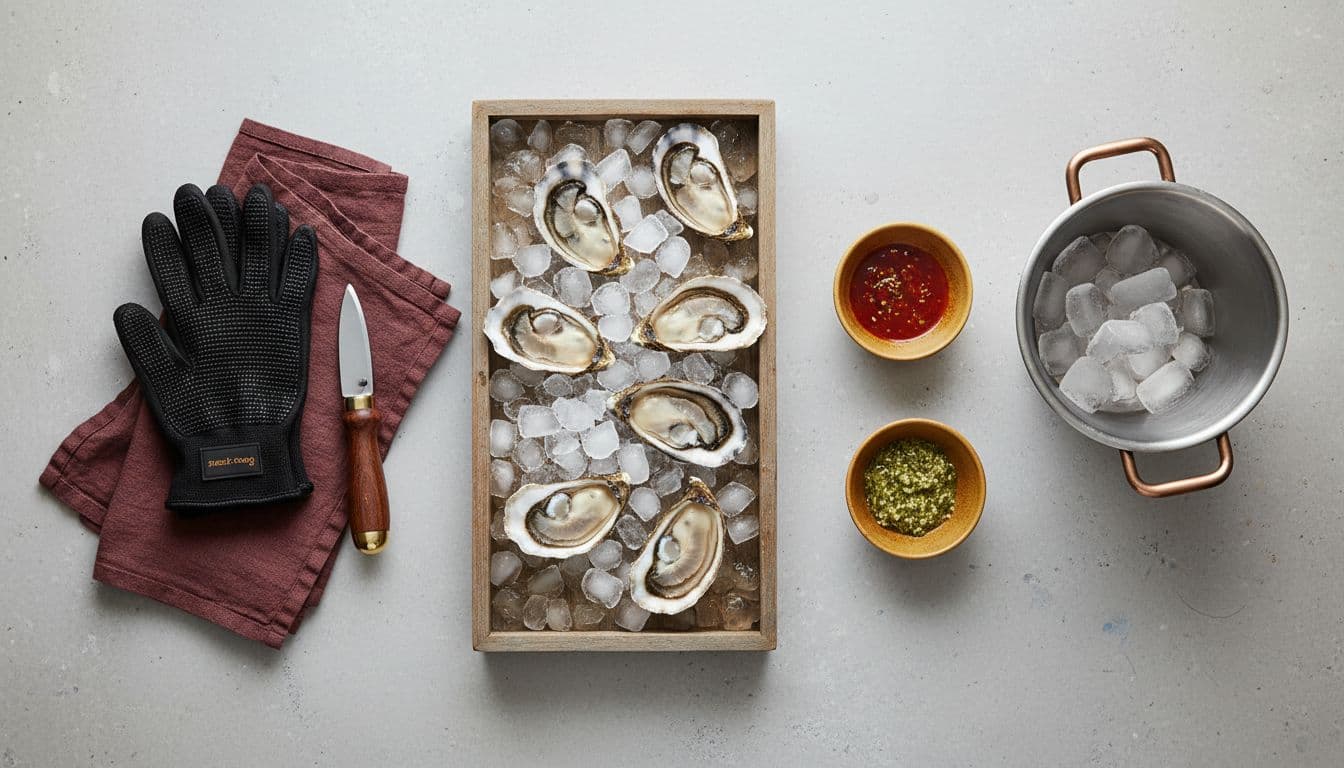
Plan on six oysters per person as a starter and a dozen if the oysters are the meal, and buy them the same day you plan to eat them. They should be closed, or should close when you tap them, and they should smell like clean seawater rather than anything stronger. Keep them in the fridge under a damp cloth with the cupped side down so they hold their liquor, and never in a sealed bag or sitting in fresh water, since both will kill them.
The setup itself needs less equipment than people expect, amounting to a tray of crushed ice, a folded towel to grip the shell, and a proper shucking knife rather than a kitchen knife that can snap. Shuck them just before serving rather than in advance, because an oyster sitting open loses the briny liquor that carries most of its flavor. Put out lemon wedges, a small bowl of mignonette and a bottle of hot sauce, and let people build their own, which also means everyone can chase the pairing they prefer.
Bread and butter is the only accompaniment that genuinely helps, since it resets the palate between rounds. Anything strongly flavored on the same table, such as cheese or cured meat, will compete with both the oysters and the wine and is better saved for later in the evening.
What wine should you avoid with oysters?
Oaked whites are the main thing to steer around, and heavily oaked Chardonnay is the usual culprit. The vanilla, butter and toast character sits awkwardly on top of something as delicate and saline as a raw oyster, and the combination often reads as slightly metallic rather than pleasant. If a label advertises butter, toast, vanilla or barrel ageing, put it back for another night.
Sweetness is the other thing to avoid, so check that a sparkling wine says Brut rather than Demi-Sec or Doux, since those are noticeably sweeter and turn salty food cloying. Our explainer on what Brut means covers the full ladder of sweetness terms if the labels confuse you. Big tannic reds are the last category to skip, because tannin and iodine-rich shellfish produce a genuinely unpleasant metallic taste together, and that reaction is strong enough that it's worth taking seriously rather than treating as snobbery.
How cold should the wine be for oysters?
Colder than you would serve most whites, because the whole appeal of this pairing is the sense of freshness. Crisp whites and sparkling wines show best between 45 and 50 degrees Fahrenheit, which is roughly 7 to 10 degrees Celsius, and that's cold enough that the bottle should come straight out of an ice bucket rather than sitting on the table. As the wine warms up, the acidity starts to read as sourness and the oysters taste flatter alongside it.
Keep the oysters themselves on a bed of ice and keep the bottle in the same bucket, which solves both problems at once. If you're shucking at home for the first time, Food and Wine's guide to serving raw oysters at home is a practical walkthrough of the gear and the grip, and it's worth reading before you start rather than halfway through.
What wine goes with cooked oysters?
Cooking changes the pairing, because heat concentrates the flavor and whatever the oysters are cooked with usually adds fat. Grilled or charbroiled oysters, the New Orleans style finished with garlic butter and Parmesan, are rich enough to want a wine with more body, so a fuller Chablis, a white Rhône blend or even a lightly oaked Chardonnay works here in a way it never would with raw oysters.
Oysters Rockefeller brings spinach, herbs and butter, and the green, slightly bitter edge of the spinach suits Sauvignon Blanc or a dry Rosé better than it suits a mineral white. Fried oysters keep things simplest, since the batter mostly adds fat and salt, and a Brut sparkling remains the best answer because the bubbles cut through fried food as effectively as they cut through anything else.
What should you order at an oyster bar?
Describe the food and the style you want rather than naming a grape, since the person behind the bar knows their list far better than you do. Telling them you're having a dozen with mignonette and a bit of hot sauce, and that you'd like something very dry and crisp or a sparkling by the glass, gets you a better bottle than reciting a grape they may not stock.
A Brut sparkling by the glass is nearly always a safe order, and if the list is long, asking for the leanest and driest white they have that sees no oak narrows it down quickly. Fino or Manzanilla Sherry is the pour worth trying if you see it, because it's bone dry, saline and served cold, and it's a classic match in Spain that rarely appears on American lists. The Resy oyster and wine pairing guide is a good reality check on what oyster bars actually pour.
What tends to stick after a few oyster nights is your own preference rather than any rule, since some people love the austerity of Muscadet and others find it thin and much prefer the fruit of an Albariño. Both are correct, and noticing which one you reached for again is more useful than any pairing chart. If you want a second opinion while you're standing at the shelf, Sommy's Fit Check will tell you whether a specific bottle suits the way you actually drink, and our wine and food pairing guide covers the general method behind all of this.
Frequently asked questions
Can you drink red wine with oysters?
Most reds are a poor match, because tannin reacts with the iodine in shellfish to produce a metallic taste that neither ingredient deserves. If you really want red, choose something very light and low in tannin such as a chilled Gamay, and accept that a crisp white or a sparkling will still taste better.
Is Champagne really worth it with oysters?
Champagne is a genuinely excellent match, though most of what makes it work is the dryness, the high acidity and the bubbles rather than the appellation on the label. A good Crémant or Cava delivers the same effect for less, so save the Champagne for when the occasion rather than the pairing calls for it.
What is the cheapest wine that works with oysters?
Muscadet is usually the best value on the shelf, with plenty of good bottles between $12 and $18, and Cava sits in much the same range while giving you bubbles. Both outperform far more expensive oaked whites in this particular pairing.
Do you have to eat oysters in months with an R?
That tradition dates from before reliable refrigeration and from the fact that oysters spawn in warmer months, which leaves them softer and less flavorful. Farmed oysters are now sold safely year round, so the rule is about texture and taste rather than safety, and these pairings hold up in any month.
What wine goes with fried oysters?
Fried oysters keep the same high-acid logic but can handle a bit more weight, so a Brut sparkling is still ideal and a richer Chablis or a dry Rosé also works well. The batter adds fat, which makes the palate-cleansing effect of bubbles even more welcome.