Most wine terms sort into two piles, and telling them apart is worth more than memorizing a hundred definitions. One pile is tied to a number a producer is legally required to honor, so the word really does predict something about the liquid: sweetness in grams per liter, alcohol by volume, minimum months in an oak barrel. The other pile has no legal definition at all, which means a marketing team picked it. Reserve, Old Vine and Handcrafted all sit in that second pile in the United States, and not one of them appears anywhere in the federal wine labeling rules.
Glossaries of wine terminology run alphabetically, which helps only if you already know the word you're hunting for. Standing in a shop holding an actual bottle, the alphabet is the wrong order entirely. What you want is the short list of words on that label that tell you something real, and that's how this piece is sorted.
Which Wine Terms Actually Predict How a Bottle Tastes?
Four sensations decide how a wine feels in your mouth, and every term worth learning attaches to one of them: sweetness, tannin, acidity and body. Sweetness words like dry, off-dry and brut all point at residual sugar, the sugar left over after fermentation stops. Tannin words like grippy, firm and astringent describe the drying, tea-like grab that red wine leaves on your gums. Acidity words like crisp, bright and zippy describe the mouthwatering snap that makes you reach for another sip. Body words like light, medium and full describe sheer weight, closer to the difference between skim milk and cream than to any flavor.
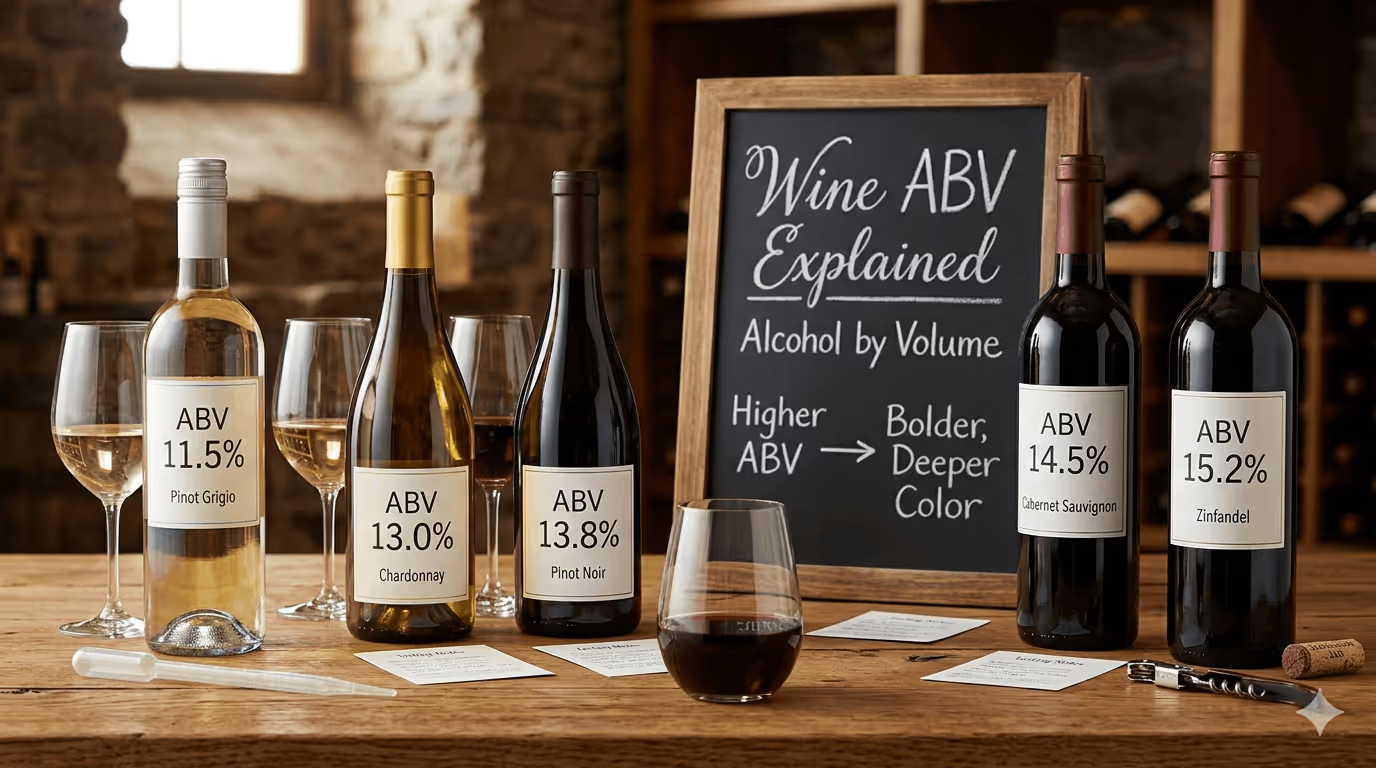
Body is the one you can read straight off the bottle without any tasting vocabulary, because alcohol tracks it closely. A wine at 11.5 percent will almost always feel lighter in your mouth than one at 15.5 percent, and the figure is printed by law on anything above 14 percent. The number carries legal slack that almost nobody mentions, though. Under 27 CFR 4.36, a tolerance of 1.5 percentage points either side of the stated figure is permitted for wines at or below 14 percent alcohol, and 1 point either side above that. A bottle labeled 13.5 percent can legally be anywhere from 12 to 15 percent, which is a real difference in weight and warmth.
You'll also see table wine and light wine used as though they were style descriptions, when they're really a legal class. Under 27 CFR 4.21, table wine means grape wine at 14 percent alcohol or less, and a producer who prints it may skip stating the alcohol number altogether. A bottle with no percentage on it is quietly telling you it sits under 14. Our fuller breakdown of wine ABV covers what those numbers feel like in the glass, and tannin and acidity each have their own piece for the sensations that are harder to picture.
What Do Brut, Dry and Off-Dry Mean in Grams of Sugar?
On European labels these words are exact, and the numbers behind them are published in Annex III of EU Regulation 2019/33. Sparkling wine gets its own ladder, running from bone dry to dessert sweet, and it contains the most misread pair of words in the wine aisle.
| Term on the label | Sugar per liter |
|---|---|
| Brut nature, pas dosé, dosage zéro | Under 3 grams, with no sugar added after the second fermentation |
| Extra brut | Between 0 and 6 grams |
| Brut | Under 12 grams |
| Extra dry | Between 12 and 17 grams |
| Sec, or dry | Between 17 and 32 grams |
| Demi-sec | Between 32 and 50 grams |
| Doux | More than 50 grams |
Read that table twice, because Extra Dry is sweeter than Brut rather than drier, and the two ranges don't even overlap. A bottle marked Sec or Dry is sweeter than both by a wide margin. That ordering is a matter of law rather than opinion, so if you have ever bought Extra Dry Prosecco expecting the driest thing on the shelf and found it faintly sugary, the label was working exactly as written. Our piece on what Brut means on sparkling wine labels goes further into how the categories sit against each other.
Still wine uses a separate scale in Part B of the same annex. Dry there means no more than 4 grams of sugar per liter, or up to 9 grams if the wine carries enough acidity to balance it, specifically where total acidity is no more than 2 grams below the sugar content. Medium dry stretches to 12 grams, or 18 under that same acidity allowance. The acidity clause explains a wine that measures sweet on paper yet tastes clean, and it's why a German Riesling can carry real sugar without reading as a dessert wine.
American labels give you none of this. The word brut does not appear once in 27 CFR part 4, the federal regulation covering the labeling of wine, so a domestic sparkling wine using it is borrowing a European convention rather than meeting a US legal standard. Most serious producers follow the European numbers anyway, and nothing compels them to.
Which Wine Terms Are Legally Defined, and Which Are Marketing?
This is where every alphabetical glossary lets you down. We searched the current text of 27 CFR part 4 in full this week, roughly 146,000 characters covering every rule on what may appear on an American wine label. The word Reserve appears zero times. Old Vine appears zero times, and so do Handcrafted and Superior. In the United States those words are decoration, and a producer may print Reserve on the cheapest wine in the portfolio without breaking a single rule.
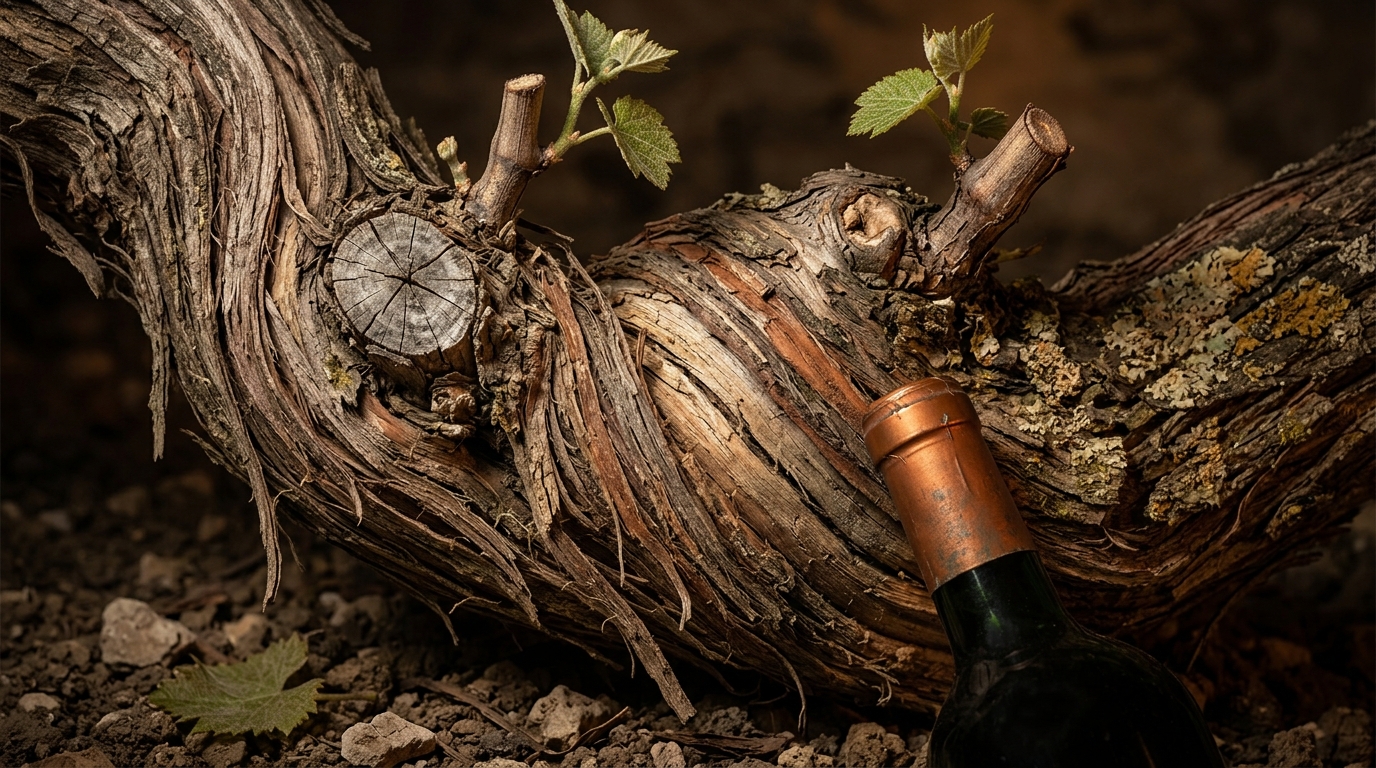
Cross the Atlantic and the same word becomes a contract. In Rioja, the Consejo Regulador treats the aging words as compulsory categories with minimum time in a 225 liter oak barrel. Crianza means at least two years of aging with a minimum of one year in barrel. Reserva means at least three years, of which one is in barrel and six months in bottle. Gran Reserva means at least five years, with two in barrel and two in bottle. Those are enforceable minimums rather than a house style, which is why Spanish Crianza on a label is genuinely informative and American Reserve is not. Italy runs a comparable system, and our guide to DOCG, DOC and IGT covers how the Italian tiers work.
One American term does carry real weight, and it's the one shoppers tend to skim past. Estate Bottled is defined in 27 CFR 4.26, and the bar is high. The bottling winery has to sit inside the labeled viticultural area, it must have grown all of the grapes on land it owns or controls inside that same area, and it must have crushed, fermented, aged and bottled the wine in one continuous process without the wine ever leaving the premises. The rule even pins down what controlled means, requiring a lease of at least three years with the winery doing the actual vineyard work. When you see Estate Bottled, one outfit really did handle the whole thing. For the longer version of either word, we have separate pieces on what Reserve means and what Old Vine means.
What Do the Place Names and Percentages on a Label Tell You?
Old world labels lead with a place and new world labels lead with a grape, which is the biggest single source of confusion for anyone reading a French or Italian bottle for the first time. Chablis is a place, and the wine inside is Chardonnay, because the appellation permits nothing else. Sancerre is a place, and the white is Sauvignon Blanc for the same reason. The place name does the work because the appellation rules already dictate what may be planted there.
When a label does name a grape, American rules put a floor under it. Under 27 CFR 4.23, a wine may carry a single variety as its type designation only if at least 75 percent of the wine came from that grape, and only if the label also shows an appellation of origin. A bottle sold as Napa Valley Cabernet Sauvignon is therefore at least three quarters Cabernet, with the rest free to be whatever the winemaker chose. That remaining quarter is a blending tool rather than a loophole, and it's often why two Cabernets from neighboring vineyards taste noticeably different.
Vintage years follow the same logic. Under 27 CFR 4.27, a wine labeled with a viticultural area appellation such as Napa Valley must be at least 95 percent from grapes harvested in the stated year. Drop to a broader appellation like California and the requirement falls to 85 percent. Neither figure tells you whether the vintage was any good, only how honestly the year on the front reflects what's inside. For the rest of the front label, our walkthrough of how to read wine labels covers the layout piece by piece.
Which Tasting Words Can You Safely Ignore?
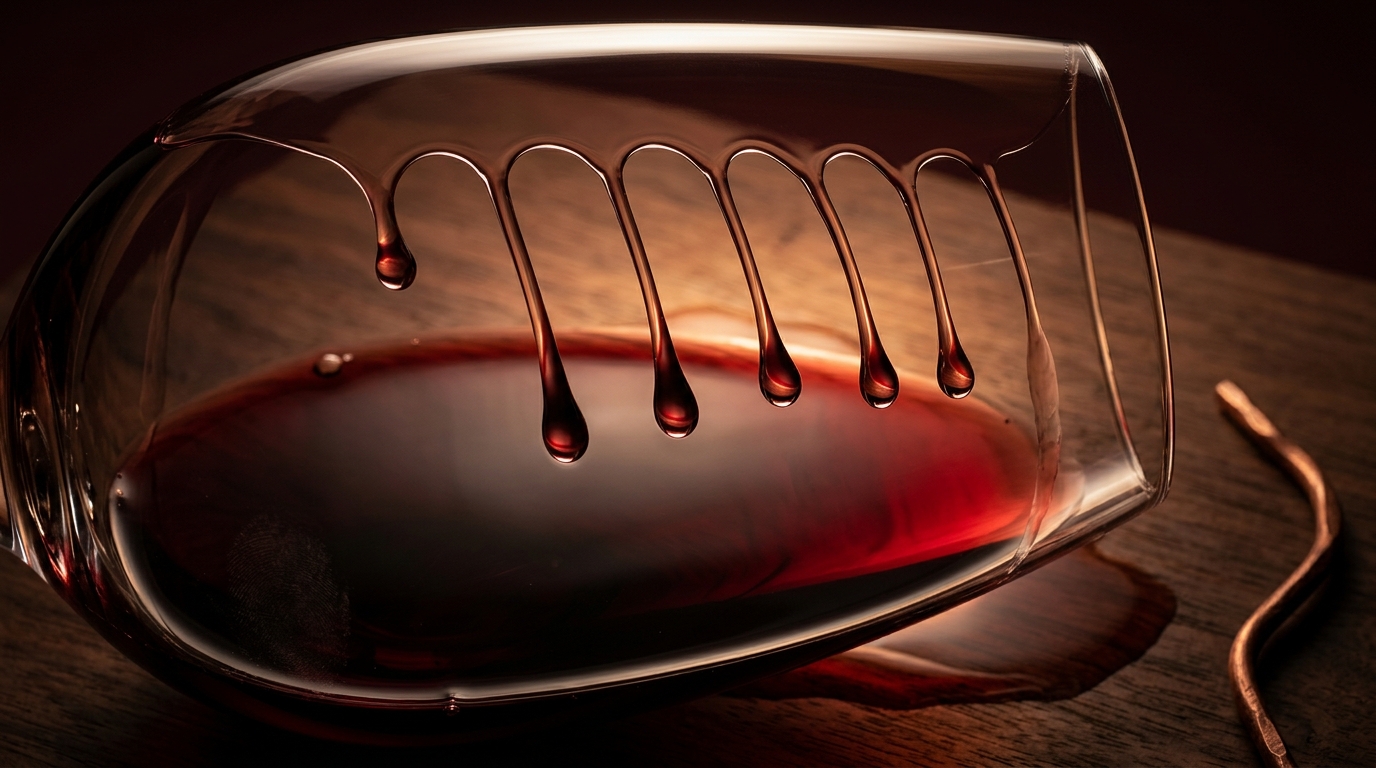
Legs, the drips that run down the glass after you swirl, tell you about alcohol and surface tension and nothing whatsoever about quality. A high alcohol wine makes dramatic legs whether it's superb or dreadful. Minerality has no agreed definition among the people who use it most, so treat it as a mood rather than a measurement. Smooth and food friendly are similar: pleasant, entirely subjective, printed on back labels because they're safe.
Contains sulfites deserves its own mention, because it's the phrase shoppers misread most often. Under 27 CFR 4.32, that statement is mandatory whenever sulfur dioxide is detected at 10 or more parts per million measured as total sulfur dioxide. Yeast produce sulfur dioxide on their own during fermentation, typically in the range of 10 to 20 parts per million, which is why winemaker Alison Crowe writes that there's no such thing as a truly sulfite-free wine. The threshold and the chemistry more or less guarantee the warning, so it distinguishes almost nothing between one bottle and the next. Our piece on wine sulfites covers what they actually do.
Terroir and complexity both mean something real to the people who use them carefully, and neither survives the trip to a back label. Terroir describes the effect of a particular site on the wine, which is a genuine phenomenon and an unfalsifiable marketing claim in equal measure. Complexity describes a wine that keeps changing as you drink it, which you can only confirm by drinking it. Neither word helps you choose between two bottles you haven't opened.
How Does Sommy's Label Scan Read a Wine Label for You?
Label Scan is the shortcut for the moment this whole piece describes. You're holding a bottle, the label is dense with words, and what you want to know is whether the wine is for you rather than what appellation law says. Point your camera at the label and Sommy reads it, pulling out the producer, the grape or the appellation, the vintage and the sweetness and aging language, then checks all of it against your Taste Profile, the living picture of your palate that Sommy builds from everything you rate.
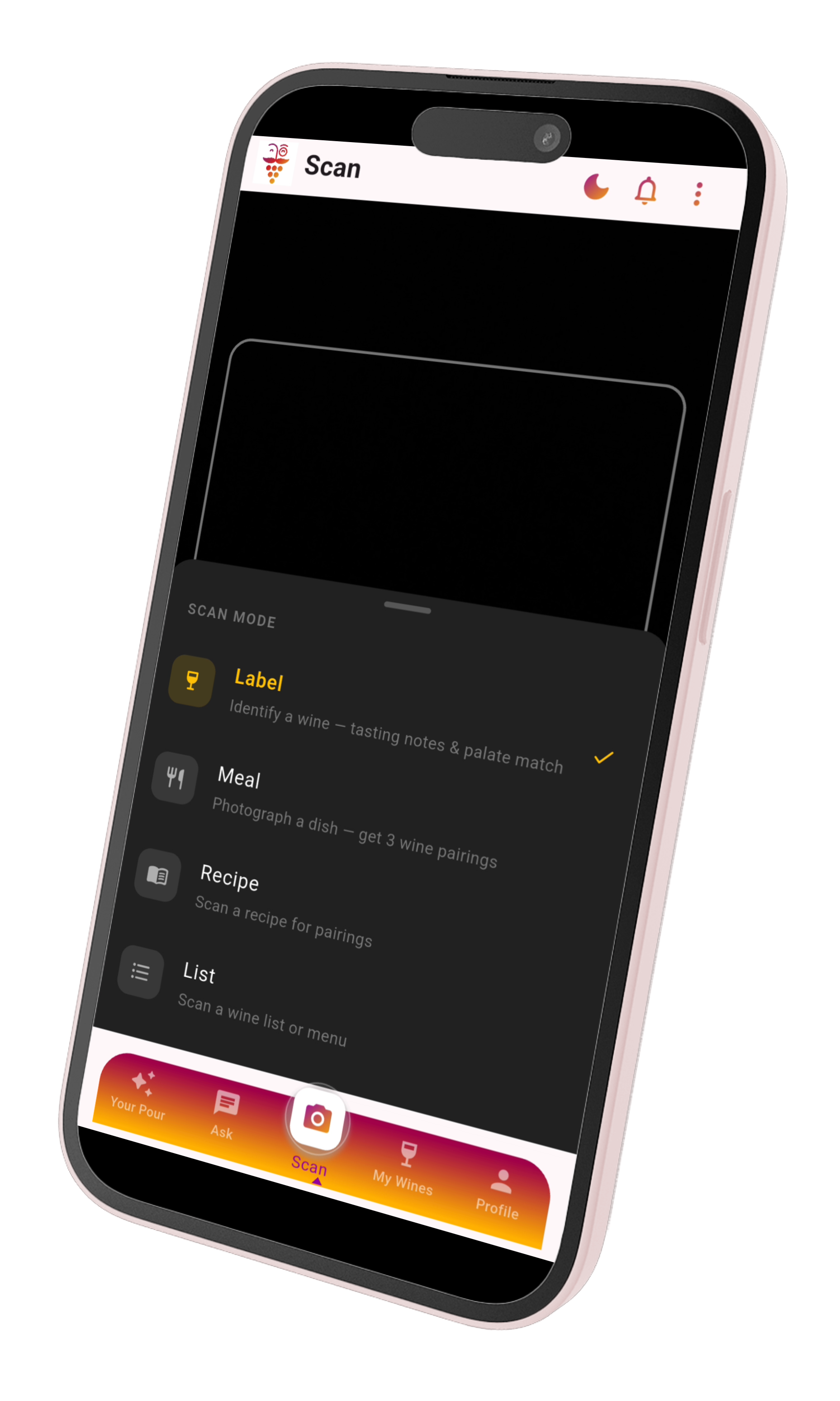
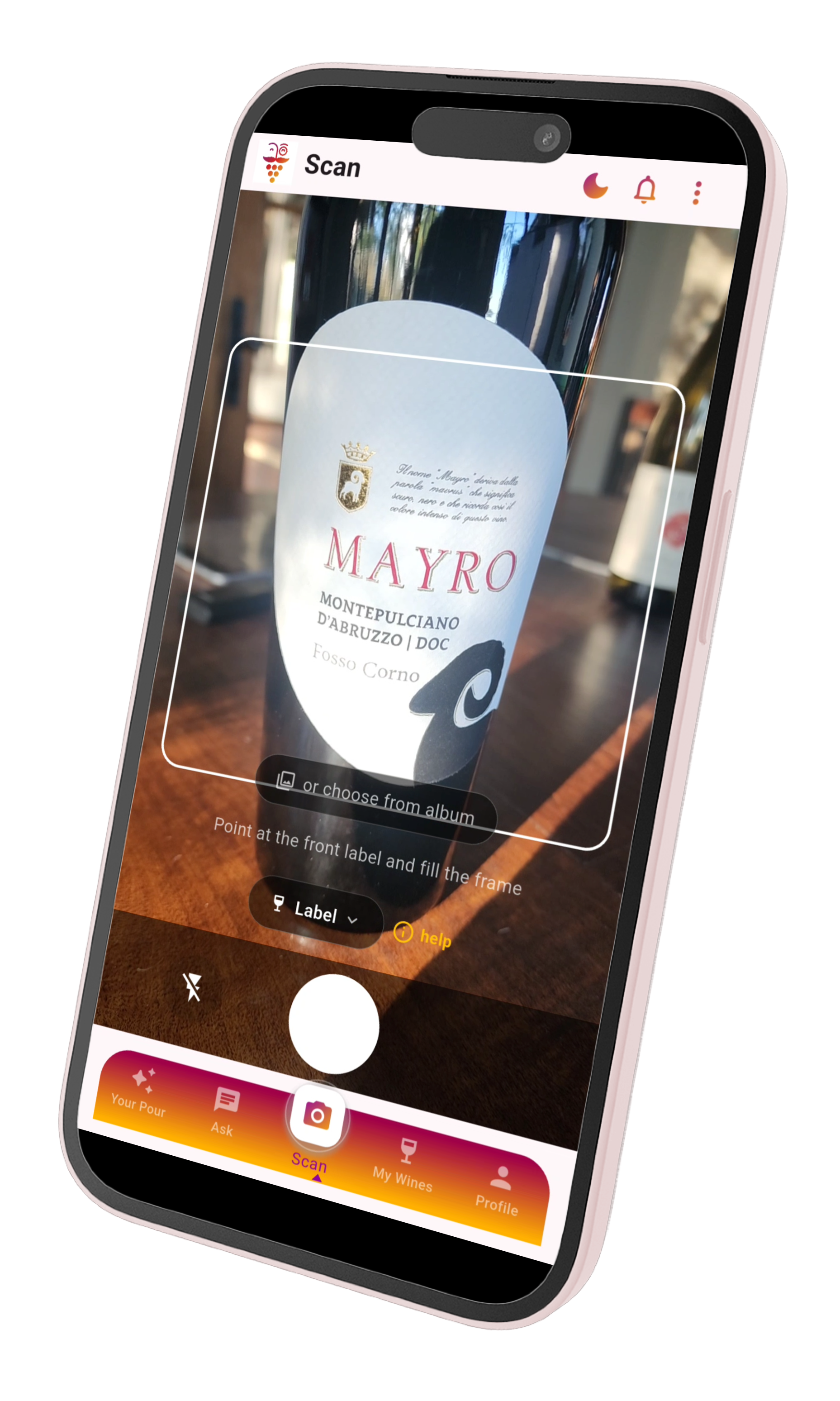
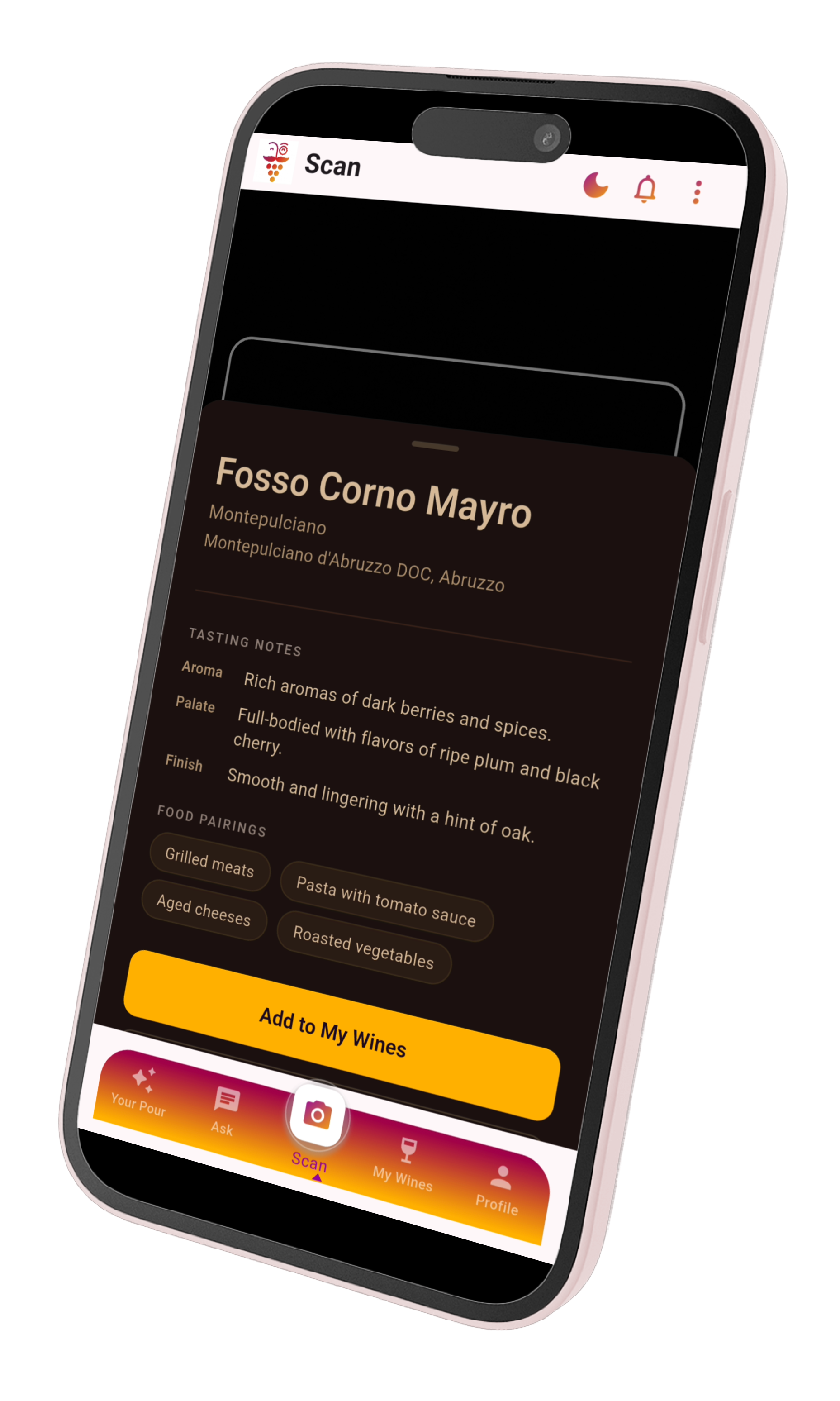
The verdict you get back is about fit rather than merit. Sommy isn't telling you the wine is good in the abstract, because that question has no answer without knowing who's drinking it. It's telling you how this bottle sits against the wines you've already liked, which is the question you were really asking when you picked the bottle up. Ask a follow up in Sommy Chat and it answers with your history in mind, so "is this drier than the last Riesling I rated" is a reasonable thing to type.
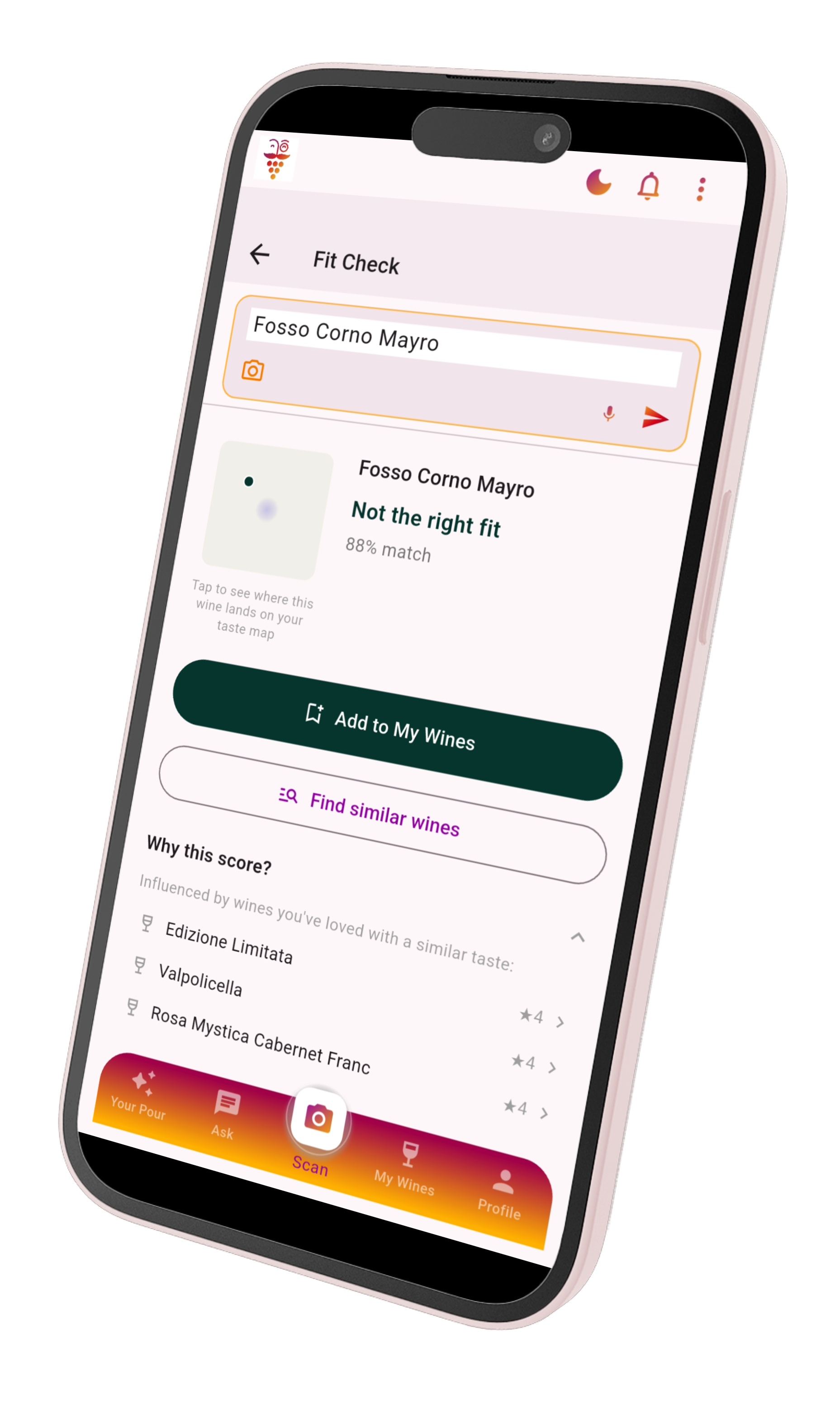
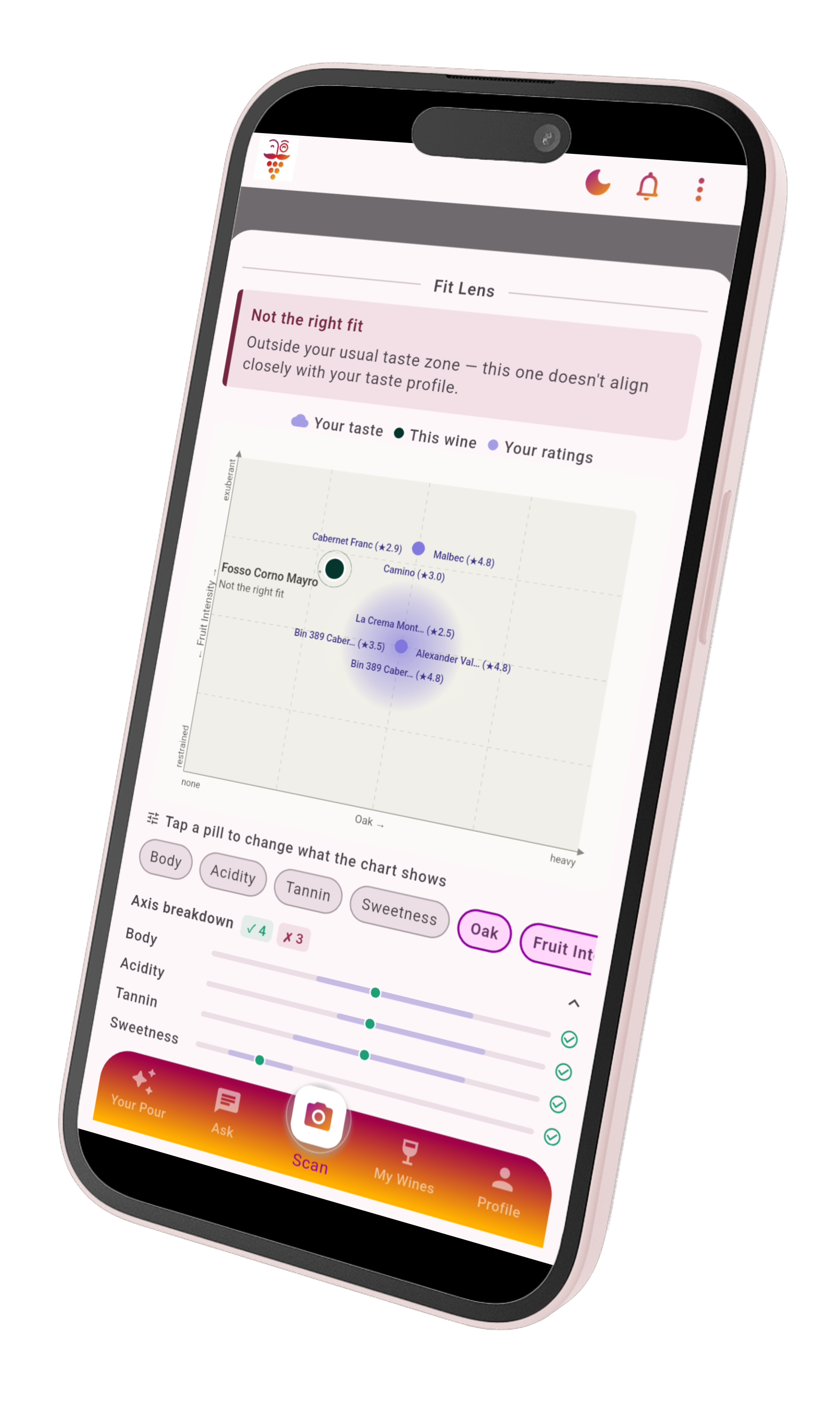
As you can see in the above example, if Sommy thinks you will not like the bottle, it will tel you, and it will tell you why.
Label Scan sits inside Vision, which points the same reading at more than one bottle at a time. Vision handles a whole wine-shop shelf, a restaurant wine list, a plate of food or a recipe, and gives back the same kind of answer against your taste. The single label in your hand is the smallest version of that job.
When Does a Label Scan Help, and When Should You Just Read the Label?
Scanning earns its keep when the label is doing something you can't decode at a glance. Foreign appellations, unfamiliar producers, a wall of Italian tiers, a sparkling wine whose sweetness term you can never keep straight: those are the moments where reading the bottle yourself takes five minutes and the scan takes five seconds. It also helps when forty bottles are in front of you and the real problem is elimination rather than comprehension.
It helps less when you already know the wine. If you drink the same Sancerre every summer, a scan tells you what you knew. It also needs a label it can actually see, so a dark shelf, a torn label or a bottle behind glass will slow it down, and the honest advice there is to turn the bottle toward the light rather than keep retrying. Sommy is working from what you've rated, so the first few scans are less sharp than the fiftieth, which is why importing an existing rating history from another app gives it a running start.
Scanning and learning the terms aren't competing options anyway. The words in this piece are the ones that survive scrutiny, and knowing why Extra Dry is sweeter than Brut makes the verdict on your screen legible rather than magical. Sommy handles the lookup, and you keep the judgment.
Frequently Asked Questions
What words are associated with wine?
The words that recur most describe the four sensations: sweetness (dry, off-dry, brut, demi-sec), tannin (grippy, firm, astringent, structured), acidity (crisp, bright, tart, zippy) and body (light, medium, full-bodied). Around those sit process words such as oaked, malolactic and unfiltered, and origin words such as appellation, vintage and estate bottled. Almost everything else on a label is description rather than definition.
What are some slang terms for wine?
Plonk is the one that has traveled furthest, defined by the Wine School of Philadelphia as British slang for inexpensive wine and also used for very low-quality wine generally. Vino borrows the Italian and Spanish word and works almost anywhere. ABC once stood for Anything But Chardonnay, a phrase the glossary at Sraml credits to winemaker Randall Grahm, and it's still shorthand for anyone avoiding a style they've grown tired of.
What are some funny wine terms?
Bunghole is entirely real, and it's the opening in a cask through which wine goes in or comes out. Noble rot sounds like an insult and describes botrytis, the beneficial mold that dehydrates grapes and is responsible for many of the world's great sweet wines. Foxy is a straight-faced tasting term for the musty odor and flavor of wines made from Vitis labrusca, the native North American grape family that includes Concord. Ullage is the space left in a bottle or barrel as wine evaporates.
What are some wine sayings?
The one you'll meet most often is the Latin proverb in vino veritas, meaning that wine brings out the truth in people. Most of the others in circulation are toasts rather than proverbs, and a fair number of the quotable lines attributed to famous drinkers turn out to have no reliable source behind them. Treat the sayings as decoration and the sweetness numbers as information.
What wine terms should a beginner learn first?
Learn dry versus off-dry, then tannin, then body, and stop there for a while. Those three cover most of what separates one bottle from another in a way you can actually feel, and each maps onto something printed on the label or easy to ask about in a shop. The rest of the wine vocabulary comes more easily once you can describe what you did and didn't enjoy.
Does Reserve on a wine label mean anything?
In the United States it means nothing at all. The word never appears in 27 CFR part 4, the federal rule governing wine labels, so any producer may print it on any wine. In Spain and Italy the situation reverses, where Reserva and Riserva carry enforceable minimum aging periods set by the regional authority.
Is dry the opposite of sweet or the opposite of fruity?
Dry is the opposite of sweet, and it refers to sugar rather than flavor. A dry wine can smell and taste intensely of fruit while containing almost no sugar, which is why people call a bone dry Argentinian Malbec fruity without contradicting themselves. The mix-up is common enough that it's worth checking which one somebody means before you take their recommendation.
Start With the Bottle in Your Hand
The useful version of wine terminology is short. Sweetness terms have numbers behind them in Europe and none in America. Aging terms are contracts in Rioja and decoration in California. Estate Bottled, the 75 percent varietal rule and the 95 percent vintage rule are real constraints worth trusting, while Reserve, Old Vine and Contains Sulfites tell you close to nothing about what's in the glass.
None of that answers the question you actually have in the shop, which is whether you'll enjoy this particular bottle. No glossary can, because the words describe the wine while the answer depends on you. Closing that gap is what Label Scan is for: point the camera, get the reading against your own taste, and spend your attention on the choice instead of the vocabulary.