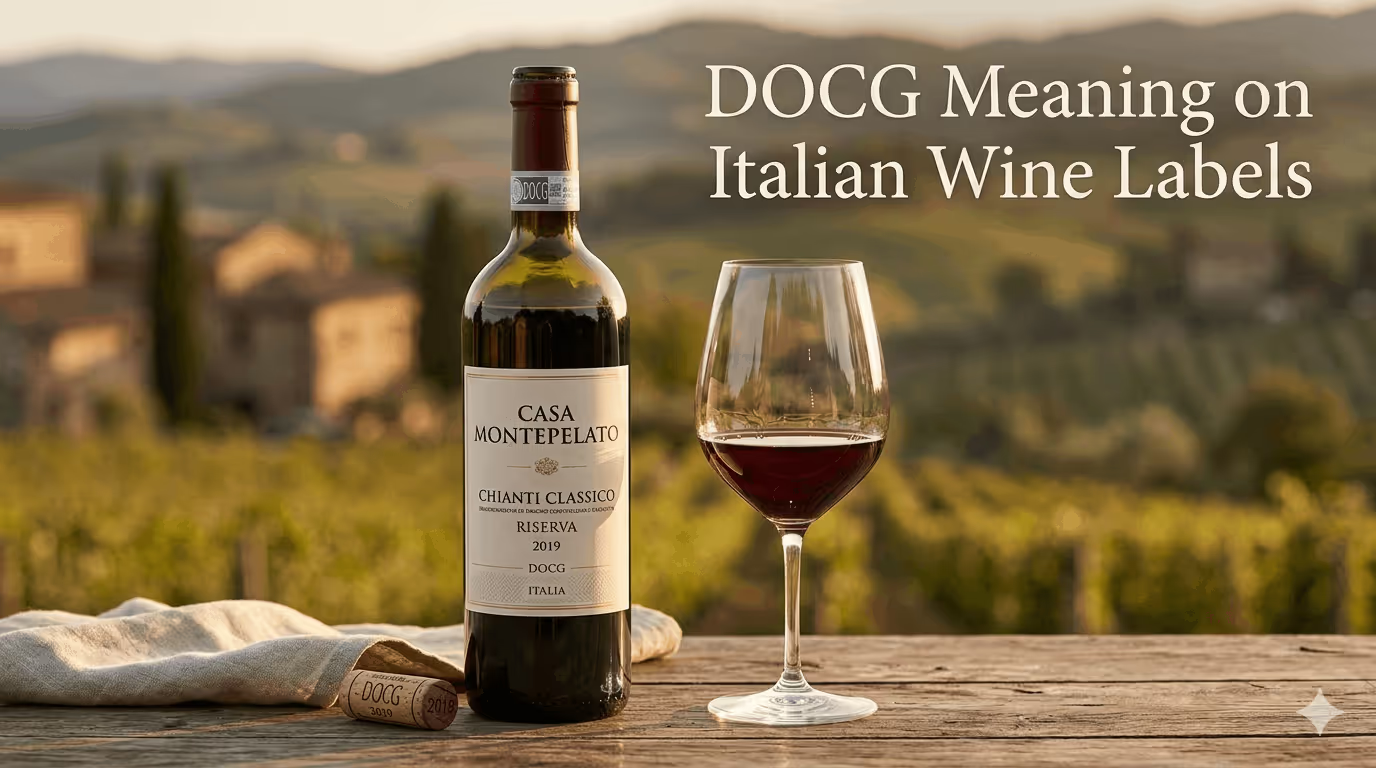

An Italian wine label tells you five things once you know where to look: the producer, the region, the classification (DOCG, DOC, IGT, or Vino), the grape or wine name, and the vintage. The classification letters describe how strict the rules were, not how good the wine tastes. Read the label as place plus rules plus producer, and Italian wine stops feeling like a test.
Italian labels look intimidating because the country has hundreds of native grapes and a layered legal system printed in Italian. The reassuring part is that the same handful of clues appear on almost every bottle. Learn them once and you can decode a shelf in seconds, whether you are holding a $12 weeknight red or a $60 special-occasion bottle.

The four classification tiers, in plain English
Italian wine law sorts bottles into four levels, based on how tightly production is controlled. Higher on the list means stricter rules, not automatically better wine. Here is what each tier actually promises.
| Tier | Full name | What it means |
|---|---|---|
| DOCG | Denominazione di Origine Controllata e Garantita | The tightest rules, plus government tasting and a numbered seal. Examples: Chianti Classico, Barolo, Brunello di Montalcino. |
| DOC | Denominazione di Origine Controllata | Named area with strict rules on grapes and method, but no extra taste panel. The largest category. |
| IGT | Indicazione Geografica Tipica | A named area with looser rules, so producers can blend or experiment. Home to many Super Tuscans. |
| Vino | Vino (formerly Vino da Tavola) | Basic table wine with almost no rules and usually no region stated. Mostly everyday jug wine. |
DOCG and DOC together fall under the EU umbrella term DOP (protected designation of origin). IGT matches the EU term IGP, and you may see either printed. The key thing to carry with you: the tier tells you how rule-bound the wine is, not how much you will enjoy it.
Why IGT does not mean lower quality
Plenty of shoppers see IGT and assume they have found the lesser bottle. Often they have found a bottle with fewer rule-book limits instead. Many famous Super Tuscans, wines like Sassicaia and Tignanello in their early days, were labeled IGT (or Vino da Tavola before it existed) precisely because producers wanted to use international grapes such as Cabernet Sauvignon alongside native Sangiovese, or to make a wine in a style the local DOC recipe did not allow.
An IGT label gives a winemaker that freedom without hiding where the grapes grew. You still get a regional clue, like Toscana IGT or Veneto IGT, but not every local restriction. For an everyday bottle, that can work in your favor: more personality, riper fruit, and often better value. Quality lives in the producer and the style in your glass, not in the strictness of the stamp.
The other parts of an Italian label
The classification is only one clue. Four more appear on nearly every bottle, and together they tell you what is really in the glass.
Producer. Italian wineries often use words like Tenuta, Azienda, Cantina, Castello, or Cascina in their name. The producer is the single best predictor of quality, so a trusted name matters more than the tier.
Region or appellation. The place name sits right next to the classification, for example Chianti Classico DOCG or Salento IGT. The region hints at the grape and the style.
The grape, or the wine name. Italians name a wine in one of three ways, and telling them apart is the trick most people miss:
- By grape plus place: Barbera d'Alba means the Barbera grape from Alba. When you see "di" or "d'" it usually points to a grape.
- By region: Chianti or Soave names the area, and the grape is implied by law (Chianti is mostly Sangiovese).
- By proper name: Sassicaia or Tignanello is a brand name, which almost always signals a blend, as with a Super Tuscan.
Vintage. The year the grapes were picked. For most everyday Italian wine, a recent vintage means fresh, lively drinking.
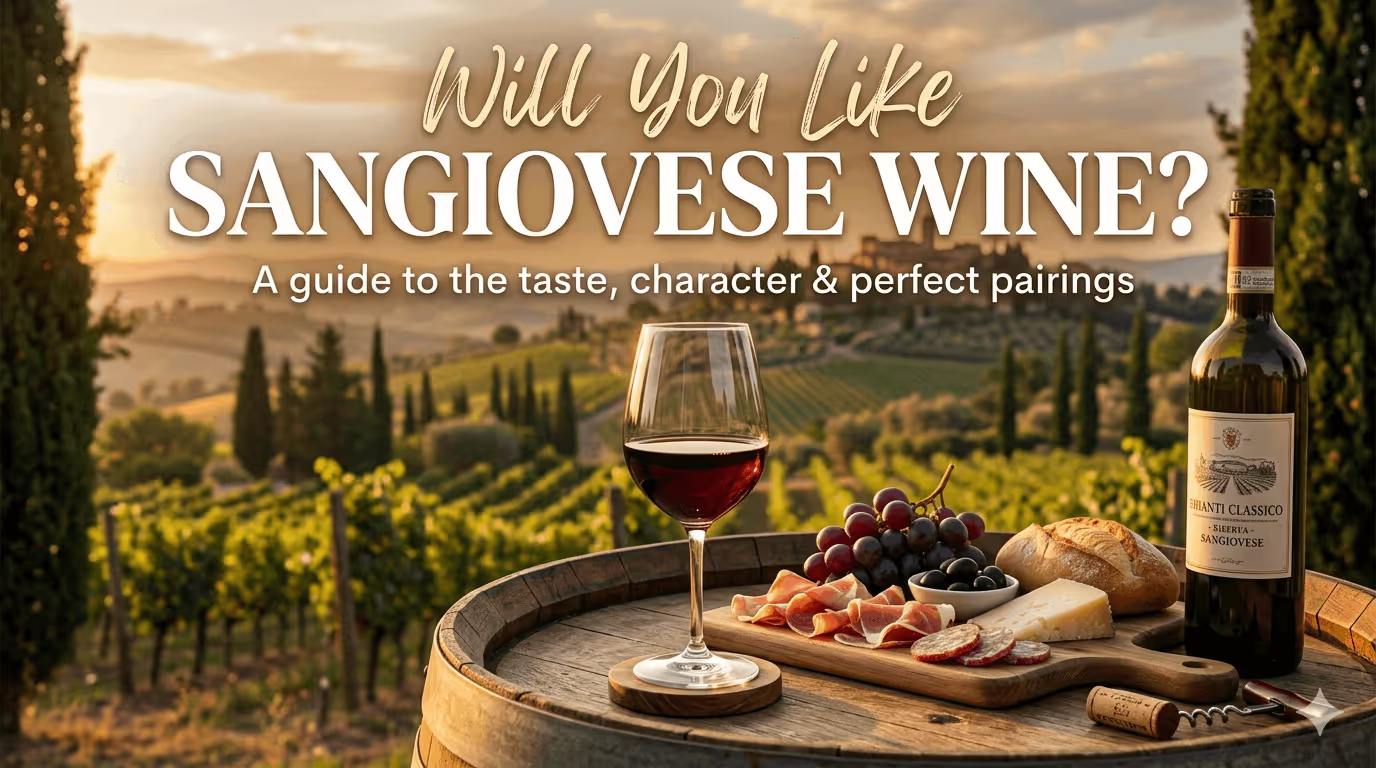
One friendly shortcut: if you see an Italian red and cannot place the grape, guess Sangiovese. It is the most planted red grape in Italy and hides under many regional names, so you will be right more often than not.

Extra Italian words worth knowing
A few more terms show up often and change what you should expect. These are the ones most quick guides skip.
- Classico: the wine comes from the historic heartland of a zone, usually the best sites. Chianti Classico is a step up from plain Chianti.
- Riserva: the wine was aged longer before release, so it is typically richer and more structured. The exact minimum varies by zone.
- Superiore: usually a touch more alcohol and often stricter yields, meaning a bit more concentration.
- Annata: simply the vintage year.
- Imbottigliato all'origine: estate-bottled, meaning the producer grew the grapes and bottled the wine, which is a good sign of accountability.
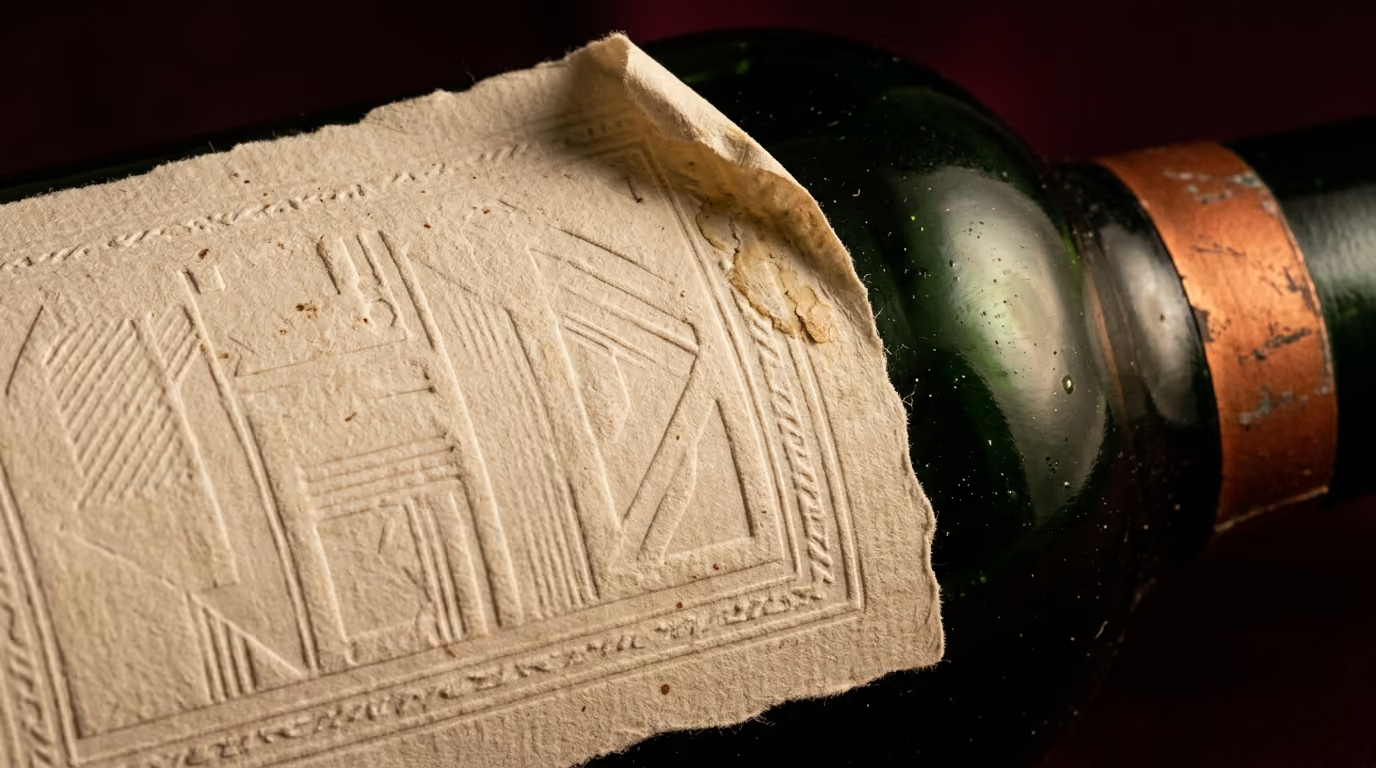
- Fascetta: the numbered pink or green paper strip over the cork on DOCG bottles, and some DOC ones. It is a government seal for traceability, not a quality medal, but its presence confirms the tier.
None of these terms guarantees you will love the bottle, but each one sharpens your read. Classico and estate-bottled are especially reliable green lights for value.
Sparkling and white wine terms
Italian labels use a second set of words for bubbles and sweetness, and they trip up a lot of shoppers. A quick glossary clears it up.
- Spumante: fully sparkling, with a firm mousse of bubbles, as in most Prosecco and Franciacorta.
- Frizzante: lightly sparkling or gently fizzy, softer than Spumante. A dry Lambrusco is often frizzante.
- Metodo Classico: made in the traditional bottle-fermented method, like Champagne. On a Franciacorta or Trento DOC, this signals a serious, fine-bubbled sparkler.
- Secco, Extra Dry, Brut: these describe sweetness, and the order surprises people. Brut is the driest, Extra Dry is a touch sweeter, and Secco (despite meaning "dry") sits sweeter still on Prosecco. For the crispest Prosecco, look for Brut.
- Amabile or Dolce: gently sweet to sweet, common on some Lambrusco and dessert styles.
One naming quirk worth knowing: the best Prosecco often says Conegliano Valdobbiadene DOCG or Asolo DOCG rather than the everyday Prosecco DOC, so those longer place names are a value signal, not a complication.
Reading a real label, line by line
Say you pick up a bottle that reads: Tenuta Example, Chianti Classico DOCG, Riserva, Sangiovese, 2021, 14% vol, imbottigliato all'origine. Here is the full decode. Tenuta Example is the producer. Chianti Classico is the region, from the historic heart of the Chianti zone. DOCG is the top tier, with a numbered seal on the neck. Riserva means extra aging, so expect a richer style. Sangiovese is the grape. 2021 is the vintage, and 14% is the alcohol, pointing to a fuller-bodied red. Estate-bottled tells you the producer controlled it start to finish. In one glance you now know it is a serious, age-worthy Tuscan red for a hearty meal, not a light everyday pour. If Spanish labels are next on your list, our guide to Crianza wine labels uses the same decode-it-in-order approach.
How to choose an Italian bottle in a store or restaurant

Once you can read the label, use it as a starting point rather than the final word. In a shop, treat the classification as one clue and then check the producer, vintage, and any back-label tasting notes. Plain words like juicy, cherry, silky, or fresh tell you more about a weeknight bottle than the legal tier does. Regions like Puglia and Sicily (often IGT) are reliable value hunting grounds. If you would rather not decode every bottle by hand, Sommy's Label Scan lets you point your phone at a bottle on the shelf and get an instant read on the style and whether it fits your taste, so the label does the talking for you.
At dinner, let the plate lead and keep your ask simple: "a fresh Italian red for pasta" or "something smooth and medium-bodied." The classification barely matters next to matching the food, and our guide on how to pair wine with food covers the shortcuts. If you are choosing specifically for an Italian meal, our roundup of the best wine for Italian food pairs each sauce family with a bottle style. For labels from other countries, the same skills carry over, and our general guide on how to read wine labels is a good next step.
Italian names worth recognizing on sight
You do not need to memorize hundreds of appellations. Knowing a dozen of the most common names on the shelf lets you predict the style before you even read the back label.
- Chianti and Chianti Classico (Tuscany): bright, cherry-driven Sangiovese reds, the classic pasta partner.
- Barolo and Barbaresco (Piedmont): powerful, age-worthy Nebbiolo reds for special occasions, usually $35 and up.
- Brunello di Montalcino (Tuscany): a richer, pricier Sangiovese built to age.
- Barbera and Dolcetto (Piedmont): juicy, high-acid everyday reds, great value around $14 to $22.
- Amarone della Valpolicella (Veneto): a bold red made from dried grapes, rich and warming.
- Prosecco (Veneto): Italy's everyday sparkling wine, crisp and affordable.
- Pinot Grigio, Soave, and Vermentino: the go-to crisp Italian whites for seafood and lighter dishes.
- Nero d'Avola (Sicily): a dark, generous, value-friendly red for grilled food.
Spot one of these and you already know roughly what to expect in the glass, which is most of the battle when you are choosing quickly.
Common mistakes when reading Italian labels
A few habits lead people astray, and dropping them makes you a sharper shopper right away.
- Treating the tier as a taste score. DOCG is stricter, not automatically tastier. A great IGT from a good producer will beat a dull DOCG every time.
- Ignoring the producer. The name on the bottle predicts quality better than any legal category. Learn a few producers you like and follow them across regions.
- Confusing the wine name with the grape. A proper name like Sassicaia is a brand and usually a blend, not a grape or a place.
- Assuming Secco means bone dry on Prosecco. It is actually the sweetest of the common styles. Reach for Brut when you want crisp.
- Overlooking the vintage on everyday wine. For bright, fruit-forward Italian whites and lighter reds, fresher is usually better, so check the year.
Frequently asked questions
What does IGT stand for on an Italian wine label?
IGT stands for Indicazione Geografica Tipica. It means the wine comes from a named Italian area but was made under looser rules than DOC or DOCG, which gives the producer room to blend or experiment. The EU version of the same idea is IGP, and you may see either. It signals regional origin and creative freedom, not lower quality.
Is DOCG always better than DOC or IGT?
No. DOCG means the strictest rules and an official tasting panel, but strictness is not the same as taste. Many outstanding wines are DOC or IGT, including the Super Tuscans that started as IGT. Use the tier as one clue and lean on the producer, the region, and your own preferences.
How do I tell the grape from the region on the label?
If the name includes "di" or "d'," such as Barbera d'Alba, it usually names a grape from a place. A single region name like Chianti or Soave tells you the area, with the grape set by law. A standalone proper name like Sassicaia is a brand, which usually means a blend.
What is the pink or green strip over the cork?
That is the fascetta, a numbered government seal used on DOCG bottles and some DOC ones. It confirms the wine's classification and lets it be traced, though it is a legal marker rather than a promise of quality.
Does a higher classification mean a more expensive wine?
Often, but not always. DOCG wines tend to cost more because of stricter rules and aging, yet plenty of IGT bottles from Puglia or Sicily deliver excellent value, and a few IGT Super Tuscans are among the priciest wines in Italy. Judge price by producer and region, not the tier alone.
Conclusion
An Italian wine label is a short story about place, rules, and the person who made the wine. Read it in order, producer, region, classification, grape or name, and vintage, and remember that DOCG, DOC, IGT, and Vino describe strictness, not flavor. IGT in particular is a green light for personality and value, not a warning.
Next time a shelf of Italian bottles has you second-guessing, you can ask Sommy for a recommendation from a photo of the label or the menu, matched to your taste and budget. A little label literacy gets you started, and a clear read gets you to a bottle you will enjoy.