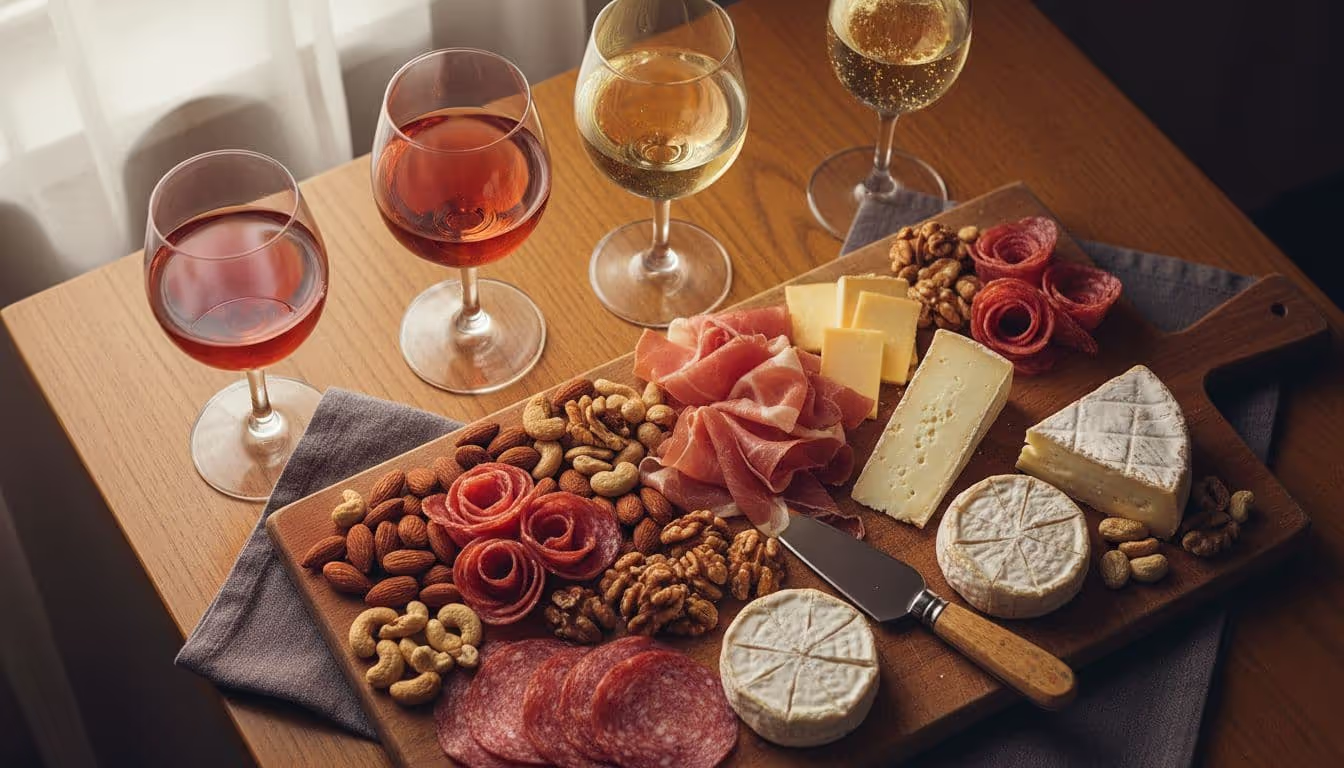

Standing over a board of salami, prosciutto, and nuts, the safest move is simple: pour dry sparkling wine, dry rosé, Pinot Noir, or Barbera. Those styles cut salt, soften fat, and stay fresh from first bite to last.
You don't need wine school for wine charcuterie boards. You need a bottle that feels bright, not heavy, and a few quick rules that stop the second-guessing. Start with the food, not the label.
The wines that work almost every time
Salt and fat change wine fast. Prosciutto can make a sharp wine feel softer. Salami can make a big red feel even heavier. Nuts add oil and toast, so oak-heavy bottles can drag. That's why the best wine recommendations usually lean toward high acid, soft tannin, and light to medium body.
High-acid wine matters because it cuts through richness like a squeeze of lemon. Gentle tannin matters because salt can make firm reds taste rough. Lighter body matters because charcuterie is about grazing, not wrestling with a glass.
Use this quick chart when you want the short answer.
| Wine style | Why it works | Best with |
|---|---|---|
| Brut sparkling wine | Bubbles and acid clean the palate | Prosciutto, almonds, mixed boards |
| Dry rosé | Fresh, crisp, easy with salty meats | Salami, prosciutto, walnuts |
| Pinot Noir | Light red fruit, gentle grip | Salami, pecans, mild cheese |
| Barbera | Bright acid, juicy finish | Rich salami, aged cheese, walnuts |
Dry rosé is often the easiest crowd-pleaser. It sits between red and white, so it handles both silky prosciutto and spiced salami. Brut sparkling wine is almost as easy, because the bubbles act like a reset button between bites. Pinot Noir works when you want red without weight. Barbera is the best move when the board feels richer and saltier.
A crisp white like Sauvignon Blanc can work too, especially on lighter boards. Still, white wine usually plays a support role here unless the board leans herb-heavy and less meaty. Think of that chart as a small wine pairing guide, not a rulebook. For extra context, this charcuterie and wine pairing guide gives a helpful look at how salt, fat, and texture shape the glass.
If you want one safe bottle for almost any board, pick dry rosé or Brut sparkling wine.

How to choose wine for your exact board
A good wine pairing guide gets easier once you notice which bite leads the board. For wine charcuterie boards, one item usually sets the pace. Match the bottle to that loudest flavor, and the rest of the board often falls into place.
If the board is loaded with olives, fruit, or jam, don't panic. The core job stays the same. Keep the wine lively enough to refresh, and soft enough to avoid clashing.
When salami leads
Salami brings spice, garlic, pepper, and fat. A fresh light red usually works best, especially Pinot Noir, Grenache, or Barbera. Big tannic reds can taste dry and hard next to cured meat, so skip the heaviest Cabernet-style bottle unless the board also has strong cheese. For example, soppressata and peppered salami love a red with cherry fruit, because that fruit softens the spice instead of fighting it.

When prosciutto stands out
Prosciutto is thinner, saltier, and more delicate. Dry sparkling wine, Prosecco, and dry rosé shine here because they lift the meat instead of covering it up. A crisp white can work too, but keep it lean and bright. Add melon or grapes, and sparkling wine gets even better because the fruit echoes the sweet edge in the meat. If you want more ideas around charcuterie and rosé pairings, that guide fits the same low-stress approach.
When nuts pull more attention
Nuts change the feel of the board more than people expect. Almonds and pistachios like sparkling wine and crisp whites. Walnuts and pecans can handle Pinot Noir or Barbera because they bring a deeper, toastier flavor. Roasted nuts especially reward freshness, because a heavy red can taste flat after a handful of salted almonds. A little more background appears in this charcuterie guide.
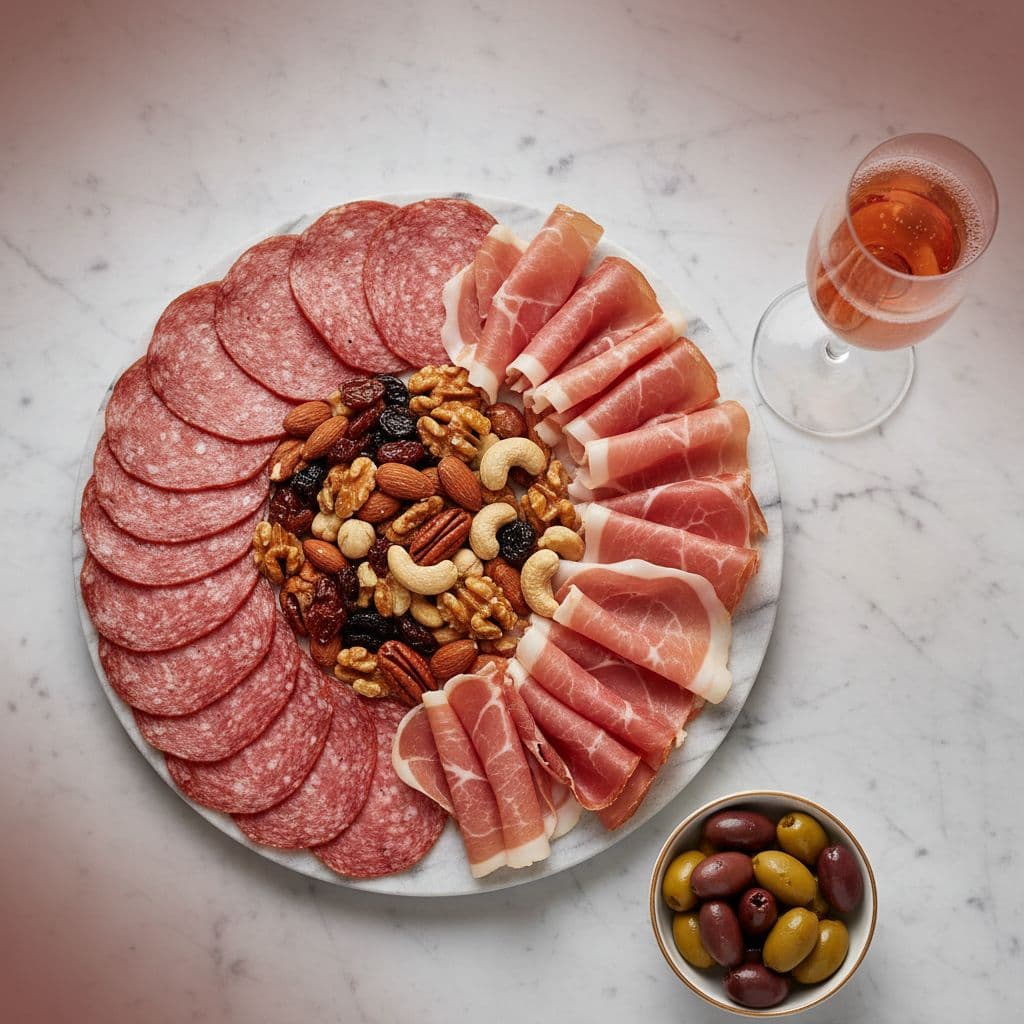
A mixed board doesn't need a perfect bottle for every bite. It needs a wine that stays pleasant across the whole plate. That's why dry rosé and Brut sparkling keep showing up in clear wine recommendations. If you're hosting, a few wine-friendly charcuterie ideas can round out the table without making the wine choice harder.
Restaurant wine tips and grocery store picks
Most people freeze in two places, at the wine list and in the aisle. A few restaurant wine tips help right away. Ask for a dry rosé, Pinot Noir, Barbera, or Brut sparkling wine. Those are strong wine list tips because they cover salami, prosciutto, and nuts without drama.
At a restaurant, you don't need to scan every region. Ask for the driest rosé, a juicy light red, or the house sparkling wine. In a store, grocery store wine picks get easier when you ignore scores and focus on style words like dry, crisp, fresh, cherry, citrus, or light-bodied. Think of that as wine tasting notes explained in plain English. That's how to choose wine when time is short.
Most people don't want a giant wine guide. They want simple wine tips, friendly wine advice, and wine explained simply. Sommy works like an AI wine assistant that turns your taste, budget, and board into smart wine recommendations, personalized wine picks, and personalized wine recommendations. It can also offer wine app suggestions, smart wine picks, and simple wine explanations when labels start to blur together. In other words, it's a modern wine guide built for clear wine recommendations and everyday wine advice.
When salami, prosciutto, and nuts share a board, bright wine wins. Dry rosé, Brut sparkling, Pinot Noir, and Barbera keep the pairing easy and forgiving.
Good pairing isn't about proving taste. It's about pouring a bottle with confidence, then enjoying the table.
If you want help choosing wine in the moment, Sommy can recommend a bottle that fits your taste, your budget, and the food in front of you.