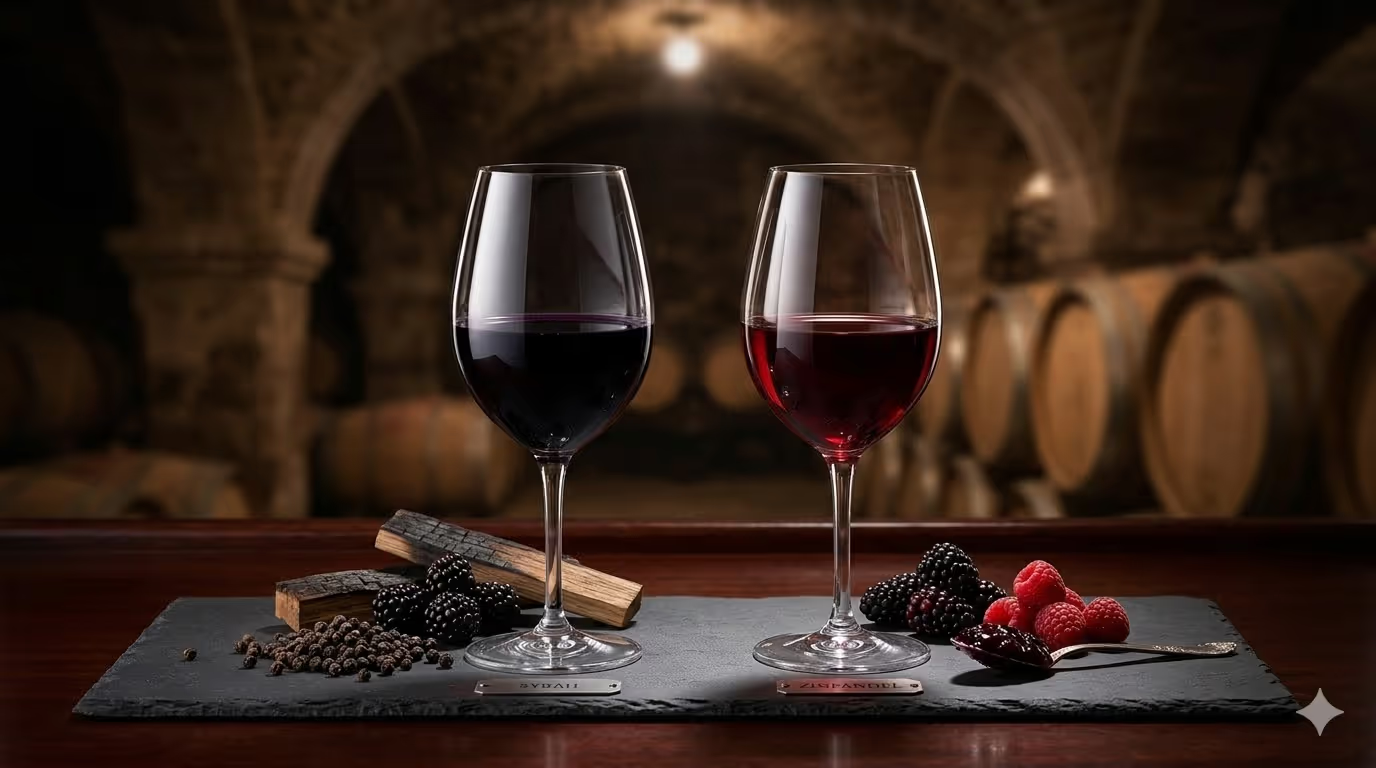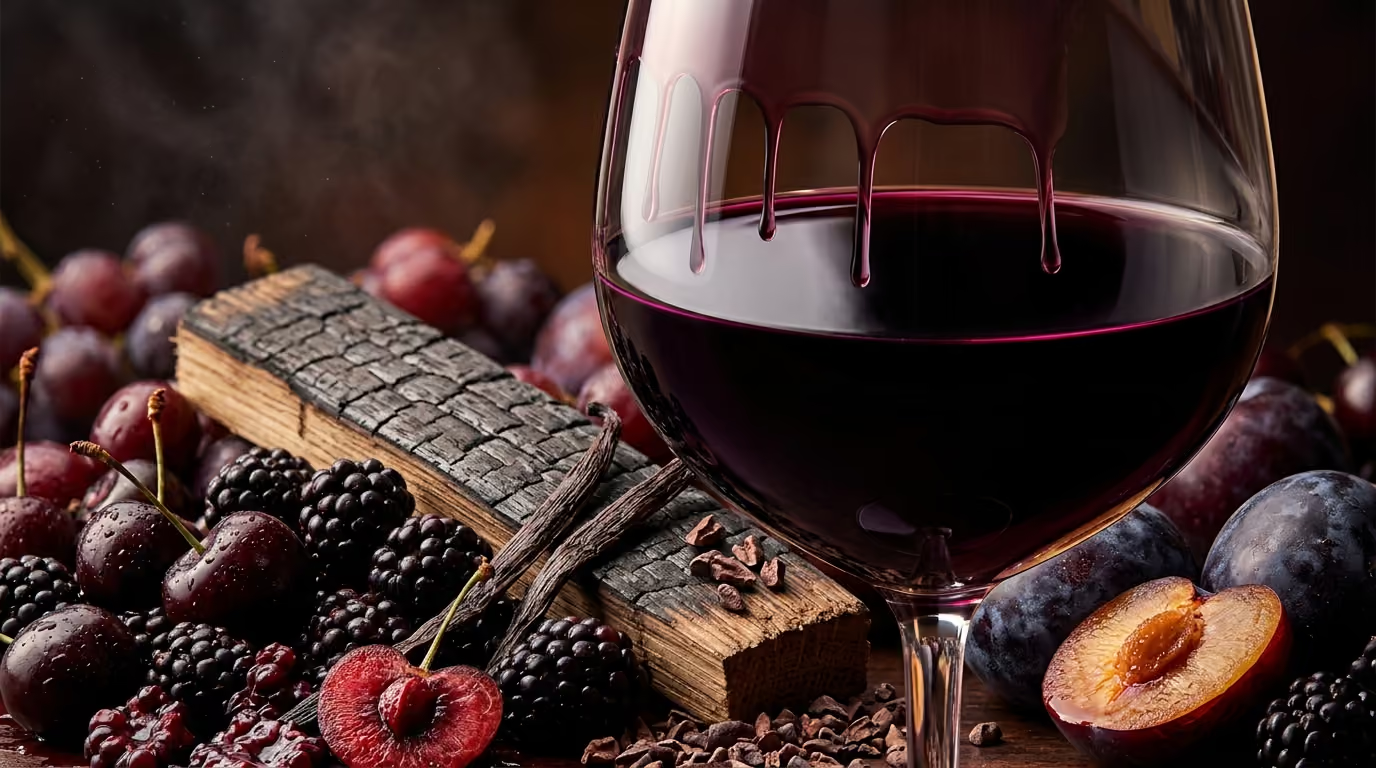


Zinfandel is a bold, fruit-forward red wine known for its jammy berry flavors. It's one of the most popular and easy-to-love reds, perfect for anyone who wants a delicious wine without needing any special knowledge. Think of it as a warm berry pie in a glass—approachable, comforting, and consistently good.
Staring at a Shelf of Zinfandel
You’re in the wine aisle, and a bottle labeled 'Zinfandel' catches your eye. The name sounds familiar, but you’re not sure what to expect. Will it be sweet or dry? Heavy or light?
That moment of uncertainty is completely normal. Choosing wine can feel overwhelming, but it doesn’t have to be. People are often just afraid of choosing the wrong bottle.
This guide will help you confidently know:
- What Zinfandel tastes like, in simple terms.
- If it’s a wine you’ll actually enjoy.
- How to grab a great bottle for pizza night or a special dinner.
The goal isn't to make you a wine expert. It's to help you feel relieved and sure about your choice. If you're curious about how different grapes like Zinfandel get their names, you can check out our simple guide on what wine varietals are.
Zinfandel is one of California’s signature grapes. Its story took off during the Gold Rush, when settlers planted vineyards that thrived in the warm sunshine. Today, it’s loved for being unapologetically juicy and delicious.
By the end of this article, you’ll know exactly what Zinfandel is about and whether it’s the right pick for you tonight.
The Two Kinds of Zinfandel to Know
Ever order Zinfandel expecting a big red, only to get a sweet pink wine? It happens. The name "Zinfandel" can mean two completely different things. Knowing the difference is the key to getting the wine you want.
Think of it as one grape with a split personality.
Red Zinfandel: The Bold Red
This is the rich, complex character. Red Zinfandel is a dry, full-bodied red wine famous for its big, jammy fruit flavors like blackberry preserves and ripe raspberry. It often has a kick of black pepper or spice on the finish. It’s the kind of wine you want next to a sizzling burger, BBQ ribs, or a hearty pasta dish.
White Zinfandel: The Sweet Pink
This is the fun, easy-going one. White Zinfandel is a sweet, light-pink rosé wine that’s incredibly easy to drink, especially on a warm day. It’s all about fresh strawberry and juicy melon flavors. It’s simple, refreshing, and always served well-chilled.
This quick visual breaks down Zinfandel’s core personality.

Whether it ends up red or pink, the grape’s signature bold fruitiness and approachable style always shine through.
While we think of it as an American classic, Zinfandel’s story is a global one. It became famous in the 1980s thanks to the massive popularity of sweet White Zinfandel. At its peak, it sold a staggering 6 million cases a year in the U.S. alone.
Today, Red Zinfandel accounts for about 75% of what's grown, but that sweet blush wine proved just how versatile this grape can be. You can learn more about how a grape’s home shapes its style by exploring the difference between Old World and New World wines.
The takeaway is simple. If you want a robust red wine for dinner, make sure you ask for Red Zinfandel. If you're in the mood for something sweet, pink, and refreshing, ask for White Zinfandel.
What Red Zinfandel Really Tastes Like
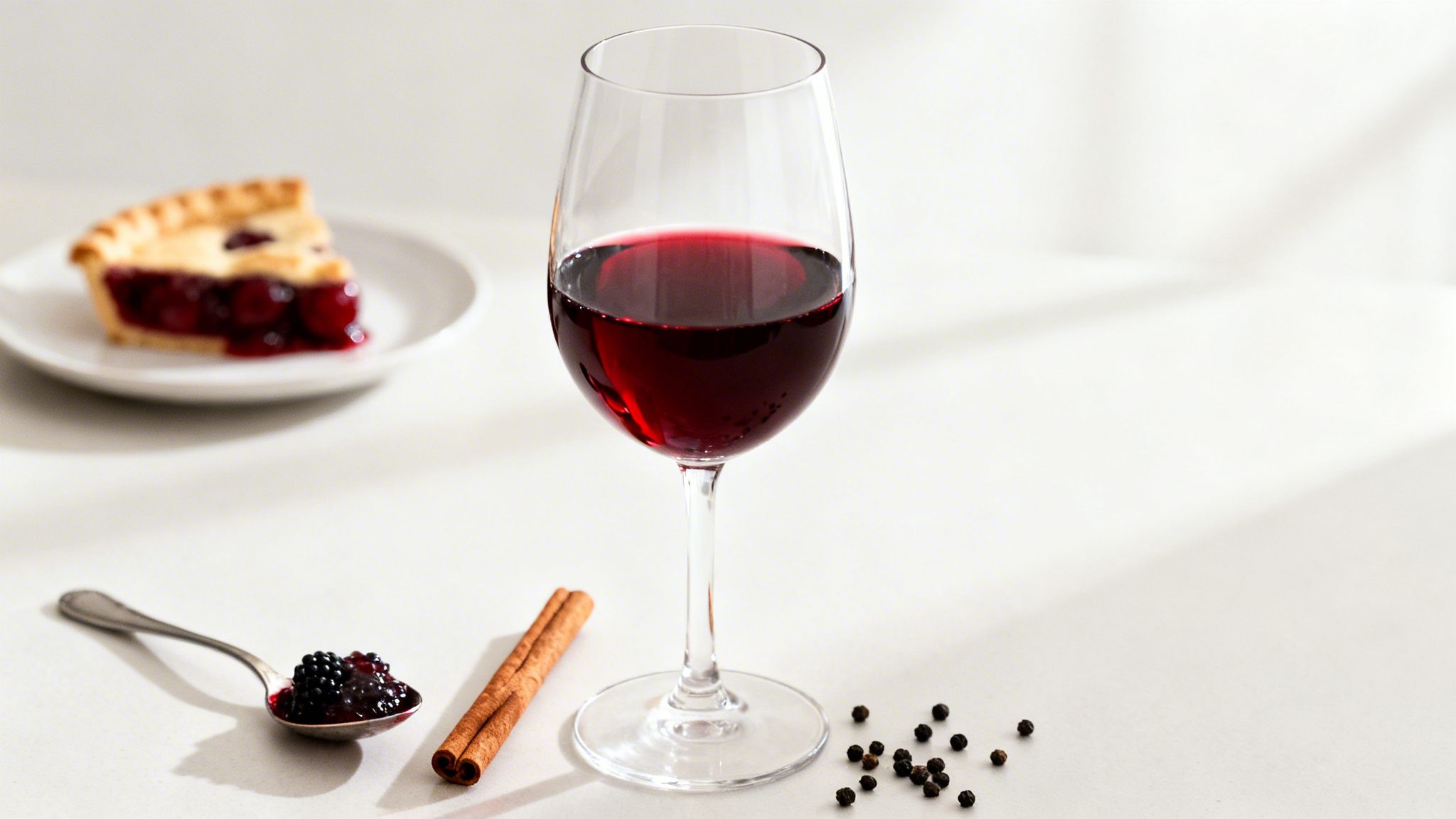
So, what does Red Zinfandel actually taste like? Forget the confusing jargon. The first thing you'll notice is a big, friendly burst of fruit.
Think about a warm slice of cherry pie, jammy blackberry, or a handful of ripe raspberries. That’s the core of Red Zinfandel. It's packed with rich, cooked fruit flavors that make it easy to love right away.
More Than Just Fruit
Once that initial wave of fruit settles, you'll start to notice other flavors.
- A little bit of spice: Imagine a crack of black pepper or a dash of cinnamon. It gives the wine a pleasant warmth.
- A hint of smoke: Sometimes, there’s a subtle smokiness, like the tangy edge of a good barbecue sauce.
Zinfandel is "full-bodied," which just means it feels rich and substantial in your mouth. Think of the difference between whole milk and skim milk. Zin is definitely whole milk.
The Overall Vibe
Red Zinfandel is an approachable, powerful wine. It’s not shy; it’s a confident red that announces itself with generous flavor.
That mix of jammy fruit and cozy spice makes it incredibly satisfying and fun to drink. If you're already a fan of other bold red wines, you'll feel right at home with a glass of Zin.
How to Choose a Good Bottle of Zinfandel
Staring at a wall of Zinfandel bottles can feel like a guessing game. But you don't need to frantically search for reviews on your phone.
With a few simple shortcuts, you can confidently grab a great bottle that fits what you’re looking for. Think of it as a quick mental checklist, not a textbook exam.
A Simple 3-Step Guide to Picking Your Zin
This isn’t about wine theory; it’s a fast, stress-free way to make a smart choice in the moment.
- Look for a Location: If you see Lodi or Paso Robles on the label, you're in safe hands. These two California spots are famous for making that classic, jammy, and reliably delicious style of Red Zinfandel. It’s a great starting point.
- Use Price as Your Guide: Bottles under $15 are typically your go-to for casual moments like a pizza night. Looking for something richer for a nice dinner? The $20-$40 range is the sweet spot.
- Spot a Key Phrase: Keep an eye out for the term 'Old Vine' on the label. This is a huge clue. It means the wine came from grapes grown on mature vines, often over 50 years old, which almost always means a more intense, concentrated flavor.
Data shows Zinfandel is a crowd-pleaser, matching 70% of casual preferences for meals like burgers or pasta, especially in the under-$25 range. If you're curious about the bigger picture, you can explore the latest global production statistics to see how trends are shifting.
This is exactly the kind of in-the-moment decision the Sommy app is built for. Instead of guessing based on price or region, Sommy can instantly recommend a bottle from a store shelf or restaurant menu based on your personal taste and budget.
These tips are perfect for narrowing down your options quickly. And if you want to get better at decoding what all those other words mean, our guide on how to read wine labels will get you there without feeling overwhelmed.
Simple Food Pairings That Always Work
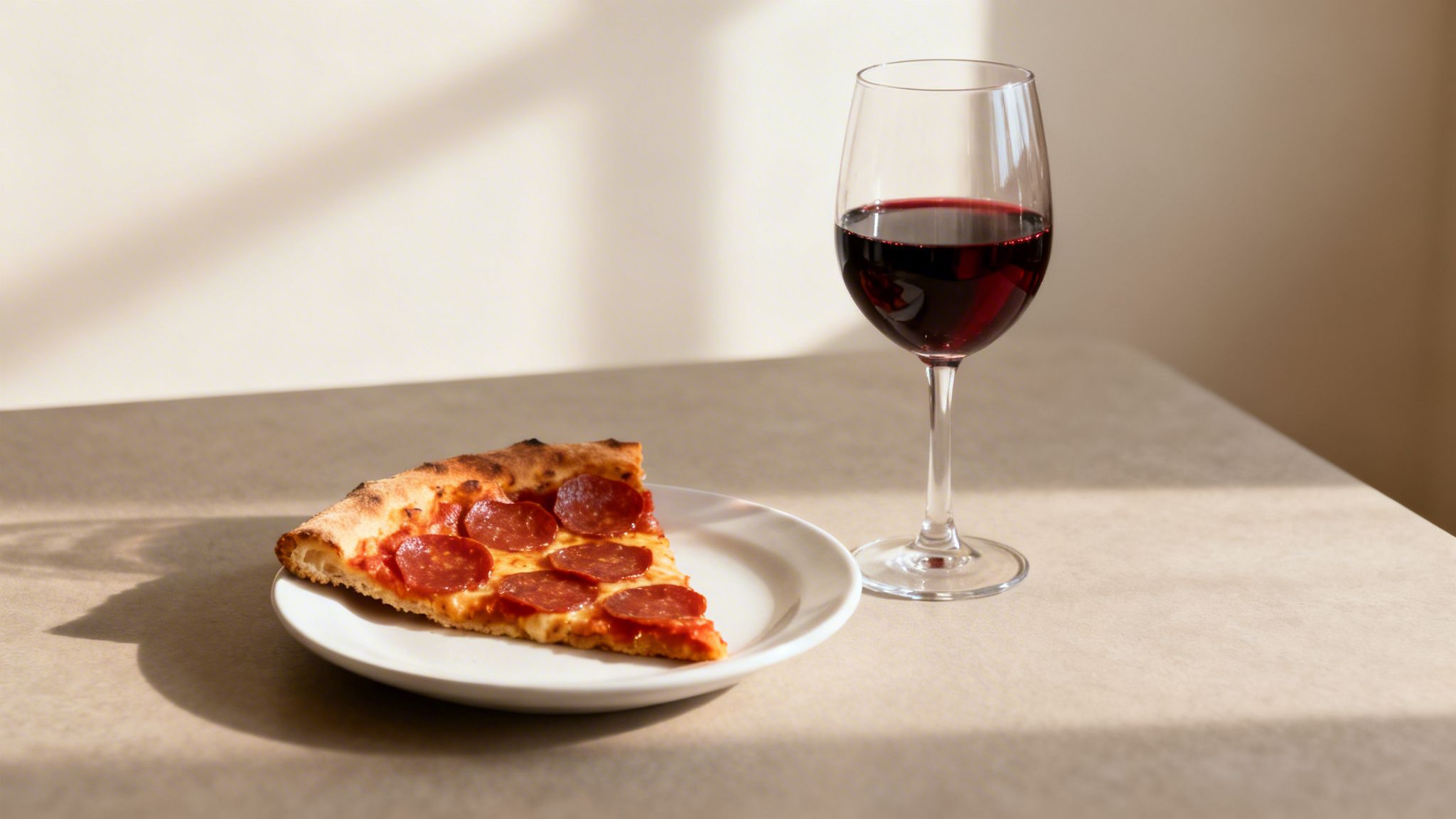
You don't need to be a food pairing expert to get Zinfandel right. Forget the complicated charts and just remember one simple idea.
Zinfandel’s bold, fruity personality loves equally bold, flavorful foods. Its juicy, jammy character is the perfect friend for anything with rich sauces, a bit of spice, or smoky, grilled flavors.
Think of it as the ultimate wine for your favorite comfort food.
Your Go-To for Everyday Dinners
Zinfandel is built for casual weeknight dinners and weekend barbecues. Its ripe fruitiness cuts through richness without getting lost, making it a no-fail choice for a lot of the food we already love.
A few pairings that always work:
- Pizza: Whether it's classic pepperoni or veggie-loaded, Zin’s fruitiness is a dream match for tangy tomato sauce and savory toppings.
- Barbecue: This is a classic for a reason. Ribs, pulled pork, or grilled chicken slathered in a sweet and smoky BBQ sauce are a slam dunk. The wine's jammy notes echo the sauce perfectly.
- Hearty Pastas: Go for spaghetti and meatballs or a rich, meaty lasagna. Zinfandel has the backbone to stand up to those robust flavors.
You also can't forget a juicy cheeseburger. The wine’s bold fruit slices right through the richness of the cheese and beef, making every bite better.
A Surprising Holiday Hero
Beyond the usual, Zinfandel is a fantastic and surprisingly crowd-pleasing choice for Thanksgiving dinner. Its profile plays well with just about everything on the table, from the roasted turkey to the sweet-and-tart cranberry sauce.
It's one of the most versatile bottles you can bring to a meal with a dozen different flavors happening at once.
With these ideas, you can grab a bottle of Zin for your next meal with total confidence. If you want more simple ideas, check out our guide to the best food to pair with red wine.
Frequently Asked Questions About Zinfandel
Even after you get the basics, a few tricky questions pop up with Zinfandel. Let's clear them up with quick, straightforward answers so you can order or buy with total confidence.
Is Zinfandel a Sweet or Dry Wine?
This is the most common point of confusion. The answer depends on which bottle you grab.
Red Zinfandel is a dry red wine. It has little to no sugar, but it’s so packed with ripe, jammy fruit flavors that your brain can register it as feeling sweet. It's technically dry.
White Zinfandel, the pink version, is almost always made in a sweet, easy-drinking style.
So, if you want a bold red for dinner, ask for "Red Zinfandel." If you want a light, sweet sipper, "White Zinfandel" is your pick.
Are Zinfandel and Primitivo the Same Thing?
Yes, for all practical purposes, they are the same grape. DNA testing proved that Zinfandel and Primitivo, a popular grape from Southern Italy, are genetically identical.
Think of them as twins separated at birth. The place they are grown can create slight differences in taste, but you can expect a very similar bold and fruity red wine from both.
If you like Red Zinfandel and see Primitivo on a menu, order it with confidence. You’re in very familiar territory.
Should I Serve Zinfandel Chilled?
Red Zinfandel should be served slightly cooler than room temperature, but not cold. A common mistake is serving big reds too warm, which makes them taste harsh.
Here’s a simple trick: put your bottle of Red Zinfandel in the refrigerator for about 15-20 minutes before you open it. This brings it to the perfect "cellar temperature" and helps its bright fruit flavors pop.
White Zinfandel, on the other hand, should always be served fully chilled, just like any rosé or light white wine.
How Is Zinfandel Different From Cabernet Sauvignon?
Think of it like this: if Cabernet Sauvignon is a classic dark suit, Zinfandel is your favorite stylish leather jacket. They are both bold red wines, but they have different personalities.
- Zinfandel is generally jammier, with more obvious ripe fruit (like raspberry jam) and a signature spicy kick.
- Cabernet Sauvignon leans more toward dark currant and cedar, with a firmer structure that can feel tighter in your mouth.
Many people who prefer a softer, more fruit-forward red find Zinfandel more approachable from the first sip. It’s not about one being better; it’s about which style you’re in the mood for.
Instead of trying to remember all these details, let Sommy do the work for you. The app can scan a restaurant wine list or a store shelf and instantly give you personalized recommendations based on your unique taste. If you want to confidently choose a wine you'll love every time, you can learn more at the Sommy website.