

The food that pairs best with red wine is whatever has enough fat, protein or savory depth to absorb the wine's tannins, which is why steak, aged hard cheese, mushrooms, braises and cured meat come up again and again. Tannin is the grippy, mouth-drying part of a red, and fat and protein soften it on contact. Match the weight of the dish to the weight of the wine, then let the tannins find something to hold onto, and most of the work is already done.
Sorting this by food category is the usual approach and it's backwards, because you almost always have the bottle before you have the meal. So this guide runs the other way around, from light reds through to the big tannic ones, and then answers the questions people actually ask underneath: what to snack on, what to serve alongside, what to keep well away from the glass, and what that 20/20 rule you keep seeing actually says.
How do you match food to a red wine in one move?
Look at how tannic the wine is and give those tannins something to bind to. Tannins come from grape skins, seeds and oak, and they're what makes a young Cabernet feel like it's drying your gums out. Protein and fat neutralize that sensation directly, which is why the same wine that tastes harsh on its own turns smooth and plummy the moment a piece of rare steak arrives.
Weight is the second half of it. A light, low-tannin red next to a heavily braised short rib disappears completely, and a huge Napa Cabernet next to a plate of steamed white fish flattens the fish. Fiona Beckett of Matching Food and Wine makes the point that rare meat in particular softens the effect of big tannins, and that a sweet marinade or baste works too, because the sweetness lifts the wine's acidity and makes it taste fresher.
Acidity is the third lever and it matters mostly for tomato. A sauce with real acidity in it will strip the fruit out of a soft, low-acid red and leave it tasting hollow, so an Italian red with matching acidity is the standard answer there.
What should you eat with a light red like Pinot Noir?
Earthy, savory, gently cooked food, and yes, including fish. Light reds such as Pinot Noir, Gamay from Beaujolais, Schiava and Zweigelt carry low tannin and bright red-berry fruit, so they need a partner that doesn't shout. Mushroom risotto, roast chicken, lentil stew, herby pasta and salmon all sit in the right register.
Mushrooms are the standout of that group. The glutamates in a well-browned mushroom read as savory depth rather than as sweetness, and they meet the forest-floor note that good Pinot Noir develops with age, so the dish and the wine end up describing the same flavor. Brown them properly rather than steaming them in their own liquid, because the concentration is the whole point, and our guide to wine pairing with mushrooms covers which varieties suit which style.
Duck breast and charcuterie both work here too. If you generally find reds too aggressive, this is the shelf to shop from, and our roundup of low tannin red wines is a longer list of the same idea.
What should you eat with a medium red like Chianti or Rioja?
Tomato, grilled meat, pizza, roasted vegetables and anything mildly spiced. Medium-bodied reds such as Merlot, Chianti, Tempranillo and Cabernet Franc have more structure and a touch of oak while staying flexible enough for a weeknight, which makes this the most useful shelf in the shop for everyday cooking.
Tomato-based pasta is the pairing this group exists for. Chianti and Barbera grew up beside that food and carry the acidity to survive it, so a spaghetti and meatballs or a lasagna works with a medium Italian red in a way it simply doesn't with a soft, jammy New World bottle. Our guide to what wine goes with pasta breaks it down by sauce rather than by shape.
Lamb belongs here as well, particularly with Rioja or a Bordeaux blend, where the herbal edge in the wine picks up rosemary and thyme in the crust. There's more on that in our guide to wine pairings for lamb.
What should you eat with a big red like Cabernet or Malbec?
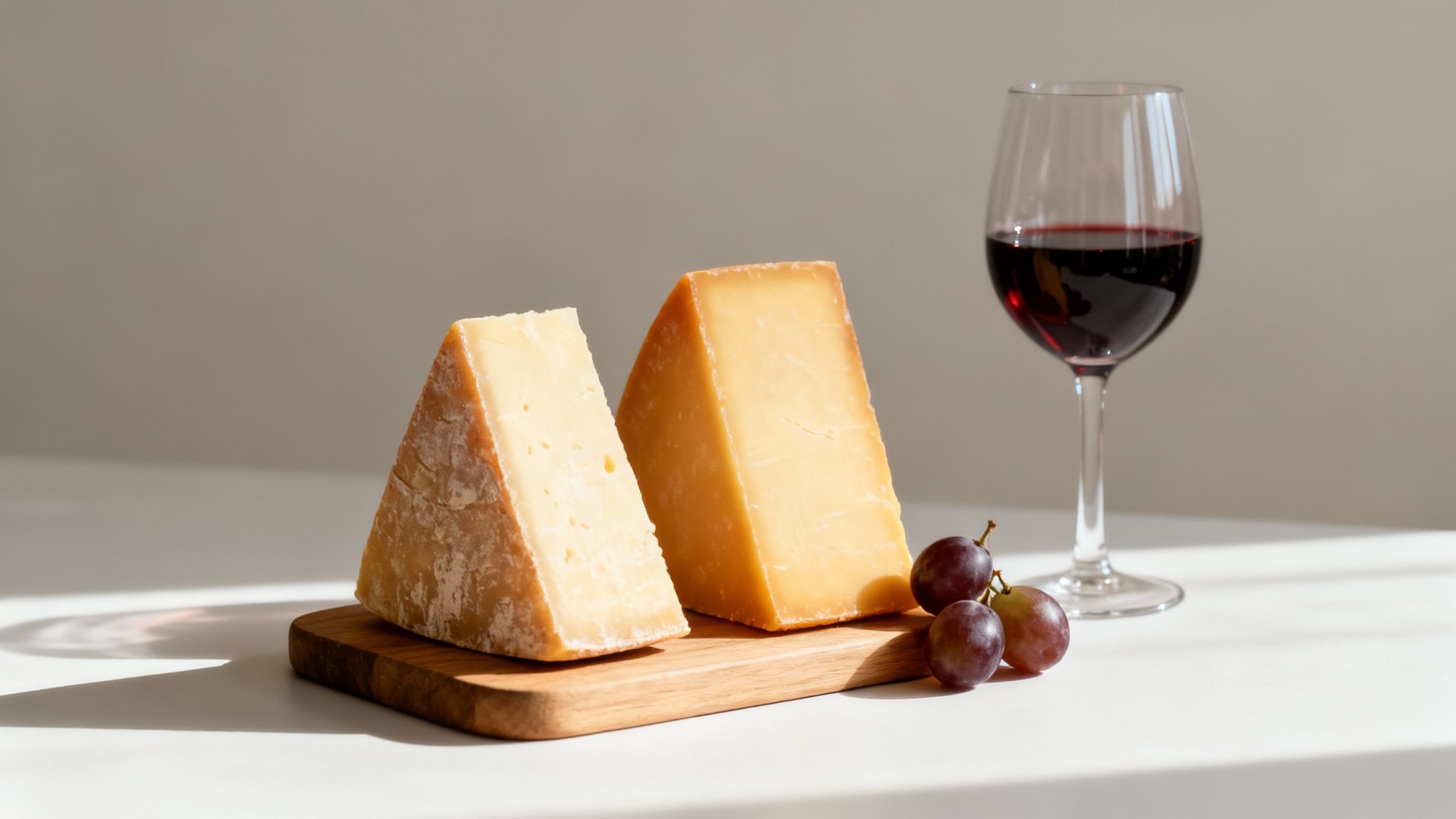
Rich red meat, hard aged cheese and slow-braised dishes, because nothing else has the mass to stand up to that much tannin. Cabernet Sauvignon, Malbec, Syrah and Zinfandel all bring dark fruit, grip and power, and many of them arrive at 14.5 percent alcohol or higher, which Beckett notes can tip a wine into being an awkward partner for lighter European cooking.
Steak is the reference pairing and the cut matters as much as the wine. A lean filet is happier with something medium-bodied, while the fat running through a ribeye is what a young Cabernet actually needs, and our guide to the best wine for a steak dinner goes through the cuts one by one. Barbecue ribs work for a different reason, since the sweetness in the glaze makes the wine taste fresher than it does on its own.
Slow-cooked beef is the other reliable direction, and it's better when the braise isn't drowned in reduction, since an intense sauce and a full-bodied red together bury the meat between them. Cook with a bottle you'd actually drink, then pour the same wine at the table.
What are the easiest weeknight meals to pair with red wine?
Sausages, burgers, pizza, chili and a tray bake of roasted vegetables, none of which need any thought about the wine at all. All of them carry fat, salt and browning, which is the combination tannin wants, so a medium red covers the lot without you matching anything deliberately.
Burgers deserve a mention on their own, because they're the cheapest way to make a bold red taste expensive. The fat in the patty and the char off the pan do the same work a ribeye does at four times the price. Sausages behave the same way, and a peppery Syrah alongside a spiced sausage is one of the genuinely reliable pairings you can make on a Tuesday.
Chili and other slow-simmered bean dishes suit a juicy, low-tannin red such as Zinfandel or Garnacha, since the heat in the pot would sharpen the tannins in something more structured. If the meal is basically a bowl of tomato, treat it as a tomato pairing and reach for an Italian red with acidity rather than a soft, fruity one.
Which foods suit a chilled red?
Picnic and tapas food, which is a whole category most pairing guides leave out. Lambrusco, Frappato, Barbera and lighter Beaujolais are all better served properly cold, and cold sharpens their acidity while keeping their modest tannins from tasting hard, which turns them into summer wines rather than winter ones.
Prosciutto, burrata, tomato tarts, grilled vegetables and pizza all sit naturally with a chilled red, and so does most of what ends up on a picnic blanket. The pairing logic is closer to rosé than to a normal red, so acidity and salt matter more than fat and protein do.
A chilled red is also the answer to the awkward summer dinner where half the table is eating fish and the other half is eating grilled meat, since it's the one style light enough for the first and still recognizably red for the second.
What snack food goes with red wine?
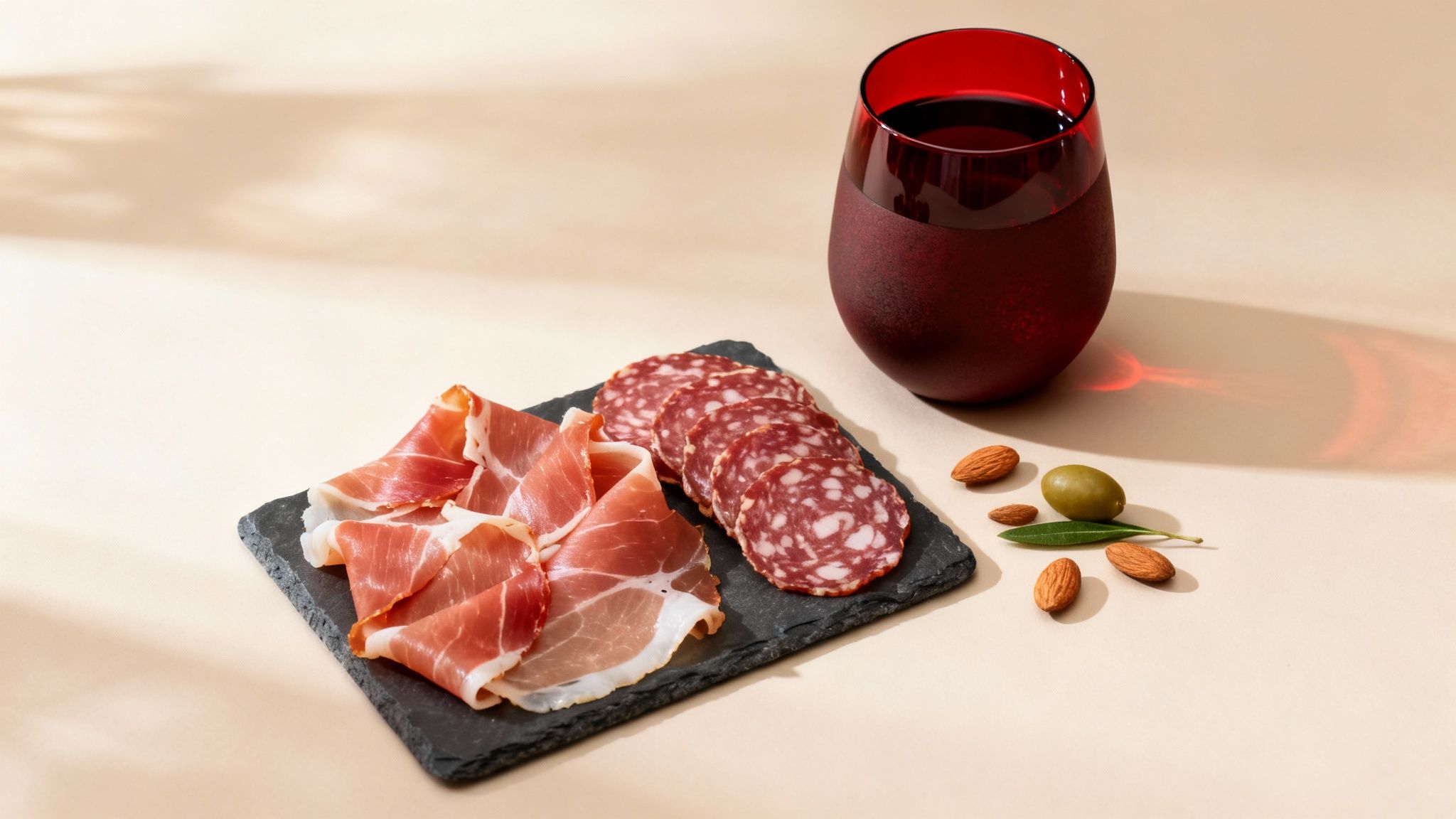
Salted almonds, olives, cured meat, hard cheese and good dark chocolate cover almost every bottle you're likely to open. Salt is doing the heavy lifting in most of them, because it suppresses the perception of bitterness in wine, so tannins feel rounder and the fruit comes forward. That's the same mechanism behind a bowl of salted nuts making a cheap red taste noticeably better.
Cured meat is the most flexible option on the board. Prosciutto sliced thin suits a light red, salami and soppressata want something juicier with low tannin, and Spanish chorizo goes best with a fruity Garnacha. Keep the crackers plain, since a heavily seasoned one competes with everything in the glass.
Dark chocolate is the divisive one and it needs a rule to work: at least 70 percent cacao, and the wine has to be as sweet as the chocolate or sweeter. Milk chocolate makes a dry red taste sour, which is why the pairing gets a bad reputation from people who tried it with the wrong bar. Our guide to wine pairing with appetizers has more on building a board that works.
What is the best side dish for red wine?
Roasted or charred vegetables, ahead of anything steamed, dressed or raw. Roasting caramelizes the sugars and adds a bitter edge from the char, and both of those give a red wine something to meet, where the same vegetable steamed offers it nothing at all. Portobello mushrooms and roasted eggplant are strong enough to carry a big red on their own, which is Beckett's recommendation for a vegetarian main rather than a side.
Potatoes in almost any roasted or gratin form are the safe default, and root vegetables browned with rosemary or thyme pick up the herbal notes in Rioja and Bordeaux blends. A tray of squash, carrot and red onion out of a hot oven does more for a medium red than most side dishes twice its effort.
The sides to reconsider are the sharp ones. A salad under a lemon or vinegar dressing turns most reds sour and hollow, and if it has to be on the table, it's better served after the main event than beside it.
What should you not eat with red wine?
Delicate fish, lighter meats, mild cheese and light creamy sauces, all of which red wine simply steamrolls. Beckett's list of dishes that don't match full-bodied reds is exactly that group: lighter fish and vegetable dishes, chicken and veal, milder cheeses, and anything under a light cream sauce.
Cheese is the trap that catches most people, because red wine and cheese are sold together as an obvious pair and they often aren't. A full-bodied red overwhelms a delicate goat cheese, and it clashes badly with a well-matured washed-rind cheese or a punchy blue. The easiest cheeses for red wine are dry, clean-tasting hard ones, and sheep's milk cheese most of all, which our wine and cheese pairing guide sets out in more detail.
There are two more worth watching for. Very hot, wet curries with a lot of sauce create an overload against a big fruity red rather than a pairing, and heavily reduced sauces served alongside a powerful wine leave you unable to taste the meat underneath either of them.
What is the 20/20/20 rule for wine?
There isn't one, and the rule people are reaching for is the 20/20 rule, which is about temperature rather than food. It says to take white wine out of the fridge 20 minutes before you drink it, and to put red wine into the fridge for 20 minutes before you pour it. The Essex Local Wine School's explanation is the clearest version of it.
The reason it matters for pairing is that a red served at modern room temperature tastes jammy and its tannins turn bitter, which wrecks the balance you spent all that effort building with the food. Twenty minutes in the fridge lifts the fruit back up and softens the grip, and the difference on a big Shiraz on a warm evening is not subtle.
Deciding what to actually cook around a bottle you've already opened is where the guesswork usually starts, and Sommy's Pairing feature works from a recipe or a photo of the meal rather than from a chart, so the answer accounts for your own taste as well as the dish.
Frequently asked questions
Does red wine go with chicken?
Light reds do, and heavy ones don't. A Pinot Noir or Gamay sits comfortably with roast chicken, especially with mushrooms or a herb butter involved, while a tannic Cabernet buries it. Chicken cooked in a red wine sauce, as in a coq au vin, shifts the whole dish into medium-red territory.
What is the easiest food to pair with red wine?
Hard aged cheese, which works with almost every red on the shelf. Cheddar, Manchego, Parmigiano-Reggiano and pecorino all carry enough fat, salt and savory concentration to meet a red halfway, and sheep's milk cheeses are the most forgiving of the lot.
Can you drink red wine with fish?
With oily fish, yes, and with delicate white fish, no. Salmon and tuna both have enough fat and flavor to stand up to a light, low-tannin red served slightly chilled, while cod, sole and most white fish get overwhelmed and can bring out a metallic taste in a tannic wine.
What vegetarian food goes with red wine?
Mushrooms, roasted eggplant, lentils and anything grilled hard enough to char. Portobello mushrooms and baked eggplant carry enough savory weight for a full-bodied red on their own, while lentil stews and herby pasta suit lighter reds better.
Should you chill red wine?
Slightly, yes, and 20 minutes in the fridge is the standard advice. Room temperature in a modern heated house is warmer than the term originally meant, and a red served too warm tastes jammy with harsher tannins. Lighter reds such as Beaujolais and Frappato take a deeper chill than that quite happily.
Does the food or the wine come first?
Whichever one you feel strongly about. If you've opened a special bottle, cook to the wine, and if you're making something specific, choose the wine to fit it. The pairings above work in both directions, which is why they're sorted by the bottle rather than by the plate.
Cooking around the bottle you already own
The useful version of all this is short. Work out roughly how tannic your red is, then give those tannins fat, protein or a hard savory cheese to bind to, and keep the weight of the dish somewhere near the weight of the wine. Roast rather than steam the vegetables, salt the snacks, and keep sharp dressings and delicate white fish off the same table.
Where your own line falls is a separate question, and it's the one no pairing guide can answer, since a tannic wine that reads as rich and structured to one person reads as harsh to the next. Easy-drinking reds are the sensible place to start if you're still working that out.