Welcome to the art and science of pairing wine and cheese. When you get it right, the combination creates something magical on your palate. This guide is here to pull back the curtain on why some pairings sing while others just fall flat. We'll focus on simple ideas, like matching intensity and finding delicious contrasts, to give you the confidence to start exploring and discover what you truly love.
Your Essential Guide To Wine And Cheese Harmony
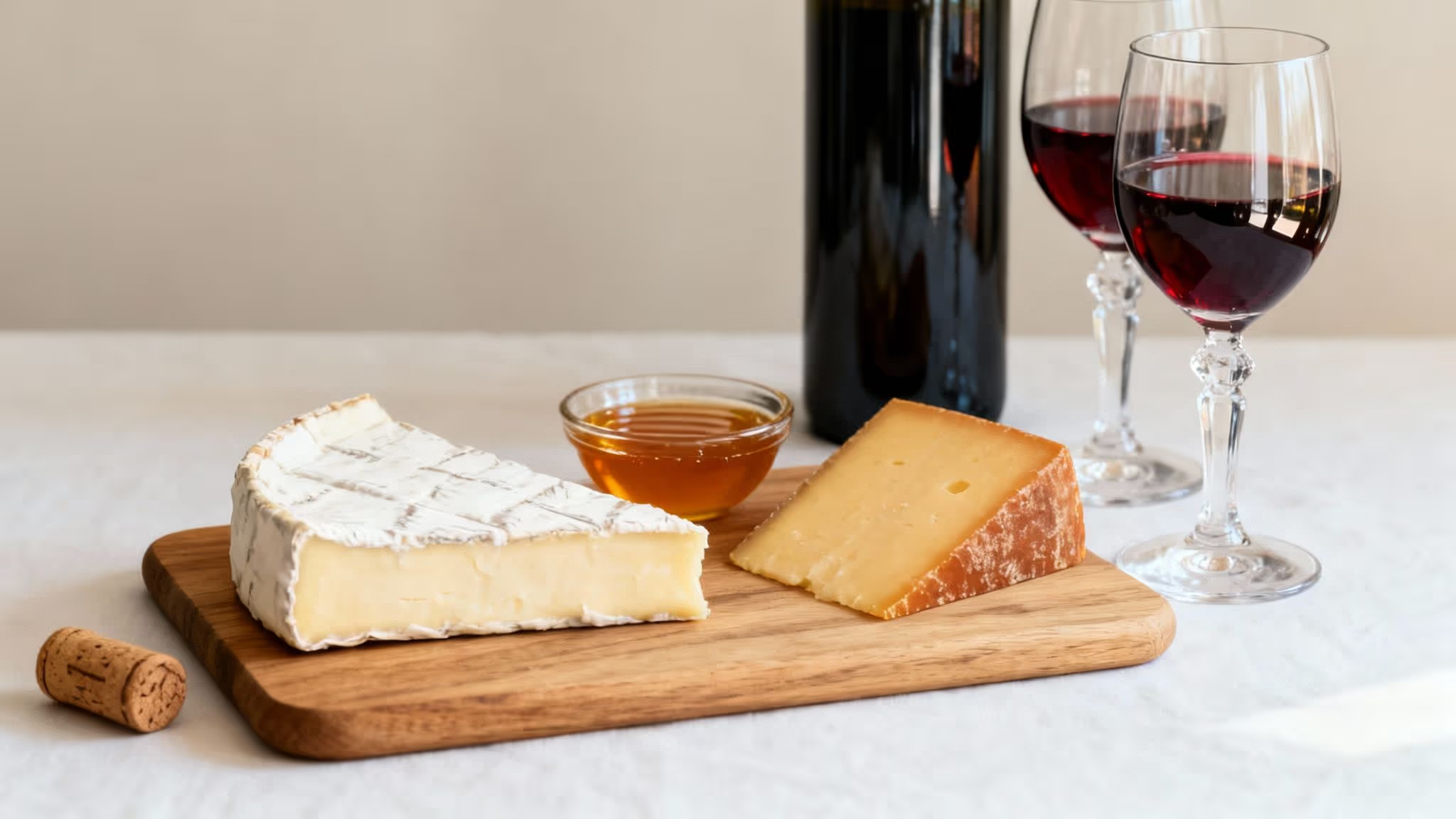
Pairing wine and cheese isn't about memorizing rigid rules; it's about understanding harmony. Think of it like a conversation. When two people have similar energy, the discussion flows. But if one person is shouting while the other is whispering, it doesn't quite work.
It’s the same with wine and cheese. A bold, powerful red wine will completely overwhelm a delicate, fresh goat cheese. The key is finding balance. This guide is your roadmap—no complicated jargon, just practical concepts that actually work. Forget feeling intimidated at the cheese counter or staring blankly at a wine list. Soon, you'll be confidently picking combinations that make both the wine and the cheese taste better, turning a simple snack into a memorable event.
Why Pairing Matters
The right pairing creates a third, more delicious flavor that neither the wine nor the cheese could achieve on its own. This happens through a fascinating interplay of texture, fat, acidity, and tannins. For instance, the zesty acidity in a crisp white wine can slice right through the rich fat of a creamy cheese, cleansing your palate and making each new bite taste just as fresh as the first.
The ultimate goal of a great pairing is synergy, where the combination is greater than the sum of its parts. It’s not just about avoiding bad matches; it’s about discovering transcendent ones.
Of course, remembering these principles while standing in a busy shop can be tricky. This is where a tool like Sommy.ai acts like your personal guide. Imagine scanning a bottle of Sauvignon Blanc and instantly getting a suggestion for the perfect chèvre to go with it. It simplifies your shopping and pretty much guarantees a great experience.
Getting Started With Classic Pairings
To get our journey started, let's lock in a few timeless combinations that just plain work. The table below is your cheat sheet, showing classic pairings that are celebrated for their perfect harmony. Think of it as your foundation for building an incredible cheese board.
Quick-Reference Pairing Cheat Sheet
Here’s a quick look at some can't-miss pairings that illustrate the core principles in action.
Use this as a starting point. Once you taste why these work, you'll start seeing the patterns everywhere, ready to create your own amazing pairings.
The Four Simple Rules Of Perfect Pairings
You don’t need to be a sommelier to pull off a truly great wine and cheese pairing. Seriously. Forget memorizing obscure regions or grape varieties. All you really need are four foundational concepts that guide almost every successful match.
Think of these less as rigid laws and more like friendly signposts pointing you toward delicious discoveries. Once you see these principles in action, you'll start noticing them everywhere. It makes experimenting on your own—and finding what you love—so much easier. Best of all, they’re simple enough to remember whether you're staring at a cheese counter or a wine aisle.
Rule 1: What Grows Together, Goes Together
This is probably the oldest and most reliable guideline in the book. For centuries, the cheeses and wines from a specific region have evolved side by side. They're born from the same soil, climate, and local traditions, creating natural partnerships that just work. This shared origin, or terroir, often leads to a beautiful, effortless harmony.
A classic example? A tangy Loire Valley goat cheese like Selles-sur-Cher alongside a crisp Sauvignon Blanc from that very same region. The wine's zesty, grassy notes are a perfect echo of the cheese's bright, herbaceous character. It’s a simple, elegant pairing that has stood the test of time for a very good reason.
Rule 2: Match The Intensity
Imagine a heavyweight boxer stepping into the ring with a featherweight. It’s not a fair fight. The same logic applies here. A bold, high-alcohol Cabernet Sauvignon will completely steamroll a delicate, fresh mozzarella, leaving you tasting nothing but wine.
The goal is to create a balanced partnership where neither the wine nor the cheese dominates the other. Let delicate wines dance with delicate cheeses, and have powerful wines square off with equally robust cheeses.
Here’s how that plays out in the real world:
- Delicate Pairings: A light-bodied Pinot Grigio with fresh, mild ricotta.
- Medium Pairings: An earthy Pinot Noir with a nutty, semi-hard Gruyère.
- Bold Pairings: A full-bodied Australian Shiraz with a sharp, aged cheddar.
Rule 3: The Magic Of Fat And Tannin
This one explains why big red wines and hard cheeses are such a legendary power couple. Red wines contain compounds called tannins, which create that drying, slightly grippy sensation in your mouth—think of the feeling after sipping strong black tea.
Cheese, on the other hand, is loaded with fat. When you take a bite of a firm, fatty cheese like an aged cheddar, it coats your palate. The tannins from a wine like Cabernet Sauvignon then swoop in and bind to those fats, essentially scraping your palate clean. This little trick makes the wine feel smoother and less harsh, while allowing the cheese's complex flavors to pop. This dynamic is a cornerstone of great pairings, a concept we explore more in our guide on how to match wine with food.
Rule 4: Opposites Attract—Sweet And Salty
Sometimes, the most exciting and memorable pairings come from contrast, not similarity. The perfect case in point is the irresistible pull of sweet and salty, a duo that lights up your taste buds like few others can.
Take the iconic pairing of a sweet Port with a pungent, salty blue cheese like Stilton. The wine’s rich, sugary fruitiness is the perfect counterweight to the cheese’s intense, salty funk. That sweetness masterfully tames the cheese's aggressive bite, creating a decadent, almost dessert-like experience that is deeply satisfying. This principle also works beautifully with Sauternes and Roquefort, or even an off-dry Riesling with a salty Feta.
Exploring Cheese Families And Their Wine Companions
Okay, we've got the ground rules down. Now for the fun part: a tour through the world of cheese. Just like wines, cheeses belong to families, grouped by how they’re made, how they taste, and how they feel in your mouth. Getting to know these families is the real secret to unlocking one delicious pairing after another.
Think of each cheese family as having its own personality. Some are bright and zesty, others are rich and funky. The game is to find a wine that gets along with that personality—either by matching its style or by offering a fun, surprising contrast. Let's walk through the major types so you can build a cheese board that truly sings.
Fresh And Soft Cheeses
These are the youngest, brightest cheeses out there, defined by their high moisture and lack of aging. They’re typically soft, spreadable, and have a clean, tangy flavor that's more milky than nutty.
- Examples: Chèvre (Goat Cheese), Feta, Ricotta, Mozzarella.
- Best Wine Friends: High-acid, unoaked white wines are your go-to. A zesty Sauvignon Blanc mirrors the tangy, herbal notes of Chèvre perfectly. A crisp Pinot Grigio or a dry Rosé complements the mild creaminess of Mozzarella without stealing the show. The goal here is to match freshness with freshness.
Bloomy Rind Cheeses
You'll know these by their soft, edible white rinds. They are famously creamy, decadent, and downright buttery. The flavor is often earthy, with distinct notes of mushroom.
- Examples: Brie, Camembert, Delice de Bourgogne.
- Best Wine Friends: The rich, fatty texture of these cheeses needs a wine with good acidity or bubbles to cut through and cleanse your palate. Champagne or other traditional-method sparkling wines are the classic power couple here; that fizz is a perfect foil for the cream. If you're set on a red, grab a low-tannin, fruity Pinot Noir.
This idea of matching textures isn't just a Western thing. A fascinating 2021 study looked at pairings between Chinese red wines and both French and Chinese cheeses. Researchers found that a full-bodied, sweeter Chinese wine made from Vitis amurensis Rupr grapes made creamy cheeses like Brie and Camembert taste even better to participants. It’s a great example of how complementary textures create a more satisfying experience. You can discover more insights from this cross-cultural pairing research.
Washed Rind Cheeses
Here’s where things get interesting—and a little funky. These cheeses are washed with brine, beer, or wine as they age, encouraging some pretty aromatic bacteria to grow. This gives them a pungent, "stinky" aroma but, surprise, the flavor inside is often nutty, savory, and much milder than you'd expect.
- Examples: Taleggio, Epoisses, Muenster.
- Best Wine Friends: The strong aromas of washed-rind cheeses can be a challenge. You need an aromatic wine that can hold its own, like a Gewürztraminer or an off-dry Riesling. A fruity, low-tannin Gamay (think Beaujolais) also works beautifully, complementing the cheese’s savory side without clashing.
The infographic below shows the three core ideas—matching intensity, thinking about terroir, and playing with contrast—that guide all of these pairings.
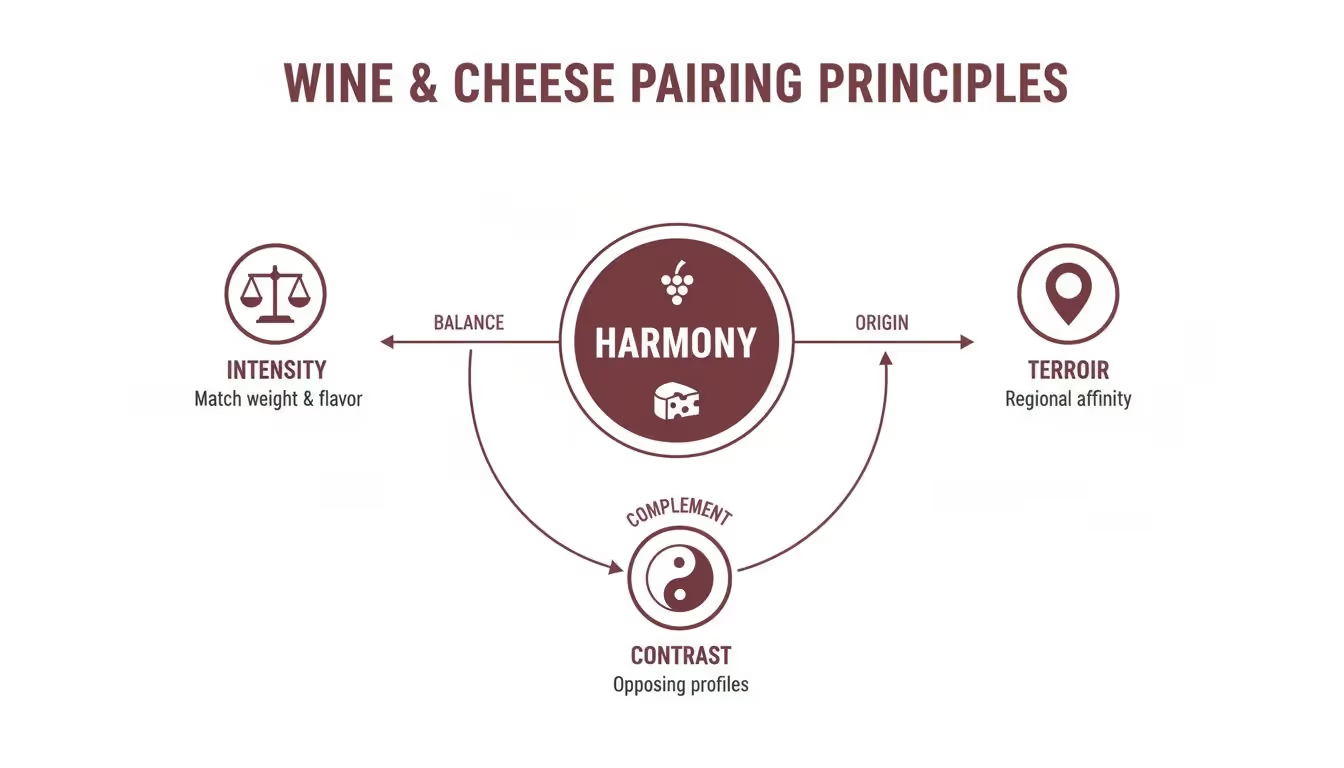
Think of it as a quick visual reminder of the "why" behind every great match. It's what helps you move from guessing to choosing with confidence.
Semi-Hard And Hard Cheeses
This is a huge and well-loved category, covering everything from smooth, meltable cheeses to those giant, crystalline wheels of aged goodness. As they age, their flavors deepen, bringing out nutty, savory, and almost caramel-like notes.
- Examples: Cheddar, Gruyère, Gouda (Semi-Hard); Parmigiano-Reggiano, Manchego (Hard).
- Best Wine Friends: These firm cheeses have the fat and protein to handle red wines with more tannin. An aged Cheddar with a Cabernet Sauvignon is a timeless match—the cheese softens the wine’s powerful structure. A nutty Gruyère is fantastic with a medium-bodied red like Pinot Noir, while a salty Parmigiano-Reggiano sings next to a bold Italian red like Chianti Classico.
Blue Cheeses
Known for their signature blue or green veins, these cheeses are bold, salty, sharp, and pungent. They can be crumbly or creamy, but their flavor is always turned up to eleven.
Blue cheeses are the rock stars of the cheese world—loud, complex, and unforgettable. They demand a wine partner that can share the stage without getting drowned out.
- Examples: Stilton, Gorgonzola, Roquefort.
- Best Wine Friends: The classic rule of "sweet with salty" is your absolute best friend here. Sweet dessert wines like Port, Sauternes, or a late-harvest Riesling are just phenomenal with blue cheese. The wine's sugar provides the perfect counterbalance to the cheese’s aggressive saltiness, creating a truly decadent and harmonious end to any meal.
Trying to remember all this at the store can make your head spin. That’s where an app like Sommy.ai becomes your secret weapon. You can just scan a cheese label, and Sommy will instantly give you great wine pairings, taking all the guesswork out of the equation and helping you find your next favorite combo.
Classic Wine And Cheese Pairings You Must Try
Now that we’ve covered the ground rules, let's put them into action with some of the most legendary duos in the food world. These combinations are famous for a reason—they just plain work, creating a harmony that’s both delicious and memorable.
Think of this as your playbook. We’ll look at a few guaranteed-to-impress pairings, break down why they click, and even offer some budget-friendly swaps. Because a killer wine and cheese night shouldn't have to cost a fortune.
Sauvignon Blanc And Goat Cheese
This is the poster child for the "what grows together, goes together" philosophy. Sauvignon Blanc from France's Loire Valley is known for its screaming-high acidity and sharp notes of grass, gooseberry, and wet stone. Right from that same region, you get tangy goat cheese (Chèvre) that shares a similar bright, herbaceous vibe.
When you put them together, the wine’s acidity slices right through the cheese's creamy texture, scrubbing your palate clean for the next bite. The citrusy, mineral notes in the wine don't just match the cheese's tang—they amplify it, making the whole experience feel incredibly fresh and alive.
Pinot Noir And Gruyère
Here’s a perfect example of matching intensities. Pinot Noir is a lighter-bodied red with earthy, forest-floor notes, bright cherry fruit, and a silky smooth texture. Gruyère, a semi-hard cheese from Switzerland, brings a nutty, slightly sweet, and savory flavor that's complex without being a bully.
The wine’s gentle tannins and bright acidity are just enough to stand up to the cheese's firm texture and rich nuttiness, but not so much that they overpower it. The earthy tones in the Pinot Noir echo the savory side of the Gruyère beautifully, making for an elegant and seamless pairing. A simple, unoaked Chardonnay can also be a fantastic partner to Gruyère's delicate profile.
Port And Stilton
If you're looking for a classic case of "opposites attract," this is it. This pairing is the ultimate sweet-and-salty combination that delivers a truly decadent experience. Port is a sweet, fortified red wine bursting with rich flavors of dark berries, caramel, and spice. Stilton is a powerhouse blue cheese, famous for its intense saltiness and pungent, earthy punch.
The magic is all in the contrast. The lush sweetness of the Port perfectly balances the cheese's aggressive saltiness, taming its bite and creating a luxurious, dessert-like harmony.
This iconic duo has helped fuel a massive industry. In fact, the global dessert wine market was valued at $35.7 billion in 2023 and is projected to hit $64.4 billion by 2033. This growth is driven by people wanting more unique, premium food and wine experiences, especially in North America and Europe. You can discover more about the growth of the dessert wine market.
From Splurge To Save: A Pairing Guide
Thankfully, you don't need a top-shelf budget to enjoy these iconic flavor profiles. Plenty of affordable alternatives can give you a very similar experience. For example, if you love a big Cabernet Sauvignon, our food pairing guide for Cabernet Franc explores a fantastic, often more affordable, relative.
The table below gives you a few easy swaps to get you started.
Classic Pairings and Budget-Friendly Alternatives
If you're standing in the cheese aisle staring at ten different types of blue cheese, don't sweat it. This is a perfect moment to use Sommy. Just scan a bottle of Pinot Noir on your phone, and the app can instantly suggest the best affordable cheese you have available right in front of you.
How To Host An Unforgettable Wine And Cheese Tasting
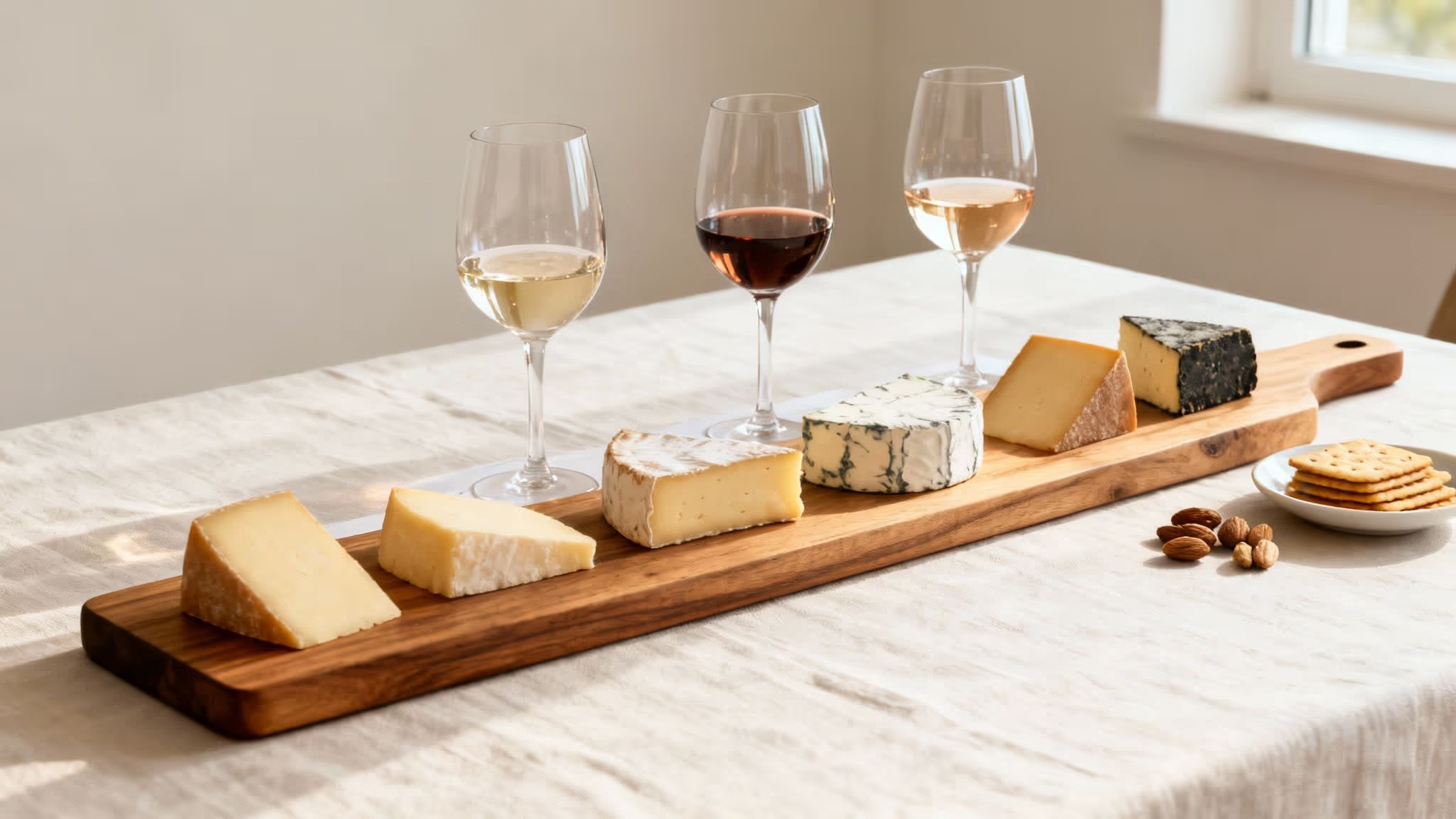
Hosting a wine and cheese night is one of the best ways to get friends together. With just a little prep work, you can turn a casual hangout into a truly memorable event. The secret isn't about spending a fortune; it’s all in the small details that let the flavors really shine.
By focusing on a few key things—like serving temperature, tasting order, and the right snacks—you can guide your guests through a delicious journey where every pairing has a chance to be at its best.
Prepare For Perfect Flavors
Temperature is one of those small details that makes a huge difference, yet it's so often overlooked. Serving either the wine or the cheese too cold (or too warm) can completely mute its flavor and kill the experience.
Just like wine, cheese needs to "breathe" to show you what it’s got. A good rule of thumb is to pull your cheeses out of the fridge about 30–60 minutes before guests arrive. This lets them come up to room temperature, softening their texture and waking up all those complex aromas.
Wine temperature is just as critical:
- Sparkling Wines: Serve these nice and cold, around 40-45°F (4-7°C), to keep the bubbles tight and refreshing.
- Light-Bodied Whites: Aim for 45-50°F (7-10°C). Any colder, and you'll miss out on their delicate floral and fruit notes.
- Full-Bodied Whites & Rosés: A slightly warmer 50-55°F (10-13°C) brings out their richer, rounder textures.
- Light-Bodied Reds: Don't be afraid to give these a slight chill. 55-60°F (13-16°C) is perfect for preserving their bright, fresh fruit flavors.
- Full-Bodied Reds: Think cool room temperature, about 60-65°F (16-18°C). This softens up the tannins without letting the alcohol smell take over.
Set Up Your Tasting Order
To keep everyone's palate from getting overwhelmed, you need a game plan for the tasting order. The guiding principle is simple: move from light to heavy. This goes for both the wine and the cheese.
Start with the most delicate pairings and work your way up to the most robust. This prevents a powerhouse flavor from blowing out your taste buds early on, making it impossible to appreciate the subtler stuff that follows.
A classic tasting flight usually follows this path:
- Start Light: Kick things off with a sparkling wine or a crisp Sauvignon Blanc paired with something fresh like a goat cheese.
- Move to Medium: Next, progress to a medium-bodied white like a Chardonnay or a light red like Pinot Noir. Pair these with a semi-hard cheese like Gruyère.
- Finish Strong: End the night with a bold, full-bodied red—think Cabernet Sauvignon—alongside an aged cheddar. Or, go for a classic finish with a sweet Port and a pungent Stilton.
Choose The Right Accompaniments
While the wine and cheese are the stars of the show, the supporting cast matters. The goal here is to find snacks that complement the pairings, not compete with them. Keep it simple.
- Crackers and Bread: Stick to plain, unsalted crackers or a simple baguette. Anything with heavy seasoning will just get in the way.
- Fruits and Nuts: Sliced apples, pears, and plain almonds or walnuts are perfect. They add a bit of texture and a neutral flavor that can cleanse the palate between bites.
- Water: It sounds obvious, but make sure there’s plenty of plain water on hand so guests can reset their taste buds between pairings.
Creating a well-rounded board with thoughtful additions makes all the difference. For more ideas on what to serve, check out our complete guide to wine tasting appetizers.
And finally, be ready for a curveball. What happens when a guest brings a surprise bottle of wine that doesn't fit your carefully planned lineup? This is where you can look like a genius. Just pull out Sommy.ai. A quick scan of the label will give you an instant pairing recommendation from the cheeses you already have on the board. Problem solved.
Start Your Own Pairing Adventure
You've got the core concepts down. Think of what we’ve covered—matching intensity, finding a great contrast—as your starting point, not a set of rigid laws. They're the foundation you can use to build your own delicious discoveries.
The most important rule in any wine and cheese pairing guide is simple: trust your own palate. The perfect pairing is the one that brings you the most joy. Let your curiosity lead the way. Go ahead and try that funky washed-rind cheese with an aromatic white wine, or see how a young, fruity red stands up to a semi-hard classic. Every single combination is just another chance to learn what you love.
Embrace The Journey
This journey of discovery is part of a massive global passion. The worldwide wine market hit a staggering USD 508.14 billion in 2024, with Europe's rich traditions leading the charge. That growth comes from a rising interest in quality food experiences, where finding the perfect pairing is a huge part of the fun. You can learn more about the expanding global wine market and see how your adventure fits into this exciting trend.
The best way to find your favorites is to just start tasting and jot down a few notes. Keeping a simple record of what you enjoyed (and what you didn't) is incredibly helpful for the next time you're at the cheese counter. You can even check out our guide on creating a wine tasting notes template to make the process easy and fun.
Your personal taste is the only expert you truly need. The best pairings are subjective, personal, and a reflection of your own unique palate. Don't be afraid to break the "rules" to find a combination you adore.
Think of Sommy.ai as your trusted companion on this adventure. When you're standing in a shop feeling unsure, it’s like having a personal sommelier in your pocket, ready to offer a suggestion that helps you try something new with confidence. Your delicious journey is just getting started.
Still Have Questions? Here Are a Few Common Ones.
Even with the principles down, some practical questions always come up right when you’re standing in the wine aisle. Let’s tackle a few of the most common puzzles people run into.
Think of this as your quick-reference FAQ for those "what if" moments.
What’s the Single Most Versatile Wine for a Cheese Board?
If you absolutely have to pick just one bottle for a board loaded with different cheeses, a dry Riesling is your secret weapon. Its killer acidity, hint of sweetness, and complex fruit notes let it hang with everything from a zippy goat cheese to a milder blue.
Another fantastic all-rounder is a dry sparkling wine like Prosecco or Crémant. Those bubbles and crisp acidity are like a reset button for your palate, cutting through the richness of pretty much any cheese without steamrolling its flavor.
And for the red wine drinkers? A light-bodied, low-tannin Gamay (think Beaujolais) is your best bet. It’s remarkably flexible and won't get into a fight with the softer cheeses on the board.
Can I Really Pair Red Wine With Soft Cheeses Like Brie?
Yes, you absolutely can—but you have to pick the right red. This is a classic tripwire. The creamy, buttery texture of a bloomy-rind cheese like Brie goes to war with high-tannin reds like a big Cabernet Sauvignon. The result is often a nasty, bitter, or metallic taste that ruins both.
The trick is to go for a low-tannin, fruit-forward red. A classic Pinot Noir or a bright Beaujolais are perfect here. Their bright acidity and red fruit flavors actually complement the earthy, mushroomy notes of the Brie instead of clashing with them.
What Do I Do If a Pairing Just Doesn't Work?
First off, don't sweat it. It happens to everyone, even the pros. The most important thing is to treat it as a data point, not a disaster. Just take a second to ask yourself why it flopped. Was the wine just too big and loud for the cheese? Did a weird flavor in one clash with the other?
You can often rescue a bad match right at the table by adding a neutral third wheel. A bite of a plain cracker, a slice of apple, or a simple piece of baguette can act as a buffer, mellowing out the conflict between the wine and cheese.
Just make a mental note for next time and remember the goal is to have fun and explore.
Ready to take the guesswork out of your next pairing? With Sommy.ai, you can scan any wine list or cheese label to get instant, personalized recommendations. Start your delicious adventure and find your next perfect match with confidence at https://sommy.ai.

EntreprEngineur. Runs on lattes. Creates with the intensity of a downhill run. Fast, slightly chaotic, ideally followed by a glass of wine.