

If you're looking for the best wine for a steak dinner, reach for a bold red almost every time. The real skill is matching the intensity of the wine to the richness of the cut. A fatty, marbled ribeye loves a high-tannin Cabernet Sauvignon, while a leaner New York strip sings next to a fruit-forward Malbec. Get that balance right and both the steak and the glass taste better.
Your quick guide to steak and wine pairings

The core rule stays refreshingly simple to remember. Powerful, rich steaks want powerful, structured wines, and leaner cuts do better with something more elegant. Match the weight of the wine to the weight of the meat and you're most of the way there. Choosing the right bottle doesn't have to feel like a final exam, so think of it more as a friendly nudge toward something you'll enjoy. Use this section as your cheat sheet, whether you're cooking at home or reading a long restaurant menu.
The basic principle of pairing
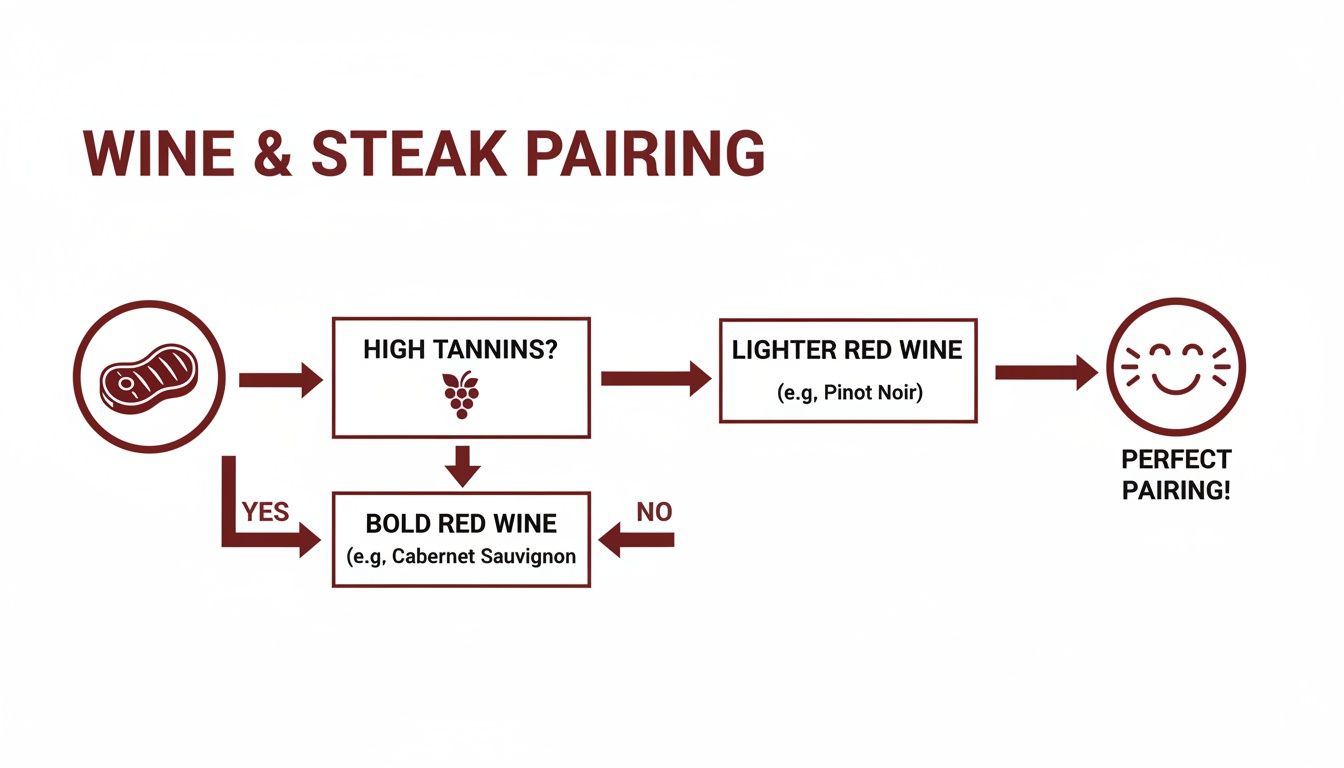
The classic steak and red wine duo comes down to a friendly reaction between the wine's tannins and the steak's fat and protein. Tannins are the compounds from grape skins, seeds, and oak barrels that create that drying, slightly grippy feeling on your tongue. On their own, in a young and powerful red, they can feel a touch harsh. Give them a rich food partner and they change character completely.
Take a sip after a bite of steak and those tannins bind to the fat and protein, so the wine tastes smoother, rounder, and fruitier. In return, the wine's structure and acidity cut through the richness and refresh your palate for the next bite. Each one improves the other with every pass, which is why the pairing has stuck around for so long. You don't need to be an expert for this to click. Once you feel it happen, you'll pick with real confidence, and you can start reading a cut the way a sommelier does.
Steak and wine quick reference
This chart matches popular cuts to the wines that reliably flatter them. Treat it as a starting point, then start experimenting once a few pairings feel natural.
| Steak cut | Best wine pairing | Why it works |
|---|---|---|
| Ribeye | Cabernet Sauvignon | High tannins cut through the rich marbling and clean the palate. |
| Filet mignon | Merlot or Pinot Noir | Soft tannins and red fruit won't overwhelm the lean, tender cut. |
| New York strip | Malbec or Syrah | Bright fruit matches the beefy flavor without bulldozing it. |
| Sirloin | Zinfandel or Chianti | Medium body and lively acidity suit this leaner cut. |
| Flank / skirt | Malbec | Plush fruit stands up to the char and the marinade. |
| T-bone / porterhouse | Bordeaux blend | Handles both the tender filet side and the beefy strip side. |
How do you match wine to your cut of steak?
Start with the steak, then find a wine that carries the same weight. Look at the cut first and ask whether it's a powerhouse of marbling or something lean and subtle. That single answer points you straight to the right bottle.
Ribeye and other marbled cuts
The ribeye is the king of flavor, packed with marbling and a buttery texture. All that fat wants a wine with real backbone and high tannins to slice through the richness. A bold Cabernet Sauvignon is the classic answer here, with its full body and dark fruit like blackcurrant and cherry. The wine's firm structure acts like a reset button with each sip, so the steak's richness never turns heavy. A good Napa Cab is a reliable pick, though a Chilean bottle delivers plenty of the same character for less money. Prime rib fans can borrow the exact logic, and our guide to the best wine for prime rib goes deeper on big, structured reds.
Filet mignon and leaner cuts
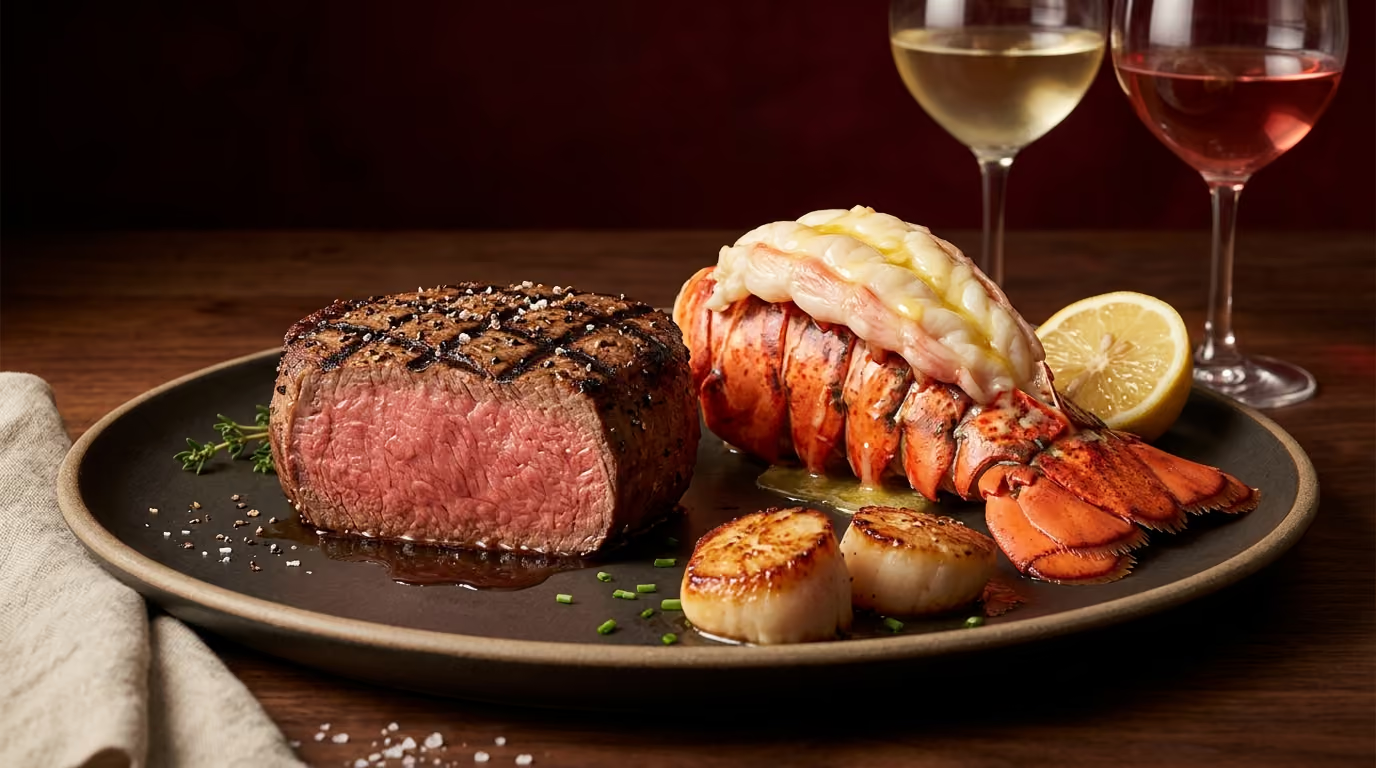
Filet mignon is all about melt-in-your-mouth tenderness rather than bold, fatty flavor. It's the most delicate of the popular cuts, so a big tannic wine would steamroll it, and you want elegance instead. Merlot brings plush, rounded tannins and notes of plum and black cherry that let the meat shine while still holding its own. Pinot Noir works just as well, with a silky texture, earthy undertones, and bright acidity that flatters the tenderness. Either one keeps the focus on the steak instead of fighting it.
A New York strip sits between the two, leaner than a ribeye but full of beefy chew. It doesn't need crushing tannins, so aim for bright fruit and a slightly softer feel. A velvety Malbec from Argentina suits it beautifully, with plum, blackberry, and cocoa notes and smoother tannins that match the meat's texture. If your strip carries a peppery crust, a savory Syrah is a fine swap that leans into the seasoning.
Sirloin, flank, and the big T-bone
These cuts reward a little flexibility. Sirloin is leaner with a firm chew, so a medium-bodied Zinfandel or a Chianti with lively acidity keeps everything balanced, and an aged Tempranillo from Rioja works well when you want a savory, smoother option. Flank and skirt steak carry big flavor and usually a marinade or char, and a plush Malbec stands right up to them thanks to its dark fruit and easygoing tannins. The T-bone and porterhouse give you two steaks in one, a tender filet side and a beefy strip side, so a Bordeaux blend that carries Cabernet structure and Merlot roundness covers the whole plate at once. That built-in balance is exactly why the classic Florentine T-bone leans on wines with both grip and generosity.
How do sauces and cooking methods change the pick?
The sauce and the cooking method can outvote the cut entirely. You've picked your steak, but how you cook it and what you spoon over it will shift the wine you reach for. A great match ties the whole plate together.
Cooking method
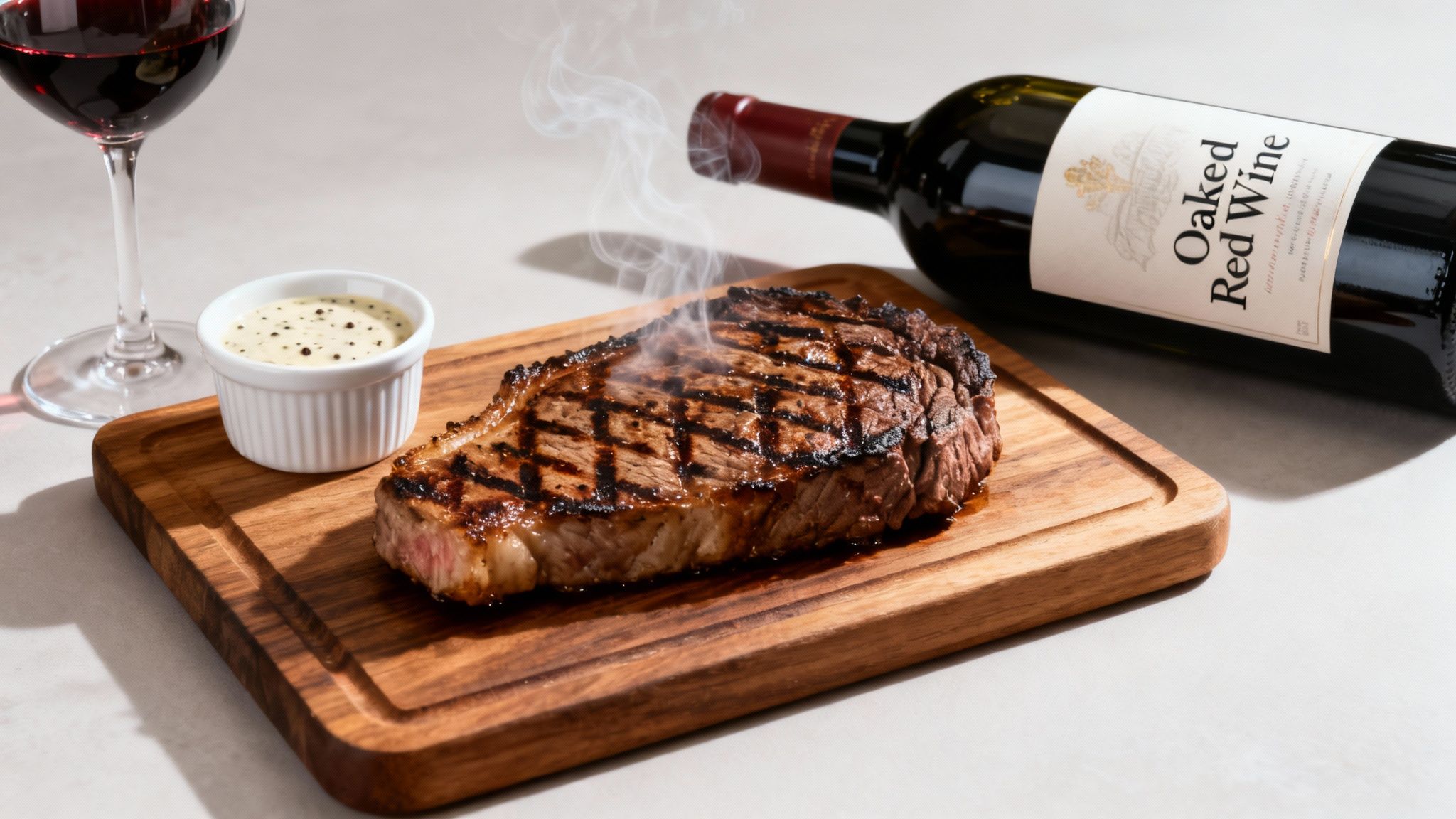
Grilling adds a smoky char, so a wine with a little oak echoes it nicely, like a California Zinfandel or an Australian Shiraz. The vanilla and spice from the barrel mirror the char and pull the plate together. Pan-searing gives you a caramelized crust with less smoke and lets the beef's flavor lead, which suits a softer Merlot or a Chilean Carménère against the buttery richness. For a slow braise or a red wine pot roast, the meat turns meltingly tender and soaks up the cooking liquid, so pour the same style you cooked with. A French Syrah or a humble Chianti works in the pot and in your glass.
Sauces
Think of the sauce as the bridge between the steak and the wine. A rich, creamy, or peppercorn sauce smooths everything out, so you don't need crushing tannins, and a plush Merlot plays nicely with the cream instead of fighting it. A zesty chimichurri or pesto wants a wine with its own herbal, peppery streak, and a Zinfandel fits the char of a grilled flank steak. Deep, savory mushroom sauces or a red wine reduction call for a wine that speaks the same language, like an aged Syrah from the Rhône or an Italian Sangiovese, whose dark cherry and leather notes lean into the umami.
Rare, medium, or well-done
How you cook the middle of the steak matters more than most people think. A rare or medium-rare steak keeps more of its juicy fat, which softens tannins well, so a firmer red like Cabernet or Syrah stays comfortable. As you push toward well-done, the meat dries out and loses some of that fat cushion, so a grippy young wine can start to feel a little tough. In that case a rounder, fruitier red such as Merlot or Malbec keeps the pairing friendly and easy to drink.
What should you pour beyond Cabernet?
Cabernet earns its reputation, but it's far from your only good option. Plenty of steak lists run deep past the usual suspects, and a well-chosen detour can beat the standby. These bottles train your palate and reward a bit of curiosity.
A Syrah from the Northern Rhône loves a black pepper crust or a smoky char, with savory notes that echo the seasoning and firm tannins that hold up to a T-bone. Italian Sangiovese, the grape behind Chianti, brings bright cherry and zesty acidity that slices through fat, which is why it's the classic partner for a Florentine T-bone. An aged Tempranillo adds dried cherry, leather, and a savory depth that makes a simple sirloin feel special, and our guide to good Rioja wines points you toward bottles worth trying. A sturdy Bordeaux blend or a peppery Cabernet Franc can surprise you too. If you like exploring, our roundup of bold red wines has more ideas to try.
The point of a detour isn't to abandon the classics. It's to widen your options so the right bottle is always within reach. A savory Rhône Syrah with a smoky ribeye, or a bright Chianti with a salt-and-pepper T-bone, can feel more rewarding than the safe pick precisely because it surprises you. Trust the same weight-matching rule you'd use with a Cabernet, and these bottles slot in without any drama.
What wine do sommeliers recommend for a steak dinner?
Sommeliers reach for the same three regions again and again for steak: Napa Valley Cabernet Sauvignon for a marbled ribeye, Left Bank Bordeaux for a porterhouse, and Mendoza Malbec when the cut is leaner or the budget is tighter. The reasoning behind all three is identical, matching tannin and body to fat, and the regions simply make that reasoning easy to shop for.
Napa is the default recommendation for a steakhouse dinner because its Cabernet is built the way a ribeye needs: ripe dark fruit, firm tannin, and enough body that the fat never wins. It is also the most expensive way to solve the problem, so the useful trade is knowing what does the same job for less. Cabernet from Chile's Maipo and Colchagua valleys carries a similar structure with a savory, sometimes herbal edge, and Washington State's Columbia Valley sits between the two in both style and price. Any of them handles a fatty cut.
Argentine Malbec is the other answer sommeliers give constantly, and for a specific reason rather than fashion. Mendoza's high-altitude vineyards produce a wine with plush dark fruit and noticeably softer tannin than Cabernet, which makes it more forgiving across cuts, doneness, and sauces. It is the bottle to name when you do not know exactly what is arriving at the table, and our guide to the best Malbec in Argentina covers where the good ones come from.
When a restaurant list is long and unfamiliar, the sommelier's own shortcut is to ask about the plate rather than the grape. Tell them the cut, whether there is a sauce, and roughly what you want to spend, and they will find something better than the safe Cabernet you were about to point at, often for less money.
Merlot or Cabernet Sauvignon with steak: which is better?
Cabernet Sauvignon is better with a fatty, marbled cut and Merlot is better with a lean, tender one, so the cut decides it rather than the grape. Cabernet carries more tannin, and tannin needs fat to soften against, which is why it shines with a ribeye and can taste austere next to a filet. Merlot has rounder tannin and plusher fruit, so it flatters a delicate cut instead of flattening it.
There are two situations where Merlot wins outright. The first is a cream or peppercorn sauce, where Cabernet's grip fights the richness while Merlot settles into it. The second is a well-done steak, because the drier the meat, the less fat there is to cushion tannin, and a grippy young Cabernet turns tough in exactly that moment. Serve either alongside a rare ribeye and the Cabernet will taste better than it does on its own.
If you would rather not choose, a Bordeaux blend contains both, which is precisely why it handles a T-bone's two different textures. That is also the honest answer to whether steak is better with red or white wine: red, almost always, because tannin and fat need each other. A full-bodied oaked Chardonnay or a Viognier can work with a leaner cut and a butter sauce, but it is a deliberate detour rather than the better default.
How do you pick the right bottle at the store or restaurant?
Lean on a few trusted regions and you'll rarely go wrong. Napa Valley is the heavyweight for American Cabernet, with big, dark-fruited wines and firm tannins built for a marbled ribeye. A Left Bank Bordeaux, mostly Cabernet, offers earthy depth and sturdy structure for a grilled porterhouse. Mendoza, high in the Andes, has become the world capital of Malbec, giving you plush, velvety, and often affordable fruit for a leaner New York strip. Knowing these names narrows a wall of bottles down to a short, safe list.
A long wine list can still make your palms sweat, so keep a simple game plan. Decide whether your steak is fatty or lean, pick a matching region from the shortlist above, and stay near a price you're comfortable with. In a restaurant, the same logic applies with a human touch. Tell the server three things: what you're eating, what you usually enjoy, and your budget. That's all they need to steer you toward a bottle you'll love, and it's genuinely their favorite part of the job.
If you'd rather skip the guesswork, Sommy's label scan reads the bottles or the wine list right in front of you and suggests a match on the spot. You might tell it you're grilling a New York strip on a twenty-five dollar budget, and it points you to the right Argentinian Malbec on the shelf. A moment of indecision turns into an easy yes.
Frequently asked questions
What's the best wine for a steak dinner overall?
For most steaks, a bold red is the safest and tastiest bet. Match a high-tannin Cabernet to a fatty ribeye, and a softer Merlot or Pinot Noir to a lean filet. A New York strip loves a fruit-forward Malbec, while a T-bone leans toward a balanced Bordeaux blend. When you're not sure, a versatile Malbec flatters almost any cut on the table.
Can I drink white wine with steak?
You absolutely can, and it works better than people expect. Reach for a full-bodied white with enough texture to hold its own, like an oaked Chardonnay or a fragrant Viognier. A light, zippy white such as Sauvignon Blanc would just get bulldozed by the meat.
What's the best affordable wine for a steak dinner?
You don't need to spend big for a great match. An Argentinian Malbec under twenty dollars delivers dark fruit and smooth tannins with almost any cut. A Spanish Tempranillo marked Crianza brings oak-aged balance, and a Chilean Carménère adds a fun, smoky twist.
What is the best white wine to pair with steak?
An oaked Chardonnay is the best white wine for steak, with a Viognier or a white Rhone blend close behind. All three have the weight and texture to stand next to beef, which a light, high-acid white like Sauvignon Blanc simply does not. Keep the white for leaner cuts such as filet or a strip served with a butter or cream sauce, and reach for red once there is char, marbling, or a peppercorn crust involved.
What wine goes with steak frites?
Steak frites wants a red with enough acidity to cut through the fries as well as the beef, which makes a Northern Rhone Syrah, a Cru Beaujolais, or an everyday Bordeaux the natural picks. The dish is usually built on a leaner cut like hanger, bavette, or onglet rather than a ribeye, so crushing tannin is the wrong instinct. A savory Syrah handles both the peppery crust and the salt on the fries at once.
What is the best drink to have with steak if not wine?
A dark, malty beer such as a porter or a brown ale is the closest non-wine match, because roasted malt echoes the char the same way oak does. A Manhattan or an old fashioned works for the same reason, with the whiskey's sweetness and the bitters standing in for fruit and tannin. Sparkling water with lemon is the honest choice when you want the palate cleansing without the alcohol, since it does the refreshing job that acidity does in wine.
Does the age of the wine matter for steak?
It makes a real difference to how a wine pairs. Younger reds have grippy tannins that a fatty ribeye softens beautifully. Older, well-aged reds turn silky and elegant, which suits a leaner filet where the subtle flavors get room to show.
What's the best way to serve red wine with steak?
Serve it slightly cooler than room temperature, somewhere around 60 to 65 degrees Fahrenheit. If it's too warm the alcohol can taste sharp, and too cold shuts the flavors down. For a big young Cabernet, decant it for 30 to 60 minutes so it can breathe and soften.
How much wine should I plan per person for a steak dinner?
A standard bottle pours about five to six glasses, so a single bottle comfortably covers two people over a leisurely steak dinner. If you're hosting four guests who enjoy a second glass, two bottles give you room to spare. Having a spare bottle on hand also lets you open a second style during dinner, like a lighter red for the filet eaters and a bolder one for the ribeye crowd.
Next time you're planning a steak night, let Sommy suggest a bottle from whatever's in front of you. Discover your next favorite bottle with Sommy.