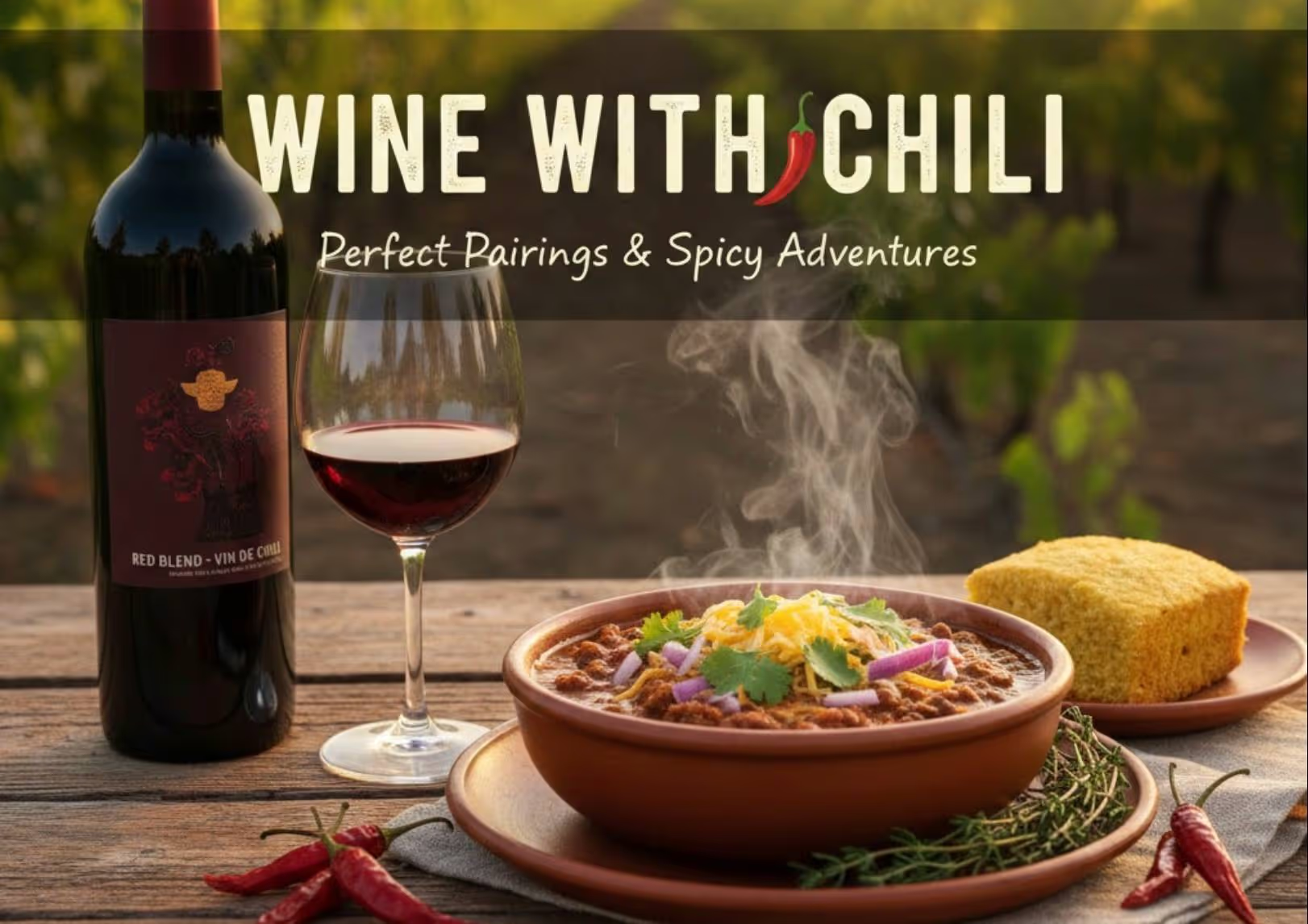

The best wine with chili is a juicy, low-tannin red such as Grenache, Zinfandel or a Côtes du Rhône for a classic beef chili, a Beaujolais or dry rosé for turkey chili, and an off-dry Riesling whenever the pot runs hot. What decides the pairing is heat, not the meat. Spice makes tannin feel harsher and alcohol feel hotter, so the big, grippy Cabernet many people reach for is usually the bottle that fights the bowl hardest.
That one idea explains every pick on this page, and it's why a lighter, fruitier wine than you'd expect tends to win on chili night. Below we go style by style (Texas red, beef and bean, turkey, white chicken, chile verde, veggie and Cincinnati), then cover toppings, the heat level that changes the rules, and what to ask for when chili turns up on a menu.
What kind of wine goes with chili?
Grenache-based reds, Zinfandel and Gamay go best with most chili, because they bring lots of ripe fruit with soft tannins and they don't taste bitter next to chile heat. If you'd rather drink white, an off-dry Riesling is the safest single bottle for spicy chili, and a dry rosé covers the widest range of toppings.

The reason is chemistry you can feel. Capsaicin, the compound that makes chiles burn, also makes a wine's tannin read as rougher and more drying, and alcohol makes the burn linger. Sommelier Jeff Kravitz put it plainly to Tasting Table: high-tannin and high-alcohol wines both intensify the heat, while a Riesling with some residual sugar helps balance it. Wine-Searcher's guide to chilis and spicy food lands in the same place, noting that higher-alcohol wines leave a burning sensation with spicy dishes and that a juicy red with soft tannins is the safe option for chili con carne.
So the three dials to read on any bottle are tannin, alcohol and sweetness. You want tannin low, alcohol moderate and, as the heat climbs, a little sweetness on your side. We'd put back anything that reads 14.5% or more on the label if your chili has real kick, even if it's a wine you love with steak.
| Chili style | Best wine | Why it works |
|---|---|---|
| Texas red (beef, no beans) | Grenache, Côtes du Rhône, Zinfandel | Ripe fruit matches the beef, soft tannin stays smooth with the chile |
| Beef and bean, tomato-heavy | Zinfandel, Malbec (the plush kind), Barbera | Enough body for the meat, acidity to meet the tomato |
| Turkey or chicken (red) | Beaujolais (Gamay), Pinot Noir, dry rosé | Lighter meat, lighter wine, still red-wine comfort |
| White chicken chili | Off-dry Riesling, Albariño, dry rosé | Freshness for the cream and white beans, a touch of sugar for green chile heat |
| Chile verde (pork, tomatillo) | Sauvignon Blanc, Grüner Veltliner | Green, zesty wine echoes tomatillo and roasted green chiles |
| Veggie and bean | Dry rosé, Gamay, dry Riesling | Bright and clean against beans, corn and tomato |
| Cincinnati (over spaghetti) | Côtes du Rhône, Beaujolais, Zinfandel | Warm-spiced fruit for the cinnamon and clove, light enough for the cheddar pile |
| Very hot, any style | Off-dry Riesling, Moscato d'Asti, Lambrusco | Sweetness and low alcohol calm the burn |
What wine goes with beef chili?
Zinfandel and Grenache are our first picks for beef chili, with a Côtes du Rhône as the easiest bottle to find in almost any store. All three bring dark, ripe fruit that stands up to browned beef, cumin and smoky chile powder, and none of them carries the heavy tannin that turns gritty against spice.
Texas-style chili deserves its own note, since it's the purest version of the dish. Chili is the official state dish of Texas, designated by the Legislature in 1977 according to the Texas State Library and Archives, and the classic "bowl of red" is cubed or ground beef in a dried-chile sauce, often with no beans at all. With nothing starchy to soften it, that bowl tastes meaty and concentrated, and it's where a Grenache-heavy Rhône blend or a Zinfandel really shines. If you want to understand what Zinfandel brings first, our guide to Zinfandel wine covers its jammy, peppery side.
When the chili leans on tomatoes and beans, acidity starts to matter more than power. Barbera from Piedmont is a lovely, underused choice here because it's naturally high in acid and low in tannin, so it keeps pace with tomato without drying your mouth out. A plush Argentine Malbec works too, as long as you pick one that's described as smooth or juicy rather than structured.
Some guides recommend Cabernet Sauvignon for chili, and a young, fruity Cab can be fine with a mild, meaty chili that's more savory than hot. The trouble is that most Cabernets are built around firm tannin and plenty of alcohol, which are exactly the two traits spice amplifies. If you're cooking for people who like heat, Cabernet is the bottle most likely to taste bitter by the second bowl.
What wine goes with turkey chili and white chicken chili?
For a red turkey chili, pour a Beaujolais or a Pinot Noir. Ground turkey is much leaner than beef, so a heavy red simply buries it, while Gamay's bright cherry fruit and low tannin match the lighter meat and still feel cozy. Our guide to Gamay explains why it's the light red that copes best with spice.
White chicken chili is a different dish entirely, and it wants a white wine. It's usually built on white beans, green chiles, cumin and often a swirl of cream cheese or sour cream, which makes it creamy, tangy and gently hot all at once. An off-dry Riesling handles that best, because its acidity cuts through the cream while a little sugar softens the green chile. Albariño is a good dry alternative if your version is mild, and a dry rosé sits comfortably in between.
If you're unsure whether a Riesling is dry or sweet, check the back label. Many bottles sold in the United States carry the International Riesling Foundation's taste profile, a sliding scale from Dry through Medium Dry and Medium Sweet to Sweet, which Decanter reported was created to help people judge a bottle before opening it. For chili with real heat, aim for Medium Dry.
What wine goes with chile verde and veggie chili?
Sauvignon Blanc is the natural match for chile verde, the green pork stew made with tomatillos and roasted green chiles. Its grassy, green-pepper notes echo the dish rather than fighting it, and Wine-Searcher points out that Sauvignon Blanc shares flavor compounds with chili peppers and capsicums. A New Zealand bottle brings riper fruit for milder pots, while a Grüner Veltliner from Austria adds a peppery snap if you'd like something a bit different.

Veggie chili is the most flexible bowl, and a dry rosé is our default for it. Bean-and-vegetable chili tends to taste brighter and sweeter than beef chili, thanks to tomatoes, peppers, corn and squash, so it pairs better with wines that taste fresh than with wines that taste heavy. If yours is smoky with chipotle or roasted vegetables, switch to a chilled Gamay. If it's tomato-forward and tangy, a dry Riesling works well. Our guide to how rosé tastes is handy if you're choosing between a pale Provence style and a deeper, fruitier one.
What wine goes with Cincinnati chili?
Côtes du Rhône and Beaujolais both suit Cincinnati chili, and so does a not-too-heavy Zinfandel. This regional style is a thin, spiced meat sauce served over spaghetti or hot dogs and piled with cheddar, onions and beans, seasoned with cinnamon, allspice, clove and nutmeg alongside the cumin and chili powder. Despite a stubborn myth, the dish does not contain chocolate.
Those warm baking spices are the pairing clue. They pick up the spiced, red-fruit side of Grenache and Zinfandel beautifully, and because Cincinnati chili is usually mild, you can lean on fruit and spice instead of worrying about heat. A three-way or four-way plate with a mountain of cheddar also wants some acidity, which is where a slightly chilled Beaujolais earns its place.
How do chili toppings change the wine?
Sour cream and cheddar push you toward wines with acidity or bubbles, while jalapeños push you toward sweetness. Toppings often change a bowl more than the base recipe does, so look at what's actually going on top before you open anything.

Sour cream cools the heat but adds richness, and cheddar adds salt and fat. Both make a dry sparkling wine or a chilled rosé taste wonderful, because acidity and bubbles rinse your palate between spoonfuls. Raw onion, cilantro and lime add sharp, green flavors that a crisp white or rosé handles easily. Fresh or pickled jalapeños are the topping that changes the rules, since they add direct heat and push the whole bowl into off-dry Riesling territory. Fritos or tortilla chips bring salt and crunch, which, honestly, makes almost any wine taste better.
If everyone at the table is building their own bowl, the most forgiving bottle is a dry rosé served cold. It's fresh enough for jalapeños, sturdy enough for cheese and sour cream, and fine with beef, turkey or beans. A juicy red served slightly cool is the best backup for people who only drink red.
What wine goes with very spicy chili?
Off-dry Riesling is the best wine for very spicy chili, followed by Moscato d'Asti and a dry or off-dry Lambrusco if you want a red. Once the heat is high enough to make you sweat, the pairing stops being about the meat at all. What helps then is sugar and low alcohol, and both work together because a German Kabinett Riesling or a Moscato d'Asti sits far below the alcohol of a typical red.
Lambrusco is our favorite surprise pick here. It's a fizzy red from Emilia-Romagna, often with a touch of sweetness, and the combination of cold bubbles, bright acidity and berry fruit is genuinely refreshing against a hot bowl. Our page on Lambrusco wine explains how to tell the dry bottles from the sweet ones, which is worth knowing before you buy. For more on heat across other cuisines, see our guide to wine for spicy food.
One honest note before you shop: chili is a beer dish for plenty of people, and Wine-Searcher says as much. Wine works beautifully once you match it to the heat, but if you're feeding a crowd that likes it scorching, a cold lager on the side is not a failure of nerve.
What should you order with chili at a restaurant?
Ask for "a smooth, fruity red without much tannin" or "a dry rosé," and tell the server you're eating chili. That gets you a sensible bottle on almost any list, because the server can translate a style into whatever they happen to stock. Chili turns up in a lot of forms when you eat out, from chili fries and chili dogs to chili-topped burgers, and the same logic applies to all of them.
By the glass, look for Grenache, Garnacha, Côtes du Rhône, Zinfandel, Beaujolais or Pinot Noir in the reds, and Riesling or rosé in the whites. If the list is mostly big Cabernet and oaky Chardonnay, the rosé or the sparkling wine is usually the smarter order. When you'd like the dish itself taken into account, Sommy's Pairing feature reads a photo of the bowl or the recipe and works from your own taste rather than the average palate this page has to write for.
Questions people ask about wine with chili
What kind of wine do you have with chili?
A juicy, low-tannin red is the classic choice, with Grenache, Zinfandel, Côtes du Rhône and Beaujolais the most reliable. For spicy chili, an off-dry Riesling is the safest white, and a dry rosé covers the widest range of toppings and chili styles.
Is red or white wine better with chili?
Red is better with beef chili, and white often wins with white chicken chili, chile verde and very hot chili. The deciding factor is heat, since spice makes red wine tannin feel harsher, so the hotter the bowl gets, the more a slightly sweet white makes sense.
What do people drink with chili?
Beer is the most common drink with chili, and a cold lager is hard to beat with a very hot bowl. Among wines, smooth reds like Zinfandel and Grenache, dry rosé and off-dry Riesling are the most popular choices.
Is Cabernet Sauvignon good with chili?
Cabernet Sauvignon only works with mild, meaty chili. Most Cabernets have firm tannin and fairly high alcohol, and capsaicin makes both feel harsher, so a softer red such as Grenache or Zinfandel is a safer bet whenever the chili has real heat.
What is the 20 minute wine rule?
The 20 minute rule says to put red wine in the fridge about 20 minutes before serving and take white wine out about 20 minutes before serving. It's useful with chili because a slightly cool red tastes fresher and less alcoholic next to spice.
What wine goes with chili and cornbread?
A Zinfandel or a dry rosé goes well with chili and cornbread. Cornbread adds sweetness and butter, which suits Zinfandel's ripe fruit, while rosé keeps the whole plate feeling fresh if the chili is spicy.