

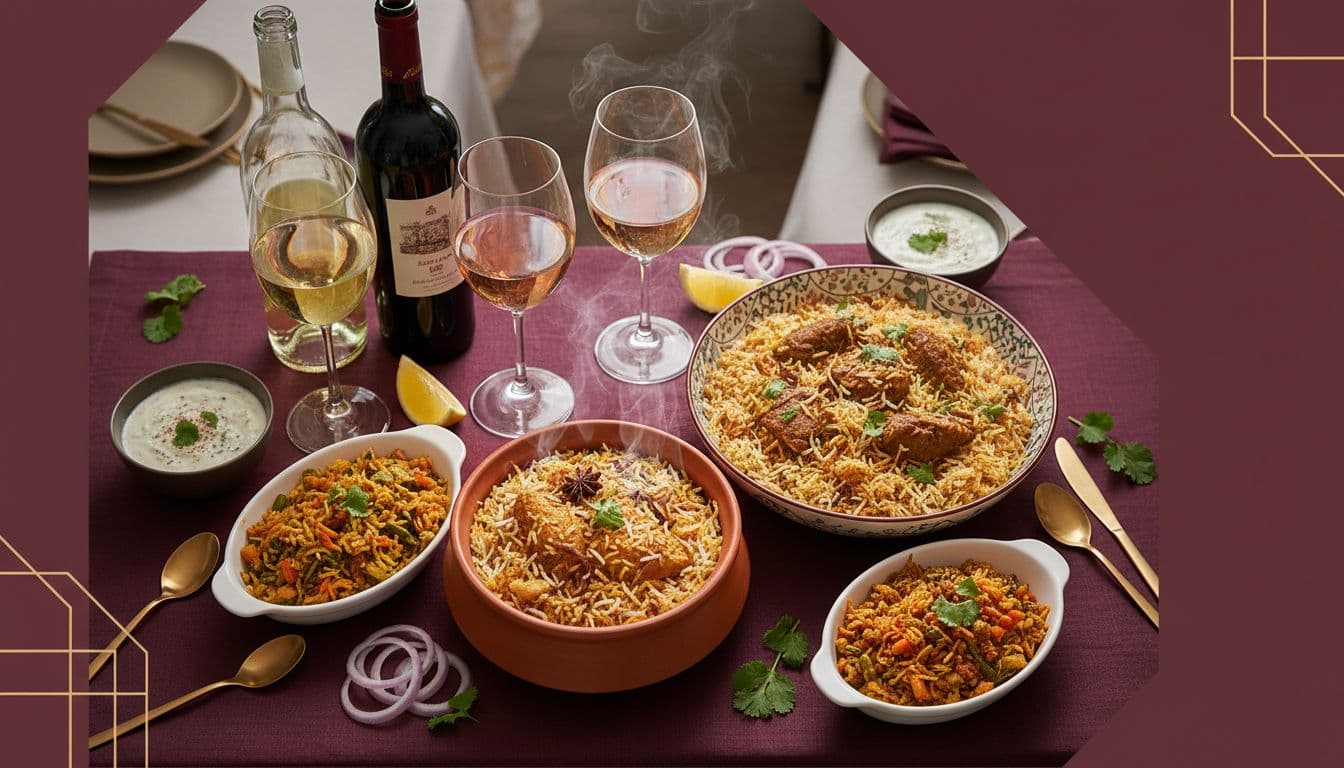
A good wine biryani pairing comes down to one idea: keep the wine bright, not heavy. For chicken biryani, go aromatic and slightly sweet; for lamb biryani, choose a light, juicy red; for veggie biryani, pick crisp white or sparkling. If there’s raita on the table, aim for high acidity and low tannin.
Biryani is like a marching band of flavors. Rice, spice, herbs, browned onions, and a rich base all play at once. The wrong wine feels like someone turned the volume up too high. The right one feels like a cool breeze between bites.
This is friendly wine advice for busy people: you don’t need wine knowledge, you just need a few reliable styles and a simple way to decide.
A 60-second rule to match wine with biryani
Think of this as a modern wine guide for real life, not a lecture. Here’s how to choose wine when biryani is already doing a lot.
Step 1: Match the heat with refreshment.
If the biryani is spicy, pick wines with lower alcohol and good acidity. They taste cleaner with chili heat.
Step 2: Respect the aromatics.
Biryani often smells like saffron, cardamom, cloves, mint, and fried onion. Aromatic whites (and some lighter reds) meet it where it is.
Step 3: Treat raita like a “reset button.”
Yogurt cools spice and softens sharp edges. That means your wine can be a bit zippy, but it shouldn’t be mouth-drying.
Step 4: Keep tannins on a short leash.
Heavy, grippy reds can make spice taste hotter and raita taste sour. Choose light reds, or chill them slightly.
If you want a quick cross-check, this style-first table works as a calm wine pairing guide:
| What’s on the plate | What to pour |
|---|---|
| Chicken biryani (aromatic, medium heat) | Off-dry aromatic white (Riesling, Gewürztraminer) |
| Lamb biryani (richer, deeper spice) | Light, juicy red (Grenache, Pinot Noir, Gamay) |
| Veggie biryani (herby, bright) | Crisp white or sparkling (Brut bubbles, Grüner-style whites) |
| Biryani with lots of raita | High-acid whites or chilled light reds (low tannin) |
And if wine words confuse you, here are wine tasting notes explained in plain language: “citrus” means it tastes fresh; “stone fruit” means soft peachy flavor; “floral” means it smells like petals. That’s it. This is wine explained simply, and it’s usually enough to make solid wine recommendations.
Easy wine picks for chicken biryani (that don’t fight the spices)
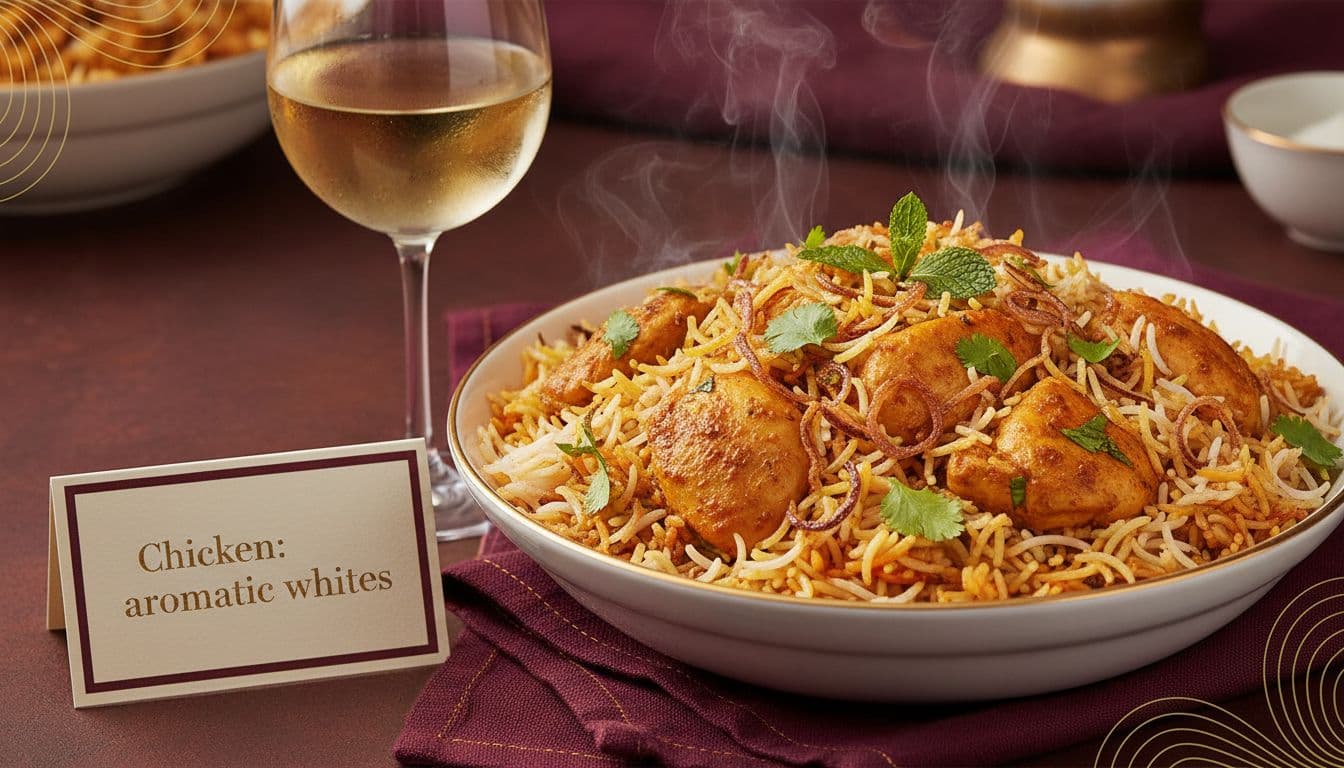
Chicken biryani has richness, but it’s usually lighter than lamb. The safest move is an aromatic white with a touch of sweetness. That little hint of sweetness doesn’t make the wine “dessert-y,” it just cushions spice and garlic.
Here are grocery store wine picks that tend to work even when you don’t know the brand:
- Off-dry Riesling: fresh, slightly sweet, very forgiving with heat.
- Gewürztraminer (often off-dry): big aroma, soft texture, loves fried onion and warm spices.
- Chenin Blanc (dry to off-dry): crisp, a bit fruity, good with herbs and lemon.
- Sparkling Brut: if you want something that feels like a palate rinse.
When you’re standing in the aisle, use these simple wine tips: look for “off-dry” or “slightly sweet” on Riesling, avoid “high alcohol” labels, and pick bottles that mention bright fruit and fresh acidity. Those are clear wine recommendations you can actually use.
What to pour with lamb biryani (and why heavy reds fail)
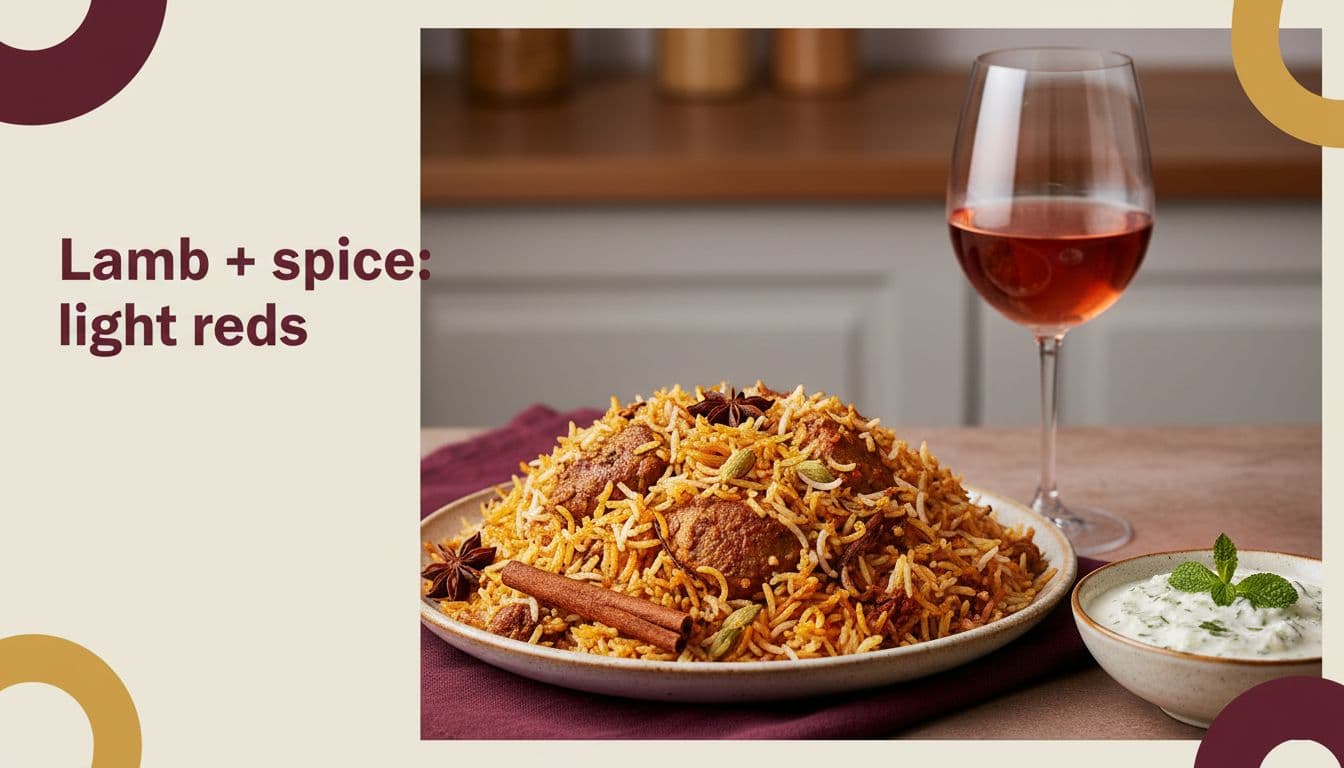
Lamb biryani is deeper and darker tasting. The instinct is to grab a bold Cabernet-style red, but that’s where things go sideways. Heavy tannins can make spice feel sharper, and they can clash with yogurt.
Instead, aim for reds that are juicy, not gritty, and consider serving them slightly cool.
Good choices:
- Grenache: soft red fruit, easy texture, friendly with warm spice.
- Pinot Noir: lighter body, more lift, works well when there’s mint or herbs.
- Gamay: bright and fresh, great if you want the wine to stay out of the way.
These also double as raita-friendly options because they don’t dry your mouth out. If you’re ordering out, use these restaurant wine tips: ask for “a light-bodied red with low tannin,” or “a red that’s good slightly chilled.” On a menu, wine list tips that help fast are to scan for “light-bodied” and “red fruit,” and avoid wines described as “big,” “oaky,” or “powerful.”
Veggie biryani and raita-friendly bottles for a mixed table
Veggie biryani can swing from bright and herb-heavy to rich and roasted, depending on the vegetables and oil. When you’re feeding a group, the best move is often wine that plays referee.
Sparkling Brut is the most flexible. Bubbles lift fried onions, cut through oil, and feel clean next to raita. If you want still wine, go for crisp whites with lemony energy, or a dry rosé that stays refreshing.
A simple rule: if the biryani tastes “green” (mint, cilantro, peas), choose crisp white. If it tastes “roasted” (cauliflower, mushrooms), choose rosé or a chilled light red.
For more ideas on wine with vegetarian Indian meals, this vegetarian Indian dinner with wine pairing ideas is a handy reference.
These are simple wine explanations you can remember mid-shopping: bubbles clean, crisp whites brighten, light reds comfort.
Conclusion: pick the wine that lowers the heat, not adds to it
For biryani night, choose brightness over brawn: aromatic off-dry whites for chicken, light juicy reds for lamb, and crisp whites or bubbles for veggie, with raita steering you away from heavy tannins. The goal isn’t perfection, it’s confidence.
If you want help in the moment, this is exactly what an AI wine assistant is good at: smart wine recommendations, personalized wine picks, and wine app suggestions based on what you’re eating and what you already like. It’s everyday wine advice that feels calm, with personalized wine recommendations, smart wine picks, and a wine guide that keeps decisions simple.