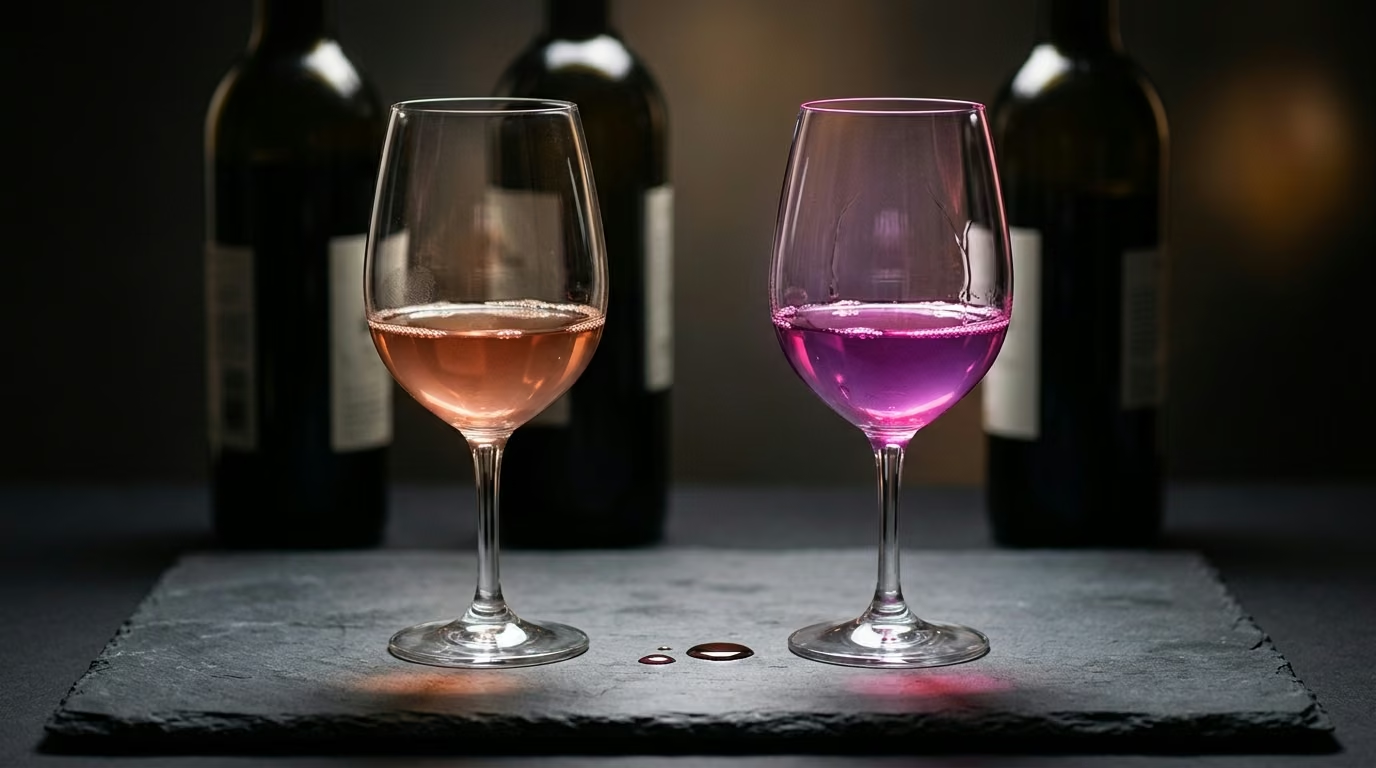
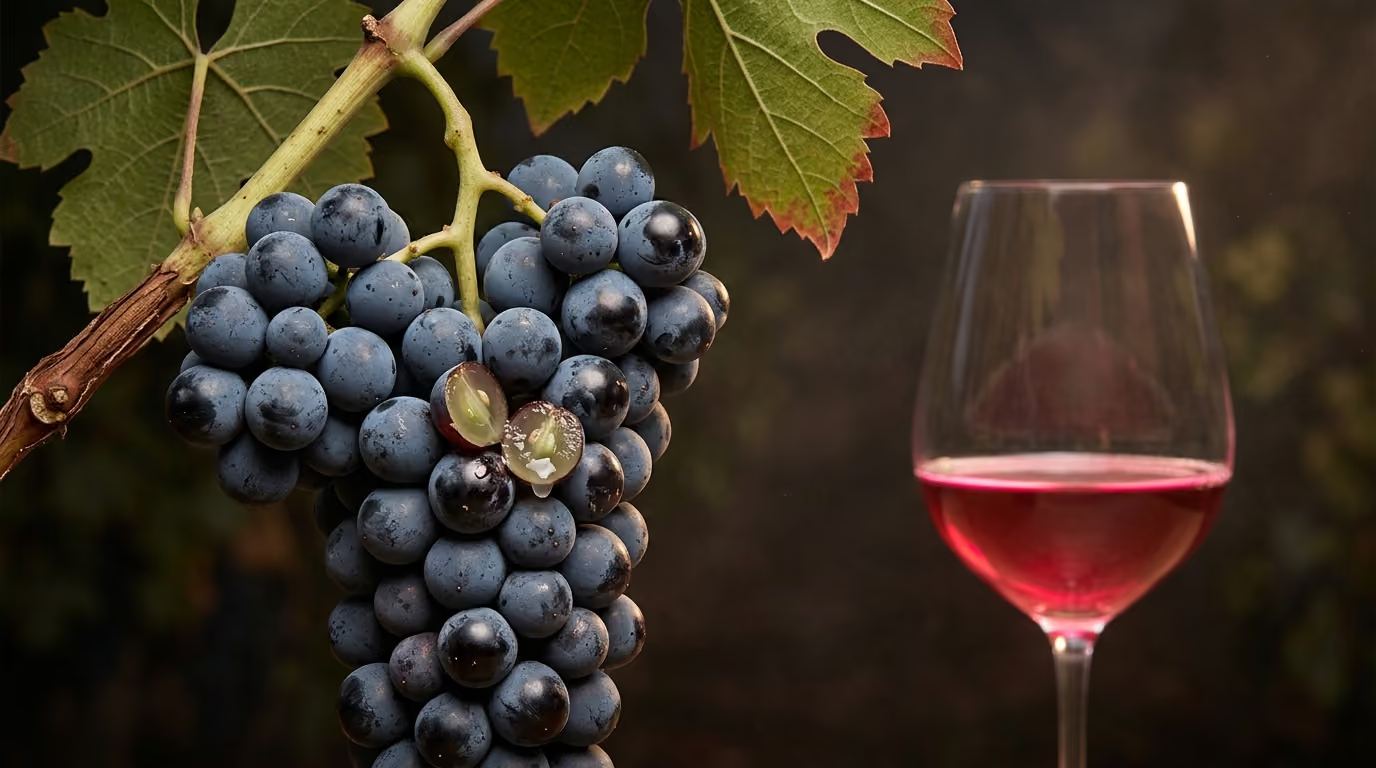
Gamay tastes bright, tart and fruit-forward, with fresh cherry and raspberry leading, floral notes drifting behind them, and almost none of the drying grip that makes heavier reds hard work. It's light in body and high in acidity, which is why it feels closer to a very good rosé than to a Cabernet. Serve it cool and it gets even better. If you like red wine but not the weight, this is the grape that solves the problem.
Most people meet Gamay without knowing it, because the bottle says Beaujolais on the front instead. That single labeling quirk is why a grape this easy to enjoy still feels obscure, and it's the first thing worth clearing up.
What does Gamay actually taste like?
Red fruit arrives first, and it's the fresh kind rather than the cooked kind. Cherry and raspberry dominate, sometimes with strawberry or cranberry alongside, and there's often a floral lift that people describe as violets or peonies. Underneath the fruit sits a faint earthy or peppery note that keeps the wine from tasting like juice.
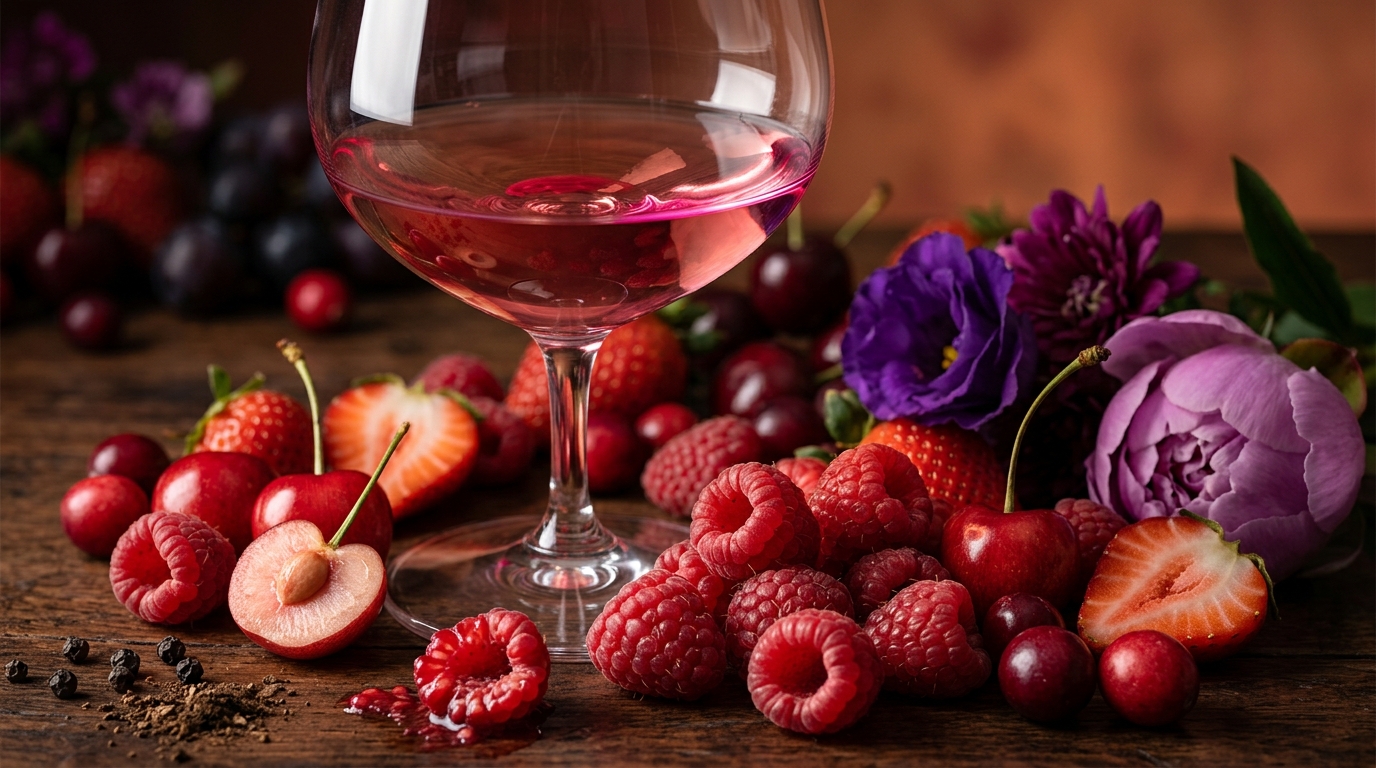
The texture is where Gamay really separates itself. The grape has thin skins and naturally low tannin, so you get very little of that dry, grippy sensation across your gums. What you get instead is high acidity, the mouth-watering freshness that makes you want the next sip immediately. Wine writer Karen MacNeil once called Beaujolais the only white wine that happens to be red, which is a bit of a joke but also a genuinely useful description of how it behaves at the table.
Winemaking adds one more layer worth knowing about. Beaujolais producers traditionally use carbonic maceration, a method where whole uncrushed grapes ferment inside a sealed tank filled with carbon dioxide. The practical result is a wine with exaggerated bright fruit, banana and bubblegum aromas in the most extreme examples, and even softer tannin than the grape would give you otherwise. Some producers lean into it hard, others barely use it at all, which is a big part of why two Beaujolais bottles can taste so unalike.
You'll probably enjoy Gamay if you already like Pinot Noir, dry rosé, chilled Lambrusco or lighter Italian reds. You'll probably find it thin if your usual pour is a plush Napa Cabernet or a jammy red blend. That's a real difference in preference and not a failure of taste on anybody's part, and knowing which side you fall on saves you money. Our guide on spotting low-tannin red wine fast covers the wider family if Gamay turns out to be your direction.
The comparison people reach for most often is Pinot Noir, and it's a fair one because the two grapes sit in the same weight class. The difference shows up in what sits underneath the fruit. Pinot Noir tends toward mushroom, tea leaf and damp earth, with a layered quality that rewards paying attention, while Gamay stays brighter, tarter and more immediately cheerful. Neither is more sophisticated than the other, though Pinot Noir costs a great deal more for the same level of quality. We put them side by side in our piece on Pinot Noir versus Gamay for chilled reds if you want the full comparison.
Is Gamay the same thing as Beaujolais?
Gamay is the grape and Beaujolais is the place, and nearly all red Beaujolais is made from Gamay. French labels name the region rather than the variety, so a bottle of Beaujolais almost never prints the word Gamay anywhere on the front.
Beaujolais sits just north of Lyon and is administratively part of Burgundy, though its granite and schist soils and its warmer climate make it feel like its own thing entirely. The appellation was established in 1936 and covers around 10,500 hectares, which makes it a serious wine region rather than a novelty. Roughly one percent of production is white, made from Chardonnay and labeled Beaujolais Blanc.
Gamay grows elsewhere too, and the bottles that do print the grape name tend to come from those places. The Loire Valley in France makes fresh, unfussy versions, often blended. Oregon's Willamette Valley and parts of Canada and Switzerland grow it as well, usually in a style that keeps the bright fruit while adding a touch more structure. Those bottles are worth trying, though they're harder to find and rarely cheaper than the French originals.
If you're standing in front of a wine list and Gamay isn't there by name, this is exactly the moment Sommy's Find Similar earns its keep. Name a bottle you already liked and it surfaces the wines that share its character by grape, region or style, so you're not guessing from a menu that assumes you already know what Morgon means.
Which Beaujolais should you actually buy?
The label tells you the style if you know the four tiers. Beaujolais Nouveau is the lightest and simplest, plain Beaujolais and Beaujolais-Villages sit in the middle, and the ten named crus give you the most character and the most structure.
Beaujolais Nouveau is the famous one, released every year on the third Thursday of November under a rule the French appellation authority set in 1985. It's made fast, meant to be drunk within months, and accounts for about a third of the region's output. Treat it as a cheerful seasonal drink rather than a serious bottle, because that's genuinely what it's for. Plain Beaujolais and Beaujolais-Villages both give you more depth while keeping that easy fresh-fruit character, and Villages is usually the better value of the two.
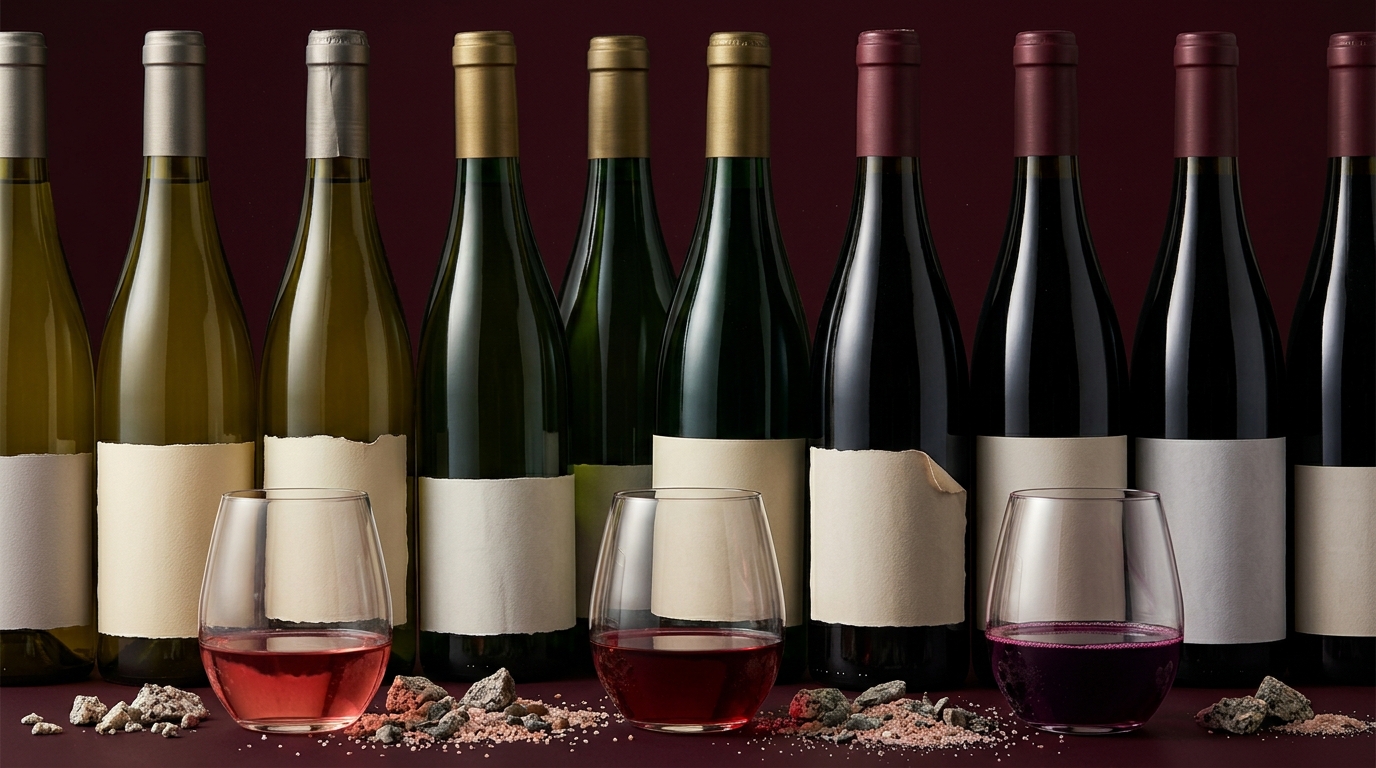
The ten crus are where things get interesting, and they sort neatly into three groups by weight.
| Body | Crus | What to expect |
|---|---|---|
| Lightest, drink young | Brouilly, Régnié, Chiroubles | Delicate berry and floral character, best within about three years |
| Medium | Côte de Brouilly, Fleurie, Saint-Amour | More concentration, velvety texture, good for around four years |
| Fullest, needs time | Chénas, Juliénas, Morgon, Moulin-à-Vent | Deeper color, real structure, often best between four and ten years |
Fleurie is the one most widely exported to the United States and a sensible first cru to try, offering a velvety texture with fruit and flowers together. Morgon produces the deepest and richest examples, and after five years it can take on a silky, almost Burgundian character. Moulin-à-Vent lasts longest of all, and some producers age it in oak, which gives it more tannin and structure than any other Beaujolais.
None of these names appear with the word Beaujolais on the label, which trips up almost every first-time buyer. A bottle simply saying Fleurie or Morgon is cru Beaujolais, made from Gamay, and usually the best value in the shop. Our guide to reading wine labels covers the same trick across other French regions.
Value is genuinely on your side here, which is not something you can say about much of Burgundy. Beaujolais spent decades in the shadow of the Nouveau craze, and the reputation damage from all that cheap November wine has kept prices for the serious bottles lower than the quality deserves. A good cru costs a fraction of a village-level red Burgundy grown thirty miles north, from vineyards with real history behind them and producers who have been refining the same sites for generations. That gap is slowly closing as more drinkers catch on, so the next few years are a good time to be curious.
How cold should Gamay be served?
Cooler than you'd serve most reds, and the lighter the style the colder it goes. Beaujolais Nouveau is at its best around 52 degrees Fahrenheit, plain Beaujolais and Beaujolais-Villages around 56 to 57, and the fuller crus around 60 to 62.
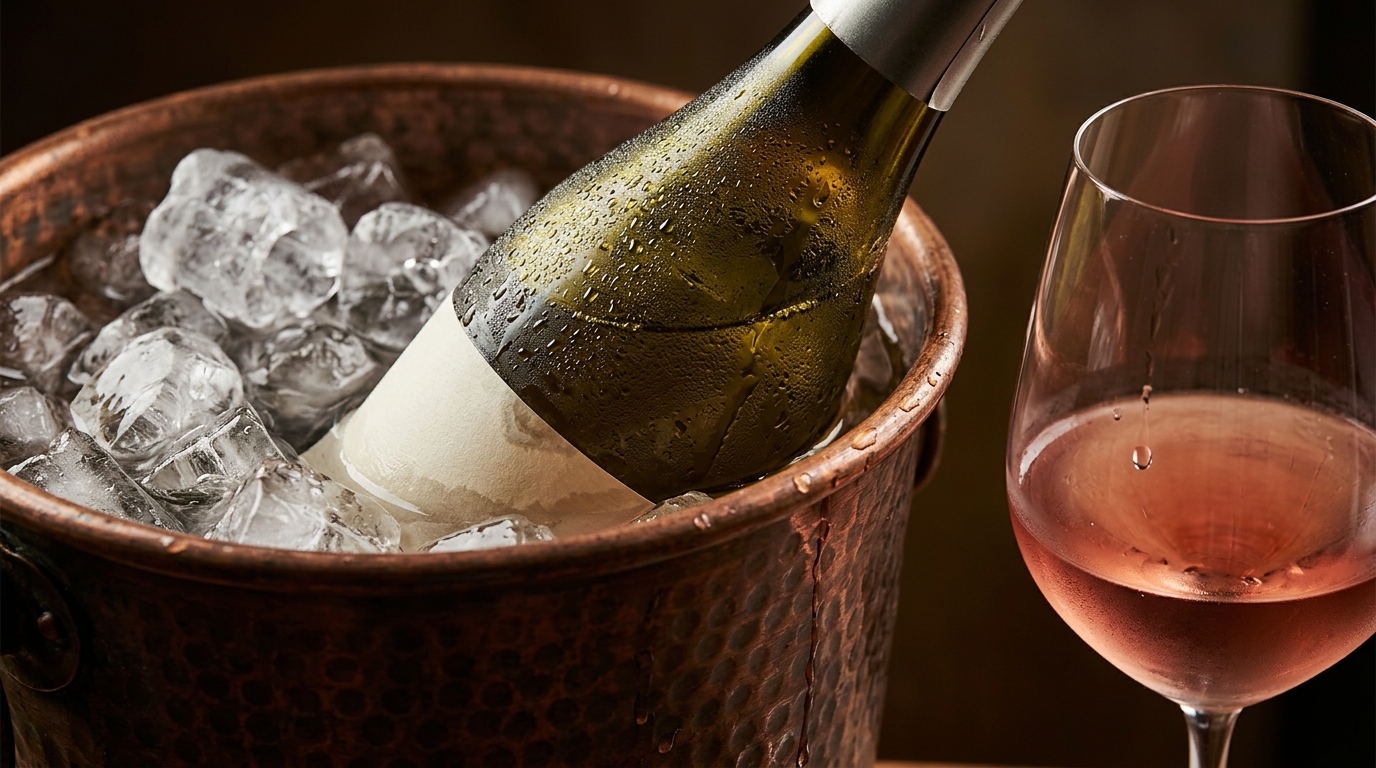
Those numbers matter more with Gamay than with almost any other red. Served warm, its high acidity turns sharp and the fresh fruit flattens into something vaguely stewed. Served properly cool, the same bottle tastes crisp, aromatic and genuinely refreshing. Twenty to thirty minutes in the fridge takes a room-temperature bottle where it needs to go, and there's no harm in leaving it longer for a Nouveau.
Beaujolais rarely needs decanting, which is one less thing to worry about. The tannins are already soft, so airing the wine buys you very little, and in the lightest styles it can actually blow off some of the aromatics you're there for. Pour it straight from the bottle and let the glass do the rest. If you need to get a bottle cold in a hurry, our notes on chilling wine fast without diluting it will save your dinner.
What food goes with Gamay?
Almost everything you'd actually cook on a weeknight. Gamay's high acidity cuts through fat and salt, its low tannin means spice and bitterness don't turn harsh, and its modest weight lets it sit beside food rather than steamrolling it.
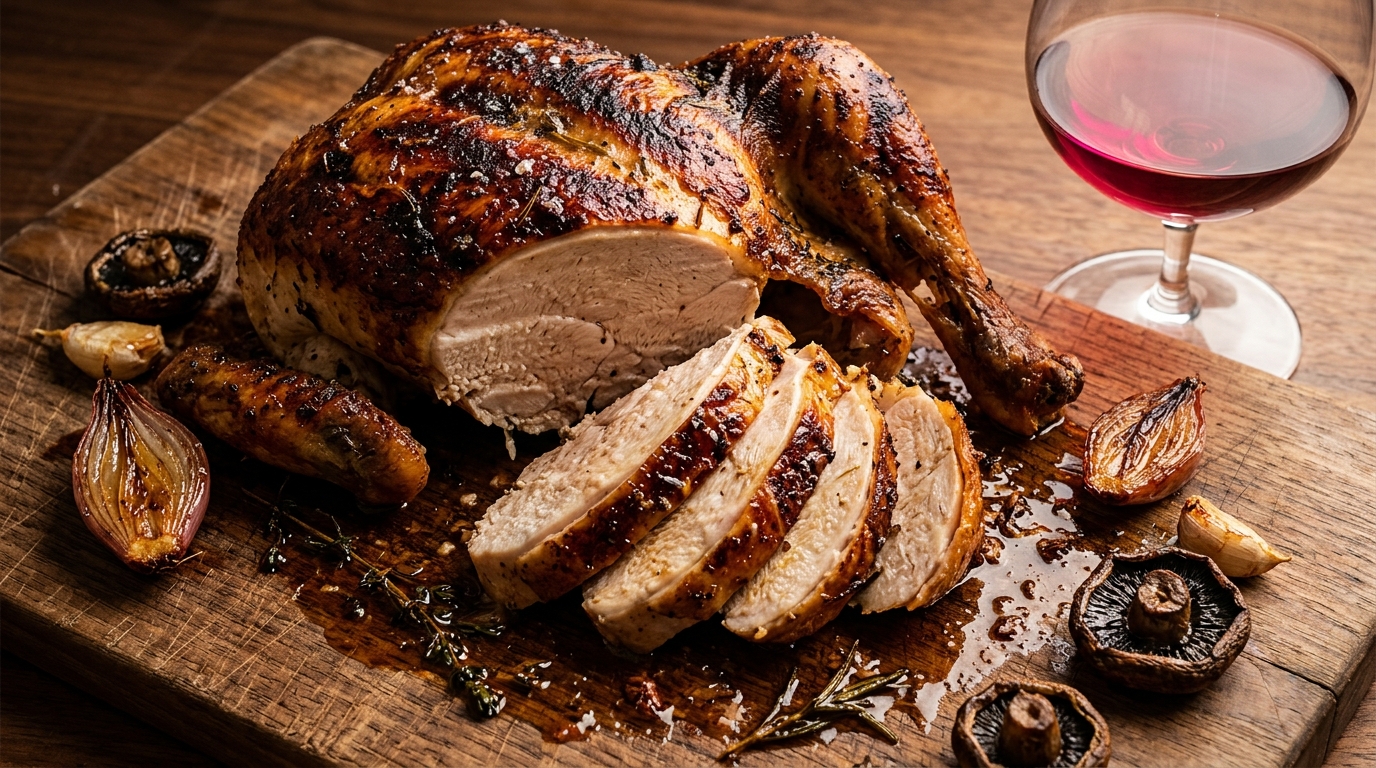
Roast chicken is the classic match, and pork, turkey, duck breast, charcuterie and salmon all work on the same logic. Mushrooms deserve a special mention, because their savory depth can make tannic reds taste bitter while Gamay stays perfectly comfortable next to them. Pizza is a genuinely good pairing rather than a compromise, especially anything with tomato, and the same goes for a cheese board with soft and semi-hard cheeses on it.
The region's own tradition points at the lighter end for the simpler bottles. Beaujolais Nouveau works best as an aperitif or with picnic food, plain Beaujolais and Villages suit salads and light plates, the lighter crus go with poultry, and the heavier crus like Morgon or Moulin-à-Vent hold up to red meat and stews. Norwegians drink it with salt cod, which sounds unlikely until you try it.
There are two combinations worth watching out for. Very sweet glazes and sticky barbecue sauces make any dry red taste sharper, so a honey-heavy dish will fight the wine. Genuinely fiery chilli heat is fine in moderation but overwhelming at full strength, and serving the wine properly cold helps more than switching bottles. Our broader guide to pairing wine with food has the reasoning if you want to apply it elsewhere.
Frequently asked questions
What does Gamay wine taste like?
Gamay tastes of fresh cherry and raspberry with floral notes and a light earthy edge, carried by high acidity and very low tannin. It feels light-bodied and refreshing rather than weighty, which is why it's often served slightly chilled like a white wine.
Is Gamay a sweet wine?
Almost all Gamay is dry, including Beaujolais Nouveau. Its bright red fruit and soft texture can read as sweet on the first sip, but there's very little residual sugar in a typical bottle.
Is Gamay the same as Pinot Noir?
They're different grapes, though both make light-bodied reds and both come from the wider Burgundy area. Gamay is generally fruitier, tarter and simpler in a good way, while Pinot Noir tends to be more savory, more layered and considerably more expensive.
Why does the label say Beaujolais instead of Gamay?
French wine law names wines after their place of origin rather than their grape variety. Red Beaujolais is made almost entirely from Gamay, so a bottle labeled Beaujolais, Fleurie or Morgon is a Gamay wine even though the grape is never printed.
Should Gamay be chilled?
Yes, and it makes a real difference. Aim for roughly 52 degrees Fahrenheit for Beaujolais Nouveau, 56 to 57 for Beaujolais and Beaujolais-Villages, and 60 to 62 for the fuller crus.
Which Beaujolais is the best one to start with?
Beaujolais-Villages is the safest first purchase, giving you real character at a modest price. If you want to try a cru, Fleurie is widely available in the United States and shows off the velvety, floral side of Gamay clearly.
Gamay makes light red wine easy
Gamay gives you fresh red fruit, gentle texture and enough acidity to handle almost any dinner, and the only real skill is reading the label. Nouveau for a party, Villages for a Tuesday, a cru when you want the bottle to hold your attention.
Buy a Beaujolais-Villages and a Fleurie, chill both properly, and drink them a week apart with roast chicken. That single comparison will tell you whether you want the simple, thirst-quenching end of Gamay or the structured end, and either answer makes the next bottle an easy choice.