
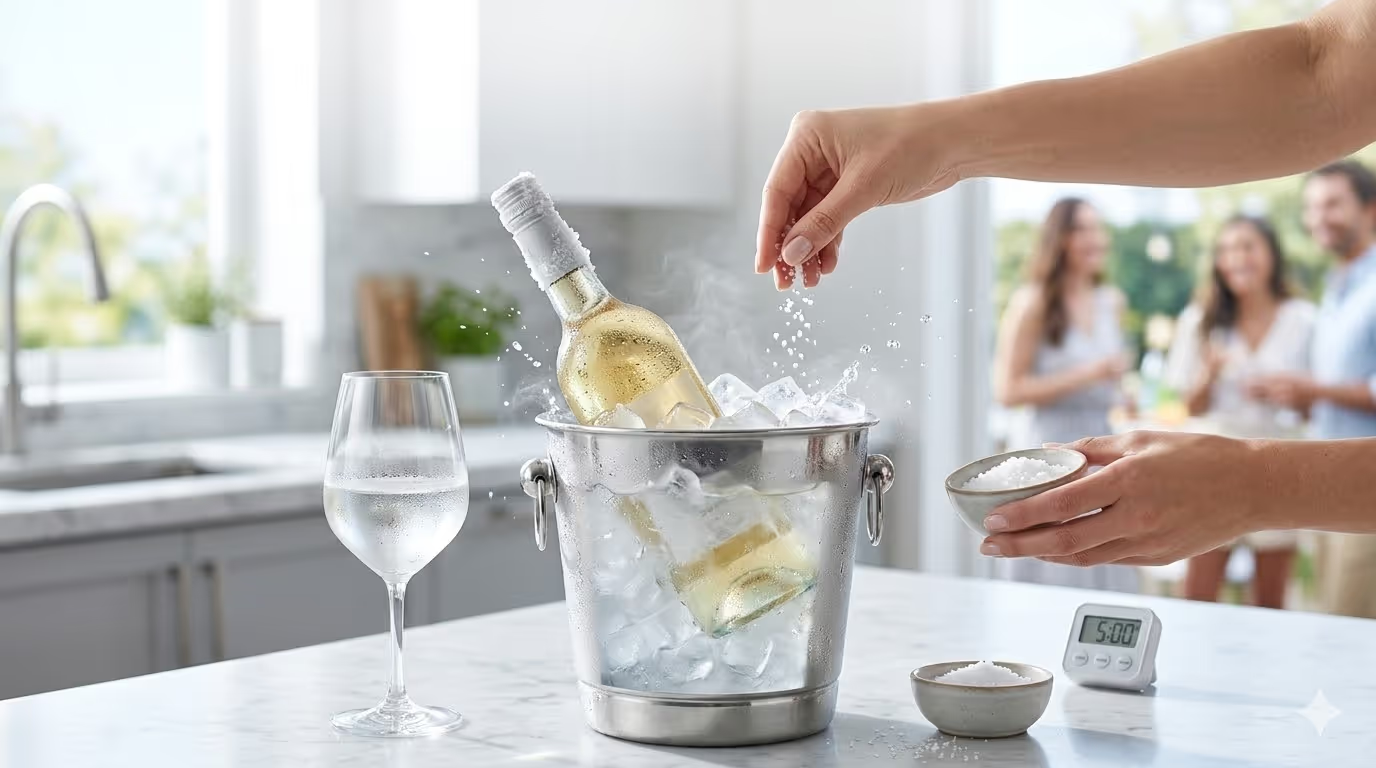

The fastest way to chill wine is a salted ice bath with the bottle spun steadily in place, which takes a room temperature bottle down to 45°F in about five minutes. Serious Eats measured that method against eight others and nothing else came close, with the freezer needing a full hour and the refrigerator never getting there at all. Salt is what makes the difference, because it lets the water around the bottle fall below the 32°F floor that plain ice water can never pass. If the wine is already in your glass, frozen grapes or steel chilling stones cool it in a couple of minutes without watering anything down.
This is the situation almost everyone has been in. Guests are arriving, dinner is nearly ready, and the bottle you meant to put in the fridge two hours ago is sitting on the counter at room temperature. You don't need a wine fridge or any special gear to fix that, and you definitely don't need to drop ice cubes into a glass and accept watery wine. You just need the right kind of cold applied the right way, and it helps to know which of the popular tricks actually hold up when somebody puts a thermometer on them.
What's the fastest way to chill a bottle of wine?
A salted ice bath, with the bottle spun steadily in place, chills a bottle faster than anything else you can do in a home kitchen. Serious Eats tested nine methods side by side, starting each bottle at 71°F and timing how long it took to reach a serving temperature of 45°F, and the salted, constantly spun bath got there in five minutes flat.
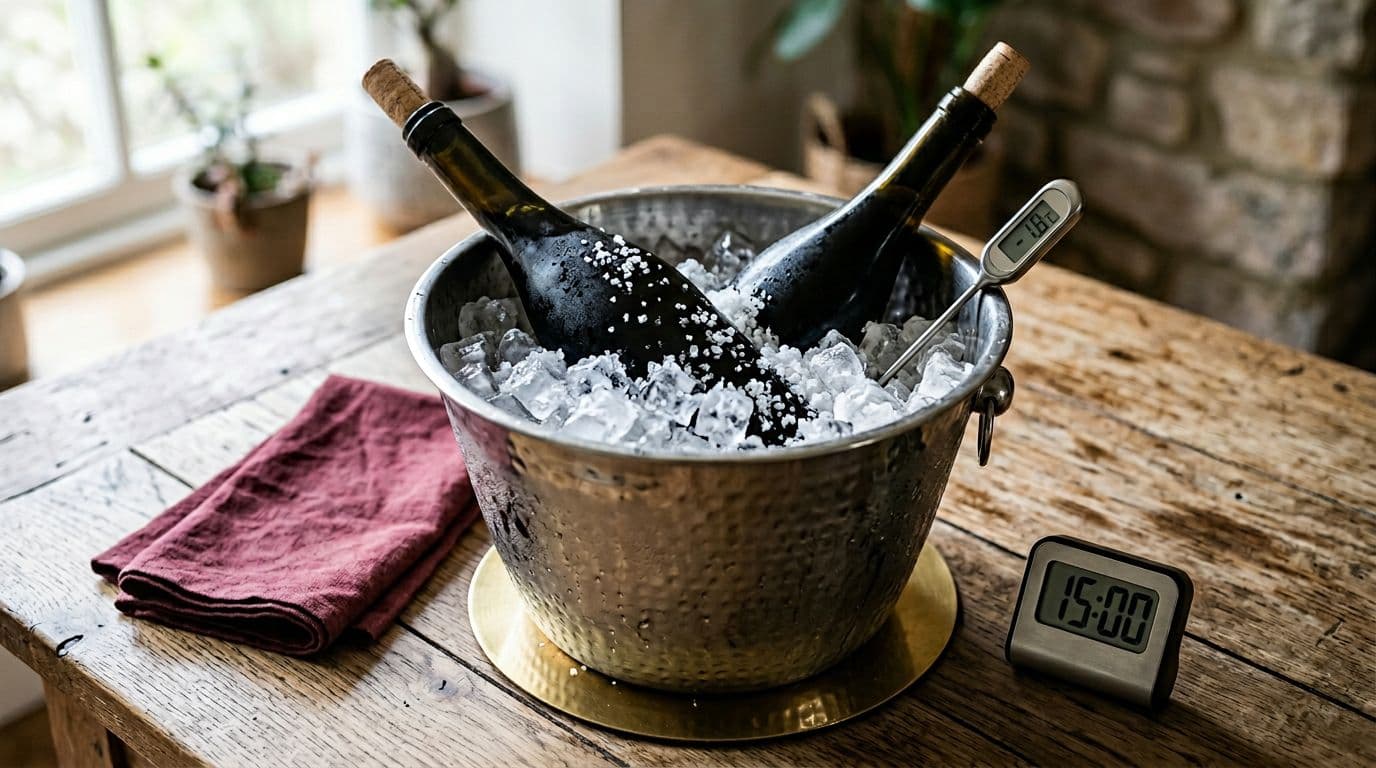
Their setup was four pounds of ice, two cups of salt, and enough water to come up to the neck of the bottle. The water level matters more than people expect, because water is what actually carries heat away from the glass, and a bucket of dry ice cubes only touches the bottle at a handful of points. Once the bottle is in, hold it by the neck and twist it so it spins in place, and every couple of minutes lift it slightly and use it to stir the whole bath before setting it back down.
The temperature drop is quicker than most people believe. Serious Eats recorded a fall of about 10°F in the first minute alone, then close to another ten degrees every minute after that, and a bottle left spinning for eight minutes rather than five came out at 36°F. Jerry James Stone ran a separate test of ten methods in a hot Sacramento August, starting from 80°F, and found the same winner, with fifteen minutes of spinning in salted water bringing a bottle to 51°F.
Here's how the measured times compared in the Serious Eats test, every bottle starting at 71°F and finishing at 45°F:
- Salted ice bath, spun constantly: 5 minutes
- Salted ice bath, left alone: 11 minutes
- Plain ice bath, left alone: 15 minutes
- Freezer, bottle lying on its side: 60 minutes
- Freezer, bottle standing upright: 85 minutes
The gap between the top and the bottom of that list is the whole point. Spinning a bottle in salted water is not a marginal improvement over the freezer, it's seventeen times faster, and it costs you nothing but a bag of ice and the salt already in your cupboard.
Why does salt make an ice bath so much colder?
Salt lowers the freezing point of water, so a salted bath can sit well below the 32°F floor that plain ice water can never pass. This is the same effect behind scattering salt on icy roads in winter, and it means the liquid surrounding your bottle is genuinely colder than the ice cubes floating in it.
Spinning matters for a different reason. As heat moves out of the glass it warms the thin layer of water sitting right against the bottle, and that warm layer then insulates the wine from the rest of the bath. Turning the bottle sweeps that layer away and replaces it with cold water from the edges of the bucket, which is why the same salted bath took eleven minutes when the bottle was left undisturbed and five when it was kept moving.
The reason the refrigerator loses so badly comes down to the same physics. Water pulls heat out of glass far faster than cold air does, so a fridge at 38°F will lose to an ice bath at 32°F every single time. If your bath isn't working after ten minutes, the usual culprit is that you packed the bucket with ice and forgot the water.
How long does the freezer really take, and does the wet towel trick work?
The freezer takes about an hour with the bottle lying on its side and closer to an hour and a half standing upright, and the popular trick of wrapping the bottle in a wet towel first makes it slower rather than faster. Both tests checked that towel method specifically, and both found the same thing.
Serious Eats put a bottle wrapped in a damp cloth upright in the freezer and gave up recording after 85 minutes, at which point the wine was still sitting at 49°F, warmer than the bare upright bottle beside it. Jerry James Stone got 19 degrees of cooling in thirty minutes from the wet towel against 23 degrees from the plain freezer, and described being told for years that the towel was the best method. A wet towel behaves like a blanket, holding the bottle's own warmth against the glass instead of letting the freezer pull it out.
Laying the bottle down does help, and that part is real. The extra surface area touching the cold shelf cut the freezer time from 85 minutes upright to 60 minutes on its side in the Serious Eats run. Pouring the wine into a gallon zip-top bag was quicker still at 50 minutes, though you're then faced with serving your guests out of a plastic bag.
Whatever you do, set a timer before the bottle goes in. Wine left in a freezer will eventually freeze, and when it does it expands, pushes the cork out and can crack the bottle. The refrigerator is even less use in a hurry, since Serious Eats found a bottle standing in the fridge was still at 59°F after 85 minutes.
How do you cool a glass of wine you've already poured?
Frozen grapes are the simplest answer, and they cool a pour in a few minutes without diluting it. Freeze a handful of clean grapes in a bag ahead of time, then drop three to five into the glass and give it a gentle swirl.
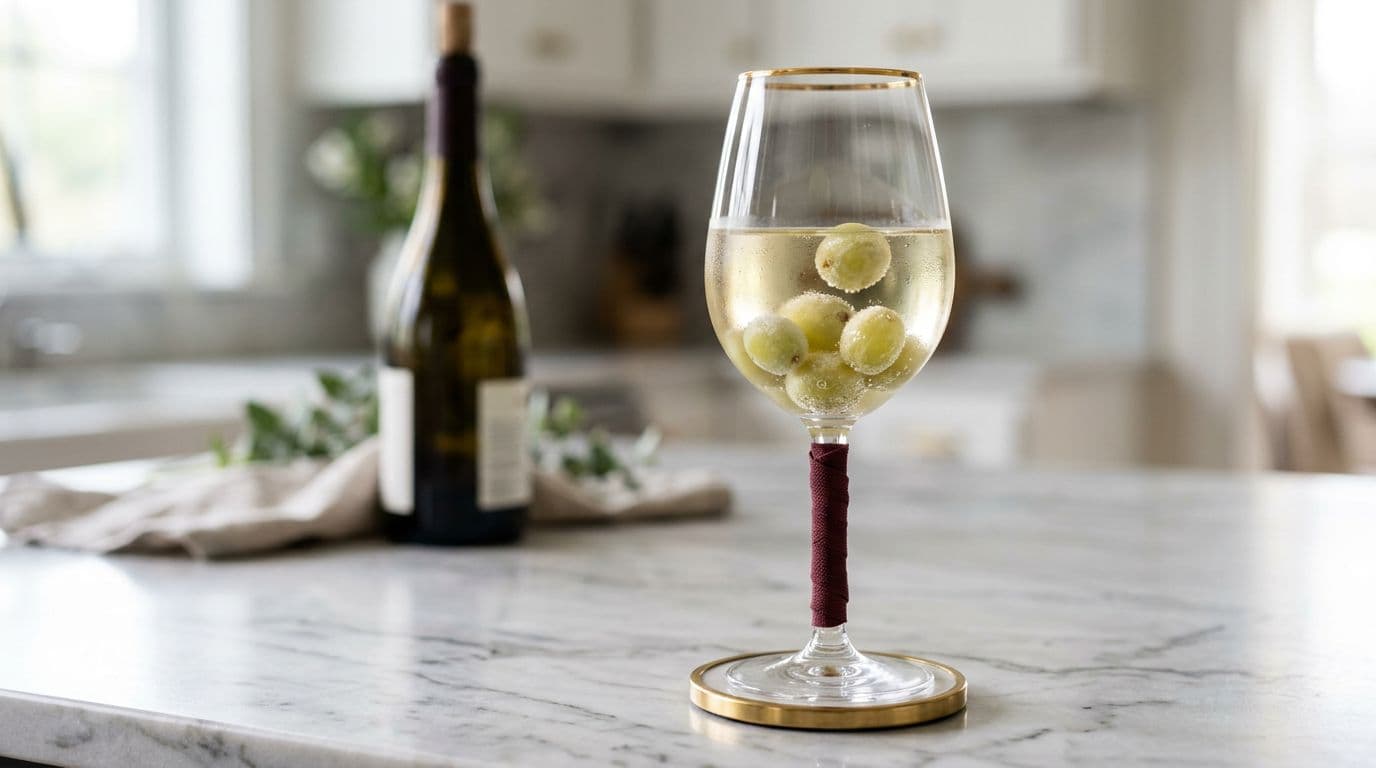
They work best in white wine and rosé, and they're fine in sparkling wine as long as you use fewer of them, since anything dropped into a glass knocks some of the bubbles out. The grapes soften slightly as they warm but they don't fall apart, and you can eat them afterwards or leave them.
Ice cubes are the thing to avoid, and not only because watery wine tastes weak. Dilution changes the balance rather than just lowering the volume, and the first thing it flattens is the acidity that makes a cold white taste refreshing in the first place. You end up with wine that is both colder and duller, which is the opposite of what you wanted.
Do stainless steel chilling stones actually work?
Steel chilling stones work well for a glass and are close to useless for a bottle, so it's worth being clear about which job you're asking them to do. Keep them in the freezer, use two to four per glass, and they'll take the edge off a warm pour in a few minutes without adding any flavor of their own.
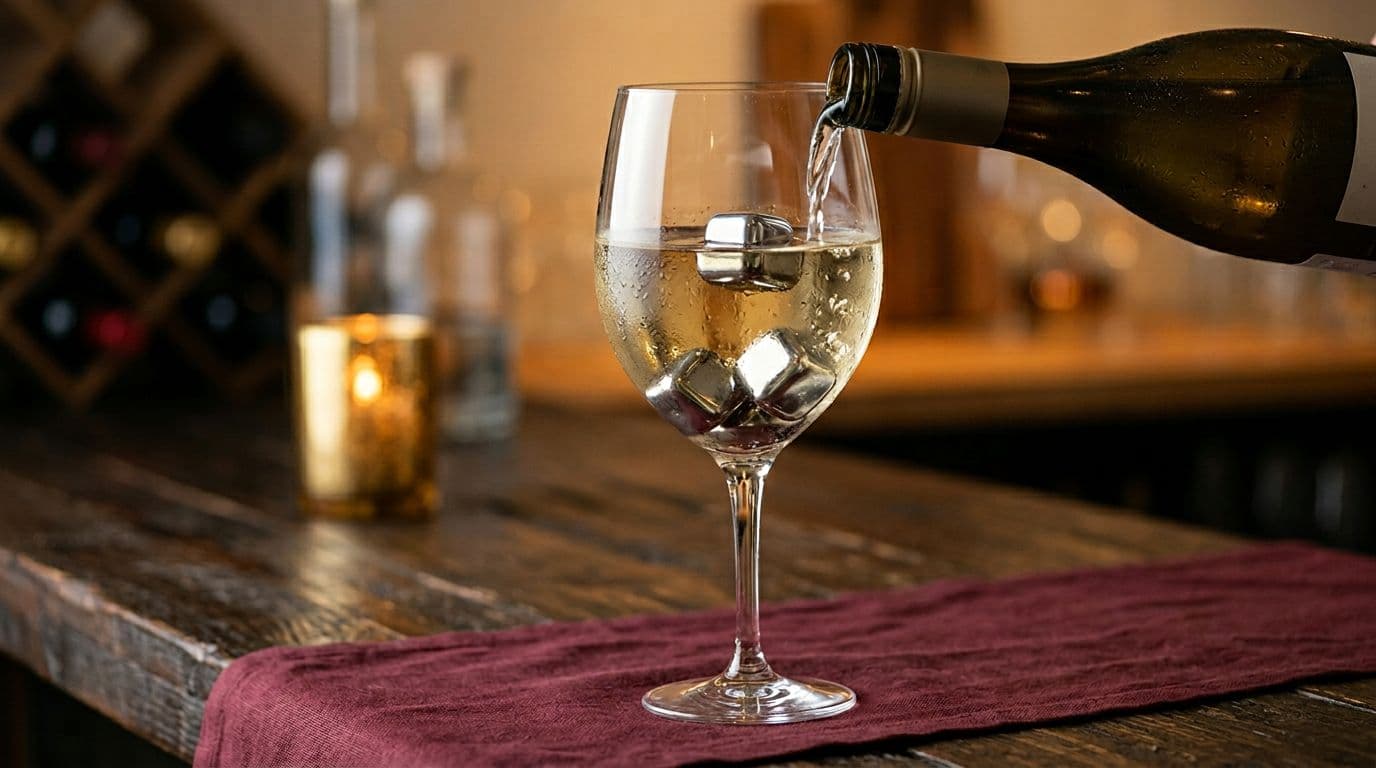
They're the better choice when you've opened something you care about, because there's no fruit sitting in the glass and nothing to alter the aroma. They're also reusable indefinitely, which frozen grapes are not.
The honest limitation is that a steel stone only carries the cold it stored in the freezer, and once that's gone it's just a piece of metal. Ice does something extra, absorbing a large amount of heat as it actually melts, and that phase change is where most of an ice bath's cooling power comes from. This is why stones will never rescue a warm bottle no matter how many you use, and why they belong in the glass rather than the bucket.
What temperature should each style of wine actually be?
Serving temperature varies more by style than most people assume, and the useful ranges run from around 40°F for sparkling wine up to about 65°F for a full-bodied red. Jerry James Stone's tested guide lays out ranges that match what most producers suggest, and they're a good set of guard rails to work from.
Sparkling wines, rosés and light dry whites sit happily between 40 and 50°F, and high-acid whites belong in that band too. If you're pouring something fizzy and want to know what you're working with, our comparison of Prosecco, Cava and Champagne walks through how they differ. Bigger, oakier whites do better a little warmer, somewhere between 48 and 60°F, because deep cold flattens the texture that makes them worth drinking. Lighter, fruitier reds want around 55 to 60°F, and full-bodied reds show best between 60 and 65°F.
Two practical consequences fall out of those numbers. A home refrigerator runs at roughly 37 to 40°F, which means a white pulled straight from it is usually colder than it should be, and ten minutes on the counter will do more for it than anything else. The other is that serving red at room temperature is advice from an era when rooms were considerably cooler, so a modern living room at 72°F is above the right range for every red on the list. Twenty minutes in the fridge is genuinely good for a lighter red, and if you want to go further into that, our comparison of Pinot Noir and Gamay for chilled reds covers which ones take a chill best. There's more detail on the full range in our guide to wine serving temperatures.
How do you know when to stop chilling?
Stop a few degrees before your target, because a bottle keeps shedding heat for a while after it leaves the bath and a poured glass sits colder than the bottle it came from. Overshooting is the most common mistake once people learn how to chill wine fast, and it's harder to walk back than it sounds.
Without a thermometer there are two reliable signals. The bottle should feel properly cold against your palm without stinging, and condensation should bead across the glass within a minute of pulling it out of the bath. If your hand aches after a few seconds of holding it, you've gone too far.
Cold suppresses aroma, which is why over-chilling costs you so much. A white served near freezing smells of almost nothing, and what's left is texture and acidity with none of the fruit that made you buy the bottle. The fix is easy enough when you catch it, since cupping the bowl of the glass in both hands for two or three minutes will bring a pour back into range faster than leaving it on the table.
If you don't finish the bottle, getting it back into the fridge quickly matters more than how you chilled it in the first place, and our notes on storing open wine so it still tastes good tomorrow cover what actually helps.
Frequently asked questions
How long does it take to chill wine fast in an ice bath?
About five minutes if you salt the water and keep the bottle spinning, and around eleven minutes if you salt it but leave the bottle alone. A plain ice bath with no salt and no spinning took fifteen minutes in the Serious Eats test, which is still far quicker than any freezer method.
Does putting wine in the freezer ruin it?
Not if you set a timer and take it out within about an hour. Wine that's genuinely left to freeze expands as it turns to ice, which pushes the cork out and can crack the bottle, and the wine itself loses aroma once it thaws.
Can you chill wine fast without any ice?
Not really, at least not at any useful speed, because the melting of ice is where most of the cooling power comes from. The freezer is the realistic fallback, and laying the bottle on its side rather than standing it up will save you about twenty five minutes.
Should you chill red wine at all?
Lighter reds benefit from it, and most reds in a warm house are being served too warm rather than too cold. Aim for 55 to 60°F for a light fruity red and 60 to 65°F for something full-bodied, which usually means twenty minutes in the fridge rather than none.
Do frozen grapes change how the wine tastes?
They cool the glass without diluting it, which is the whole reason to use them, and they don't leak fruit flavor into the wine over the few minutes they're in there. Use fewer in sparkling wine, since anything dropped into the glass costs you some of the bubbles.
Is it ever fine to put ice cubes in wine?
It's fine if you genuinely don't mind the taste, and plenty of people drink rosé on ice in summer quite happily. Just know that you're trading away acidity and aroma rather than only strength, so it's worth reaching for frozen grapes or steel stones when the bottle is one you care about.
Getting the temperature right without the panic
Chilling wine quickly doesn't call for gear or tricks, and the two methods worth remembering are a salted ice bath for a whole bottle and frozen grapes or steel stones for a glass you've already poured. Skip the wet towel, since two separate tests found it slows things down, and set a timer if the bottle goes anywhere near the freezer. Stop a little early rather than a little late, because a wine that's too cold tastes of very little and takes longer to recover than you'd like.
Most of the stress around a warm bottle isn't really about temperature anyway, it's about wanting the evening to go well. Get the cold right and the rest of it gets easier, and if you're still deciding what to open, Sommy can help you pick something you'll actually enjoy.
