
The best wine for prime rib is a bold, structured red with firm tannins, and Cabernet Sauvignon is the classic answer. The meat is rich and heavily marbled, so it needs a wine with enough tannin and acidity to cut through the fat and reset your palate between bites. Cabernet does that better than almost anything, with a Bordeaux blend, Syrah, or Malbec close behind. If your table prefers something softer, a plush Merlot or an elegant Pinot Noir also works beautifully.
That is the confident, can't-miss version. Below we explain the one bit of science that makes it click, then walk through seven reds worth pouring and how to match the bottle to your seasoning, sauce, and how you like the roast cooked.

The prime rib cheat sheet
Short on time and standing in the aisle? Here is the whole guide in one table. Any of these will make the meal better; pick the row that matches your mood and budget.
| Wine | Style | Best for |
|---|---|---|
| Cabernet Sauvignon | Full, firm tannins, dark fruit | The classic. A well-marbled roast with a rich crust. |
| Bordeaux blend | Full, savory, refined | A more elegant, herb-tinged take on the Cabernet idea. |
| Syrah / Shiraz | Full, peppery, meaty | Peppercorn crusts and anyone who loves savory reds. |
| Malbec | Full, plush, great value | A crowd-pleasing bottle under $20. |
| Barolo (Nebbiolo) | Full, high tannin and acidity | A special occasion and the wine lover at the table. |
| Rioja Gran Reserva | Medium-full, savory, aged | Softer tannins with leather and dried-herb notes. |
| Merlot or Pinot Noir | Softer / lighter | Guests who want something smoother or more delicate. |
Why bold, tannic reds are the classic match
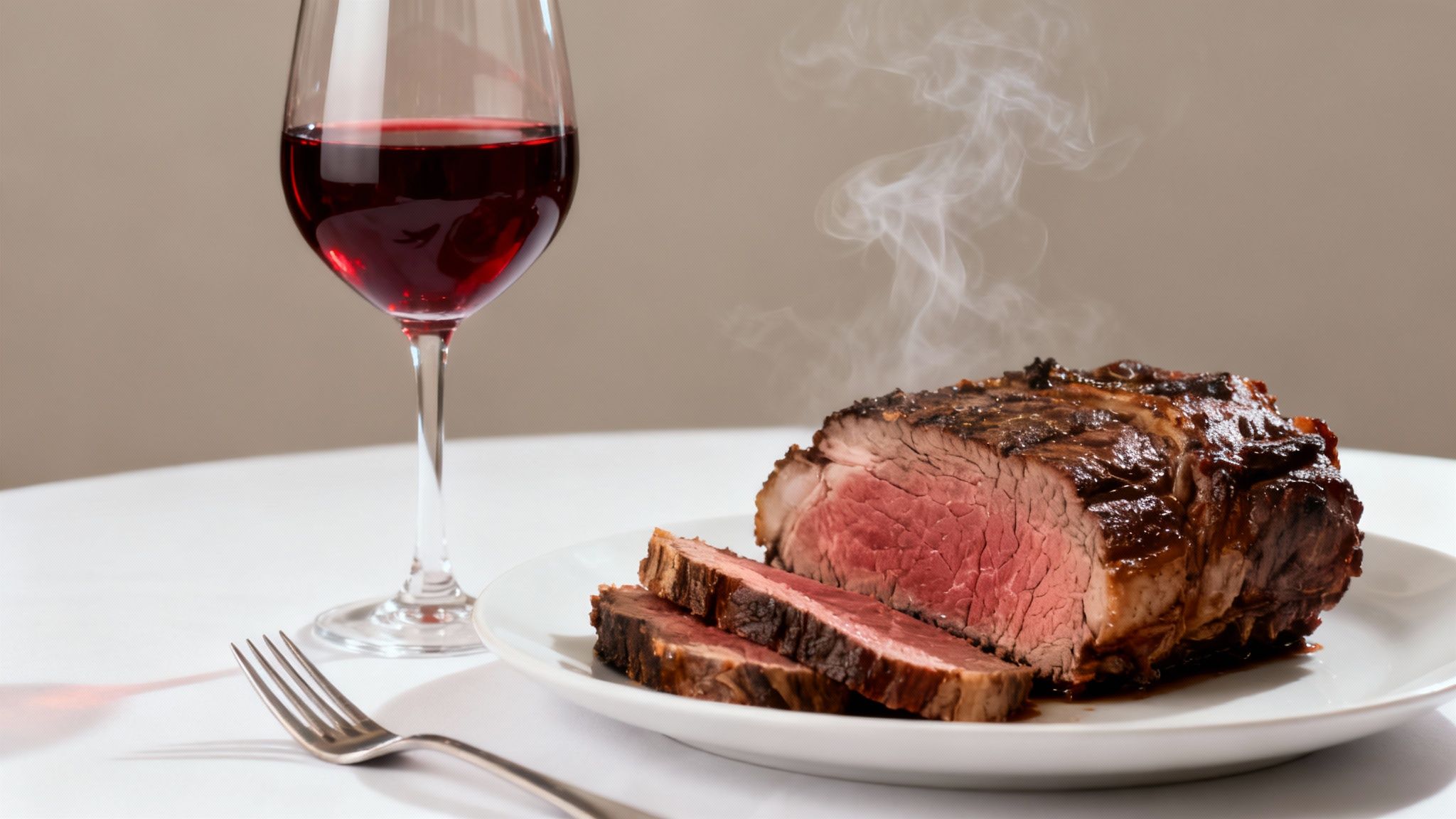
The whole pairing rests on one reaction. Prime rib is one of the fattiest, most marbled cuts on the cow, so each bite coats your mouth with rich, beefy flavor. Tannin, the compound that gives red wine its slightly dry, grippy feel, binds to that fat and protein and scrubs your palate clean, readying you for the next bite. Without it, a few bites in and the meal starts to feel heavy. That reset is exactly why a structured red is the best wine for prime rib. Here is a fuller explainer on what tannin is in wine if you want it.
Acidity does quiet work alongside the tannin. A wine with fresh acidity keeps the pairing feeling lively instead of leaden, which is why a jammy, low-acid red can taste flabby next to the roast while a structured one stays refreshing to the last slice. Tannin plus acidity is the two-part engine behind every great beef pairing.
There is a second, less obvious point that helps you narrow the field. Prime rib is roasted, not grilled, so it has all that fat but very little char. That means you do not need a heavily oaked, smoky wine to match a smoky crust. You want tannin and structure with clean fruit, which is why a savory, medium-to-full red beats a big, oaky bruiser here. Match power with power on body, keep the oak in check, and the pairing sings. One more sizing note: skip the very lightest, most delicate reds, which get swallowed by the beef, but also skip the most massive, high-alcohol bottlings, which can bury it. A medium-full red sits in the sweet spot.
The best wines for prime rib
You do not need a cellar's worth of options, just a reliable shortlist. Here are seven reds that all deliver, from the safe classic to a couple worth trading up for.
Cabernet Sauvignon: the classic
When in doubt, grab a Cab. It is the go-to steak-and-roast red for good reason: full body, firm tannins, and deep black cherry and cassis fruit with savory cedar and tobacco edges. The tannins cut the richness while the dark fruit stands shoulder to shoulder with the beef. Napa and Washington State bottles are reliably plush; a cooler-climate Cab from Bordeaux or a leaner California vintage keeps more savory grip. Expect $20 to $40 for a roast-worthy bottle, though good Cabernet from Chile or Washington starts lower. If you buy only one wine for the night, this is the safe bet.
Bordeaux blend: the refined version
A red Bordeaux (or a New World "Meritage" blend of Cabernet, Merlot, and Cabernet Franc) is the elegant cousin of a straight Cab. The Merlot in the blend rounds out the tannins while Cabernet Franc adds a savory, herbal lift that flatters a garlic-and-rosemary crust. It feels a touch more classic and restrained than a bold California Cabernet.
Syrah or Shiraz: the savory, peppery pick
Syrah is the wine to reach for if your roast wears a cracked-peppercorn crust. Its signature black pepper, cured-meat, and dark-fruit notes echo a seasoned prime rib almost perfectly. A Northern Rhône Syrah (Crozes-Hermitage, Saint-Joseph) leans savory and structured; an Australian Shiraz is riper and more generous, with sweeter dark fruit and a touch more oak. Either has the tannin to handle the fat, and both bridge naturally into a Grenache-Syrah blend like a Gigondas or Châteauneuf-du-Pape if you want a richer, spicier Rhône option.
Malbec: the value crowd-pleaser
For a bold bottle that rarely disappoints and often costs under $20, Argentine Malbec is the smart buy. It is full-bodied and plush, with juicy blackberry and plum fruit and softer tannins than Cabernet, so it pleases a crowd without any harsh grip. Mendoza bottles are the reliable standard; for something more structured and savory, a French Malbec from Cahors leans darker and firmer. A great everyday choice for a big family roast.
Barolo and other Nebbiolo: the special-occasion red
If prime rib is the centerpiece of a real celebration, Barolo earns its place. Made from Nebbiolo in Piedmont, it pairs high tannin and high acidity, the two things that slice fat best, with haunting notes of rose, tar, and dried cherry. It is a wine lover's pick and asks for a bit of air first. Barbaresco, its slightly gentler neighbor, does the same job.
Rioja Gran Reserva: savory and aged
Spanish Rioja, especially a Reserva or Gran Reserva, brings age-softened tannins and savory notes of leather, dried herbs, and vanilla. It has enough structure for the beef but a mellow, layered character that suits a slow-cooked roast and a long dinner. A lovely change of pace from the usual Cabernet.
Merlot and Pinot Noir: the softer options
Not everyone wants a tannic powerhouse. Merlot brings the same dark fruit as Cabernet with a plusher, rounder texture and gentler tannins, making it the easy peacemaker for a mixed table. Pinot Noir goes the other way: lighter and higher in acidity, it slices the fat with brightness rather than grip and shines with a simply seasoned, medium-rare cut where the pure beef flavor leads. For more on that grape, see the best wine for a steak dinner.
Match the wine to how you cook it
The pairing is not only about the cut; it is about the whole plate. Your seasoning, sauce, and doneness all nudge the choice.

- Simple salt and pepper: let the beef lead with a classic Cabernet Sauvignon or a Bordeaux blend. Their dark fruit and savory notes won't get lost against the pure, roasted flavor.
- Garlic and herb crust: rosemary, thyme, and garlic love the herbal lift of a Cabernet Franc, a Bordeaux blend, or a Northern Rhône Syrah.
- Peppercorn crust: Syrah, every time. Its natural black-pepper note is a direct echo.
- Horseradish or creamy sauce: reach for acidity. A brighter Pinot Noir or a Rioja cuts the cream and keeps the palate fresh.
Doneness matters too. A rare to medium-rare roast is softer and milder, which flatters a higher-acid, more delicate wine like Pinot Noir; the tannins of a huge young Cabernet can feel harsh against very rare meat. A medium to well-done cut is firmer and more intensely roasted, so it happily stands up to a bigger, bolder Cabernet or Syrah. Earthy sides (roasted mushrooms, root vegetables) tilt the whole plate toward Pinot Noir's savory notes.
How much wine to buy for the dinner
Prime rib is a party centerpiece, so the real question is often quantity, not just which label. A standard 750ml bottle pours about five to six glasses. The common rule is roughly half a bottle per adult across a full dinner, so plan on one bottle for every two guests, then add one or two spares. A table of eight, then, wants about five bottles.
A simple, budget-friendly move for a crowd: buy most of your bottles as one reliable, versatile red (a Malbec or an approachable Cabernet), then splurge on a single special bottle (a Barolo or a nicer Bordeaux) to open first while palates are fresh. Everyone gets a taste of the good stuff, and you are not pouring a $60 wine over the last, saltiest bites of the night.
Serving it right
You picked a great bottle. A few small moves before you pour make it taste even better.
- Temperature: most of us serve red too warm. Aim for 60 to 65°F, slightly cooler than a modern room. Fifteen to twenty minutes in the fridge does it. Too warm and the alcohol turns sharp and the fruit muddies.
- Let it breathe: a young, tannic red (Cabernet, Barolo, Syrah) softens and opens with air. Pour it into glasses about 30 minutes before dinner, or use a decanter. No decanter, no problem; the glass does the work.
- Glassware: a larger bowl helps a big aromatic red show its best, but any clean wine glass is fine. The company matters more than the crystal.
If you would rather skip the decision entirely, that is what Sommy is for: scan the restaurant list or a store shelf, and it matches a bottle to both your prime rib and your own Taste Profile in seconds, learning what you like each time you rate a wine.
Frequently asked questions
What is the best wine for prime rib?
A bold, structured red with firm tannins, led by Cabernet Sauvignon. Its tannin and dark fruit cut the fat and match the beef's savory depth. Bordeaux blends, Syrah, and Malbec are excellent alternatives.
Can you pair white wine with prime rib?
Yes, though red is the classic. A rich, oaked Chardonnay has the body to stand up to the meat, and its creamy texture plays off the richness. It won't cut the fat with tannin the way a red does, but for a committed white drinker it works.
What is a good cheap wine for prime rib?
Argentine Malbec is the best value, usually plush and full-bodied for under $20. A well-made Chilean Cabernet Sauvignon or a Côtes du Rhône Syrah blend also delivers far above its price with this dish.
Cabernet Sauvignon or Merlot for prime rib?
Cabernet if you want the bold, tannic classic that cuts the fat most cleanly. Merlot if your table prefers something softer and rounder. Serving both covers every guest, and either is a genuinely good match.
Does an expensive wine make a better pairing?
No. Price and a great pairing are not the same thing. What makes prime rib sing is the wine's structure, its balance of fruit, acidity, tannin, and body, not the number on the label. A well-made $18 Malbec or Chilean Cabernet can outshine a pricey bottle that is too soft or too oaky for the dish. Trust the style, not the receipt.
What wine goes with a Christmas or holiday prime rib?
The holiday classics are Cabernet Sauvignon, a red Bordeaux, or a Syrah, all of which suit a festive roast and a long table. To start the meal, a glass of Champagne or dry sparkling wine is a lovely, palate-priming opener before you move to the big red with the beef.
What wine should you avoid with prime rib?
Skip light, low-tannin, sweet, or delicate wines; they vanish behind the rich meat. Very oaky, high-alcohol reds can also overwhelm the roast, since there is no grill char to match. Aim for structure and clean fruit instead.