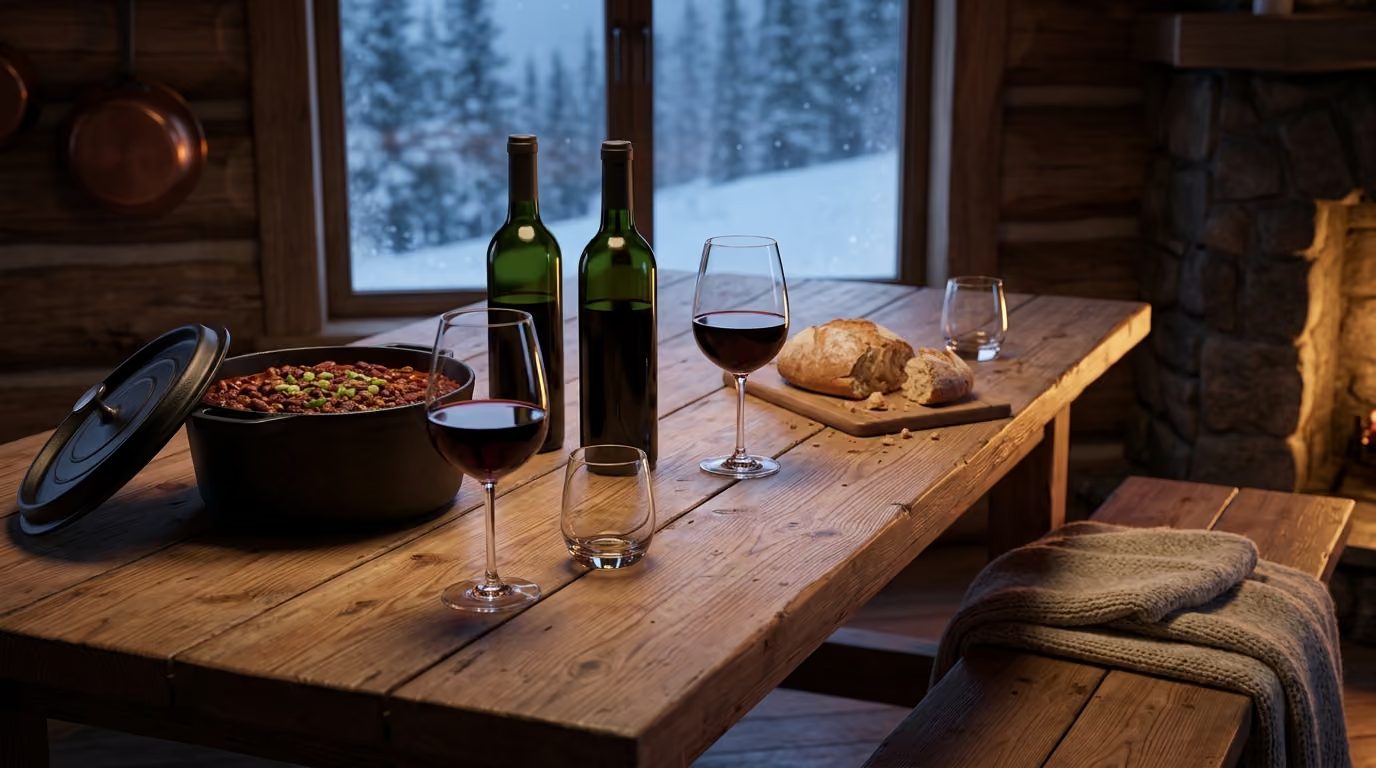
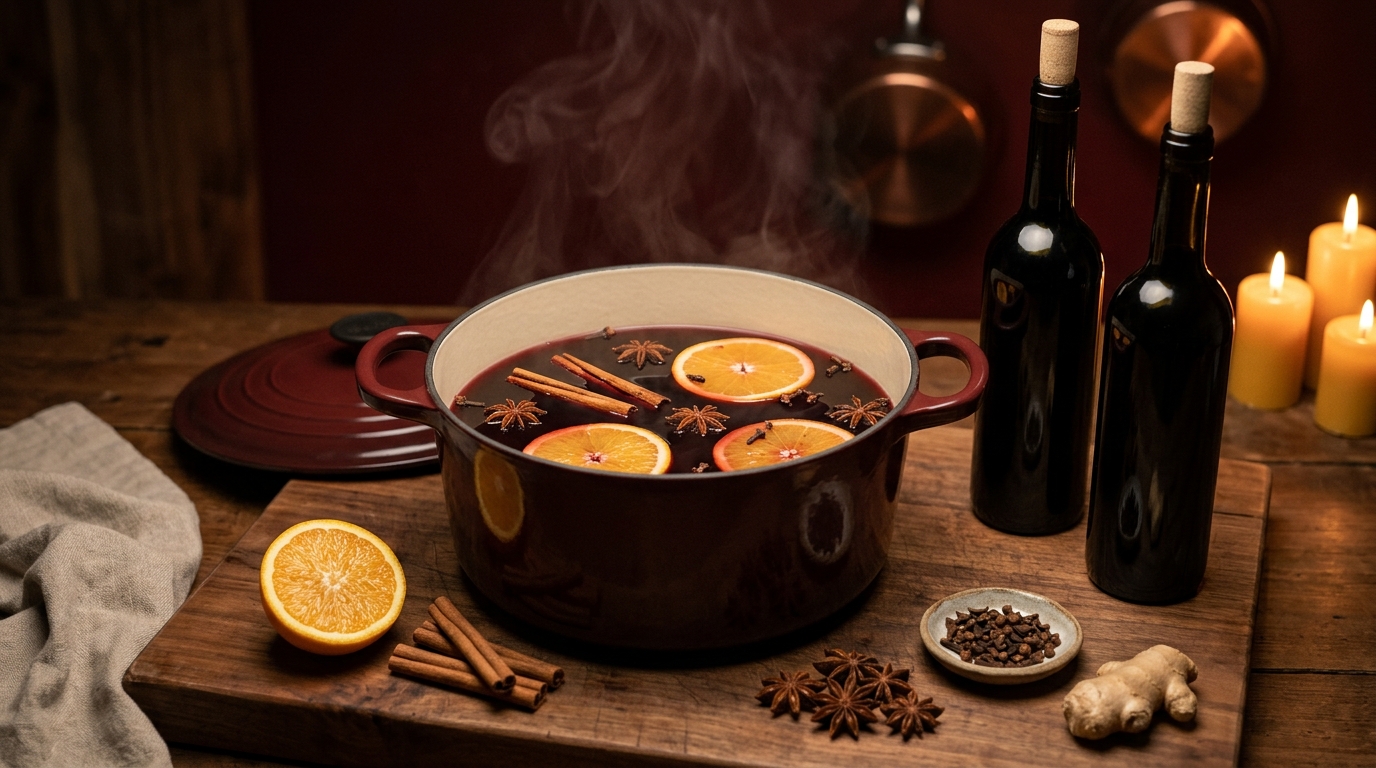

The best wine for mulled wine is a cheap, fruity, unoaked red with soft tannins, and our first pick is a young Spanish Garnacha like Borsao, which averages about $11 a bottle (Wine-Searcher). A Côtes du Rhône, a Chilean Merlot or a Beaujolais works just as well. Skip Cabernet Sauvignon, oaky Zinfandel and anything you'd be sad to lose, because heat makes tannin and oak taste bitter and the spices cover up whatever made an expensive bottle special.
Most pages stop there, and the ones ranking for this question also disagree with themselves. One recommends Cabernet Sauvignon in its list and then tells you to avoid tannic wines a few paragraphs later. Another warns that oak and tannin turn bitter when heated, then lists a 15% Zinfandel it describes as having "a strong tannic texture". So we'll explain what heat actually does to a wine, name the bottles that hold up, show how much alcohol survives the pot, and work out how many bottles a party really needs.
What is the best wine for mulled wine?
The best wine for mulled wine is Garnacha, the Spanish name for Grenache, because it's naturally low in tannin, full of ripe red fruit and cheap enough to pour into a saucepan without guilt. Bodegas Borsao's young Garnacha, sold as Borsao Garnacha or Borsao Selección depending on the market, averages $11 per 750 mL bottle before tax on Wine-Searcher.
If you can't find it, four other styles do the same job. A Côtes du Rhône is the classic French answer: Guigal's version is a blend of 50% Syrah, 40% Grenache and 10% Mourvèdre, aged in foudres (big old casks that add little wood flavor), and the producer itself describes its tannins as "rounded and smooth" (Guigal). Chilean Merlot is the pick of Majestic, the British wine chain, whose buyers recommend "richly fruity, medium-bodied red wines with little oak ageing" and name Chilean Merlot as the perfect example (Majestic). Beaujolais, made from Gamay, is about as soft as red wine gets. And for a crowd, a 3-liter box of an easygoing red blend does the work of four bottles.
What they share matters more than the names: each is fruity first, none leans on new oak, and none grips your gums like a young Cabernet. If you've read our page on low-tannin red wine, it's the same list, and that's not a coincidence.
Why does heat ruin some wines and not others?
Heat ruins tannic and oaky wines because warming a wine makes its bitterness more obvious, and both tannin and toasted oak bring bitterness. Wine Enthusiast puts it plainly in its mulled wine FAQ: "Wines with a lot of oak aging or tannins will turn bitter once heated", and it singles out Napa Cabernet, whose tannins and oak flavors "will be magnified when heated, yielding a bitter mulled wine" (Wine Enthusiast).

You can taste a mild version of this whenever a red is served too warm, which is why our guide to wine serving temperatures suggests serving most reds a little below room temperature. Mulling pushes that much further, then adds cloves and cinnamon bark, which bring their own woody bitterness, so a wine that was already grippy ends up tasting like stewed tea.
Fruit works the other way, because ripe red fruit flavors get along with orange peel, cinnamon and a little sugar, so a wine that's mostly fruit turns into something that tastes like a spiced berry compote. That's why the cheapest fruity bottle often beats a more serious one, and why the pricey bottle is actually worse here, not just wasted. Majestic makes a related point that's easy to forget: mulled wine is "95% wine, so it should be something you're happy to drink" (Majestic). Cheap is fine, but sour, stale or corked isn't, because spices hide a lot of things and none of those.
Which red wine should you use for mulled wine?
Use a red you'd describe as juicy, soft and fruity, and pick the style by what you can find and what you're making it for. This table sorts the reliable choices by what each one brings to the pot.
| Style | Why it works | Bottle to look for | Watch out for |
|---|---|---|---|
| Garnacha (Grenache) | Low tannin, ripe strawberry and raspberry fruit | Borsao Garnacha (Selección) | Bottles whose back label mentions barrel aging |
| Côtes du Rhône | Grenache-led blend, smooth tannins, peppery spice | Guigal Côtes du Rhône | Pricier single-village Rhône wines |
| Chilean Merlot | Plush, plummy and soft | Any unoaked, everyday Chilean Merlot | "Reserva" labels that mention oak |
| Beaujolais or Beaujolais Nouveau | The softest red on the shelf, bright and fresh | Any Beaujolais-Villages | Cru Beaujolais, which costs more for no gain here |
| Boxed red blend | Four bottles in one box, easy for a crowd | A 3-liter fruity red blend | Blends described as "bold" or barrel-aged |
Garnacha is our first choice because it gets the balance right with the least effort. It tastes of ripe red berries with a little pepper, which is close to what you're trying to build with the spices anyway, and our page on what Grenache tastes like explains why it's so easy to drink. The one thing to check is the back label, and if it talks about months in barrel or toasted oak, pick a different bottle, because Borsao's basic young Garnacha is the version you want.
Merlot is the safe supermarket answer. Its plum and cherry fruit and soft texture are the reasons people like it in the first place, as we cover in what Merlot tastes like. An everyday Chilean bottle will usually be fruitier and less oaky than a pricier California one.
Beaujolais is the seasonal pick, because the new vintage of Beaujolais Nouveau arrives every year on the third Thursday of November (Georges Duboeuf), which falls on November 19 this year. It's made with a method that keeps tannin very low, explained in our page on carbonic maceration, so it's one of the gentlest reds you can heat. Its bright acidity also keeps a sweetened batch from tasting flat.
Tempranillo belongs here too, with a caveat. A young, fresh Tempranillo works nicely, but long-aged bottlings carry much more oak flavor, and oak is exactly what heat exaggerates. Our Tempranillo page explains how the young and aged styles differ, so you can tell them apart on the shelf.
Which wines should you keep out of the pot?
Keep Cabernet Sauvignon, oaky Zinfandel, barrel-aged blends and expensive Pinot Noir out of the pot. Each one fails for a different reason, and only the first is obvious.
Cabernet Sauvignon is the classic mistake. Its firm tannins are the whole point of the grape, and heat turns them harsh. Big, ripe Zinfandel is the sneakier one, because it's so fruity that it looks like a great fit, but many popular bottles are built around oak. Bota Box, for example, describes its boxed Old Vine Zinfandel as "bold and fruit-forward with toasted oak and black pepper" on its own wine list (Bota Box), and that toasted oak is the part that turns bitter. The same list includes a Bourbon Barrel Cabernet Sauvignon and a Rum Barrel Red Wine Blend, and anything aged in a spirit barrel already tastes of the wood before you've added a single clove. Our page on Zinfandel has more on how ripe and strong the grape can get.
Pinot Noir fails for a different reason, since it's low in tannin, so it won't turn bitter, but you pay for Pinot Noir's delicacy, its perfume and its silky texture, and a pot of cinnamon and orange flattens all of that. A Pinot that costs twice as much makes a mulled wine that tastes like the Garnacha, and the Garnacha is a better drink on its own while it's still in the bottle.
The last thing to avoid is anything sold as cooking wine. Holland House Red Cooking Wine, a common supermarket brand, lists water, neutral spirits and salt among its ingredients (Holland House), which is why we steer people away from these bottles in our page on the best wine for cooking, and salt is the one flavor no amount of sugar can hide in a drink.
Should you use a sweet wine or add sugar?
Start with a dry red and add sugar yourself, because that way you control the sweetness instead of guessing at it. BBC Good Food's classic recipe uses 4 tablespoons of caster sugar for one 750 mL bottle and serves six (BBC Good Food), and Majestic suggests "a few tablespoons of sugar, to taste" (Majestic). Add half, taste once the spices have had time to work, and then add the rest only if it needs it.
The reason to start dry is that sweetness creeps up on you. Orange slices, a splash of brandy or Port, and the spices themselves all make the drink taste rounder as it warms, so a batch that tasted right in the first five minutes can taste syrupy twenty minutes later. A wine that already has sugar left in it, like many smooth, sweet-leaning supermarket red blends, makes this worse, since you're adding sugar on top of sugar you can't measure. If you do use one, skip the added sugar completely and sweeten by the glass. Our page on dry vs sweet wine explains how to tell which kind you're holding.
Honey and maple syrup work too, and Coravin's recipe uses both (Coravin), though their flavors suit a richer wine better than a bright Beaujolais.
How much alcohol cooks off when you make mulled wine?
Less than many recipes suggest, but more than none, and it starts leaving long before the pot boils. Ethanol boils at about 173°F, compared with 212°F for water (PubChem, National Library of Medicine), so alcohol is the first thing to evaporate from a warm pot, and any steam you see is already carrying some of it away.

That's why "don't boil it or the alcohol will burn off" is only half right. Coravin's FAQ, for example, says alcohol evaporates "only if overheated" (Coravin). The best lab numbers we have say otherwise. The USDA's Table of Nutrient Retention Factors, built from measured samples, found that alcohol stirred into a dish and baked or simmered keeps 40% of its alcohol after 15 minutes, 35% after 30 minutes, 25% after an hour and 10% after two hours, while alcohol stirred into a hot liquid and taken straight off the heat keeps 85% (USDA Table of Nutrient Retention Factors, Release 6).
Those figures come from cooked dishes at a real simmer, so treat them as a worst case rather than a forecast for your pot. Mulled wine held gently below a simmer loses alcohol more slowly. The direction is what counts: the longer and hotter it sits, the weaker and flatter it gets, and a slow cooker left on for an afternoon is the surest way to end up with warm spiced grape juice.
The fix is BBC Good Food's method, which happens to be the best one for flavor too. Warm the wine with the spices and sugar on low heat for 10 minutes, take the pan off the heat and let it infuse for about 30 minutes, then reheat it gently, without boiling, just before you serve (BBC Good Food). The spices get their time in the wine, and the wine spends very little time hot. If you want it stronger, a splash of brandy or Port stirred in at the end goes in after the heat has done its work.
How much wine do you need for mulled wine at a party?
Plan on one 750 mL bottle for every six servings, which is the yield BBC Good Food gives for its recipe (BBC Good Food). That works out to about 125 mL, or a little over 4 ounces, per mug, which suits mulled wine because it's sipped slowly and it's best while it's hot.
From there the math is simple. A party of 12 where everyone has two mugs needs 24 servings, which is four bottles. A 3-liter box holds exactly four 750 mL bottles' worth, so one box covers that party, and boxes suit this kind of job because they're easy to pour from and nothing breaks. Black Box, for example, sells its wines in 3-liter, 1-liter and 500 mL sizes (Black Box).
For a big batch, heat only what you'll serve in the next half hour and top the pot up with cold wine as it empties, so no wine spends hours on the heat. If you have leftover wine you didn't mull, our guide to storing an open bottle explains how long it keeps.
Can you make mulled wine with white wine or rosé?
Yes, white and rosé both mull well, as long as you pick an aromatic, fruity wine and lean on lighter spices. Wine Enthusiast suggests Pinot Grigio, Verdejo or a juicy Grenache rosé (Wine Enthusiast), and Coravin's white version uses Sauvignon Blanc or Riesling with honey, ginger, citrus and vanilla (Coravin).
Our favorite of those is an off-dry Riesling, because its natural sweetness and bright acidity do some of the work the sugar would otherwise do, and its peach and citrus flavors suit ginger and cardamom far better than they suit cloves. The rule from the red side still holds: avoid oaky, buttery Chardonnay, for the same reason you'd avoid an oaky Cabernet. Even the law treats the white version as its own thing. Under EU rules, a Glühwein made from white wine must say so on the label with words such as "white" (EU Regulation 251/2014).
What's the difference between mulled wine, Glühwein and glögg?
Mulled wine, Glühwein and glögg are the English, German and Scandinavian names for the same drink, wine warmed with spices and sugar, and the German and Nordic versions have legal definitions in the EU. Under EU Regulation 251/2014, a drink sold as Glühwein must be "obtained exclusively from red or white wine or both", flavored "mainly with cinnamon and/or cloves", and have at least 7% alcohol by volume, and adding water is forbidden (EU Regulation 251/2014). The same regulation sets near-identical rules for the Nordic version, listed as Viiniglögi, Vinglögg and Karštas vynas.
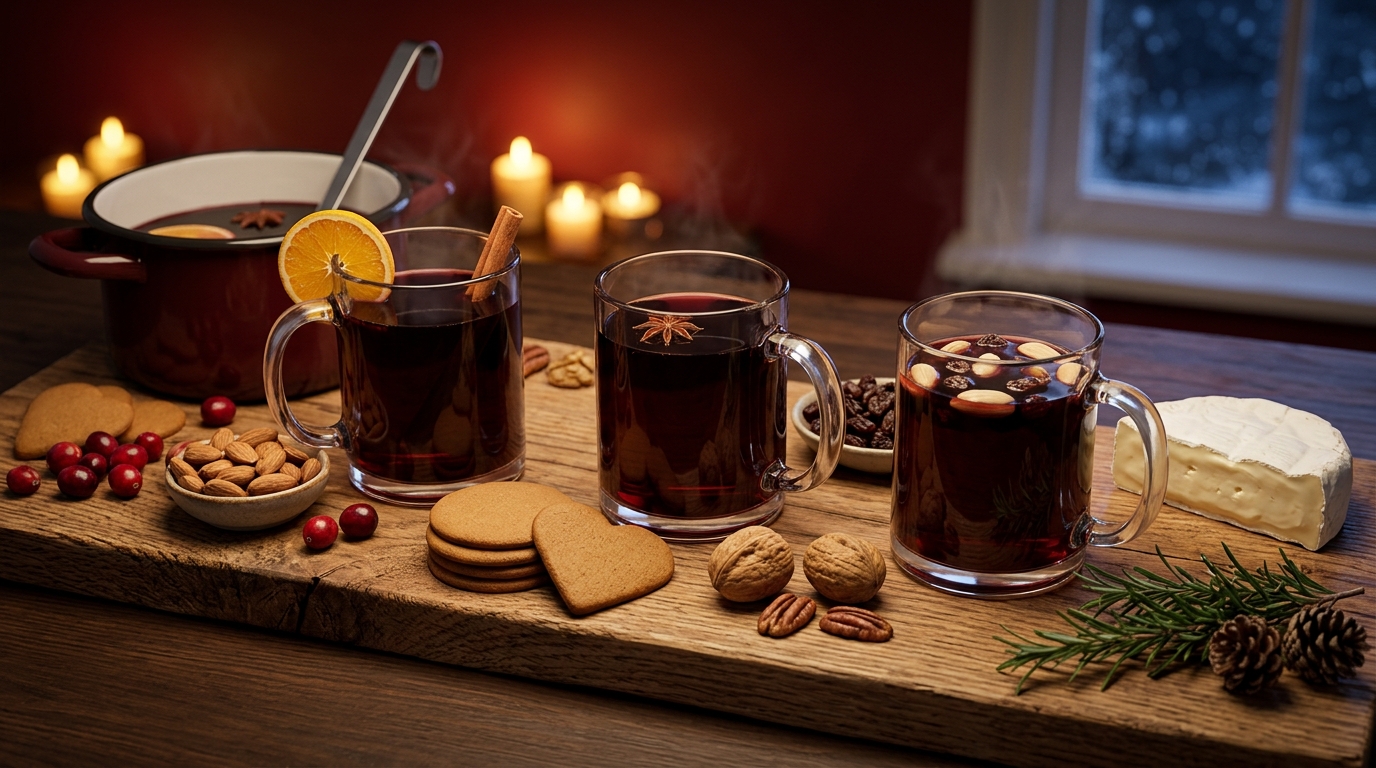
Those rules are worth knowing even if you're making it at home, because they describe what a traditional batch is. It's all wine, no water, and the cinnamon and cloves lead. In practice the styles drift apart in the extras: Majestic notes that glögg often adds almonds and raisins (Majestic), while British recipes reach for orange, star anise and sometimes a slug of sloe gin. Ready-made mulled wine is a real shortcut too, and Majestic sells its own heat-and-serve bottles for exactly that reason, so a bottled Glühwein is a fine choice if you want the market-stall version without buying a spice rack.
For food, Coravin's suggestions of gingerbread, fruitcake, baked brie and roasted nuts are the right idea, and our wine and cheese pairing page covers the soft cheeses that sit nicely beside a warm, spiced red. For the holiday table itself, see our page on the best wine for Thanksgiving.
Frequently asked questions
What is the best wine for mulled wine?
The best wine for mulled wine is a fruity, unoaked, low-tannin red, and a young Spanish Garnacha like Borsao is our first pick at around $11. Côtes du Rhône, Chilean Merlot and Beaujolais are all reliable alternatives that hold up to heat and spice.
Can you use cheap wine for mulled wine?
Yes, cheap wine is the right choice for mulled wine, as long as it tastes good on its own. Spices and sugar cover up subtle flavors, so an expensive bottle is wasted, but they can't fix a sour, stale or faulty wine, so taste it before it goes in the pot.
Is Merlot or Cabernet better for mulled wine?
Merlot is better for mulled wine than Cabernet Sauvignon. Merlot is soft and plummy, while Cabernet's firm tannins turn bitter when heated, which is the main reason mulled wine made with Cabernet tastes harsh.
Can you use Pinot Noir for mulled wine?
You can use Pinot Noir for mulled wine, and its low tannin means it won't turn bitter, but the spices flatten the delicate flavors you paid extra for.
Can you make mulled wine ahead and reheat it?
Yes, you can make mulled wine ahead and reheat it gently, without boiling. Coravin suggests keeping leftovers in an airtight container in the fridge for up to three days, and BBC Good Food reheats a batch over low heat or in the microwave for about two and a half to three minutes.
Does mulled wine still have alcohol in it?
Yes, mulled wine still has most of its alcohol if you heat it gently and briefly. Alcohol starts evaporating below boiling point, so a pot kept hot for hours loses much more than one warmed for ten minutes and served.
Which bottle should you buy for mulled wine this weekend?
Buy a young Garnacha like Borsao if you can find it, a Côtes du Rhône or an everyday Chilean Merlot if you can't, and a 3-liter box of a soft red blend if you're feeding a crowd. Leave the Cabernet, the oaky Zinfandel and the bourbon-barrel bottles on the shelf, and save your good Pinot Noir for drinking.
Once it's home, start dry, add sugar a little at a time, warm it for ten minutes and let the spices steep off the heat, and you'll get a mulled wine that tastes of fruit and spice instead of bitter tea. For more bottles that taste good without costing much, our list of cheap wine that tastes good is the place to start.