Tempranillo is Spain's signature red grape, and the wine it makes is dry, medium to full in body, and built around red cherry, dried fig, leather, and a soft note of vanilla from time in oak. If you already enjoy Cabernet Sauvignon or a savory Sangiovese, there's a very good chance Tempranillo lands right in your comfort zone. It's the grape behind most red Rioja, it was practically born to sit next to food, and a genuinely good bottle rarely costs a fortune. Here's how it tastes, how to decode that confusing Spanish label, and how to land on a bottle you'll actually want to finish.
What is Tempranillo wine?
Tempranillo is Spain's most widely planted red grape, and it's the backbone of the country's most famous reds. The name comes from temprano, Spanish for early, because the grape ripens earlier than most of its neighbors in the vineyard. You'll find it grown all across Spain, with the greatest bottles coming out of Rioja, Ribera del Duero, and Toro in the north.
It also travels under other names. In Portugal, where it goes into both dry reds and Port, it's called Tinta Roriz or Aragonez. In Ribera del Duero the locals often call it Tinto Fino or Tinta del País. Beyond Iberia you'll spot small plantings in Argentina, California, Texas, and Australia, though Spain and Portugal are still where it truly shines.
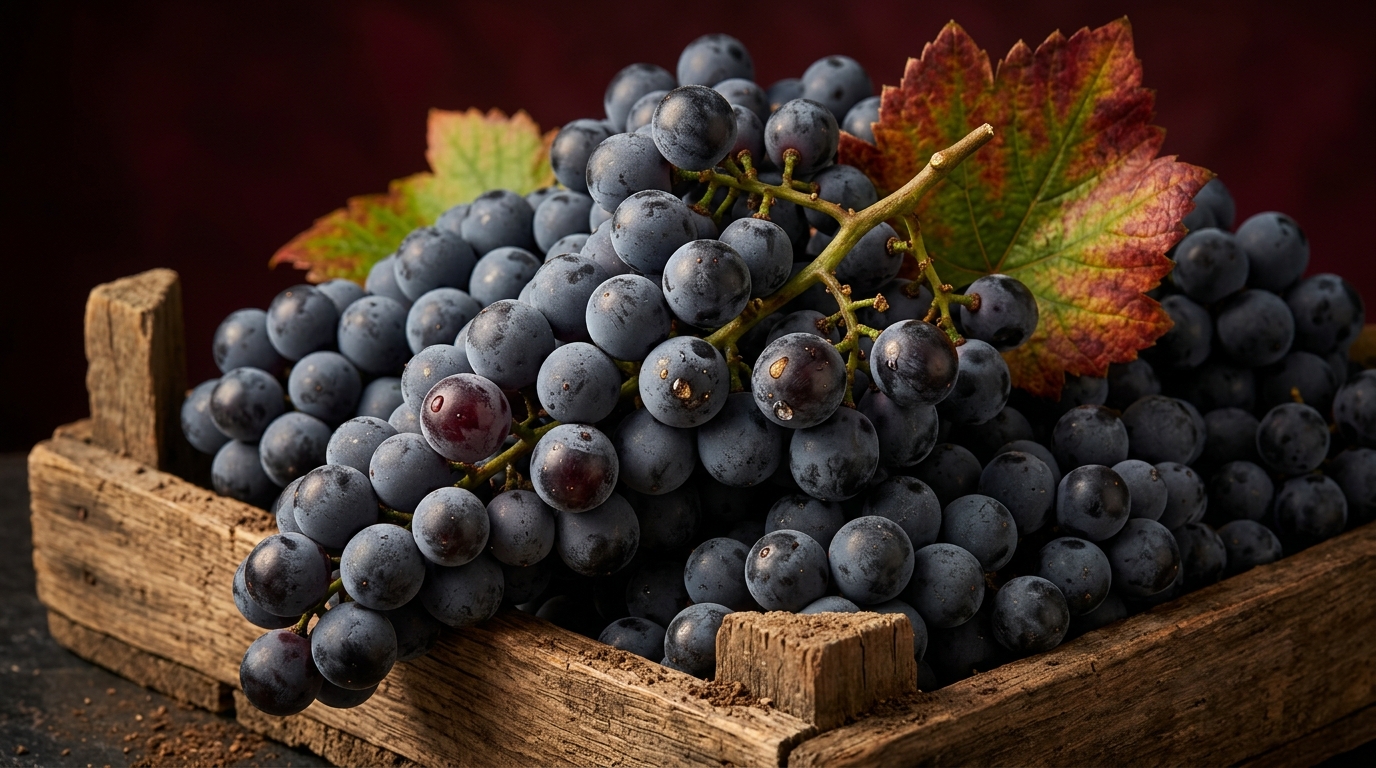
The grape has fairly thin skins, so the wines run from a medium ruby to a deeper garnet rather than the inky purple you get from something like Malbec. What ends up in your glass is almost always a dry red, and more often than not it has spent a stretch in oak barrels that shapes both its color and its flavor. That oak aging is the whole reason the label matters so much, and we'll get to that shortly.
What does Tempranillo taste like?
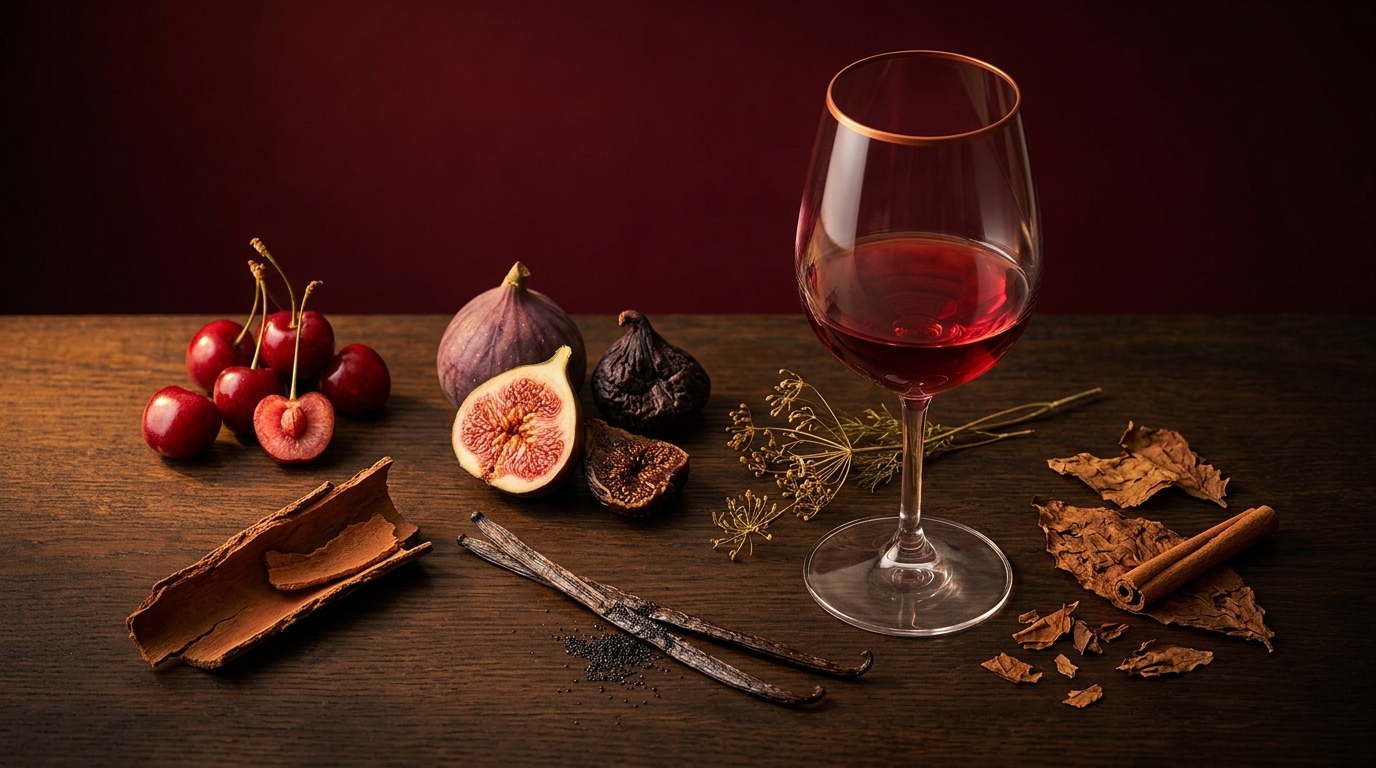
Tempranillo tastes dry and savory, with red cherry and dried fig fruit wrapped in leather, tobacco, cedar, and a lift of vanilla or dill from the barrel. It sits at a medium to full body, carries medium to high tannin, keeps a fresh streak of acidity, and usually lands somewhere between 13.5 and 15 percent alcohol. It is not a sweet wine, even when it smells rich and ripe.
The fruit leans red rather than black: think fresh cherry, red plum, and a little strawberry in younger bottles, drying toward fig and prune as the wine ages. Around that fruit sits the savory side that wine lovers tend to fall for, all leather, dried tobacco leaf, and sun-dried tomato. The barrel adds the finishing layer. American oak tends to give that telltale coconut and dill character you notice in classic Rioja, while French oak keeps things subtler with cedar and baking spice.
If you want a quick mental picture, Tempranillo splits the difference between the ripe power of Cabernet and the bright, food-loving nervousness of an Italian red. The tannins give it grip, so it feels substantial, but the acidity keeps it lively instead of heavy. That combination is exactly why it behaves so well at the dinner table, and it's a big part of why so many people who think they don't like "big reds" end up loving a glass of Rioja.
Is Tempranillo the same as Rioja?
Not exactly, and this is the single most useful thing to understand about the grape. Rioja is a place in northern Spain, Tempranillo is a grape, and most red Rioja is made mostly from Tempranillo. So when you pick up a bottle simply labeled "Rioja," you are almost certainly drinking a Tempranillo-led wine even though the grape name never appears on the front.
This trips people up constantly, because Spain tends to label its finest wines by region rather than by grape, the opposite of what you see with a California Cabernet or a New Zealand Sauvignon Blanc. Rioja producers usually blend a little Garnacha, Graciano, or Mazuelo into the Tempranillo for perfume and structure, but Tempranillo is the lead singer. The same goes for Ribera del Duero, where the wines are built almost entirely on Tempranillo under its local name, Tinto Fino, and tend to come out darker and more powerful than their Rioja cousins.
The short version: if you love a particular Rioja, you love Tempranillo, and you can chase that same flavor into Ribera del Duero, Toro, and beyond. If you're shopping specifically in that region and want to know which bottles overdeliver, our guide to finding good Rioja wines without the guesswork walks through it. For now, just remember that "Rioja" on a label is a promise about where the wine is from, and Tempranillo is the promise about what's inside.
How do you read a Tempranillo label?
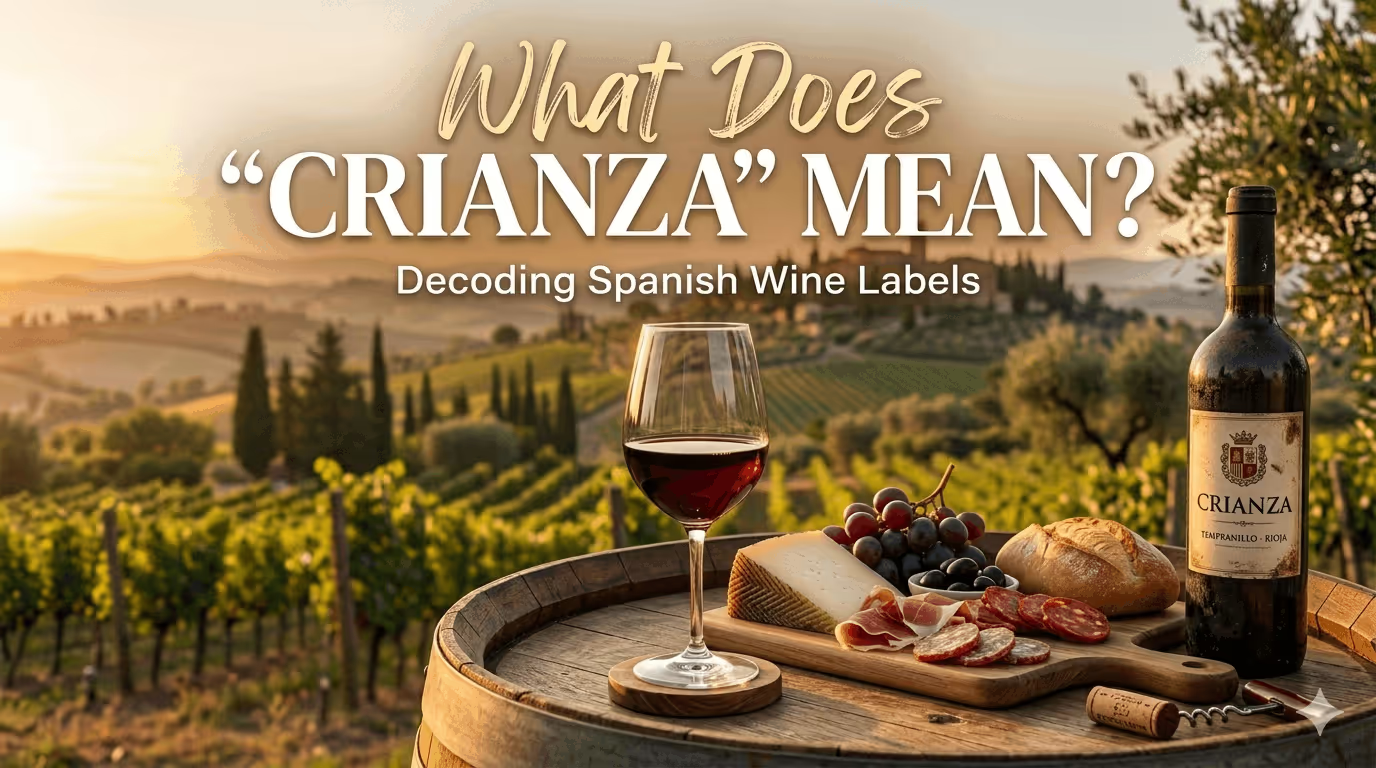
The words to look for are Joven, Crianza, Reserva, and Gran Reserva, and they tell you exactly how long the wine aged before it reached you. This aging system started in Rioja and is now used across much of Spain, so learning these four words does most of the work of choosing a bottle. Each step up means more time in oak barrels and in the bottle, which makes the wine smoother, more savory, and usually more expensive.
A Joven (Spanish for young) sees little or no oak and is bottled to drink fresh and fruity. A Crianza spends a minimum of two years aging with at least one full year in oak, which is where you first taste that classic vanilla and spice. A Reserva ages at least three years total with a minimum of twelve months in barrel, adding real leather and dried-fruit complexity. A Gran Reserva is only made in the best vintages and ages a minimum of five years, with at least two of those in oak, so it arrives already soft, mellow, and ready to drink. If the aging categories feel like a foreign language at first, our plain-English take on how to read wine labels covers the rest of the small print too.
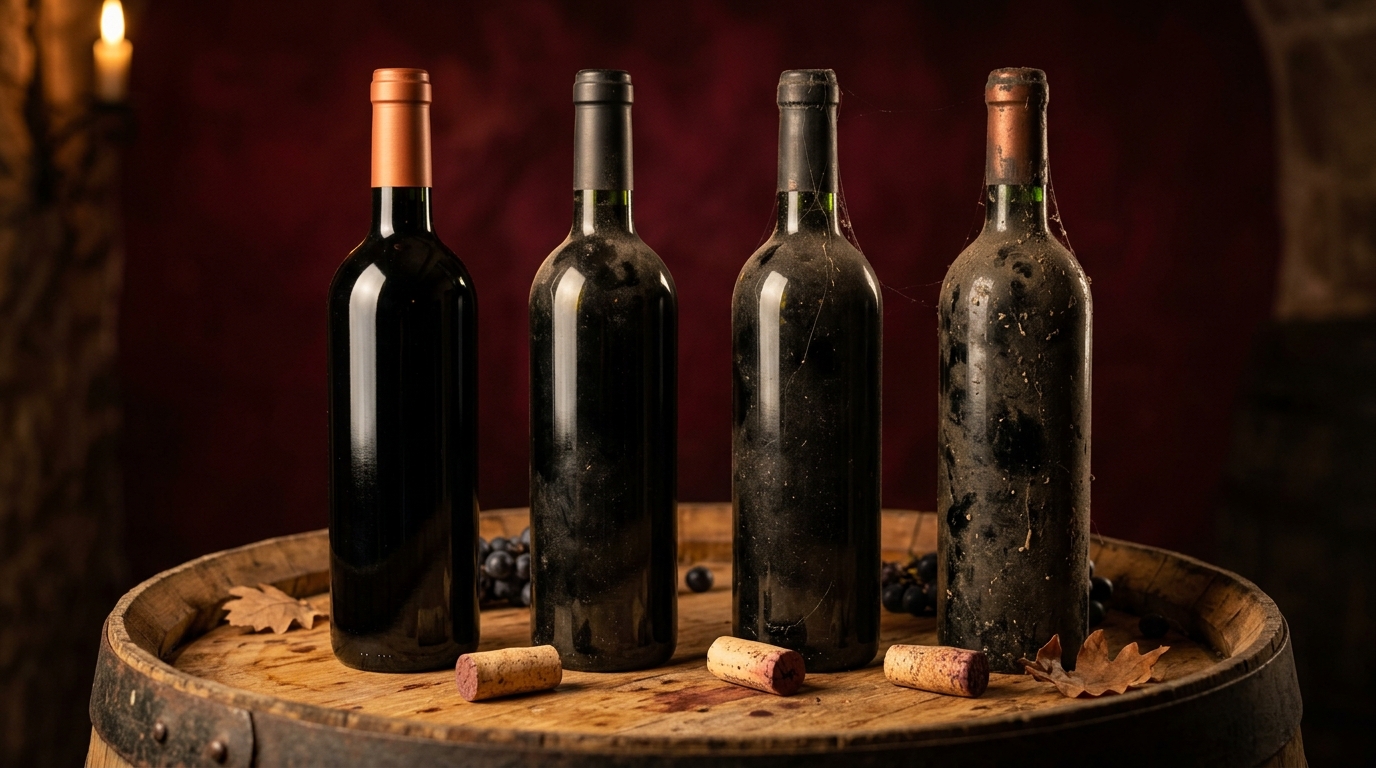
Here's how the four tiers compare, with the kind of prices you'll typically see on a US shelf:
| Label term | Minimum aging (red) | How it tastes | Typical US price |
|---|---|---|---|
| Joven | Little to no oak | Fresh, juicy, red-fruited | $10 to $18 |
| Crianza | 2 years, 1 in oak | Balanced, gentle vanilla and spice | $12 to $22 |
| Reserva | 3 years, 1 in oak | Savory, leather, dried fruit | $20 to $45 |
| Gran Reserva | 5 years, 2 in oak | Silky, mellow, complex | $40 to $120 |
For an everyday bottle with real character, a Crianza is the sweet spot and hard to beat for the money. When you want something to linger over, a Reserva gives you most of the magic of an aged Spanish red without the top-tier price, and it's the tier we reach for most often.
Will you like Tempranillo?
You'll probably enjoy Tempranillo if you already like dry reds with a savory edge, and it's one of the easiest "serious" reds to fall for even if bold wine usually isn't your thing. The whole trick is balance, because it has enough fruit and body to satisfy a Cabernet drinker, yet its fresh acidity and softer tannins make it far more approachable than a big, chewy red, so it rarely feels like hard work. That is the quiet reason so many people find their way to Spanish reds and never really leave.
The quickest way to place it is against grapes you already know. Next to Cabernet Sauvignon, Tempranillo is a touch lighter and more savory, trading some of Cabernet's dark-fruit power for leather and spice, so if you find Cabernet a little heavy this may suit you better. Next to Merlot, it's brighter and grippier, with more acidity and a more savory personality, though both are crowd-pleasers. Its closest relative in spirit is Sangiovese, the grape behind Chianti, since both are savory, high-acid reds that live for the dinner table. If you're curious about that cousin, our piece on whether you'll like Sangiovese wine makes a good companion read. Those medium-high tannins are what give the wine its grip, and if that word means nothing to you, here's what tannin in wine actually is.
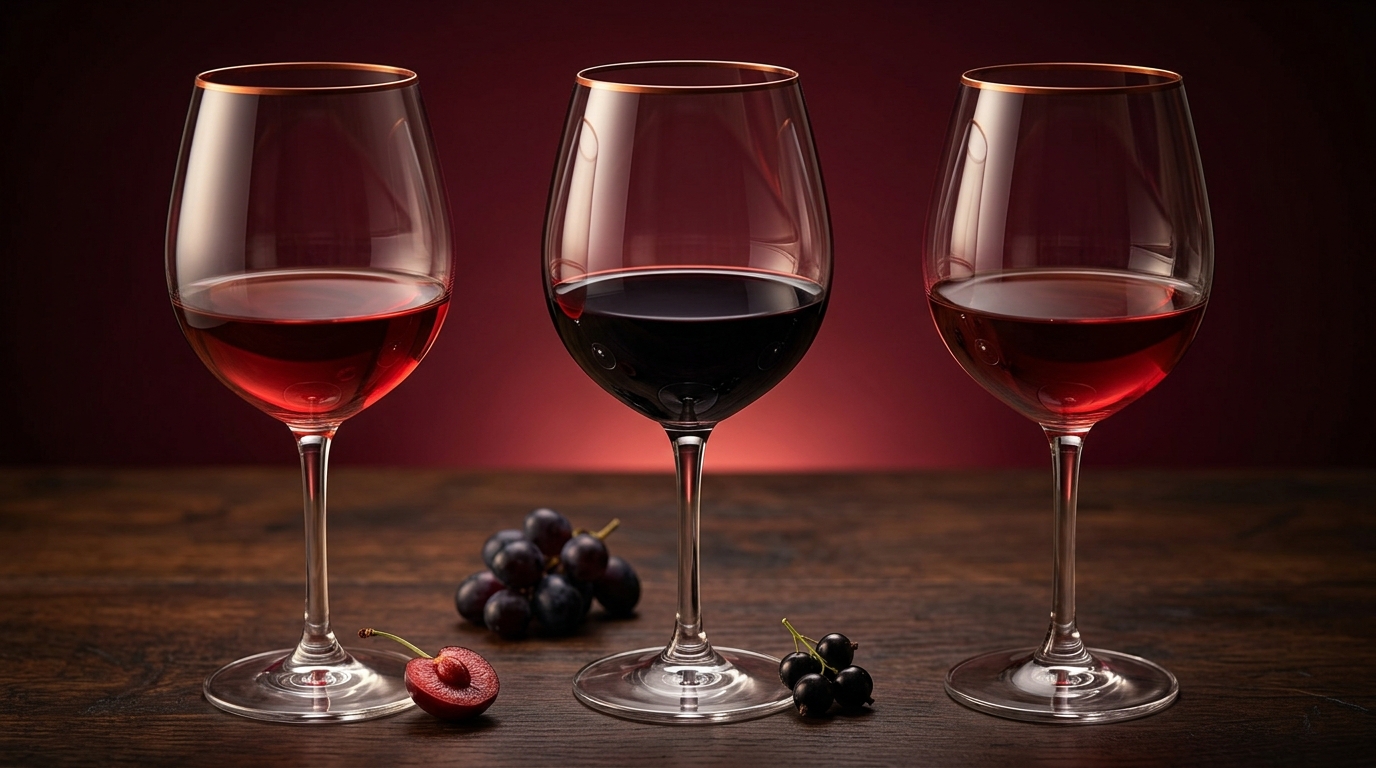
Taste is personal, though, and no chart can promise a specific bottle will click for you. If you're standing in the shop holding a Rioja Reserva and still can't tell whether it's your style, that's exactly the moment we built Fit Check for. Type in the bottle, say it out loud, or scan the label, and Sommy gives you an honest read on whether it fits the Taste Profile it has learned from the wines you've already rated. It won't tell you what you're supposed to like. It tells you whether this particular wine matches the palate that's actually yours.
What food pairs with Tempranillo?
Tempranillo is a natural at the table because its acidity cuts through fat while its savory flavors echo grilled and roasted food. This is a wine that genuinely wants a plate in front of it, and it flatters a huge range of dishes rather than demanding one perfect match. When in doubt, think about how Spaniards actually eat, with grilled meats, cured pork, and plenty of salt and smoke.
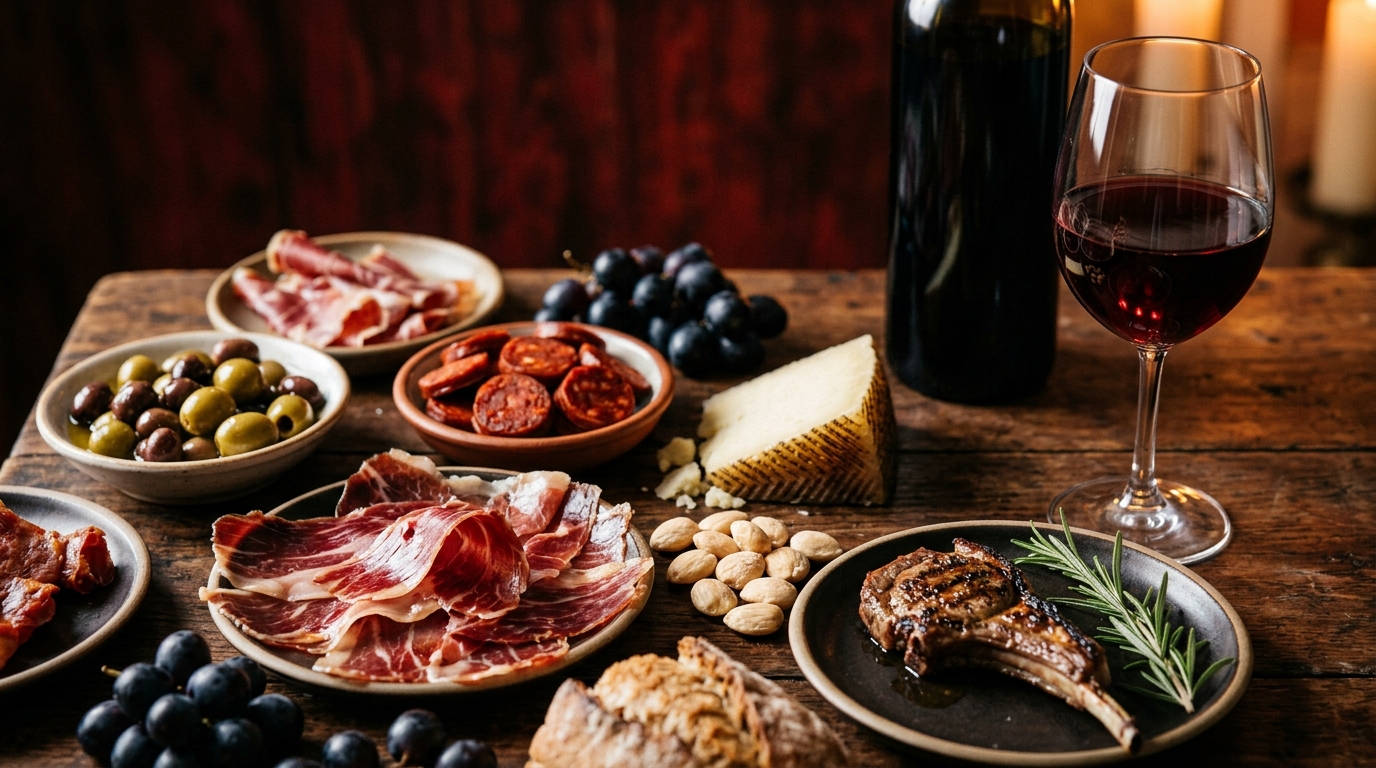
Lamb is the classic partner, whether it's a roast leg or simple grilled chops, since the wine's leather and spice notes love the richness of the meat. Steak, roast chicken, and pork all work beautifully too, and Tempranillo has a special affinity for cured Spanish staples like jamón, chorizo, and aged Manchego cheese. It also handles tomato-based dishes with ease, so a Tuesday-night bowl of pasta with a meaty ragu is a genuinely great match. A younger Joven or Crianza is your everyday tapas wine, while a Reserva or Gran Reserva deserves a proper Sunday roast. If you want to build a whole spread around a bottle, our guide to wine for Spanish tapas leans right into the grape's home turf.
The one place to be a little careful is heat. Tempranillo can handle mild spice, but a very fiery curry or a heavy dose of chili will make its tannins taste harder than they are. For those meals a fresher, fruitier Joven works better than a heavily oaked Gran Reserva. Otherwise, this is about as friendly and flexible as red wine gets, which is a large part of why it has quietly become a weeknight staple in so many homes.
How much should you spend, and how do you serve it?
You can drink genuinely good Tempranillo for around $15, and you rarely need to spend more than $40 unless you're chasing a special-occasion Gran Reserva. That accessibility is one of the grape's best qualities. Unlike some famous reds where the entry price keeps climbing, Spain still offers real quality at everyday money, especially in the Crianza and Reserva tiers where the value is genuinely excellent.
As a rough map of US prices, everyday Joven and Crianza bottles usually run $10 to $22, a step-up Reserva lands around $20 to $45, and a Gran Reserva or a top Ribera del Duero can climb from $40 well past $100. Ribera del Duero as a region tends to cost a little more than Rioja for a similar level, since its powerful, concentrated style has become fashionable. If you're new to the grape, start with a Rioja Crianza around $15 to $20 and you'll get a true taste of what makes it special.
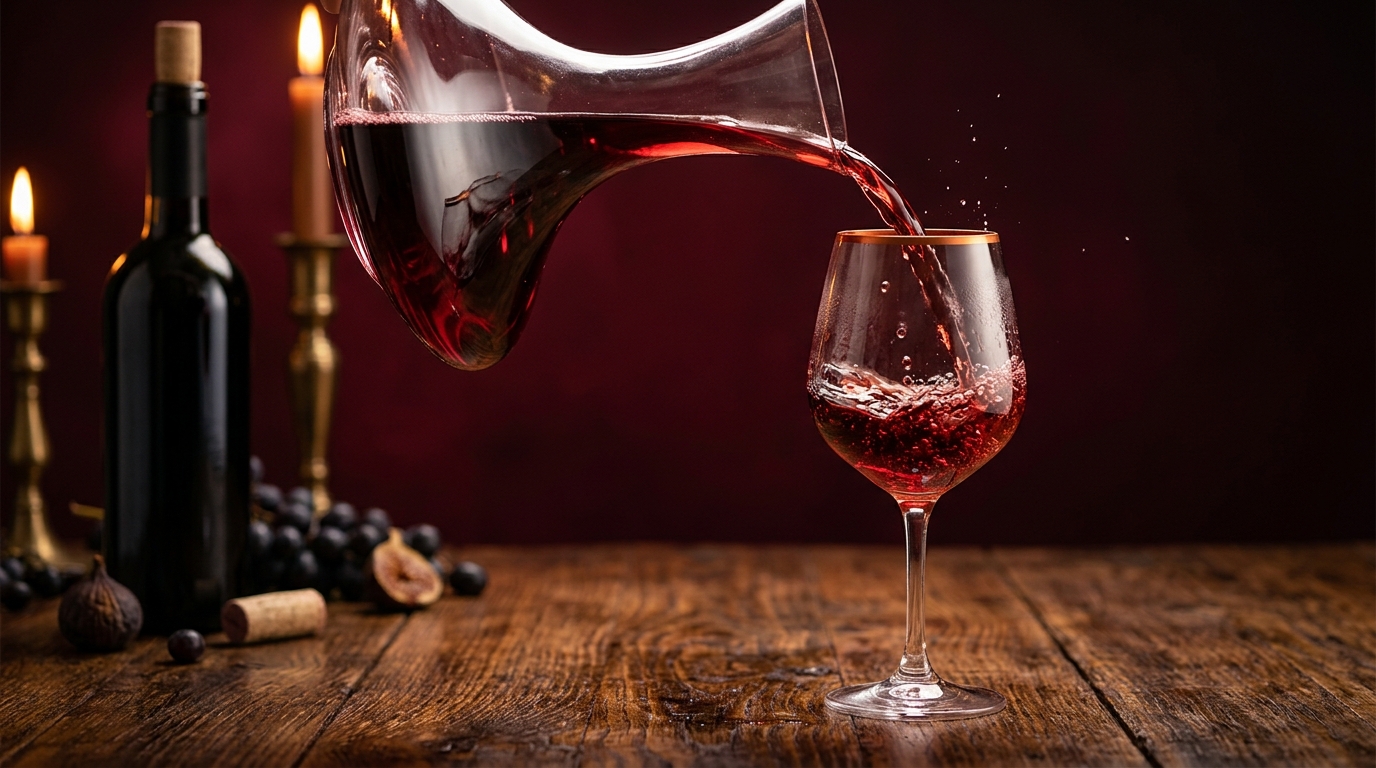
Serving it is refreshingly simple, so pour Tempranillo a little below room temperature, somewhere around 60 to 68 degrees Fahrenheit, which keeps the fruit fresh rather than flat and boozy instead of dulling everything down. A younger, oaky bottle opens up nicely with 30 to 60 minutes in a decanter or even just an open bottle, while an older Gran Reserva is usually smooth enough to enjoy straight away. And if you fall for a serious Reserva or Gran Reserva, the best examples can keep improving in the bottle for a decade or more, so there's no rush to drink them all at once.
Frequently asked questions about Tempranillo
Is Tempranillo sweet or dry?
Tempranillo is a dry red wine, always. It can smell rich and fruity, with ripe cherry and vanilla notes that some people read as sweetness, but there's essentially no residual sugar in the glass. That ripe-yet-dry character is a big part of why it's so easy to enjoy.
Is Tempranillo a good wine for beginners?
Yes, it's one of the friendliest serious reds to start with. Its balance of fruit, softer tannins, and fresh acidity makes it approachable without being simple, and an affordable Rioja Crianza is a low-risk way to find out whether savory Spanish reds are for you.
How do you pronounce Tempranillo?
It's said "temp-rah-NEE-oh," with the double L making a soft "y" sound rather than a hard L. Rioja, the region you'll see it in most often, is said "ree-OH-ha."
Is Tempranillo like Cabernet Sauvignon?
They share a dry, full-flavored personality, but Tempranillo is usually a little lighter and more savory, with leather and spice where Cabernet leans into dark, powerful fruit. If you find Cabernet slightly heavy, Tempranillo often feels more graceful while still satisfying.
What is the difference between Tempranillo and Rioja?
Tempranillo is the grape, and Rioja is the Spanish region famous for growing it. Most red Rioja is made mainly from Tempranillo, so the two are closely linked, but you'll also find the grape in Ribera del Duero, Toro, Portugal, and beyond.
Does Tempranillo need to be decanted?
Younger, heavily oaked bottles benefit from about 30 to 60 minutes of air, which softens the tannins and lets the fruit show. Older Gran Reserva wines are usually mellow enough to pour and enjoy right away.
Finding your next bottle of Tempranillo
The beauty of Tempranillo is how much reward it offers for how little effort it asks. Learn the four label words, start with a Rioja Crianza, and you have a savory, food-loving red that punches well above its price and rarely lets you down. From there you can wander into an older Reserva, a bolder Ribera del Duero, or a rustic Toro, and the grape's cherry-and-leather signature will carry you the whole way.
If you'd rather skip the guesswork entirely, that's what Sommy is for. Tell it what you've enjoyed before, scan a label in the shop, or ask it what to open with tonight's dinner, and it will point you toward the Tempranillo that fits your taste rather than someone else's scorecard. Pour a glass, put some food on the table, and let a very old Spanish grape do what it has always done best.