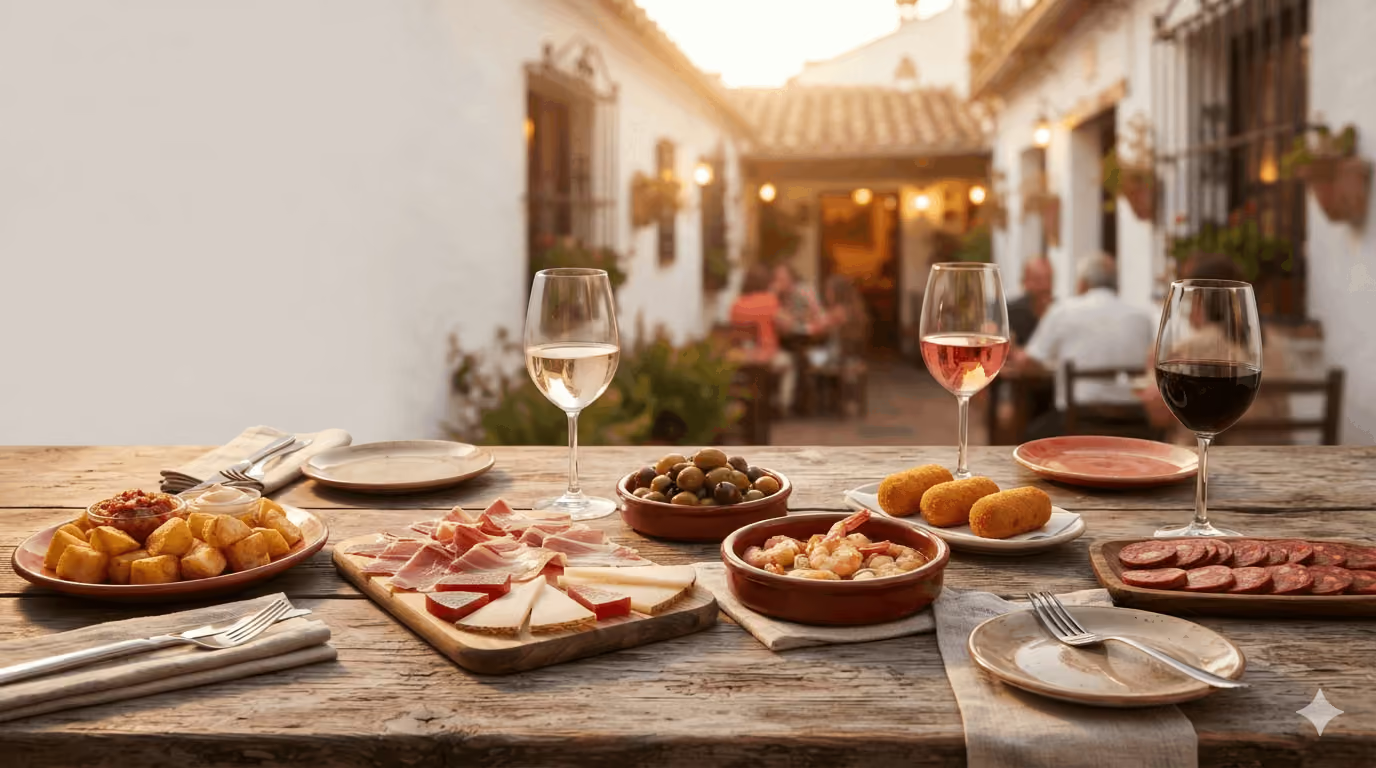

Selecting the right wine for Spanish tapas can often feel more complicated than it needs to be. When you have a table filled with diverse flavors, such as salty cured ham, crispy fried potatoes, and savory garlicky shrimp, it is easy to overthink your drink selection.
If you are hosting a tapas party, the best strategy is to start with reliable options like Cava, a crisp white wine, or a versatile light red wine. You do not need a perfect, individual match for every single dish. Instead, prioritize a bottle that keeps the table happy and complements the variety of flavors without overpowering them.
Use the strongest flavor on the plate, rather than the most complicated bottle in the store, to make a calm and confident choice.
Key Takeaways
- Cava is the most versatile choice for Spanish tapas, especially when your table is filled with a variety of fried, salty, or mixed small plates.
- Reach for Albariño, Rueda Verdejo, or a crisp dry rosé when serving seafood, olives, cheese, and other lighter dishes.
- Pour Garnacha or a structured Rioja when enjoying flavorful chorizo, meatballs, roasted mushrooms, or grilled meats.
- For a varied spread, buy one bottle of sparkling wine and one light red instead of attempting to chase a separate pairing for every individual plate.
- Your own personal preference matters most, so use these wine styles as a helpful starting point rather than a rigid rulebook.
Start With the Food on the Table
Spanish tapas are small plates, but their flavors are anything but subtle. Salted ham, anchovies, smoked paprika, garlic, olive oil, fried croquettes, and sharp cheese can all appear at once. A heavy wine can make that lively spread feel flat.
The easiest answer when selecting wine for Spanish tapas is a fresh bottle with enough brightness to reset your palate between bites. Sparkling wine does that well. Crisp whites do it too. A light, juicy red wine works perfectly when the table leans toward chorizo and grilled meat.
Match the weight of the wine to the weight of the food. The Wine Scholar Guild's food and wine pairing guidance follows this same practical idea: lighter dishes call for lighter wines, while fuller flavors can handle more body.
Use this three-step approach when you are deciding:
- Look for the dominant direction of the menu: seafood and vegetables, fried and salty snacks, or meat and smoky flavors.
- Choose one flexible wine style that fits most plates.
- Buy a second bottle only if the menu splits sharply, such as prawns on one side and lamb skewers on the other.
That is how to choose wine without turning dinner into homework. A good bottle should support the conversation, not become the night's test.
When the table has many flavors, freshness beats heaviness.
The Most Reliable Wines for a Tapas Night
Cava is usually the first bottle to reach for when planning your evening. This classic Spanish sparkling wine features bubbles that perfectly cut through fried food, salt, and creamy sauces. It feels right at home beside Patatas Bravas, calamari, Croquetas, Manchego cheese, marinated olives, and Tortilla Española. To get the best experience, look for a dry bottle marked Brut or Brut Nature.
A crisp Spanish white wine is another easy win for your table. Albariño from the Rías Baixas region offers a fresh, citrus character that pairs beautifully with grilled prawns, clams, salt cod, and Pimientos de Padrón. If you prefer something herbal and zesty, a Rueda Verdejo is often a friendly choice that complements salty snacks, fresh vegetables, and herb-forward plates. Both options keep a busy tapas table feeling bright and refreshed.
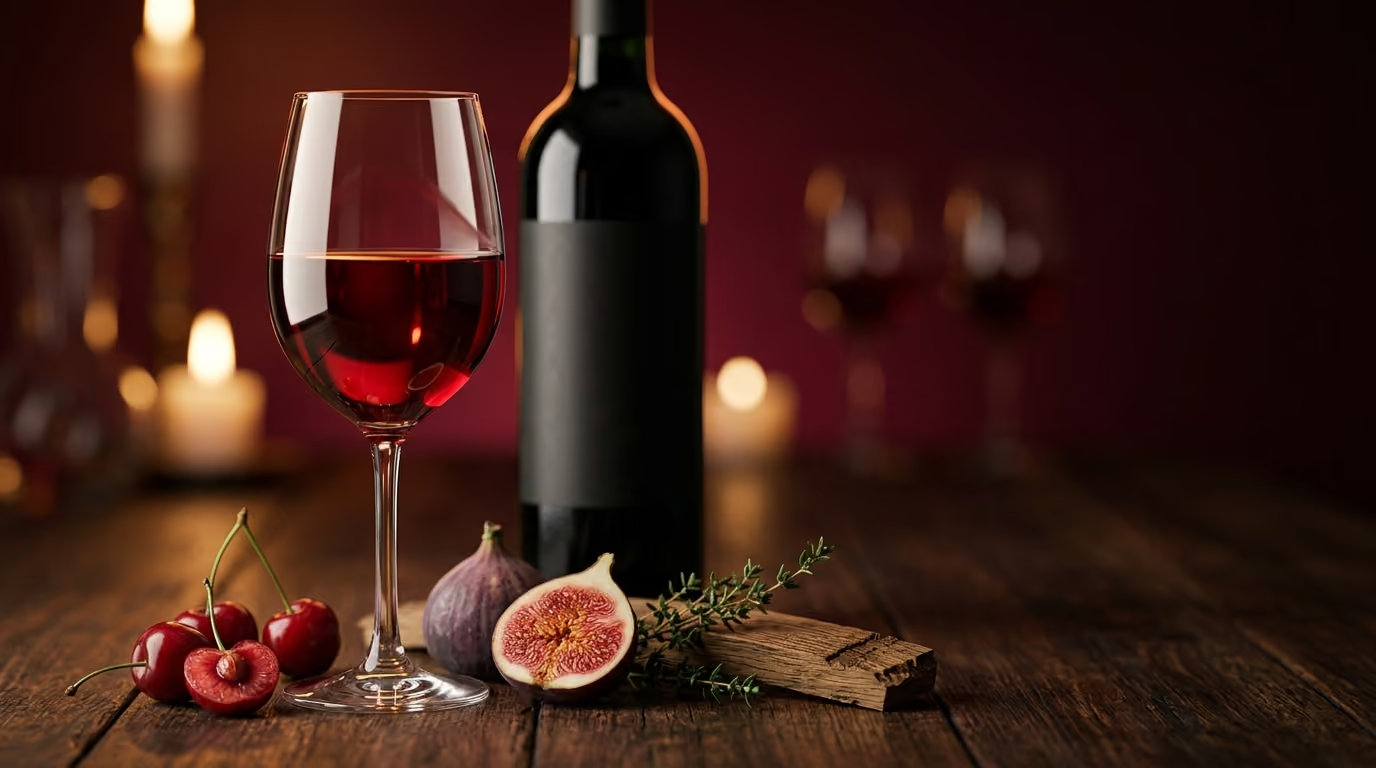
If you are looking for a reliable red wine, reach for Garnacha or Rioja. Garnacha is typically juicy and relaxed, with bright red fruit flavors that work wonders with chorizo, roasted peppers, and pork. A Rioja Crianza offers a little more savory depth, making it an excellent match for meatballs in tomato sauce, sautéed mushrooms, and grilled lamb.
Dry rosé serves as the perfect peacekeeper when guests have varied preferences. It handles cured meats, tuna, peppers, grilled vegetables, and mild spice without feeling too sharp or too heavy. The Spanish food and wine pairing overview also highlights Spain's lighter, aromatic whites as ideal companions for local cheeses and lighter fare.
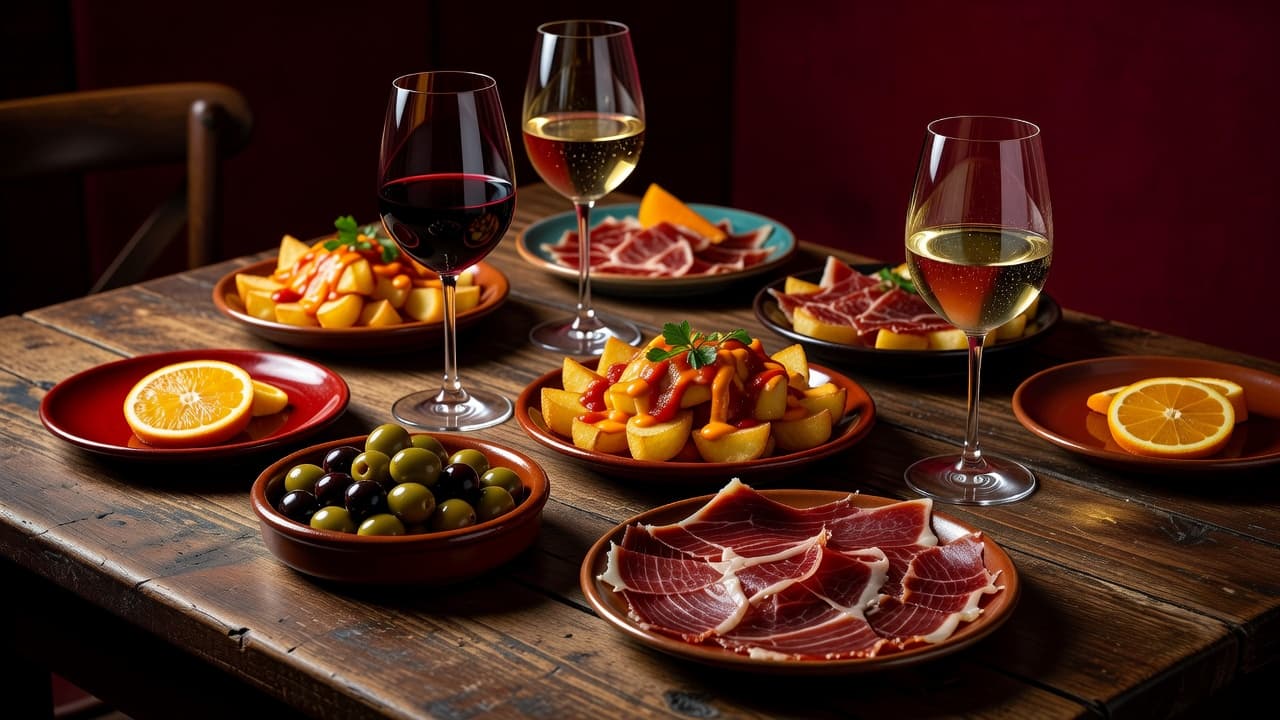
A bottle of Sherry can also provide a sophisticated touch to your gathering. Both Fino Sherry and Manzanilla are excellent choices that shine when served with Jamon Iberico, roasted almonds, olives, and anchovies. As a traditional Sherry variety, these wines are dry, refreshing, and particularly enjoyable before the meal gets heavier. Be sure to serve them well-chilled in a small wine glass.
A Wine Pairing Guide for Popular Tapas
A tapas menu rarely needs a separate wine for every plate. Still, a few direct matches help when you are building a menu or scanning a restaurant order. Proper food and wine pairing is about balancing textures and intensity rather than following rigid rules.
| Tapas dish | Best wine style | Why it works |
|---|---|---|
| Patatas bravas | Cava or dry rosé | Freshness lifts fried potatoes and paprika sauce |
| Jamon Iberico | Fino, Manzanilla, or Cava | Dry, salty flavors meet rich cured ham |
| Garlic shrimp | Albariño or Verdejo | Crisp wine keeps garlic and olive oil light |
| Croquetas | Cava | Bubbles refresh after each creamy bite |
| Chorizo | Garnacha or Rioja Crianza | Juicy red fruit suits smoky spice |
| Grilled lamb skewers | Rioja Crianza | Enough depth for char and savory meat |
| Tortilla espanola | Cava or Verdejo | Both work with soft egg and potato |
| Manchego cheese | Garnacha or dry rosé | Fruit and freshness balance nutty cheese |
The useful part of any wine pairing guide is knowing where flexibility lives. Cava can cover most of the table. A light red can handle several meat dishes. You are choosing a direction, not solving a puzzle with one correct answer.
For a closer look at individual dishes, Wine-Searcher's tapas pairing suggestions include ideas for Tortilla Española and other familiar plates.
Wine tasting notes explained in normal language
Labels and menus can sound intimidating, but most tasting notes point to simple sensations. Crisp means refreshing and mouthwatering. Juicy usually means fruit forward and easy to drink. Dry means the wine will not taste sugary.
For wine tasting notes explained without a lecture, translate the description into a food decision. A crisp, dry white wine belongs with shrimp. A juicy red wine belongs with chorizo. A fuller, oaky bottle such as a Tempranillo or a structured Ribera del Duero belongs with grilled meat, but may overwhelm delicate seafood.
Those are the simple wine explanations that matter at dinner. You do not need to identify every aroma in the glass, nor do you need to be an expert on Sherry to enjoy a great glass of wine with your meal.
Restaurant Wine Tips That Keep Ordering Simple
Restaurant wine lists can make a straightforward choice feel public. Skip the pressure to find the most impressive bottle. First, decide whether the table needs one wine or two.
For seafood, fried tapas, and vegetable dishes, ask for a dry Cava, Albariño, Rueda Verdejo, or a crisp white wine. For a meat-heavy order, ask for a lighter red wine such as Garnacha or Rioja. Those words give a server useful direction without forcing you to speak in tasting-note code.
Good restaurant wine tips begin with a clear sentence: "We have prawns, croquettes, and jamon. We would like something dry and fresh." For red, say: "We have chorizo and lamb. Could you suggest a lighter Spanish red?"
Wine lists often sort bottles by region or grape, which is not always helpful in the moment. Keep these wine list tips in mind:
- Order Cava by the glass when you want a low-risk starting point.
- Ask for a bottle that is light to medium in weight if small plates will keep arriving.
- Avoid the biggest red on the list unless grilled meat is the main event.
A red served slightly cool often tastes better with tapas. Put it in an ice bucket for about 10 minutes, especially in a warm restaurant or crowded kitchen.
Grocery Store Wine Picks Without the Overthinking
When you are browsing the wine aisle for a tapas party, look for a Spanish bottle first. The country of origin is a faster clue than trying to decode every complex label. To keep things simple, Cava, Albariño, Rueda Verdejo, Garnacha, Tempranillo, and Rioja give you dependable lanes that rarely fail.
For reliable grocery store wine picks, choose Cava when the menu is unknown. Select Albariño or Rueda Verdejo for seafood and light snacks. If your spread includes pork, chorizo, or roasted vegetables, reach for a Garnacha or a classic Tempranillo. A bottle of Rioja is a comfortable step up for richer meat dishes, and you should not overlook Sherry. A bottle of Amontillado or Oloroso Sherry can be a brilliant addition for those seeking deeper, richer food and wine pairing experiences.
Price does not need to rise with your anxiety. Many excellent tapas bottles sit in the everyday range, especially sparkling wine, crisp whites, and approachable reds. A bottle you genuinely enjoy is always better than an expensive bottle that makes you feel nervous to open.
A broader tapas wine pairing reference can help when your menu is especially red-wine focused. Still, remember that your own personal preference should always have the final say.
Frequently Asked Questions
Do I need to buy a different wine for every tapas dish?
No, you definitely do not need a separate bottle for each plate. It is much better to choose one or two versatile wines, such as a crisp Cava or a juicy Garnacha, that can complement a wide variety of flavors across your table.
What is the best wine to serve if I am hosting a group with different preferences?
Cava is your most reliable option because its bubbles and acidity pair perfectly with almost anything, from salty ham to fried croquettes. A dry rosé is another excellent peacekeeper that bridges the gap between light seafood and flavorful meat dishes.
How do I know if a red wine is too heavy for a tapas meal?
Look for wines labeled as light or medium-bodied, such as a Garnacha or a younger Rioja. You should generally avoid big, high-alcohol reds that might overpower the delicate textures of small plates, and remember that chilling your red wine for a few minutes can make it taste much fresher.
Let Your Taste Make the Final Call
A wine guide should make decisions easier, not make you feel behind. If you know you dislike sharp white wine, a dry rosé or a chilled Garnacha may suit your tapas party better. If bold red wine is your comfort zone, a balanced Rioja is often a safer choice than something overly heavy or complex.
Save a quick note after dinner: "Loved Cava with croquetas" or "Garnacha worked with chorizo." Over time, those small memories become better than generic wine recommendations. They become your own personal pattern.
Sommy is an AI wine assistant that remembers those preferences and turns them into personalized wine picks for menus, shelves, and meals. Its smart wine recommendations focus on what you tend to enjoy, not what sounds impressive. For more friendly wine advice, see the guide to choosing wine with confidence.
If you want help choosing wine in the moment, Sommy can offer personalized wine recommendations, wine app suggestions, and clear answers when a tapas menu is sitting in front of you.
Bring a Bottle You Feel Good About
The best wine for Spanish tapas is typically fresh, versatile, and made for sharing. Start your evening with a chilled glass of Cava to please a crowd, select a crisp white wine for fresh seafood dishes, and pour a bottle of Garnacha or a classic Rioja when flavorful, smoky meats take center stage.
If you are choosing a red wine to anchor your meal, look for options that balance acidity and fruit. Remember that these suggestions are simply a starting point, and your own preferences should always take precedence. A relaxed approach to your selections will elevate the food, the drink, and the overall atmosphere of your next tapas party.