
What Is Sherry Wine? Dry, Sweet, and Which to Order
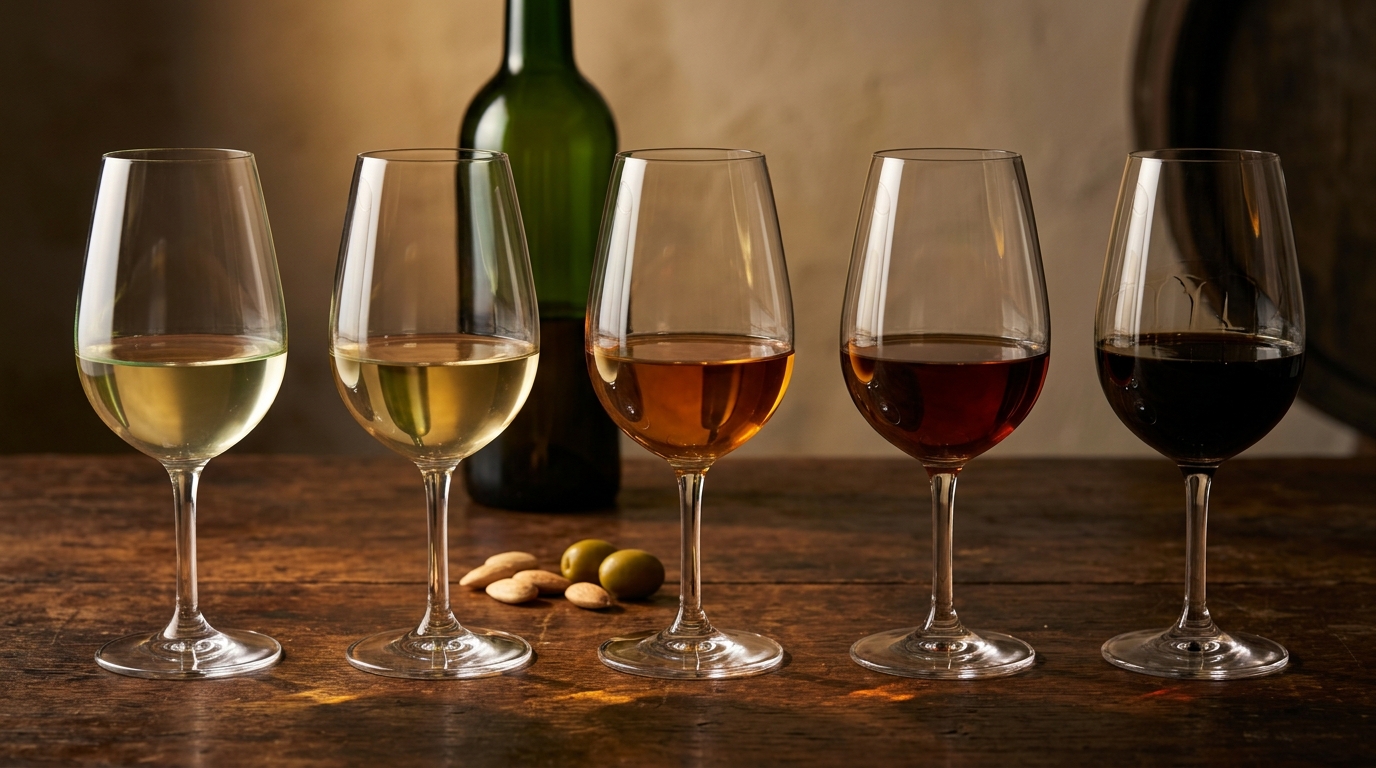
Sherry is a fortified white wine from a small corner of southern Spain, and most of it is bone dry rather than sweet. Fino and Manzanilla are the pale, chilled, salty styles, Amontillado and Oloroso are the amber, nutty ones, and Pedro Ximénez is the near-black syrup you pour over ice cream. Almost everything that separates those bottles comes down to a single decision made in the cellar about how much alcohol to add.
That decision is the whole trick, and once you know it the names on a Spanish wine list stop being a memory test. You can pick by what you're eating and how you want the glass to feel, which is how anyone who drinks a lot of sherry actually orders it.
What is sherry wine, exactly?
Sherry is a protected wine made only in a small triangle of Andalusia between Jerez de la Frontera, Sanlúcar de Barrameda and El Puerto de Santa María. Nearly all the dry styles start from one grape, Palomino, grown on pale chalky soil that holds what little rain the region gets through very long summers. The base wine on its own is lean and fairly neutral, which sounds unpromising until you see what happens next.
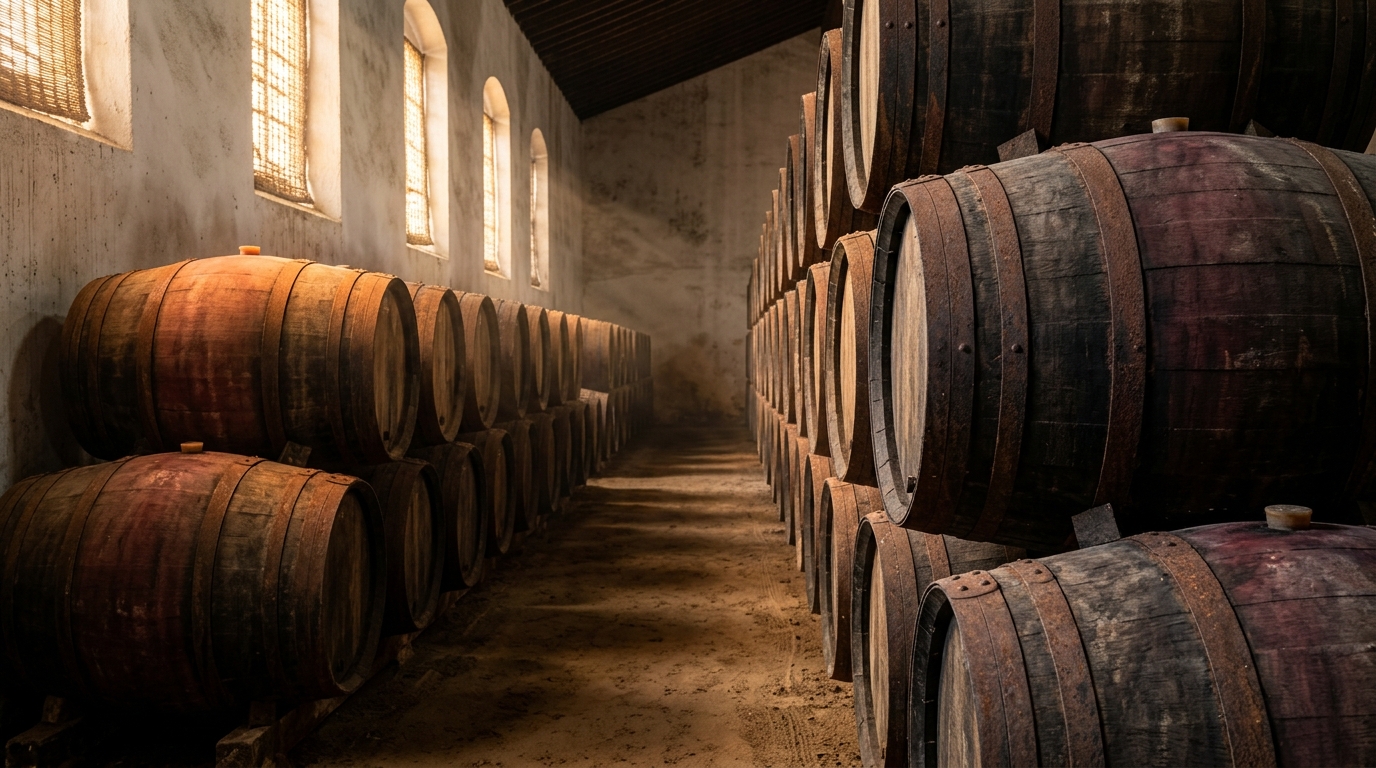
After fermentation finishes, the winemaker adds neutral grape spirit. According to the Consejo Regulador, the governing body for the region, the choice to fortify the base wine to either 15 or 17 percent alcohol decides which kind of ageing the wine goes through, and therefore what it ends up tasting like. Stop at 15 percent and a living film of yeast called flor grows across the surface of the wine in the barrel, sealing it off from oxygen and keeping it pale and sharp. Go to 17 percent and the flor can't survive, so the wine ages in contact with air instead, turning slowly darker, rounder and more savory.
Everything else follows from that fork in the road. Pale sherry means the flor protected it. Dark sherry means oxygen shaped it. You now understand more about sherry than most people standing in front of the shelf.
Which sherry should you order with your meal?
Start with the food rather than the name, because the styles line up with dishes almost too neatly. Salty, fried and briny things want the pale styles. Roasted, nutty and mushroomy things want the amber ones. Rich braises want the darkest dry style, and dessert wants the sweet one.
| Style | Fortified to | Ageing | Tastes like | Serve at | Try it with |
|---|---|---|---|---|---|
| Manzanilla | 15% | Under flor, Sanlúcar only | Chamomile, almond, sea air | 41 to 45°F | Anchovies, oysters, olives |
| Fino | 15% | Under flor | Green almond, fresh dough, herbs | 41 to 45°F | Jamón, fried fish, salted nuts |
| Amontillado | 15% then higher | Flor first, then air | Hazelnut, tobacco, dried herbs | 54 to 57°F | Mushrooms, roast chicken, hard cheese |
| Oloroso | 17% | Air only | Walnut, leather, orange peel | 54 to 57°F | Braised beef, oxtail, aged Manchego |
| Palo Cortado | 15% then above 17% | Flor, then air | Bitter orange, walnut, butter | 54 to 57°F | Jamón, consommé, aged cheese |
| Pedro Ximénez | Fermentation stopped | Air only | Raisin, fig, coffee, cocoa | 54 to 57°F | Blue cheese, vanilla ice cream |
The serving temperatures come from the Consejo Regulador's own guidance on conservation and serving, and the pale styles really do want to be that cold. They also make a recommendation that surprises people, which is to skip the tiny traditional copita glass and use a normal white wine glass with a generous bowl, because the small one doesn't give the aromas anywhere to go.
What do Fino and Manzanilla taste like?
Both are pale, dry and best drunk cold, and together they're the answer to anyone who still thinks sherry is a sweet drink. Expect green almond, fresh bread dough, wild herbs and a clean salty finish that makes you want the next mouthful of food.
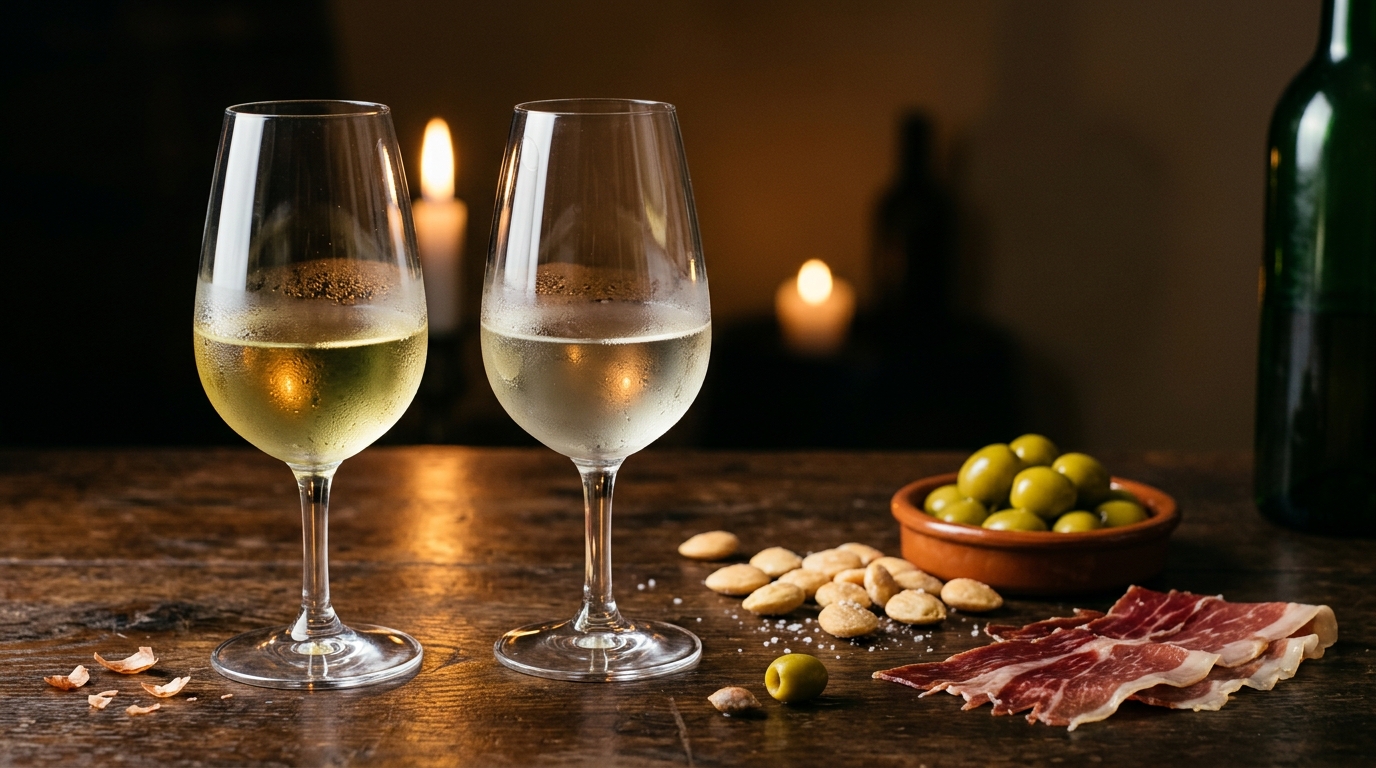
Fino ages under flor for at least two years in American oak butts in the bodegas of Jerez and El Puerto, and the yeast does something no other winemaking process does. It feeds on the wine while shielding it, stripping out glycerol and leaving behind that dry, faintly bitter almond edge. The Consejo describes the result as an ideal aperitif because the savory character makes whatever you eat alongside it taste more of itself, which matches how it works in practice with olives, Marcona almonds and jamón Ibérico.
Manzanilla is made the same way, but only in Sanlúcar de Barrameda at the mouth of the Guadalquivir river, where the cooler and damper Atlantic air grows a thicker, more persistent flor. It comes out lighter and more openly saline than Fino, with a chamomile note that gives the style its name. Anchovies, fried calamari and oysters are where it shines, and it's the bottle to order if you like your white wine sharp and mineral.
There's one warning that applies to both of them. They're the most fragile wines in the range, because taking them out of the barrel removes the flor that has been protecting them their whole life. Keep the bottle in the fridge, open or not, and drink it inside a few days rather than letting it sit.
How do Amontillado, Oloroso and Palo Cortado differ?
They're all dry, all amber to mahogany, and all shaped by air rather than by yeast, but they arrive there by different routes and the routes are tastable. This is where sherry stops being an aperitif and starts being a wine you'd drink through dinner.

Amontillado begins life exactly like a Fino, under flor. At some point the flor fades or is allowed to die, the wine is fortified higher, and oxygen takes over for the rest of its life. That double history is why it tastes the way it does, keeping the dry tension and the faint yeasty sharpness of its youth underneath hazelnut, dried herbs and dark tobacco. Pour it with mushrooms, roast chicken or a piece of hard sheep's cheese and it will look like the obvious choice in hindsight.
Oloroso never had flor at all. The winemaker tastes the young wine, decides it has the structure for oxidative ageing, and fortifies straight to 17 percent so no yeast film can form. Years of air give it walnut, leather, orange peel and a broad, rounded weight on the palate that comes from glycerol rather than from sugar. The Consejo makes the point that very old Olorosos can climb above 20 percent alcohol without anyone adding more spirit, because water evaporates through the cask over decades and concentrates what's left. Braised beef, oxtail and aged Manchego are its natural company.
Palo Cortado is the strange one, and worth ordering if you see it by the glass. The Consejo Regulador describes a wine that starts under flor at 15 percent and is then refortified above 17 percent after a taster spots something unusual in the cask and marks it for oxidative ageing. What you get combines the lifted, delicate aroma of an Amontillado with the body of an Oloroso, plus a bitter orange note that's hard to find anywhere else in wine.
Which sherries are actually sweet?
Only a few of them, and they announce themselves on the label. Pedro Ximénez and Moscatel are the naturally sweet styles, while Cream, Medium and Pale Cream are dry sherries that have been blended with sweet wine afterwards.
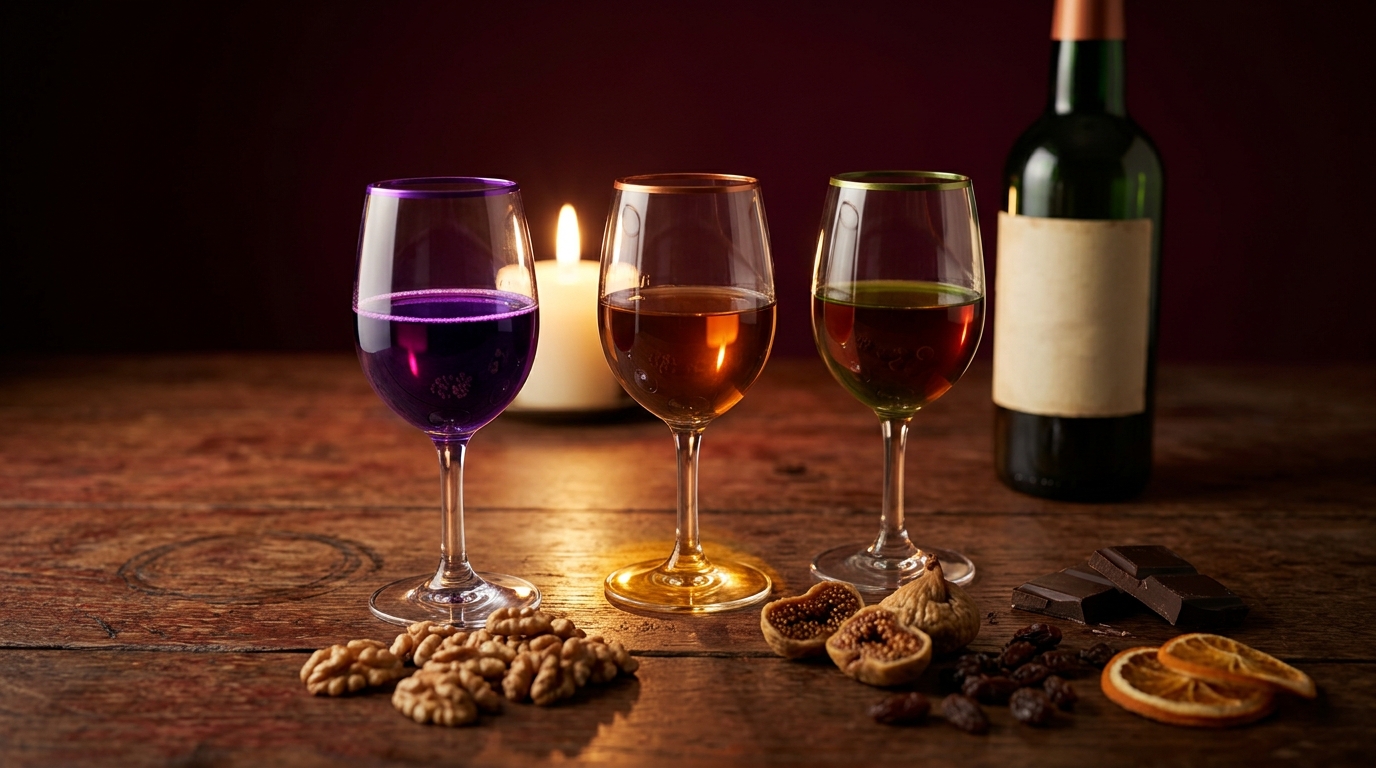
Pedro Ximénez is made from grapes of the same name that are laid out in the sun until they raisin, a process the region calls asoleo. The juice pressed from those raisins is so concentrated that fermentation is stopped almost immediately with grape spirit, leaving most of the sugar behind. It ages only in air, and it comes out ebony coloured and thick enough to coat the glass, tasting of raisin, fig, date, honey, coffee and dark chocolate. The Consejo will happily tell you it's probably the sweetest wine in the world, and it still finishes fresh because the sun concentrates the acidity along with the sugar.
Moscatel is the gentler sweet option, floral and citrus-peeled where PX is dense, and its higher sugar and alcohol mean an open bottle keeps for months rather than days. If you like the idea of a sweet wine that doesn't overwhelm a dessert, it's the better first purchase of the two. Our wider look at what makes a good sweet wine covers where these sit against Moscato, Riesling and the rest.
The one to watch for is Cream sherry, which is not a traditional dry style despite how familiar the name sounds. It's an Oloroso base sweetened with PX or Moscatel, and it's what a lot of people in English-speaking countries picture when they hear the word sherry at all. That single confusion is responsible for the entire myth that sherry is a sweet drink. If you want the dry thing, the word on the label you're looking for is Fino, Manzanilla, Amontillado, Oloroso or Palo Cortado.
How long does an open bottle of sherry last?
It depends entirely on how the wine was aged, and the gap between the two ends of the range is weeks. The pale, biologically aged styles are the most delicate wines in the cellar and the dark, oxidatively aged ones are among the most stable.
Fino and Manzanilla should live in the fridge before and after opening, and they're at their best for roughly three to five days while the salinity and the bread-dough aroma still feel alive. A tightly stoppered bottle can stay pleasant for about a week depending on how cold you keep it. Pour a smaller glass than you would of white wine and put the bottle straight back, because warmth does more damage here than a little air does.
Amontillado and Oloroso are a different proposition, and this is what makes sherry so practical to keep at home. They've already spent years in deliberate contact with oxygen, so a few more days of it changes very little, and a bottle stored cool and upright will hold for several weeks. Pedro Ximénez lasts longer again, since sugar and alcohol both slow everything down. That means one bottle of Oloroso can cover four or five dinners across a month, which no dry white in your fridge is going to do. Our breakdown of dry versus sweet wine and the numbers behind them explains why sugar and alcohol buy that extra time.
How do you order sherry without knowing the names?
Say what you want the wine to do rather than naming a style, and any decent server or shop assistant will land you in the right place. "Something dry and really cold to start with, please" gets you a Fino or a Manzanilla every time. "Something nutty and dry to go with the mushrooms" gets you an Amontillado.
Sherry is also one of the easiest wines to experiment with, because so many bars pour it by the glass. You can try three styles across one meal for the price of a single bottle of most things, and you'll learn more in that hour than any article can teach you. If you'd rather not improvise in front of a waiter, Current Venue filters a restaurant's actual list down to the bottles that suit your taste, which is handy on a Spanish menu where half the names are unfamiliar and none of them come with a description. Our guide to ordering wine at a restaurant without the guesswork covers the rest of the conversation.
In a shop, look past the front label and find the style word. Don't assume a dark colour means sweet, because a properly dry Oloroso can smell of dried fruit and finish completely dry. If you already like crisp Sauvignon Blanc, Fino is your entry point, and if you enjoy the nutty side of tawny Port without the sugar, go straight to Oloroso. For the sweeter fortified end, our guide to Port, Madeira and Portugal's dessert wines is the natural next stop.
Frequently asked questions
Is sherry wine always sweet?
No, and the large majority of it isn't sweet at all. Fino, Manzanilla, Amontillado, Palo Cortado and nearly all Oloroso are dry wines, while Pedro Ximénez, Moscatel and the Cream styles are the sweet ones. The style name on the label tells you far more than the colour of the wine does.
What is sherry wine made from?
Almost every dry sherry is made from the Palomino grape grown around Jerez in southern Spain. The sweet styles use Pedro Ximénez or Moscatel instead, with the grapes dried in the sun before pressing to concentrate their sugar.
Is sherry the same thing as Port?
They're both fortified wines, but they're made differently and taste nothing alike. Port is a sweet red from Portugal's Douro valley fortified partway through fermentation, while sherry is a Spanish white fortified after fermentation finishes, and most of it is dry.
What is the easiest sherry for a beginner?
Chilled Fino if you already enjoy crisp dry whites and salty snacks, or Amontillado if you'd rather have something softer and nutty. Buying one of each and tasting them side by side with a bowl of almonds is the fastest education available.
Why is sherry not vintage dated?
Sherry is blended through a system of stacked barrels called the solera, where wine is drawn from the oldest row and topped up from the next youngest. Every bottling therefore mixes many harvests, which is what keeps a house style tasting the same from one year to the next.
Can you cook with drinking sherry?
Yes, and a dry Amontillado or Oloroso will do far more for a pan sauce or a mushroom risotto than the salted cooking sherry sold in supermarkets. Use the same bottle you'd drink and pour yourself a glass while the pan reduces.
Pouring your first bottle with confidence
Sherry stops being confusing the moment you separate the pale wines from the dark ones. Fino and Manzanilla give you cold, salty brightness before dinner, Amontillado and Oloroso give you nutty depth alongside the food, and Pedro Ximénez finishes the evening over something cold and creamy.
Pick by the meal in front of you rather than by the Spanish name, order it by the glass the first few times, and let your own reaction do the deciding. Getting every regional term right matters far less than finding the style you actually reach for again.