


Portugal makes three dessert wines worth knowing, and you can choose between them with one question. Do you want something rich and fruity, or something nutty and mellow? Rich and fruity points you to a Ruby-style Port or a young Moscatel de Setubal. Nutty and mellow points you to a Tawny Port or a Madeira.
That's genuinely the whole decision at a restaurant table, and it's a better filter than any amount of label vocabulary.
The rest of this guide explains what's behind those names, because the labels are where people get stuck. Ruby, Tawny, LBV, Colheita, Sercial, Malmsey. None of them tell you in plain English what's about to arrive in the glass, and most of them describe how long the wine sat in a barrel rather than how sweet it is. Once you can read them, Portugal turns out to make some of the best value sweet wine in the world.
What are the main Portuguese dessert wines?
There are four categories, though in practice you'll only meet the first two on most menus. All of them are fortified, which means a neutral grape spirit is added partway through fermentation to stop the yeast before it has eaten all the sugar. That single technique explains why these wines are both sweet and strong.

| Wine | Where | Tastes like | Strength |
|---|---|---|---|
| Port | Douro Valley | Blackberry, plum, chocolate, or nuts and caramel with age | About 19 to 20% |
| Madeira | Madeira island | Caramel, roasted nuts, orange peel, always with sharp acidity | Around 17 to 20% |
| Moscatel de Setubal | Setubal Peninsula | Apricot and orange when young, raisin and caramel with age | Around 17 to 20% |
| Carcavelos | Near Lisbon | Off-dry, topaz colored, nutty | Around 18 to 19% |
Port is the one everyone knows. It comes from the Douro Valley in northern Portugal, it's fortified with a grape spirit called aguardente, and it usually lands between 19 and 20 percent alcohol. In both the European Union and the United States, only wine from Portugal is allowed to be labelled port.
Madeira comes from a small Atlantic island several hundred miles off the coast of Africa and it's the most distinctive wine on this list. It's deliberately heated and oxidized during production, a process that would ruin any other wine, and the result is something that tastes of caramel and roasted nuts while staying bracingly fresh. About 85 percent of it is made from a red grape called Tinta Negra.
Moscatel de Setubal is Portugal's quiet gem, a fortified Muscat made just south of Lisbon from Muscat of Alexandria or the rarer Moscatel Roxo. Carcavelos is included here mostly out of respect. It was world famous in the 19th century for its tawny, nutty fortified wine, and it's since been almost entirely built over by the suburbs of Lisbon and Estoril, so finding a bottle is a genuine hunt.
If you want to place these against sweet wines generally, our guide to dry versus sweet wine covers how sweetness is actually measured and why the same wine can taste sweeter to you than to the person next to you.
Should you order Ruby or Tawny Port?
This is the fork that matters, and it takes about ten seconds to decide once you know what each word means. Ruby and Tawny are the two main families of red Port, and the difference between them is time in a barrel.
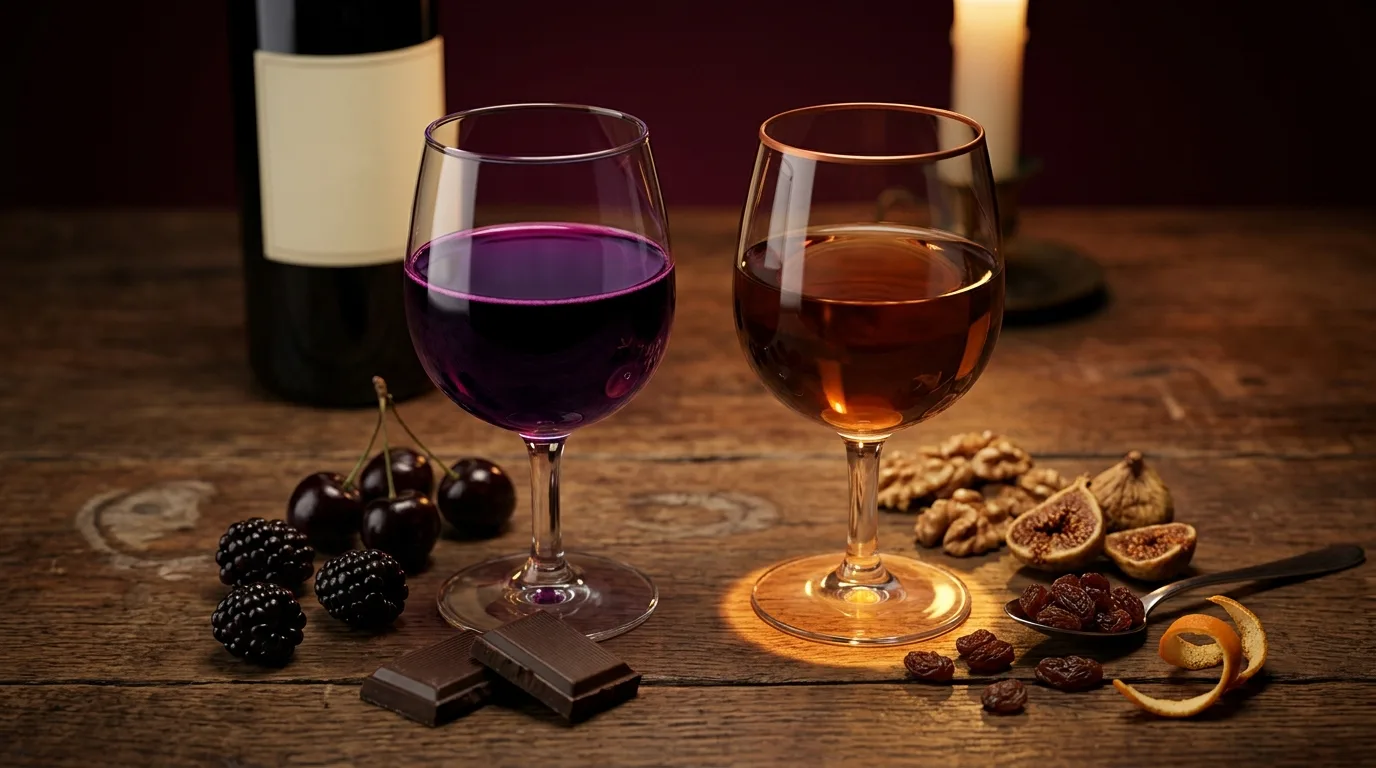
Ruby Ports are young, aged only a few years or less, and they stay deep purple-red with the fruit still front and center. Expect blackberry, black cherry, plum and often a chocolate note. This is the style to order if you want a dessert wine that tastes obviously of fruit, and it's also the one that goes with chocolate. The Ruby family is larger than the name suggests and includes plain Fine Ruby, Ruby Reserve, Late Bottled Vintage, Crusted and Vintage Port.
Tawny Ports spend much longer in wood before release, which slowly oxidizes them. They fade from purple to amber-brown, the fresh fruit recedes, and what comes forward instead is walnut, dried fig, toffee, caramel and orange peel. Aged Tawnies carry an age indication in ten year steps, from 10 Year up to 50 Year, which is an average of the blend rather than the age of any single wine in it. A 10 Year Tawny is the single best-value bottle in this entire category and the one we'd put in front of somebody trying Port for the first time.
The shortcut is easy enough to memorize. Order Ruby if you're eating chocolate or berries, and order Tawny if you're eating nuts, caramel, cheese, or nothing at all. Tawny is also the better bet if you find sweet wine cloying, because the barrel age gives it a drier, more savory finish even though the sugar level is similar.
Vintage Port is the famous, expensive one. It spends only about 18 months in barrel and then does the rest of its maturing in the bottle over decades, which is why it needs decanting and why it's usually kept for an occasion rather than an ordinary Tuesday.
How sweet is Madeira, and which style should you ask for?
Madeira is the wine most people order wrong, because its four classic styles run from bone dry to properly sweet and the labels use grape names rather than sweetness words. Learn the order and the whole category opens up.
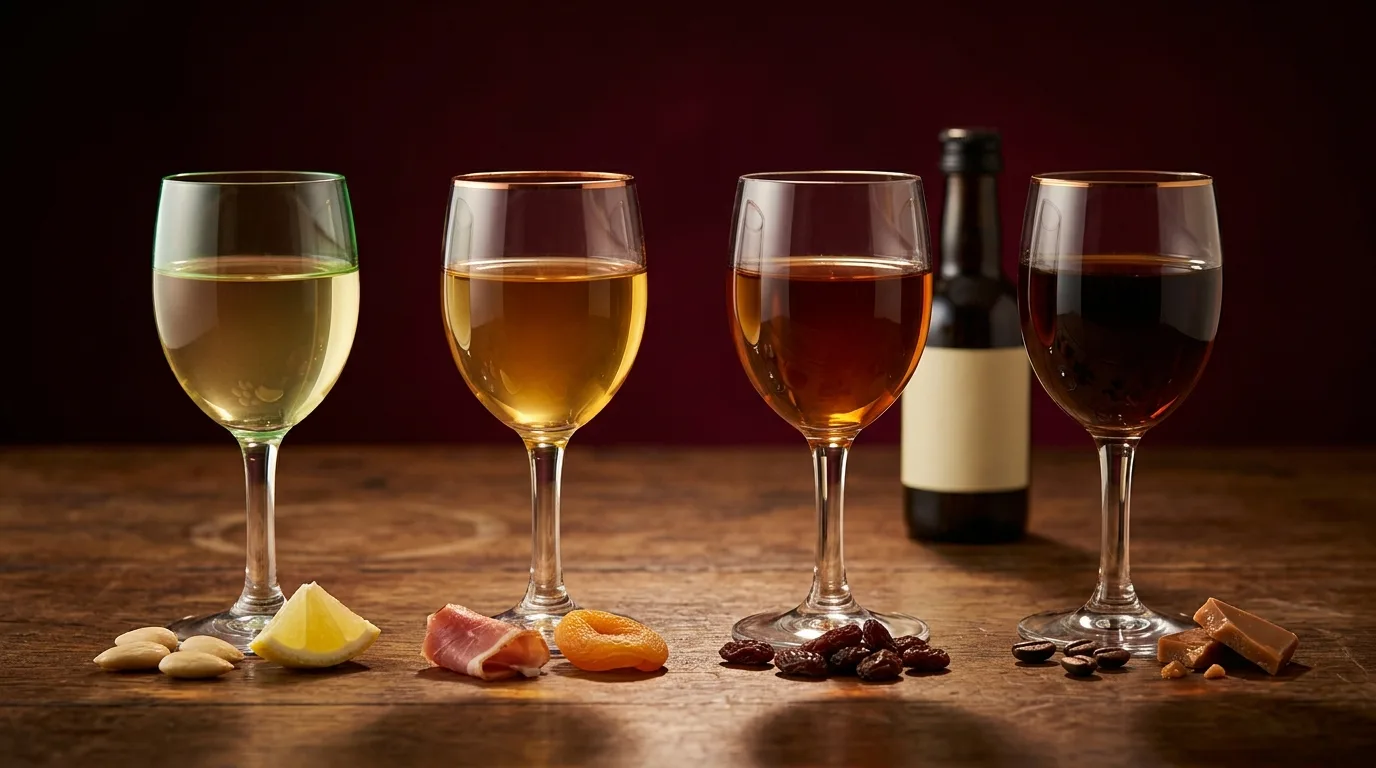
| Style | Sweetness | Tastes like | Drink it |
|---|---|---|---|
| Sercial | Driest, 9 to 27 g/L | Almond, citrus, high acidity | Before dinner, chilled |
| Verdelho | Off-dry, 27 to 45 g/L | Smoke, dried apricot, high acidity | With soup or cured ham |
| Bual | Sweet, 45 to 63 g/L | Raisin, medium-rich, dark colored | With cheese or a tart |
| Malmsey | Sweetest, 63 to 117 g/L | Coffee, caramel, rich texture | After dinner, on its own |
Sercial is nearly fermented dry and tastes of almond and citrus with high acidity, which makes it an aperitif rather than a dessert wine at all. Verdelho sits a step sweeter with a smoky character. Bual is properly sweet, darker, with a raisin quality and medium-rich texture. Malmsey, made from the Malvasia grape, is the sweetest and darkest of the four, with coffee and caramel flavors and a rich mouthfeel.
The part that surprises people is that even Malmsey doesn't taste cloying. Madeira carries naturally high acidity that balances the sugar, so the sweetest style still finishes clean instead of sitting heavily on your tongue. If sweet wine has put you off before, this is the category most likely to change your mind, and our guide to good sweet wines has more starting points in the same spirit.
You'll also see Rainwater on shelves, which is a lighter, softer style made mostly from Tinta Negra and aged around three years. It's inexpensive and pleasant, and it's a reasonable way to find out whether you like Madeira before spending more.
Decoding a dessert list at the table is exactly the moment Sommy's Vision label scan is built for. You point your phone at the list or at a bottle, and it reads the styles back against what it already knows about your taste rather than making you decode Sercial and Bual in your head while a server waits.
What should you eat with a Portuguese dessert wine?
The reliable rule is that the wine should be at least as sweet as the food. A dessert sweeter than the wine strips the wine of its fruit and leaves it tasting thin and sour, which is the single most common way these pairings fail.
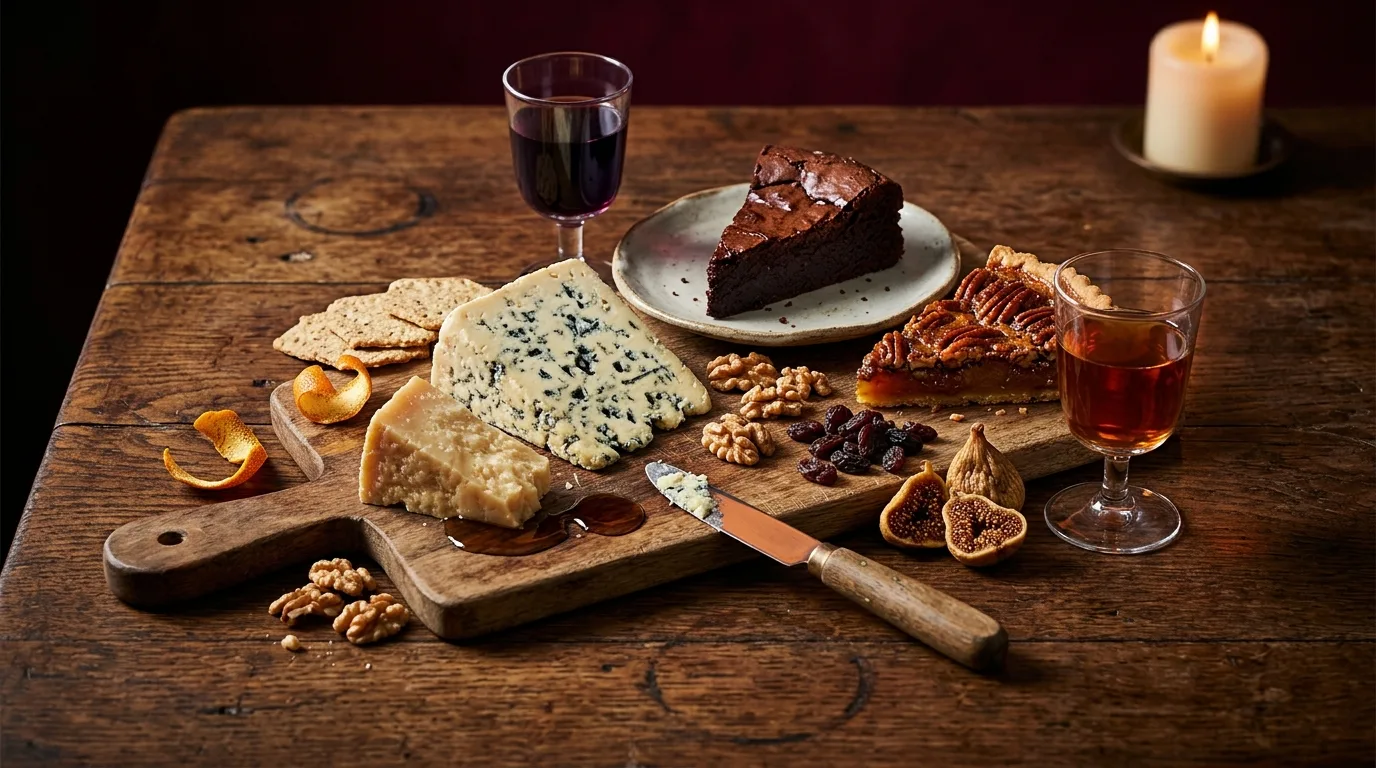
Ruby Port and chocolate is the pairing worth knowing first. The wine's dark berry fruit and the cocoa meet on common ground, and Ruby has enough sweetness and body to survive a rich flourless cake or a chocolate tart. If you're setting up something more interactive, our chocolate fondue pairing guide covers how much sweetness you actually need.
Tawny Port belongs with anything nutty or caramelized. Pecan pie, almond tart, creme brulee, sticky toffee pudding and salted caramel all work, because the wine already tastes of those things and the pairing amplifies rather than clashes.
Blue cheese and Port is the classic that predates all of this, and it earns its reputation. The salt and funk of a Stilton or a Roquefort meet the sugar in the wine and each makes the other taste less extreme. Tawny works, Ruby works, and either beats almost any dry wine at the same job. Our cheese board guide has the rest of the board covered.
Madeira is the most flexible of the group because of that acidity. Bual and Malmsey handle cheesecake, apple tart and anything with dried fruit. Drier Sercial and Verdelho work before the meal rather than after, alongside olives, almonds, cured ham or a bowl of soup, which is a genuinely Portuguese way to drink them. Moscatel de Setubal, with its apricot and orange character, is lovely with an almond cake or a fruit tart.
How long does an open bottle actually last?
Much longer than a table wine, and this is the practical reason to keep a bottle around. Fortified wine has both more alcohol and more sugar than ordinary wine, and the ones that were already oxidized in barrel have very little left to lose.
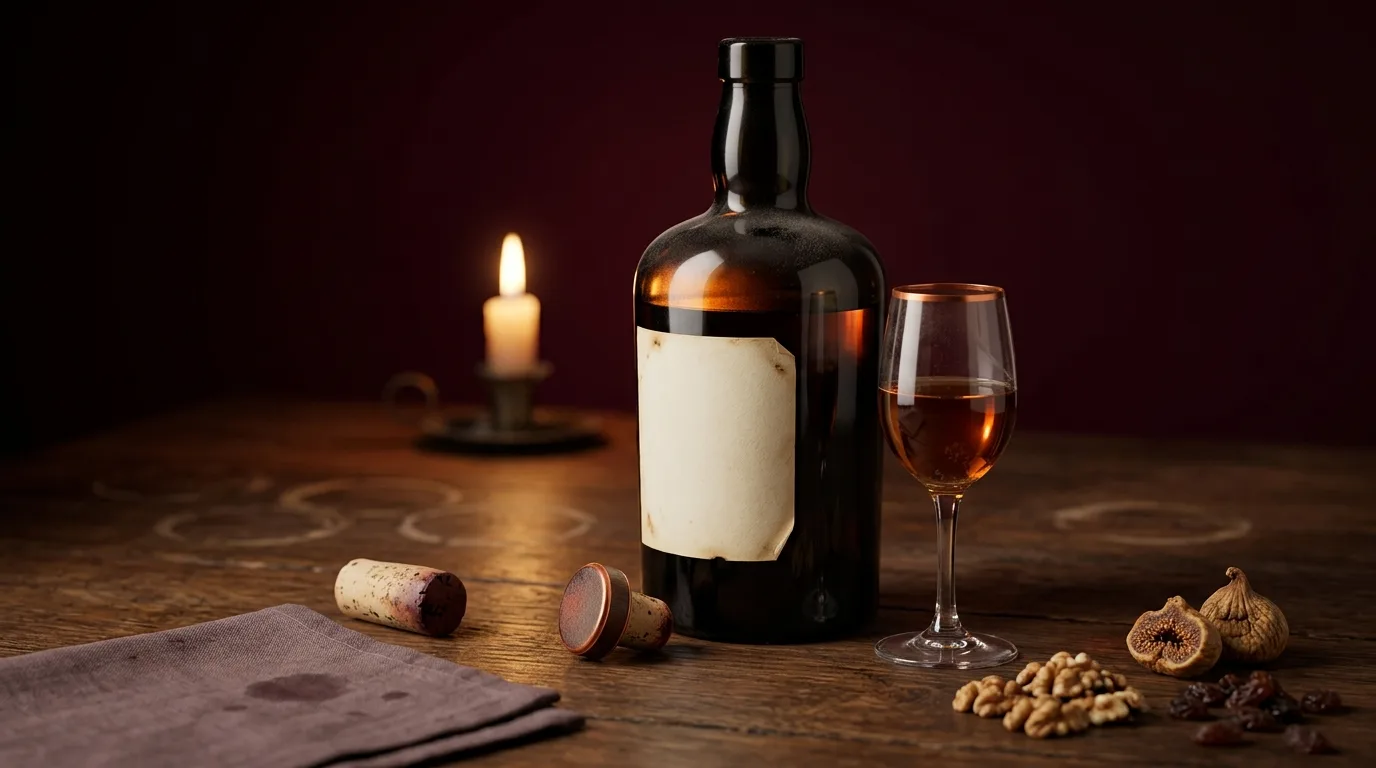
Tawny Port keeps for several months once opened, because its years in barrel have already exposed it to significant oxidation. A young Ruby or Late Bottled Vintage stays good for several weeks, and sometimes months if it's very young. Old Vintage Port is the exception and the one to plan around, since it matured in the bottle away from oxygen and is best finished within several days of opening.
Madeira is in a category of its own. Its production process involves deliberate heating and oxidation, so an open bottle stays sound for months or longer, and a vintage Madeira with the cork replaced can last for decades. Properly sealed and unopened, Madeira is among the longest-lived wines in existence, and bottles from the 18th century still turn up in good condition.
Store any of them somewhere cool and dark rather than beside the stove, standing upright if the bottle has a stopper rather than a driven cork. Serve Port between 59 and 68F, with Tawny a touch cooler than that and White Port properly chilled. Our serving temperature guide has the full ladder if you want it.
Common questions about Portuguese dessert wines
What do LBV and Colheita mean on the label?
Late Bottled Vintage is a Port from a single year that was left in barrel longer than a Vintage Port would be before bottling. It gives you a good deal of the character of Vintage Port without the price or the decades of waiting, and most versions are filtered so they don't need decanting. Colheita is a single-vintage Tawny aged at least seven years in wood, and it carries the harvest year on the bottle instead of a 10 or 20 Year age indication. Some Colheitas spend 20 or more years in barrel before release, which makes them very different animals from a Vintage Port of the same year.
Is White Port sweet?
It's less sweet than you'd expect. It's made from white grapes, and the spirit is added later in fermentation once more of the sugar has already converted to alcohol, which gives it an unusual dryness for the category. Drier styles are excellent chilled with tonic water and a slice of lemon, which is how a great many people in Porto actually drink it in summer.
Do I need to decant it?
Only some of the time, and it depends on the style. Unfiltered Ports, which means Vintage, Crusted and some Late Bottled Vintages, throw a sediment in the bottle and need decanting to leave it behind. Tawny Ports, filtered LBVs and Madeira are all fine poured straight from the bottle.
Is Moscatel de Setubal worth trying?
Very much so, and it's the least known bottle on this page. It's aged in wood like Port, and it changes character with time in a way that's easy to taste. Up to around five or six years old it's at its freshest and most fruity, with pronounced apricot notes. As it ages it darkens and picks up raisin, caramel and nutty flavors. One producer, Jose Maria da Fonseca, has held something close to a monopoly on the style since founding the house in 1834.
Which one should a beginner buy first?
Start with a 10 Year Tawny Port. It's widely available, it doesn't need decanting, it survives months in an open bottle, it works with cheese and with dessert and on its own, and it shows you what barrel age tastes like without asking you to commit to a Vintage Port's price. If you already know you like fresh fruit flavors more than nutty ones, start with a Late Bottled Vintage instead.
Choosing one tonight
Run the same question you started with. Rich and fruity means Ruby or LBV Port, and nutty and mellow means Tawny Port or Madeira. Then check what's on the plate, and make sure the glass is at least as sweet as the dessert.
These are some of the most generous wines any country makes, and the good news is that you don't need the expensive end to enjoy them. A 10 Year Tawny or an entry-level Madeira will tell you more about why people love this category than a rare bottle you're afraid to open.