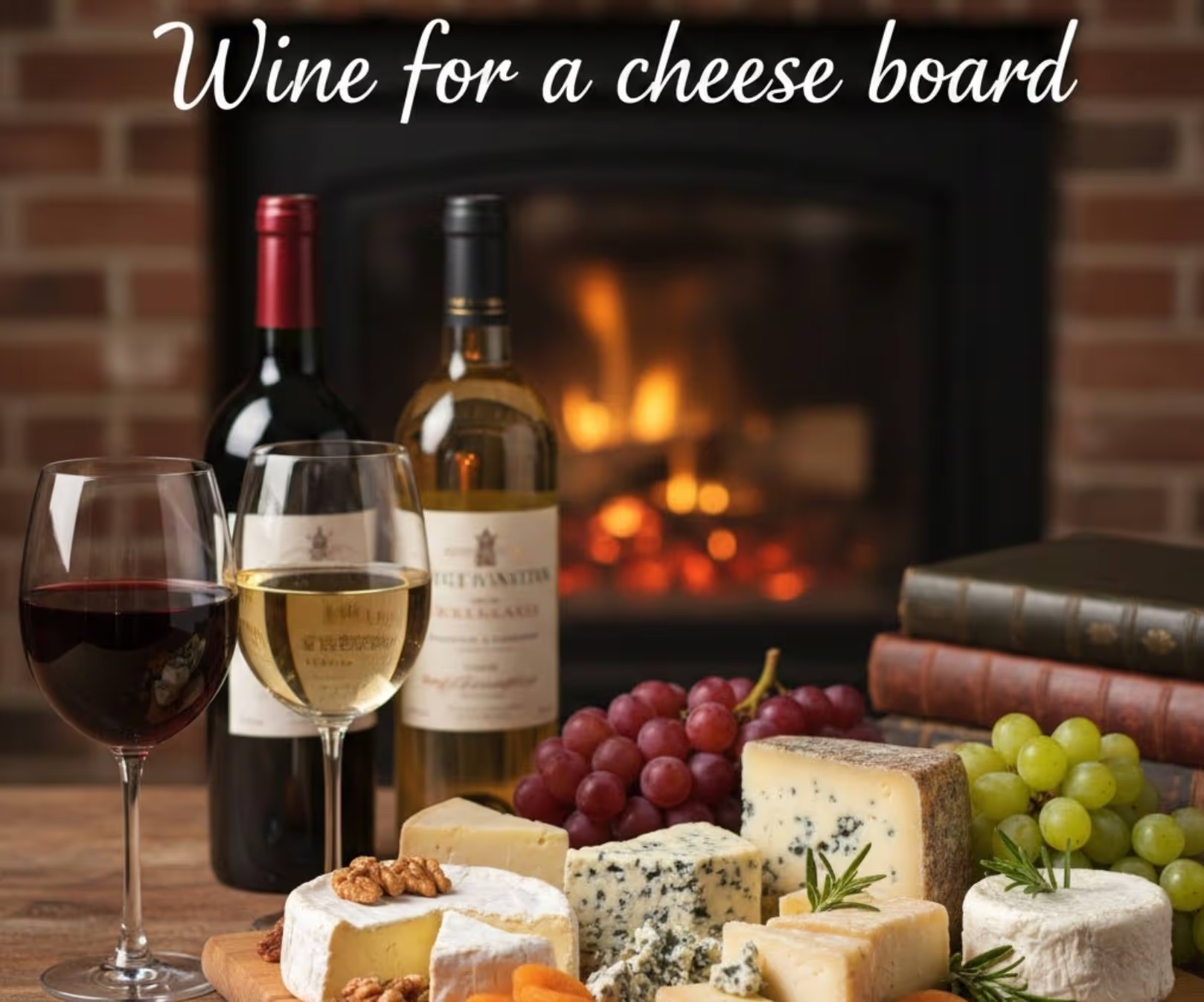

A cheese board is supposed to feel easy. Then you’re staring at brie, cheddar, blue, and goat cheese, and suddenly picking wine feels like a trap.
Here’s the core answer: use sparkling for brie, a medium red for cheddar, a sweet wine for blue, and a crisp white for goat cheese. Those four styles cover the board without weird clashes, even if you don’t know grapes or regions.
This is a practical wine cheese pairing guide, built for real life and fast decisions, with clear wine recommendations you can actually use.
The “no-clash” plan for a mixed cheese board
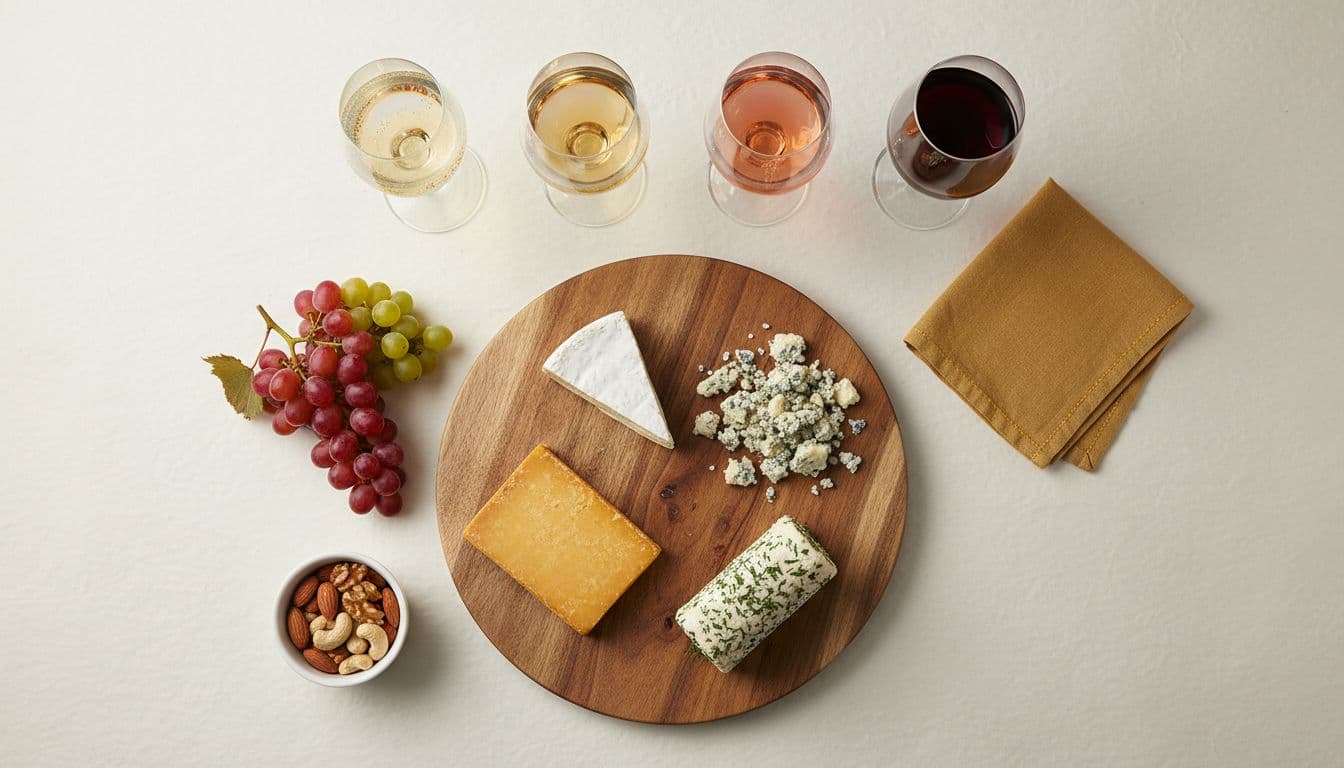
If you only remember three simple wine tips, make them these:
1) Match weight, not labels.
Light cheeses hate heavy, tannic reds. Strong cheeses can bully delicate whites.
2) For creamy cheese, bring bubbles or bright acid.
It’s like squeezing lemon over something rich. The wine “wakes up” your mouth.
3) For salty blue, sweetness is the peace treaty.
Sweet wine doesn’t make blue taste sweeter, it makes it taste less sharp.
Here’s the quick map that works almost every time:
| Cheese on the board | Safest wine style | What to look for on a label/menu |
|---|---|---|
| Brie | Dry sparkling | Brut, Crémant, Cava, dry sparkling |
| Cheddar | Medium-bodied red | Rioja, Cabernet Franc, Merlot (not huge) |
| Blue | Sweet dessert wine | Sauternes-style, late harvest, Port |
| Goat cheese | Crisp white | Sauvignon Blanc, dry Riesling, Albariño |
The four safe pairings (brie, cheddar, blue, goat)
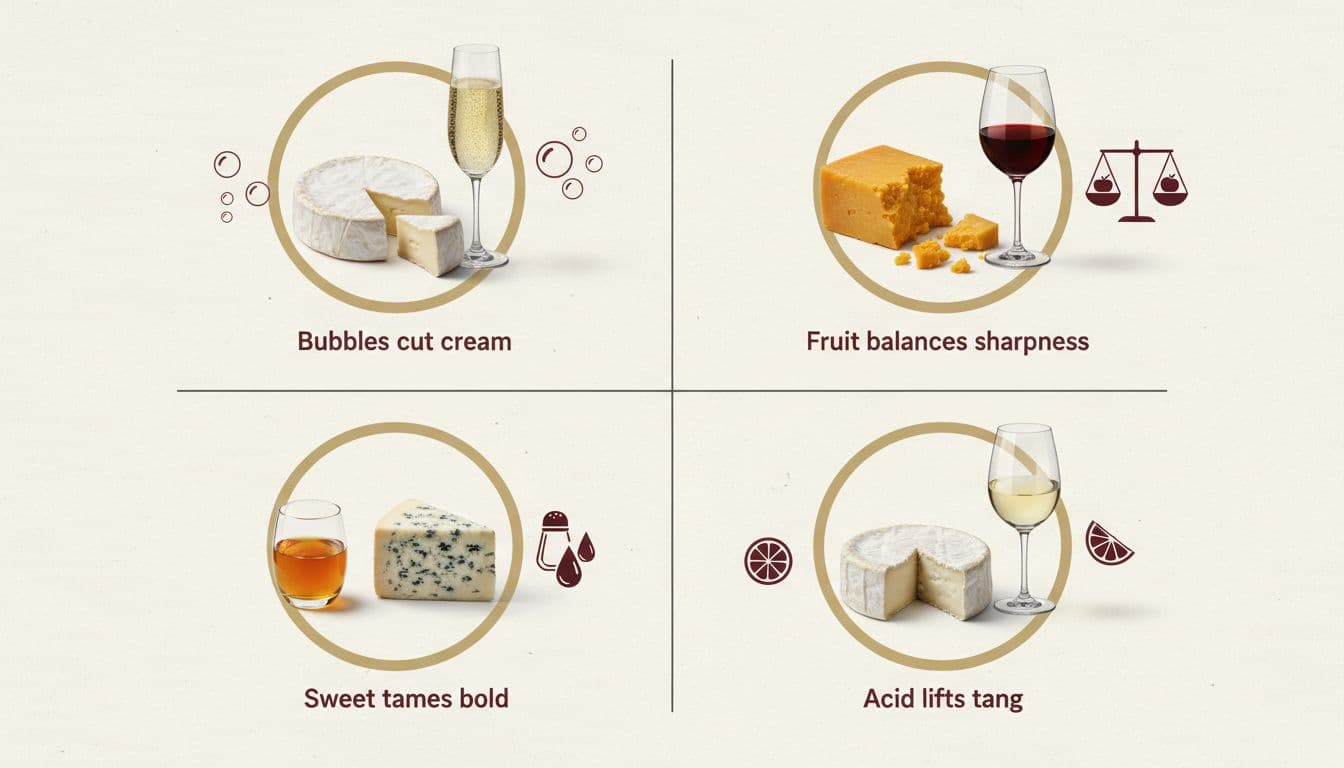
Brie: go sparkling so it doesn’t feel heavy
Brie is soft, buttery, and mild. A big red can make it taste metallic or flat. Sparkling fixes that.
Clear wine recommendations for brie
- Dry sparkling (Brut) is the safest: Champagne, Crémant, Cava, or any dry sparkling.
- If you hate bubbles, choose a crisp white that isn’t oaky (think “fresh,” not “buttery”).
Grocery store wine picks (what to grab fast): a Brut sparkling under your budget, or a simple Sauvignon Blanc.
Restaurant wine tips: ask for “your driest sparkling by the glass.” It’s a clean start and it won’t fight the cheese.
Cheddar: pick a medium red that tastes like fruit, not wood
Cheddar swings from creamy to sharp. The mistake is going too heavy. A huge Cabernet can turn cheddar bitter and dry.
Wine recommendations for cheddar
- Rioja is a steady choice when you want red that behaves.
- Cabernet Franc is another safe bet, it’s often medium-bodied and food-friendly.
- If you’re standing in the aisle, “Merlot” often lands in the right middle zone.
This is wine explained simply: cheddar wants fruit and comfort, not a mouth-drying wall of tannin.
Blue cheese: sweetness is what makes it click
Blue cheese is salty, funky, and loud. Dry wine can taste thin next to it. Sweet wine steps in and smooths the edges.
Smart wine recommendations for blue cheese
- Sauternes-style (sweet white) is classic.
- Late-harvest whites work too.
- Port is bold and cozy, especially in winter.
If you’re curious about other classic matches, this guide to the best wine and cheese pairings is a helpful list for future boards.
Goat cheese: crisp white keeps it bright
Goat cheese has tang. It can taste extra “goaty” if the wine is too soft or too oaky. Crisp white keeps it clean.
Beginner-friendly wine advice for goat cheese
- Sauvignon Blanc is the go-to because it’s fresh and sharp in a good way.
- Dry Riesling is great if you want something lighter but still bright.
- Albariño works nicely if you want a sunny, citrusy feel.
If the goat cheese has herbs, it’s even easier. The wine starts to taste like a little garden.
If you can only buy one bottle for the whole board
Sometimes you just want one bottle and zero second-guessing. For a mixed board, the best all-around move is dry sparkling.
Sparkling plays well with brie, it won’t ruin goat cheese, and it can even hang with cheddar. Blue cheese is the only outlier, but it’s still “fine” if you keep a drizzle of honey or fig jam on the board.
If sparkling isn’t your thing, choose a crisp white (Sauvignon Blanc or dry Riesling). It’s the next best one-bottle solution.
Restaurant wine tips and grocery store wine picks (no jargon needed)
When you’re scanning a menu or shelf, you don’t need expert words. You need “what won’t clash.”
Wine list tips that work in the moment
- Say what you’re eating: “I’m doing a cheese board with brie, cheddar, blue, and goat.”
- Ask for a style: “What’s your safest dry sparkling?” or “What’s a medium red that’s not too heavy?”
- If you’re stuck between two reds, choose the one described as “bright” or “fruity,” not “powerful.”
Grocery store wine picks that reduce risk
- For sparkling: look for “Brut” (dry). Avoid “Demi-Sec” unless you want sweet.
- For cheddar red: choose something that says medium-bodied.
- For blue: choose a bottle clearly labeled dessert wine, late harvest, or Port.
For more basics in plain language, this beginner’s guide to pairing cheese and wine is a nice confidence boost.
Wine tasting notes explained (so labels make sense fast)
Wine tasting notes explained, without the poetry:
- Crisp: mouth-watering, lemony, good with goat cheese.
- Buttery: soft, rich, often oaky, risky with tangy cheeses.
- Fruity: tastes like berries or cherries, usually safe with cheddar.
- Dry: not sweet. A “dry sparkling” is your board’s best friend.
- Sweet: literally sweet, the best match for salty blue.
This is a modern wine guide in one idea: treat tasting notes like road signs, not a test.
Conclusion: make the board easy on yourself
A good wine cheese pairing doesn’t need perfect bottles, it needs smart wine picks that avoid the common clashes. Dry sparkling for brie, medium red for cheddar, sweet wine for blue, crisp white for goat cheese is the calm path.
If you want help choosing in the moment, this is exactly what an AI wine assistant is good at: smart wine recommendations, personalized wine picks, and wine app suggestions based on what you’re eating and what you already like.
For a wine app , look for personalized wine recommendations that keep things simple, offer simple wine explanations, and give everyday wine advice you can trust.