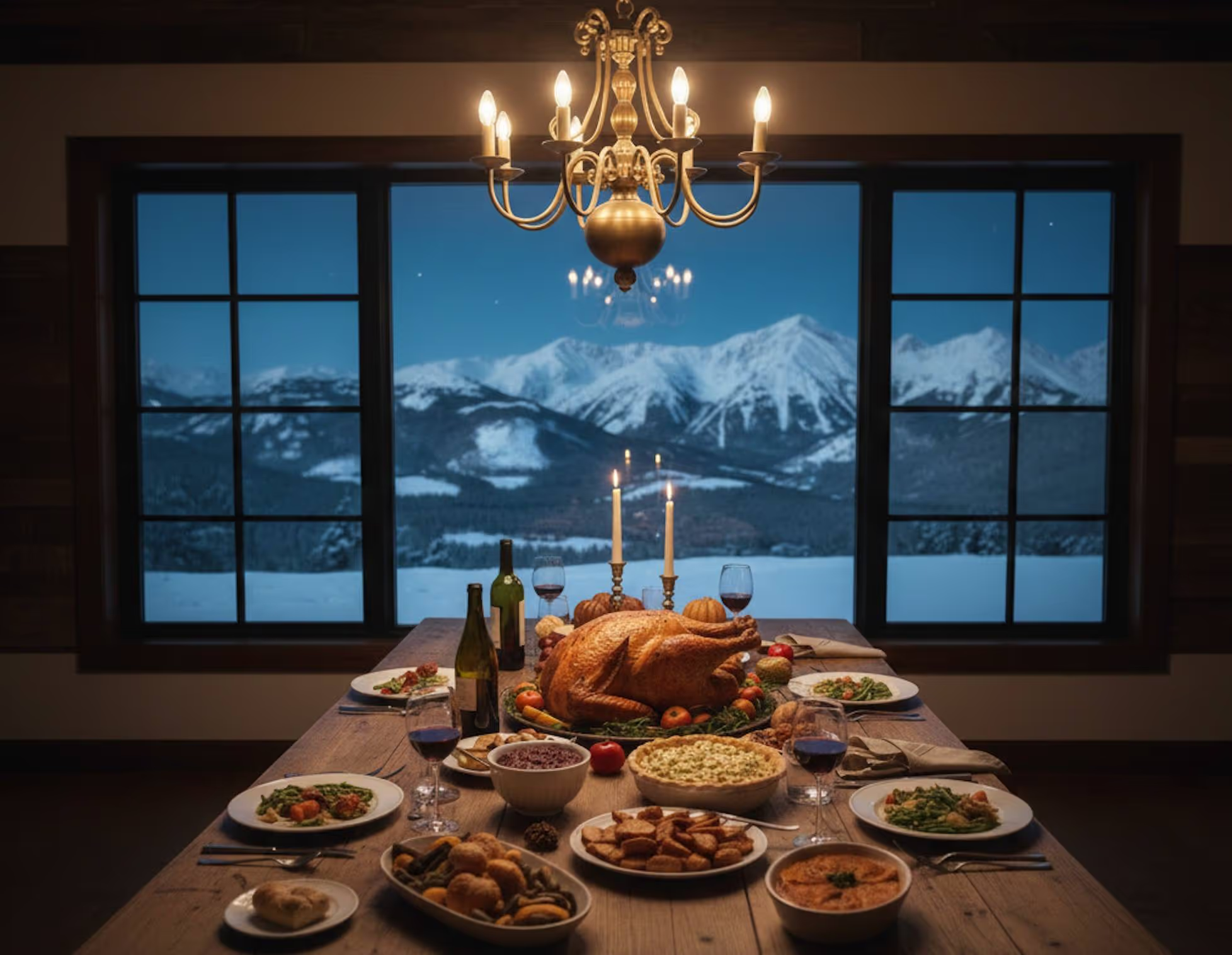

The best wine for Thanksgiving is a light, high-acid red like Pinot Noir or Beaujolais, or an off-dry white like Riesling, because both handle a plate carrying turkey, gravy, stuffing and cranberry sauce at the same time. If you want one bottle that pleases everyone, buy dry sparkling wine, since Cava starts around $15 and works from the first snack through to the pie. Plan on roughly one bottle for every two guests for a short gathering, and one bottle each if people settle in for the afternoon.
Thanksgiving is genuinely forgiving as a wine occasion, because no single bottle can match every dish on a plate that sweet, salty and rich all at once, which takes most of the pressure off the decision. What you're really doing is picking two or three flexible styles that never actively clash, then buying enough of them.
What makes a wine work with a Thanksgiving plate?
Three things matter: high acidity, gentle tannin, and a little sweetness or fruit richness. Acidity is what keeps your palate fresh against butter, gravy and cream, and it's the reason a sharp wine tastes better with rich food than a soft one does. Without it, the third helping tastes heavy in a way the first didn't.
Tannin is the drying, gum-gripping sensation in red wine, and Thanksgiving is where it causes problems. Turkey is lean, and the salt in stuffing and gravy makes tannin taste harsher than it would alongside a steak. That's why an oaky Cabernet Sauvignon or a young Bordeaux tends to disappoint here despite being an excellent wine in other company.
The sweetness point is the one people resist and it matters most. Cranberry sauce, sweet potatoes with brown sugar, and glazed carrots all carry real sugar, and a bone-dry wine tastes sour and thin next to them. A wine with a touch of fruity sweetness, which is what "off-dry" means on a label, meets those dishes on their own terms. Our explainer on spotting an off-dry white wine covers the label wording that tells you what's in the bottle.
Which red wines suit turkey and the savory sides?
Light, juicy reds with fresh acidity and soft tannin are the ones that work, and Pinot Noir remains the safest choice on the table. It brings red cherry and cranberry flavors that echo the sauce, along with an earthy, mushroomy quality that flatters stuffing and roasted vegetables. Soter Vineyards Planet Oregon 2023 runs about $23 and Joel Gott Oregon 2023 about $25, both checked on wine.com in August 2026, and either is more than good enough for a crowded table. Domaine Drouhin Dundee Hills at roughly $48 is the bottle to open if you want one serious pour for the people who'll notice.
Gamay, sold as Beaujolais, is the better value and arguably the better match. It's lighter than Pinot Noir with the same bright acidity and even softer tannin, and it tastes of strawberry and raspberry in a way that makes it easy to drink for hours. Louis Jadot Beaujolais 2024 costs about $15, and Mary Taylor Descombes Beaujolais-Villages 2022 around $22 gives you more depth for a few dollars more. Serving either one lightly chilled, at cellar temperature rather than room temperature, makes a noticeable difference.
Grenache and lighter Zinfandel both work if your stuffing has sausage in it or your family simply prefers a fuller red, though watch the alcohol level and avoid anything above about 15 percent, which tastes hot alongside salty food. Skip heavily oaked Cabernet Sauvignon, Syrah and Malbec entirely. For turkey specifically, our guide to pairing wine with turkey goes deeper on white meat against dark meat.
Which white wines handle the whole table?
Riesling is the strongest white for Thanksgiving, and it isn't close. It carries very high acidity alongside a little residual sweetness, which is precisely the combination the sweet sides demand, and its lime and green apple flavors stay lively through a long meal. Pewsey Vale Eden Valley Dry Riesling 2024 costs about $18, Wagner Stempel from Germany about $24, and Forge Cellars from the Finger Lakes about $28. Any of the three outperforms a Chardonnay at twice the price on this particular plate.
Chenin Blanc is the other white worth seeking out, particularly from Vouvray in the Loire or from South Africa. It has a honeyed, pear-and-ginger character with a waxy texture that stands up to stuffing, and the versions with a touch of sweetness handle sweet potatoes as well as Riesling does. Most wine shops keep only a couple of bottles, so it rewards asking rather than browsing.
Chardonnay is fine if your family already drinks it, with one condition: choose an unoaked or lightly oaked style rather than a buttery Californian one, because vanilla and butter flavors sit awkwardly against cranberry sauce. Sauvignon Blanc is the weakest of the common whites here, since its grassy sharpness fights the sweet dishes, though it does suit a herb-heavy stuffing and green beans well enough to justify a bottle if someone requests it.
Is sparkling or rosé the safer choice?
Sparkling wine is the most flexible thing you can put on a Thanksgiving table, and it's the right answer if you only want to buy one style. The acidity is high, there's no tannin to clash with anything, and the bubbles keep a rich meal feeling lighter than it is. It also solves the awkward first hour when people are arriving and picking at snacks.
Cava gives you the most for your money, with Blanchard Pérez Brut around $15 and Vins el Cep Kila Brut 2022 around $16. Crémant from the Loire or Alsace costs a little more, roughly $20 to $25, and generally tastes more refined than Prosecco at the same price. Prosecco itself is perfectly good and tends to be softer and slightly sweeter, which some tables prefer. Our comparison of Prosecco, Cava and Champagne explains what actually separates them.
Dry rosé deserves more attention than it gets in November, mostly because people file it under summer. It has the red fruit of a light red and the freshness of a white, which makes it the single most agreeable wine to put in front of a group with mixed preferences. Buy a dry one from Provence, Spain or the American West Coast, and avoid the sweeter pink wines unless dessert is the target.
How much wine do you actually need to buy?
Plan on each guest having about two drinks in the first hour and one an hour after that, with roughly five glasses coming out of a standard 750ml bottle. That arithmetic gets away from people quickly, so the table below does it for you. These numbers assume wine is the main drink and round up, because running out is the only real mistake available here.
| Adults drinking | Gathering length | Glasses needed | Bottles to buy |
|---|---|---|---|
| 4 | 3 hours | 16 | 4 |
| 6 | 4 hours | 30 | 6 |
| 8 | 4 hours | 40 | 8 |
| 10 | 5 hours | 60 | 12 |
| 12 | 5 hours | 72 | 15 |
Split that total across styles rather than buying one case of the same thing. A workable division for eight bottles is two sparkling, three white and three red, adjusted toward whatever your particular family actually drinks. Serving beer or cocktails alongside lets you scale the wine down by roughly a third.
Buying a full case usually triggers a discount of 10 to 15 percent at most shops, which often makes twelve bottles cheaper than nine. Anything unopened keeps perfectly well for the December gatherings that follow, so over-buying carries almost no cost. If you're hosting more than once this season, our guide to choosing wine for a dinner party covers the same planning for smaller groups.
What should you pour with pumpkin and pecan pie?
Dessert wine needs to be at least as sweet as the dessert, otherwise it tastes thin and sour by comparison. That rule decides almost everything about the pie course, and it's why a dry sparkling wine that worked beautifully all afternoon suddenly falls apart next to pecan pie.
Moscato d'Asti is the easiest choice and the most widely liked, being gently sweet, lightly fizzy and low enough in alcohol that a glass after a large meal feels manageable. It suits pumpkin pie particularly well because the sweetness is delicate rather than syrupy. Late-harvest Riesling is the more interesting option, bringing enough acidity to keep a rich dessert from feeling cloying, and it handles apple pie and pumpkin equally.
Pecan pie is sweet enough to defeat most wines, and the ones that survive it are tawny Port and cream sherry, both carrying nutty caramel flavors that meet it head on. Pour these in small measures, around two or three ounces, since nobody wants a full glass of fortified wine after that much food. One bottle covers a large table comfortably.
What do you pour when not everyone at the table drinks?
Buy fewer bottles and better ones, and put real thought into the non-alcoholic option rather than leaving it as an afterthought. A table where half the adults aren't drinking needs perhaps three bottles instead of eight, which frees up the budget to open something genuinely good for the people who are.
The non-alcoholic wines available now are far better than they were a few years ago, though they vary wildly, and the sparkling ones are consistently the most successful because carbonation and acidity survive the alcohol removal process better than tannin does. Sparkling grape juice, good tart cider, or a jug of something homemade with cranberry and citrus all work, and they matter more than people admit, since being handed a glass of water while everyone toasts feels pointedly different from being included.
Alcohol levels are worth watching generally on a day this long. Riesling and Beaujolais often sit around 12 percent where a Zinfandel can reach 15, and across an afternoon that gap is substantial. Choosing the lower-alcohol styles lets people drink across five hours without anyone falling asleep before the pie arrives.
When should you buy the wine, and how cold should it be?
Buy your wine at least a week ahead and ideally earlier, because the shops are chaotic in Thanksgiving week and the good value bottles sell out first. Nothing on this list is improved by being bought at the last minute, and buying early is also how you get the case discount and the chance to ask a shop assistant for advice while they still have time to give it.
Temperature does more for a wine than price does, and most people get it wrong in both directions. Whites, rosé and sparkling should be at about 45 to 50 degrees Fahrenheit, which means taking them out of the fridge roughly twenty minutes before pouring rather than serving them straight from it. Reds want about 60 to 65 degrees, which is cooler than any modern heated house, so twenty minutes in the fridge before dinner genuinely improves a Pinot Noir or a Beaujolais.
Working out a lineup for a specific menu is the sort of thing worth asking about rather than guessing at. You can describe your table in Sommy Chat, including the dishes and how many people are drinking, and get a set of bottles that accounts for what you and your family have liked before instead of a generic list of styles.
Common questions about Thanksgiving wine
Is red or white wine better with turkey? Both work, and the choice matters less than the style within each. A light, high-acid red like Pinot Noir or Beaujolais and an off-dry Riesling are equally good answers, while a heavy oaked red is the only genuinely poor one.
What is the single best wine for Thanksgiving if I buy one bottle? Buy a dry sparkling wine, because it works with snacks, the main meal and most of the table's preferences at once. Cava around $15 does this as well as anything more expensive.
How many bottles of wine do I need for 10 people? Around 12 bottles for a five-hour gathering where wine is the main drink, based on two drinks in the first hour and one an hour afterwards. Scale down by roughly a third if you're also serving beer or cocktails.
What wine goes with pumpkin pie? Moscato d'Asti is the easiest match, with late-harvest Riesling as the more interesting alternative. Both are sweeter than the pie, which is what stops them tasting sour alongside it.
What wine should I bring as a Thanksgiving guest? Bring a dry sparkling wine, a dry rosé, or a Pinot Noir, all of which fit almost any menu without competing with what the host has planned. Our guide to choosing wine as a gift covers presentation if you want it to feel like an occasion.
Does Thanksgiving wine need to be expensive? No, and the $15 to $25 range covers everything this meal needs. The plate is too busy for subtlety, so an expensive bottle gives you less return here than at almost any other dinner.
What to put on the table this year
A lineup of Cava for the first hour, a bottle or two of dry Riesling, and Pinot Noir or Beaujolais for the main meal covers a normal family Thanksgiving completely, and it costs somewhere between $60 and $100 for a table of eight. Add a Moscato d'Asti for dessert if pie matters in your house, and you've handled the entire day for less than the cost of the turkey.
The one thing worth doing differently this year is buying it all in October or early November while shops are calm and stocked. Everything above keeps happily for months, the case discount is real, and it removes the single most stressful errand from the week itself.
Sommy keeps track of which of these your family actually enjoyed, so next November starts from what worked rather than from a blank list. Scan a bottle or ask about a menu, and the recommendation reflects your own table instead of a generic one.