
Off-dry Riesling, a dry sparkling rosé, or a light Pinot Noir will handle almost any ham you put on the table. Ham is salty and fatty with a sweet crust baked onto the outside, so the wine needs bright acidity, generous fruit, and very little tannin. The glaze does more to the pairing than the meat does, which is why a bourbon and brown sugar crust points at a juicy Zinfandel while a honey glaze asks for a white with a touch of sweetness. Your side dishes are the other half of the problem, and they explain why a perfectly good bottle can taste wrong by the second helping.
What wine goes best with ham?
Off-dry Riesling is the most reliable single answer, because it brings high acidity and a small amount of sugar at the same time. That sugar is doing real work here. A bone dry wine set against a sweet glaze reads as sour and thin, since your palate calibrates to whatever is sweetest on the plate. A little residual sugar in the glass keeps the wine tasting like fruit instead of like lemon juice.
The other two safe picks are a dry sparkling wine and a light, low-tannin red. Bubbles and acidity scrub salt and fat off your tongue between bites, which is why sparkling wine is the traditional match for cured pork in almost every country that makes both. A pale red works for the same reason a heavy one fails: salt sharpens the drying, bitter edge of tannin, so a big Cabernet Sauvignon next to a salty ham tastes metallic and hard.
Everything else follows from those three. Chenin Blanc, dry rosé, Lambrusco, Gamay from Beaujolais and Grenache all fit the same specification. Oaky Chardonnay, Cabernet Sauvignon, Malbec and young Bordeaux all break it.
Why does the glaze decide the pairing?
Ham on its own is a fairly narrow flavor: salt, smoke, and pork fat. The glaze is where the variation lives, and it is usually the sweetest and most aromatic thing on the plate, so it sets the target your wine has to hit.
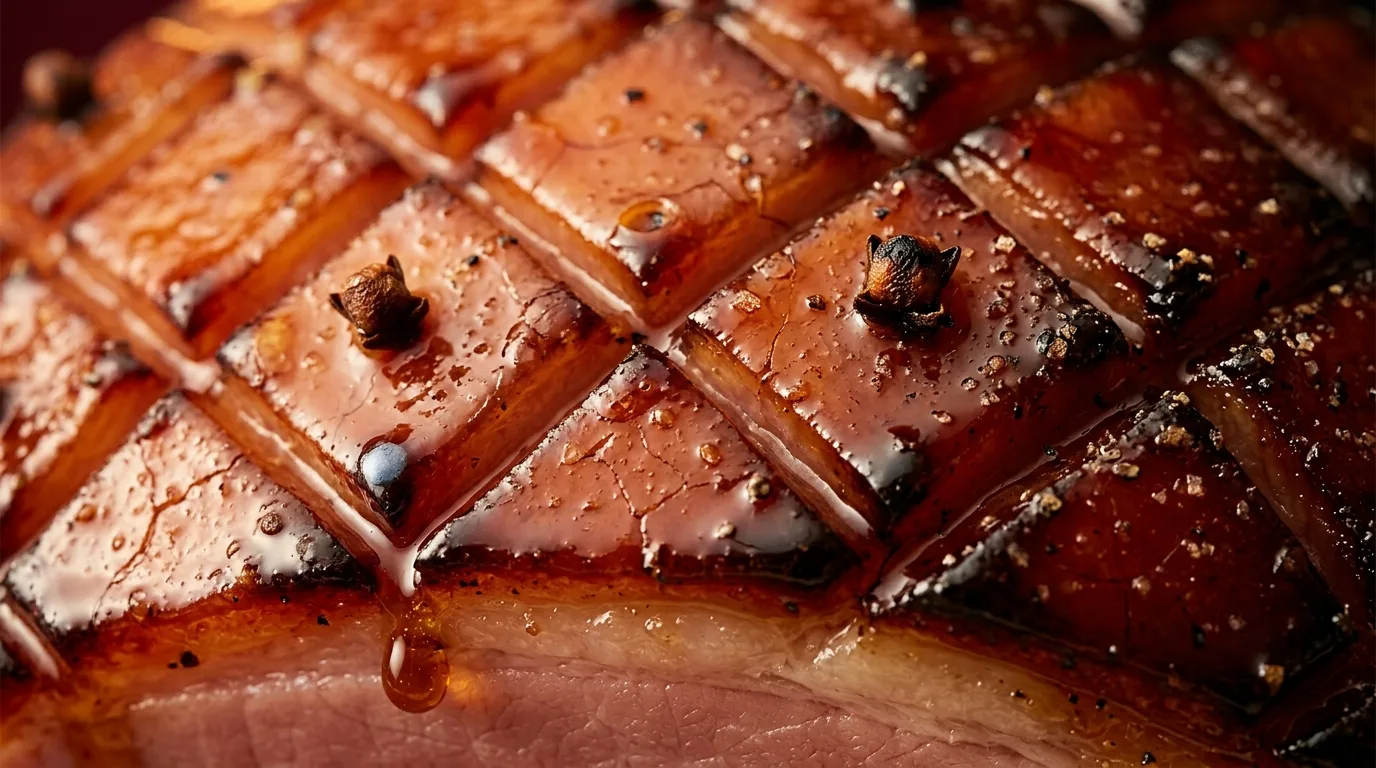
Sweetness is the first thing to read. Honey and maple glazes are simply sweet and floral, so they want a wine with matching ripeness. Brown sugar and bourbon glazes go darker, closer to caramel and toffee, and they suit red fruit rather than citrus. Pineapple and orange glazes add sharp acidity of their own, which means the wine can afford to be drier because the plate is already doing the cutting.
The second thing to read is spice. A lot of glazes carry mustard, cloves, allspice or a black pepper crust, and those push toward wines with their own savory edge. Grenache and Zinfandel both have a peppery streak that meets that head on. Wine Spectator's own ham and wine guide organizes its picks the same way, by glaze rather than by cut, which tells you the professionals treat the crust as the real subject too.
Which wine suits your glaze?
Look at what you brushed onto the ham, then work backwards to the bottle. This is faster than trying to match the meat, and it gets you to the right shelf in about ten seconds.
| If your glaze is | Pour | Why it works |
|---|---|---|
| Honey or maple | Off-dry Riesling, Chenin Blanc | Ripe fruit and residual sugar keep the wine from tasting sour beside the sweetness |
| Brown sugar or bourbon | Zinfandel, Grenache, Lambrusco | Dark berry fruit and a peppery lift match caramel and toffee notes |
| Pineapple or orange | Sparkling rosé, dry Riesling | The glaze supplies its own acidity, so a drier, fresher wine stays balanced |
| Mustard and clove | Gamay, Cru Beaujolais | Bright red fruit and low tannin absorb the spice without turning bitter |
| No glaze, smoked only | Dry rosé, Pinot Noir, Cava | Savory smoke wants freshness and fruit rather than sweetness |
Sparkling rosé earns a mention on its own, because it is the closest thing to a universal answer in this whole category. It has the acidity of a white, the red fruit of a light red, and bubbles that reset your palate after a sweet, fatty mouthful. If you are hosting and you want to stop thinking about it, buy that.
Does the type of ham change the answer?
It changes it less than people expect, though the salt level moves. A supermarket spiral-cut ham is wet-cured, mild, and already glazed, so it is the easiest version to match and the off-dry white answer holds. A country ham or a heavily smoked shoulder is far saltier and more savory, which pushes you away from sweetness and toward a dry rosé, a Cava, or a chilled Pinot Noir.
Dry-cured hams are a different dish altogether. Prosciutto, Serrano and Jamón Ibérico are sliced thin, eaten cold, and carry the most concentrated salt of any ham you will buy, and Wine Folly's guide to pairing wine with ham separates them out for exactly that reason. Sparkling wine and dry sherry are the classic partners there, and we go deeper on the cold-plate version in our notes on wine with prosciutto.
If you are cooking a fresh ham, which is really just an uncured pork roast, ignore all of this and treat it as pork. The salt and the glaze are what make the standard ham pairing unusual, and without them you are back in ordinary wine and pork pairing territory.
Which side dishes wreck the pairing?
This is the part most ham pairing advice skips, and it is the reason people conclude they picked the wrong bottle when they actually picked the wrong forkful. Certain sides change how the wine tastes for a minute or two afterwards, and a holiday table is usually covered in them.
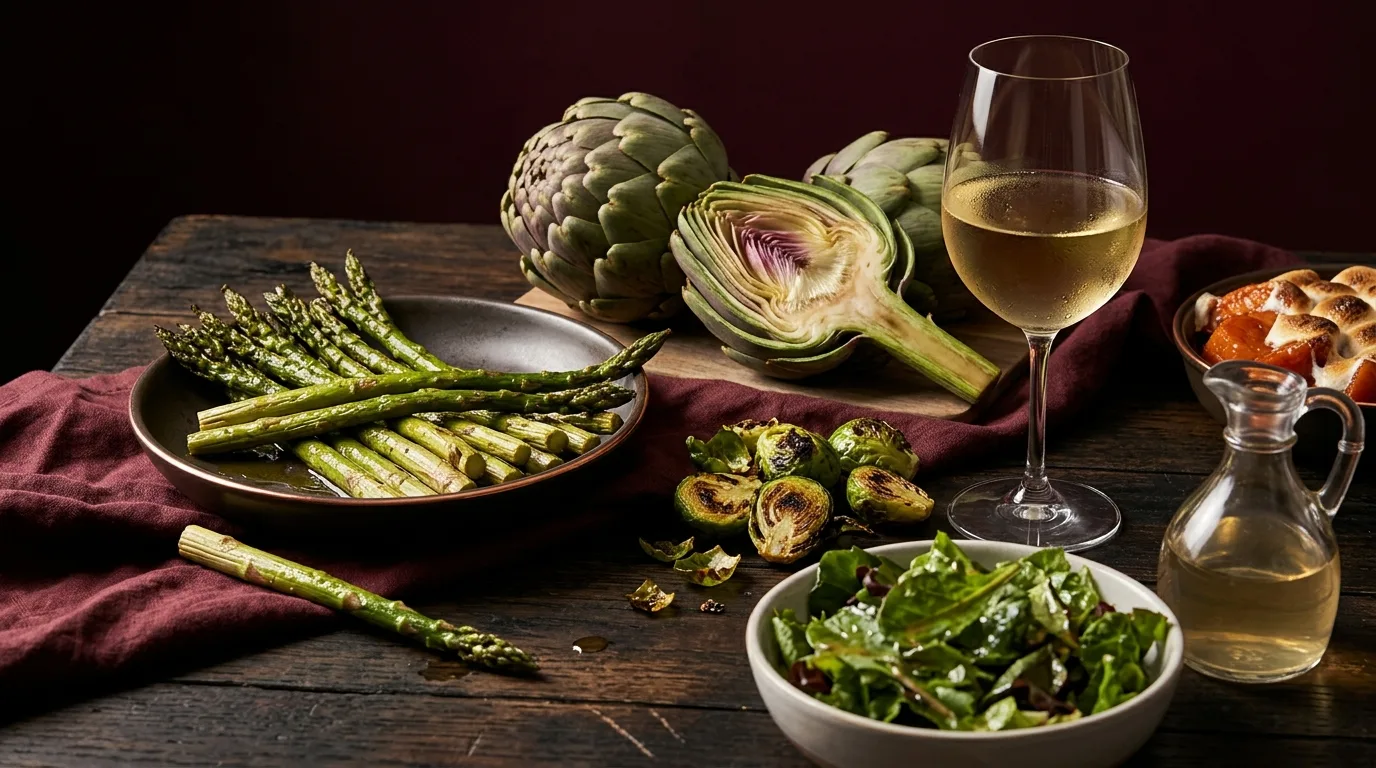
Asparagus and artichokes are the notorious pair, and both can leave a wine tasting flat or faintly metallic. The fix is more acidity and a little sweetness rather than a different grape, and we worked through the details in our guide to asparagus wine pairing without metallic notes. Charred Brussels sprouts push bitterness in a similar direction, though less aggressively.
Vinegar is the sneakier problem on a holiday table. A sharp vinaigrette or a jar of pickles makes a wine taste dull and slightly sour, because the wine is suddenly the less acidic thing in your mouth. Anything high in acid survives this, so Riesling and sparkling wine hold up while a soft, oaky white collapses.
Very sweet sides do the same thing in reverse. Candied yams, marshmallow-topped casseroles and sweet cornbread will make a dry wine taste sharp and hollow, which is the single strongest argument for keeping a touch of sugar in the glass on a holiday table. Pick the wine that suits the ham, then let a little sweetness or a little fizz cover the rest of the plate.
What if you're only opening one bottle?
Buy the sparkling rosé and stop negotiating with yourself. It handles the glaze, the salt, the vegetables and the sweet casseroles better than any still wine, and it suits people who normally drink white as well as people who normally drink red. That last part matters more than pairing theory does when eight people are sitting down together.
If bubbles are not your thing, off-dry Riesling is the runner-up and covers almost as much ground. The trap is the label, because Riesling is sold everywhere from bone dry to dessert sweet with very little on the front to tell you which you have. Our guide to spotting a dry Riesling explains the tells, and the same reasoning in reverse helps you find the off-dry white you actually want here.
One more thing about buying sparkling wine for this meal: Brut is the driest common style, and Extra Dry is a labelling quirk that sits a step sweeter despite the name. For a sweet glaze, Extra Dry is genuinely the better buy, which is the opposite of what most people assume at the shelf.
What should you drink with the leftovers?
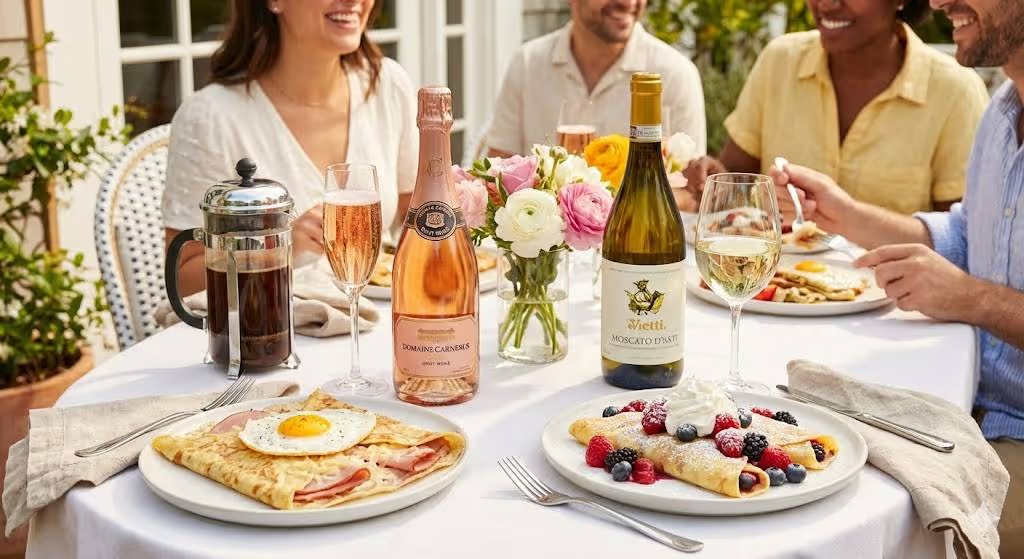
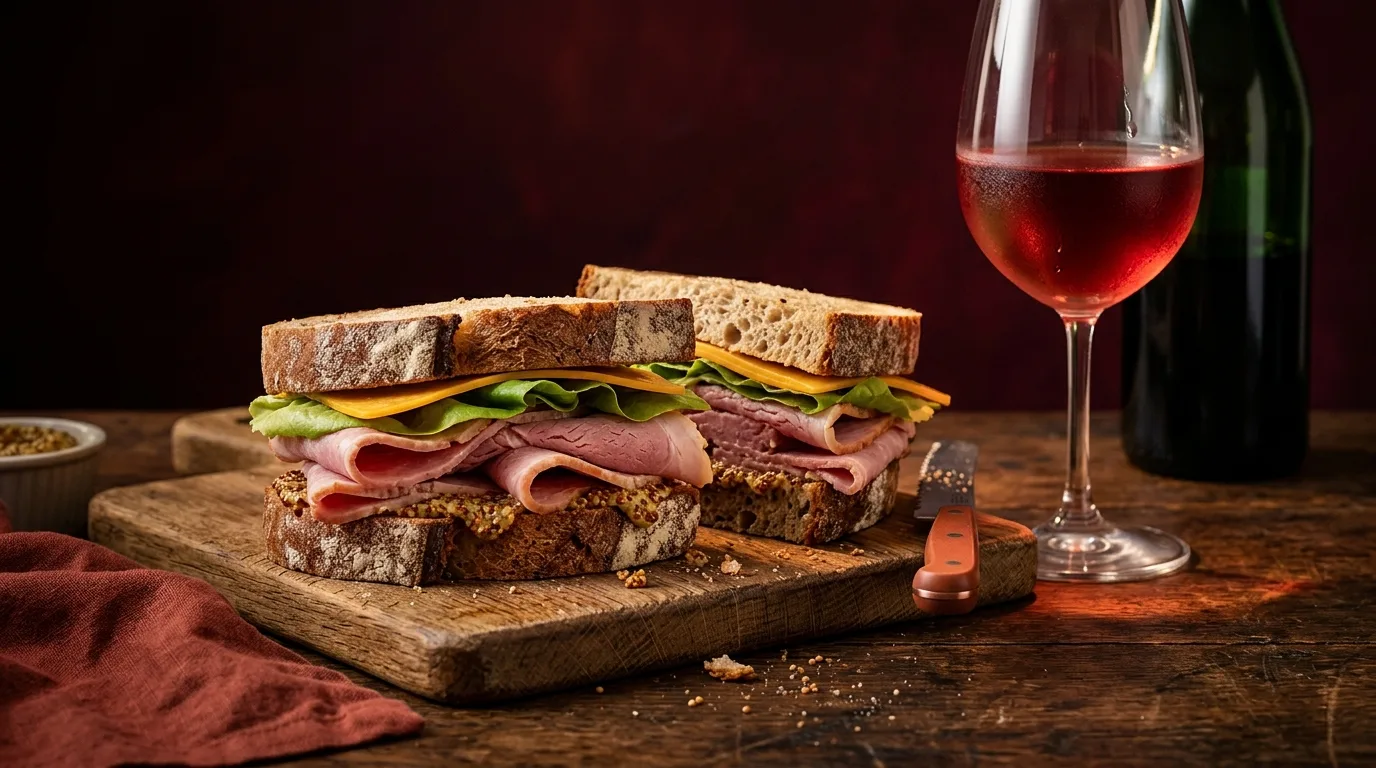
Leftover ham is a completely different pairing, because the glaze is mostly gone and the salt is what remains. A ham and cheese sandwich with mustard is happiest with a chilled light red, so a Gamay or a Lambrusco served cold is genuinely lovely with it.
Ham and eggs, quiche, or a ham and gruyère tart shift things toward whites with body, so an unoaked Chardonnay or a Chenin Blanc works well. Split pea soup made from the bone is earthy and thick, and it wants something savory rather than fruity, which is where a dry rosé or a simple Pinot Noir earns its place.
The general rule for day two is that you can go drier than you did on the day itself. Without the sugar of the glaze on the plate, a dry wine no longer reads as sour, and the range of bottles that work opens up considerably.
How do you pick a bottle at the supermarket?
Shop by style rather than by producer, and read the back label instead of the front. For an off-dry white, look for German Riesling with Kabinett or Feinherb on it, or a Washington State Riesling, and check the back for words like "a touch of sweetness" or a sweetness scale printed as a small chart. For sparkling rosé, Cava and Crémant both give you dry, traditional-method bubbles without a Champagne price, and our roundup of the best grocery store wines covers what to expect at that end of the aisle.
Standing in front of forty bottles of Riesling with no idea which of them are sweet is exactly the moment Sommy's Vision label scan is built for. Point your phone at the bottle in your hand and it reads the label, tells you where that wine actually sits on the dry to sweet range, and says whether it fits the meal you are cooking, which beats guessing from the front label the way everyone currently does.
For a light red, look for Beaujolais, Gamay, or a Pinot Noir from Chile or the Languedoc, and skip anything described as bold, reserve, or barrel-aged. Those words usually mean more tannin and more oak, and both of them fight with a salty, sweet plate.
Frequently asked questions
What is the best wine with ham?
Off-dry Riesling is the best all-round choice, since its acidity handles the salt and its touch of sweetness matches the glaze. Dry sparkling rosé and a light Pinot Noir are the two strongest alternatives, and sparkling rosé is the easiest bottle to serve to a mixed table.
Do you serve red or white wine with ham?
Both work, provided the red is pale and low in tannin. Whites suit sweeter glazes such as honey and maple, while a juicy Zinfandel or Gamay suits brown sugar and bourbon glazes, so the crust decides more than your usual preference does.
Does Pinot Noir go with ham?
Pinot Noir is a good match for ham, especially a smoked or lightly glazed one. Choose a lighter, brighter bottle rather than a rich oaked style, and serve it slightly chilled so the fruit stays fresh against the salt.
What wine goes with honey-baked ham?
Honey-baked ham wants a wine with ripe fruit and a little residual sugar, which makes off-dry Riesling the standard answer. Chenin Blanc, Gewürztraminer and a demi-sec sparkling wine all work for the same reason.
Why does my wine taste bitter with ham dinner?
Salt makes tannin taste harsher, so a tannic red will turn bitter and drying against ham. Asparagus, artichokes and charred greens on the same plate push in the same direction, and switching to a low-tannin red or a sparkling wine fixes it immediately.
Should the wine be sweet if the ham is glazed?
It should have some sweetness, though nowhere near as much as the glaze. Off-dry is the target, meaning a wine that tastes fruity rather than sugary, which keeps it from reading as sour next to a sweet crust.
Pouring it on the day
Read your glaze before you read the ham, because the crust is the loudest thing on the plate and it is what your wine has to answer. Honey and maple send you to an off-dry white, brown sugar and bourbon send you to a juicy red, and a plain smoked ham is happy with a dry rosé or something sparkling.
If you would rather not think about it at all, open a dry sparkling rosé and let it cover the whole table, sides included. And when the leftovers come out tomorrow, go drier than you did today, because without the glaze the wine no longer has anything to compete with.