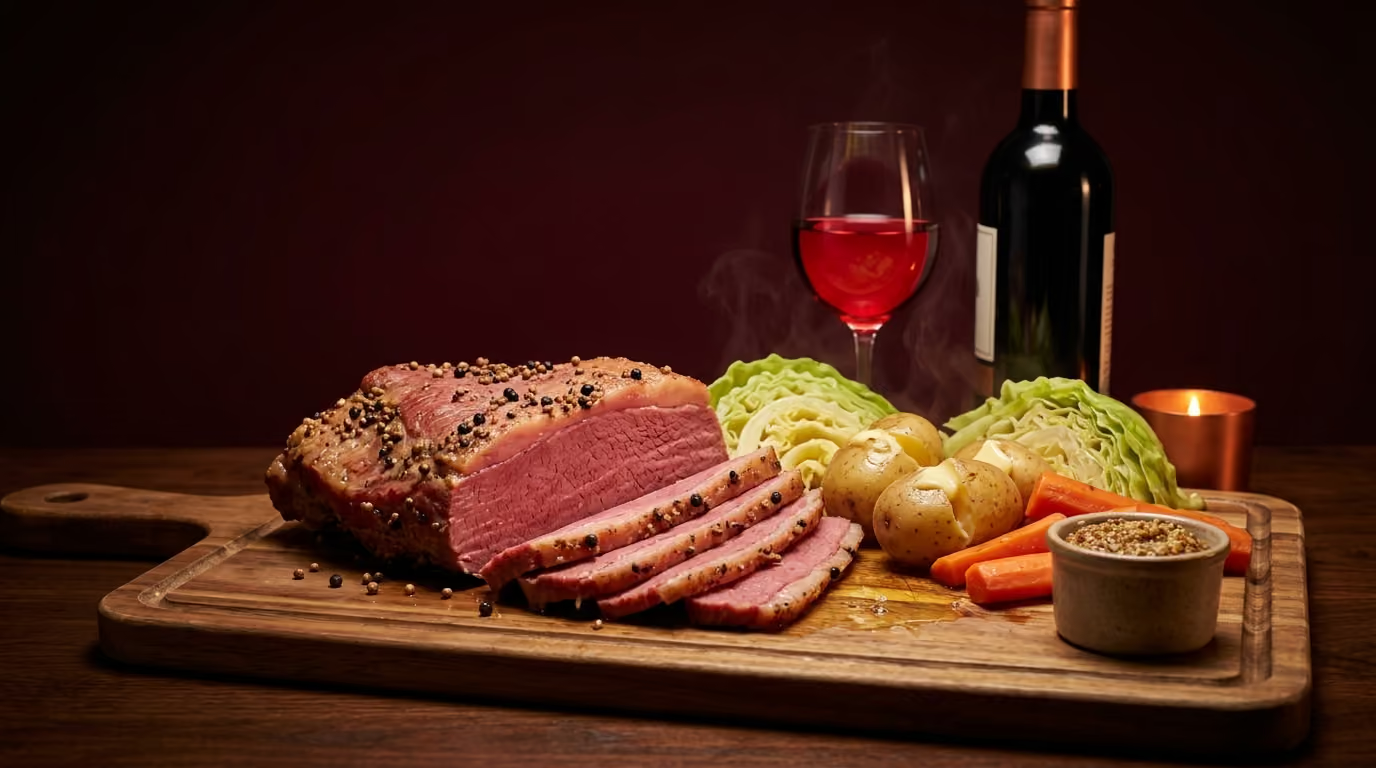
Pour Beaujolais or another light, fruity red with corned beef and cabbage, or a dry Riesling if you'd rather drink white. Both work for the same reason: this is a salty, fatty plate that needs acidity and fruit to stay enjoyable past the third bite, and it gets ruined faster by tannin than by almost anything else.
The variable that actually decides your bottle is whatever you put on top of the beef, rather than the beef itself. A plate with grainy mustard wants a different wine from one with horseradish cream, and a glazed corned beef wants something different again from a boiled one. We'll start with why salt is the problem, then sort the wines by what's on your plate.
Why is corned beef hard to pair with wine?
Salt is the reason, and it works against tannin specifically. Corned beef is brined for days, so it carries far more salt than a roast, and salt sharpens the perception of tannin in red wine, making a bottle that tastes smooth on its own turn hard and bitter beside the meat. That interaction is why so many people conclude they don't like wine with this dish, when what they don't like is one particular category of wine with it.
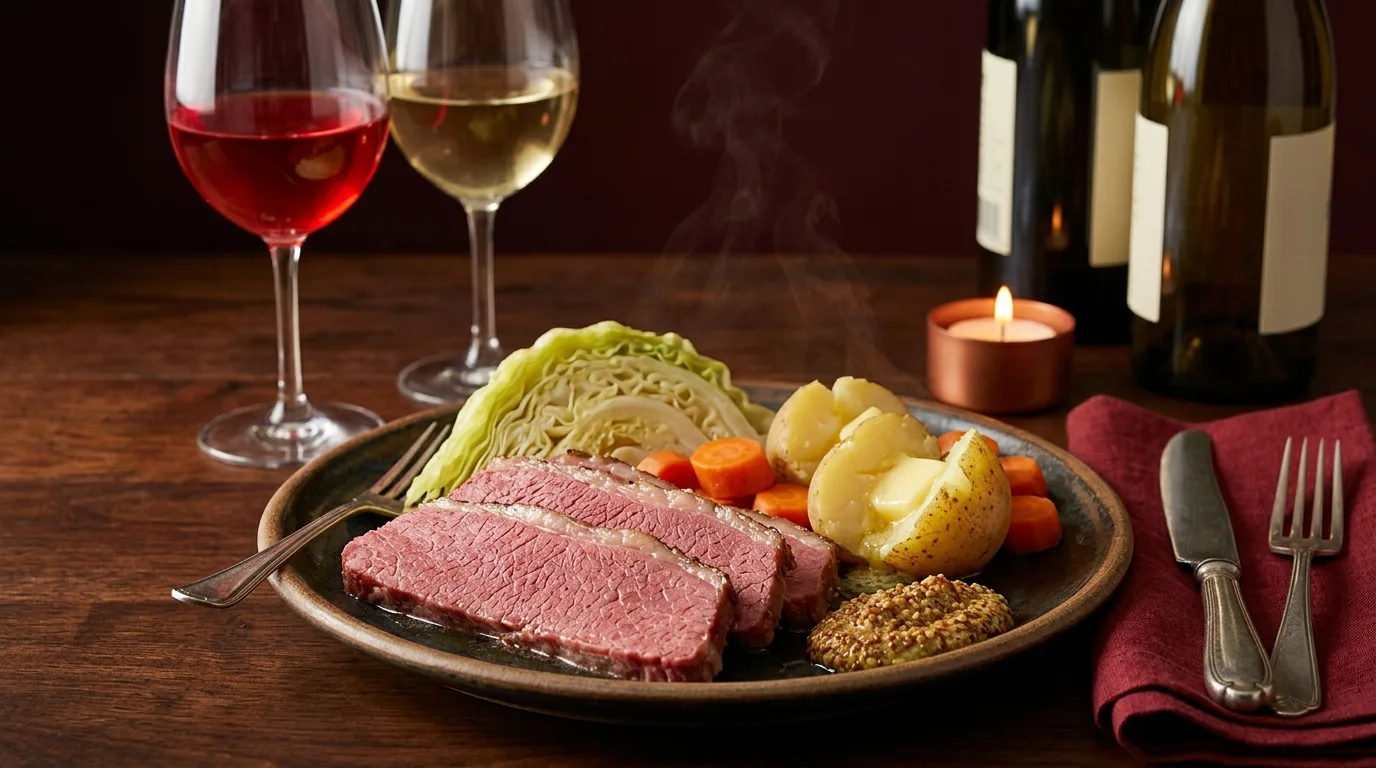
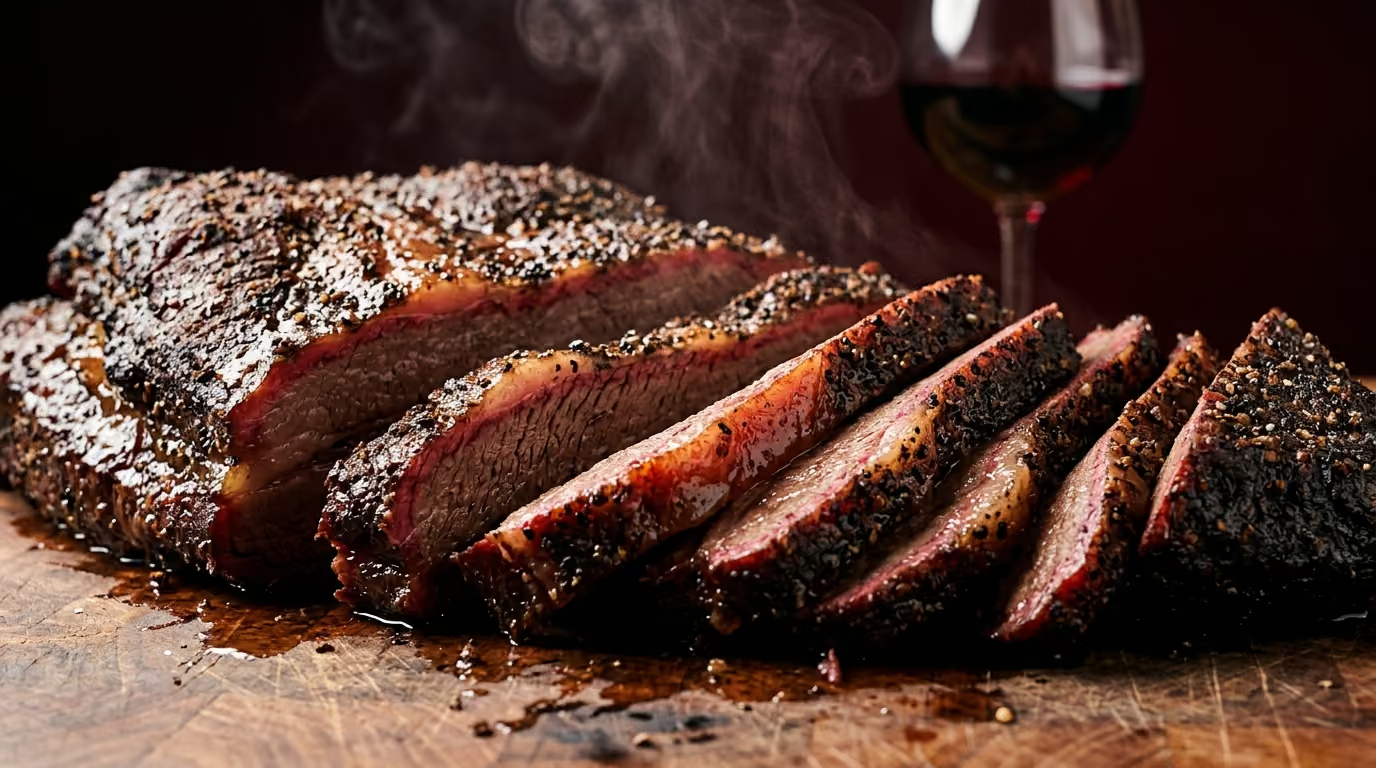
Corned beef is brisket underneath the brine, and a smoked or barbecued brisket takes a very different wine, as our brisket and burnt ends pairings set out. Curing changes the cut's requirements completely, which is why the usual big-red advice for beef misfires here.
Fat is the second factor and it's much easier to handle. A long-simmered brisket is rich, and richness is solved by acidity, which resets your palate between bites the way a squeeze of lemon does on something fried. That's the single most useful thing to look for in a bottle here, and it's why both of our top recommendations are high-acid wines despite being different colors.
Cabbage complicates it slightly in a way people rarely account for. Boiled cabbage brings a mild sweetness and a faintly sulfurous edge, and carrots and potatoes add more soft sweetness alongside it. None of that is difficult on its own, but it does mean a bone-dry, austere wine can taste unusually stern against the vegetables even when it suits the meat.
Wine Spectator's Dr. Vinny, asked this exact question, votes for a light-bodied fruity red like Beaujolais or Grenache, with an Alsatian Pinot Blanc or dry Riesling on the white side. That matches what we'd pour, and Pinot Blanc in particular is an underrated call that almost nobody else makes.
Which red wine works with corned beef?
Beaujolais is the red we'd open first, because Gamay gives you bright red fruit with very little tannin, which is exactly the shape this dish needs. Beaujolais-Villages is the everyday version and the Cru villages like Morgon and Fleurie give you more depth without adding grip. Serve it slightly chilled and it does everything you want against salty, fatty beef.
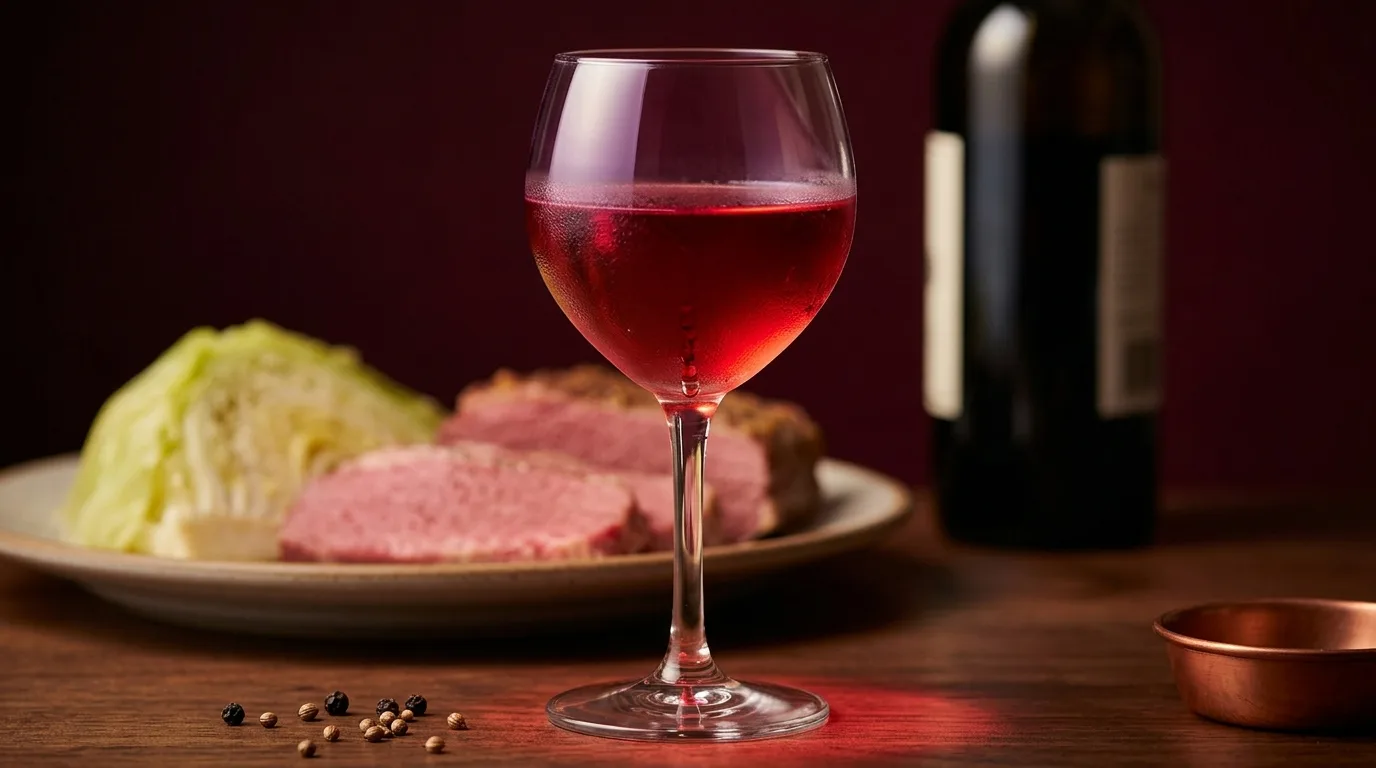
Grenache is the alternative if Beaujolais isn't on the shelf, and it's often easier to find. Look for a lighter, fresher example rather than a big, high-alcohol one, since warmth and power are the two qualities that go wrong here. Spanish bottles labeled Garnacha are frequently the best value in this category, and a young, unoaked one is ideal.
Cabernet Franc is the third option and the most interesting of them. It carries a green, herbal note that sounds like it should clash and instead lands well against cabbage and peppercorn, and its tannin is soft enough not to trigger the salt problem. Pinot Noir works on the same principle if the beef is lean and there's no sweet glaze involved, though it can get lost under a heavily spiced brine. Our comparison of Cabernet Franc and Cabernet Sauvignon explains why the two behave so differently at the table despite the shared name.
Chill whichever red you choose for fifteen or twenty minutes before serving. It isn't a fussy detail, and it's the difference between a wine tasting fresh and lifted against the beef or tasting warm and heavy. Anything described as bold, barrel-aged, full-bodied or firmly structured should stay in the rack tonight, and our chilled reds comparison covers which grapes take a chill best.
What white wine goes with corned beef and cabbage?
Dry Riesling is the strongest white for this plate, and on a table with mustard it's arguably the best bottle of any color. Riesling has more natural acidity than almost anything else on the shelf, which handles the fat, and a touch of fruit that meets the sweetness in the cabbage and carrots without tipping into sugary.
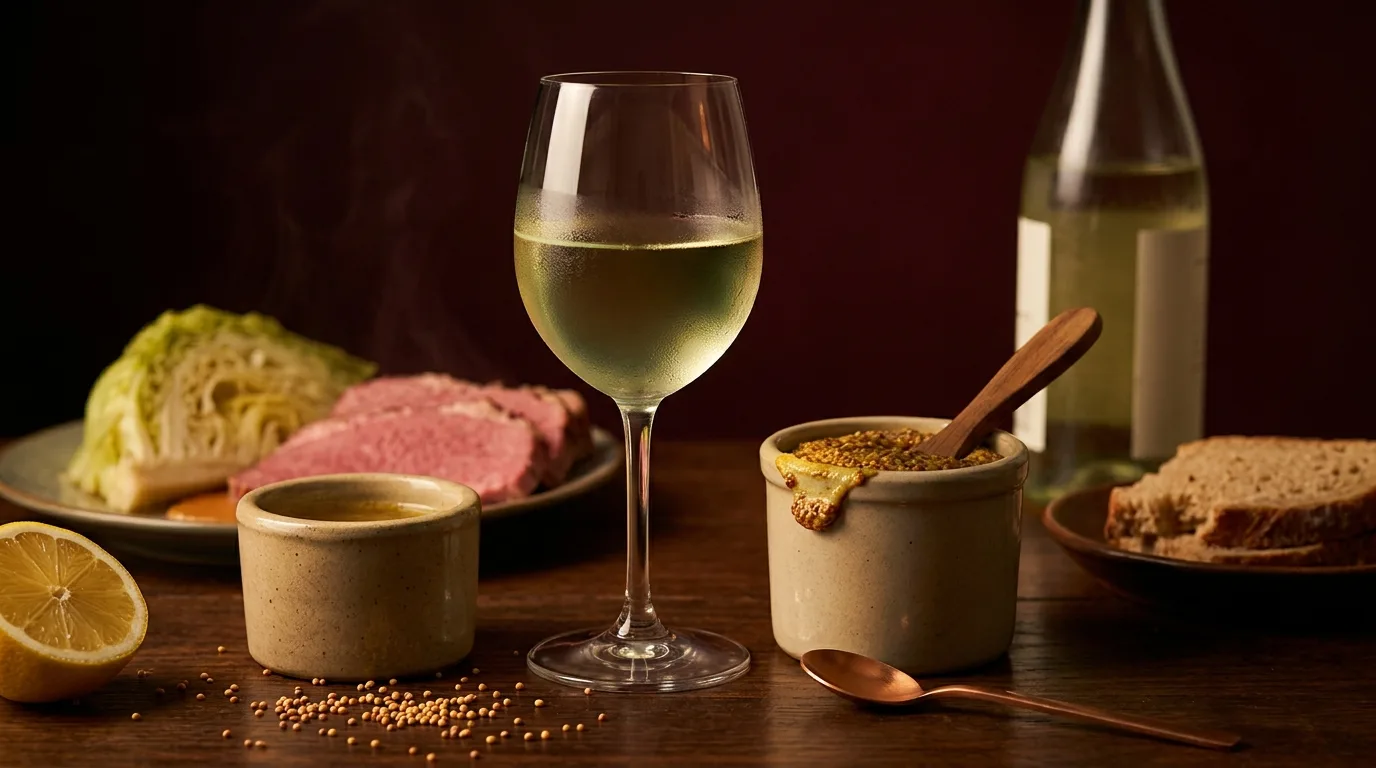
If Riesling isn't a grape you reach for often, our piece on spotting a dry Riesling fast covers how to tell the dry bottles from the sweet ones before you buy, which is the single thing that stops people trying it.
Off-dry Riesling deserves a mention because it's the better choice with anything glazed. A brown sugar or honey glaze on the brisket makes a bone-dry wine taste sour and thin by comparison, and a little residual sugar in the glass fixes that instantly. Alsace Riesling gives you more body and structure if you want a white with enough presence to stand up to the meat's texture.
Sauvignon Blanc is the more available option and it's a perfectly good one, with the grassy, citrus character that keeps a heavy plate feeling lighter. Tasting Table makes it their main recommendation for this dish, arguing that it's dry enough and acidic enough to cut the fat where Riesling can lean sweet. We'd say that depends entirely on which Riesling you buy, but the underlying point about acidity is right.
Dry sparkling wine is the one we'd actually recommend for a crowd. Brut Champagne, Cava or a dry Crémant does two things at once, since the acidity cuts the fat and the carbonation physically scrubs the palate between bites, which is precisely what a rich, salty plate calls for. Stick to brut rather than demi-sec, because a sweeter sparkling wine turns cloying beside salt cured meat unless there's a real glaze to justify it.
| What's on your plate | Reach for | Why it works |
|---|---|---|
| Classic boiled corned beef and cabbage | Beaujolais | Bright fruit, almost no tannin to react with salt |
| Plate built around grainy mustard | Dry Riesling | High acidity meets the tang directly |
| Brown sugar or honey glazed brisket | Off-dry Riesling | A little sweetness stops the wine tasting sour |
| Horseradish cream on the side | Grüner Veltliner or Sauvignon Blanc | Peppery whites handle the heat without amplifying it |
| Feeding a crowd | Brut sparkling | Acidity plus bubbles reset the palate between bites |
| Leftovers in a Reuben | Dry Riesling or Beaujolais | Both survive rye, sauerkraut and Russian dressing |
Does the mustard or glaze change the answer?
The condiment moves the pairing more than the meat does, and it's the thing to decide around. Grainy or Dijon mustard brings sharp acidity and a little heat, which pushes you firmly toward a high-acid white, since a wine with less acidity than the mustard will taste dull and slightly sweet next to it. Dry Riesling is the cleanest answer, and Sauvignon Blanc is close behind.
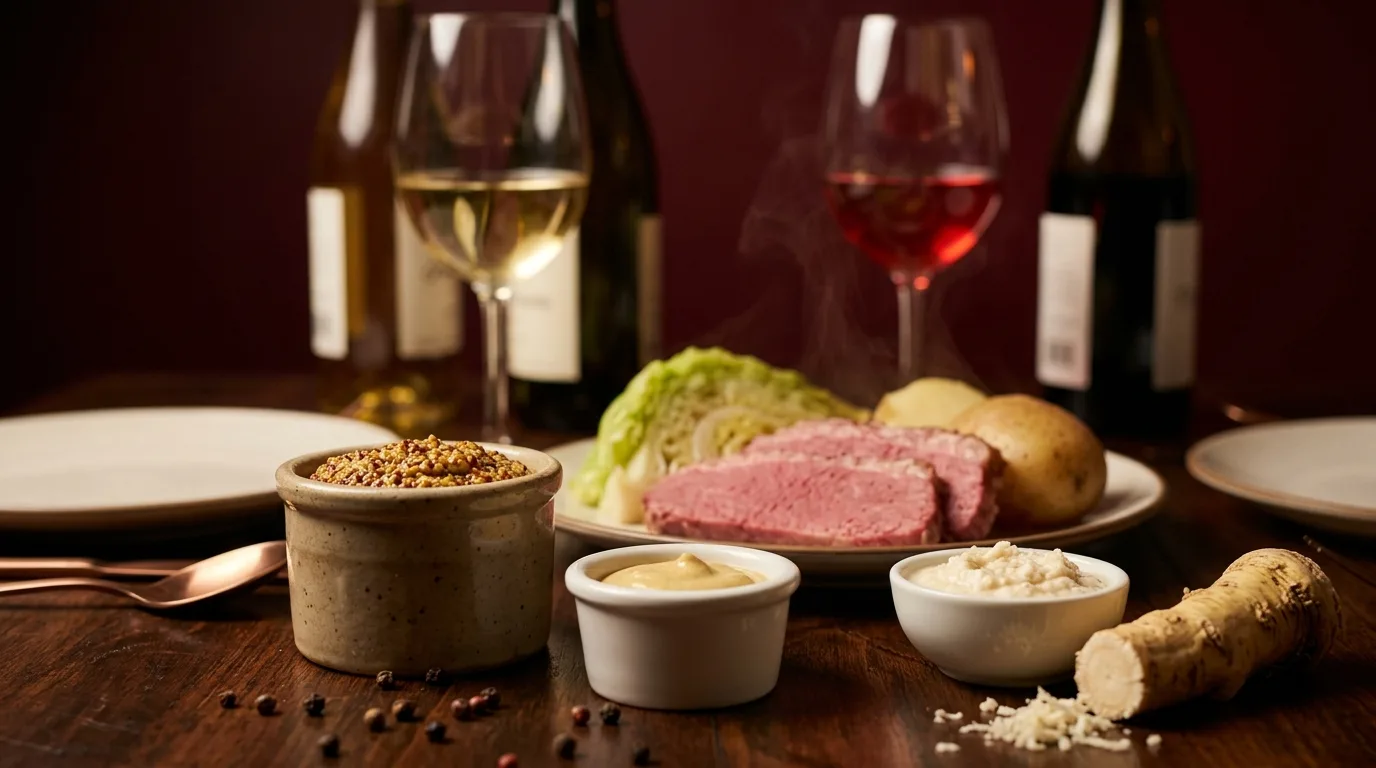
Horseradish is a different problem because the heat is volatile and hits the nose rather than the tongue. High alcohol amplifies that burn noticeably, so this is the moment to choose a lower-alcohol bottle, and a peppery white like Grüner Veltliner handles it more gracefully than anything else. If you're serving horseradish cream, the dairy softens the whole thing and gives you more freedom than straight horseradish does.
A sweet glaze flips the usual advice, which is why it's worth calling out separately. Brown sugar, honey and mustard glazes are common on baked corned beef, and against that sweetness a bone-dry wine reads as thin and sour. An off-dry Riesling or a fruit-forward Grenache handles it much better, and this is the one version of the dish where a little sweetness in the glass is the correct choice rather than a compromise.
Leftovers deserve their own thought, since a Reuben is where most corned beef actually ends up. Rye bread, sauerkraut, Swiss cheese and Russian dressing pile acidity, salt and fat together, and the wine that survives it is the same high-acid, low-tannin bottle that worked on the first night. Dry Riesling is the pick, with Beaujolais a close second.
How do you choose a bottle without overthinking it?
Buy for acidity and against tannin, and you'll land somewhere good regardless of which specific bottle you pick up. Every recommendation on this page follows that one rule, and it's a more reliable guide than memorizing regions, because it tells you what to do when the store doesn't stock what you came for.
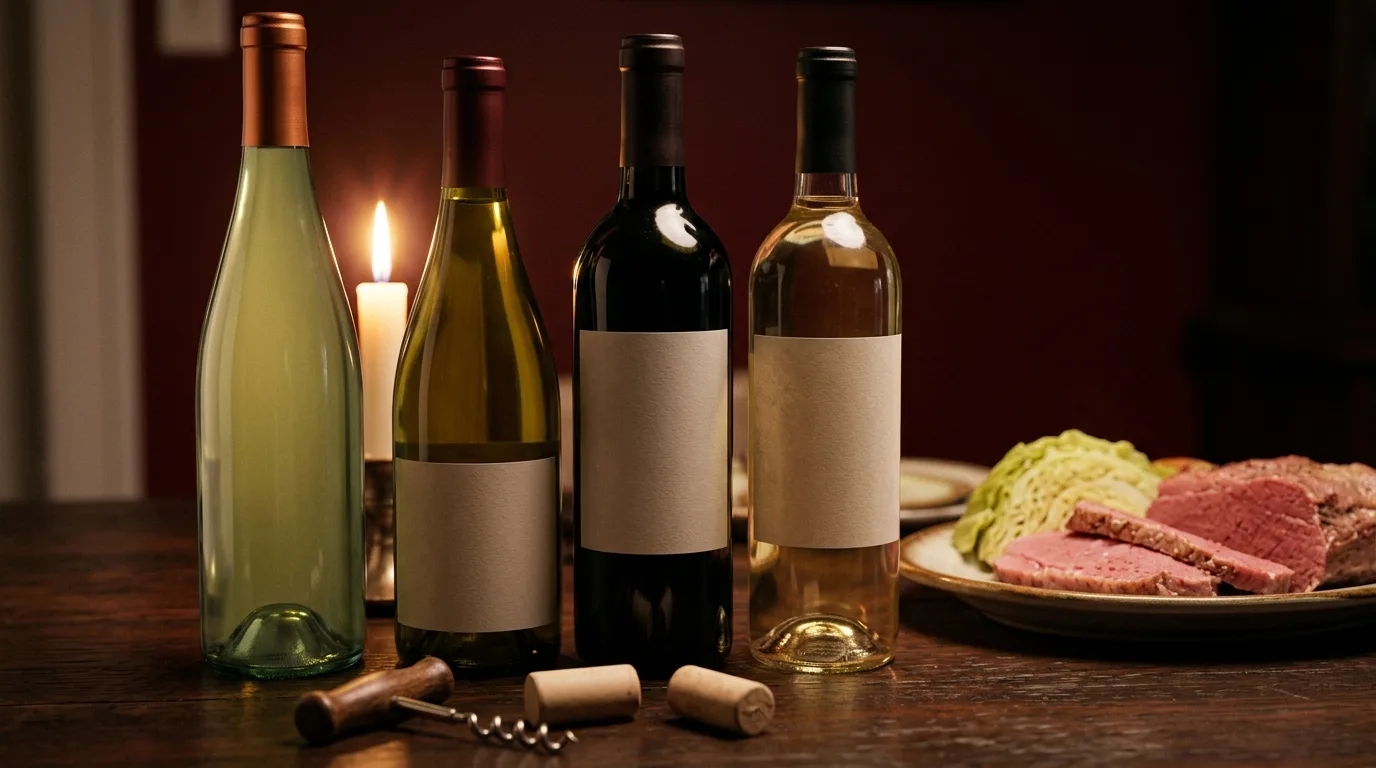
On the shelf, the words worth trusting are crisp, bright, fresh, lively and red-fruited. The ones to walk away from are bold, powerful, full-bodied, structured and barrel-aged, all of which describe wines whose tannin the salt in the brisket will find. Alcohol is a useful proxy too, since a bottle around 12 or 13 percent will almost always suit this dish better than one pushing 15.
It's worth saying plainly that beer is the traditional answer and there's no shame in it. A stout or a crisp lager handles corned beef comfortably, and if that's what's on the table already, wine isn't an upgrade you owe anyone. The case for wine here is that a high-acid bottle does something beer doesn't, cutting the fat while adding fruit that plays off the cabbage and carrots, which makes the plate taste more layered rather than just refreshed.
At a restaurant, say what you want the wine to do rather than naming a grape. Asking for a light, fruity red you can have slightly chilled, or a crisp dry white with good acidity, gives a server a clear target and gets you a better bottle than guessing at a list. If the table is split between red and white, order by the glass and let the corned beef settle the argument.
Frequently asked questions
What is the best wine for corned beef and cabbage?
Beaujolais is the best red and dry Riesling the best white. Both have high acidity and low tannin, which is what a salty, fatty plate needs. Choose the Riesling if mustard is on the table and the Beaujolais for a classic boiled dinner.
Why does red wine taste bitter with corned beef?
Salt sharpens the perception of tannin, so a tannic red tastes harder and more bitter beside brined beef than it does on its own. Choosing a low-tannin red like Beaujolais, Grenache or Cabernet Franc avoids the problem entirely.
Should you serve red wine chilled with corned beef?
Yes, give it fifteen to twenty minutes in the refrigerator. A slightly cool light red tastes fresher and its acidity works harder against the fat, while the same bottle served warm tastes heavy and more alcoholic.
What wine goes with corned beef and mustard?
A high-acid white, with dry Riesling the strongest choice and Sauvignon Blanc close behind. Mustard brings sharp acidity of its own, and a wine with less acidity than the condiment will taste flat next to it.
Can you drink sparkling wine with corned beef and cabbage?
Yes, and it's an excellent choice for a crowd. Brut Champagne, Cava or dry Crémant combines acidity with carbonation, which cuts the fat and clears the palate between bites. Avoid demi-sec unless the brisket carries a sweet glaze.
Fresh over heavy, every time
Beaujolais and dry Riesling are the two bottles to remember for corned beef and cabbage, and the choice between them comes down to whether mustard is on the table. Chill the red, keep the white properly cold, and skip anything bold or tannic no matter how good it is on its own.
The test is simple enough to run at the table. Take a bite, take a sip, and notice whether your mouth feels clean afterward. If the wine refreshes rather than weighs, you've picked the right one, and that matters more than any rule we could write down.