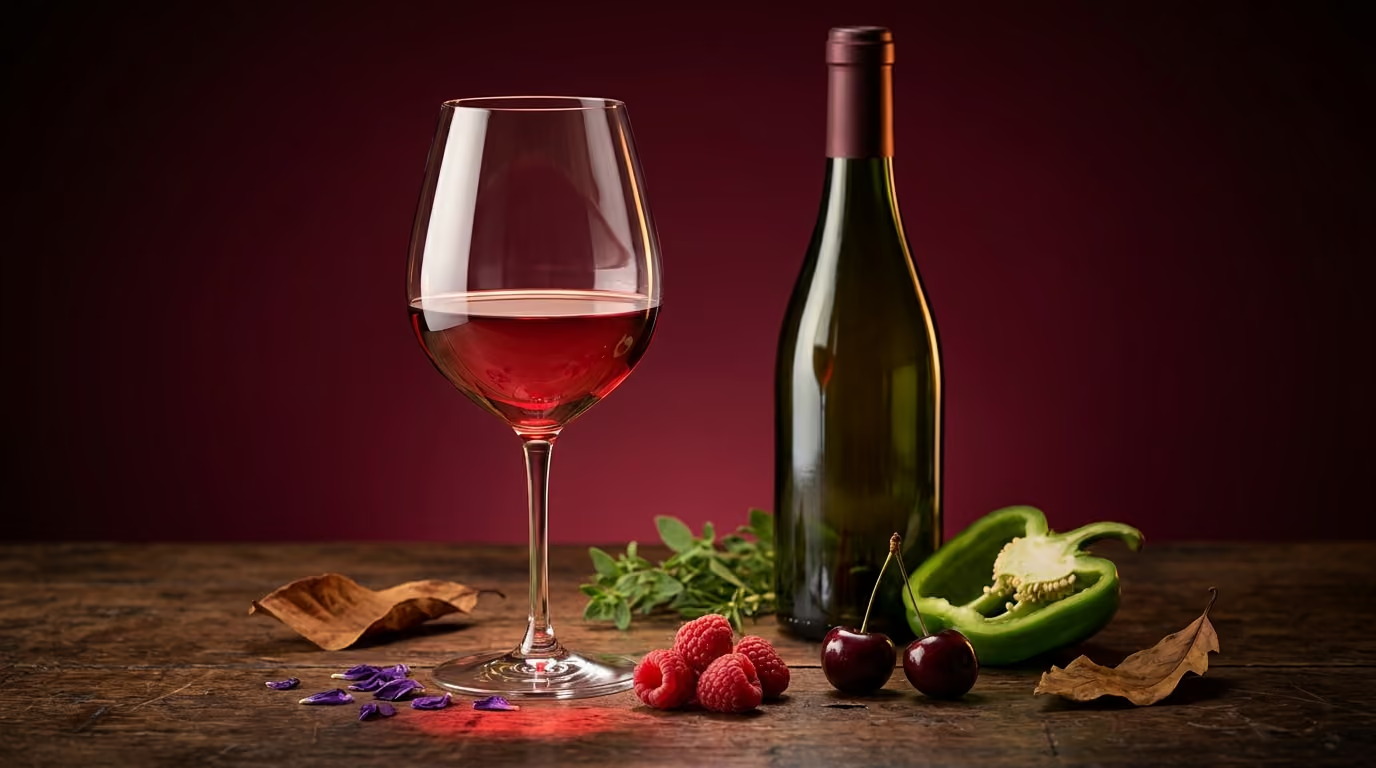

Cabernet Franc and Cabernet Sauvignon are closely related red grapes, and Cabernet Franc is actually one of the parents of Cabernet Sauvignon. The short version is that Cabernet Franc tastes lighter and softer, with bright red fruit, fresh herbs, and a peppery lift, while Cabernet Sauvignon is fuller and firmer, with dark blackcurrant fruit and grippier tannins. Both of them are dry, so neither one is sweet, and the right choice really comes down to whether you want something easygoing or something big and structured. In this guide we walk through how each one tastes, which is smoother, what you can expect to pay in USD, and how to pick the one you'll actually enjoy.
What's the difference between Cabernet Franc and Cabernet Sauvignon?
The core difference is weight and grip: Cabernet Franc is lighter with softer tannins and higher acidity, while Cabernet Sauvignon is fuller-bodied with firmer tannins and darker fruit. If you've had both and one felt easier to sip while the other felt bigger and more serious, that's exactly the gap between these two grapes.

They taste like relatives because they genuinely are. Cabernet Sauvignon came from a natural crossing of Cabernet Franc and Sauvignon Blanc, and researchers at the University of California, Davis confirmed that family tree through DNA testing back in 1997. So Cabernet Franc is the older parent, and Cabernet Sauvignon is the more famous child that inherited the deep color and structure but pushed everything toward bigger and bolder. Both are red Bordeaux grapes, both age well in the right hands, and both love savory food, which is why people mix them up in the first place.
You'll meet these two grapes in two different ways, either on their own as a single-variety wine or blended together in a classic Bordeaux-style red where Cabernet Sauvignon brings the backbone and Cabernet Franc adds perfume and lift. On a label, a wine that simply says Cabernet Franc or Cabernet Sauvignon is made mostly from that one grape, while a red Bordeaux or a California Meritage blend usually leans on Cabernet Sauvignon with Cabernet Franc and Merlot playing a supporting role. Knowing that little bit of label logic lets you predict the style before you even pull the cork. Here's how the two stack up side by side.
| Feature | Cabernet Franc | Cabernet Sauvignon |
|---|---|---|
| Body | Light to medium | Full |
| Tannins | Softer and gentler | Firm and grippy |
| Acidity | Higher and fresher | Medium |
| Main fruit | Red raspberry and red plum | Dark blackcurrant and blackberry |
| Signature note | Bell pepper, fresh herbs, graphite | Cassis, cedar, tobacco with age |
| Alcohol | Around 12.5 to 14 percent | Often 13.5 to 15 percent |
| Typical price | About $15 to $30 | About $15 to well over $100 |
| Best for | Easy food-friendly weeknight reds | Steak nights and cellaring |
What does Cabernet Franc taste like?
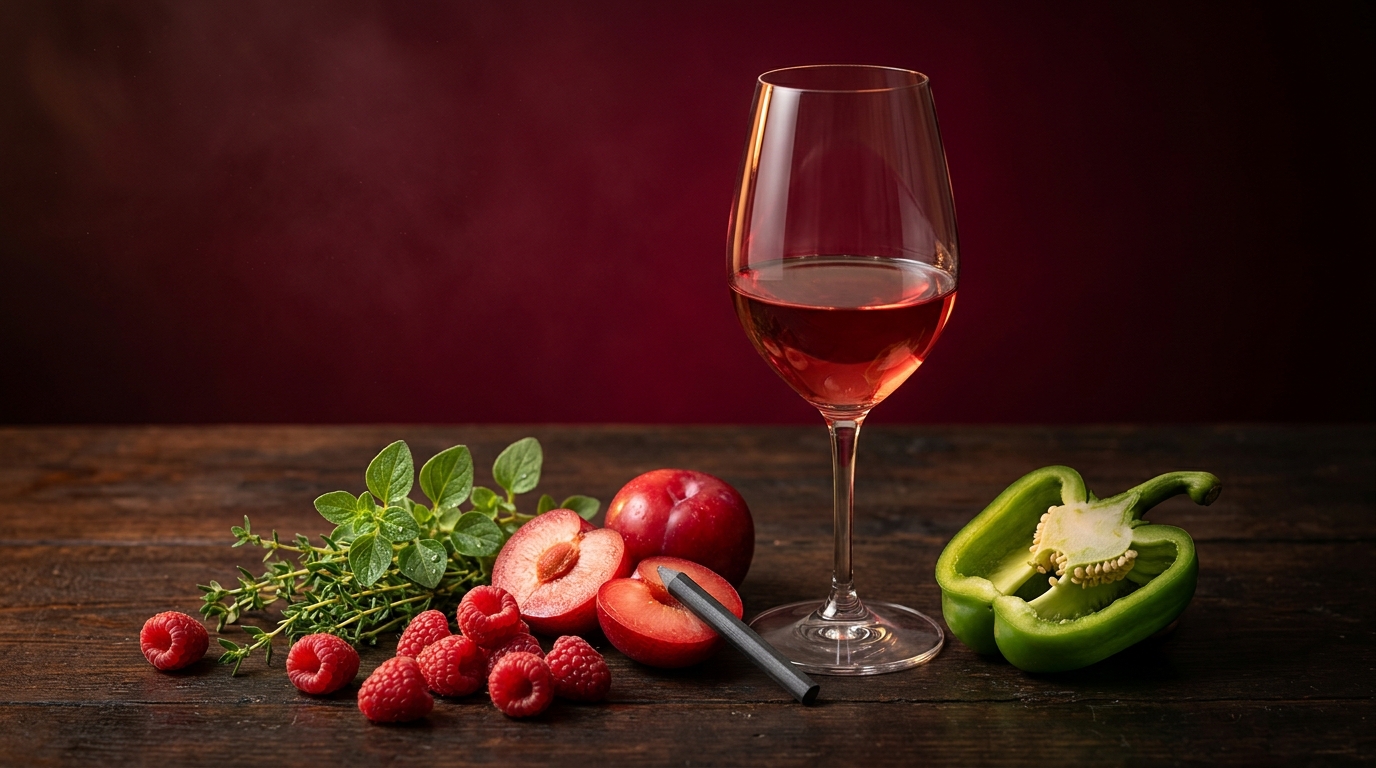
Cabernet Franc tastes like a lighter, fresher red, leading with red fruit like raspberry and red plum, lifted by a green herbal note and a peppery snap. That herbal streak is the signature, and it comes from natural compounds in the grape that also give a fresh bell pepper its bite. Some bottles show it as a clear green bell pepper aroma, others as dried herbs or a graphite, pencil-shavings edge, but there's almost always a savory lift alongside the fruit.
Because the tannins are gentle and the acidity runs high, Cabernet Franc feels bright and food-friendly rather than heavy. It's a grape that ripens early and shrugs off cold weather, which is why it does so well in cooler places. The Loire Valley in France is its spiritual home, where villages like Chinon, Bourgueil, and Saumur make it as a fresh, medium-bodied red. It also plays a starring role in the blends of right-bank Bordeaux, including many wines from Saint-Émilion, and it has become the signature red of cooler American regions like New York's Finger Lakes and Long Island. Where the grape grows changes its personality quite a bit. In the cool Loire it stays lean, herbal, and fresh with crunchy red fruit, while warmer spots in California or Argentina ripen it into a rounder, plummier style with that herbal edge dialed back. If you once tried a Cabernet Franc and found it too green and leafy, a bottle from a warmer region might completely win you over, and the reverse holds if a soft New World version left you wanting more freshness. If you tend to find big reds a little much, Cabernet Franc is often the one that changes your mind, and it sits nicely alongside our roundup of easy to drink red wines.
What does Cabernet Sauvignon taste like?
Cabernet Sauvignon tastes bold and structured, built on dark blackcurrant and blackberry fruit, with firm tannins that grip the sides of your tongue and savory notes of cedar and tobacco that deepen as it ages. Young bottles lean juicy and fruit-forward, while older ones develop leather, graphite, and dried herb complexity that wine lovers spend years chasing.

The reason it drinks so much bigger than Cabernet Franc comes down to the grape itself. Cabernet Sauvignon has small berries with thick skins, and those skins are where tannin and color live, so the wine ends up darker, firmer, and more powerful. It also needs real warmth and a long season to ripen fully, which is why it thrives in sun-soaked places like Napa Valley, and it anchors the famous left-bank blends of Bordeaux. You'll also find excellent versions from Washington State, Chile, Australia's Coonawarra, and Tuscany. Winemakers often age it in oak barrels, which layers in vanilla and baking-spice warmth on top of that dark fruit. Style shifts with the address too. A Napa Valley Cabernet Sauvignon tends to taste riper, richer, and rounder, with juicy black fruit and a plush, mouth-filling feel, while a classic Bordeaux leans more restrained and savory, with firmer structure and earthier tobacco-and-graphite notes. Both wines are still Cabernet Sauvignon, so if one style has ever let you down, the other is genuinely worth a try before you write the whole grape off. If bold reds are your thing, it's worth seeing how Cabernet stacks up against other heavyweights in our look at Malbec vs Cabernet Sauvignon.
Is Cabernet Franc sweeter or smoother than Cabernet Sauvignon?
Neither one is sweet, because both are made as dry wines, but Cabernet Franc almost always drinks smoother thanks to its softer tannins and lighter body. People often call Cabernet Franc sweeter because its bright red-berry fruit reads as fruity on the palate, and our brains are quick to translate fruity into sweet. There's little to no leftover sugar in either wine, so what you're actually tasting is fruit character, not sweetness.
Smoothness is where the two really part ways. Tannin is the compound that makes a red wine feel dry and grippy, almost like strong black tea, and Cabernet Sauvignon has a lot more of it, which is what gives that firm, mouth-coating pull. Cabernet Franc keeps its tannins soft and its fruit fresh, so it glides where Cabernet Sauvignon grips. That makes Cabernet Franc a friendlier pick if you're newer to red wine or you simply don't love that drying sensation, and you can read more about what causes it in our guide to tannin in wine. A gentle chill of about twenty minutes in the fridge suits Cabernet Franc beautifully and makes it taste even brighter, while Cabernet Sauvignon is happiest closer to room temperature so its structure has room to open up.
Once you know what to look for, telling the two apart gets easy. Pour a little of each side by side and focus on just two things, how much the wine grips and dries your mouth, and whether the fruit leans red or black. Cabernet Franc will feel lighter and taste of raspberry and fresh herbs, while Cabernet Sauvignon will feel firmer and taste of blackcurrant and cedar. Running that little comparison once or twice teaches your palate far more than any tasting note ever could.
Which one should you pour tonight?
Pour Cabernet Franc when you want an easygoing, food-friendly red for a weeknight, and reach for Cabernet Sauvignon when you want a bold, structured wine for red meat or a bottle to cellar for years. The choice really is about the mood and the meal more than about which grape is better, because both can be excellent.

Go with Cabernet Franc if you like lighter reds, if big tannins tend to dry you out, or if you're eating something herby or vegetable-forward. It shines next to roast chicken, pork, tomato-based pasta, grilled vegetables, and herby Mediterranean plates, and it handles a wider spread of dishes than most people expect. There's a whole rundown of matches in our piece on food pairing with Cabernet Franc. Choose Cabernet Sauvignon when you're grilling a steak, roasting lamb, or setting out aged cheese, because its grip and dark fruit stand up to rich, fatty food that would flatten a lighter wine. If you like the bold end of the spectrum but want to compare cousins, our take on Cabernet Sauvignon vs Merlot covers another close call worth knowing. And if you're standing in the shop holding both bottles and still can't decide which one suits you, the Fit Check feature in Sommy gives you an instant read on whether a specific bottle matches your taste, so you can scan the label or type the name and get a straight answer before you buy.
Serving makes a real difference with both of these wines. Give Cabernet Sauvignon a little air, either half an hour in the glass or a quick decant, and its tannins soften while the dark fruit opens up and turns more generous. Cabernet Franc needs less time and rewards that light chill we mentioned, which sharpens its fresh, lifted side. A larger, rounder glass flatters the power of Cabernet Sauvignon, though honestly whatever glass you have in the cupboard will do the job just fine.
How much should you pay, and which ages better?
You can find very good Cabernet Franc for around $15 to $30, while Cabernet Sauvignon runs from roughly $15 to well over $100, and Cabernet Sauvignon is the one truly built to age. Cabernet Franc tends to sit in a friendlier, narrower price band, so it's a reliable spot to find quality without spending much, especially the fresh, medium-bodied bottles from the Loire Valley.

Cabernet Sauvignon covers far more ground. There are honest everyday bottles from Chile, Washington, and Australia in the $15 to $25 range that overdeliver, and then the ladder climbs quickly through Napa and Bordeaux toward collector prices that can pass a few hundred dollars a bottle. Where the two grapes separate most is aging. Cabernet Sauvignon's thick skins and firm tannins act like a natural preservative, so serious bottles can improve for ten to twenty years or more, softening and growing more savory the whole time. Most Cabernet Franc is at its best within the first five to ten years, bright and lifted, though the top wines from the Loire and Bordeaux can age longer. For everyday drinking, both grapes make plenty of bottles meant to enjoy now, so you don't need a cellar to get the good stuff.
A simple way to shop smart is to match the region to your budget. For Cabernet Franc, the Loire Valley gives you the most character for the money, and cooler American regions are catching up quickly. For Cabernet Sauvignon, look to Washington State, Chile, and Australia when you want richness without the Napa markup, then save the splurge for a special occasion when a benchmark Napa or Bordeaux bottle earns every dollar. Buying by region rather than by the biggest name on the shelf is how you end up drinking better for less.
Common questions about Cabernet Franc and Cabernet Sauvignon
Is Cabernet Franc sweeter than Cabernet Sauvignon? No, both are dry wines with little to no leftover sugar. Cabernet Franc can taste fruitier because of its bright red-berry character, and that fruitiness is easy to mistake for sweetness, but there's no real sugar difference between the two.
Which is smoother, Cabernet Franc or Cabernet Sauvignon? Cabernet Franc is smoother in almost every case. Its tannins are softer and its body is lighter, so it feels gentler and easier to sip, while Cabernet Sauvignon has firmer, more mouth-coating tannins that give it a bigger, grippier feel.
Is Cabernet Franc a good wine for beginners? Yes, Cabernet Franc is one of the more approachable reds you can start with. The softer tannins and fresh fruit make it easy to enjoy without the drying grip that can put newer drinkers off bigger reds, and it works with a wide range of everyday meals.
Why do Cabernet Franc and Cabernet Sauvignon taste related? They taste related because they are related. Cabernet Sauvignon is the offspring of Cabernet Franc and Sauvignon Blanc, so it inherited the dark color, savory herbal edge, and aging potential of Cabernet Franc while turning up the body, tannin, and dark fruit.
What foods go with each grape? Cabernet Franc loves roast chicken, pork, tomato-based dishes, and herby vegetable plates, while Cabernet Sauvignon is at its best with steak, lamb, and aged cheese. The lighter grape flexes across more dishes, and the bolder one wants richer, fattier food to match its structure.
Is Cabernet Franc more expensive than Cabernet Sauvignon? Usually it's the other way around, at least at the top end. Cabernet Franc mostly sits in a moderate price range, while Cabernet Sauvignon stretches from cheap and cheerful all the way up to rare collector bottles, so the ceiling on Cabernet Sauvignon is far higher.
Can you blend Cabernet Franc and Cabernet Sauvignon together? Yes, and winemakers have been doing it for centuries. Classic Bordeaux reds combine the two, with Cabernet Sauvignon giving structure and dark fruit while Cabernet Franc adds aroma, freshness, and a savory lift. The result is often more balanced and complete than either grape tastes on its own.
Finding your Cabernet
Both of these grapes are worth a place on your table, and the best way to know which one you'll reach for again is simply to taste them next to each other and notice which feels more like you. If you love a bright, herby, easy pour, Cabernet Franc is likely your grape, and if you crave big fruit and firm structure, Cabernet Sauvignon will feel like home. As you try each one, Sommy learns what you actually enjoy and builds your Taste Profile, the living picture of your palate, so the next recommendation gets sharper every time. Ask Sommy about a bottle you're eyeing, and let it point you toward the Cabernet that fits your taste, not someone else's.