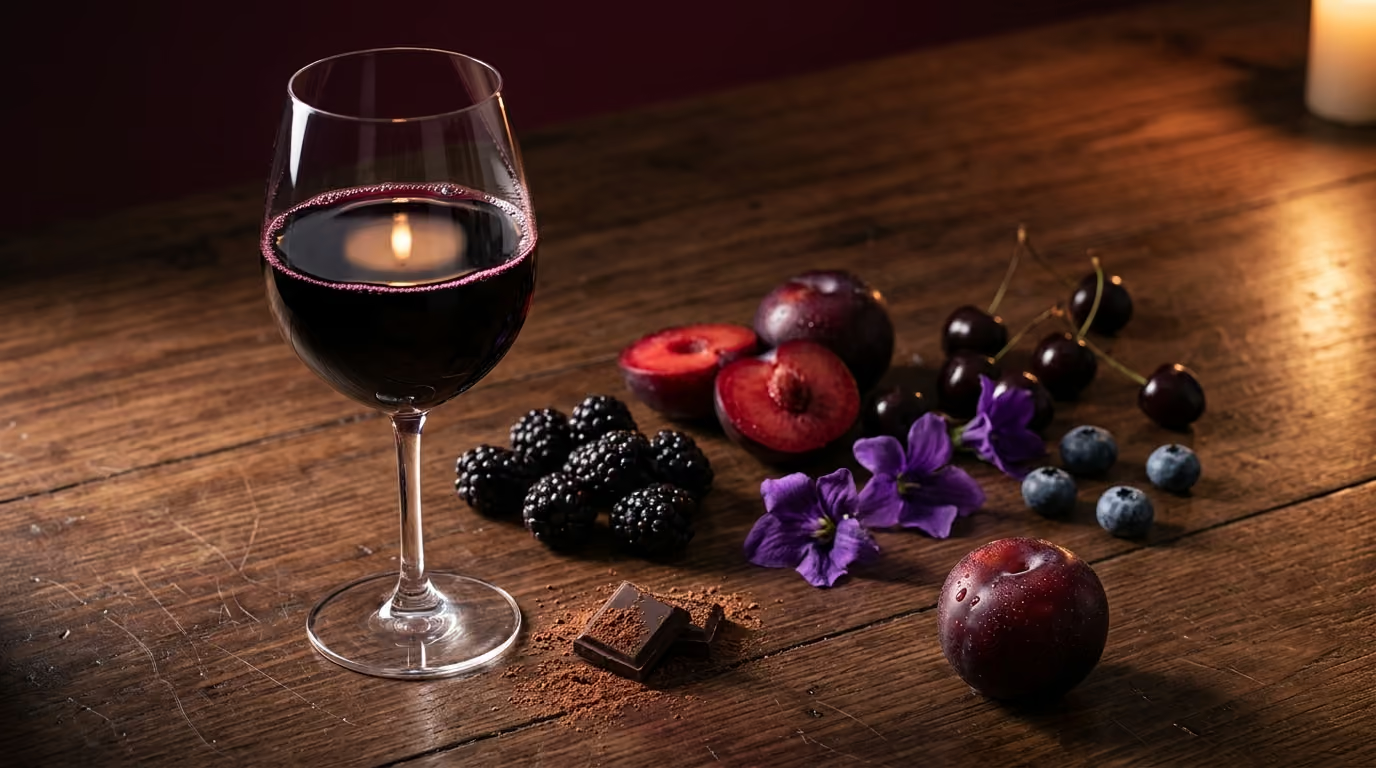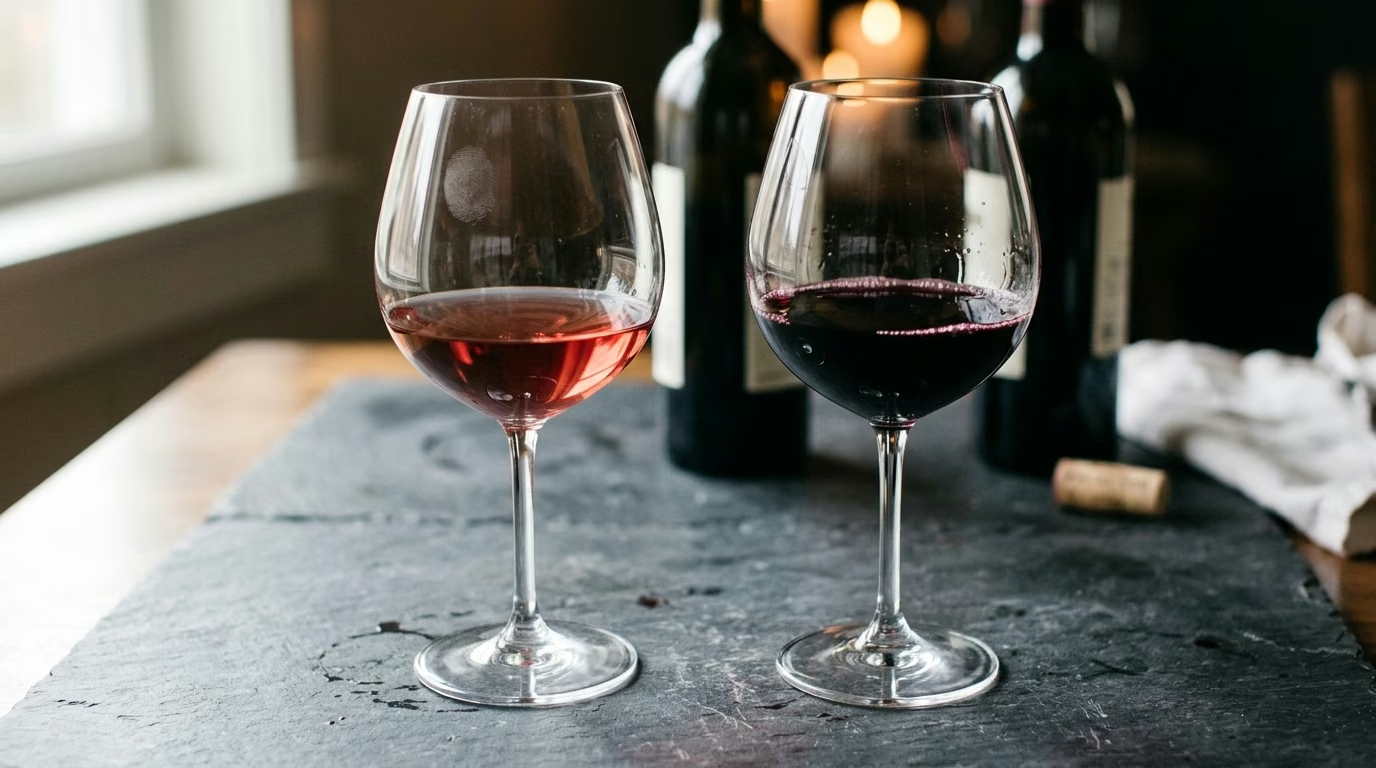

Malbec and Cabernet Sauvignon are both dry, full-bodied red wines, yet they drink very differently once the wine hits your glass. Malbec is the softer, rounder, more fruit-forward of the two, with plush plum and blackberry flavors and gentle tannins that taste good the moment you open it. Cabernet Sauvignon is firmer and more structured, carrying grippier tannins, blackcurrant and cedar notes, and the backbone to age for years. If you want an easygoing weeknight red, reach for Malbec, and if you want a bold, age-worthy bottle for steak or a special dinner, reach for Cabernet Sauvignon.
What's the difference between Malbec and Cabernet Sauvignon?
The core difference is texture and structure: Malbec is plush and approachable, while Cabernet Sauvignon is firm and built to age. Both start as thick-skinned dark grapes that make deeply colored red wine, and both belong to the same Bordeaux family, so they share some DNA. What sets them apart is how they feel in your mouth and how they behave over time. Malbec gives you ripe fruit and a smooth, velvety finish with less grip. Cabernet gives you a tighter, more tannic frame that rewards patience and pairs with richer food.
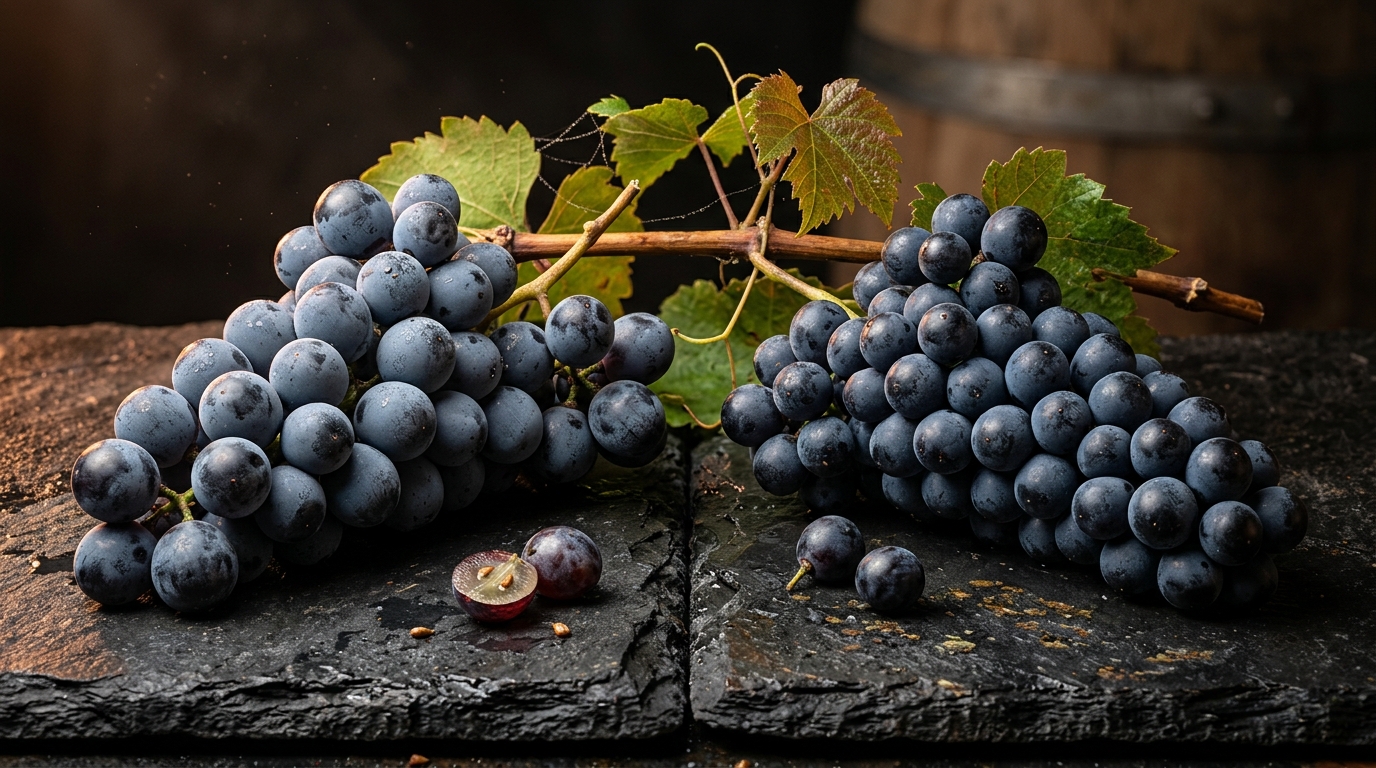
Here is the quick side-by-side, so you can see the two grapes next to each other before we get into the detail.
| Feature | Malbec | Cabernet Sauvignon |
|---|---|---|
| Origin | Southwest France (Cahors), now the signature grape of Argentina | Bordeaux, France, now grown widely in Napa, Chile, and Australia |
| Body and tannins | Full body, medium tannins that feel soft and round | Full body, medium-high tannins that feel firm and grippy |
| Acidity | Medium-low, which reads as smooth | Medium-high, which reads as fresh and structured |
| Signature flavors | Plum, blackberry, black cherry, a touch of cocoa | Blackcurrant, black cherry, cedar, tobacco, a green herbal edge |
| Typical ABV | 13.5 to 15 percent | 13.5 to 15 percent |
| Aging | Best in its first few years, drinks great young | Ages gracefully, good bottles improve for 5 to 10 years or more |
| Typical US price | Strong value, often $12 to $25 | $15 to $25 for everyday, $50 to $150 and up for premium |
| Best for | Easy, fruit-forward reds for a weeknight | Structured, age-worthy reds for steak or a special meal |
Neither grape is better than the other, and that is the honest answer most guides dance around. They simply suit different moods, meals, and drinkers. Once you know how each one tastes and feels, picking between them gets easy, and you can even use that knowledge to tell whether a specific bottle on the shelf is your style.
How do Malbec and Cabernet Sauvignon taste?
Malbec tastes rounder and fruitier, while Cabernet Sauvignon tastes bolder and more savory. When you sip a Malbec, the first thing you notice is dark, ripe fruit: juicy plum, blackberry, and black cherry, often with a soft note of cocoa or sweet spice from oak. The tannins stay gentle, the acidity sits on the low side, and the whole thing feels smooth and generous. It is a red wine that gives you pleasure right away without asking you to think too hard.
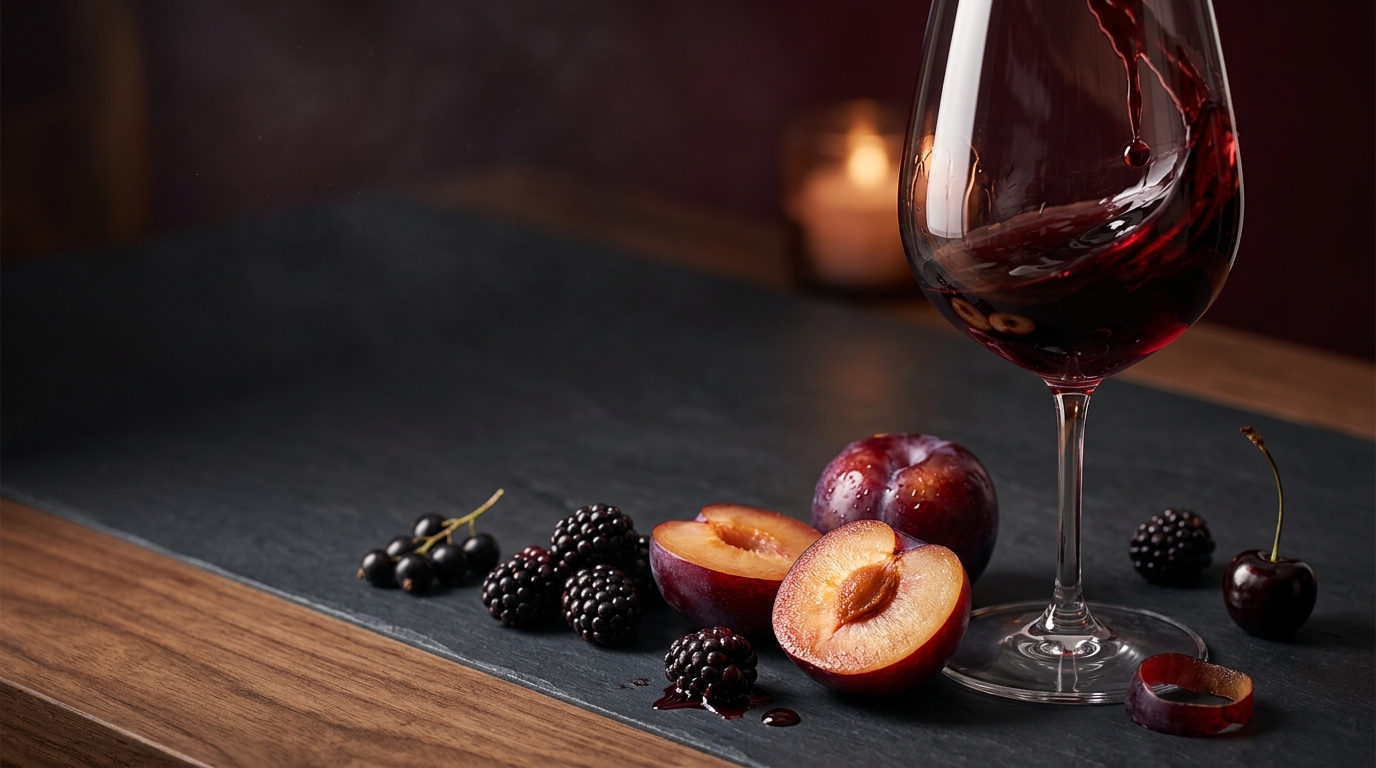
Cabernet Sauvignon works differently on the palate. The fruit is darker and more brooding, leaning into blackcurrant (what wine people call cassis) and black cherry, and it comes wrapped in savory layers of cedar, tobacco, pencil shaving, and a faint green herbal streak that classic Cabernet is famous for. The tannins are the headline: they are medium-high, and they grip the sides of your tongue, which is exactly what makes Cabernet feel bold and serious. That firm structure is also why Cabernet can taste a little tight when it is young and open up beautifully after a few years in the bottle.
Oak plays a part in the gap too. Cabernet Sauvignon is very often aged in oak barrels, which adds vanilla, baking spice, and a smoky, savory layer on top of that firm tannic core, while Malbec sees oak more selectively, so its ripe fruit usually stays front and center. That is one more reason Cabernet can feel more serious and Malbec more immediately friendly, even before you get to the tannins.
Both wines are genuinely dry, meaning neither has real sweetness left in it, so if a Malbec seems sweeter to you, that is the ripe fruit and lower acidity talking rather than sugar. If you want to understand why Cabernet feels grippier, it helps to know what tannin in wine actually is and how it shapes the way a red wine feels. That single difference in tannin explains most of what separates these two.
Where do Malbec and Cabernet Sauvignon come from?
Malbec and Cabernet Sauvignon both trace back to France, but they built their reputations in very different places. Malbec started in the southwest of France, around Cahors, where it was a minor blending grape for centuries. Its fortunes changed completely in Argentina. A French botanist first planted it in Mendoza in 1868, and the grape thrived in the high-altitude, sunny vineyards at the foot of the Andes. Today Malbec makes up roughly 40 percent of Argentina's red grape plantings, and Mendoza subregions like the Uco Valley and Luján de Cuyo are the names to look for on a great bottle.

Cabernet Sauvignon has grander roots, because it is the world's most planted red wine grape, and it was born in Bordeaux, France, as a natural cross between Cabernet Franc and Sauvignon Blanc. From Bordeaux it spread to nearly every serious wine region on earth. Napa Valley in California turned Cabernet into a global icon with rich, powerful, oak-aged bottles, and Chile, Washington, and Australia all make their own distinctive styles, from herbal and structured to ripe and plush.
Those origins matter at the shop, because region tells you a lot about style. An Argentine Malbec leans juicy and generous, while a Cahors Malbec from France runs darker and more rustic. A Napa Cabernet tends to be ripe and bold, while a Bordeaux or Chilean Cabernet often shows more of that savory, herbal edge. If you already love one style, chasing the region is the fastest way to find more bottles you will enjoy, and it is a big reason Argentine Malbec has become such a reliable pick for value seekers.
What foods pair best with Malbec and Cabernet Sauvignon?
Both wines love red meat, but they shine with different dishes because of their tannins. Cabernet Sauvignon's firm tannins are built for fat and protein, so it is the classic partner for a ribeye, a porterhouse, a rack of lamb, or a hard aged cheese. The tannins cut through the richness and leave your palate refreshed for the next bite, which is why a big Cabernet next to a steak dinner feels so right. Save your best Cabernet for the meals where the food is as bold as the wine.

Malbec is the more flexible everyday partner. Its softer tannins and juicy fruit make it forgiving, so it plays well with grilled sausages, barbecue, burgers, empanadas, pizza, and roasted vegetables. Argentina drinks Malbec with grilled beef almost by law, and that pairing is hard to beat, but Malbec also handles casual, saucy, weeknight food far better than a tannic Cabernet would. Where Cabernet can taste harsh next to something spicy or tomato-heavy, Malbec rolls with it.
A simple rule keeps this easy, so match the weight and boldness of the wine to the weight and boldness of the plate. A delicate roast chicken gets lost next to either of these big reds, so this is not the pairing for light food. But when you have got char, fat, and deep savory flavor on the plate, both grapes deliver, with Cabernet leaning formal and Malbec leaning fun. When you are genuinely unsure which bottle suits tonight's dinner, snapping a photo of the meal in the Sommy app and asking for a pairing takes the guesswork out.
How much should you pay for Malbec and Cabernet Sauvignon?
Malbec is one of the best values in red wine, while Cabernet Sauvignon covers a much wider price range. For Malbec, you can find genuinely excellent bottles from Argentina in the $12 to $25 range, and that entry level punches well above its price because the sunny Mendoza climate ripens fruit so reliably. Step up to $25 to $50 and you reach single-vineyard and reserva bottles with more depth and oak. Only the icon producers climb past $50 to $100, and even then Malbec tends to over-deliver compared with famous reds from other regions.

Cabernet Sauvignon asks a wider question of your wallet. Solid, drinkable everyday Cabernet lives in the $15 to $25 band, and there is plenty of honest wine there. The real quality jump for Cabernet usually starts around $25 to $50, where you find structure and aging potential worth cellaring. Above that, Cabernet has a long premium tail: Napa Valley and top Bordeaux Cabernet routinely run $75 to $150 and beyond, and collectible bottles reach into the hundreds. You are paying for pedigree, oak, and the ability to age for a decade or more.
The practical takeaway is that Malbec is the safer bet when you want to spend less and still drink well, because its floor is high and its ceiling is friendly. Cabernet rewards a bigger budget but also punishes a careless cheap purchase more, since a thin, under-ripe Cabernet can taste green and hard. If you are still finding your footing with reds, spending confidently is easier when a bottle's style is checked against your own taste before you buy, rather than after you have opened a disappointing one.
Which should you choose, Malbec or Cabernet Sauvignon?
Choose Malbec when you want easy pleasure and Cabernet Sauvignon when you want structure and occasion. That one line settles most decisions, but here is how to make it personal. Reach for Malbec if you like your reds smooth, fruity, and ready to drink, if you are pouring for a mixed crowd, or if you want a crowd-pleasing bottle under $25 that rarely disappoints. It is also the friendlier introduction for anyone still deciding whether they even like bold red wines, because its gentle tannins do not fight the drinker.
Reach for Cabernet Sauvignon when the meal or the moment calls for something bolder. It is the wine for a steakhouse dinner, a bottle you want to cellar, or an evening where you want the wine to command attention. Cabernet drinkers tend to enjoy that firm, grippy structure and the savory complexity that comes with age, so if you already love the way tannins frame a wine, Cabernet is your grape. This is the same reason people who love Cabernet often explore Cabernet Sauvignon versus Merlot to fine-tune exactly how much grip they want.
There is also a third answer worth knowing: you can have both in one glass. Malbec and Cabernet Sauvignon are blended together all the time, in Bordeaux, in Cahors, and increasingly in Argentina, precisely because their strengths cover each other's gaps. The Malbec brings soft, juicy fruit and a plush mid-palate, while the Cabernet lends backbone, grip, and aging potential, so a well-made blend can taste both generous and structured. If a label reads as a Cabernet-Malbec or a red blend, that is often what you are getting, and it can be the smart pick when you cannot decide between the two.
You do not have to pick a side forever, and you do not have to guess in the aisle either. Taste is personal, and the whole point of a red like this is finding the one that fits you. In the Sommy app, a quick Fit Check tells you whether a specific Malbec or Cabernet on the shelf actually matches your taste before you buy, using the Taste Profile it builds from wines you have rated. That turns the choice from a coin flip into a confident pick. And if you enjoy this style of head-to-head, the Pinot Noir versus Malbec comparison is a natural next read.
Common questions about Malbec and Cabernet Sauvignon
Is Malbec sweeter than Cabernet Sauvignon? Both wines are dry, so neither has meaningful sugar left in it. Malbec often tastes sweeter because it has riper fruit, lower acidity, and softer tannins, which read as smooth and round on the palate. That impression is about fruit and texture rather than actual sweetness.
Which is smoother and easier to drink, Malbec or Cabernet Sauvignon? Malbec is the smoother, more approachable of the two. Its medium, rounded tannins and lower acidity make it easy to enjoy on its own or with casual food, while Cabernet Sauvignon's firmer, grippier tannins make it feel bolder and more demanding, especially when the bottle is young.
Does Malbec or Cabernet Sauvignon have more alcohol? They are very close, and both typically land between 13.5 and 15 percent alcohol by volume. Warm-climate examples of either grape, such as an Argentine Malbec or a Napa Cabernet, can push toward the higher end, so region matters more than the grape itself here.
Which is better for a beginner? Malbec is the friendlier starting point for most new red wine drinkers because its soft tannins and juicy fruit are welcoming rather than challenging. Once you enjoy Malbec, moving up to the firmer structure of Cabernet Sauvignon feels like a natural next step.
How does Malbec vs Cabernet compare with Merlot? Merlot sits between the two in style, softer and plummier than Cabernet but less brambly and dark than a bold Malbec. If you like the smoothness of Malbec but want something a bit more classic, exploring wines similar to Merlot is a good detour.
Can I use Malbec or Cabernet Sauvignon in cooking? Yes, both dry reds work well in braises, stews, and pan sauces for beef and lamb. Malbec adds ripe fruit to the pot, while Cabernet adds savory structure and a little more grip, so match the one you would happily drink alongside the finished dish.
The bottom line on Malbec and Cabernet Sauvignon
The choice between Malbec and Cabernet Sauvignon comes down to what you want from the glass tonight. Malbec is your smooth, fruit-forward, high-value red for easy evenings and casual food, and it rarely lets you down under $25. Cabernet Sauvignon is your bold, structured, age-worthy red for steak, celebration, and the times you want a wine with real presence. Both are dry, full-bodied, and built for good food, so there is no wrong answer, only the one that fits your mood and your palate. The more wines you taste and rate, the clearer your own preference becomes, and that is exactly the kind of pattern Sommy learns so it can point you to the next bottle you will love.