
Pick Pinot Noir if dinner is salmon, roast chicken, mushrooms or turkey, or if the table wants a light, silky red with red cherry fruit and an earthy edge. Pick Malbec if dinner is steak, burgers or barbecue and you want a fuller, darker red that tastes of plum and blackberry with a cocoa finish. Both are dry, so the real dividing line is weight, since Pinot Noir is the lighter, tarter wine with soft tannins and Malbec is the fuller, rounder one with more grip.
That's the textbook version, and it's right most of the time. This page covers the rest of the decision: which bottle suits tonight's food, which to pour for a guest whose taste you half know, what to spend, and which bottles blur the line, like a fresh high-altitude Malbec or a California Pinot Noir dark enough to win over a Malbec fan.
What's the actual difference between Pinot Noir and Malbec?
Pinot Noir is a thin-skinned grape that makes pale, light to medium-bodied red wine with low tannin and medium-high acidity, while Malbec is a thick-skinned grape that makes deep purple, full-bodied wine with medium tannin and medium-low acidity. Those are Wine Folly's profiles for Pinot Noir and Malbec, which also put Pinot at 12% to 14% alcohol against 13.5% to 15% for Malbec.
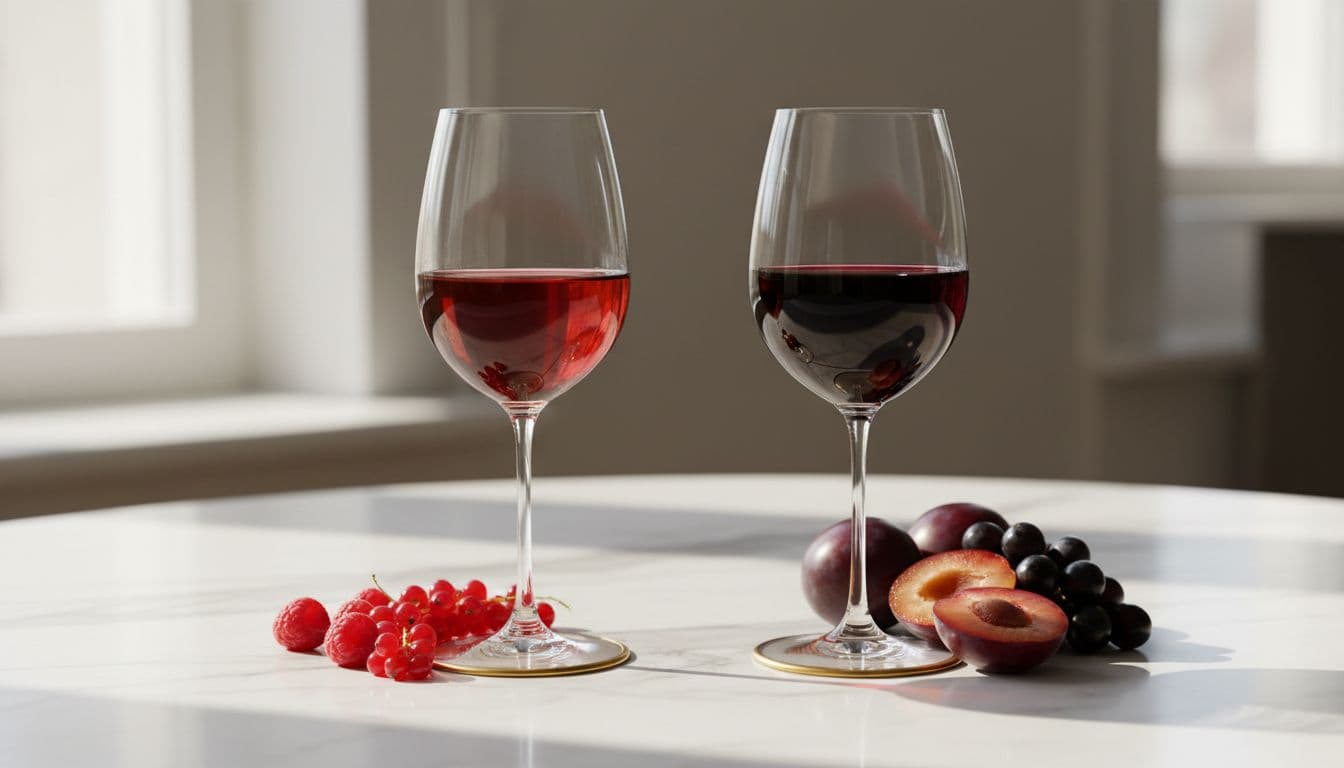
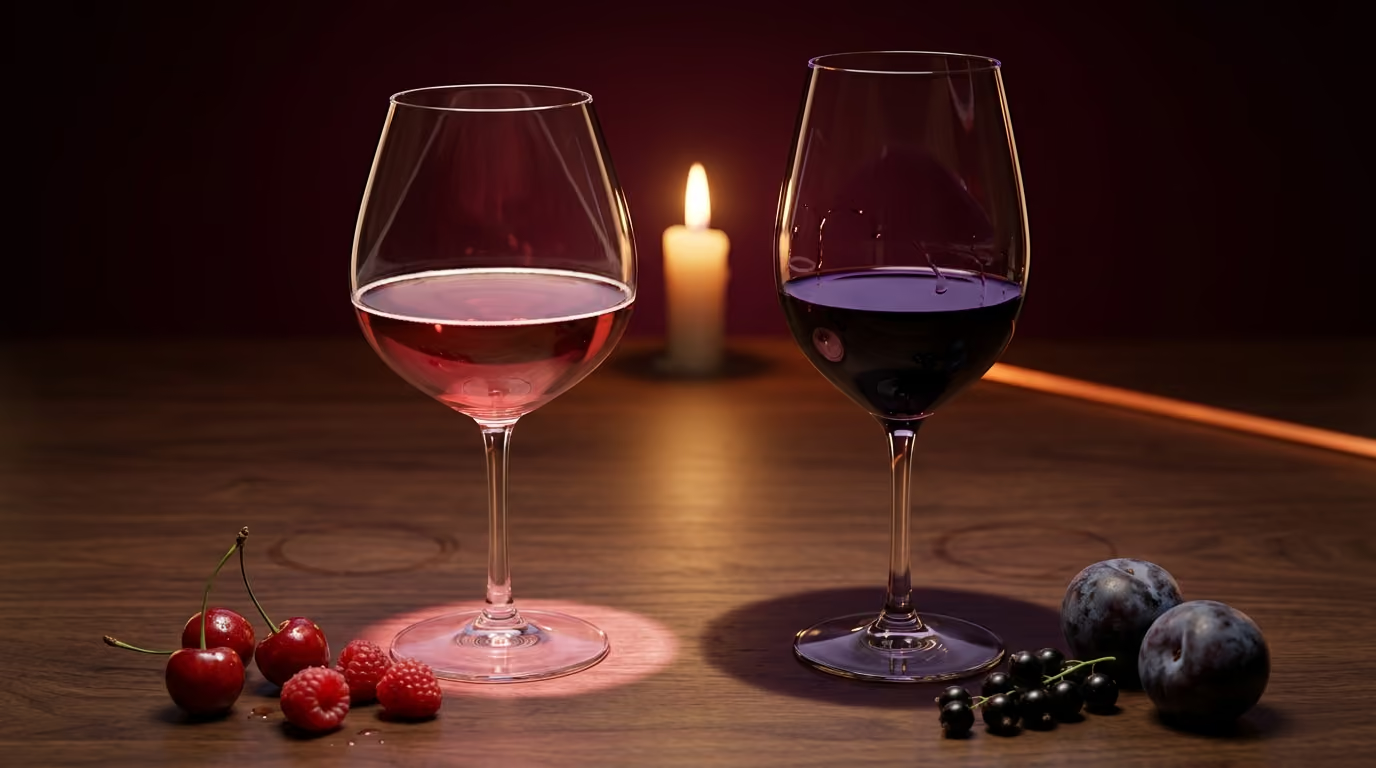
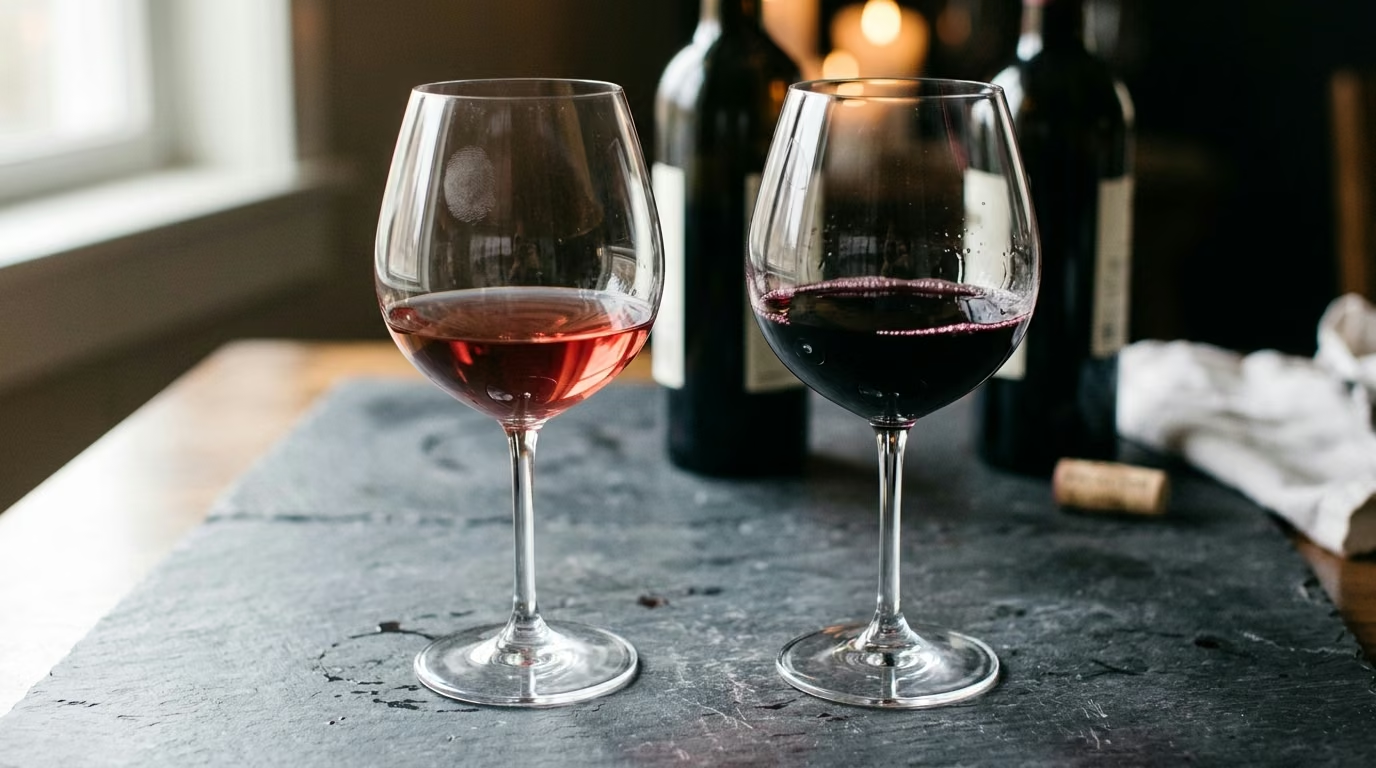
You can see the difference before you taste anything. Wine Folly notes that Malbec's skins carry high levels of color pigment, and that one of its classic blind-tasting tells is an opaque purple color with a bright magenta rim. Next to it, a glass of Pinot Noir looks almost see-through. The same thick skins that stain the glass also give Malbec more tannin, the drying grip you feel on your gums after a sip.
| What you're deciding | Pinot Noir | Malbec |
|---|---|---|
| Body | Light to medium | Full |
| Main fruit | Raspberry, red cherry | Red plum, blackberry |
| Other notes | Mushroom, hibiscus, vanilla if oaked | Cocoa, vanilla, sweet tobacco |
| Tannin (drying grip) | Low | Medium |
| Acidity (freshness) | Medium-high | Medium-low |
| Alcohol | 12% to 14% | 13.5% to 15% |
| Serve at | 55°F to 60°F | 60°F to 68°F |
| Easy dinner match | Salmon, roast chicken, duck, mushrooms | Steak, burgers, barbecue, blue cheese |
| Classic places | Burgundy, Oregon, California, New Zealand | Mendoza in Argentina, Cahors in France |
| Easy bottle to try | A to Z Oregon Pinot Noir, about $17 | Catena Malbec, about $21 |
Where the grapes come from shapes them too. Pinot Noir's home is Burgundy in eastern France. Malbec comes from Southwest France, where it's still called Côt, but Argentina is where it became famous, and Wine Folly says 40% of Argentina's red grape vineyards are now Malbec. According to Wikipedia's Malbec entry, a French agricultural engineer named Michel Pouget brought the grape to Argentina in 1868, and Argentine grapes make softer, less tannic wines than those from Cahors, the grape's stronghold in France.
Which one should you open with tonight's dinner?
Open Malbec with grilled or roasted red meat, burgers, barbecue and anything with char or melted cheese, and open Pinot Noir with salmon, roast chicken, duck, pork, mushrooms and holiday turkey. The logic is weight matching, because Malbec's tannin and body need fat and protein to soften against, while Pinot Noir's acidity and light frame let it sit beside delicate food without flattening it.
Pinot Noir is the red that can handle fish. Wine Folly calls it light enough for salmon but complex enough for richer meats like duck, and it singles out earthy, fatty mushroom dishes as a highlight. If the plate is on the lighter side, like roast chicken, salmon or pork chops, Pinot usually fits. It's also our default for Thanksgiving, because it stays fresh next to gravy, stuffing and cranberry sauce, which is why our Pinot Noir turkey pairing guide leads with it.
Malbec wants food with some heft. Picture a ribeye with a charred edge, a smash burger with cheddar, braised short ribs or a pulled pork sandwich. Wine Folly adds that blue cheese brings out Malbec's fruitiness and suggests trying it with a burger, which is about as easy as a weeknight pairing gets. Malbec also travels further than steak, and the trade body Wines of Argentina recommends fresh, unoaked Malbec from cool areas like Gualtallary in the Uco Valley with bibimbap, and a young, light Malbec or even a Malbec rosé with ramen.
The harder calls are the dishes that sit in the middle. A mushroom pasta, a roast pork loin or a sausage pizza could go either way, so let the richest thing on the plate decide. If the mushrooms are the star, choose Pinot Noir, and if they're a side next to a steak, choose Malbec. Our guide on how to match wine with food lays out the method behind those calls, and our best wine for dinner guide applies the same weight idea to a full weeknight menu.
Why does Pinot Noir taste earthy and Malbec taste fruity?
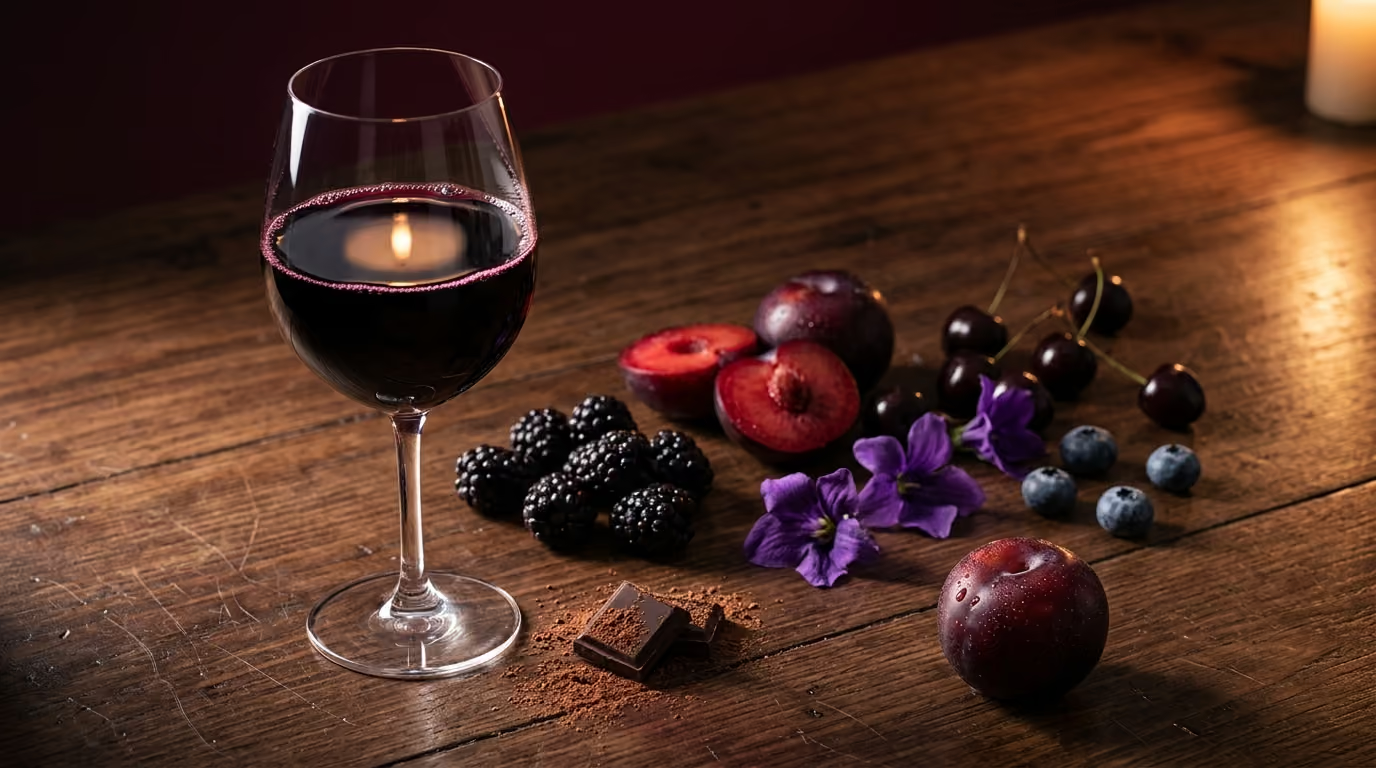
Pinot Noir tastes earthy because its delicate red fruit leaves room for savory aromas like mushroom and forest floor, while Malbec's dense plum and blackberry fruit, plus cocoa and vanilla from oak, sits in front of everything else. Wine Folly lists raspberry, cherry, mushroom, vanilla and hibiscus as Pinot's primary flavors, and red plum, blackberry, vanilla, sweet tobacco and cocoa for Malbec.
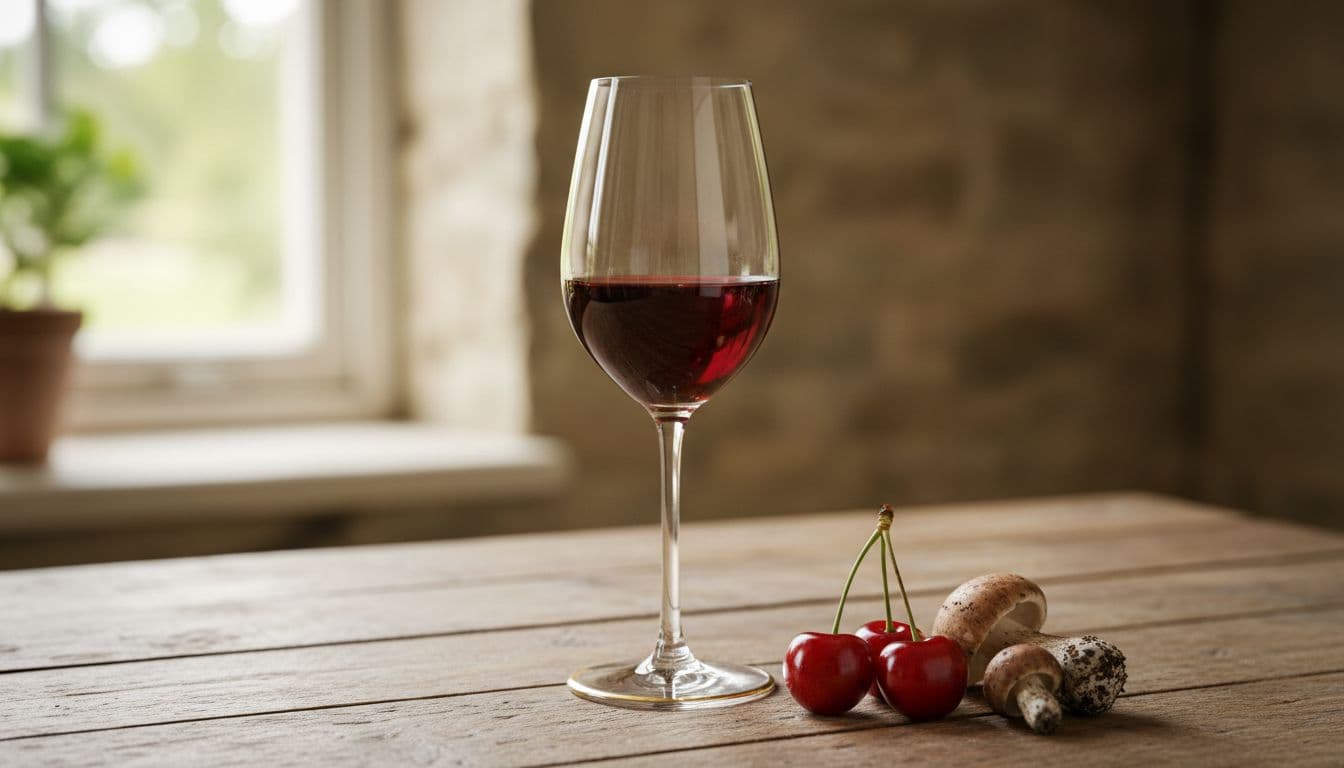
When people call Pinot Noir earthy, they mean something closer to damp leaves after rain or mushrooms browning in butter than to actual soil, and the word points to a savory note rather than anything dirty. Wine Folly says those notes grow as the wine ages, with mushroom and leather showing up in older bottles. Burgundy is where the earthy side is strongest, and Wine Folly puts that down to terroir, the mix of soil, slope and climate a vineyard sits in.
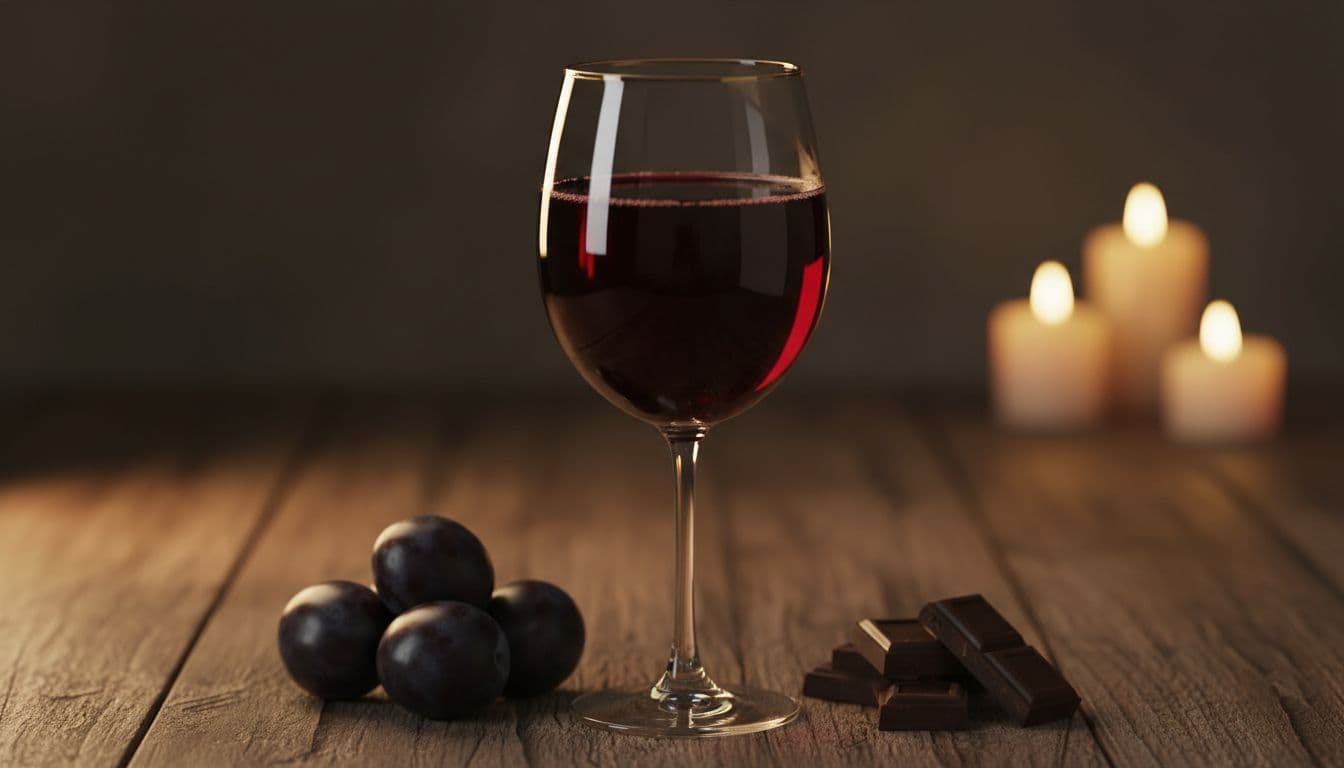
Malbec's fruit reads as ripe and dark, and Wine Folly describes the finish as smooth and chocolatey. That ripeness comes from sunshine, which Malbec needs to ripen its thick skins. It can taste a little sweet even though it isn't, since Wine Folly's tech notes put residual sugar in the top-rated Malbecs it checked at typically less than 1 gram per liter, which is fully dry. Ripe fruit and softer acidity make the brain expect sugar that isn't there.
Which one should you pour for a guest who likes a different wine?
Pour Malbec for a guest who usually drinks Cabernet Sauvignon or Zinfandel, and pour Pinot Noir for a guest who mostly drinks white wine, rosé or lighter reds like Gamay. The wines a person already orders are a better guide than any tasting note, because they tell you how much weight and tannin that person enjoys.
A Cabernet drinker likes body and grip, and Malbec gives them both with softer edges and more obvious fruit, so it rarely disappoints that guest. Someone who reaches for Chardonnay or Sauvignon Blanc and finds most reds heavy will be happier with a Pinot Noir served slightly cool, since it has the fresh acidity they're used to. Merlot fans are the swing vote. They like plush and smooth, which points to Malbec, but if they drink Merlot because it's softer than Cabernet, a fruit-forward California Pinot can land just as well, and our Malbec vs Merlot comparison works out which of those two really drinks softer.
The trickiest guest is the one who says they like a smooth red. That word usually means low tannin, which on paper is Pinot Noir, but plenty of people who use it are describing ripe fruit and a round texture, which is Mendoza Malbec. If you can, ask about the last bottle they loved. If you can't, Pinot is the safer guess at a mixed table, and Wine Folly makes the same call, saying that when everyone orders a vastly different entree you can usually win by picking Pinot Noir.
Is there a Malbec that drinks like Pinot Noir, or a Pinot that drinks like Malbec?
Yes on both counts, because high-altitude, unoaked Malbec from the Uco Valley drinks fresher and brighter than the classic Mendoza style, and California Pinot Noir is fuller and darker than Oregon or Burgundy. The grape sets the range, and the place moves the wine around inside it.
Malbec gets fresher as you climb the mountain. Wine Folly says the grape struggles to keep its acidity at lower elevations and does far better at high sites with cold nights and sunny days. Catena Malbec is an easy way to taste that, since Catena's own tech sheet for the 2024 vintage blends three vineyards, the highest of them in Gualtallary at 4,757 feet, and lists the wine at 13.5% alcohol, the bottom of Malbec's usual range. Wine-Searcher lists Catena Malbec at an average of $21. To go further toward Pinot territory, look for Uco Valley or Gualtallary on the label alongside words like unoaked or fresh, the style Wines of Argentina keeps recommending for spicier food.
Cahors pulls Malbec the other way. Wikipedia's Cahors AOC entry says the appellation's reds must be at least 70% Malbec, with Merlot and Tannat allowed for the rest, and the Malbec entry says the limestone soils of Cahors give the grape its darkest and most tannic form. That makes Cahors the pick for a Malbec fan who wants more structure with a steak, and most Pinot drinkers will find it heavy. Clos La Coutale is a good introduction, a Malbec and Merlot blend aged for a year in barrels and large wooden casks according to the estate's own page, and Wine-Searcher lists Clos La Coutale at an average of $20.
On the Pinot side, California is the bridge. Wine Folly describes California Pinot Noir as bigger, lusher and more fruit-forward than French or German examples, with sweet black cherry and black raspberry plus notes of vanilla, clove, cola and caramel, while Oregon Pinot is lighter in color and texture, more tart, and often the closest in style to Burgundy. Meiomi is the clearest case of the rich style, and we keep a separate list of wines like Meiomi for anyone who already loves it. Meiomi's own description of its Pinot Noir is black cherry, toasty oak, juicy strawberry and toasted mocha, which is a Malbec drinker's vocabulary, and Wine-Searcher lists Meiomi Pinot Noir at an average of $21. For the lighter, earthier style, A to Z Oregon Pinot Noir averages $17 and Louis Jadot Bourgogne Pinot Noir from Burgundy averages $23. If you want to go deeper on either grape, our guide to the best Malbec in Argentina reads the regions one at a time, and our take on what the best Pinot Noir is does the same for Pinot.
Which is the better value, Pinot Noir or Malbec?
Malbec is usually the better value under $20, and Pinot Noir tends to ask you to spend a bit more for the same satisfaction. Wine Folly's Malbec guide calls $12 to $20 the range for good introductory bottles, smooth and juicy without much oak, and $20 to $50 the range for higher-end reserva and single-vineyard wines. Alamos Malbec, the entry-level label from the same family as Catena, averages $12 on Wine-Searcher.
Pinot Noir's thin skins make it a fussy grape to grow, which is why Wine Folly calls it the heartbreak grape, and in our experience the very cheapest bottles are where it disappoints most, tasting thin rather than light. So our rule of thumb is simple enough to use in the aisle. Below about $15, buy Malbec, and between $15 and $25 both grapes give you good choices, which is where five of the six bottles on this page sit. At the top end the comparison stops being fair, and Wine Folly points out that the best Malbecs sell for well over $100, but top-quality bottles can be found for around $50, while the iconic wines of Burgundy start at $250.
How do you choose between them on a restaurant wine list?
Choose Pinot Noir when the table's plates are mixed or lean toward fish and poultry, and choose Malbec when most people ordered red meat. By the glass, it's fine to split, since one of each is often the easiest way to cover a steak and a salmon at one table.
Temperature matters more than people expect. Wine Folly suggests serving Pinot Noir at 55°F to 60°F and Malbec at 60°F to 68°F, and restaurant reds often arrive warmer than both. A warm Pinot loses its freshness and a warm Malbec tastes boozy, so don't be shy about asking for an ice bucket for five or ten minutes.
If you don't recognize any of the names on the list, these lines work with any server:
- "Which of your Pinot Noirs is the lightest and most earthy?"
- "Do you have a Malbec from the Uco Valley that isn't heavily oaked?"
- "We're sharing steak and salmon, so which red works with both?"
- "I'd like something fruity and round, but not heavy."
Frequently Asked Questions
Is Pinot Noir or Malbec sweeter?
Neither is sweet, because both are normally made dry. Malbec often tastes sweeter thanks to its ripe dark fruit and softer acidity, but Wine Folly's tech notes put residual sugar in top-rated Malbecs at typically less than 1 gram per liter.
Which has more alcohol, Pinot Noir or Malbec?
Malbec usually carries more alcohol than Pinot Noir. Wine Folly puts Malbec at 13.5% to 15% and Pinot Noir at 12% to 14%, so a Malbec often feels warmer and fuller in the mouth.
What is Pinot Noir wine?
Pinot Noir is a red wine made from a thin-skinned grape that originated in Burgundy, France. It makes pale, light to medium-bodied wines with red cherry and raspberry fruit, low tannin and fresh acidity, and it's grown widely in Oregon, California, Germany and New Zealand.
What are the different types of Malbec?
The main red styles are ripe, plush Mendoza Malbec, fresher high-altitude Malbec from the Uco Valley, and darker, more tannic Cahors from France. Wines of Argentina also points to Malbec rosé, sparkling Malbec and white Blanc de Malbec, all made from the same grape.
Should you chill Pinot Noir or Malbec?
Chill Pinot Noir lightly to 55°F to 60°F, and serve Malbec a little warmer at 60°F to 68°F, which are Wine Folly's ranges. From room temperature, our rough rule is about 20 minutes in the fridge for Pinot and 10 for Malbec.
Is Pinot Noir vs Malbec a better choice for someone new to red wine?
Pinot Noir is usually the gentler start, because its low tannin doesn't dry your mouth the way bigger reds can. If you already like bold flavors or you're eating steak, a Mendoza Malbec around $12 to $20 is just as easy to enjoy.
Knowing which side of the light or full line you sit on is most of the decision, and it's exactly what Sommy is built to learn from the wines you rate. Its Fit Check takes a bottle you type, say or scan and gives you a percentage match against your Taste Profile, which answers the one question this page can't, whether you'll actually like it. Sommy is still pre-launch, so join the Sommy waitlist and we'll let you know when it's ready.