The best wine for brisket is a medium to full-bodied red with dark fruit, low to moderate oak and enough acidity to handle the fat, which points to northern Rhône Syrah, Malbec or a Chianti Classico. Burnt ends are sweeter and fattier and want something fruitier, so Zinfandel finally earns its place there. If you've searched this before and come away confused, that's reasonable. The top results genuinely contradict each other, and the reason is that they're each pairing a different piece of meat.
Why do wine guides disagree so much about brisket?
They disagree because brisket isn't one dish, and almost nobody says so out loud. Search this question and the first page hands you two opposite answers with equal confidence. Wine retailers and cellar sites tell you to reach for a big, high-tannin red, usually Cabernet Sauvignon or Zinfandel, on the theory that a fatty cut needs tannin to cut through it.
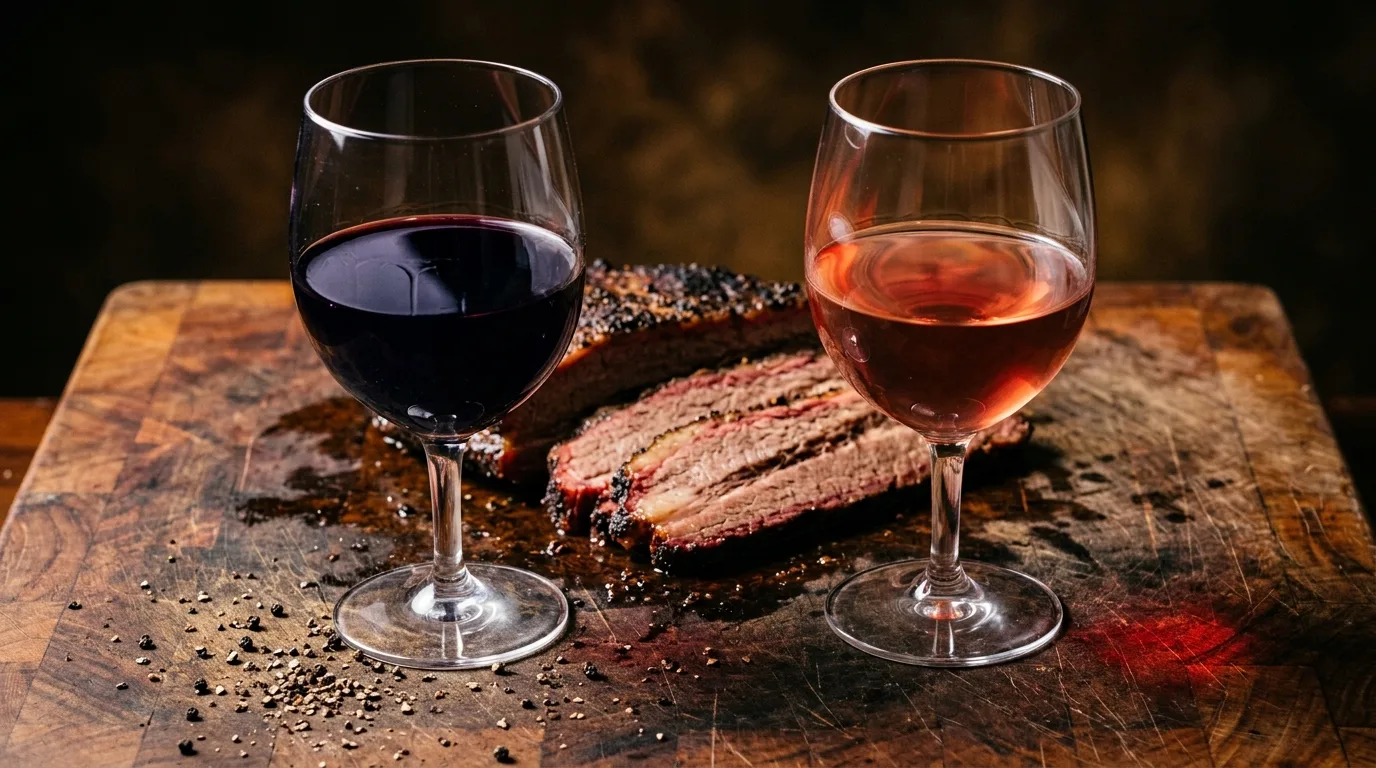
Then Food & Wine asks Jordan Mackay, who co-wrote Franklin Barbecue: A Meat-Smoking Manifesto with the Austin pitmaster Aaron Franklin, and he says close to the reverse. In his five rules for pairing wine with barbecue he tells you to skip the Zinfandel, avoid oaky wines because smoke and toasted barrel don't actually flatter each other, and stop worrying about tannin, since properly cooked barbecue is tender enough that you don't need the grip you'd want with a steak. His picks are northern Rhône Syrah and, surprisingly, Oregon Pinot Noir.
Both camps are right about their own dish. The retailers are usually describing braised brisket, the pot-roast style cooked for hours in liquid with onions and tomato, which is a rich, saucy dish where tannin has something to do. Mackay is describing Texas smoked brisket, where the meat is rendered so soft that tannin has nothing to grip and the dominant flavor is wood smoke and black pepper. Those are different meals that happen to share a name, and once you know which one you're eating the answer stops being contested.
What wine goes with Texas-style smoked brisket?
Northern Rhône Syrah is the strongest match for smoked brisket, and it isn't close. Syrah from Crozes-Hermitage, Saint-Joseph or Cornas carries black pepper, cured meat and smoked bacon as part of its natural flavor, so it doesn't clash with the bark on the meat, it continues it. The wine tastes like it came off the same fire.
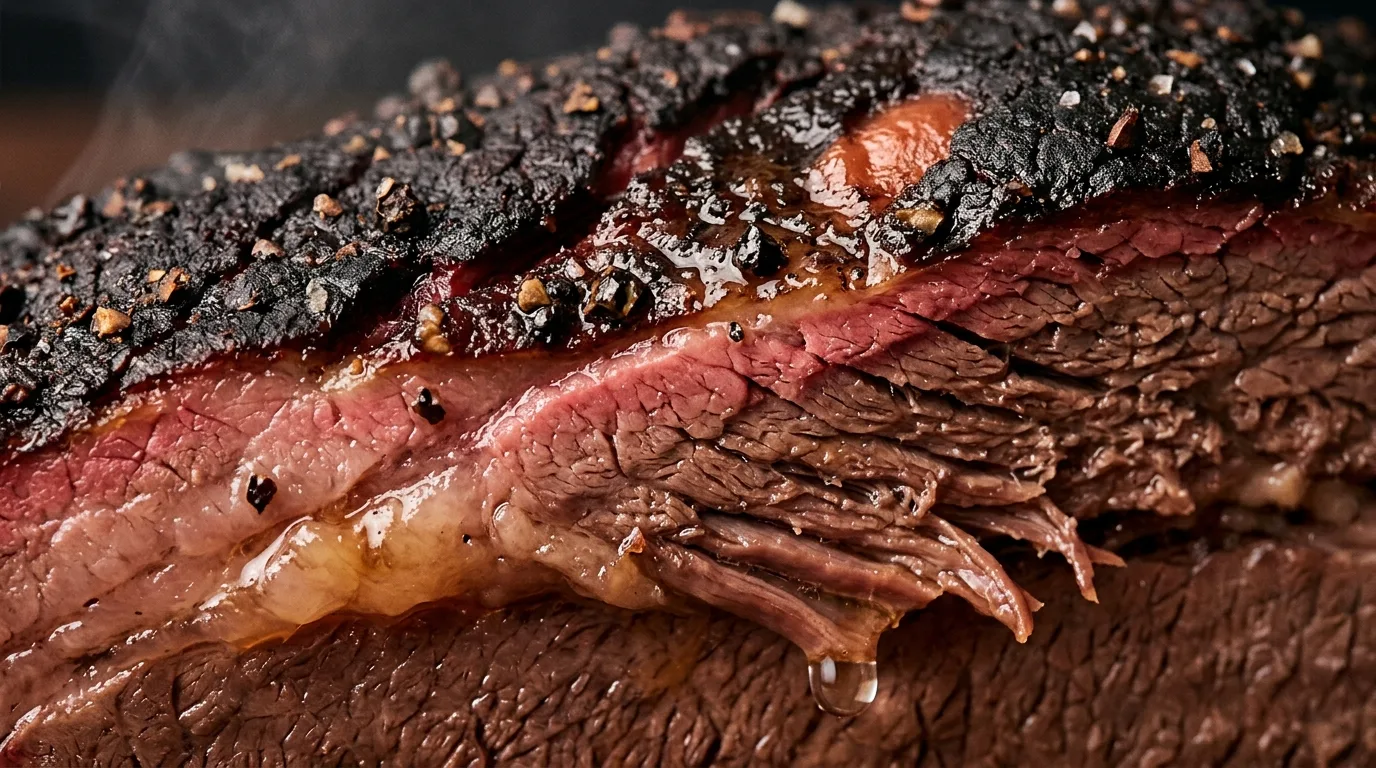
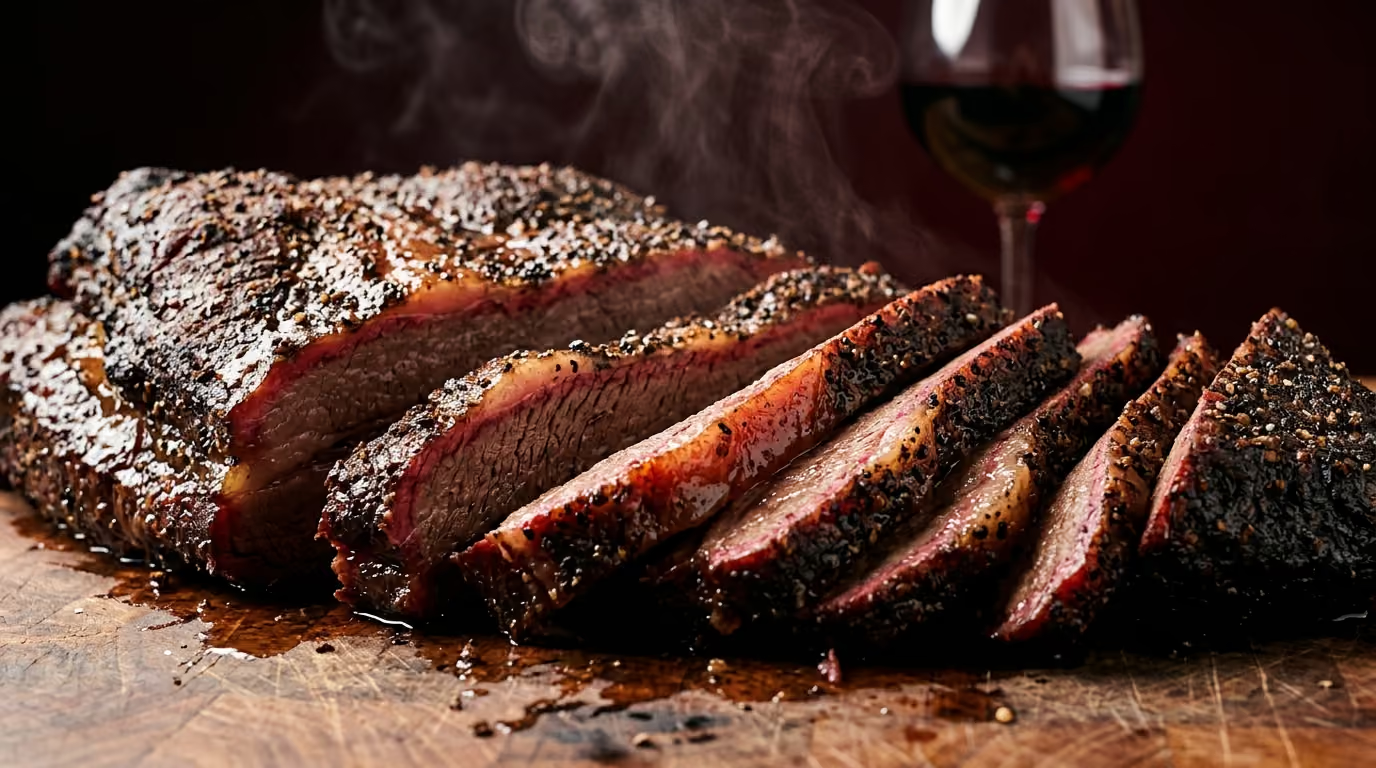
Texas brisket is rubbed with little more than salt and coarse black pepper, then smoked over post oak for the better part of a day. What you're tasting is smoke, rendered beef fat, and a peppery crust that has gone almost black. Fruit-forward wine works against that, since sweet jammy fruit next to savory smoke reads as slightly sugary, while a savory wine falls straight into line with it. Our guide to the best Syrah wine and how to find one you'll enjoy covers the difference between the peppery northern Rhône style and the riper Australian one, which matters here more than usual.
Mackay's Oregon Pinot Noir suggestion sounds odd and holds up in practice. Willamette Valley Pinot has high acidity, gentle tannin and an earthy, forest-floor quality, and against tender smoked beef it refreshes rather than competes. He describes it as a boxing match where the quick, wiry fighter handles the heavyweight, which is a fair description of what the acidity does to all that fat. If that's a style you don't know, our piece on Willamette Valley whole cluster Pinot Noir explains where the savory, stemmy character comes from.
Malbec from Mendoza is the third option and the easiest to find at a reasonable price. It has plush dark fruit and softer tannin than Cabernet, which suits the leaner flat cut particularly well. Skip anything heavily oaked, whatever the grape, because a wine full of toasted barrel next to a plate full of wood smoke gives you the same flavor twice and it turns bitter fast.
What should you pour with burnt ends?
Burnt ends want a fruitier, softer red than the rest of the brisket does, and this is where Zinfandel finally makes sense. They're cut from the point, the fattier of the brisket's two muscles, then cubed, seasoned again, sauced and put back in the smoker until the edges caramelize. The result is sweeter, richer and more intensely smoky than a sliced brisket, and it behaves like a different dish on the palate.
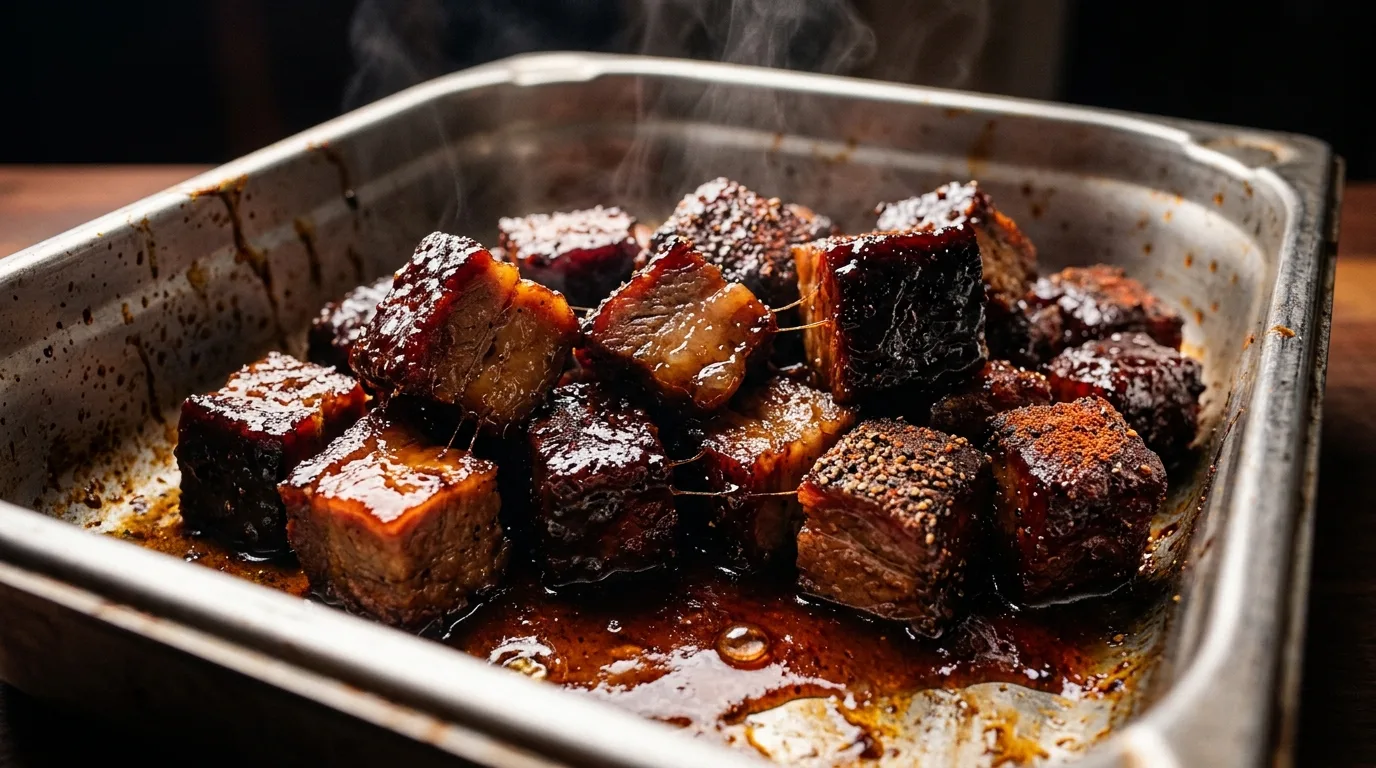
That sweetness is the deciding factor. A sauce built on molasses, brown sugar or tomato makes a bone dry, savory red taste thin and slightly sour by contrast, which is exactly the effect people notice when a great Syrah suddenly seems wrong. A wine with generous ripe fruit meets the sauce at its own level instead. Zinfandel is the obvious candidate, with its jammy berry fruit and peppery finish, and a Primitivo from Puglia does the same thing for less money.
Australian Shiraz is the other reliable answer here and it's the one most people already have access to. It's riper and sweeter-fruited than northern Rhône Syrah, and against caramelized sauce that ripeness stops being a liability. Our comparison of Syrah and Zinfandel sets out how differently the two behave next to sweet and spicy food.
The mistake to avoid with burnt ends is a serious, structured, expensive red. A fine Bordeaux or a cellar-worthy Napa Cabernet has nothing to offer a pile of sugar-glazed pork-fat-rich beef cubes, and the sauce simply erases everything you paid for. Save the good bottle for the sliced brisket and drink something cheerful with the burnt ends.
Does braised brisket want a different bottle?
Braised brisket wants a red with more acidity and less smoke in its personality, which usually means an Italian red or a right-bank Bordeaux. This is the version cooked slowly in liquid rather than over wood, often with onions, carrots and a tomato-based gravy, and it's the classic holiday and Sunday-dinner dish rather than a barbecue.
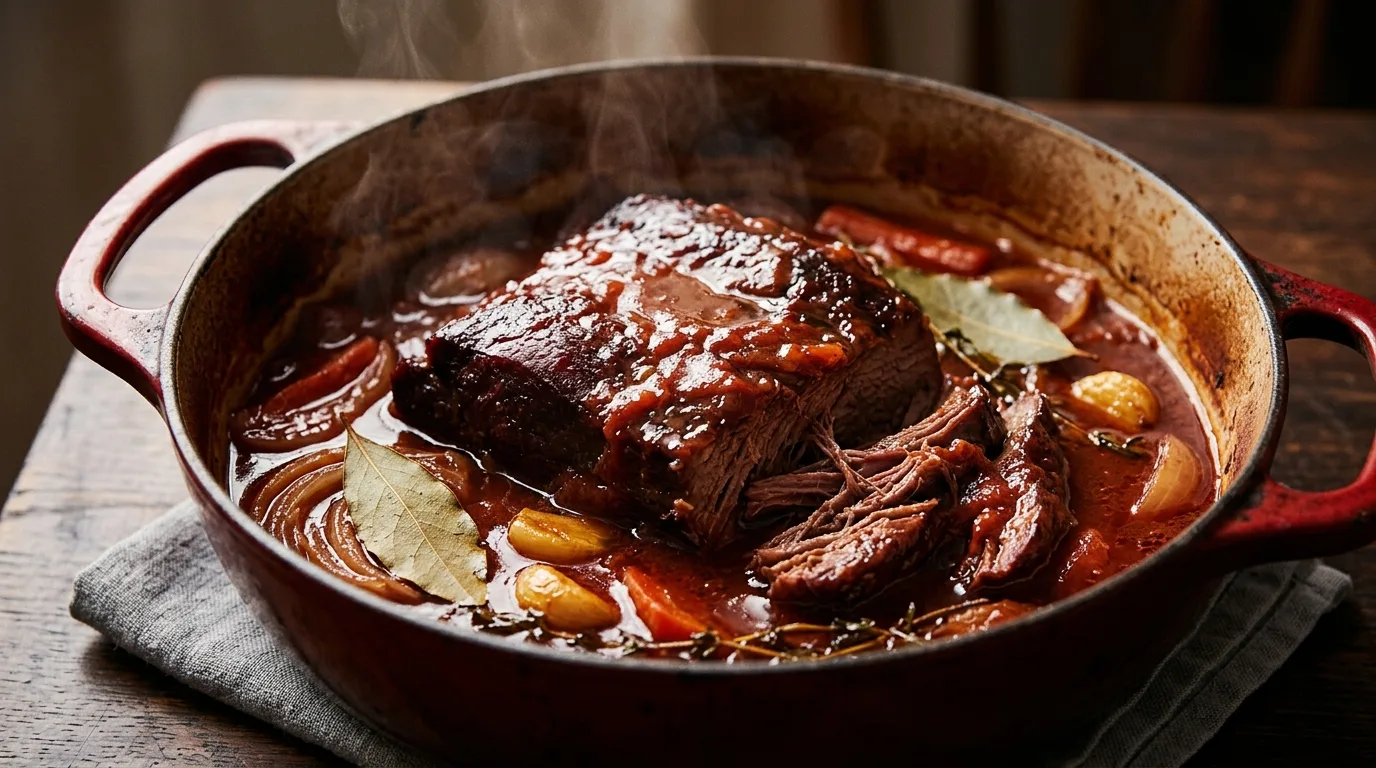
Because tomato is doing so much of the work, the wine needs acidity to match it. Chianti Classico is the standard choice and a very good one, since Sangiovese has bright acidity, savory herbs and a natural affinity for tomato in any form. Barbera does the same job with softer tannin and even more freshness. A Merlot-based Bordeaux from Saint-Émilion or Pomerol suits a richer, wine-braised version where the gravy has more depth than sharpness.
There's a useful piece of contrarian advice floating around this corner of the internet, and it comes from the founder of the wine-tracking site CellarTracker, quoted in Cooking Chat's notes on wine with brisket. He recommends southern Rhône reds such as Châteauneuf-du-Pape or the villages around it, and Spanish or Italian reds with good acidity, while telling you to stay away from big Australian Shiraz and California Cabernet for this dish. That's the opposite of the burnt-ends advice above, and both are correct, because a tomato-braised brisket and a sugar-glazed burnt end have almost nothing in common.
Rioja Reserva deserves a mention for the same reason. It has acidity, gentle savory fruit and enough age to feel settled, and it goes with a slow-cooked beef dish about as naturally as anything on the shelf.
How do the rub and the sauce change the pick?
The sauce changes the answer more than the meat does, which is the single most useful thing to know about pairing wine with barbecue. Brisket cooked three ways with three sauces is three separate pairing problems, and the rub matters almost as much.
Here's how the versions you're most likely to be eating line up.
| The brisket | What it needs | Reach for |
|---|---|---|
| Texas smoked, salt and pepper rub, no sauce | Savory, peppery, unoaked | Northern Rhône Syrah, Oregon Pinot Noir |
| Kansas City burnt ends, sweet sauce | Ripe fruit, soft tannin | Zinfandel, Primitivo, Australian Shiraz |
| Braised with tomato and onion | High acidity, moderate body | Chianti Classico, Barbera, Rioja Reserva |
| Coffee or chilli rub | Dark fruit, low oak | Malbec, Douro red, Mourvèdre blend |
| Vinegar or mustard sauce | Sharp acidity, light body | Gamay, Cabernet Franc, dry rosé |
A chilli-heavy rub is the one case where alcohol becomes the deciding variable. Capsaicin makes high-alcohol wine taste hotter and more astringent, so a fifteen percent red that seemed fine with plain brisket turns harsh against a spicy one. Drop to something around thirteen percent and the problem disappears. We work through the same trade-off with sweet and spicy sauces in our guide to wine for BBQ ribs and pulled pork, and again with the gochujang end of the spectrum in wine for Korean BBQ.
What do you open for a cookout crowd?
Open one crowd-pleasing red and serve it cooler than you think, because a cookout is rarely the place for a single perfect pairing. Brisket at a gathering arrives alongside burnt ends, slaw, pickles, beans and whatever someone else brought, and a wine chosen precisely for the sliced meat will meet four other flavors on the same plate.
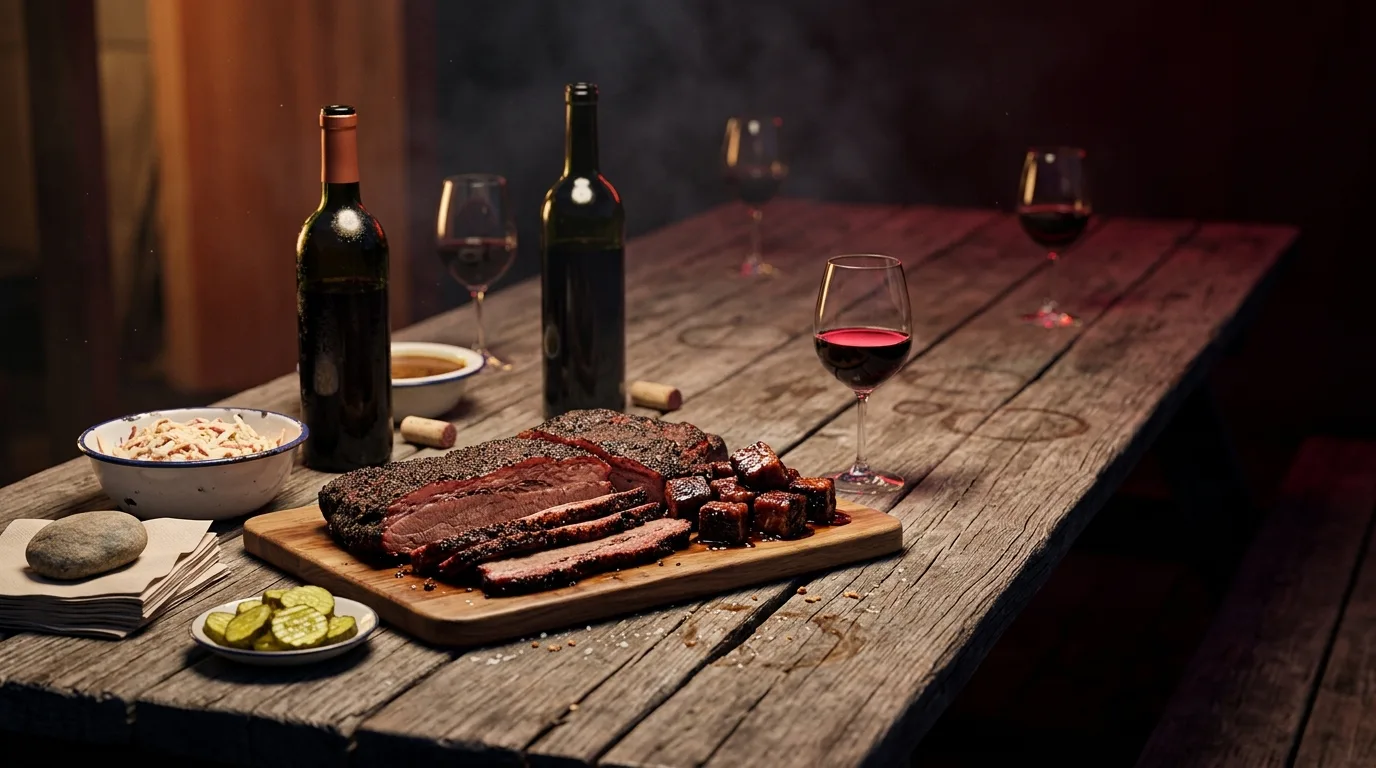
Mendoza Malbec is the safest bottle for that job. It's ripe enough for sweet sauce, structured enough for the meat, soft enough that nobody finds it difficult, and it's easy to buy several bottles of without much thought. A Côtes du Rhône is the next best option and covers the savory end better. If you'd rather buy two things, get a Malbec for the sauced dishes and a Syrah for the plain sliced brisket, and let people choose.
Temperature matters more outdoors than anywhere else. Red wine sitting in the sun climbs well past room temperature and starts tasting flabby and alcoholic, and twenty minutes in a cooler fixes it completely. Somewhere around 60 degrees Fahrenheit is right for a big red at a summer cookout.
When you're standing over the smoker deciding what to open, Sommy's Pairing feature works from a photo of the actual plate, sauce and sides included, and matches it against what you already know you like. That's more useful than a general rule at the exact moment the general rule stops applying, which with barbecue is most of the time.
Frequently asked questions
What is the best wine pairing for brisket?
Northern Rhône Syrah for smoked brisket, because its black pepper and cured-meat character continues the flavor of the bark rather than fighting it. Malbec is the easier and cheaper alternative, and Oregon Pinot Noir works surprisingly well thanks to its acidity.
Should you drink Cabernet Sauvignon with brisket?
It's a better match for braised brisket than for smoked. Big oaky Cabernet next to heavy wood smoke gives you a doubled-up toasty flavor that turns bitter, and the tannin has little to grip in meat that's already fall-apart tender.
Is Zinfandel good with brisket?
With burnt ends and sweet-sauced brisket, yes, since its jammy fruit meets the sugar in the sauce. With plain salt-and-pepper Texas brisket it's a weaker choice, and Aaron Franklin's co-author Jordan Mackay specifically recommends skipping it there.
What wine goes with burnt ends?
Something fruity and soft. Zinfandel, Primitivo or Australian Shiraz all handle the caramelized sugar in the sauce, where a dry savory red would taste thin next to it. Leave the serious structured reds for the sliced meat.
Does white wine ever work with brisket?
Rarely on its own, though a full-bodied oaked Chardonnay can hold up to sliced brisket without sauce. A dry rosé with some body is the better non-red option, particularly with vinegar-based sauce or on a hot day.
What temperature should the wine be at a barbecue?
Cooler than the air. Around 60 degrees Fahrenheit keeps a big red fresh, and a red left in the sun quickly tastes heavy and alcoholic. Twenty minutes in a cooler before serving is usually all it needs.
Match the sauce, then the smoke
Brisket has a reputation for being a hard pairing, and it's mostly a filing problem. Once you separate Texas smoked brisket from sugar-glazed burnt ends from tomato-braised pot roast, three clear answers appear where there used to be an argument. Savory Syrah for the smoke, fruity Zinfandel for the burnt ends, high-acid Italian red for the braise.
The one rule that holds across all three is to go easy on the oak. Wood smoke and toasted barrel are the same family of flavor, and doubling them is how a good bottle ends up tasting bitter next to great meat. Buy for the sauce, chill it slightly, and don't spend so much that the barbecue sauce gets the last word.