
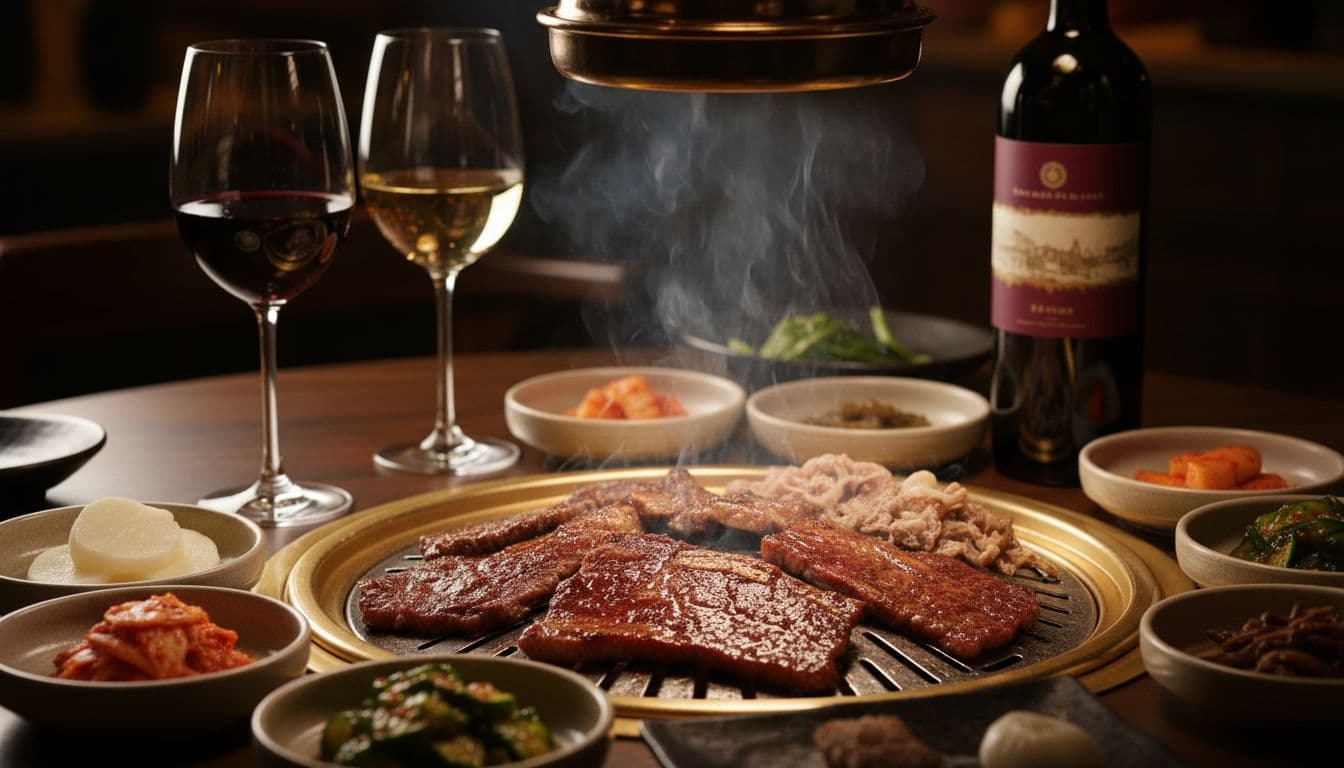
The best wines for Korean BBQ are off-dry Riesling, sparkling rosé and light chillable reds such as Gamay, Zweigelt or a cooler-climate Pinot Noir. They cool the chili heat, meet the sweet soy in the marinades and stay refreshing through a long, smoky meal where new plates keep arriving. If you only remember one rule, reach for something fresh, lightly fruity and moderate in alcohol, and leave the big oaky bottles on the shelf.
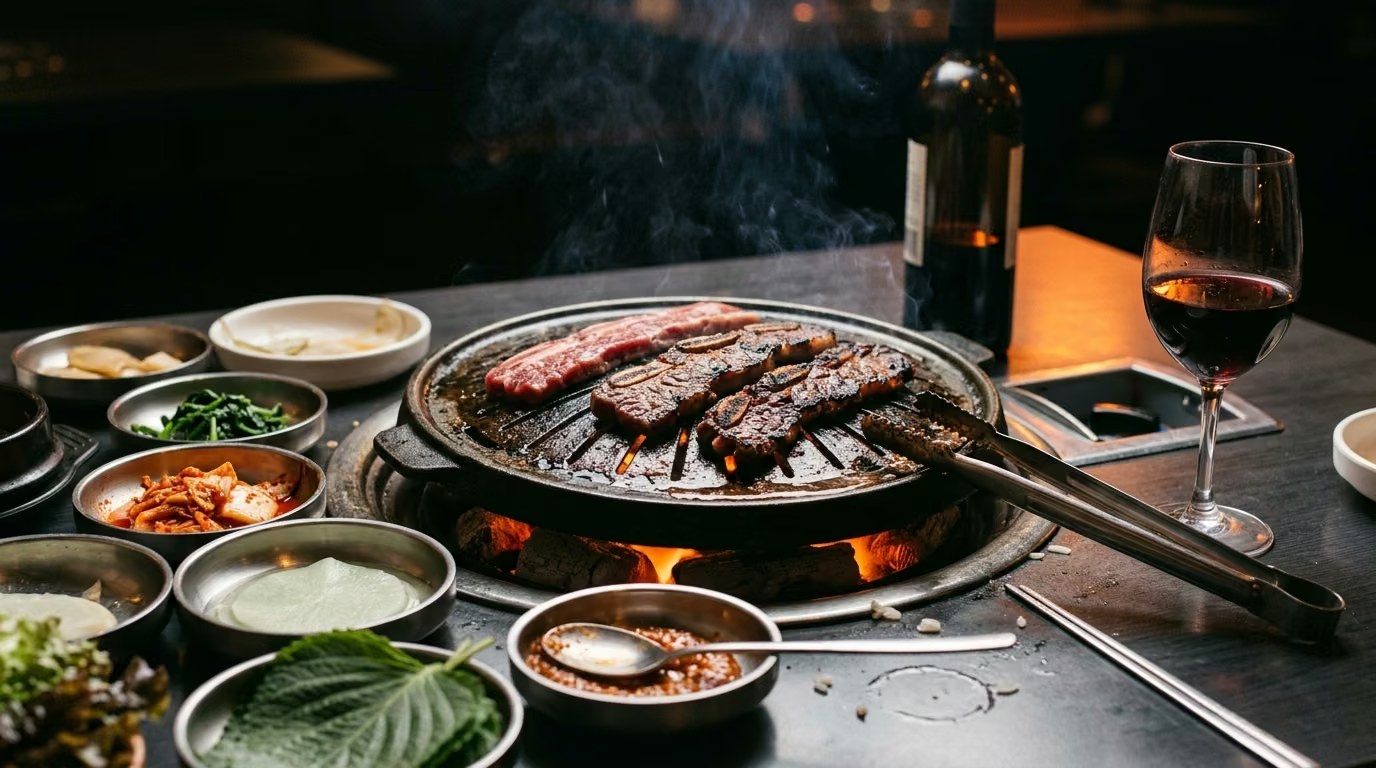
Korean BBQ is loud, smoky, sweet and spicy all at once, and the flavors swing from caramelized beef to fiery kimchi within a single bite. That's why most people default to beer or soju and assume wine can't keep up. Wine can, and the right bottle genuinely improves the meal.
Which wines work across a whole Korean BBQ table?
Four styles cover almost everything you'll grill, and they all share the same shape: bright acidity, moderate alcohol, low to medium tannin and a little fruit. That combination is what handles the sweet-and-spicy swing without ever fighting the food.
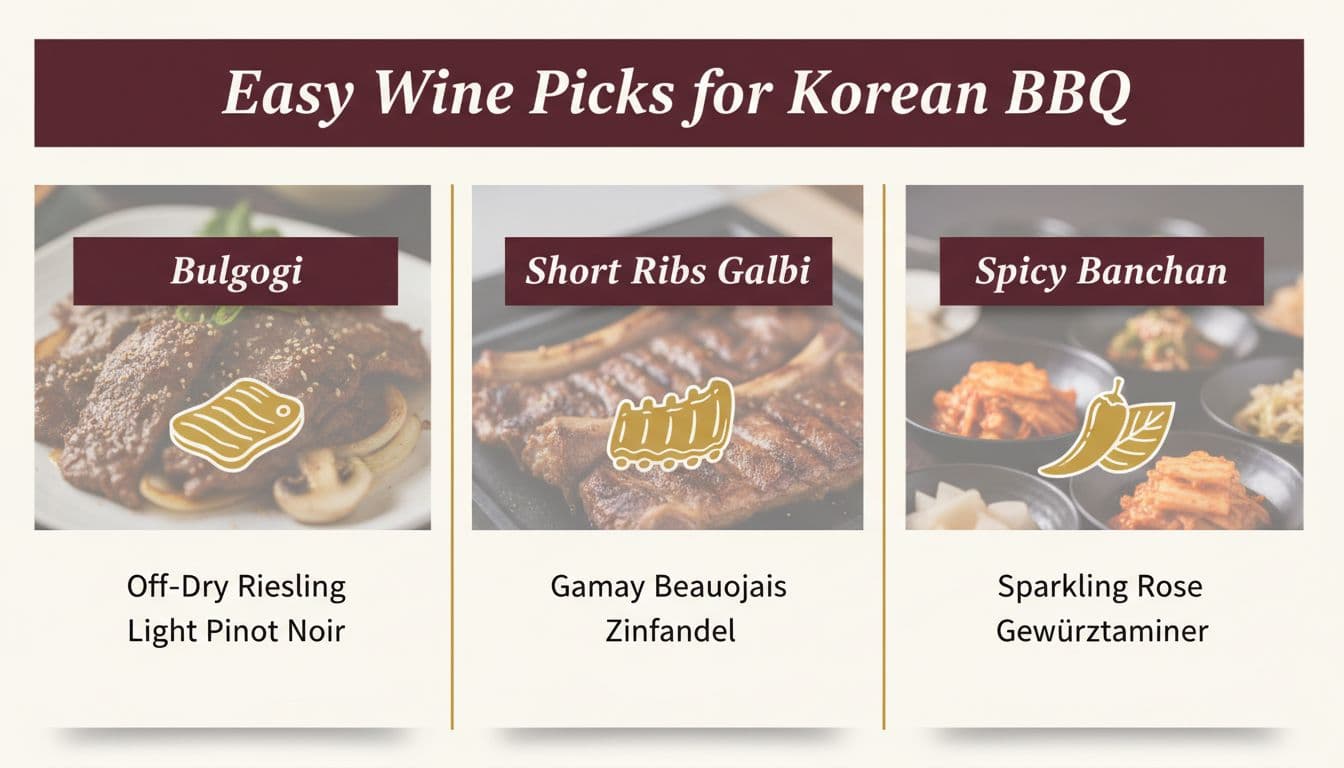
| If your table has... | What's going on | Easy wine picks |
|---|---|---|
| Bulgogi (sweet soy, garlic beef) | Sweet plus savory | Off-dry Riesling, light Pinot Noir |
| Galbi (short ribs, grill char) | Fat plus caramelized edges | Gamay, sparkling rosé |
| Samgyeopsal (pork belly) | Rich, fatty, savory | Sparkling rosé, chilled Gamay, dry Lambrusco |
| Jeyuk bokkeum, dakgalbi (spicy pork and chicken) | Gochujang heat | Off-dry Riesling, Gewürztraminer |
| Spicy banchan (kimchi, gochujang) | Heat plus tang | Sparkling rosé, off-dry Riesling |
If you want a single bottle for the whole table and you don't want to think about it again, buy sparkling rosé. It's the only style on that list that never actively clashes with anything else on it.
How do you choose wine for Korean BBQ in three rules?
You don't need to memorize grapes, because three rules cover almost every table. Each one is about a specific thing Korean BBQ does that most Western food doesn't.
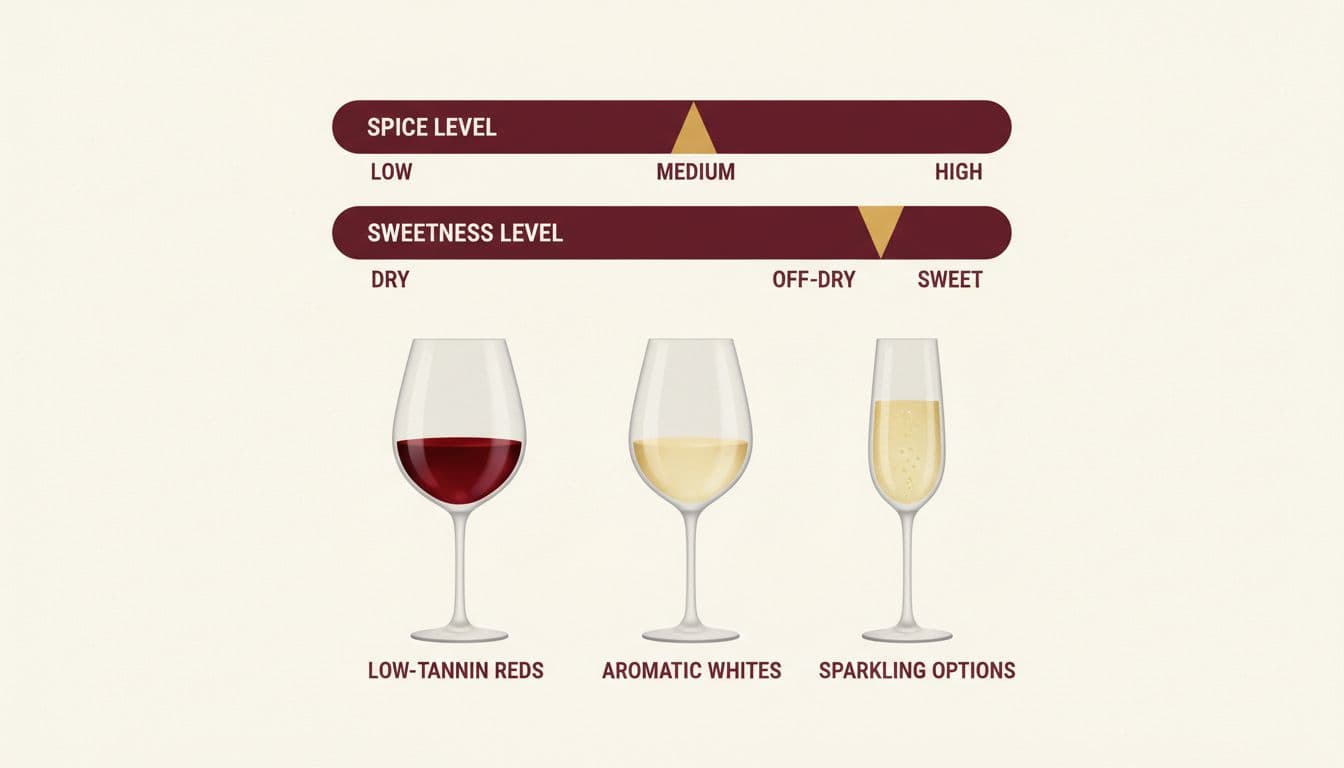
Match a little sweetness with a little sweetness. Bulgogi and galbi marinades usually carry sugar, pear or honey, and a bone-dry wine tastes thin and sour next to that. An off-dry white, meaning barely sweet rather than dessert sweet, tastes rounder and more in sync with the glaze. Our explainer on dry versus sweet wine covers where the line actually sits.
Keep the reds light and chill them. Big, mouth-drying reds clash with garlic and chili, because tannin makes heat feel sharper on the tongue. A juicy lighter red served slightly cool behaves far better, and fifteen minutes in the fridge is the step most people skip. Aim for something around 55 degrees Fahrenheit rather than room temperature.
When there's real heat, bring bubbles or a hint of sweetness. Carbonation refreshes your mouth between bites, and a touch of sugar calms chili better than a bone-dry sip ever will. High alcohol does the reverse, so avoid the heavyweight reds when kimchi and gochujang are on the grill.
What wine goes with bulgogi?
Off-dry Riesling is the classic answer for bulgogi, and a light Pinot Noir is the red version. Bulgogi is a sticky glaze with a campfire edge, sweet and salty and loaded with garlic, so the wine's job is to stay friendly rather than to compete.
Riesling handles all of it at once. It tastes fresh and lightly fruity, its acidity cuts the sugar in the marinade, and it never tries to dominate. On the label, look for the words off-dry, semi-sweet or Kabinett, and steer away from anything marked trocken or bone dry. German and Washington State bottlings are both easy to find and reliable here, and our guide to telling a dry Riesling from a sweet one helps when the label stays quiet about it.
Light Pinot Noir works too, particularly when the table isn't leaning spicy. Cherry fruit, bright acidity and soft tannin sit next to grilled beef without steamrolling it, and a cooler-climate bottle from Oregon, Germany or Burgundy is the safest version. If you want to understand why lighter reds keep coming up on this page, our guide to easy to drink red wines breaks down the styles worth knowing.
What wine pairs with Korean BBQ short ribs?
Gamay or sparkling rosé, and galbi is the dish where the second one really earns its place. Short ribs are richer than bulgogi, with more fat, deeper char and that glossy sweet-soy shine, so the wine has to cut through richness while still getting along with sugar.
Gamay, usually sold as Beaujolais, is the easiest yes on the list. It stays bright and juicy rather than heavy, it has almost no tannin to clash with the char, and it takes a light chill beautifully, which makes it feel crisp next to meat coming straight off the grill.
Sparkling rosé is the other reliable option. The bubbles lift fat off your tongue between bites, and the strawberry fruit sits happily beside a caramelized marinade. It's also the bottle that makes the whole table happy, including the people who claim they don't like wine. A dry Cava rosé from Spain is the value version and turns up in most stores.
What wine goes with samgyeopsal, or Korean pork belly?
Dry Lambrusco, and almost nobody suggests it. Samgyeopsal, meaning thick slices of grilled pork belly wrapped in lettuce with garlic, ssamjang and a smear of salted sesame oil, is the heart of a lot of Korean BBQ nights, and most wine guides skip it entirely.
Pork belly is about rich fat and savory depth, so the wine's job is to scrub your palate clean for the next bite. Lambrusco is a lightly sparkling red from Emilia-Romagna, and the fizz plus gentle tannin cuts straight through the fat while the dark-berry fruit gets on well with anything grilled. Ask for the secco style, meaning dry, rather than the sweet one, which is the version that gave the grape its bad reputation in the 1980s.
Sparkling rosé and chilled Gamay work for the same reason, since bubbles and cool bright fruit both reset your mouth against all that richness. If the ssam wraps are heavy on raw garlic and ssamjang, lean toward the sparkling option, because carbonation handles pungency better than still wine does.
What wine goes with spicy Korean pork and chicken?
A genuinely off-dry white, because jeyuk bokkeum and dakgalbi land closer to fire than to caramel. Both are built on gochujang and chili rather than sweet soy, and this is where the wrong wine gets punished, since tannin and alcohol both crank up the burn.
Reach for a Riesling with visible sweetness or a Gewürztraminer, both of which cool the heat and carry the flavor rather than clashing with it. Gewürztraminer in particular, with its lychee and rose character, is a fun match for anything gochujang-glazed, and our guide to what Gewürztraminer goes with covers why. If you want a red, keep it soft, chilled and low in tannin, which points back to Gamay or a light Pinot Noir served cool.
The one move to avoid is a bold, warm, oaky red, which tastes bitter and hot against chili and makes the food seem spicier than it is. Our guide to off-dry white wine explains why a little sugar does so much work here.
What red wine goes with Korean food?
Light, low-tannin, moderate-alcohol reds served cool, which in practice means Gamay, Zweigelt, Schiava, dry Lambrusco and cooler-climate Pinot Noir. Red absolutely works with Korean BBQ, but only within that band, and the reds that fail here fail on tannin and alcohol rather than on color.
Zinfandel comes up a lot in this conversation and deserves a straight answer. A medium-bodied Zinfandel with brambly fruit is genuinely good with sweet-glazed grilled beef, because the jammy fruit mirrors the caramelized marinade. The problem is that many Zinfandels are bottled at 15 percent alcohol or more, and at that level the wine makes kimchi and gochujang taste hotter with every sip. Check the back label before you buy, and if it reads 14 percent or below you have a good match on your hands.
Cabernet Sauvignon, Syrah and Malbec are the ones to leave alone here, not because they're bad wines but because their tannin and weight are aimed at a different meal. Save them for a steak dinner and pour something lighter at the grill.
What should you buy, and how much should you spend?
Buy by style rather than by producer, because the styles behave consistently and the labels on the shelf change from store to store. Five bottles cover a Korean BBQ table completely, and none of them lives at the expensive end of the aisle.
An off-dry Riesling is the safest single white, and you want the words off-dry, semi-sweet or Kabinett on the front. A dry Cava rosé is the value sparkling and the best crowd-pleaser in the shop. A dry Lambrusco secco is the underrated one and punches above its price with fatty grilled food. A Gamay or Beaujolais is the everyday light red, and a cooler-climate Pinot Noir is the safe red for people who'd rather not experiment.
Korean BBQ rewards wines that feel refreshing over wines that feel expensive, so this is not the meal to open something rare and age-worthy. The everyday shelf is genuinely the right place to shop, and our roundup of the best grocery store wines covers reliable bottles by style. Put whatever you save toward a second bottle, because a long grill night gets through more wine than you expect.
How do you order wine at a Korean BBQ restaurant?
Use one sentence and a short scan of the list. Tell the server what you're grilling and what you want the wine to do: something like "we're doing bulgogi, short ribs and some spicy sides, so we'd like an off-dry white or a light red that isn't too tannic" gives them everything they need.
Then scan the list for Riesling, rosé, Pinot Noir, Gamay, Beaujolais or Lambrusco. Spotting two or more of those means you're set. For a mixed group, order sparkling rosé by the bottle, since it survives every dish on the table and pleases the people who came for the beer.
If the list is long and you're stuck between forty names you don't recognize, this is where Sommy's Current Venue feature earns its keep: scan the restaurant's list with your phone and it filters the bottles down to the ones that fit both your taste and your meal.
Wine, soju or beer, honestly?
Beer and soju are traditional here and they're good for real reasons. Beer is crisp and cleansing between fatty bites, and soju is neutral enough to disappear behind the food entirely, which is part of the point of it.
Wine does something neither of them can, which is to add flavor to the pairing rather than only refreshing between bites. An off-dry Riesling echoes the sweetness in the marinade, a sparkling rosé makes fatty pork belly taste lighter, and a chilled Gamay brings fruit that beer simply doesn't have. You also don't have to choose, and a bottle of sparkling rosé alongside the beer covers everyone at the table.
Frequently asked questions about wine and Korean BBQ
Does wine really go with Korean BBQ?
It does, as long as you choose bright, lower-tannin, slightly sweet or sparkling wines rather than big oaky bottles. Off-dry Riesling, sparkling rosé and chilled light reds all work across the range of dishes, from sweet bulgogi to fiery kimchi. The pairing only fails when the wine is high in alcohol or heavy in tannin.
What alcohol pairs well with Korean barbecue?
Anything low in alcohol and refreshing, which is why beer, soju and off-dry white wine all have a claim. Sparkling rosé is the best single wine for a mixed table, and a cold lager is the traditional match. Spirits and high-alcohol red wine are the two to avoid, because alcohol amplifies chili heat rather than relieving it.
What is the single best wine if I can only bring one bottle?
Sparkling rosé is the answer, without much competition. It handles sweet marinades, rich pork belly and spicy banchan all at once, and the bubbles keep your palate fresh as new plates arrive. A dry Cava rosé is the version that's easiest to find and best value.
Red or white with Korean BBQ?
Both can work, and the food decides. Choose an off-dry white such as Riesling when the meal leans spicy, and a light chilled red such as Gamay or Pinot Noir when it leans toward grilled, caramelized beef. Sparkling rosé splits the difference when the table has ordered both.
What wine should I avoid with Korean BBQ?
Skip big, tannic, oaky reds such as young Cabernet Sauvignon, and skip anything above roughly 14.5 percent alcohol. Tannin and alcohol both amplify chili heat and taste harsh next to spicy banchan. Heavily oaked Chardonnay has the same problem from the other direction, since oak and gochujang turn bitter together.
Should I chill the red wine?
Yes, and only lightly at that. Around fifteen minutes in the fridge, or a target near 55 degrees Fahrenheit, makes a light red taste fresher and more refreshing next to hot food. Warm red wine feels heavy and alcoholic at a smoky grill table, and cooling it is the cheapest improvement available.
Does Zinfandel work with Korean BBQ?
It can, if you pick a medium-bodied one. The jammy blackberry fruit suits sweet-glazed grilled beef, but many Zinfandels are bottled at 15 percent alcohol or higher, and that much alcohol makes gochujang and kimchi taste noticeably hotter. Check the back label and choose something at or below 14 percent.