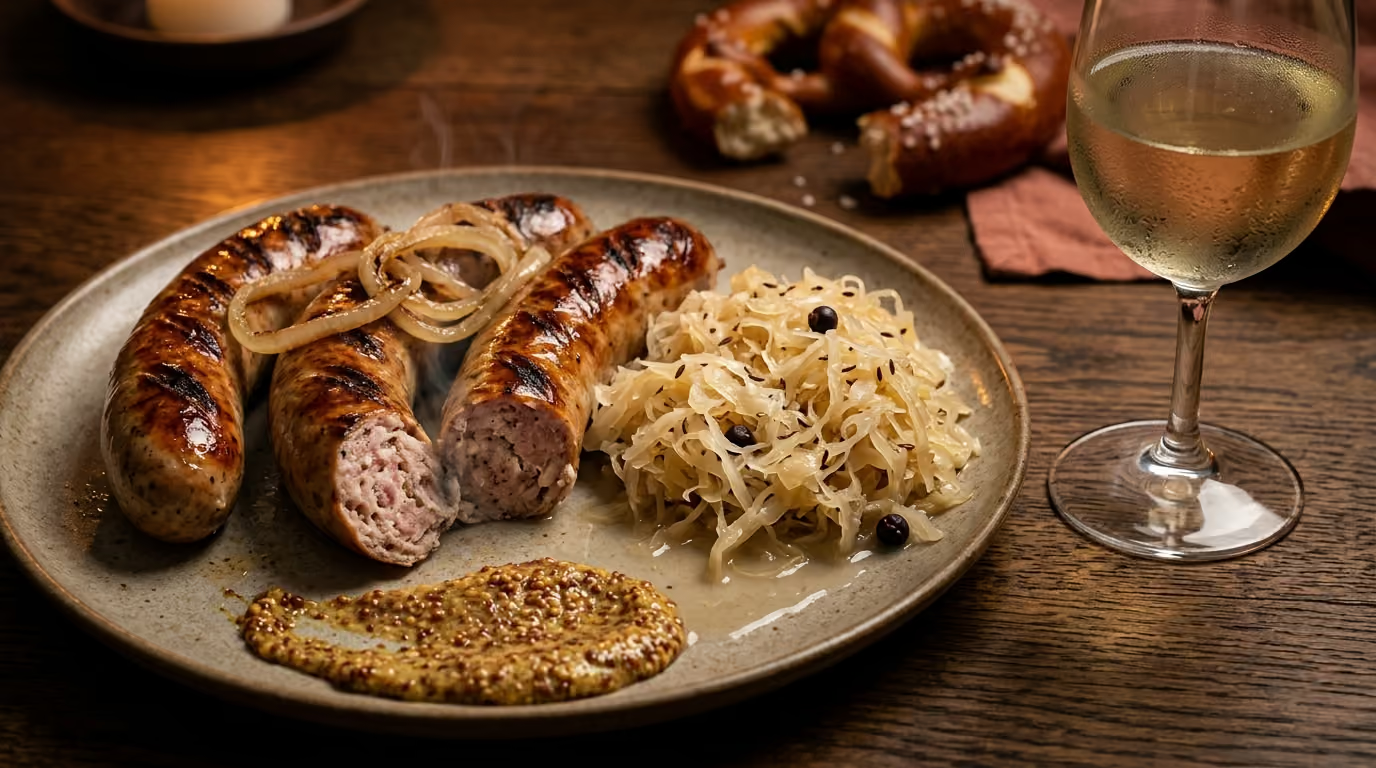
A chilled dry Riesling is the best wine for bratwurst, and it wins because sauerkraut is the harder half of the plate. Grüner Veltliner runs a close second, especially once mustard and grilled onions arrive, and a dry sparkling wine handles a crowd better than either. Pork suggests red wine to most people, but sour cabbage quietly overrules that instinct. Serve the bottle properly cold and the whole plate settles down.
Plenty of pairing advice treats bratwurst as just another grilled sausage, which is why so much of it points at Pinot Noir and Zinfandel. Those recommendations are fine for a brat on its own with a bun and ketchup. They fall apart the moment sauerkraut lands next to it, because vinegar and tannin have a genuinely unpleasant reaction. We'd rather start where the difficulty actually is, which means talking about the cabbage first.
What's the best wine for bratwurst and sauerkraut?
Dry Riesling, and we don't hedge much on this one. It's the rare wine that solves both problems on the plate at once, cutting through fatty pork with real acidity while its faint fruit sweetness takes the sharp edge off sour cabbage. German bottles from the Mosel and Rheingau are the classic route, though dry Riesling from Alsace, Washington, the Finger Lakes, and Australia's Clare Valley all do the same work.
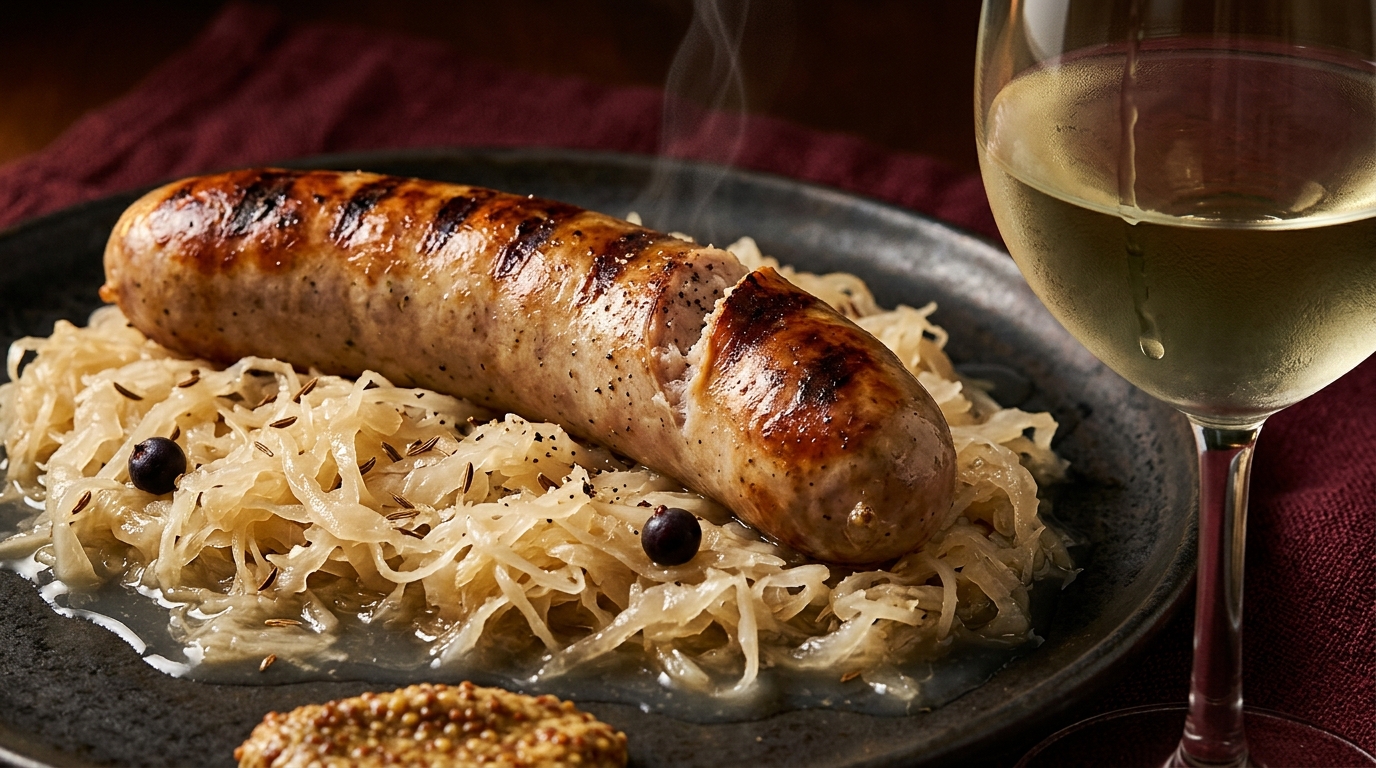
Grüner Veltliner is the pick we reach for when the plate has more going on. It tends to taste dry and faintly peppery with a citrus snap at the finish, and that white-pepper character sits beautifully next to caraway, brown mustard, and charred onions. Austrian bottles in the liter format are made for exactly this kind of casual eating, and they're usually sold with a screwcap so the leftovers keep.
A dry sparkling wine is the best choice when you're feeding a group and don't want to think about it again. Bubbles and acidity scrub sausage fat off the palate more efficiently than any still wine, and a dry Cava, a Crémant d'Alsace, or an American brut all stay upright next to sauerkraut. Look for brut or extra brut on the label, since anything sweeter starts to feel cloying against salt.
Dry Chenin Blanc from the Loire and a crisp Pinot Gris from Alsace both round out the list if your shop is short on the first three. The common thread across every one of these is high acidity with little to no oak, which is the actual specification you're shopping for.
The wines to leave on the shelf are just as useful to know. A buttery, oaked Chardonnay goes soft and slightly sour against sauerkraut, because oak and lees richness need fat to push against rather than vinegar. Anything sweet without matching acidity, including most Moscato, turns syrupy beside salt. High-alcohol reds make a salty plate taste saltier still, which is the opposite of what you want three brats into the evening.
Why does sauerkraut decide the bottle instead of the sausage?
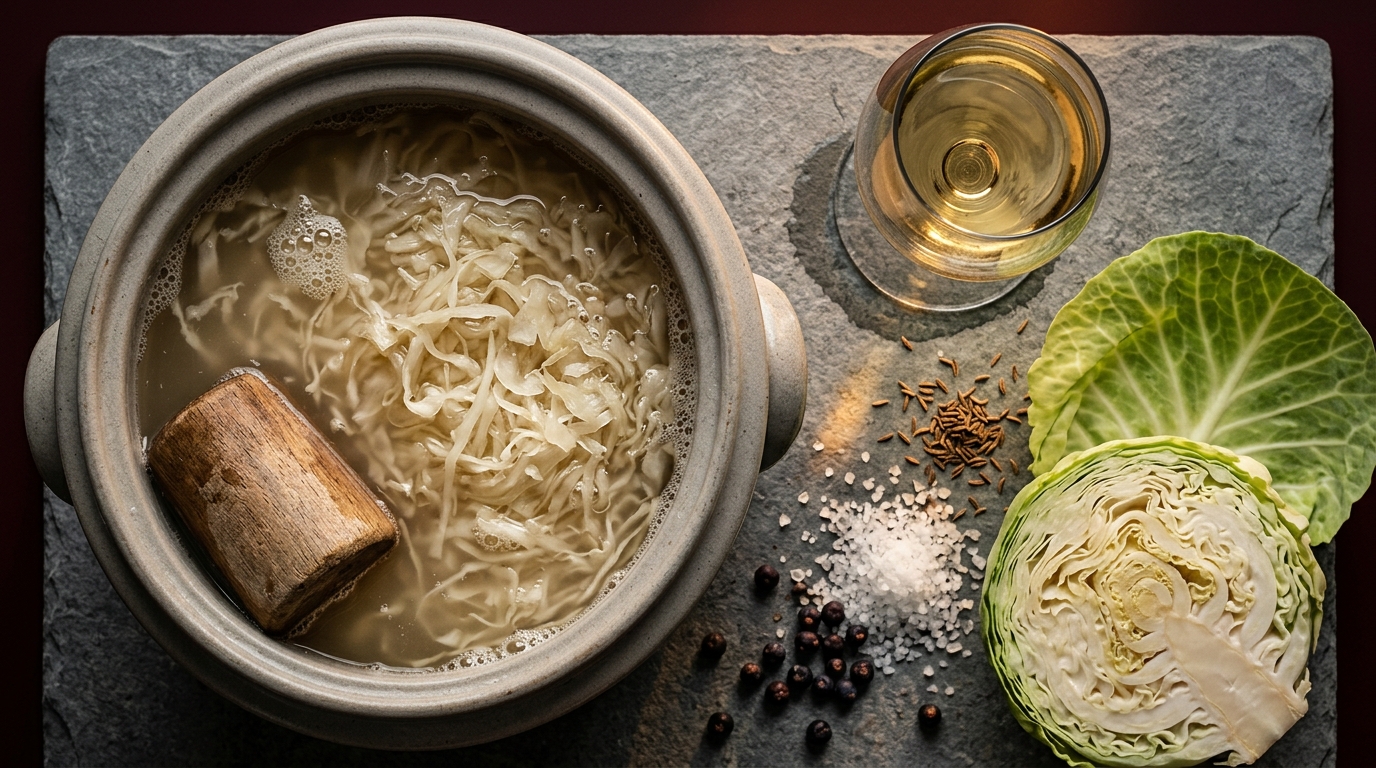
Because sauerkraut is fermented and genuinely acidic, and acidity in food resets how every wine beside it tastes. A wine with less acidity than the food will taste flat, flabby, and oddly sweet once the cabbage hits your tongue. That's the mechanism behind the most common bratwurst pairing failure, where a perfectly good medium red suddenly tastes dull and slightly bitter halfway through dinner.
Tannin is the second problem and it's the more unpleasant of the two. Vinegar and tannin sharpen each other, so a grippy red next to sour cabbage leaves your mouth feeling dried out and metallic. If tannin is a concept you've never fully pinned down, our piece on what tannin actually does to your mouth explains why this particular combination goes wrong so reliably.
Salt is the one element working in your favor. Bratwurst and sauerkraut are both salty, and salt makes wine taste fruitier and softer, which is why a bone-dry Riesling can come across as surprisingly generous at this table. That's also why a wine with a trace of residual sugar, the style German labels call feinherb, often outperforms a completely dry one when the kraut is really puckering.
The practical rule is short enough to remember at the shop. Match the acidity of the food, keep the tannin low, and let the salt do the rest.
Does it matter how the brats are cooked?
It does, and the cooking method shifts the pairing more than the brand of sausage ever will. Grilling adds char and smoke, simmering in beer adds malt sweetness and softens everything, and a sauce like curry ketchup changes the target completely.
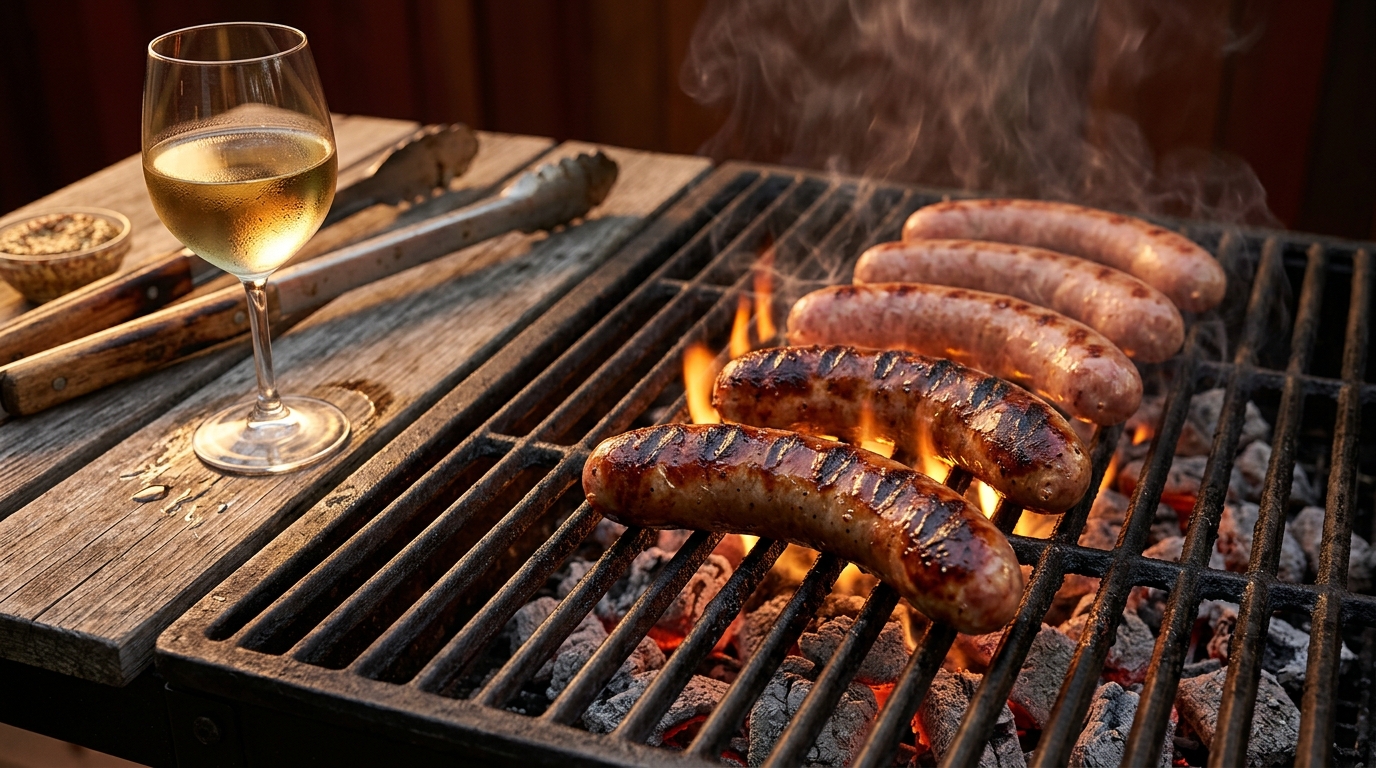
Grilled brats with real char have a bitter, smoky edge that a very lean, high-acid white can fight with. This is the version where Grüner Veltliner pulls ahead of Riesling, since its peppery weight meets the char rather than cutting straight past it. A dry rosé with some substance, particularly from Provence or Bandol, is our other pick for the grill.
Brats simmered in beer and onions before grilling come out softer, sweeter, and more savory. Riesling is back in front here, and this is the one preparation where a light red genuinely works, since the sharp edges have been cooked off. The same logic drives our picks for sausage and peppers on a sheet pan, where the roasting does a similar softening job.
Currywurst is its own situation, with sweet curry ketchup bringing sugar and mild spice. Off-dry Riesling is close to the only correct answer, because the wine has to be at least as sweet as the sauce or it'll taste sour and thin. If the plate leans heavily on mustard instead, especially a coarse Bavarian sweet mustard, stay with Riesling and enjoy how well the two get along.
Weisswurst deserves its own mention, since it isn't really the same meal at all. The pale Bavarian veal sausage is mild, delicate, and traditionally eaten before noon with sweet mustard and a pretzel, so a lean high-acid white would simply run straight over it. A softer, rounder white suits it better, which means an Alsatian Pinot Blanc, a gentle Silvaner from Franken, or a lightly sparkling wine with low dosage.
| What's on the plate | Bottle to open | Why it works |
|---|---|---|
| Brats with sharp sauerkraut | Dry or feinherb Riesling | Acidity matches the cabbage and a trace of sugar softens the bite |
| Grilled brats with char and mustard | Grüner Veltliner | Peppery weight meets the smoke instead of cutting past it |
| Beer-simmered brats and onions | Spätburgunder, served cool | Sweet, softened flavors let a light red finally work |
| Currywurst | Off-dry Riesling | The wine has to be as sweet as the curry ketchup |
| A mixed Oktoberfest table | Brut sparkling wine | Bubbles and acidity handle salt, fat, and pretzels all at once |
Can you drink red wine with bratwurst?
Yes, though only certain reds and only in certain versions of this meal. The determining factor is how much sauerkraut is on the plate and how sharp it is, so a brat with grilled peppers and no kraut opens up options that a brat buried in cabbage does not.
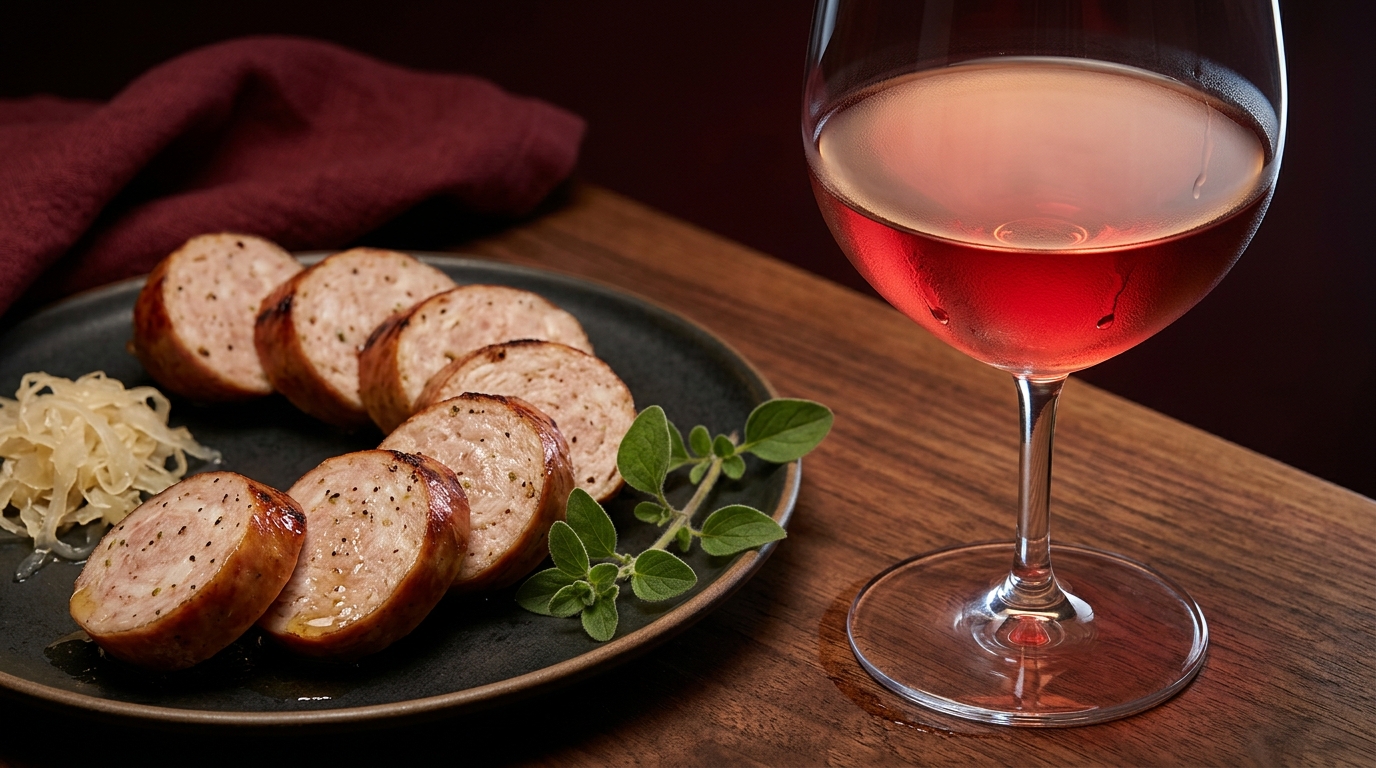
Spätburgunder, the German name for Pinot Noir, is the natural choice and the one German drinkers actually reach for. It's light in tannin, high in acidity, and its red-berry fruit suits pork without weighing it down. Serve it with about twenty minutes in the fridge, which is standard practice for it in Germany and makes a noticeable difference. Blaufränkisch from Austria and a young Gamay from Beaujolais both work for the same reasons.
The reds to skip are the ones most pairing pages recommend. A tannic Cabernet Sauvignon, a heavily oaked Zinfandel, or a big Syrah will all clash with sauerkraut and turn harsh, and the higher alcohol in those bottles makes salty food taste saltier. Our broader guide to pairing wine with pork covers when those bigger reds do make sense, which is mostly when the pork is roasted rather than fermented alongside cabbage.
Temperature matters more with these lighter reds than almost anywhere else. Warm Pinot Noir tastes alcoholic and loose next to a hot grill, while the same bottle served cool tastes bright and lifted, and our guide to serving temperatures by style has the numbers if you want them.
How do you buy a dry Riesling without ending up with a sweet one?
Look for the word trocken on the label, which is the legal German term for dry, and treat everything else as a maybe. This is the single most frustrating part of buying Riesling, because the classic German labelling system describes ripeness at harvest rather than sweetness in the glass, so a bottle marked Kabinett or Spätlese might be bone dry or noticeably sweet.
Halbtrocken means off-dry and feinherb means roughly the same thing with a little more latitude, and both are genuinely good choices for sharp sauerkraut. If the label carries the VDP eagle and the word Grosses Gewächs, it's a dry wine from a top vineyard site. Alsace, Austrian, and Australian Rieslings are usually dry by default, and American bottles almost always state it plainly on the back.
This is where standing in the aisle with a phone actually helps, and it's the situation Sommy's Label Scan was built for. Point it at the front of a German bottle you can't read and it'll tell you what's in there and whether it fits how you drink, which is more useful than guessing at Prädikat terms while other shoppers wait behind you. The same reading problem shows up on a charcuterie table, and our notes on wine with cured meats and pickles run into it constantly.
One last practical note on quantity. Bratwurst and sauerkraut is a generous, salty meal that makes people thirsty, so buy one more bottle than you think you need and put them all in the fridge an hour before anyone arrives.
Frequently asked questions
What is the best wine for bratwurst?
A chilled dry Riesling, because it has the acidity to cut through fatty pork and just enough fruit to soften sour sauerkraut. Grüner Veltliner is the strongest alternative, particularly when mustard, caraway, or grilled onions are part of the plate.
What wine goes with sauerkraut?
High-acid, low-tannin whites are the only reliable answer, so dry Riesling, Grüner Veltliner, dry Chenin Blanc, and brut sparkling wine all work. Sauerkraut is fermented and sharp, so any wine with less acidity than the cabbage will taste flat and dull beside it.
Can you pair red wine with bratwurst and sauerkraut?
You can, provided the red is light and low in tannin, which makes Spätburgunder, Blaufränkisch, and Gamay the sensible picks. Avoid Cabernet Sauvignon and oaky Zinfandel, since their tannin turns harsh and metallic against vinegar.
Should the wine be served cold?
Whites and sparkling should be properly chilled at around 45°F, cold enough to stay refreshing next to salt and fat. Light reds are much better with roughly twenty minutes in the fridge, landing near 55°F, which is how they're usually served in Germany anyway.
What wine works for an Oktoberfest spread?
Dry sparkling wine is the most practical choice for a mixed table of brats, pretzels, mustard, and kraut, since bubbles and acidity suit all of it. A liter bottle of Grüner Veltliner is the other good call, built for casual drinking and easy to keep pouring.
Does the type of sausage change the pairing?
Less than the toppings do, though it's worth a small adjustment. A smoky, coarse-ground bratwurst leans toward Grüner Veltliner or a fuller rosé, while a fine-textured veal bratwurst is happier with a delicate Riesling or a crisp Pinot Gris.
Pour something cold and get the grill going
Bratwurst night doesn't need a sommelier, it needs a cold bottle with real acidity and no oak. Start with a dry Riesling if the sauerkraut is sharp, move to Grüner Veltliner when there's char and mustard on the plate, and open sparkling wine when you're feeding a crowd and want one bottle to cover everything.
If you take one thing from all this, let it be that the cabbage is calling the shots. Once you start choosing for the sauerkraut instead of the sausage, the right bottle becomes obvious, and you can spend the rest of the evening arguing about mustard instead.