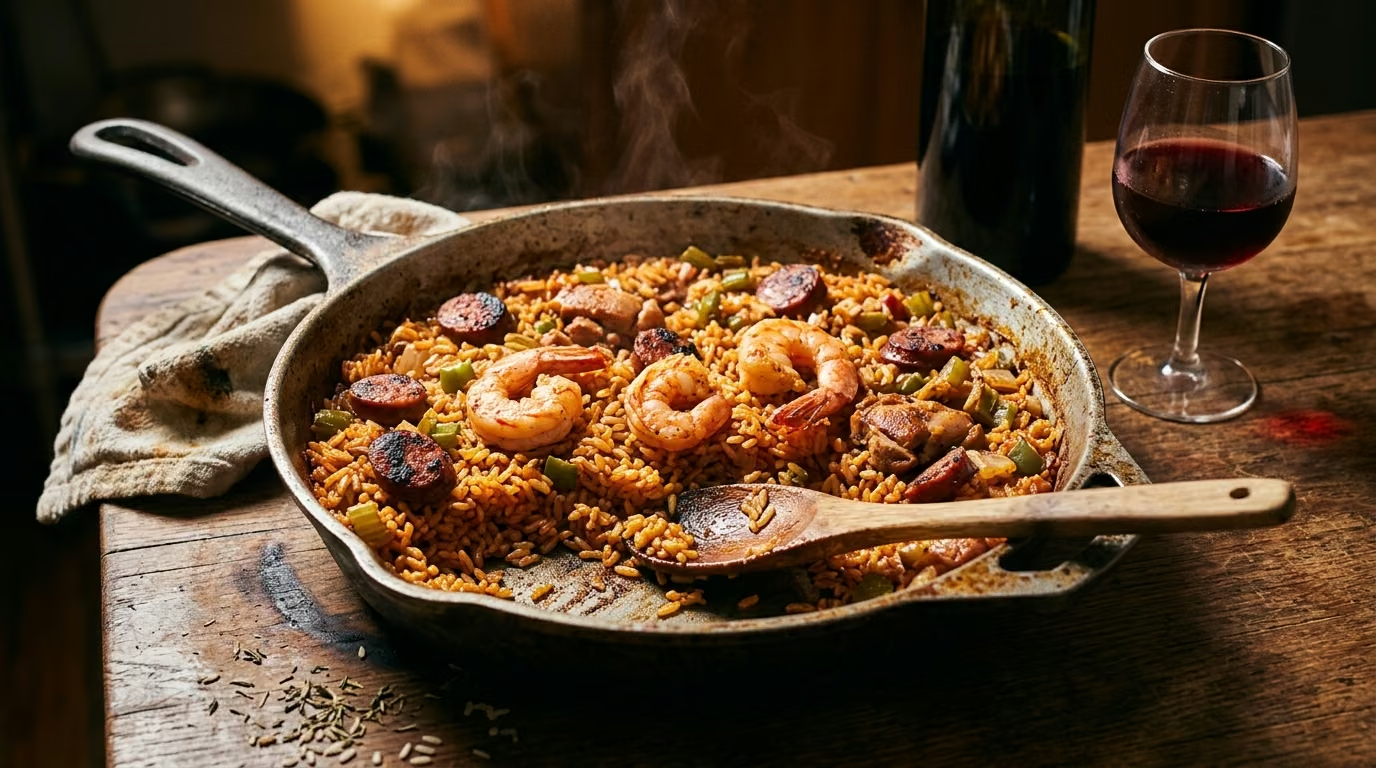

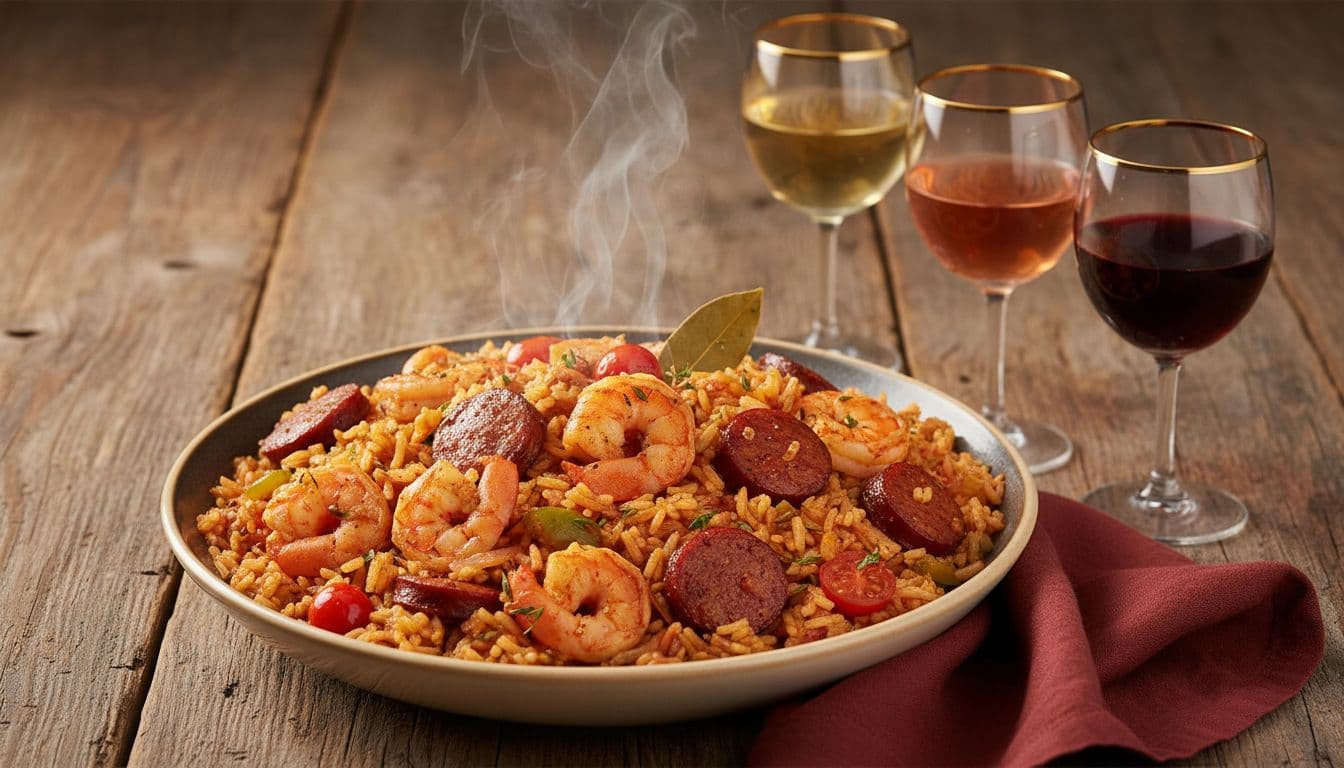
The best wine with jambalaya is a fruity, fresh, low-tannin bottle that cools the spice instead of fighting it, and off-dry Riesling, dry rosé, or a light red like Grenache are the three safest picks. Spicy shrimp-and-sausage jambalaya makes big, tannic reds taste hotter and rougher, so the trick is to lead with fruit, freshness, and lower alcohol, then match the wine to how hot the bowl actually is. You are not bad at picking wine; the dish is simply loud, with heat, smoke, tomato, seafood, and sausage all talking at once.
What are the best wine styles for jambalaya?
Five styles cover every version of the dish, and you don't need all of them. Keep this map in mind before you order or shop.
| Wine style | Best for | Why it works |
|---|---|---|
| Off-dry Riesling | Hotter, spicier jambalaya | A little sweetness cools the chili |
| Dry rosé | Mixed shrimp and sausage bowls | Fresh, bright, endlessly flexible |
| Light Grenache or Gamay | Smokier, less-hot versions | Juicy fruit handles the sausage |
| Aromatic white (Gewürztraminer, Chenin) | Seafood-forward, fragrant bowls | Perfume and body match the spice |
| Dry sparkling wine | Rich or party-style servings | Bubbles lift fat and heat |
Jambalaya is like a brass band. Shrimp brings sweetness, sausage brings smoke and salt, cayenne hits late, and tomato keeps everything bright. A wine that tries to dominate the band turns the whole thing messy; a wine that cools and freshens lets each part stand out. Off-dry Riesling is often the safest answer, its touch of sweetness softening the burn while its bright acidity keeps the rice and tomato from feeling heavy. Dry rosé sits right behind it as the friendly middle seat between white and red. Light reds work too, but only when they stay soft: skip heavy Cabernet and reach for Grenache, Gamay, or a smooth red blend with ripe fruit and modest alcohol.
Creole or Cajun? It changes the pairing
Jambalaya grew out of Louisiana's Creole and Cajun kitchens, a one-pot descendant of Spanish paella that picked up French and West African influences along the way. The one difference that matters for wine is the tomato, and plenty of wine guides get it backwards, so it's worth being precise.
Creole jambalaya, sometimes called red jambalaya, includes tomato, which makes it brighter and more acidic. That extra acidity loves a wine with acidity to match, so a dry rosé, an off-dry Riesling, or a zippy light red shines here. Cajun jambalaya, the brown one, has no tomato at all and leans smokier and deeper, built on browned meat and a dark, roux-like base. It rewards a juicy light red like Grenache or a fuller aromatic white that can meet the smoke.
Either way, the heat level is the bigger dial. A mild, sausage-forward bowl opens the door to light reds, and a fiery, cayenne-heavy one pushes you firmly toward off-dry whites and rosé. If you only remember one thing from this section, remember that the tomato tells you which direction to lean and the cayenne tells you how far.
Does the andouille sausage change what you should pour?
It's the single loudest ingredient in most bowls, and yes, it does. Andouille is a coarse-ground, heavily smoked pork sausage, seasoned with garlic, black pepper and cayenne, and the smoke in it is far more assertive than the smoke in a breakfast sausage or a kielbasa.
Smoke is what pushes the pairing toward red. A juicy Grenache or a Côtes du Rhône picks up the savory, peppery edge of the sausage in a way that a crisp white simply passes over, and the wine's ripe fruit reads as sweeter against all that salt. The catch is that andouille brings heat as well as smoke, so a red only works while the cayenne stays moderate.
When shrimp is doing more of the talking than the sausage, flip back to white or rosé. Shrimp is delicate and slightly sweet, and a light red can bury it even when the same wine flatters the sausage. A bowl that's genuinely half and half is exactly the situation dry rosé exists for.
How do you choose when spice meets smoke?
Choosing here comes down to three dials: heat, weight, and texture. Heat wants relief, sausage wants fruit, and shrimp wants freshness. Once you see those three pulls, the decision gets much easier, and fresh and juicy beats bold and tannic almost every time.
Big reds stumble for a simple reason. Tannin feels drying, a little like strong black tea, and against cayenne and paprika that dryness can turn bitter fast. High alcohol makes the spice feel louder still, which is why an impressive-sounding red can clash on the plate. So if the bowl is extra spicy, move toward Riesling or rosé. If it leans smokier than hotter, a light red makes sense. If there is lots of tomato and pepper, choose a wine with enough acidity to stay lively. The same logic shows up across spicy comfort food; our guide to the best wines to balance chili's heat lands in almost the same place, because alcohol and tannin both sharpen pepper.
In plain English: "juicy," "crisp," and "peppery" are green lights, while "big," "oaky," and "firm tannins" are warnings. That is usually all the label reading you need.
Which wines can you pour tonight?
For a classic shrimp and sausage jambalaya, start with an off-dry Riesling from Germany, Washington, or New York's Finger Lakes. It cools the spice and stays bright with the seafood. Dry rosé, especially from Provence or California, is the pick when you want one bottle that pleases several palates at once.
A light Grenache, a Côtes du Rhône, or a Beaujolais works when the dish has more smoky sausage than sharp heat; serve it slightly cool, around 55°F, so it feels calm rather than boozy. A juicy Zinfandel can also work with a smokier, milder bowl if you want a fuller red, as long as the alcohol is not sky-high. Dry sparkling wine is a strong backup when the table has appetizers, sides, or mixed tastes, since bubbles scrub the palate clean after smoky sausage and rich rice. Heavy oak, sweet red blends, and high-alcohol reds are the styles to leave on the shelf.
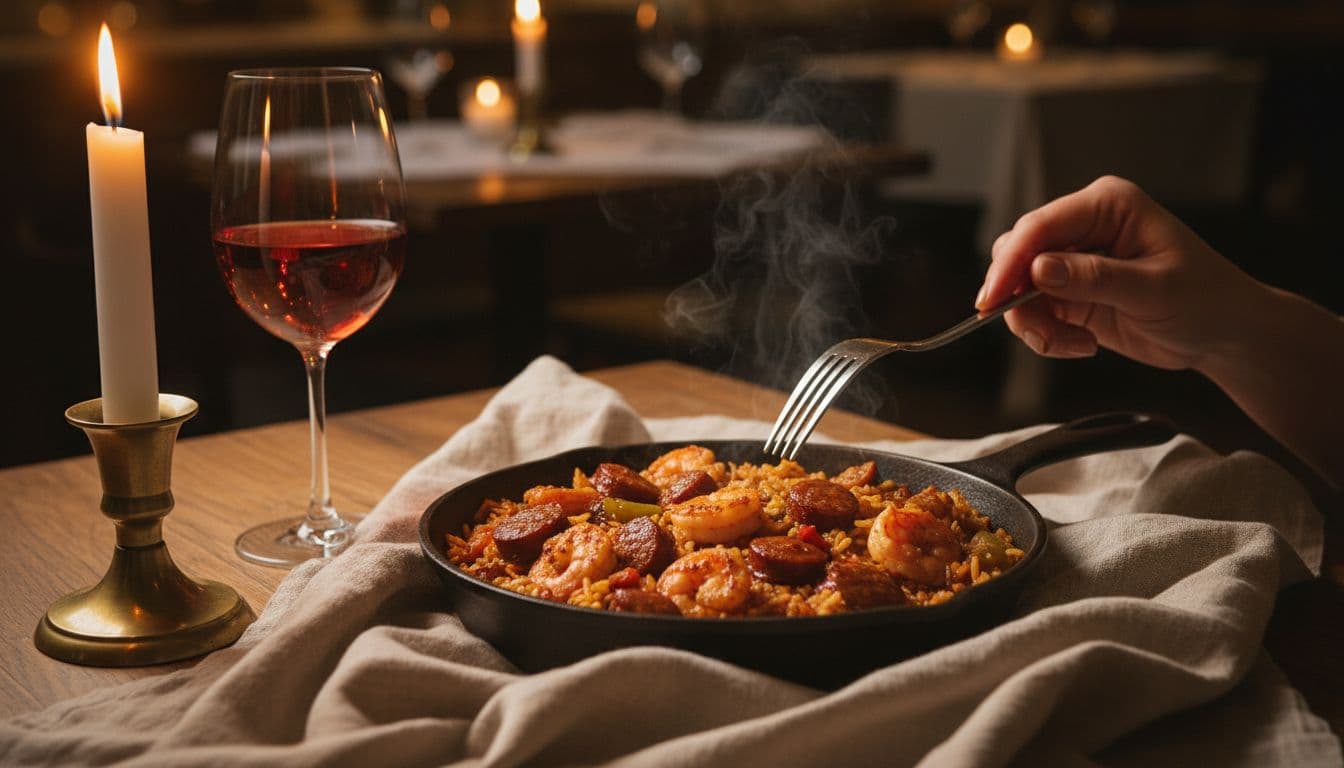
One more that deserves a mention: a dry Chenin Blanc from the Loire or South Africa is quietly excellent here, because it has the body to handle sausage and enough acidity to keep up with tomato. It's the bottle to reach for when you want a white with more presence than a Riesling but you don't want oak anywhere near the meal.
How do you order and shop for it?
From a restaurant wine list
When the list feels like a wall of labels, keep the request short and clear. Ask for "a crisp dry rosé," "an off-dry Riesling," or "a juicy light red with low tannin." Those move the server toward the right styles fast. If someone steers you to Cabernet, gently redirect: say you want something fresher and smoother because the jambalaya has real spice. Most places can work with that.
What to grab in the store
Shopping is easier by style than by brand. Ignore the medals and shelf talkers, and look for words like fresh, floral, smooth, juicy, or bright. Lower alcohol usually helps, because heat makes a strong wine feel even stronger, so a back label reading 12 percent is doing you more of a favor than one reading 15. This is also a genuinely affordable pairing, and the everyday shelf is where the right bottles live rather than the locked cabinet.
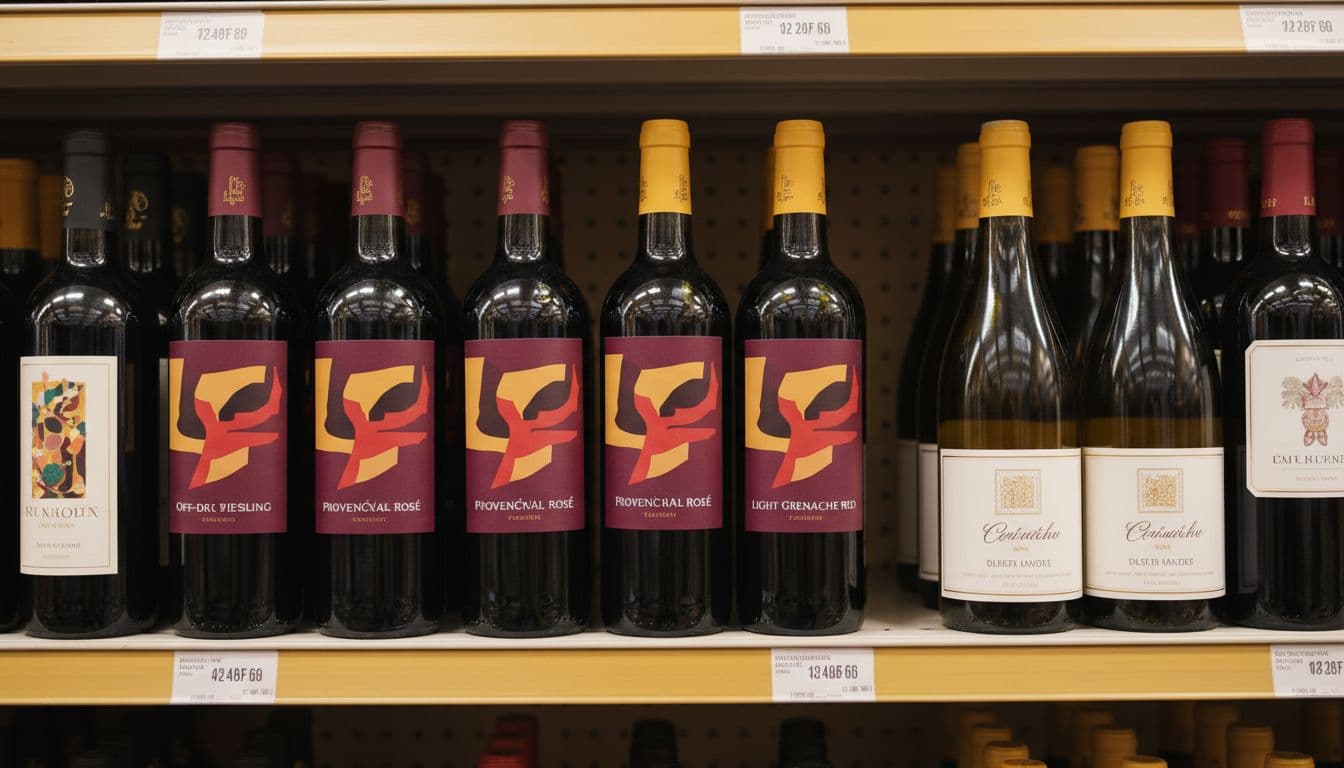
Off-dry Riesling is the safest single bottle, dry rosé covers a crowd or a mixed menu, and Grenache, Gamay or a soft red blend fits milder, smokier bowls. If you're standing in the aisle holding something you've never heard of, Sommy's Fit Check will tell you whether that specific bottle fits both the meal and your own taste, which is the question a general pairing guide can't answer for you.
How should you serve it, and what else is on the table?
Chill everything a touch more than you might expect. Whites and rosé are best around 45 to 50°F, and even the light reds want a short 15 minutes in the fridge to about 55°F. A cool glass reads as more refreshing against a hot, spicy bowl, and it keeps a fruity red from tasting flabby.
Jambalaya rarely arrives alone, and the good news is the same wines stretch across a Louisiana spread. Cornbread, red beans and rice, a cup of gumbo, hush puppies and a simple green salad all sit happily beside an off-dry Riesling or a dry rosé, since those wines handle both smoke and spice. Fried okra and remoulade push toward the sparkling option, because bubbles handle fried food better than anything still. Only very sweet desserts, like a bread pudding to finish, call for a switch, at which point a genuinely sweet wine takes over from the off-dry one you drank with dinner.
The best bottle for jambalaya is not the fanciest one; it is the one that cools the spice, lifts the shrimp, and does not fight the sausage. If you would rather not decide in the moment, that is exactly what Sommy is for: tell it what you are eating or scan the wine list, and it matches a bottle to both the dish and your own Taste Profile.
Frequently asked questions
What wine goes best with jambalaya?
An off-dry Riesling is the safest all-round choice, because its light sweetness cools the spice while its acidity keeps the rice and tomato fresh. Dry rosé and a light, low-tannin red like Grenache are excellent alternatives depending on the bowl.
What wine pairs with Cajun food?
The same short list works across Cajun cooking generally: off-dry Riesling, dry rosé, and light low-tannin reds such as Grenache, Gamay and Côtes du Rhône. Cajun food is built on cayenne, black pepper, smoked pork and a dark roux, and every one of those pushes away from tannin and high alcohol. Dry sparkling wine is the reliable choice for anything fried, from boudin balls to hush puppies.
What drink pairs well with jambalaya?
Beyond wine, a cold lager or a pale ale does the job for the same reason a light wine does, since carbonation and low alcohol both cool chili heat. Iced tea and lemonade work for the same reason without alcohol. What doesn't work is anything strong and spirit-forward, because the alcohol makes the cayenne feel hotter with every sip.
What pairs best with jambalaya on the table?
Cornbread, red beans and rice, cornbread's cousin the hush puppy, a cup of gumbo and a sharp green salad are the classic partners, and all of them get along with the same off-dry Riesling or dry rosé you poured for the main dish. Keep the sides simple, since jambalaya is already carrying rice, protein and heat all in one pot.
What is the 20 minute wine rule?
It's the shorthand that most people serve red too warm and white too cold, so you put the red in the fridge for 20 minutes before pouring and take the white out of the fridge 20 minutes before pouring. Both moves land you closer to the right temperature, which is roughly 55°F for a light red and 45 to 50°F for a white or rosé. It matters more than usual with jambalaya, because a warm red tastes alcoholic against chili heat.
Does red wine go with jambalaya?
Yes, as long as it stays light and low in tannin. Grenache, Gamay, Beaujolais, and a juicy Zinfandel work well, especially with smokier, sausage-forward jambalaya. Avoid heavy, tannic, high-alcohol reds like young Cabernet, which make the spice taste harsher.
What wine pairs with spicy jambalaya?
The spicier the bowl, the more you want a lightly off-dry white or a fresh rosé. A Riesling Kabinett or an off-dry rosé has just enough sweetness to tame the cayenne while its acidity keeps everything lively. Skip high-alcohol reds, which amplify the heat.
Is white or red wine better for jambalaya?
White (or rosé) is usually the safer bet because its freshness handles heat and seafood so well. Red can be lovely with a smokier, milder Cajun-style jambalaya, but only in a light, fruity, low-tannin style.
Does Creole jambalaya need a different wine than Cajun?
A small adjustment is worth making. Tomato-based Creole jambalaya is brighter and pairs beautifully with acidic wines like rosé and Riesling. Tomato-free Cajun jambalaya is smokier and deeper, which suits a juicy light red or a fuller aromatic white. In both, the heat level matters more than the color of the pot.