
You've got a pot of chili simmering, and now you're standing in the wine aisle feeling a little lost. Staring at a wall of bottles can feel like a pop quiz you didn't study for, right? It's a common moment of stress, but it doesn't have to be.
The best wine for a classic beef chili is a jammy, low-tannin red like a Zinfandel. If you’re making a lighter turkey or white bean chili, a crisp, slightly sweet Riesling is a perfect match. The goal is to find a wine that calms the spice, not one that clashes with it. Let's make this decision quick, easy, and confident.
Your Go-To Guide for Pairing Wine With Chili
Choosing a wine shouldn't be a test. It’s supposed to make your meal better, not earn you points for knowing obscure wine facts. The whole point is to give you a few simple, reliable choices so you can grab a great bottle and get back to your dinner without a moment of hesitation.
Simple Rules for a Perfect Match
Think of these as a simple cheat sheet. These are the only guidelines you need to nail the pairing every time.
- Fight Spice with Fruit: When your chili has a kick, you need a wine with bold, juicy fruit flavors. Think of ripe berries or plums. The fruitiness acts as a cooling balance against the heat from the peppers.
- Match the Weight: A hearty beef chili needs a wine that can hold its own—something with a bit of body. A lighter chicken or vegetarian chili pairs much better with a lighter-bodied white or rosé.
- Keep Alcohol in Check: Be careful with high-alcohol reds when you're eating something spicy. Alcohol actually makes the heat feel more intense, which can make your mouth feel like it's on fire. Stick to wines with moderate alcohol to keep everything balanced.
The best wine is the one you enjoy. You don’t need to know about soil types or barrel aging. You just need to know what makes your meal taste even better.
To make things even easier, here's a quick reference chart you can use at the store or when you're looking at a restaurant menu.
Quick Guide to Chili and Wine Pairings
Use this chart to match your chili with the right wine style. No expertise required.
| Chili Type | Wine Recommendation | Why It Works |
|---|---|---|
| Classic Beef & Bean Chili | Zinfandel or Malbec | The bold fruitiness cools the spice, and the full body stands up to the chili's richness. |
| Spicy Texas-Style (No Beans) | Australian Shiraz or Grenache | These jammy reds have a touch of spice that complements the cumin and chili powder. |
| White Chicken or Turkey Chili | Off-Dry Riesling or Sauvignon Blanc | Riesling’s touch of sweetness tames the heat, while Sauvignon Blanc’s crispness cuts through creamy textures. |
| Vegetarian or Bean Chili | Dry Rosé or Beaujolais | Rosé is incredibly versatile and refreshing, while a light-bodied Beaujolais won’t overpower the vegetables. |
Just find your chili, grab the suggested wine, and enjoy a fantastic meal. It’s that simple.
Why Finding the Right Wine Can Feel Tricky
Ever found yourself in the wine aisle, just guessing what might work with your chili? You're not alone. It's a classic moment of decision anxiety. Chili isn't just one flavor; it's a mix of spice, rich meat, tangy tomato, and sometimes a hint of sweetness.
That complex blend is exactly what can make some wines taste strange or flat. A great wine pairing chili experience isn't about memorizing rules. It’s about understanding a couple of key interactions.
The Spice and Alcohol Clash
The heat from chili peppers is front and center. If you pair it with a big, high-alcohol red wine, the alcohol cranks up the volume on the spice. It can turn a nice warmth into an aggressive burn.
You don't want to fight the heat; you want to cool it down. A wine with juicy, bold fruit flavors provides a refreshing balance, while lower alcohol levels keep the spice pleasant. The same approach works for other spicy, saucy dishes, such as choosing the best wine with jambalaya.
Acidity Needs a Partner
The tomatoes in your chili bring a bright acidity to the dish. If you pour a wine that doesn't have much acidity of its own, the wine will taste dull and lifeless.
A wine with good, crisp acidity can match the tomatoes, creating a pairing that feels balanced and refreshing. This is why a zippy white wine can sometimes be an even better match for chili than a red.
The goal isn't to find one "perfect" wine. It's to avoid a bad combination. A bad pairing is where the food or the wine makes the other taste worse. A good pairing makes both of them shine.
This simple visual shows the basic idea for two common types of chili, pointing a classic beef chili toward Zinfandel and a white bean chili toward Riesling.
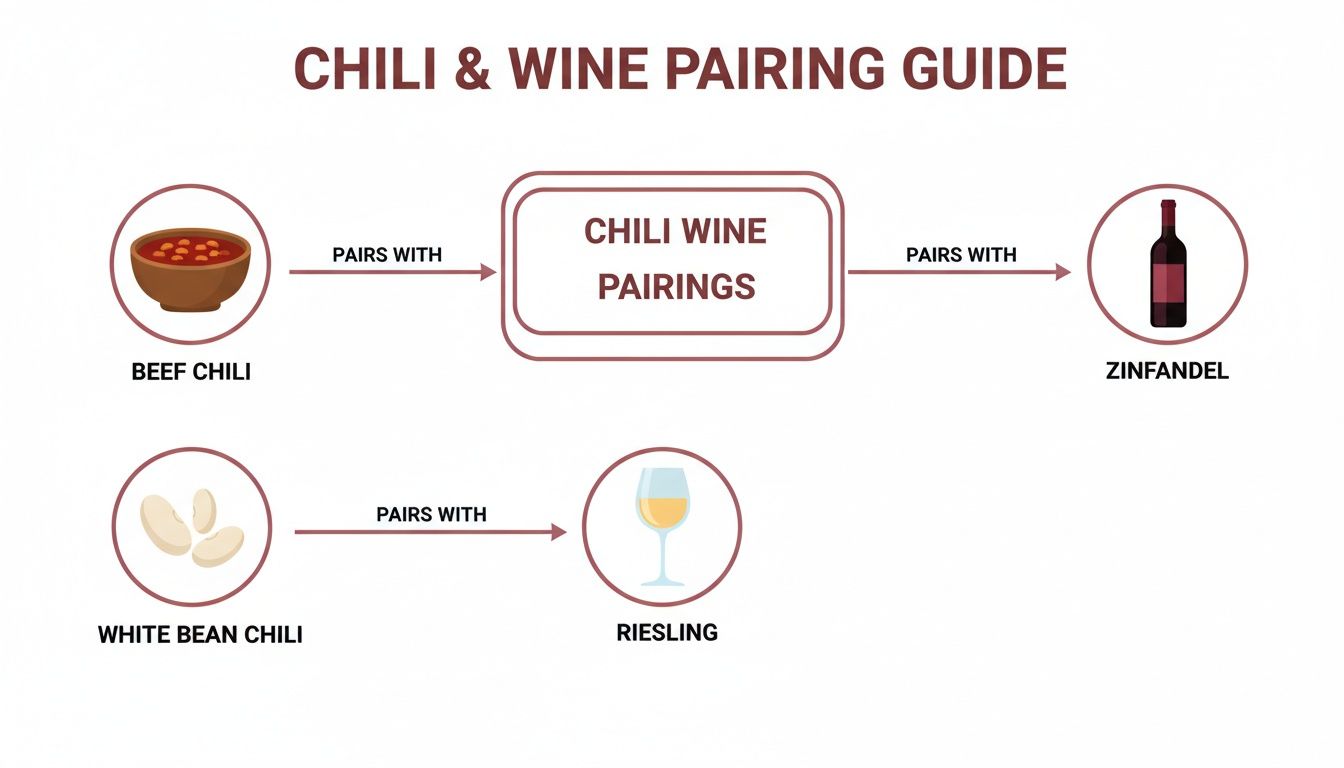
It’s all about matching the style of the chili to a wine that complements it—no deep wine theory required.
Once you get a feel for these simple dynamics, your intuition takes over. This isn't about becoming a wine expert. It's about gaining just enough confidence to make a quick, calm decision you know you'll enjoy. That's exactly the kind of in-the-moment help the Sommy AI assistant is built for—taking the guesswork out when you just want to enjoy your meal.
The Best Red Wines for Hearty Chili

When you're serving a rich, savory bowl of chili, a red wine just feels right. But the trick is picking one that works with the chili instead of against it. For a traditional, spicy beef chili, a good Zinfandel is almost always a guaranteed win. Its bold, jammy fruit flavors are exactly what you need to cool down the heat, making every spoonful better.
You don’t have to be a wine expert to get this right. The goal is simple: find a red with plenty of fruit, smooth tannins, and moderate alcohol. A wine with these qualities won't amplify the spice or taste bitter against the chili flavors.
Your Go-To Red Wine Choices
Here are a few dependable reds you can grab at just about any store. Think of this as your shortlist for a perfect wine pairing chili night, built to make your decision fast and easy.
- Zinfandel: This is the champion for classic, American-style chili. It’s packed with ripe berry flavors like blackberry and cherry that act as the perfect counterbalance to chili powder and cumin. It has enough body to stand up to beef but is smooth enough that it doesn’t overpower everything else.
- Grenache (or GSM Blends): If your chili is milder and more earthy, Grenache is a fantastic choice. It’s softer than Zinfandel, with lovely red fruit notes and a subtle spiciness that just works. A GSM (Grenache-Syrah-Mourvèdre) blend offers a bit more structure.
- Syrah/Shiraz: For a smokier chili with a serious kick, like a Texas-style recipe, a Syrah from France or a Shiraz from Australia is an excellent pick. These wines often have their own peppery notes that harmonize beautifully with the seasonings in the chili.
These options are easy to find and consistently deliver. If you want a few more ideas, we have other great suggestions in our guide to easy-to-drink red wines.
A Budget-Friendly International Option
You don't need an expensive bottle for a great pairing. In fact, one of the best value picks comes from South America. A Chilean Carmenère is a fantastic and affordable choice that almost feels tailor-made for chili.
It often has a distinct herbal or green bell pepper note that mirrors the savory spices used in many chili recipes. That unique profile, combined with its soft tannins and dark fruit flavors, makes it an exceptionally food-friendly wine.
Chile's wine exports have grown to 682 million liters valued at USD 1.6 billion, making it a top global player. This makes sense when you think about chili's appeal—millions of Americans enjoy it, often looking for wines just like Chilean Carmenère, whose herbal notes play well with ingredients like bell peppers and cumin. You can see the numbers in the 2024 Chilean Wine Market Report.
The right red wine shouldn't be complicated. Look for words like "fruity," "jammy," or "smooth" on the label. These are your clues that the wine will likely be a great partner for your chili, helping you choose with confidence.
Surprising White and Rosé Wine Pairings
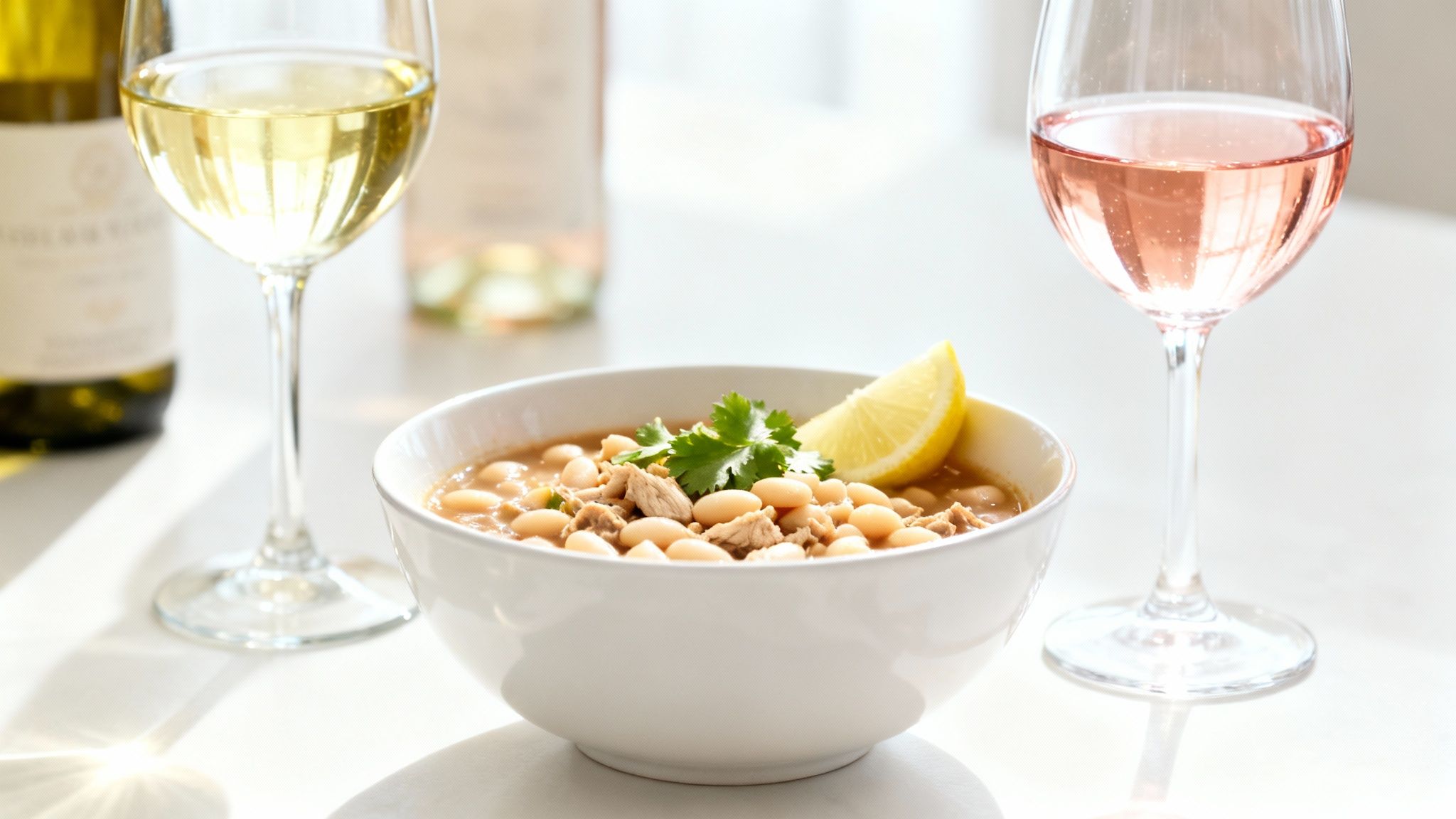
While red wine is the classic choice, don't overlook whites and rosés. They can be brilliant partners for chili, especially lighter versions made with chicken, turkey, or white beans.
This isn't about breaking rules. It's about opening up delicious new possibilities with confidence.
Instead of matching chili's richness, these wines offer a refreshing contrast. They cut through the heaviness and cleanse your palate, making each bite feel bright and new. It’s a different—but equally fantastic—pairing experience.
When to Reach for a White Wine
White wine is your secret weapon for any chili that has zesty, fresh flavors. If your recipe is loaded with lime, cilantro, or green chiles, a crisp white wine can echo those notes beautifully.
Here are a few scenarios where a chilled white is perfect:
- For Spicy Chili: An off-dry Riesling is a game-changer. That hint of sweetness is the ultimate antidote to spice, instantly cooling your palate while its zippy acidity keeps the pairing from feeling heavy.
- For Zesty Flavors: Making a white bean chili with lots of lime and cilantro? A Sauvignon Blanc is your best bet. Its citrusy, herbal character will feel like a natural extension of the dish.
- For Creamy Chili: If you top your chili with sour cream or cheese, the high acidity in a wine like Pinot Grigio or an unoaked Chardonnay cuts right through that richness. If you're a fan of crisp whites, our guide on Chablis and Chardonnay might be helpful.
The Ultimate All-Rounder Rosé
If you feel stuck between red and white, a dry Rosé is the perfect middle ground. It offers the best of both worlds: the bright, refreshing acidity of a white wine with some of the red fruit flavors you’d find in a light red.
A good dry Rosé is like a Swiss Army knife for food pairing. It’s versatile enough to handle a mild beef chili but light enough not to overwhelm a delicate vegetarian or chicken version. It’s a safe, delicious, and stylish bet every time.
This makes it an ideal choice for a chili party where multiple types might be on the menu. It will get along with nearly everything on the table. So, next time you're making chili, feel confident heading to the chilled section of the wine aisle.
Choosing Your Wine in the Moment
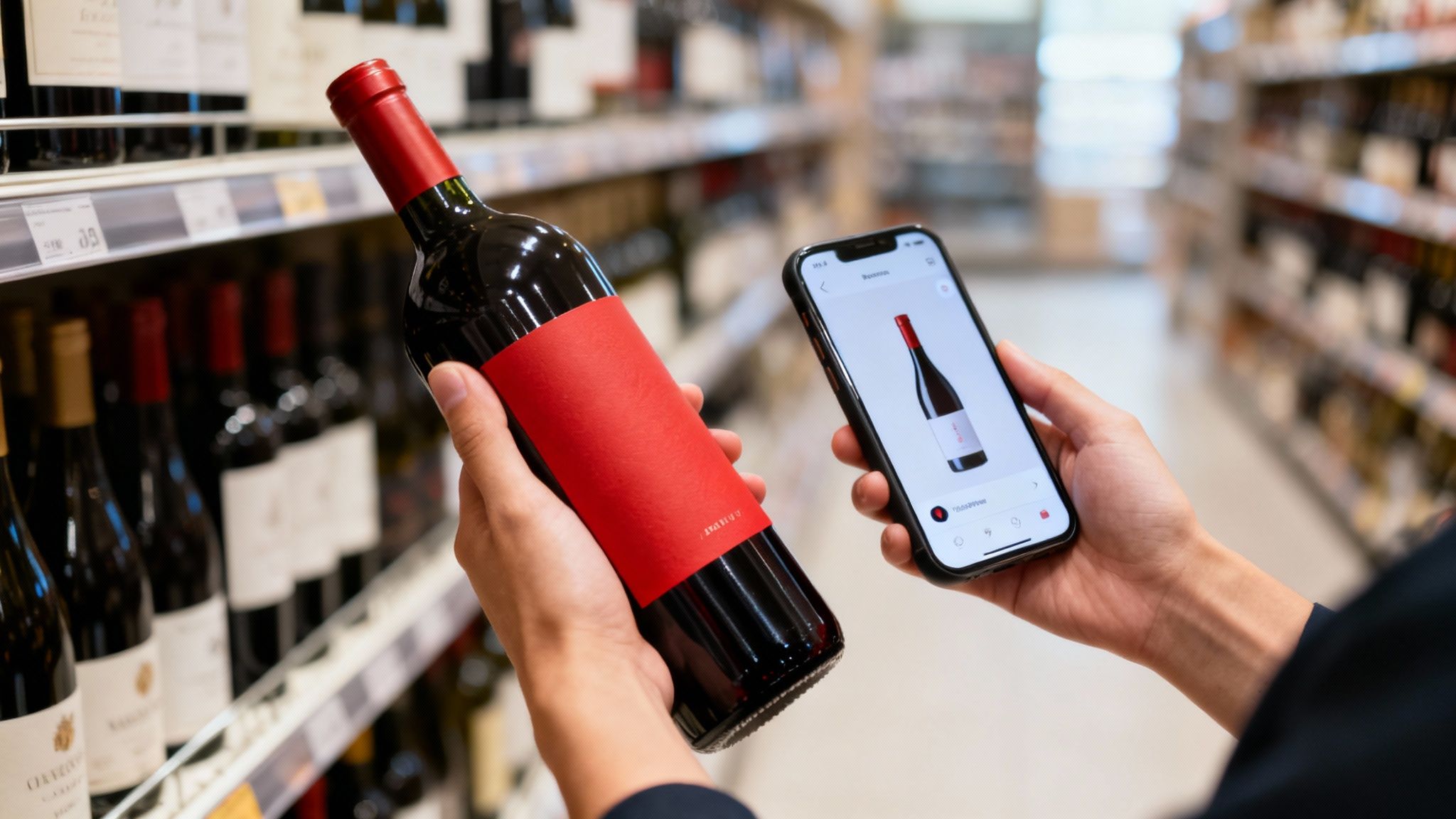
You’re in the wine aisle, and all the labels start to look the same. Or you're at a restaurant, the server is waiting, and the wine list feels like an exam. We've all been there. The pressure to make the "right" choice can take the fun out of it.
Let's make this simple. You don't need to recognize the grape or the region. All you need are a few clues.
Quick Clues on the Label
When you need a wine for chili, just scan the bottles for simple, descriptive words. Think of these as your shortcuts to a confident choice.
- For Red Wines: Look for words like "fruity," "jammy," or "smooth." These descriptions are a reliable green light, signaling a wine that will cool the spice and complement the richness of a classic chili.
- For White Wines: Search for terms like "crisp," "off-dry," or "aromatic." These point to wines that will refresh your palate and cut through the heat, especially with a lighter turkey or white bean chili.
The global wine market is projected to hit USD 1,082.05 billion by 2033, partly due to the rising demand for wines that pair well with bold, spicy dishes. Table wines, which command 81.8% of the market, are perfect for this job. Their vibrant acidity and softer tannins are exactly what you need to balance the heat. You can see more on this trend at Grand View Research.
Trust your instincts. A simple description on a label is often more useful than a complicated review. The goal is to grab a bottle that sounds good to you without overthinking it.
Your In-the-Moment Assistant
This is exactly the kind of situation where an AI assistant like Sommy becomes your best friend. Instead of guessing based on a label, you can remove all the pressure. You can even use a wine scanner app to get instant, personalized recommendations right where you stand.
With Sommy, you can scan a bottle in the store or a wine list at the table. The app gives you a clear, calm recommendation based on your personal taste and the meal you're having. It’s all about making a quick, confident choice you’ll be happy with, so you can get back to what really matters—enjoying your dinner.
Your Chili and Wine Questions Answered
Even with a few solid guidelines, it’s normal to have questions when pairing wine with a dish as complex as chili. Let's tackle some of the most common ones so you can feel confident the next time you're on the spot.
What If My Chili Is Extremely Spicy?
When the chili brings serious heat, your number one rule is to avoid high-alcohol red wines. Alcohol acts like fuel for the fire in your mouth—it makes the spice feel more intense.
Instead, you want a wine that acts like a fire extinguisher. Reach for something with low alcohol and a touch of sweetness. An off-dry Riesling is your best friend here. That little bit of sugar is like a cool, soothing balm for your palate. A super fruity, low-tannin red like a Beaujolais also works well. The goal is to calm the spice, not crank it up.
Does the Type of Meat Change the Wine Pairing?
Absolutely. The weight of the protein in your chili should guide your wine choice. It's a classic principle: match the weight of the food with the weight of the wine.
- Heavy Meats: For rich meats like ground beef or brisket, you need a wine with enough backbone to stand up to them. A bold Zinfandel, a peppery Syrah, or a plush Malbec has the structure to cut through that richness.
- Lighter Meats: For a leaner turkey or chicken chili, a lighter touch is better. A medium-bodied red like Pinot Noir won't overpower the delicate meat, and a crisp white like a Sauvignon Blanc can be a surprisingly refreshing match.
Can I Pair Sparkling Wine with Chili?
Yes, and you should! This is a fun and effective pairing. The bubbles and high acidity in sparkling wines like Prosecco or Cava are fantastic palate cleansers.
With every sip, they scrub away the richness and spice, leaving your mouth feeling refreshed and ready for the next spoonful. For a real home run, try a sparkling red like Lambrusco. Its bright berry notes and fizz are an unexpected but brilliant match for the savory spices in chili.
The global wine market is dominated by table wines, making up 81.8% of all sales, and these are often the best bet for complex dishes. The burn from capsaicin in peppers is something high-acid whites are built to handle. In the U.S., where diners often feel unsure about pairings, an app like Sommy can be a game-changer. You can scan a wine shelf and find great matches on the spot, like a Grenache-Syrah-Mourvèdre (GSM) blend that works beautifully with bean-heavy chilis. You can read more about these global wine market insights.
What Is a Safe Wine for a Chili Party?
When you’re serving a crowd with a mix of tastes, pick a versatile, fruit-forward red wine with smooth tannins. A California Zinfandel or an Australian Shiraz are perfect crowd-pleasers. They have enough bold fruit to complement a classic chili but are smooth enough not to clash with the spice. If you're wondering why smooth tannins are so important with spicy food, our simple guide explains what is tannin in wine and why it matters.
On the white wine side, an off-dry Riesling is another safe bet. Its balance of sweetness and acidity allows it to handle almost any spice level.
This is exactly the kind of in-the-moment decision Sommy was built for. Instead of standing in the wine aisle guessing what might work, the app gives you a confident recommendation in seconds. Let the AI handle the details so you can get back to your party. Find your next favorite bottle at https://www.sommy.ai.

EntreprEngineur. Runs on lattes. Creates with the intensity of a downhill run. Fast, slightly chaotic, ideally followed by a glass of wine.