
Standing in the wine aisle, you see a bottle of "Chablis" next to a "Chardonnay" and feel a familiar flicker of doubt. Here's the simple answer: all Chablis is 100% Chardonnay, but it comes from a cool, specific place in France that makes it taste crisp, clean, and minerally. Think of Chablis as the lean, zesty style of Chardonnay. Other Chardonnays, especially from warmer regions like California, are often richer and creamier.
That moment of hesitation is completely normal. The goal isn't to become a wine expert. It is just to confidently grab the bottle you're in the mood for. This guide removes the guesswork by focusing on what actually matters: how each one tastes, what it costs, and when to pour it.
Chablis vs Chardonnay at a Glance
Here is the quick-reference table. Keep it in your back pocket for the next time you're on the spot.
| Characteristic | Chablis (Crisp Chardonnay) | Typical Chardonnay (Richer Style) |
|---|---|---|
| Primary Flavors | Green apple, citrus, flint, chalk | Ripe pineapple, baked apple, vanilla, butter |
| Body & Texture | Light-bodied, crisp, high acidity | Medium to full-bodied, creamy, smooth |
| Winemaking | Almost always unoaked (steel tanks) | Often aged in oak barrels for richness |
| Best With | Oysters, grilled fish, salads, goat cheese | Roasted chicken, creamy pasta, lobster |
| Typical Price (US) | About $25 to $45 for village Chablis | About $12 to $40, entry to premium |
| Overall Vibe | Refreshing, clean, energetic, bright | Comforting, rich, luxurious, smooth |
This difference in style almost always comes down to where the grapes are grown, a key idea in Old World vs. New World wine.
How They Taste in the Glass
If you're craving something zesty, clean, and bracingly fresh, you want a Chablis. Its signature notes are crisp green apple, lemon, and a distinctive flinty, almost chalky minerality. It is the high-energy, razor-sharp expression of the Chardonnay grape.
If instead you're in the mood for something richer, creamier, and more comforting, you'll probably love a Chardonnay from a warmer spot like California or Australia. These wines lean into ripe pineapple, vanilla, butter, and baked apple, delivering a much smoother, fuller-bodied experience.
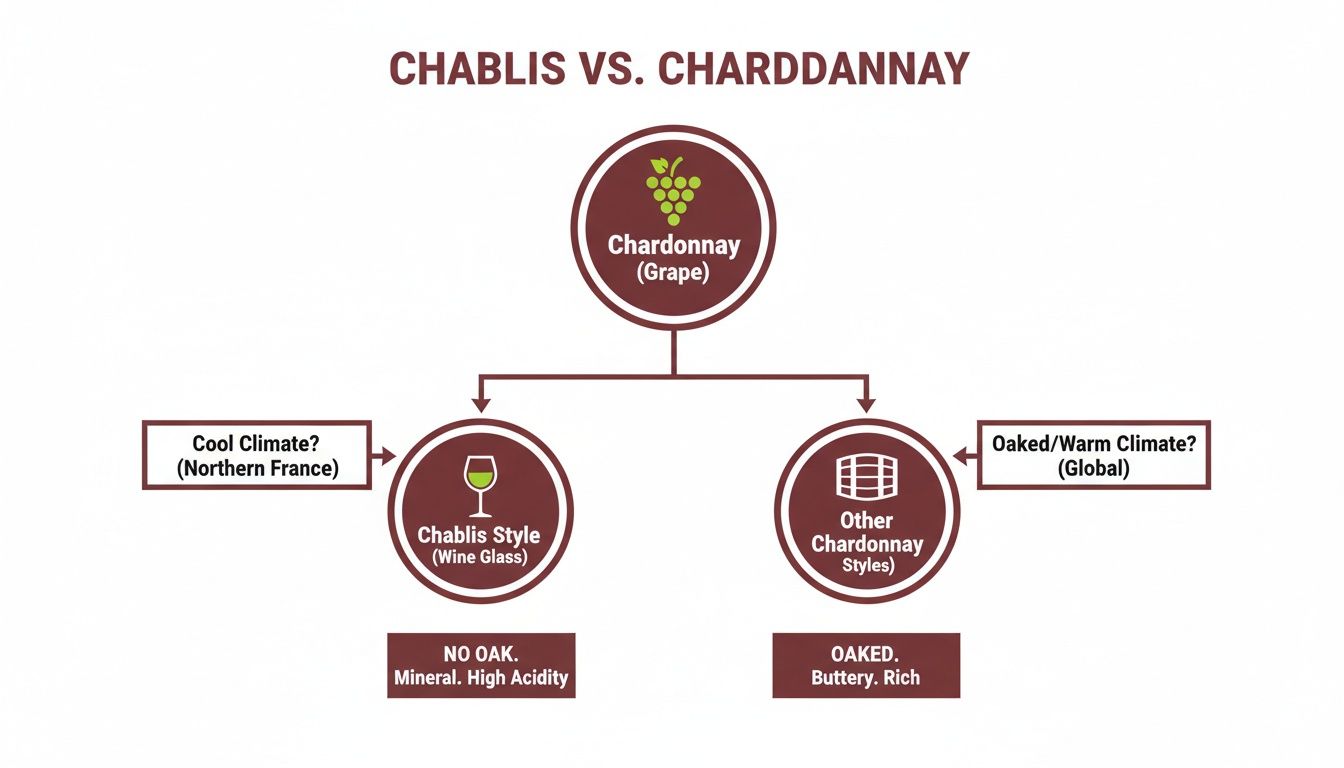
The big difference often comes down to the winemaker's choice: whether they use oak barrels, which add body and notes of vanilla and toast, or let the grape's pure, crisp character shine in stainless steel. Chablis makers almost always choose steel, which is why the wine can taste so different from a California Chardonnay even though it is the exact same grape.
Climate does the other half of the work. Chablis sits in a cool, northern corner of Burgundy where grapes ripen slowly and hold on to their acidity, giving that lean, tart-apple snap. In a warm region like Napa or South Australia, the same grape ripens fully in the sun, building higher sugar (and so higher alcohol) and rounder tropical-fruit flavors. Add oak on top of that riper fruit and you get the plush, buttery style. Cool place plus steel equals crisp Chablis; warm place plus oak equals rich Chardonnay.
The real takeaway: Chablis is your go-to for a clean and refreshing experience, while other Chardonnays are perfect when you want something richer and more comforting. It is all about matching the wine's personality to your moment.
When to Choose Chablis
Reach for Chablis for anything light, fresh, and elegant. Its crispness and clean finish make it a fantastic choice when you don't want the wine to overpower the food. This is the bottle you want on a warm day, sitting outside, or when the meal is delicate.
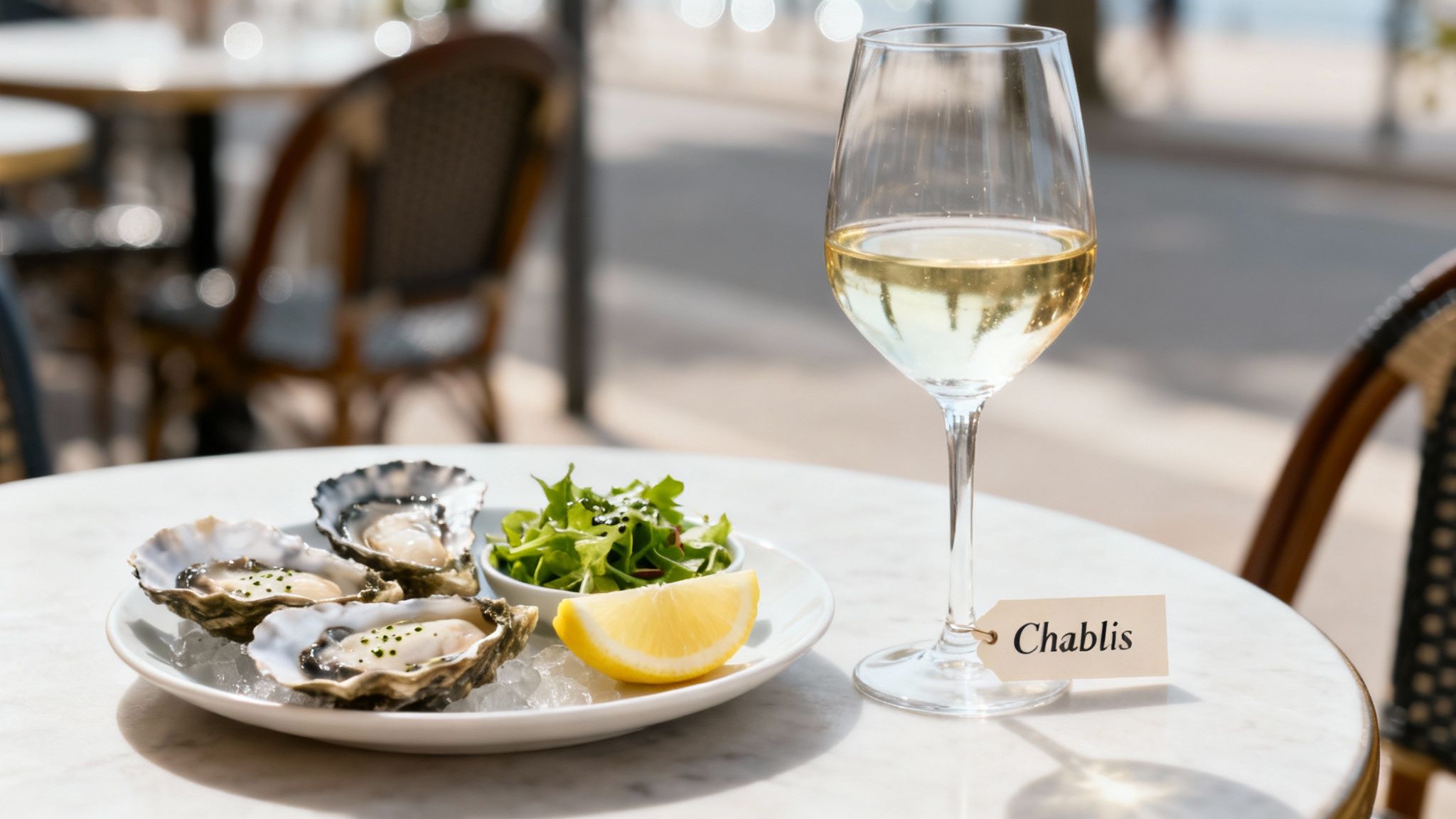
Chablis truly comes alive alongside the right foods, cutting through richness without ever feeling heavy:
- Seafood and shellfish: The classic, can't-miss pairing. Oysters, grilled fish, shrimp, and scallops are phenomenal with Chablis, because the wine's stony minerality echoes the briny flavors of the sea. For more ideas, see our guide on the best wine with shellfish.
- Light salads and appetizers: A salad with a sharp vinaigrette trips up many wines, but Chablis handles it with ease. It also loves goat cheese, simple vegetable dishes, and sushi.
- Simple chicken or pork: Plainly prepared dishes, like a roasted chicken or grilled pork tenderloin with herbs. The wine's clean profile won't compete with subtle flavors.
When to skip it: if your meal involves heavy, creamy sauces, rich red meats, or bold, spicy flavors, the delicate nature of Chablis gets lost. Those moments call for a wine with more body.
When a Classic Chardonnay Is the Right Call
Now flip the script. If your meal involves creamy sauces, roasted chicken, or buttery lobster, a classic oaked Chardonnay is an incredible partner. This style, often from warmer spots like California or Australia, brings a fuller body and a rounder, softer texture, with flavors of vanilla, toast, and baked apple that complement heartier dishes.
- Creamy pasta dishes: A buttery wine is a natural for Alfredo, carbonara, or other cream-based sauces. See our guide to the best wine for a creamy pasta night.
- Roasted poultry and pork: The subtle sweetness and toasted notes in an oaked Chardonnay match the caramelized, savory flavors of roasted chicken or turkey.
- Rich seafood: While Chablis owns raw oysters, a classic Chardonnay is what you want for lobster in melted butter or seared scallops in a cream sauce.
When to skip it: with a very light, delicate meal like a green salad and citrus vinaigrette, an oaked Chardonnay can steamroll the food. Reach for Chablis instead. Your choice is really just about matching the wine's weight to your meal.
Which One Is Right for You?
Forget the region names for a second and think about what you actually enjoy. A few quick questions sort it out:
- Do you love a wine that tastes bright, lean, and almost saline? That is Chablis. It is also the safer pick with food, since its acidity flatters most dishes rather than fighting them.
- Do you reach for wines that feel round, soft, and a little creamy? That is a warm-climate, oaked Chardonnay. It rewards a comfortable night in more than a crisp patio lunch.
- Not sure and want one bottle that pleases a table? A village Chablis is the crowd-friendly choice. It is hard to dislike and goes with almost anything.
There is no better or worse here, only what fits your taste and your meal. Many wine lovers keep both styles on hand and pick by the night.
If You Like One, Try These
Once you know which style you lean toward, it is easy to keep discovering new bottles in the same lane:
- If you love Chablis (crisp, mineral, unoaked), try a Macon-Villages from southern Burgundy for an affordable, lightly oaked cousin, an unoaked Chardonnay from Sonoma Coast or New Zealand, or, if it is really the mineral zing you crave, a Sancerre (a different grape, Sauvignon Blanc, but a similar flinty energy).
- If you love a rich Chardonnay (round, oaked, buttery), explore a Meursault or Puligny-Montrachet from Burgundy's Cote de Beaune for the benchmark version, a top Napa or Sonoma Chardonnay, or a white Rioja aged in oak for something a little different.
The Chablis Quality Levels and What They Cost
Part of what makes Chablis feel confusing is that it comes in four quality levels, and the price climbs as you go up. All four are the same grape from the same corner of northern Burgundy, where cool weather and the famous Kimmeridgian limestone soil (packed with ancient marine fossils) give the wine its chalky, mineral edge. The higher tiers come from the best-facing slopes, where grapes ripen more fully.
- Petit Chablis: The easygoing, everyday tier from the outer vineyards. Light, zippy, and usually under $25. A great low-risk way to try the style.
- Chablis (village): The heart of the appellation and the one most people mean by "Chablis." Expect classic green-apple-and-flint character for roughly $25 to $45. Reliable names like Louis Jadot, Louis Latour, and Joseph Drouhin land around $27 to $33, while William Fevre runs closer to $43.
- Chablis Premier Cru: From named single vineyards with better exposure, giving more depth and length. Typically about $45 to $80.
- Chablis Grand Cru: Just seven tiny vineyards on one prized slope, built for concentration and years of aging. These start around $90 and climb well beyond, with cult producers like Dauvissat and Raveneau reaching into the hundreds.
If you're new to Chablis, start with a village bottle around $30. It shows exactly why the region is famous without spending big.
How to Serve Each One
A few small choices let either style show its best side:
- Temperature: Serve Chablis well chilled, around 48 to 50°F, so its acidity stays crisp and refreshing. Give an oaked Chardonnay a touch less chill, around 52 to 55°F, so its richer texture and aromas open up. Straight-from-the-fridge is a little too cold for the rich style and mutes it.
- Glass: A standard white-wine glass is fine for both. If you have them, a slightly wider bowl helps a fuller Chardonnay breathe, while a narrower glass keeps Chablis focused and cold.
- Aging: Most village Chablis and everyday Chardonnay are made to drink now, within two or three years. Premier Cru and Grand Cru Chablis, plus serious white Burgundy, can improve for a decade or more, gaining a nutty, honeyed depth. If you are unsure, drink it young and fresh.
How to Spot the Difference on a Label
Standing in the aisle, how do you tell these two apart without tasting them first? You don't need to be an expert. It is all about a few clues on the label.
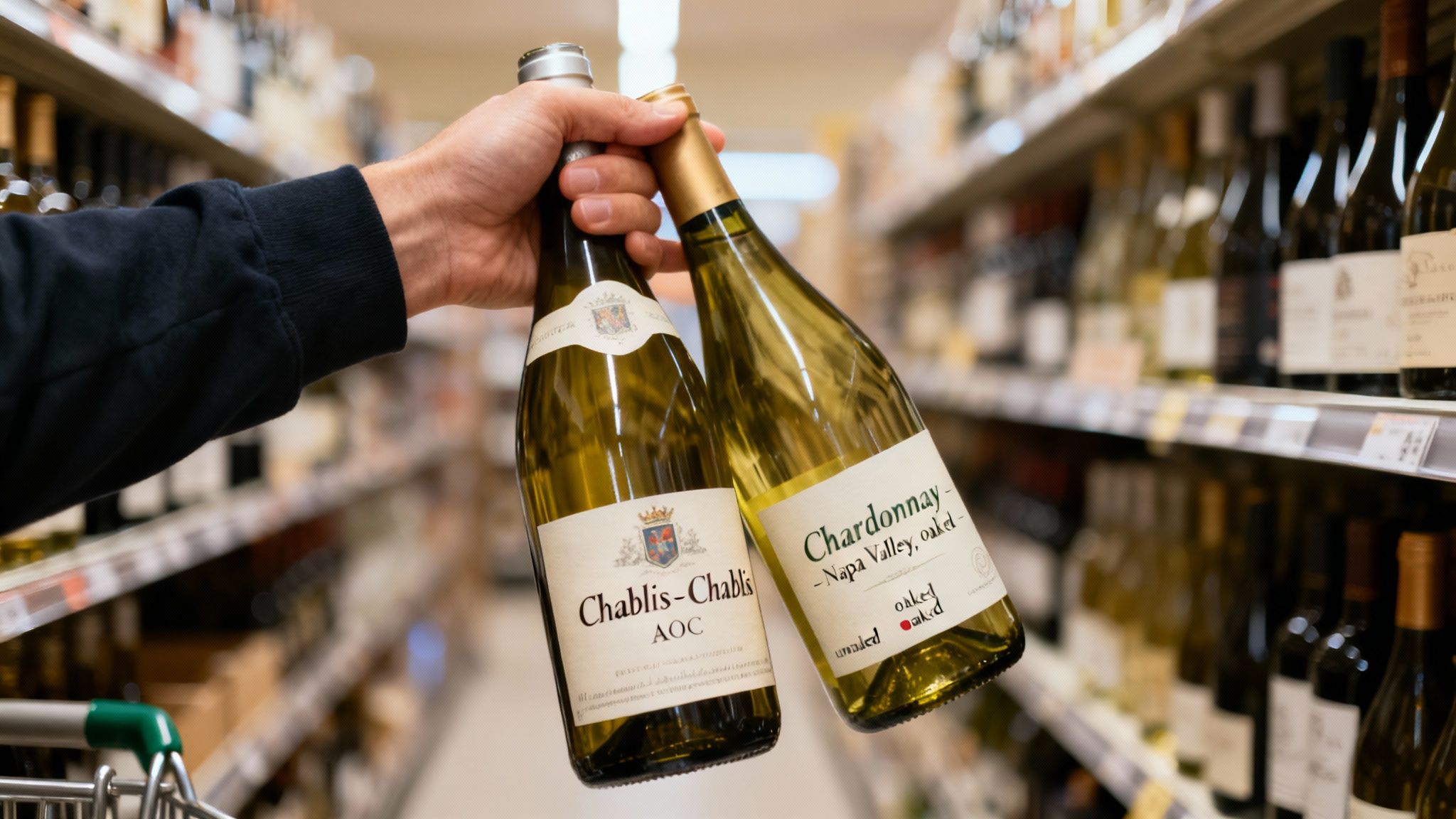
The single biggest clue is the location printed on the bottle:
- If it says "Chablis": You're golden. The word Chablis guarantees the crisp, mineral, unoaked style from its home in France. The place is the style.
- If it says "Chardonnay" plus another location: A label that reads Chardonnay and names a place like "Napa Valley," "Sonoma Coast," or "Australia" is almost certainly the richer, fuller-bodied style, with riper fruit and often some oak.
Many winemakers give extra hints too. Unoaked or stainless steel signals a clean, zesty wine in the Chablis mold. Buttery, creamy, or toasty are dead giveaways for an oaked Chardonnay. For more, see our full guide on how to read wine labels.
Still not sure which to grab when you are staring at a dozen bottles? You can scan the shelf or a wine list with Sommy and get a recommendation matched to your taste and your meal, so a crisp Chablis or a richer Chardonnay is chosen for you in seconds.
Common Questions About Chablis vs. Chardonnay
Is Chablis always dry?
Yes, for all practical purposes, Chablis is a dry white wine. Fermentation converts the grape sugar into alcohol, leaving a crisp, clean finish with high acidity and virtually no sweetness. Any richness you taste comes from texture, not sugar.
Why is Chablis more expensive than some other Chardonnays?
You're paying for a small, legally protected place. Only Chardonnay grown inside the Chablis boundaries can use the name, the cool region is prone to frost that shrinks harvests, and demand for its crisp, food-friendly style keeps climbing. That minerality comes straight from the famous soil and can't be copied elsewhere.
Can Chablis be oaked?
Traditionally, no. Most producers use stainless steel to keep the pure fruit and mineral character front and center. Some top Premier Cru and Grand Cru bottles see old, neutral oak, but the goal is a little extra texture, not the buttery, toasty flavor of an oaked California Chardonnay.
I don't usually like Chardonnay. Would I like Chablis?
Quite possibly. Most people who say they dislike Chardonnay are really reacting to the heavy, buttery, oak-driven style. Chablis is the opposite: dry, crisp, and mineral, with none of that weight. It is one of the most common wines to change a self-described "Chardonnay hater's" mind, so it is worth a try even if the grape has let you down before.
Which should I buy for dinner tonight?
Match the wine's weight to the food. Serving seafood, salad, or something light? Grab a village Chablis around $30. Cooking creamy pasta, roast chicken, or lobster with butter? Reach for a richer, oaked Chardonnay. When you want the choice made for you, tell Sommy what's on the table and it recommends a bottle that fits your taste. See how it works.